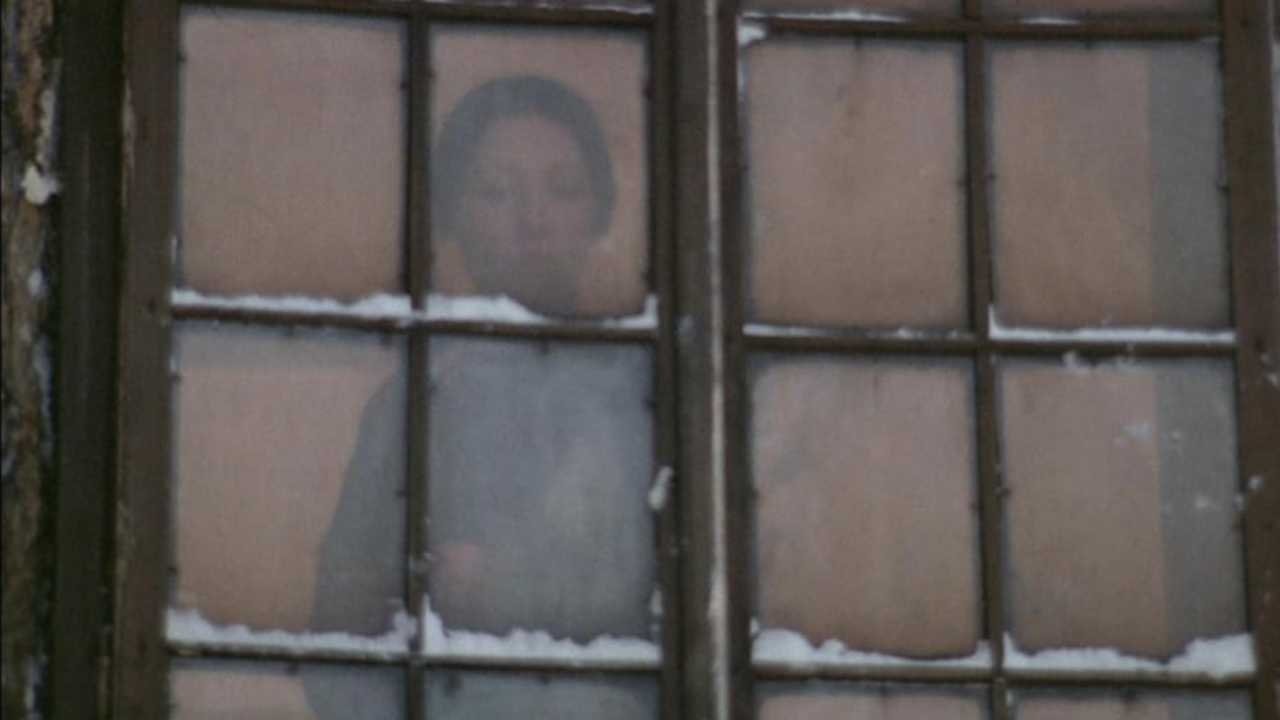
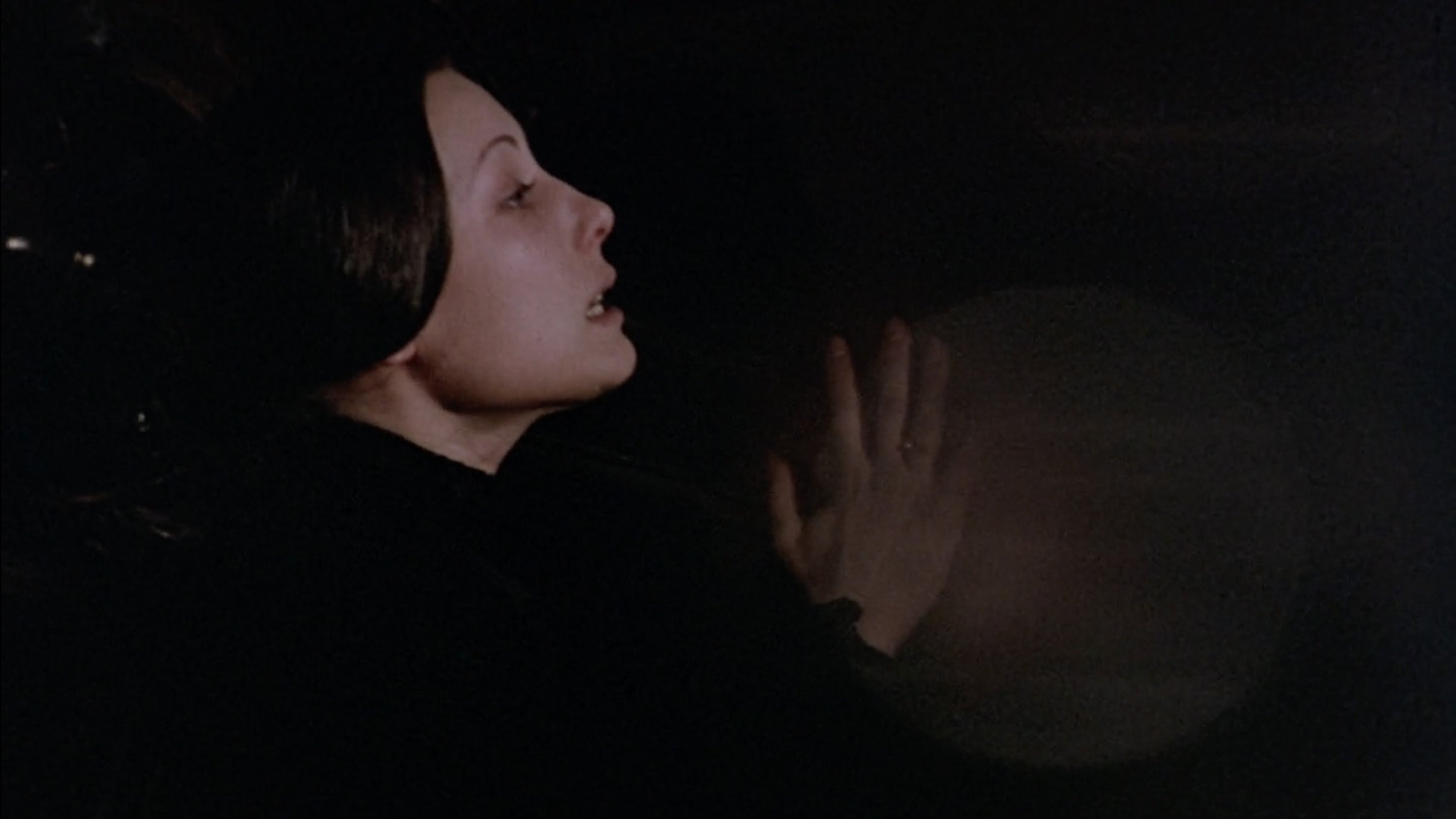
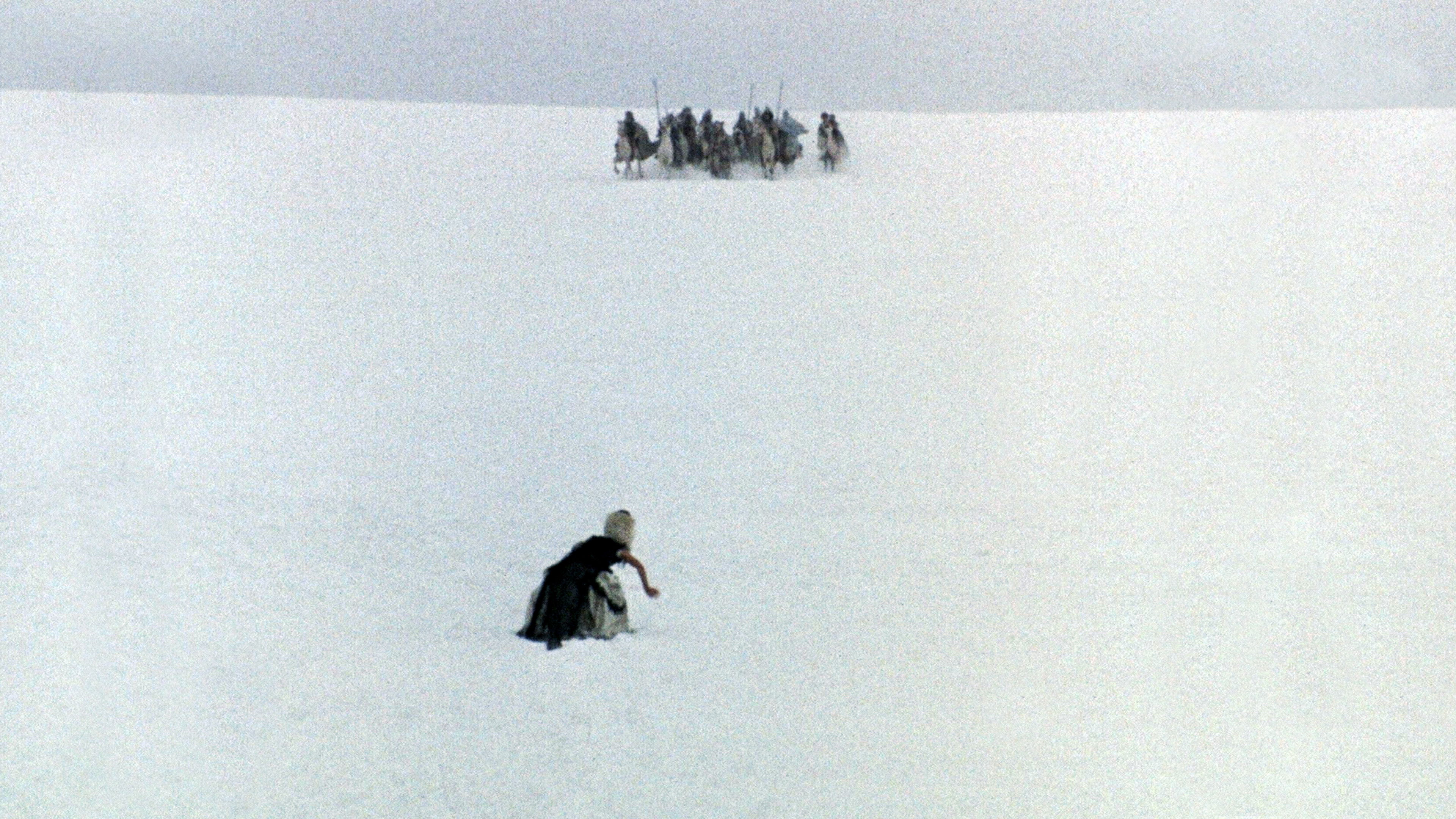
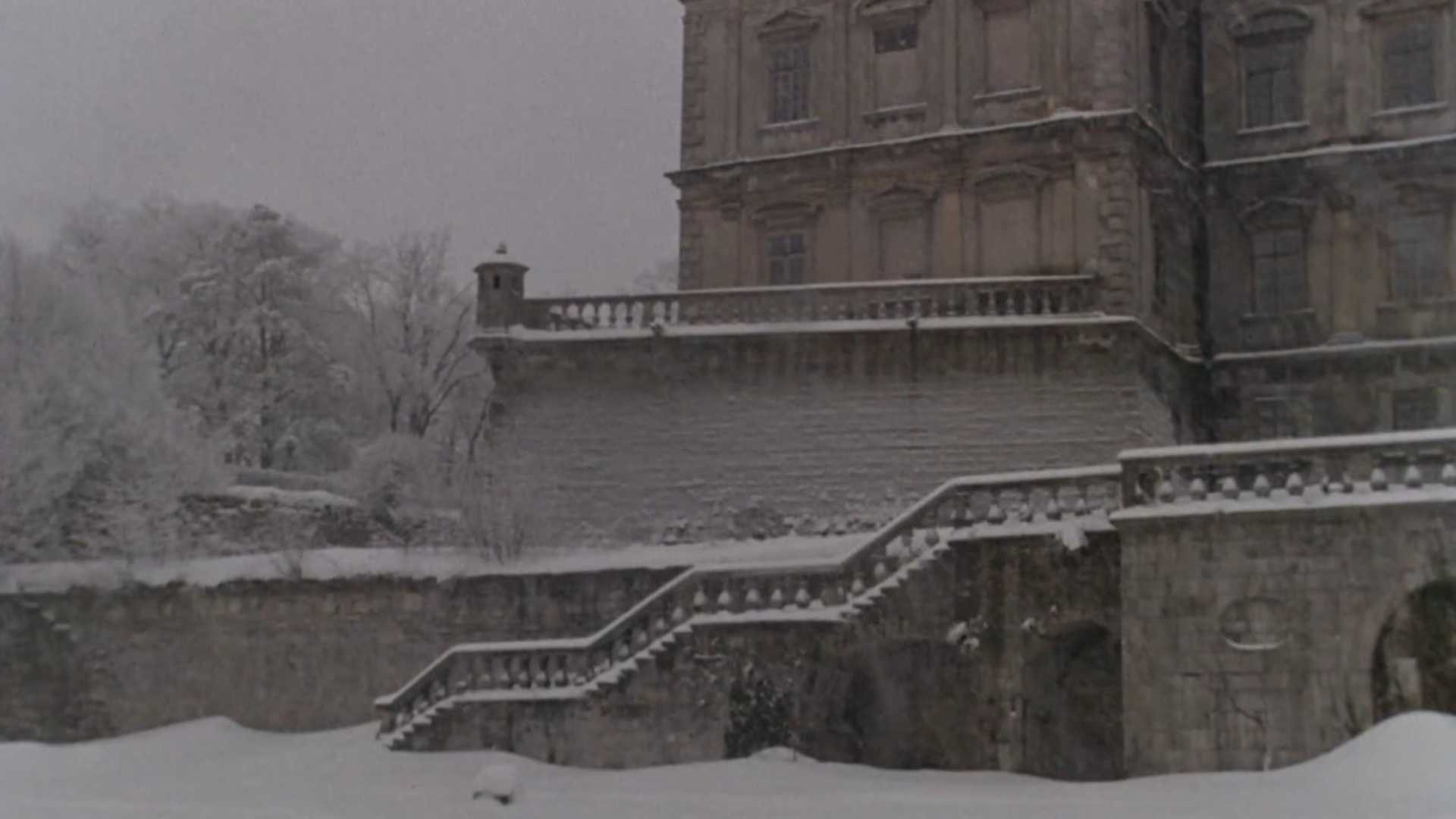
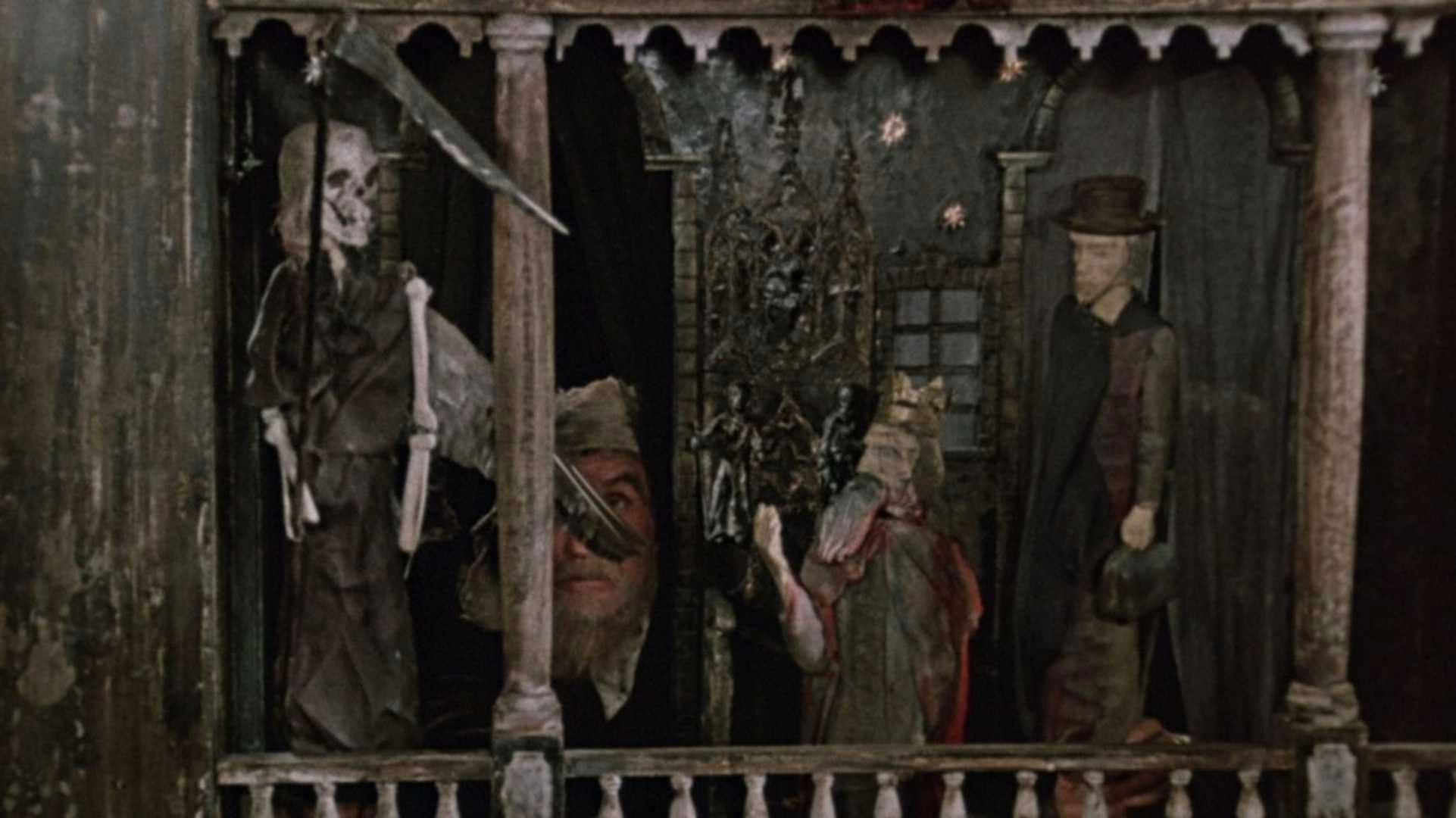
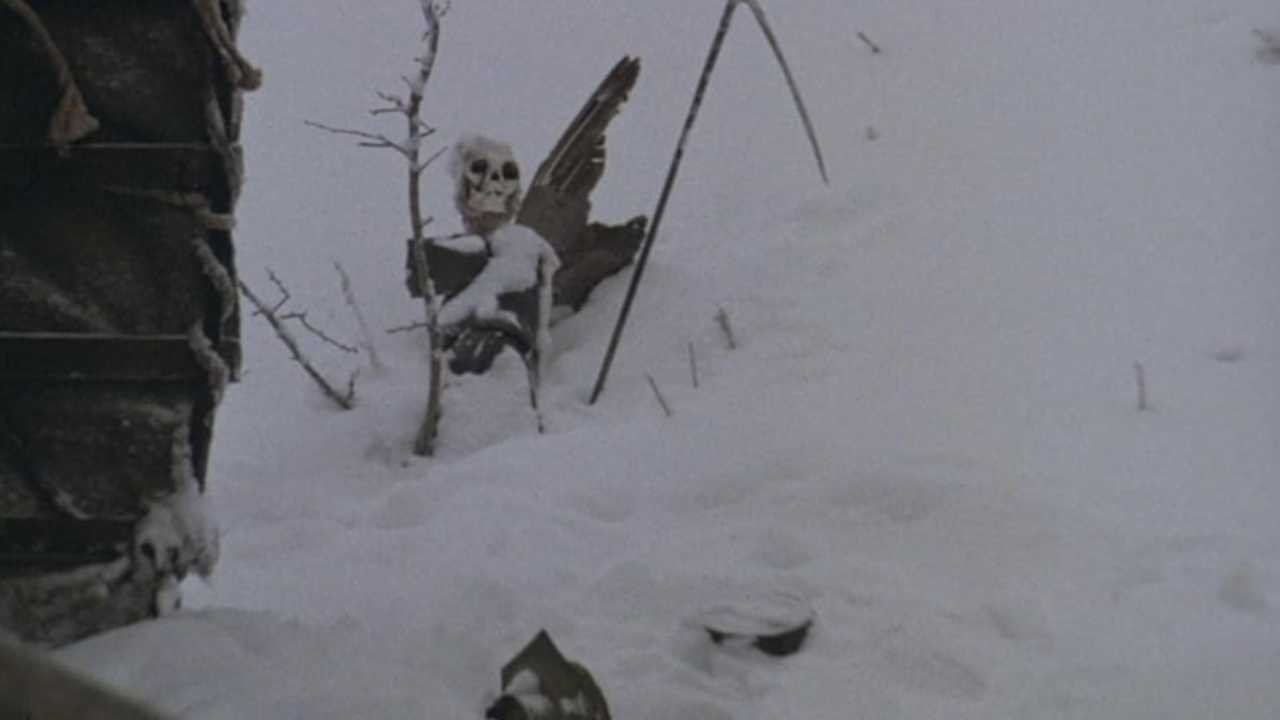
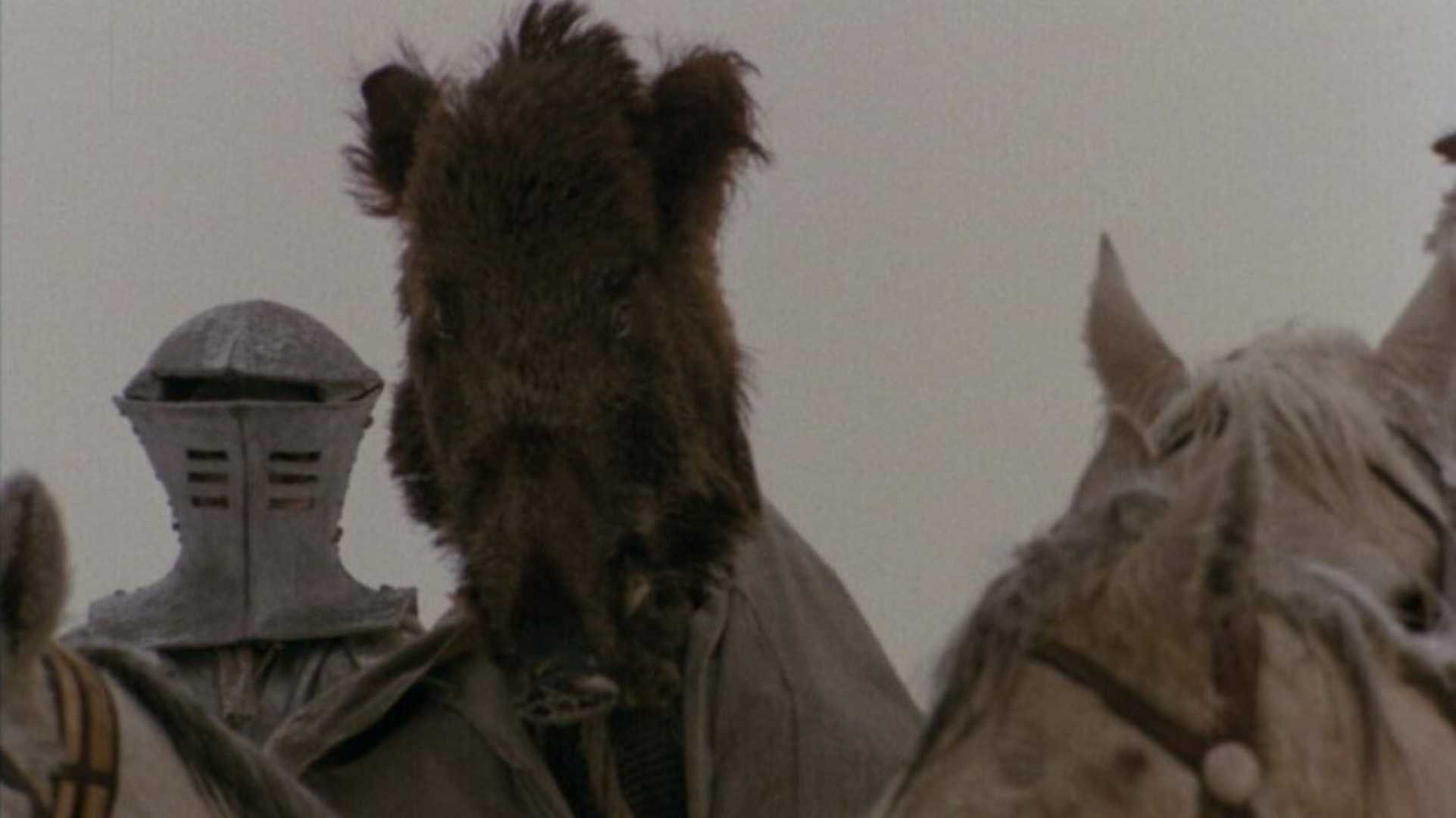
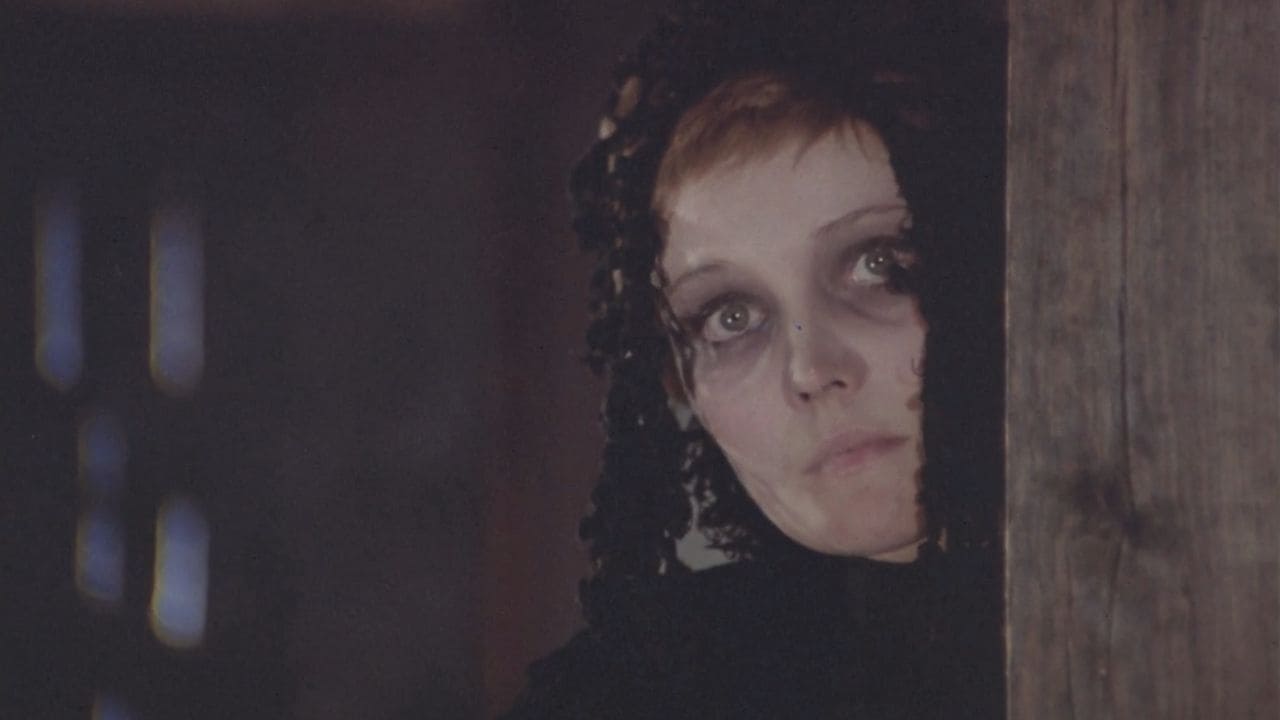
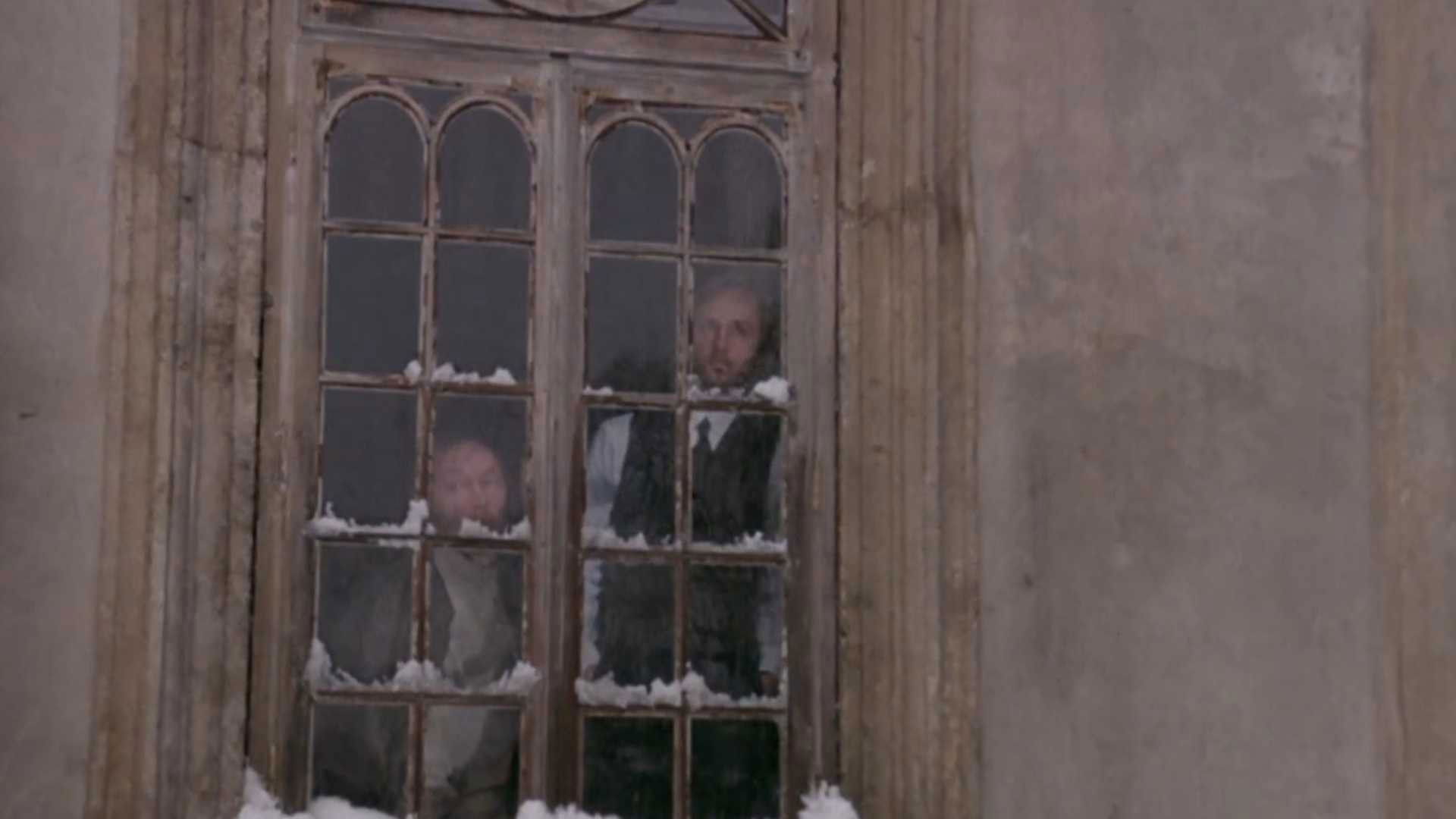
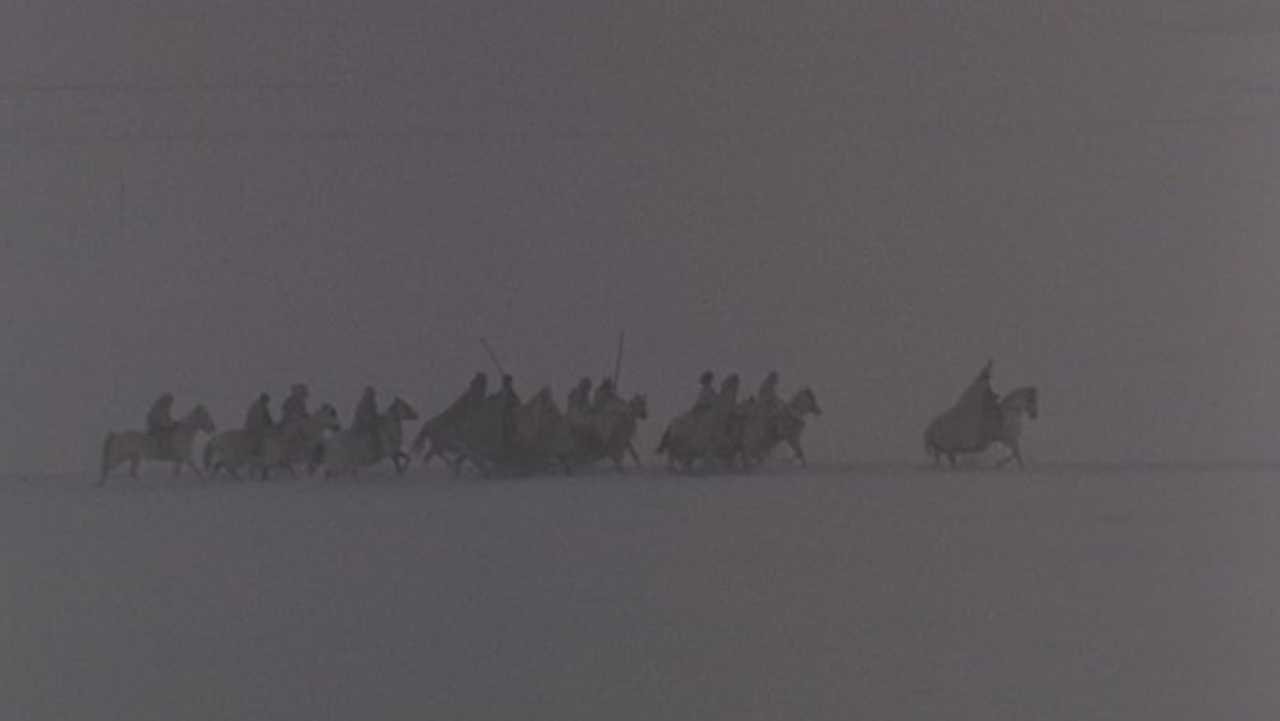
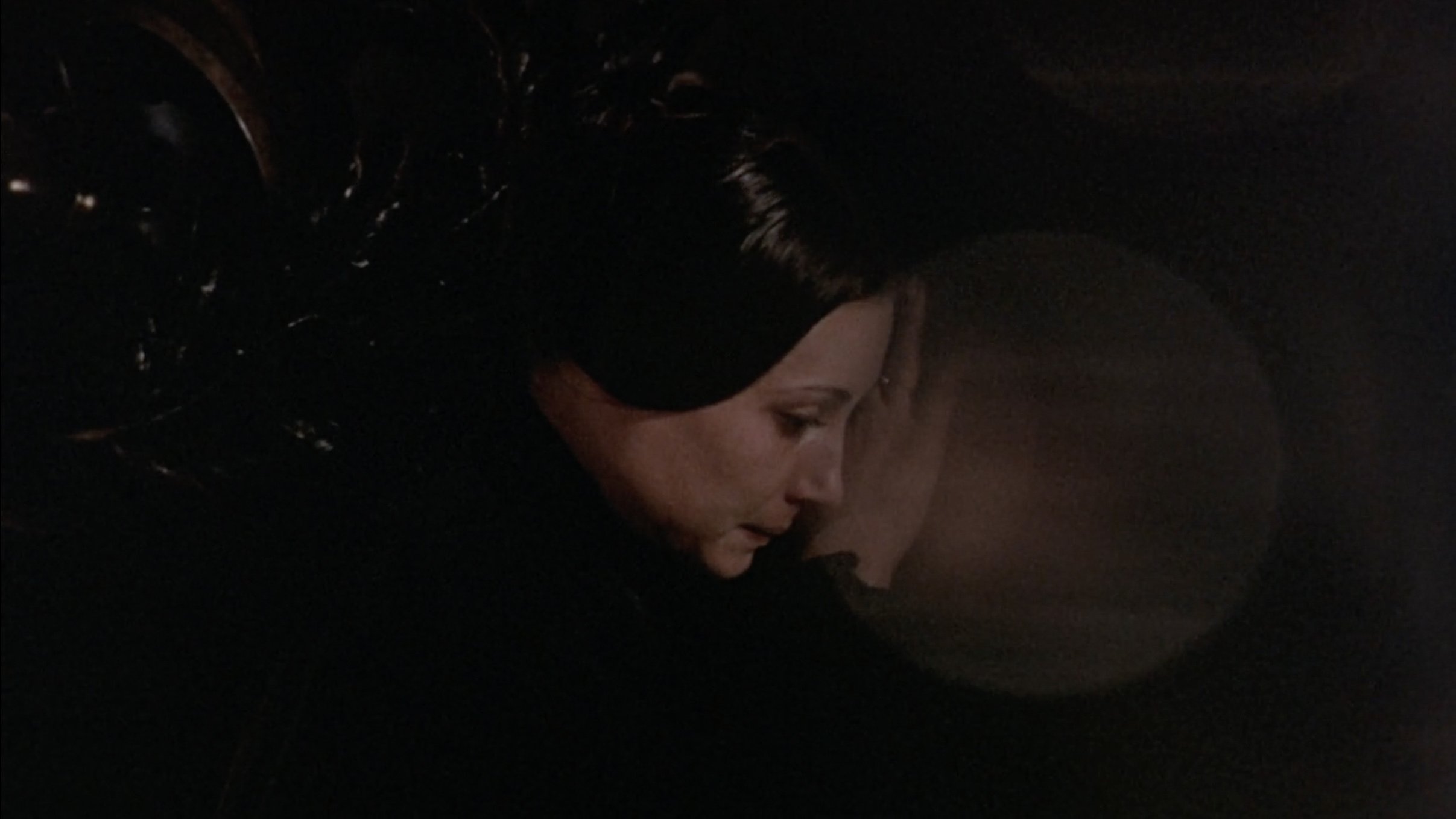
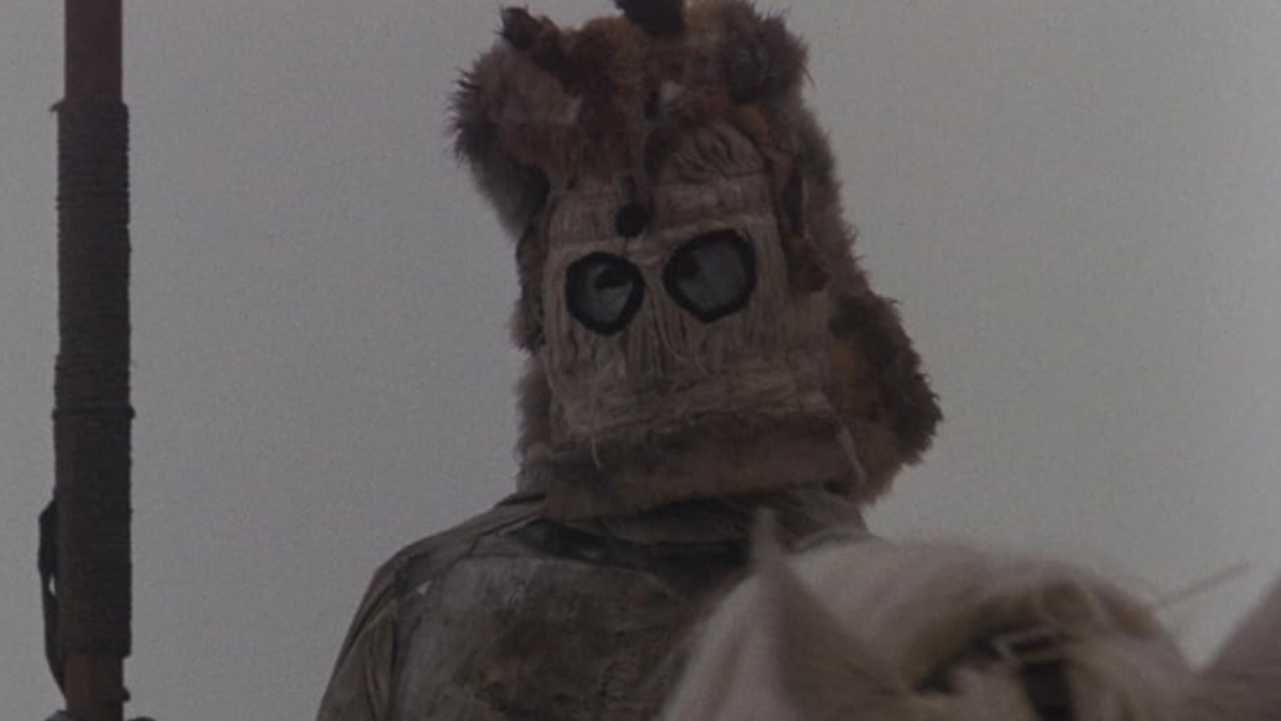
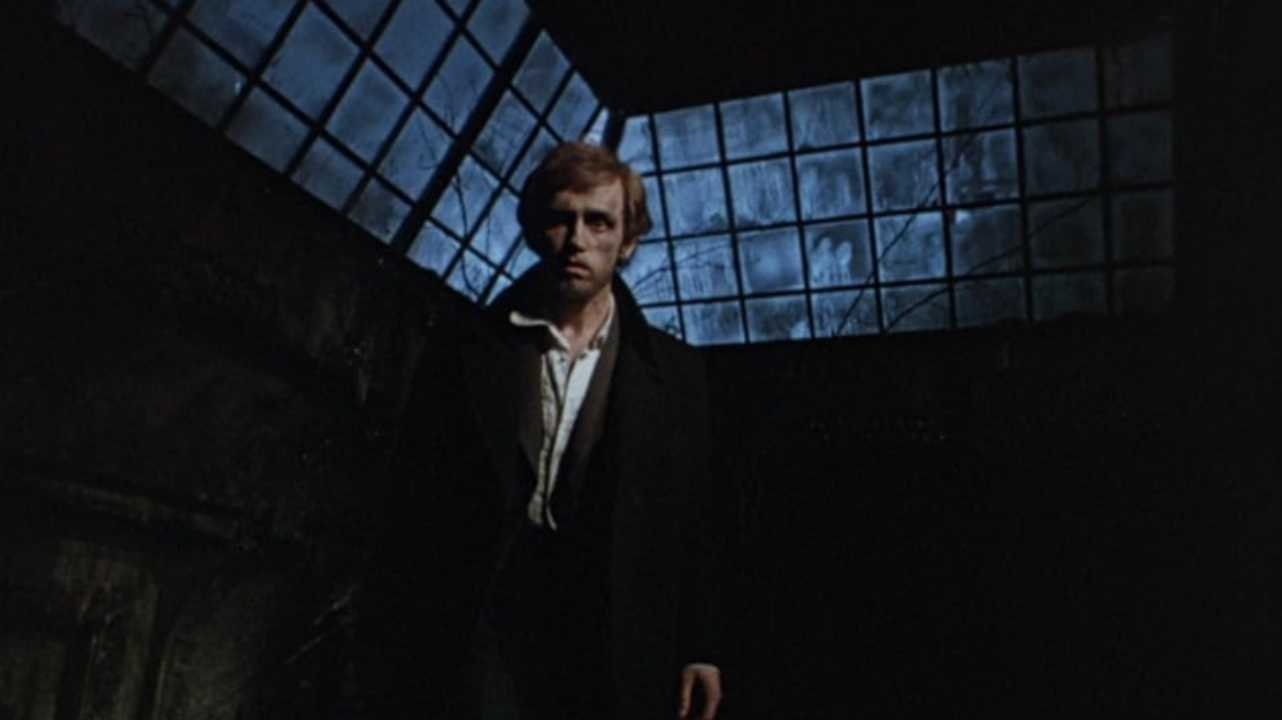
The formal throughline I observed was an obscured lens. Our vision of the truth is always muddled. Whether it’s a pillar or obfuscating glass, we can never truly trust our senses. Many shots show the characters speaking to one another over a blurry foregrounded shoulder.
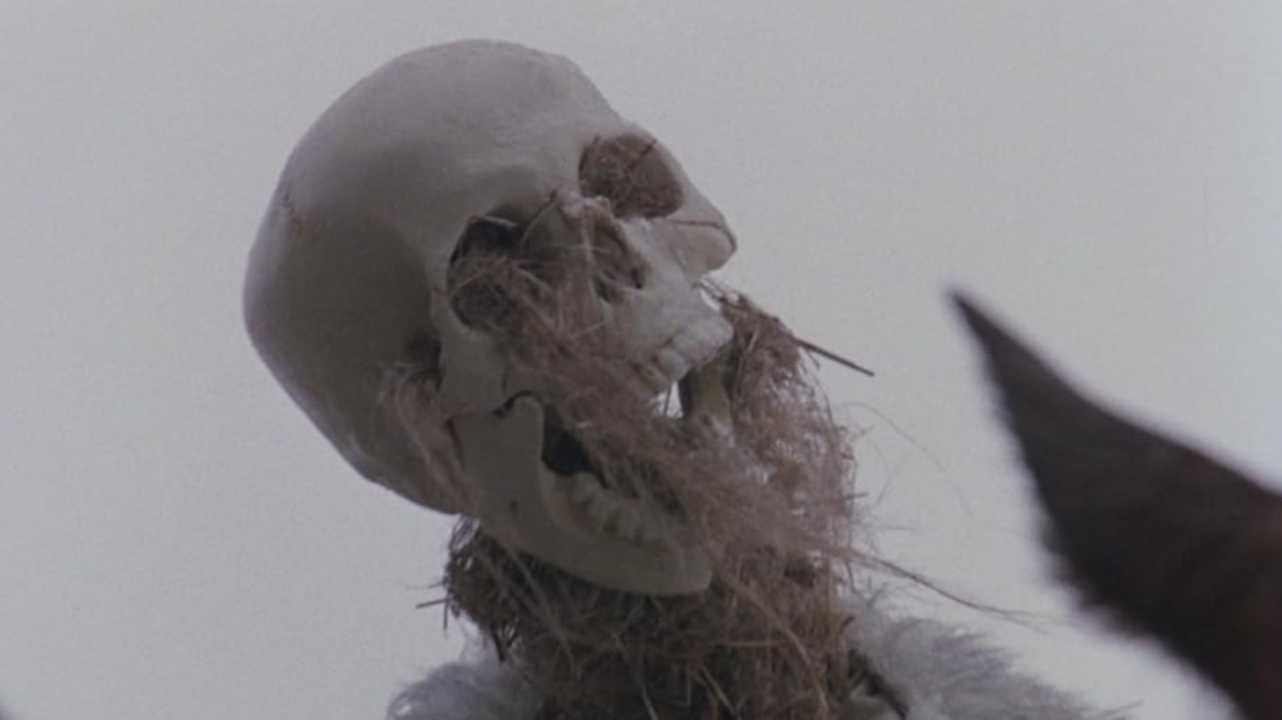
The editing is labyrinthian and when inside the castle, I couldn’t help but recall Don’t Look Now in its winding and confusing momentum. The editing is ghostly throughout. There is a haunting sequence of our protagonist running from apparitions as he trudges through marsh and swampland. The impending doom of it all with the overdubbed hoof sounds recall a Tarkovskian flood attack the Bruinen River against the Nazgul in Fellowship of the Ring.
The interior of the castle reminded me of the aesthetic of Lopushansky, but importantly this predates him. Some of the rooms of the castle are dilapidated and falling apart. Even one room is flooded. This creates a claustrophobic and apocalyptic sense from within the castle as if doom is constantly on the precipice of the house or the characters’ minds. The minds of the characters are key in this story as the reflected reality is some mix of real/unreal. I think the film asks where reality ends and legend begins and how civilizations, especially those who have been conquered, are relegated to forgotten history.
This film feels undeniably gothic but with an added layer of Russian philosophy. It’s less spooky and more confusing. I like it that way. There’s a line towards the end of part one basically saying stories with plain logic or sense are bad. I don’t go that far but I empathize with the sentiment. This story offers a plethora of interpretive opportunities.
The formal throughline I observed was an obscured lens. Our vision of the truth is always muddled. Whether it’s a pillar or obfuscating glass, we can never truly trust our senses. Many shots show the characters speaking to one another over a blurry foregrounded shoulder.
The editing is labyrinthian and when inside the castle, I couldn’t help but recall Don’t Look Now in its winding and confusing momentum. The editing is ghostly throughout. There is a haunting sequence of our protagonist running from apparitions as he trudges through marsh and swampland. The impending doom of it all with the overdubbed hoof sounds recall a Tarkovskian flood attack the Bruinen River against the Nazgul in Fellowship of the Ring.
The interior of the castle reminded me of the aesthetic of Lopushansky, but importantly this predates him. Some of the rooms of the castle are dilapidated and falling apart. Even one room is flooded. This creates a claustrophobic and apocalyptic sense from within the castle as if doom is constantly on the precipice of the house or the characters’ minds. The minds of the characters are key in this story as the reflected reality is some mix of real/unreal. I think the film asks where reality ends and legend begins and how civilizations, especially those who have been conquered, are relegated to forgotten history.
This film feels undeniably gothic but with an added layer of Russian philosophy. It’s less spooky and more confusing. I like it that way. There’s a line towards the end of part one basically saying stories with plain logic or sense are bad. I don’t go that far but I empathize with the sentiment. This story offers a plethora of interpretive opportunities.