Though I've seen (and really liked) Andrew Bujalski's 'Support the Girls,' that did not prepare me for how different this film, from five years earlier, is--'Computer Chess' is a really odd film, from its choice of subject and the way it is made all the way to the seeming conclusions it reaches.
The plot synopsis is pretty simple. Over a long weekend in 1989, several groups of programmers (along with a relatively small audience) meet up in the conference room of a pretty downscale hotel to pit their chess programs against one another. At the same time, and unrelatedly at first, members of a Human Potential Movement-adjacent group are participating in workshops in the same hotel conference room (though at different hours of the day). At the end of the weekend, they leave, the end.
Though I've never participated in a computer chess tournament (or, tbh, been that interested in computer chess), I played a lot of chess and played in a lot of chess tournaments around the time the film is set and I can say that the accuracy with which this type of event is staged in the film is disturbingly accurate to my experiences, including the manner in which the lone female participant is constantly called out (I can't recall the name of the girl I saw at all those tournaments but she had long hair, really liked Menudo (she always had a Walkman), and was from my school district so I saw her a lot--if you are out there, I'm genuinely sorry if anything I did contributed to your discomfort and I really hope that all went well for you). Can't speak to the HPM types, but nothing in the film rings untrue about them.
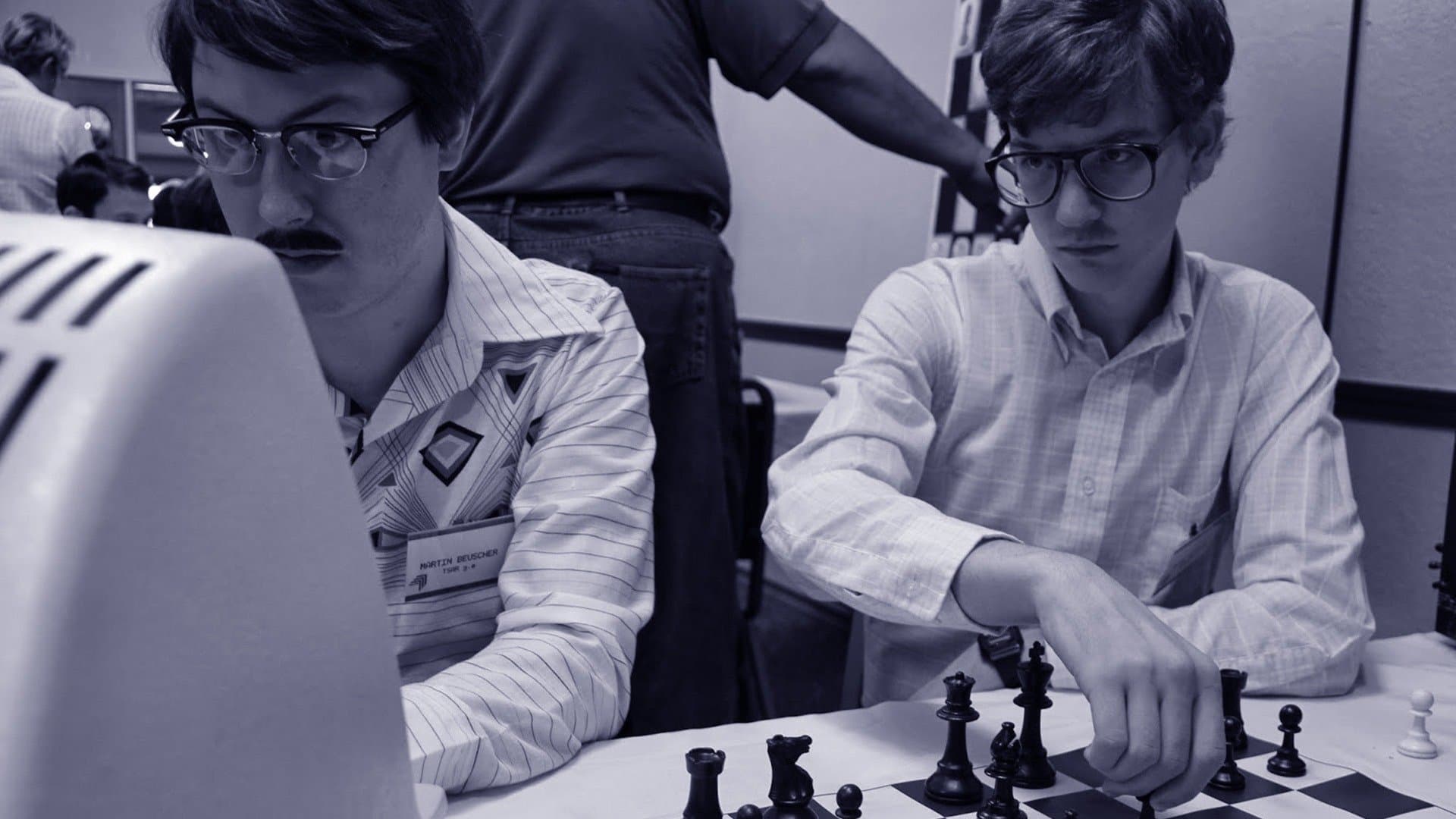
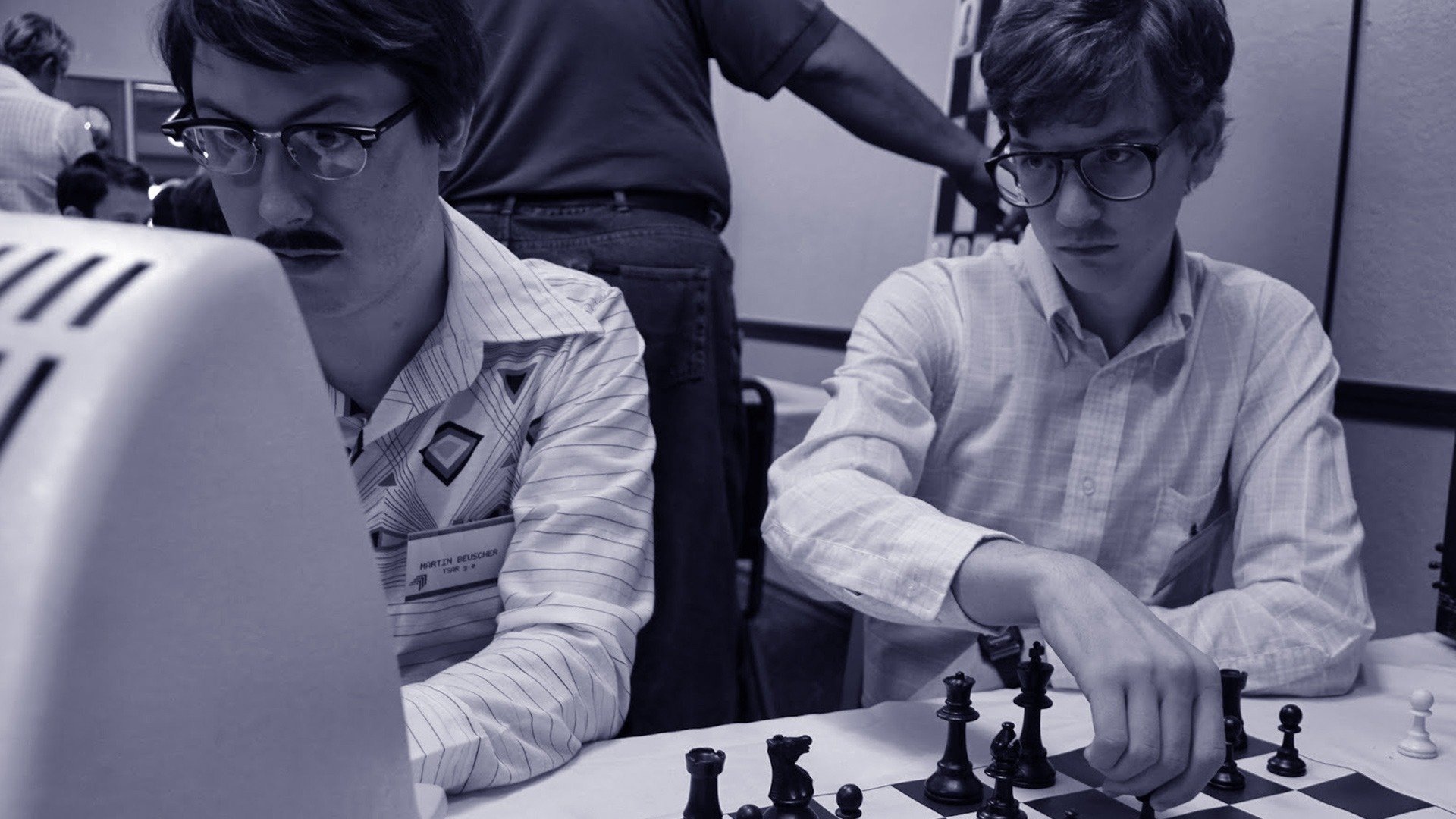
The film appears to have been shot on period, low-grade VHS cameras, almost entirely in black and white (barring one scene), in a quasi-documentary style, though there are large sequences which abandon this last conceit.
Anyway, what I'm trying to get around to saying is, why, specifically, go to this much effort to recreate so accurately such a weirdly niche setting when the context of the plot doesn't really support it--I mean, a very similar story could be told at almost any point in the history of computer programming, chess, cults, etc so what's the reason for this.
And this is all before we get to the actually left-field stuff: that the hotel appears to infested with cats (something that is only acknowledged by characters very rarely), the apparent development of sentient artificial intelligence, the completely deadpan comedy (which is, often, really funny), or film's ending (which I'm not going to spoil, but which is truthfully, very strange).
Though the craft is certainly impeccable, I really don't know how I feel about it and I've no idea how to rate it. I guess a straight down the middle 3 with an eye towards revisiting it another time?
Though I've seen (and really liked) Andrew Bujalski's 'Support the Girls,' that did not prepare me for how different this film, from five years earlier, is--'Computer Chess' is a really odd film, from its choice of subject and the way it is made all the way to the seeming conclusions it reaches.
The plot synopsis is pretty simple. Over a long weekend in 1989, several groups of programmers (along with a relatively small audience) meet up in the conference room of a pretty downscale hotel to pit their chess programs against one another. At the same time, and unrelatedly at first, members of a Human Potential Movement-adjacent group are participating in workshops in the same hotel conference room (though at different hours of the day). At the end of the weekend, they leave, the end.
Though I've never participated in a computer chess tournament (or, tbh, been that interested in computer chess), I played a lot of chess and played in a lot of chess tournaments around the time the film is set and I can say that the accuracy with which this type of event is staged in the film is disturbingly accurate to my experiences, including the manner in which the lone female participant is constantly called out (I can't recall the name of the girl I saw at all those tournaments but she had long hair, really liked Menudo (she always had a Walkman), and was from my school district so I saw her a lot--if you are out there, I'm genuinely sorry if anything I did contributed to your discomfort and I really hope that all went well for you). Can't speak to the HPM types, but nothing in the film rings untrue about them.
The film appears to have been shot on period, low-grade VHS cameras, almost entirely in black and white (barring one scene), in a quasi-documentary style, though there are large sequences which abandon this last conceit.
Anyway, what I'm trying to get around to saying is, why, specifically, go to this much effort to recreate so accurately such a weirdly niche setting when the context of the plot doesn't really support it--I mean, a very similar story could be told at almost any point in the history of computer programming, chess, cults, etc so what's the reason for this.
And this is all before we get to the actually left-field stuff: that the hotel appears to infested with cats (something that is only acknowledged by characters very rarely), the apparent development of sentient artificial intelligence, the completely deadpan comedy (which is, often, really funny), or film's ending (which I'm not going to spoil, but which is truthfully, very strange).
Though the craft is certainly impeccable, I really don't know how I feel about it and I've no idea how to rate it. I guess a straight down the middle 3 with an eye towards revisiting it another time?