
Woman in Witness Protection
1997·Drama·2h 11m
7.1
★
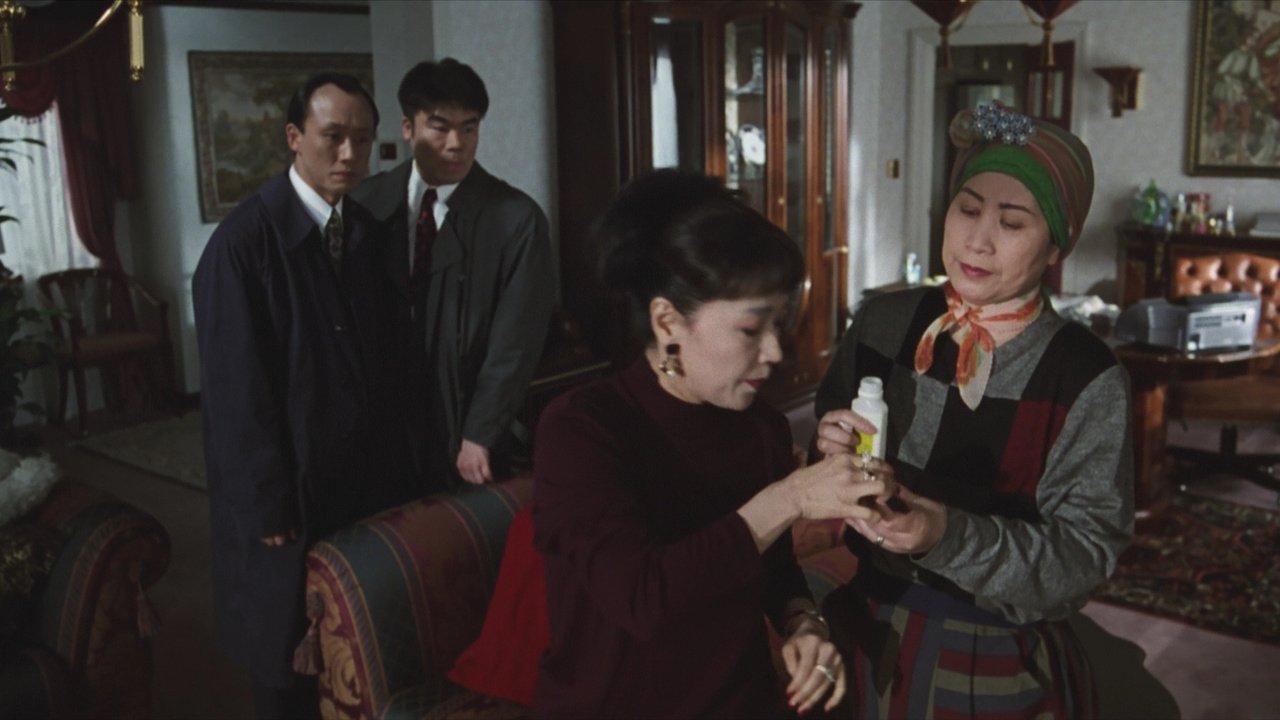
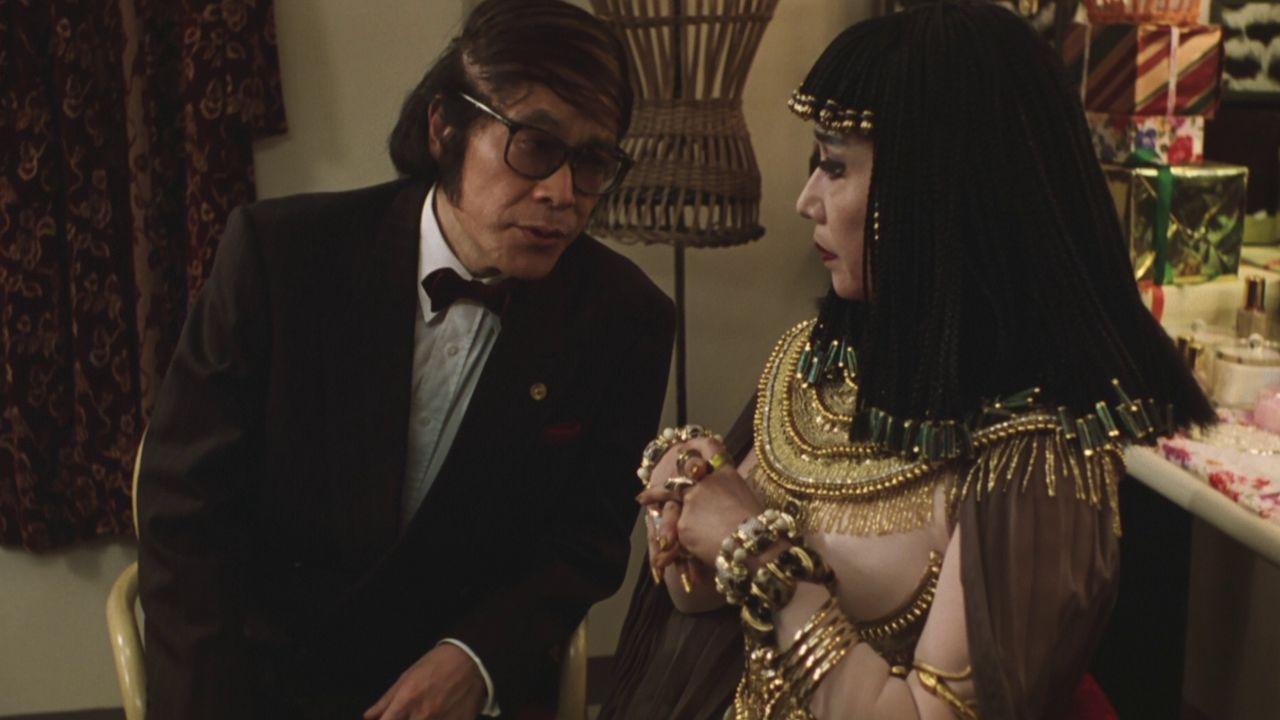
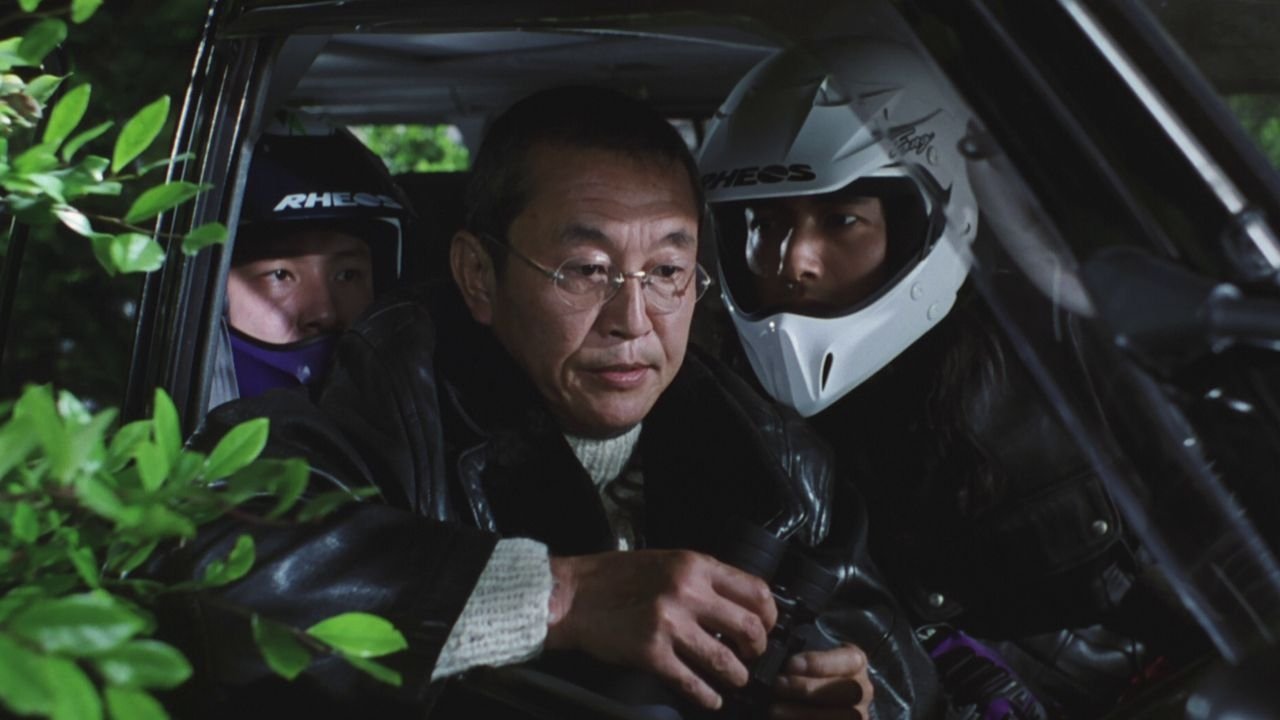
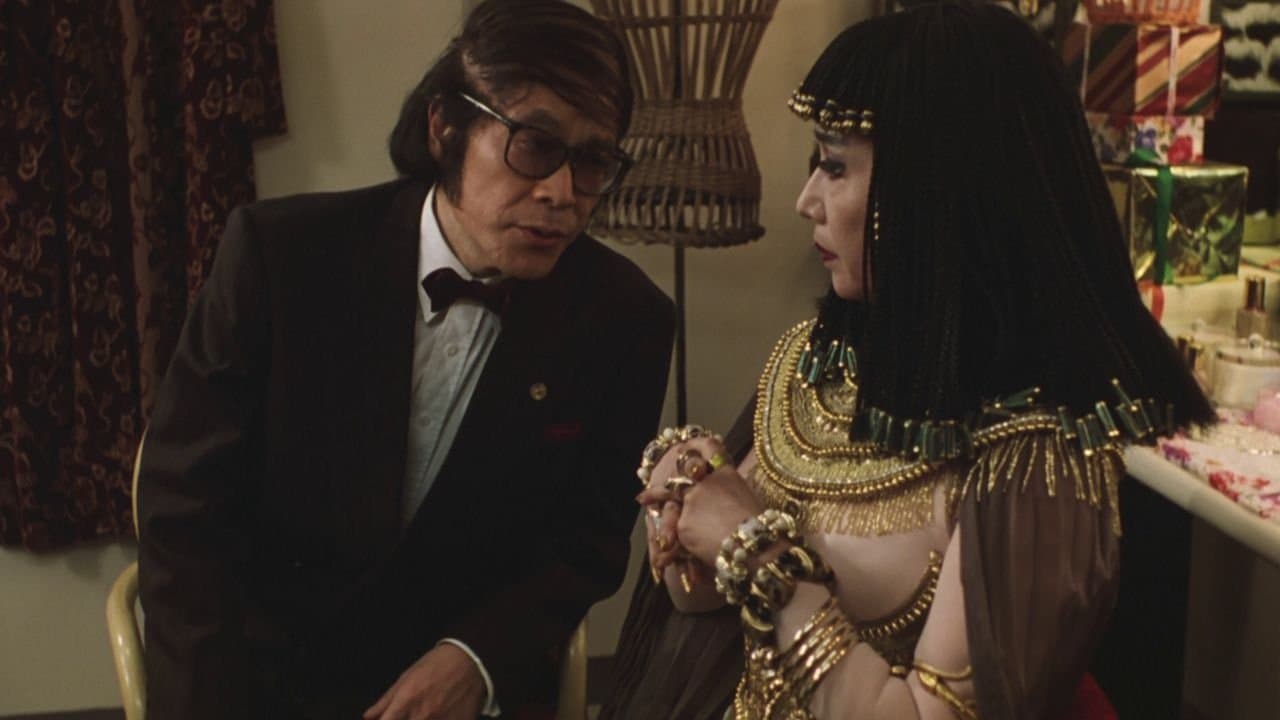
Vain, middle-aged actress Biwako is placed in witness protection while authorities investigate the brutal murder she witnessed. Under the watch of two dedicated cops, Biwako struggles to maintain her career, her public image, and her personal life as she prepares for her new role on the witness stand.
Directed by Jūzō Itami
japan
gangster
yakuza
witness protection

Trailer

IMDB
N/A
Cast

Nobuko Miyamoto
Isono Biwako
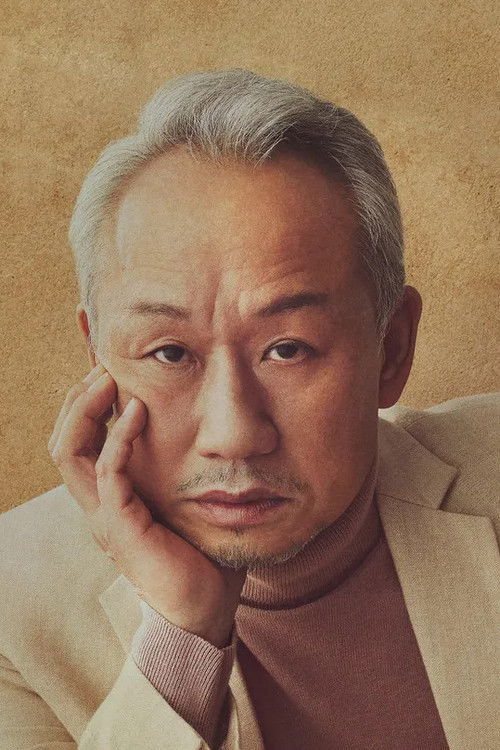
Masahiko Nishimura
Detective Tachibana
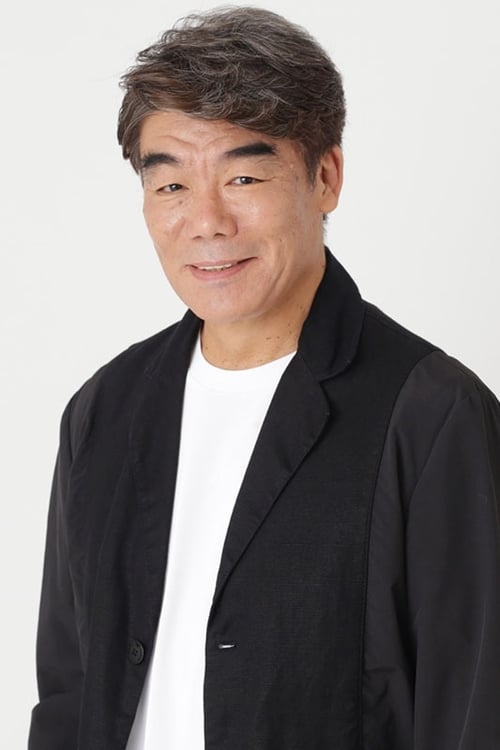
Takehiro Murata
Detective Chikamatsu
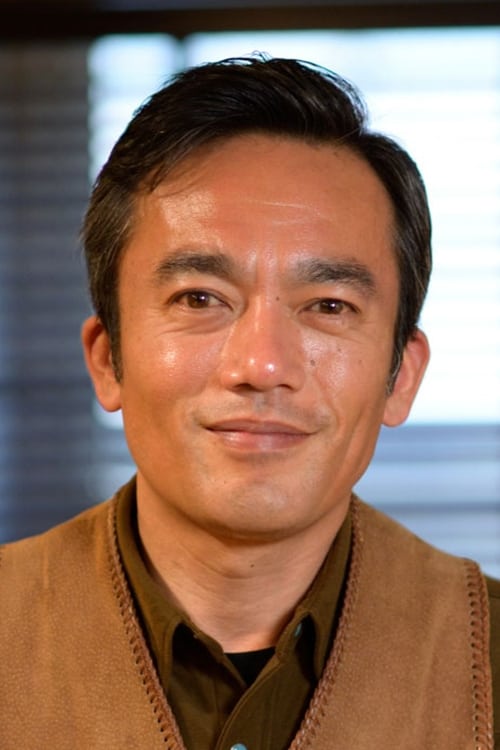
Kazuya Takahashi
Tamao Oki
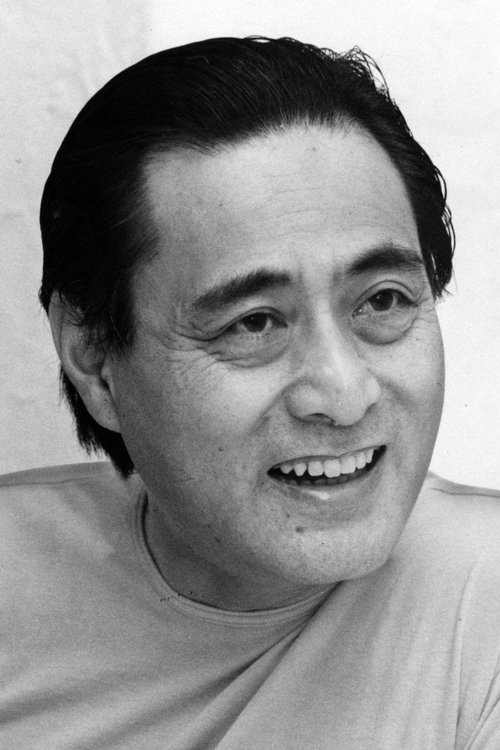
Masahiko Tsugawa
Shingyoji Temple Chief Clerk
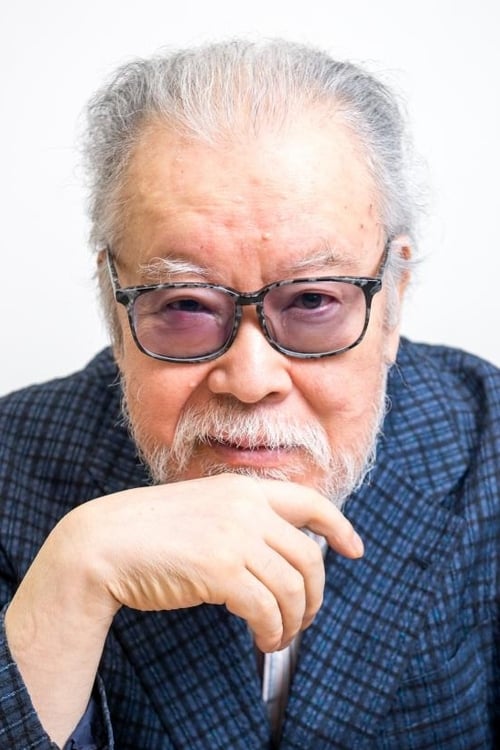
Tohru Emori
Nihonmatsu

Akira Nagoya
Director Hatano

Taro Yamamoto
Nakamura
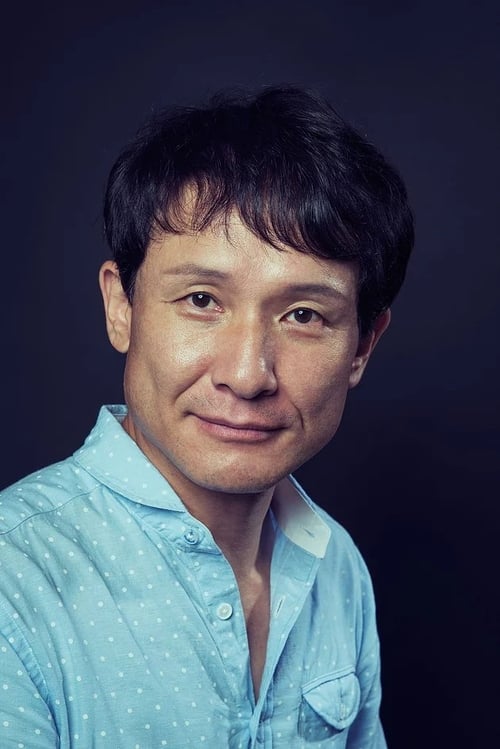
Houka Kinoshita
Eiji
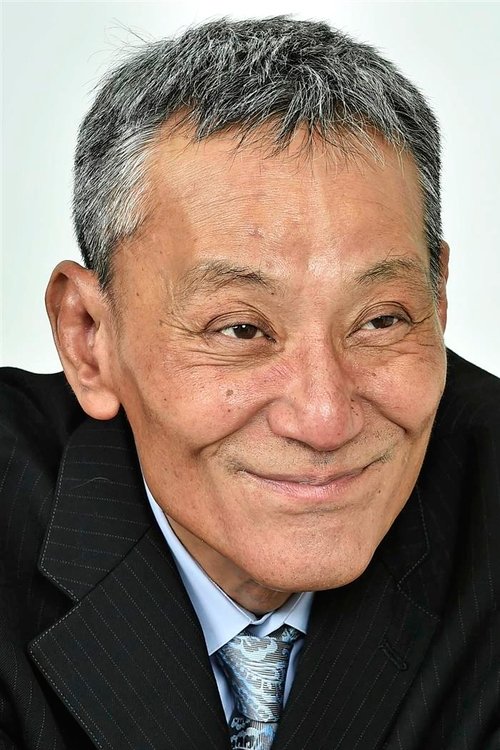
Daisuke Ryū
Religious Cult Leader
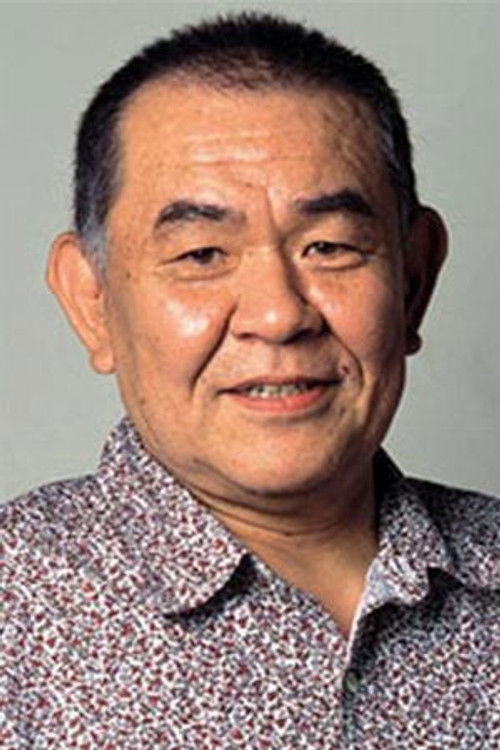
Tetsu Watanabe
Detective

Mirei Asaoka
Nakamura's Wife
Crew
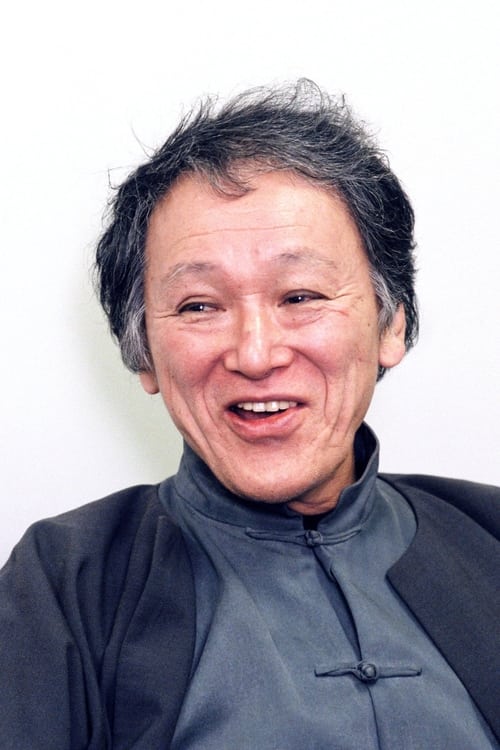
Jūzō Itami
Director
Jūzō Itami
Screenplay

Toshiyuki Honda
Original Music Composer
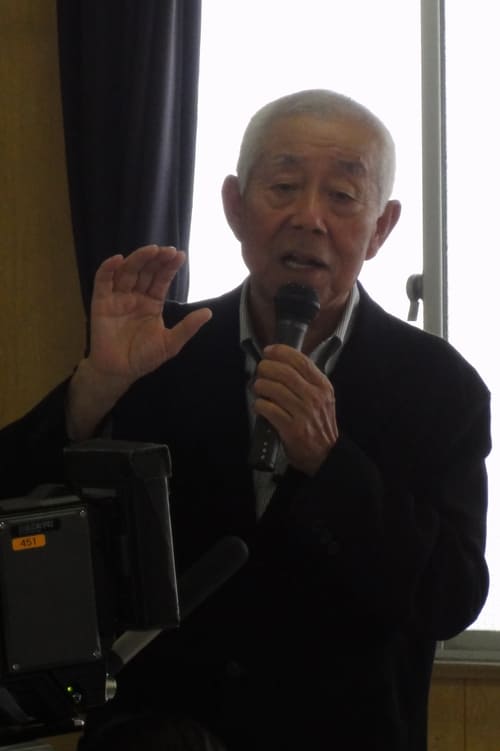
Yonezō Maeda
Director of Photography
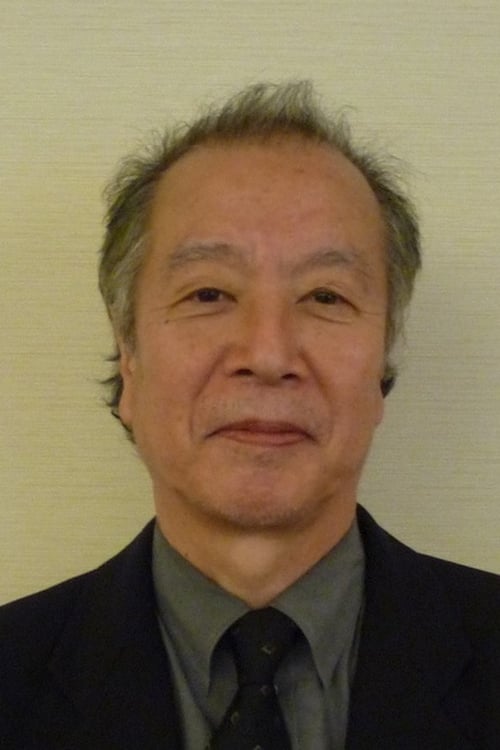
Osamu Onodera
Sound Recordist
Popular Reviews
8 reviews
Alex Teichman
9.0★ · 01/24/26

Was in an Itami mood today. There are probably plenty of individual films that I’m more fond of then those in his catalog, but I don’t think there’s another director who’s body of work I respect more as a whole. Always creative and energetic and so different from anything else I’ve ever seen. Such a pleasure to continue to come back to these again and again.
Was in an Itami mood today. There are probably plenty of individual films that I’m more fond of then those in his catalog, but I don’t think there’s another director who’s body of work I respect more as a whole. Always creative and energetic and so different from anything else I’ve ever seen. Such a pleasure to continue to come back to these again and again.


Joshua Timpko
8.0★ · 08/21/25
Watch my video essay about Juzo Itami
Itami’s final film, Woman in Witness Protection, is a “return to form” after his penultimate film, A Quiet Life. Where in the latter he forgoes his classic roving camera, zippy editing, upbeat score, and zany characters/performances, with WIWP, he brings it all back, though with a subtle somberness and patience that one could argue wasn’t really lacking in his early films. The comedy is here in small bursts (like the one hard-boiled, humorless officer needing to perform as an extra in a play—and screwing it up wildly), mostly taking a backseat to the criminal activity. This may be the most tense Itami film of his catalog and the one where the stakes actually feel higher than, say, a supermarket shutting down or a hotel losing business or a ramen shop owner losing her customers, or corrupt businessmen getting away with tax evasion. For once, the stakes feel truly life or death with Biwako (played, once again, brilliantly by Nobuko Miyamoto) coming to grips with the severity of the situation and the weight of her responsibility to testify in court.
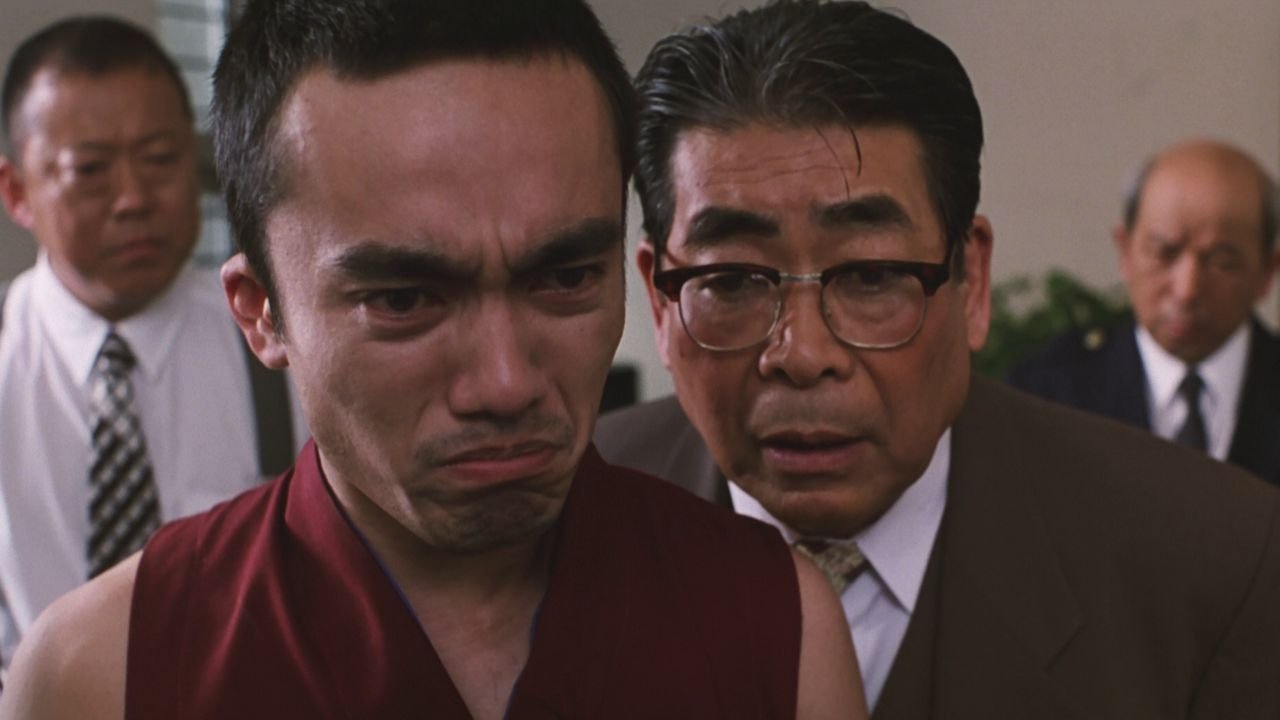
As all of Itami’s films in one way or another are celebrations of process and of pillars holding up a functioning society, here we have the pillar of the criminal justice system, AND the responsibility of our fellow man to step up when someone is wronged (or in this case, murdered). If there's one criticism I can see people lobbing at Itami’s work, it's gotta be his insistence on a rather black and white worldview—one where there are clear delineations between good and evil, right and wrong. We live in a world now in 2025 where distrust in institutions is something you’re practically born with—it’s innate within us, like when you toss a toddler into a swimming pool. In some ways, perhaps I gravitate to Itami’s universe because it’s one that strips away any moral grey. His police characters are virtuous Boy Scouts hell-bent on doing whatever is necessary to see that justice prevails. The villains in this film are a shadowy band of religious fanatics who are certain their higher purpose is to cleanse the planet (a whole plot that I felt was underdeveloped). Simultaneously, we have Miyamoto playing a diva aging actress, a role that has quite a satisfying arc (she opens the film yelling at her assistant, making her cry—by the end, she is told off by Tachibana and breaks into tears) that sees her reckoning with that societal responsibility.
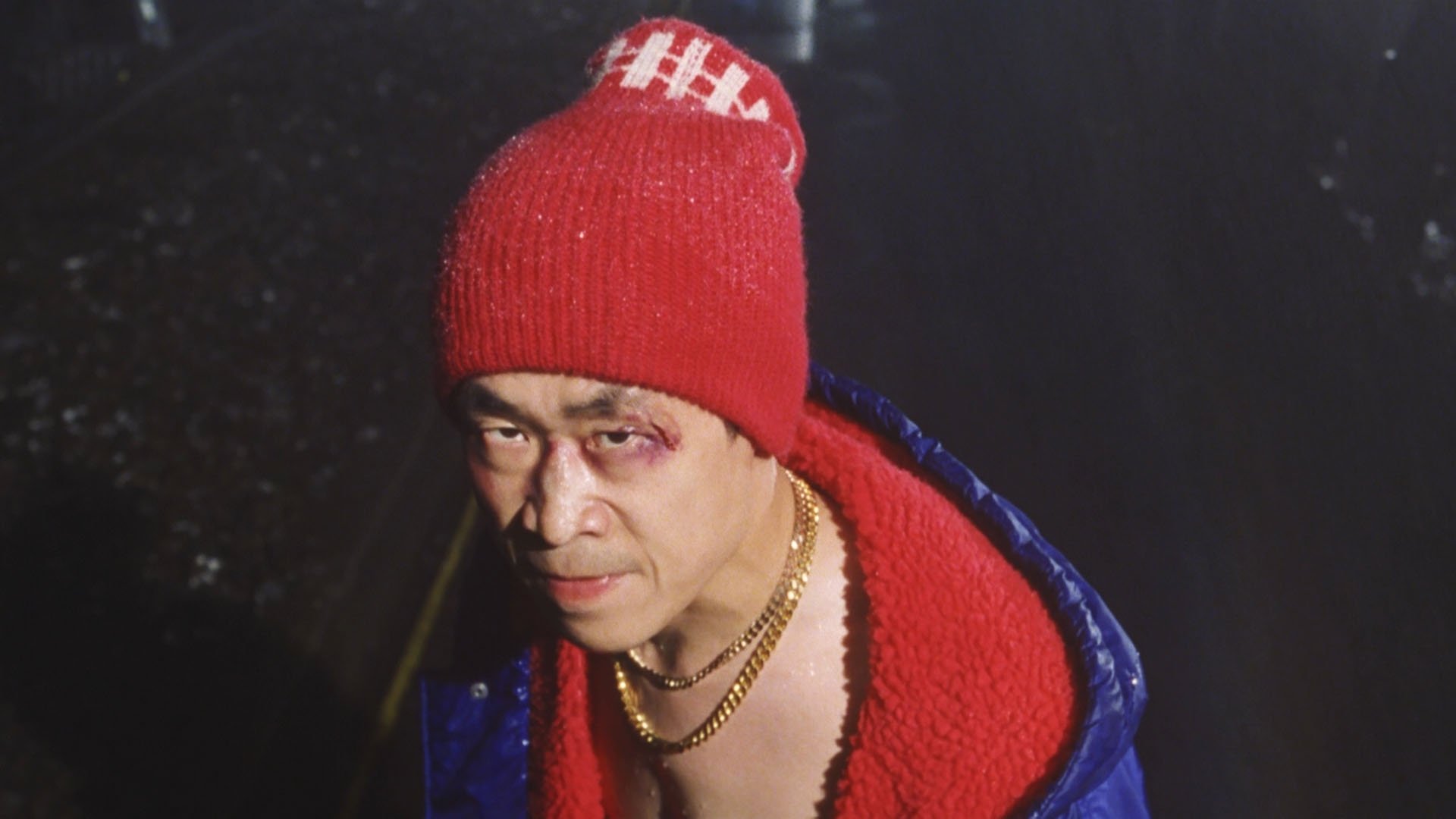
Along the way, there are fun detours, like the scene where the killer is apprehended at a karaoke bar. That scene in particular felt so refreshingly modern and tense. At any moment, I believed the killer would get away. It wasn’t a simple “slap the cuffs on him and haul him away” scene. The arresting officer (a one-off character) struggles, face smeared in his own blood, tackling the killer in the mud until their exhaustion takes over (though Itami does end the scene with a laugh as the officer simply flops down flat on top of the killer).
Weirdly enough, this film felt the most Coen Brothers-y to me. The accidental shooting in Burn After Reading could no doubt have been inspired by the opening shooting in this film. There was a zaniness to even the one-off supporting players that felt very refreshing—like the aforementioned arresting officer who is studying American literature and getting shit for it by his boss. Or even the killer himself with his facial ticks. The casual nihilistic violence. I wouldn't be surprised if there had been a mutual inspiration between the two.
All in all, this was another fun and tense film from a filmmaker taken from us too soon. I would have loved to know what kinds of work Itami would have made in his 70s as he waltzed into the 21st century with new tools for his toolbelt. His toying with CGI in The Last Dance and A Quiet Life was a valiant effort. I imagine he had so many other ideas that, unfortunately, we have been robbed of.
I have a lot of thoughts on Itami that I plan to compile into a video for my YouTube channel, but long story short, his filmography is chock-full of hidden gems, and I believe he fits the mold of “underrated” filmmaker—a filmmaker whose current status in the cultural conversation is lower than it should be. The term underrated gets tossed around a lot, but truly, how do you account for the drop-off in logs of his film on an app like Letterboxd?
If you made it this far, go check out the work of Juzo Itami and come join me in singing his praises.
7.7/10
Itami’s final film, Woman in Witness Protection, is a “return to form” after his penultimate film, A Quiet Life. Where in the latter he forgoes his classic roving camera, zippy editing, upbeat score, and zany characters/performances, with WIWP, he brings it all back, though with a subtle somberness and patience that one could argue wasn’t really lacking in his early films. The comedy is here in small bursts (like the one hard-boiled, humorless officer needing to perform as an extra in a play—and screwing it up wildly), mostly taking a backseat to the criminal activity. This may be the most tense Itami film of his catalog and the one where the stakes actually feel higher than, say, a supermarket shutting down or a hotel losing business or a ramen shop owner losing her customers, or corrupt businessmen getting away with tax evasion. For once, the stakes feel truly life or death with Biwako (played, once again, brilliantly by Nobuko Miyamoto) coming to grips with the severity of the situation and the weight of her responsibility to testify in court.
As all of Itami’s films in one way or another are celebrations of process and of pillars holding up a functioning society, here we have the pillar of the criminal justice system, AND the responsibility of our fellow man to step up when someone is wronged (or in this case, murdered). If there's one criticism I can see people lobbing at Itami’s work, it's gotta be his insistence on a rather black and white worldview—one where there are clear delineations between good and evil, right and wrong. We live in a world now in 2025 where distrust in institutions is something you’re practically born with—it’s innate within us, like when you toss a toddler into a swimming pool. In some ways, perhaps I gravitate to Itami’s universe because it’s one that strips away any moral grey. His police characters are virtuous Boy Scouts hell-bent on doing whatever is necessary to see that justice prevails. The villains in this film are a shadowy band of religious fanatics who are certain their higher purpose is to cleanse the planet (a whole plot that I felt was underdeveloped). Simultaneously, we have Miyamoto playing a diva aging actress, a role that has quite a satisfying arc (she opens the film yelling at her assistant, making her cry—by the end, she is told off by Tachibana and breaks into tears) that sees her reckoning with that societal responsibility.
Along the way, there are fun detours, like the scene where the killer is apprehended at a karaoke bar. That scene in particular felt so refreshingly modern and tense. At any moment, I believed the killer would get away. It wasn’t a simple “slap the cuffs on him and haul him away” scene. The arresting officer (a one-off character) struggles, face smeared in his own blood, tackling the killer in the mud until their exhaustion takes over (though Itami does end the scene with a laugh as the officer simply flops down flat on top of the killer).
Weirdly enough, this film felt the most Coen Brothers-y to me. The accidental shooting in Burn After Reading could no doubt have been inspired by the opening shooting in this film. There was a zaniness to even the one-off supporting players that felt very refreshing—like the aforementioned arresting officer who is studying American literature and getting shit for it by his boss. Or even the killer himself with his facial ticks. The casual nihilistic violence. I wouldn't be surprised if there had been a mutual inspiration between the two.
All in all, this was another fun and tense film from a filmmaker taken from us too soon. I would have loved to know what kinds of work Itami would have made in his 70s as he waltzed into the 21st century with new tools for his toolbelt. His toying with CGI in The Last Dance and A Quiet Life was a valiant effort. I imagine he had so many other ideas that, unfortunately, we have been robbed of.
I have a lot of thoughts on Itami that I plan to compile into a video for my YouTube channel, but long story short, his filmography is chock-full of hidden gems, and I believe he fits the mold of “underrated” filmmaker—a filmmaker whose current status in the cultural conversation is lower than it should be. The term underrated gets tossed around a lot, but truly, how do you account for the drop-off in logs of his film on an app like Letterboxd?
If you made it this far, go check out the work of Juzo Itami and come join me in singing his praises.
7.7/10
Watch my video essay about Juzo Itami
Itami’s final film, Woman in Witness Protection, is a “return to form” after his penultimate film, A Quiet Life. Where in the latter he forgoes his classic roving camera, zippy editing, upbeat score, and zany characters/performances, with WIWP, he brings it all back, though with a subtle somberness and patience that one could argue wasn’t really lacking in his early films. The comedy is here in small bursts (like the one hard-boiled, humorless officer needing to perform as an extra in a play—and screwing it up wildly), mostly taking a backseat to the criminal activity. This may be the most tense Itami film of his catalog and the one where the stakes actually feel higher than, say, a supermarket shutting down or a hotel losing business or a ramen shop owner losing her customers, or corrupt businessmen getting away with tax evasion. For once, the stakes feel truly life or death with Biwako (played, once again, brilliantly by Nobuko Miyamoto) coming to grips with the severity of the situation and the weight of her responsibility to testify in court.
As all of Itami’s films in one way or another are celebrations of process and of pillars holding up a functioning society, here we have the pillar of the criminal justice system, AND the responsibility of our fellow man to step up when someone is wronged (or in this case, murdered). If there's one criticism I can see people lobbing at Itami’s work, it's gotta be his insistence on a rather black and white worldview—one where there are clear delineations between good and evil, right and wrong. We live in a world now in 2025 where distrust in institutions is something you’re practically born with—it’s innate within us, like when you toss a toddler into a swimming pool. In some ways, perhaps I gravitate to Itami’s universe because it’s one that strips away any moral grey. His police characters are virtuous Boy Scouts hell-bent on doing whatever is necessary to see that justice prevails. The villains in this film are a shadowy band of religious fanatics who are certain their higher purpose is to cleanse the planet (a whole plot that I felt was underdeveloped). Simultaneously, we have Miyamoto playing a diva aging actress, a role that has quite a satisfying arc (she opens the film yelling at her assistant, making her cry—by the end, she is told off by Tachibana and breaks into tears) that sees her reckoning with that societal responsibility.
Along the way, there are fun detours, like the scene where the killer is apprehended at a karaoke bar. That scene in particular felt so refreshingly modern and tense. At any moment, I believed the killer would get away. It wasn’t a simple “slap the cuffs on him and haul him away” scene. The arresting officer (a one-off character) struggles, face smeared in his own blood, tackling the killer in the mud until their exhaustion takes over (though Itami does end the scene with a laugh as the officer simply flops down flat on top of the killer).
Weirdly enough, this film felt the most Coen Brothers-y to me. The accidental shooting in Burn After Reading could no doubt have been inspired by the opening shooting in this film. There was a zaniness to even the one-off supporting players that felt very refreshing—like the aforementioned arresting officer who is studying American literature and getting shit for it by his boss. Or even the killer himself with his facial ticks. The casual nihilistic violence. I wouldn't be surprised if there had been a mutual inspiration between the two.
All in all, this was another fun and tense film from a filmmaker taken from us too soon. I would have loved to know what kinds of work Itami would have made in his 70s as he waltzed into the 21st century with new tools for his toolbelt. His toying with CGI in The Last Dance and A Quiet Life was a valiant effort. I imagine he had so many other ideas that, unfortunately, we have been robbed of.
I have a lot of thoughts on Itami that I plan to compile into a video for my YouTube channel, but long story short, his filmography is chock-full of hidden gems, and I believe he fits the mold of “underrated” filmmaker—a filmmaker whose current status in the cultural conversation is lower than it should be. The term underrated gets tossed around a lot, but truly, how do you account for the drop-off in logs of his film on an app like Letterboxd?
If you made it this far, go check out the work of Juzo Itami and come join me in singing his praises.
7.7/10
Itami’s final film, Woman in Witness Protection, is a “return to form” after his penultimate film, A Quiet Life. Where in the latter he forgoes his classic roving camera, zippy editing, upbeat score, and zany characters/performances, with WIWP, he brings it all back, though with a subtle somberness and patience that one could argue wasn’t really lacking in his early films. The comedy is here in small bursts (like the one hard-boiled, humorless officer needing to perform as an extra in a play—and screwing it up wildly), mostly taking a backseat to the criminal activity. This may be the most tense Itami film of his catalog and the one where the stakes actually feel higher than, say, a supermarket shutting down or a hotel losing business or a ramen shop owner losing her customers, or corrupt businessmen getting away with tax evasion. For once, the stakes feel truly life or death with Biwako (played, once again, brilliantly by Nobuko Miyamoto) coming to grips with the severity of the situation and the weight of her responsibility to testify in court.
As all of Itami’s films in one way or another are celebrations of process and of pillars holding up a functioning society, here we have the pillar of the criminal justice system, AND the responsibility of our fellow man to step up when someone is wronged (or in this case, murdered). If there's one criticism I can see people lobbing at Itami’s work, it's gotta be his insistence on a rather black and white worldview—one where there are clear delineations between good and evil, right and wrong. We live in a world now in 2025 where distrust in institutions is something you’re practically born with—it’s innate within us, like when you toss a toddler into a swimming pool. In some ways, perhaps I gravitate to Itami’s universe because it’s one that strips away any moral grey. His police characters are virtuous Boy Scouts hell-bent on doing whatever is necessary to see that justice prevails. The villains in this film are a shadowy band of religious fanatics who are certain their higher purpose is to cleanse the planet (a whole plot that I felt was underdeveloped). Simultaneously, we have Miyamoto playing a diva aging actress, a role that has quite a satisfying arc (she opens the film yelling at her assistant, making her cry—by the end, she is told off by Tachibana and breaks into tears) that sees her reckoning with that societal responsibility.
Along the way, there are fun detours, like the scene where the killer is apprehended at a karaoke bar. That scene in particular felt so refreshingly modern and tense. At any moment, I believed the killer would get away. It wasn’t a simple “slap the cuffs on him and haul him away” scene. The arresting officer (a one-off character) struggles, face smeared in his own blood, tackling the killer in the mud until their exhaustion takes over (though Itami does end the scene with a laugh as the officer simply flops down flat on top of the killer).
Weirdly enough, this film felt the most Coen Brothers-y to me. The accidental shooting in Burn After Reading could no doubt have been inspired by the opening shooting in this film. There was a zaniness to even the one-off supporting players that felt very refreshing—like the aforementioned arresting officer who is studying American literature and getting shit for it by his boss. Or even the killer himself with his facial ticks. The casual nihilistic violence. I wouldn't be surprised if there had been a mutual inspiration between the two.
All in all, this was another fun and tense film from a filmmaker taken from us too soon. I would have loved to know what kinds of work Itami would have made in his 70s as he waltzed into the 21st century with new tools for his toolbelt. His toying with CGI in The Last Dance and A Quiet Life was a valiant effort. I imagine he had so many other ideas that, unfortunately, we have been robbed of.
I have a lot of thoughts on Itami that I plan to compile into a video for my YouTube channel, but long story short, his filmography is chock-full of hidden gems, and I believe he fits the mold of “underrated” filmmaker—a filmmaker whose current status in the cultural conversation is lower than it should be. The term underrated gets tossed around a lot, but truly, how do you account for the drop-off in logs of his film on an app like Letterboxd?
If you made it this far, go check out the work of Juzo Itami and come join me in singing his praises.
7.7/10
Alex Teichman
10.0★ · 03/19/25
Probably the only director I’ve ever come across that can pull off blowing someone’s head off with a gun and still managing to make the scene feel like… playful? Idk I can’t even think of a word for it
Probably the only director I’ve ever come across that can pull off blowing someone’s head off with a gun and still managing to make the scene feel like… playful? Idk I can’t even think of a word for it
Alex Teichman
10.0★ · 12/19/23
So god damn precise and meticulously crafted in a way that almost feels casual. This is my favorite work from Nobuko Miyamoto yet
So god damn precise and meticulously crafted in a way that almost feels casual. This is my favorite work from Nobuko Miyamoto yet
andwea
10.0★ · 03/19/26