
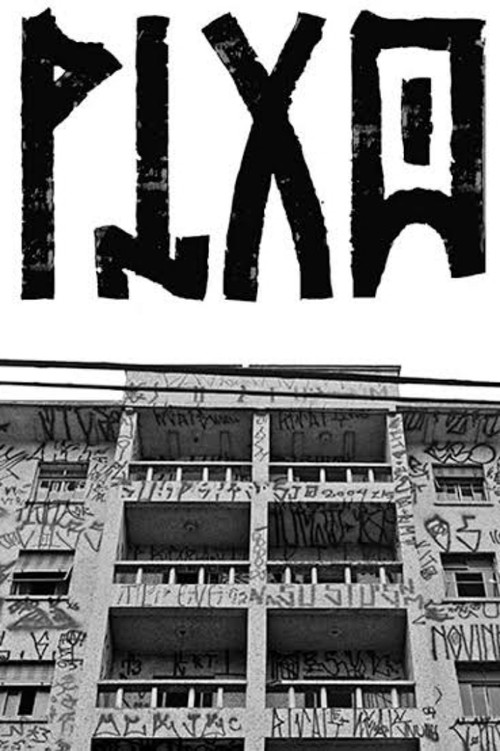
The film discusses the cultural impact of "pichação", a Brazilian form of graffiti, on the streets of São Paulo and its international influence as one of the main cornerstones of Street Art.
Directed by Roberto T. Oliveira and João Wainer
artist
graffiti
street art
art
urban area
são paulo

IMDB
N/A
Crew

João Wainer
Director
João Wainer
Director of Photography
Ice Blue
Music Director
Popular Reviews
19 reviews
julia
10.0★ · 10/24/25
pior que a tag do cão fila é muito boa
pior que a tag do cão fila é muito boa


Olivia
8.0★ · 05/26/25
"Ae tiozão a tinta é preta pq a realidade não é colorida..."
"Ae tiozão a tinta é preta pq a realidade não é colorida..."
Conor Larkin
9.0★ · 04/22/24
When that dude said doing Illegal activities healed his anxiety... I felt that.
When I was a prepubescent little shit (12 or 13), I looked up to my slightly older cousin. Maybe a bit too much. He introduced me to horror movies, Youtube prank channels and urban exploration - 'Urbex' - among other juvenile attempts to rebel. At that age he was the coolest person I knew, and although I never partook in it myself, he also became heavily obsessed with graf writing. He would go into abandoned apartments, decrepit houses, subterranean drains. any location where he could leave his tag. Just to prove he'd been there.
Pixo is drastically different to grafiti, of course. This documentary follows an entire subculture of artists who's work protests for their very existence. Brazil's Megalopolis, Sao Paulo, was at one point the industrial epicentre of all of south america due to it's natural resources. Now it's a monument of capitalist decay, with extreme disparity between the poor residents and rich politicians. Pixador risk their well-beings daily to defy these conditions, their art stands to prove that true expression is something that is lived, not merely gained by the approval of institutions and the upper-class.
The contrast to this is someone like banksy, who's graffiti is still commodified by the upper class. all of his attempts to rail against capitalism are futile when he plays into the sensibilities of what high art should be. Pixo has no interest in being visually appealing, having deeper meanings, being provocative or the likes. It is a practice that is used to be seen, a way for the ignored to demand attention, to force change. In the documentaries' final scene, it is extremely apparent that pixo isn't a form of creation but a form of destruction, with the hopes that something better will be built in its wake. The art world fails to see this.
I can hardly say my cousin had all this in mind when he spray painted SMA (Suck my ass) all over our shitty town in the tropics. But his need to feel seen was just as valid.
I sent him a text for the first time in a year, recommending this documentary to him. I hope he likes it.
Recommended Double Feature Pairing: La Haine (1995)
When I was a prepubescent little shit (12 or 13), I looked up to my slightly older cousin. Maybe a bit too much. He introduced me to horror movies, Youtube prank channels and urban exploration - 'Urbex' - among other juvenile attempts to rebel. At that age he was the coolest person I knew, and although I never partook in it myself, he also became heavily obsessed with graf writing. He would go into abandoned apartments, decrepit houses, subterranean drains. any location where he could leave his tag. Just to prove he'd been there.
Pixo is drastically different to grafiti, of course. This documentary follows an entire subculture of artists who's work protests for their very existence. Brazil's Megalopolis, Sao Paulo, was at one point the industrial epicentre of all of south america due to it's natural resources. Now it's a monument of capitalist decay, with extreme disparity between the poor residents and rich politicians. Pixador risk their well-beings daily to defy these conditions, their art stands to prove that true expression is something that is lived, not merely gained by the approval of institutions and the upper-class.
The contrast to this is someone like banksy, who's graffiti is still commodified by the upper class. all of his attempts to rail against capitalism are futile when he plays into the sensibilities of what high art should be. Pixo has no interest in being visually appealing, having deeper meanings, being provocative or the likes. It is a practice that is used to be seen, a way for the ignored to demand attention, to force change. In the documentaries' final scene, it is extremely apparent that pixo isn't a form of creation but a form of destruction, with the hopes that something better will be built in its wake. The art world fails to see this.
I can hardly say my cousin had all this in mind when he spray painted SMA (Suck my ass) all over our shitty town in the tropics. But his need to feel seen was just as valid.
I sent him a text for the first time in a year, recommending this documentary to him. I hope he likes it.
Recommended Double Feature Pairing: La Haine (1995)
When that dude said doing Illegal activities healed his anxiety... I felt that.
When I was a prepubescent little shit (12 or 13), I looked up to my slightly older cousin. Maybe a bit too much. He introduced me to horror movies, Youtube prank channels and urban exploration - 'Urbex' - among other juvenile attempts to rebel. At that age he was the coolest person I knew, and although I never partook in it myself, he also became heavily obsessed with graf writing. He would go into abandoned apartments, decrepit houses, subterranean drains. any location where he could leave his tag. Just to prove he'd been there.
Pixo is drastically different to grafiti, of course. This documentary follows an entire subculture of artists who's work protests for their very existence. Brazil's Megalopolis, Sao Paulo, was at one point the industrial epicentre of all of south america due to it's natural resources. Now it's a monument of capitalist decay, with extreme disparity between the poor residents and rich politicians. Pixador risk their well-beings daily to defy these conditions, their art stands to prove that true expression is something that is lived, not merely gained by the approval of institutions and the upper-class.
The contrast to this is someone like banksy, who's graffiti is still commodified by the upper class. all of his attempts to rail against capitalism are futile when he plays into the sensibilities of what high art should be. Pixo has no interest in being visually appealing, having deeper meanings, being provocative or the likes. It is a practice that is used to be seen, a way for the ignored to demand attention, to force change. In the documentaries' final scene, it is extremely apparent that pixo isn't a form of creation but a form of destruction, with the hopes that something better will be built in its wake. The art world fails to see this.
I can hardly say my cousin had all this in mind when he spray painted SMA (Suck my ass) all over our shitty town in the tropics. But his need to feel seen was just as valid.
I sent him a text for the first time in a year, recommending this documentary to him. I hope he likes it.
Recommended Double Feature Pairing: La Haine (1995)
When I was a prepubescent little shit (12 or 13), I looked up to my slightly older cousin. Maybe a bit too much. He introduced me to horror movies, Youtube prank channels and urban exploration - 'Urbex' - among other juvenile attempts to rebel. At that age he was the coolest person I knew, and although I never partook in it myself, he also became heavily obsessed with graf writing. He would go into abandoned apartments, decrepit houses, subterranean drains. any location where he could leave his tag. Just to prove he'd been there.
Pixo is drastically different to grafiti, of course. This documentary follows an entire subculture of artists who's work protests for their very existence. Brazil's Megalopolis, Sao Paulo, was at one point the industrial epicentre of all of south america due to it's natural resources. Now it's a monument of capitalist decay, with extreme disparity between the poor residents and rich politicians. Pixador risk their well-beings daily to defy these conditions, their art stands to prove that true expression is something that is lived, not merely gained by the approval of institutions and the upper-class.
The contrast to this is someone like banksy, who's graffiti is still commodified by the upper class. all of his attempts to rail against capitalism are futile when he plays into the sensibilities of what high art should be. Pixo has no interest in being visually appealing, having deeper meanings, being provocative or the likes. It is a practice that is used to be seen, a way for the ignored to demand attention, to force change. In the documentaries' final scene, it is extremely apparent that pixo isn't a form of creation but a form of destruction, with the hopes that something better will be built in its wake. The art world fails to see this.
I can hardly say my cousin had all this in mind when he spray painted SMA (Suck my ass) all over our shitty town in the tropics. But his need to feel seen was just as valid.
I sent him a text for the first time in a year, recommending this documentary to him. I hope he likes it.
Recommended Double Feature Pairing: La Haine (1995)
Sky
4.0★ · 04/14/24
Insightful, strong documentary on a topic so niche and easily overlooked. Insightful because it’s style is so bold yet so unfamiliar, it’s amateurish production may appeal to some, yet for me made it incredibly difficult to connect with and fully appreciate.
Insightful, strong documentary on a topic so niche and easily overlooked. Insightful because it’s style is so bold yet so unfamiliar, it’s amateurish production may appeal to some, yet for me made it incredibly difficult to connect with and fully appreciate.
nika
9.0★ · 01/09/24
вайб имеется
вайб имеется