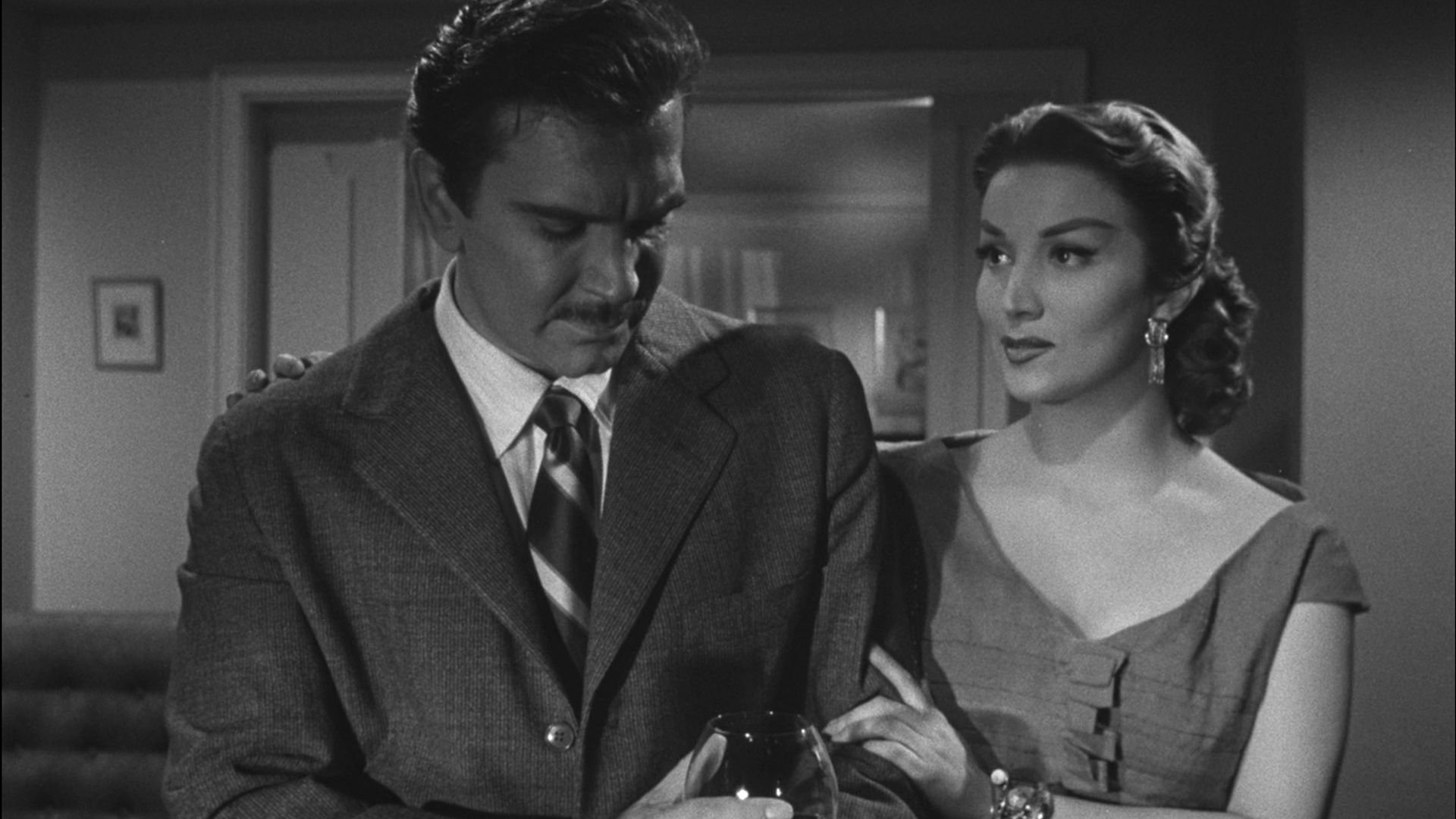
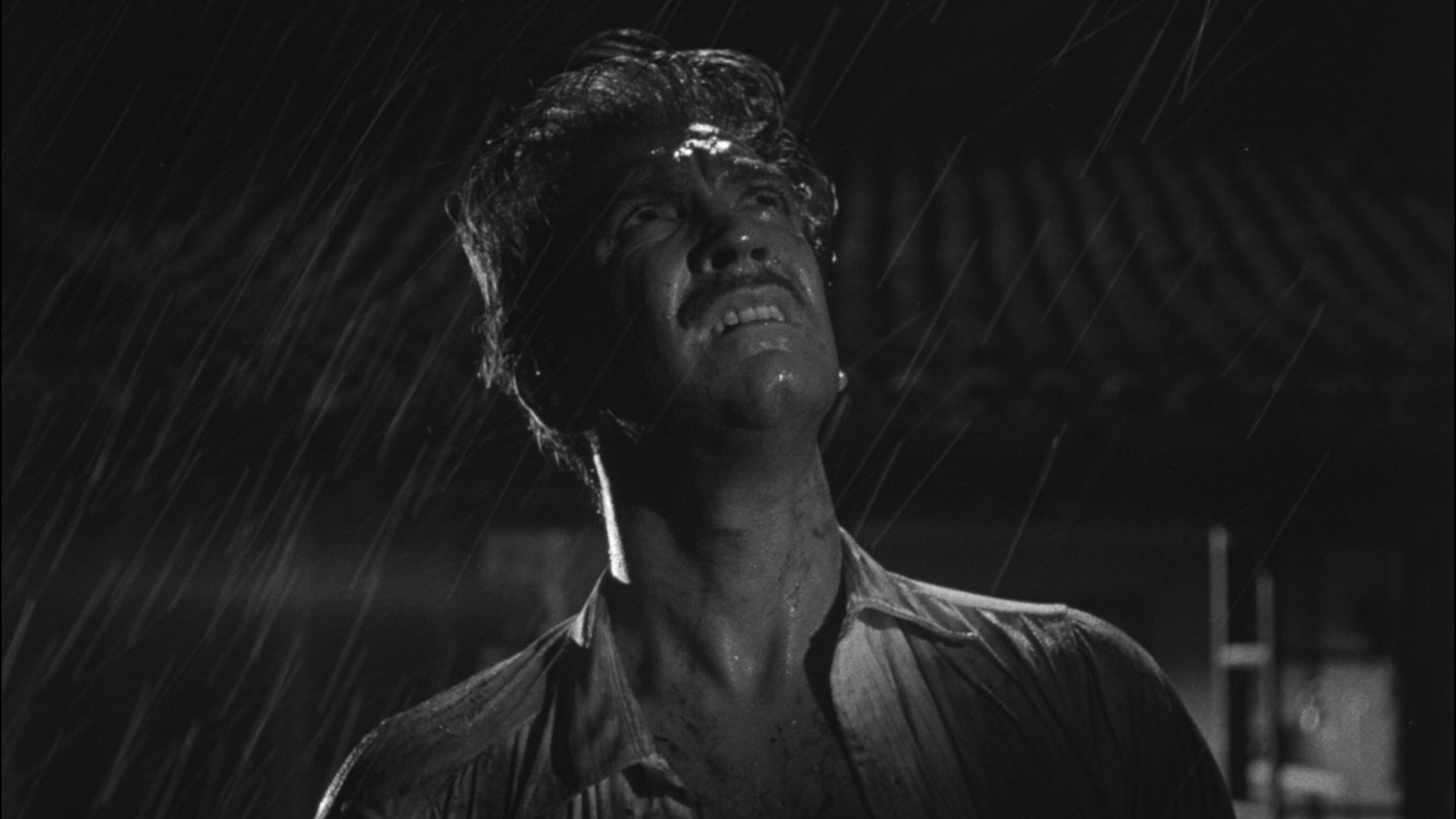
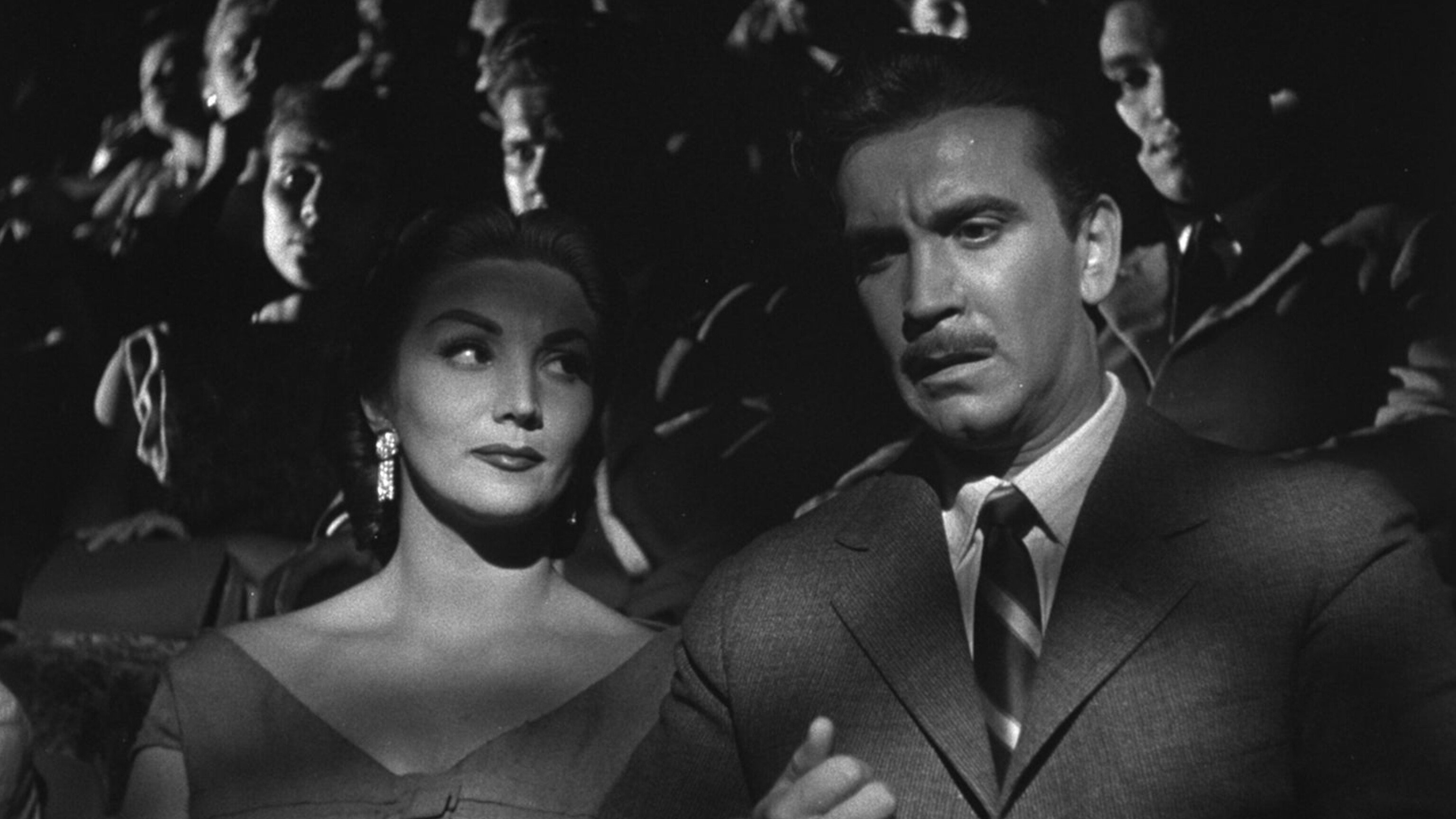
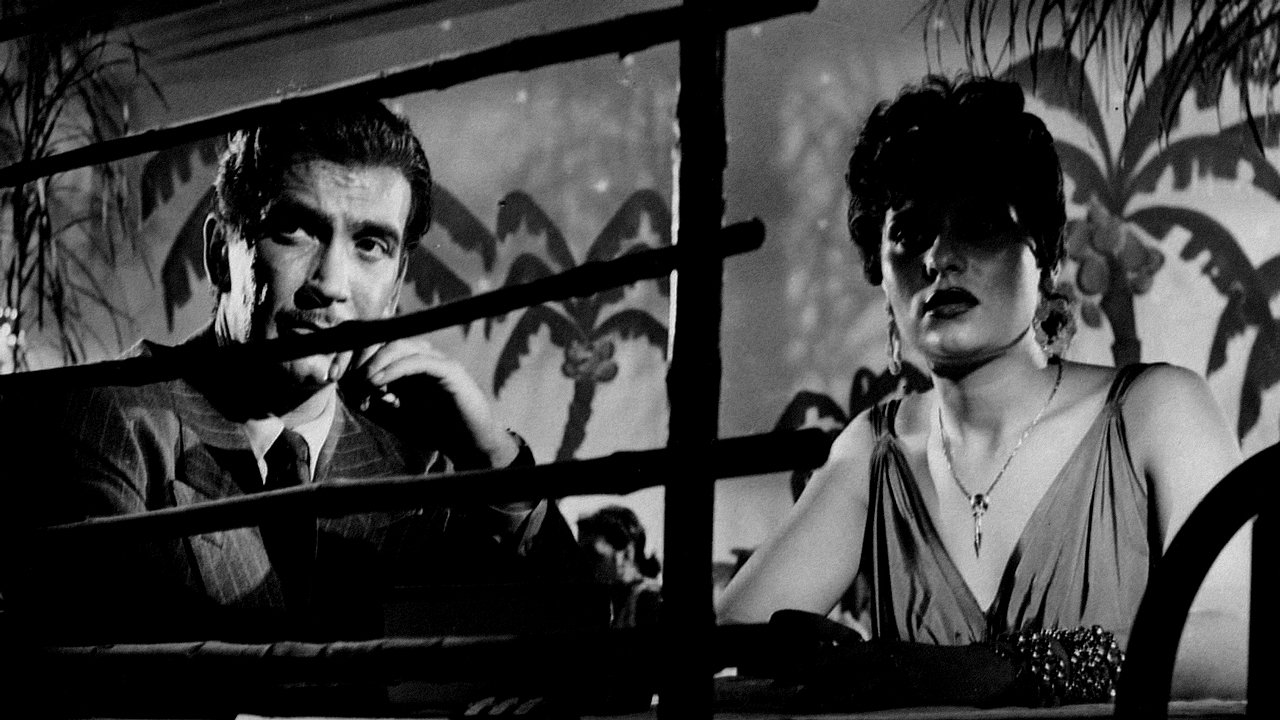
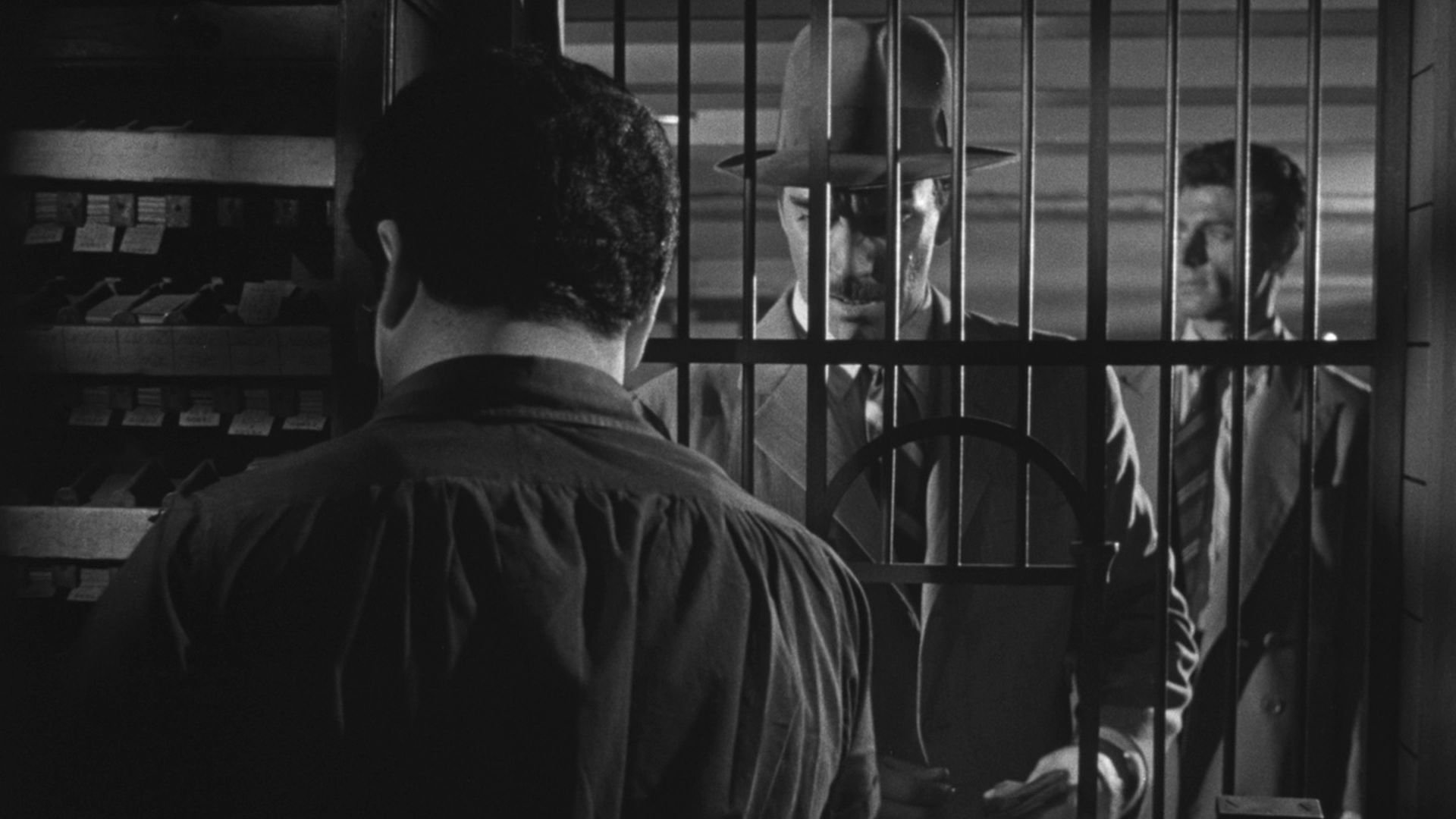
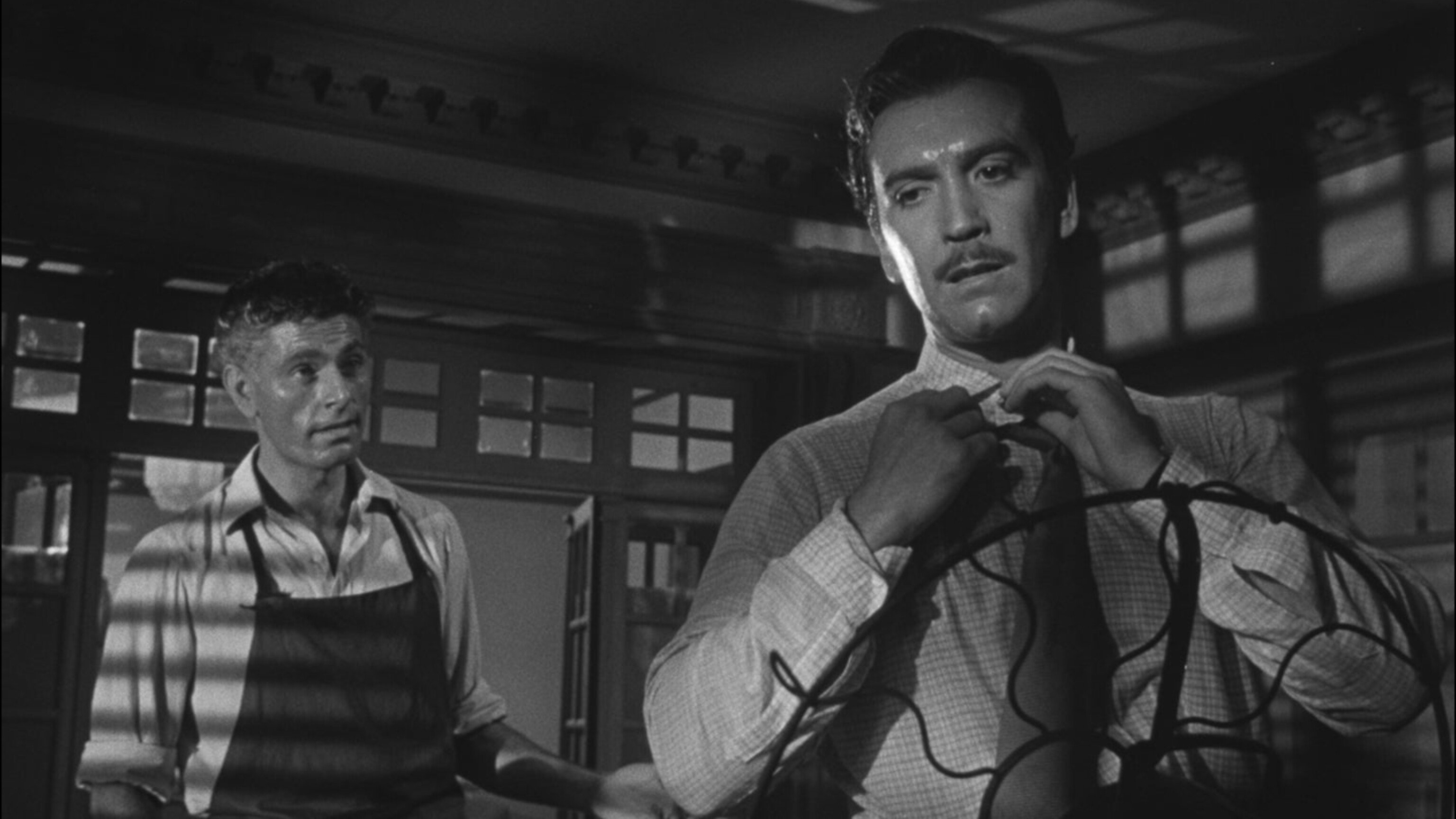
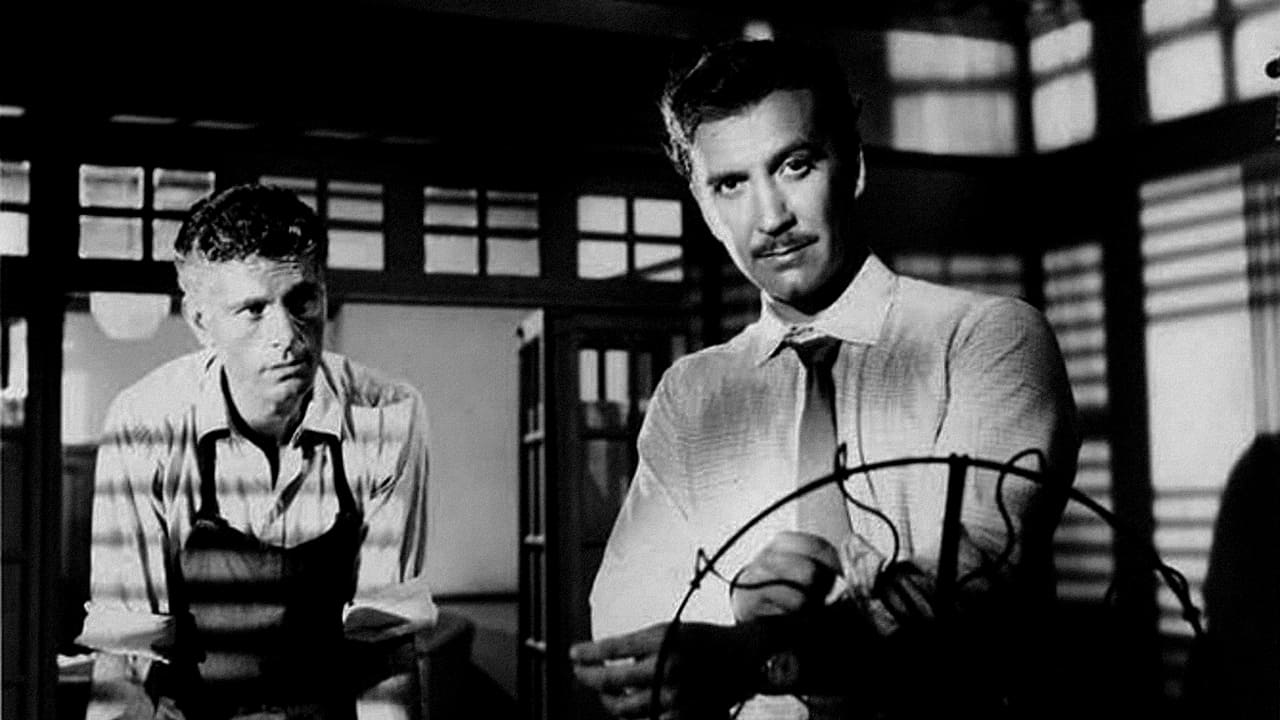
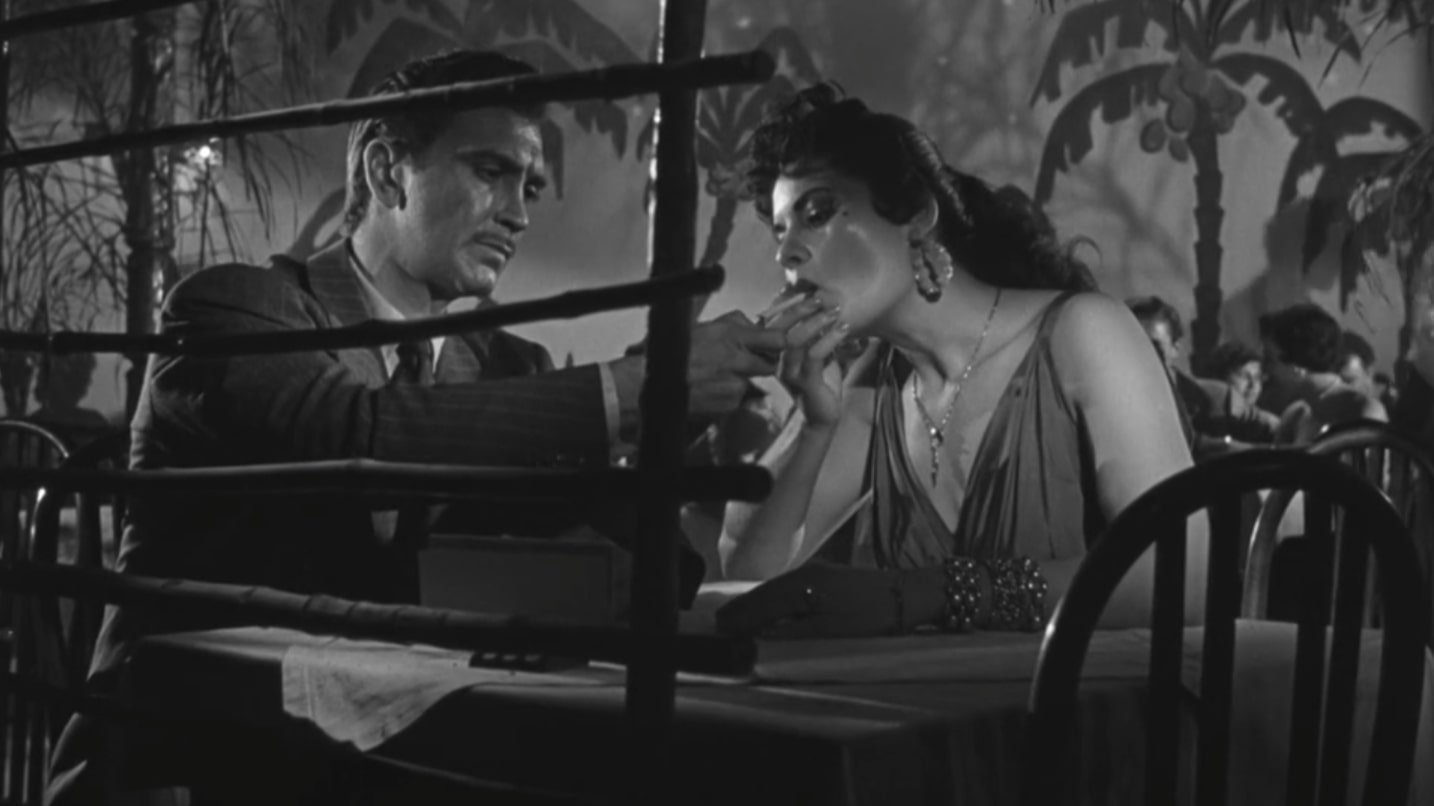
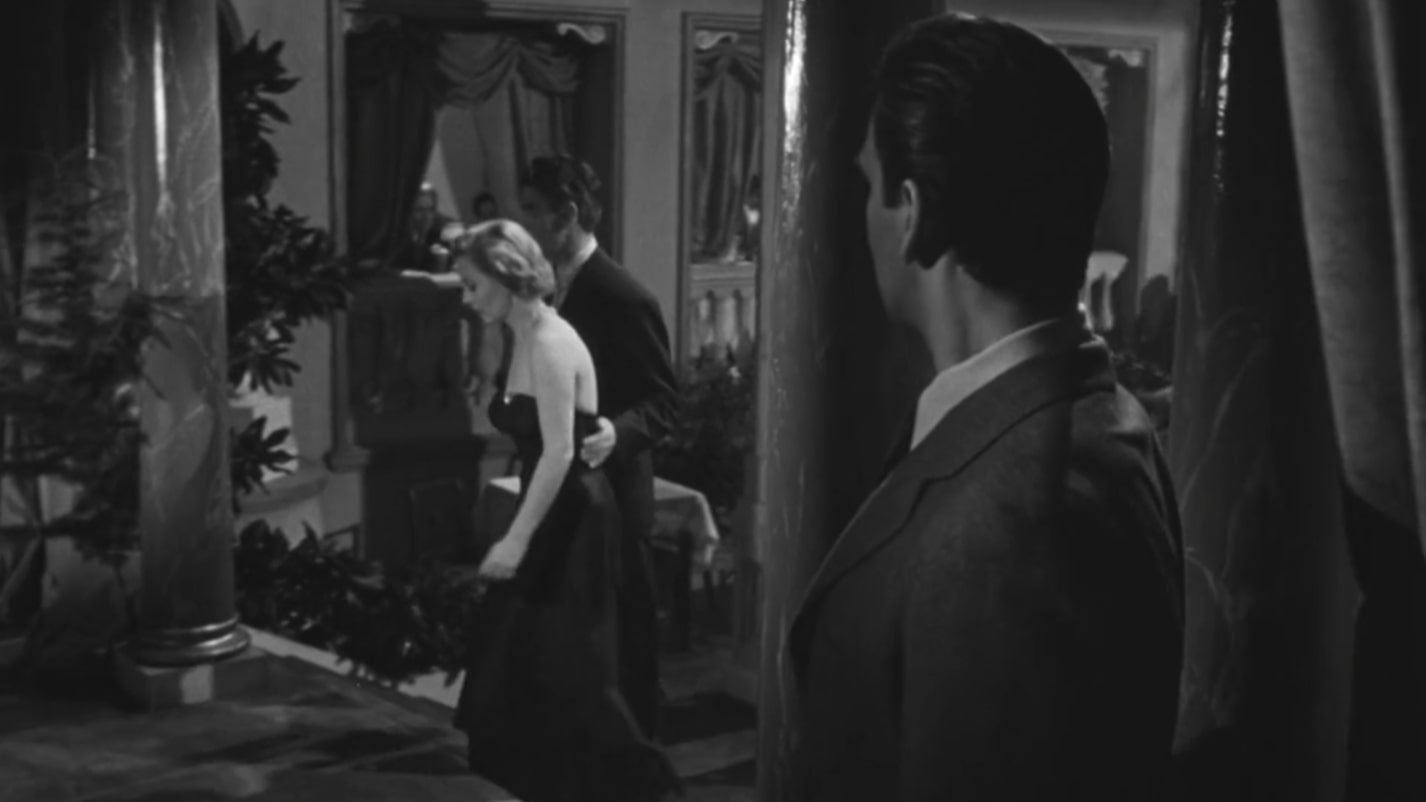
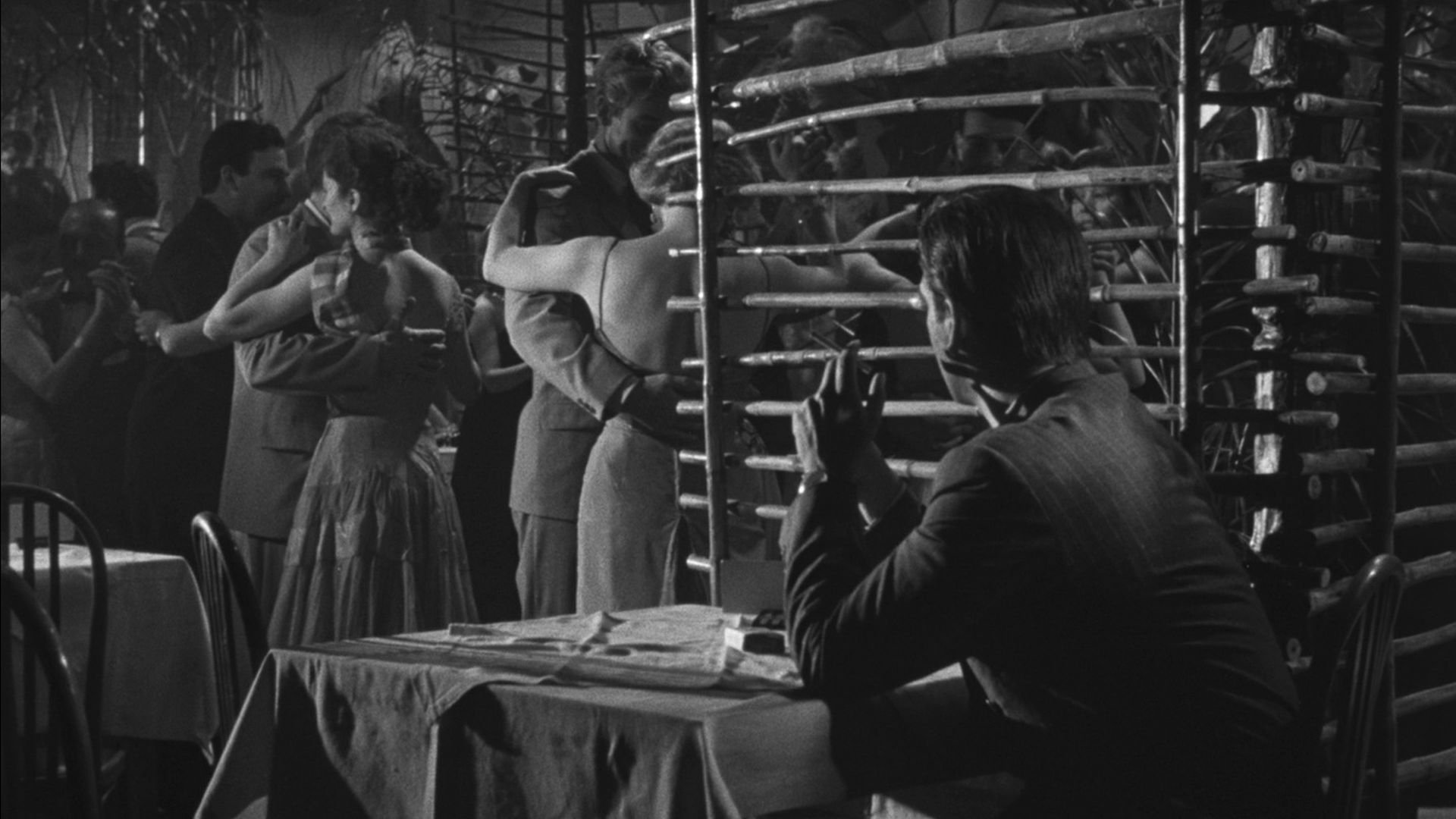
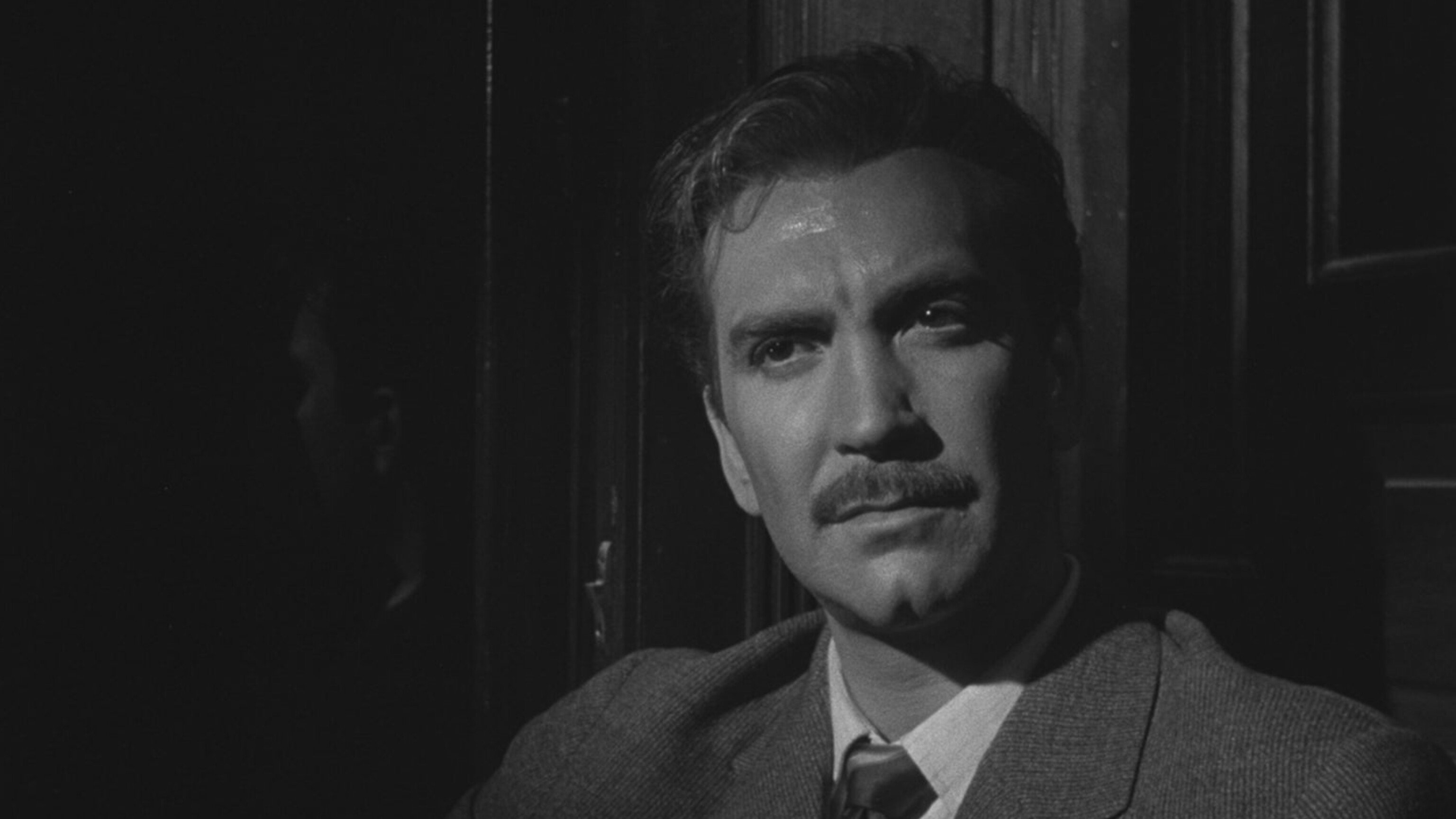
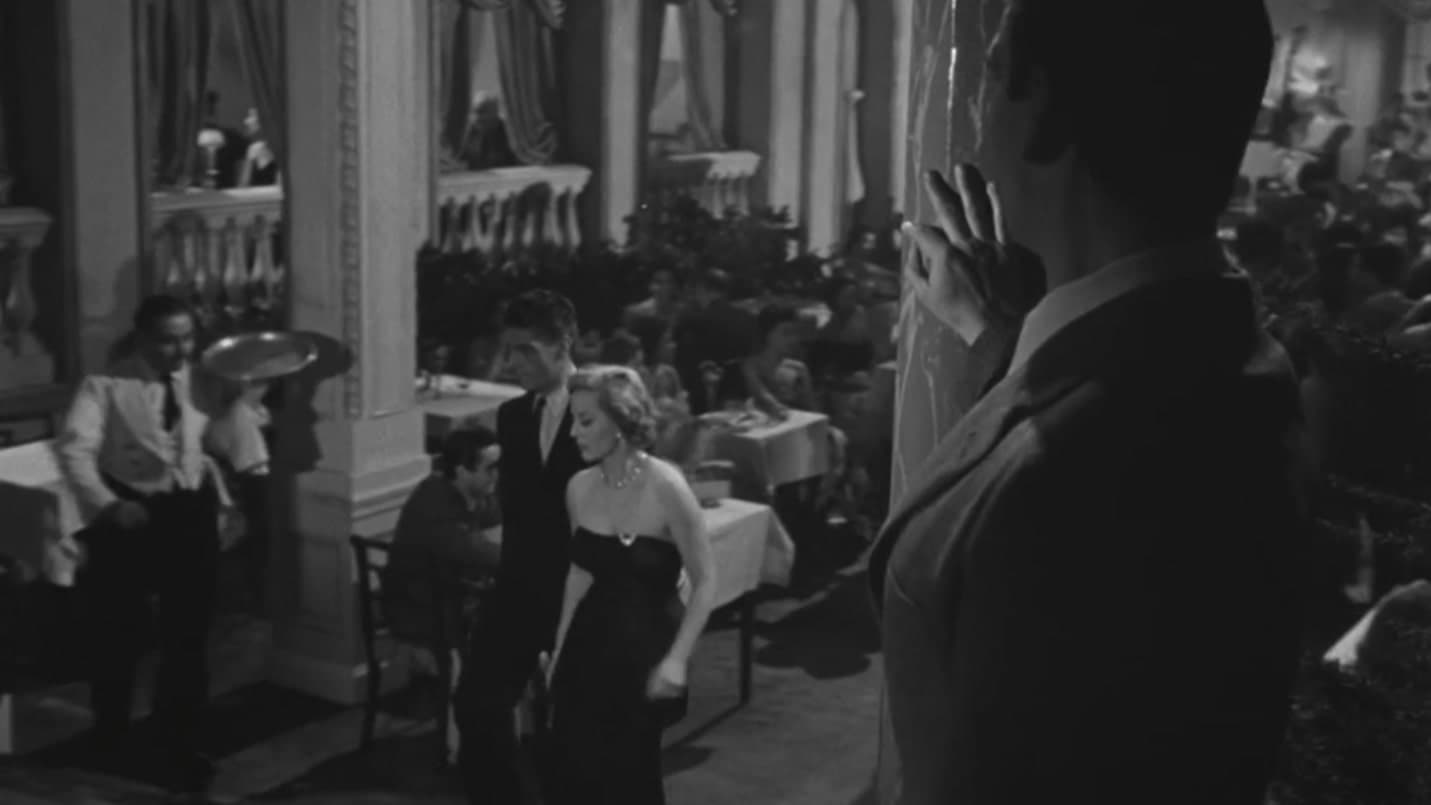
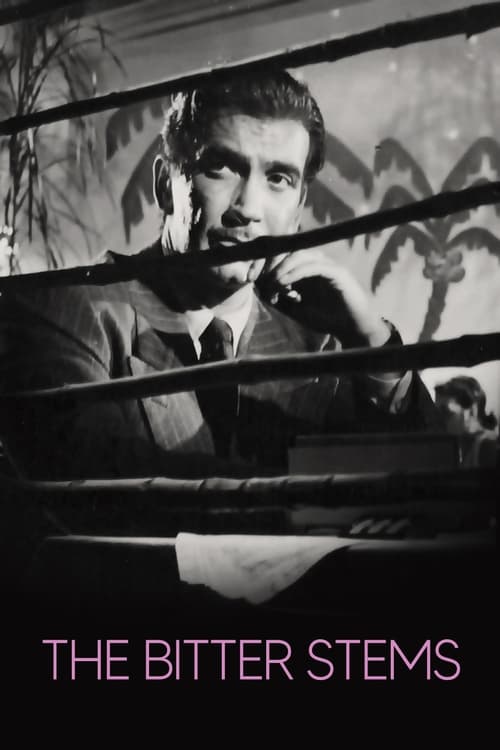
The Bitter Stems (Los Tallos Amargos, 1956) emerges not only as a forgotten noir gem but as a deeply introspective psychological portrait of societal disillusionment. While its plot follows a morally compromised journalist entangled in fraud and murder, the film’s haunting dream sequence reveals far more than narrative suspense — it uncovers the emotional and ideological ruins of a man shaped by legacy and self-deceit. As smoke dissolves into war-torn memories, this sequence collapses time, fusing childhood trauma, financial desperation, and existential guilt into a surreal internal reckoning. More than a stylish detour, the dream functions as the aesthetic and thematic fulcrum of the film — a miniature vision of national anxiety and personal collapse. Through expressionist visuals and fluid transitions, The Bitter Stems critiques Argentina’s postwar identity crisis, mapping the inner turmoil of a failed intellectual against the backdrop of a society wrestling with authoritarian echoes. As such, the film is not only a noir masterwork, but also a culturally significant and historically resonant text — one that uses the language of cinema to interrogate repression, failure, and the ghosts of unexamined legacies.
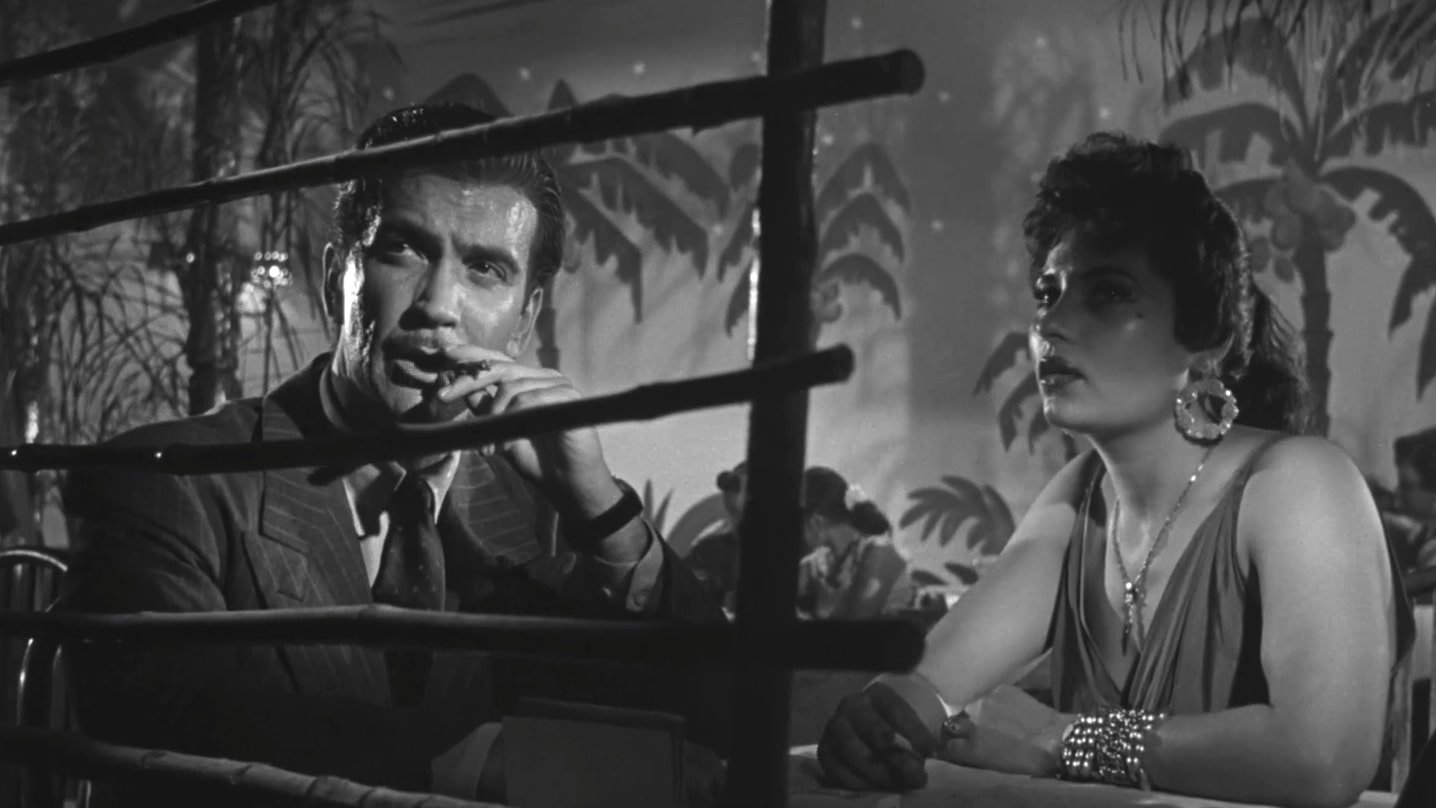
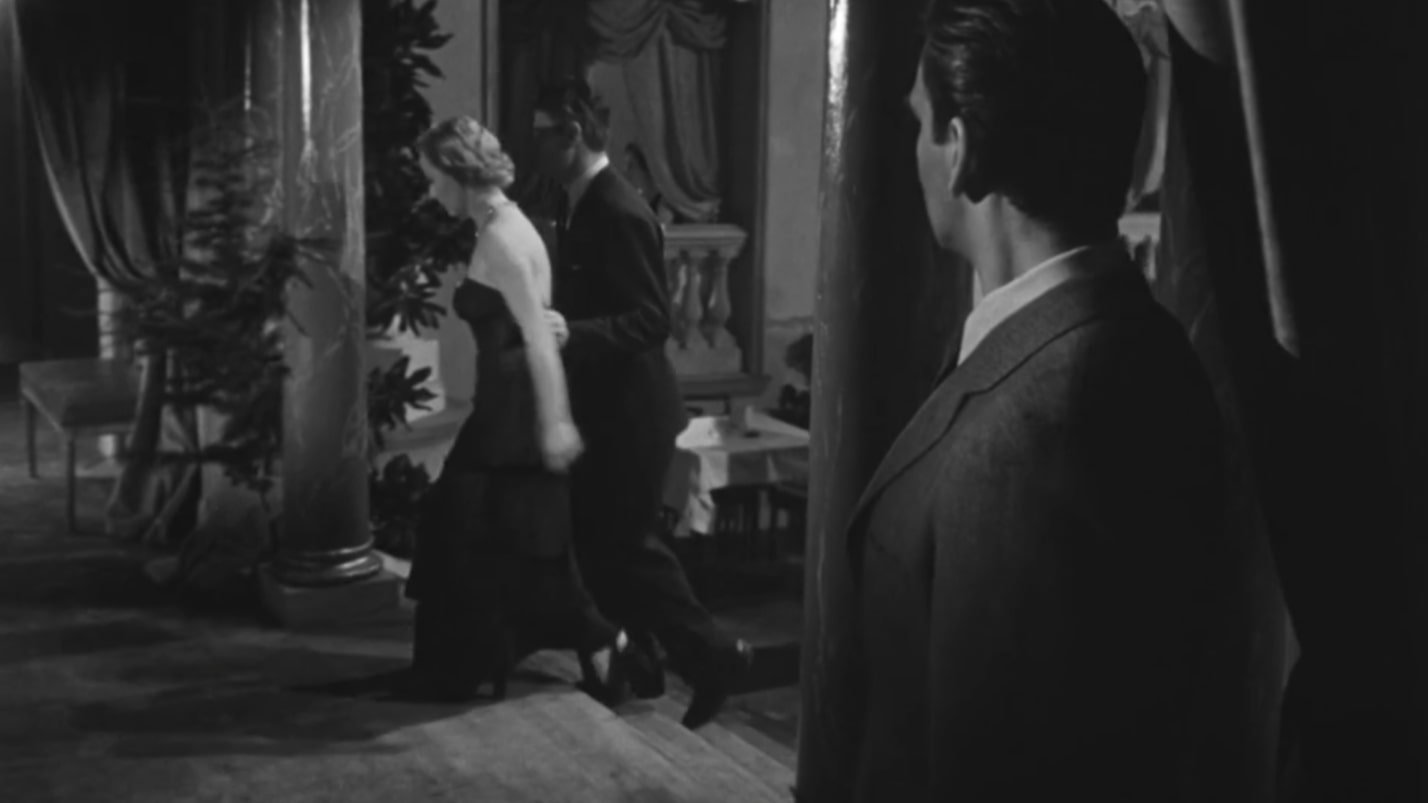
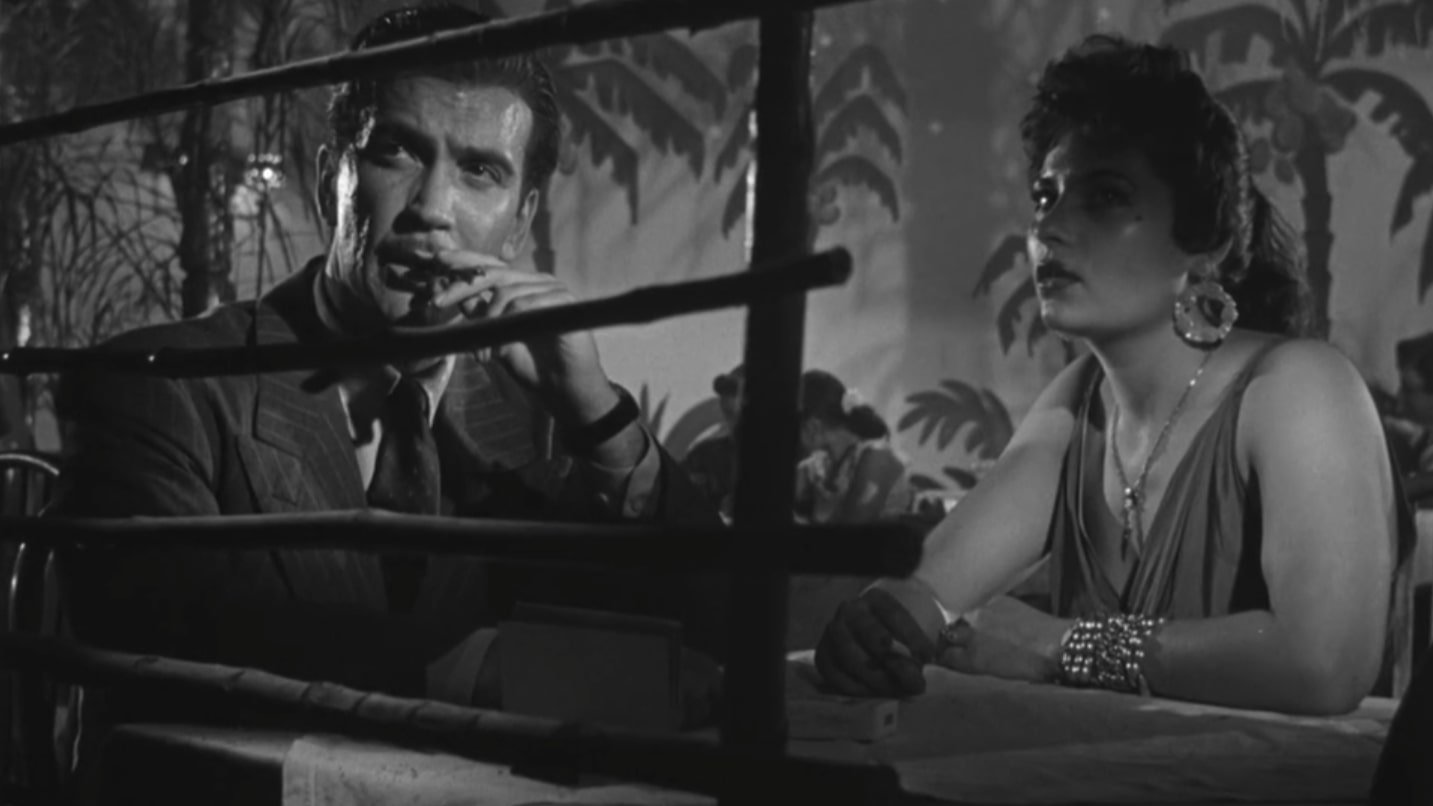
Shortly after visiting his mother and ending an affair, Alfredo falls asleep — and the film slips into one of the most evocative dream sequences in classic noir. It begins with dissolving wooden blinds and smoke, signaling a descent into the subconscious. Alfredo sees a veiled woman emerging from a surreal diner. The woman disappears behind a sliding door, and Alfredo finds himself face-to-face with a battlefield silhouette. Alfredo becomes a child again, holding hands with a uniformed man among rows of helmets and wooden crosses. This morphs into a chilling tableau of military inheritance and maternal control. Alfredo is dwarfed by abstract trees and mourning women as he picks up the Iron Cross — a symbol of both pride and burden. Time accelerates as Alfredo returns to adulthood, where a typewriter replaces the coffin, and his mother opens a window onto scenes of revolution. Awakening in tears, Alfredo is comforted by his mother, but the meaning lingers: he cannot bury the past, nor fully separate himself from it.
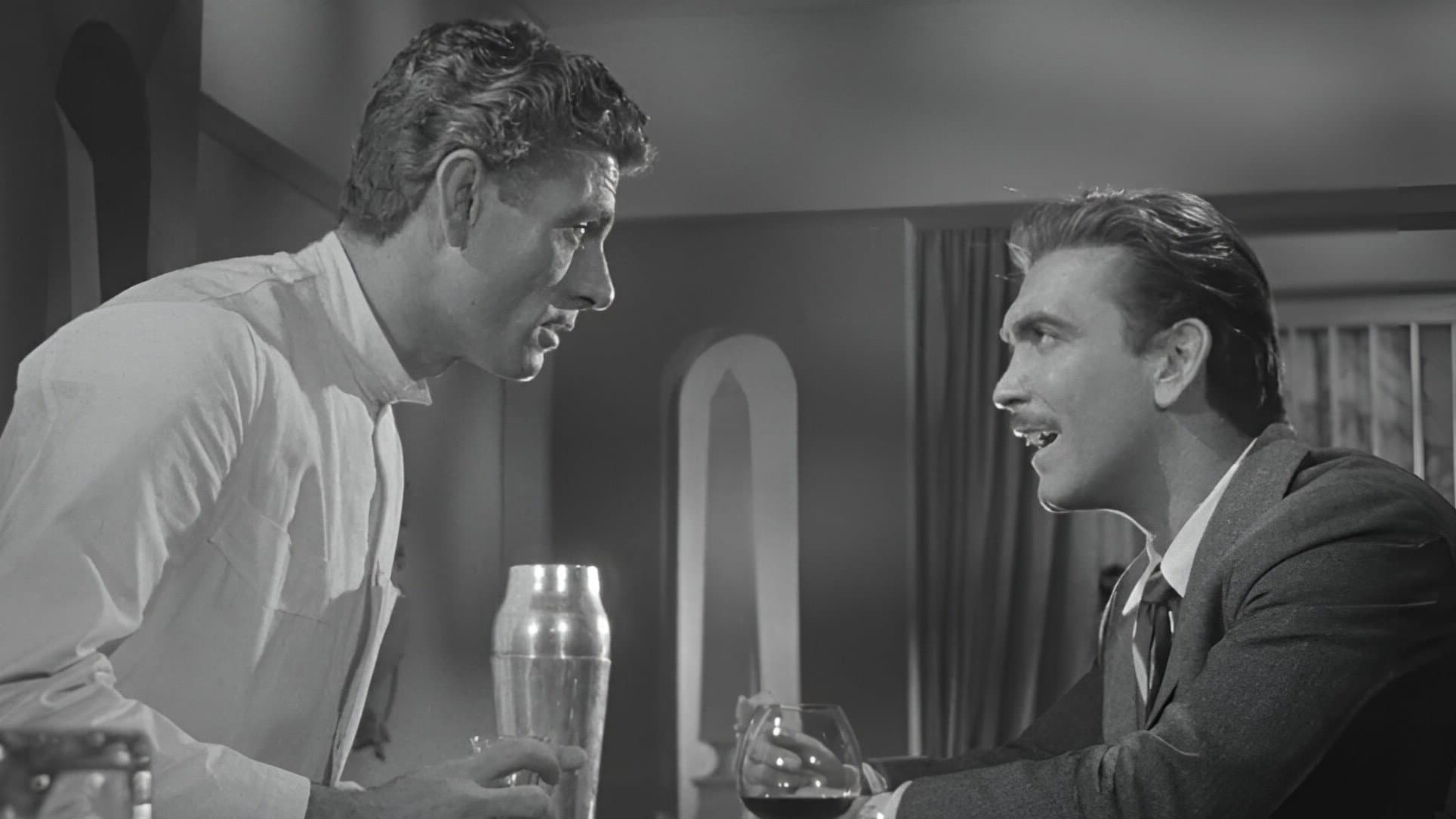
The dream sequence in The Bitter Stems serves as a mirror to Argentina’s fractured sense of identity in the mid-20th century, particularly as it wrestled with the legacies of authoritarianism and postwar disillusionment. Alfredo’s dream is not just a descent into personal guilt — it is a cinematic reflection of Argentina's struggle to reconcile the Old World values imported from Europe with the emerging contradictions of a modern Latin American state. The veiled woman in the dream, cloaked in exoticism and anonymity, symbolizes a displaced sense of desire and identity, one that cannot be fully grasped. The bar filled with Argentine currency, the martini shaker overflowing with coins, and the graffiti walls of dollar signs are emblems of corruption and economic anxiety. They point to the growing influence of capitalism and foreign debt on a country still caught between nationalist aspirations and foreign dependence.
The figure of the uniformed man, Alfredo's father, anchors the dream in cultural memory. His uniform recalls Argentina’s fascination with military power and its uneasy inheritance from European militarism, especially the Prussian aesthetic and authoritarian masculinity. The Iron Cross, prominently featured and later claimed by the child Alfredo, is not only a symbol of paternal legacy but also of inherited ideology. The child’s transition from awe to alienation as he moves from the battlefield to the funeral suggests a nation haunted by the very ideals it once celebrated. His mother’s presence, alternately nurturing and stifling, represents the traditional family structure — emotionally closed off, complicit in maintaining patriarchal values, and resistant to individual deviation. Director Fernando Ayala crafts a critique of cultural conditioning in Argentina. It is not merely a dream of one man, but a symbolic map of a society unsure of what it is becoming — torn between inherited myths and the disorienting reality it continues to produce.
The Bitter Stems was released in 1956, just one year after the fall of Juan Perón’s authoritarian regime, during a moment when Argentina was gripped by political uncertainty. The dream sequence operates as a psychological excavation of postwar Argentine consciousness, reflecting a country attempting to process both its internal trauma and its complex entanglements with European history. The imagery of Iron Crosses and a militarized father speaks directly to Argentina’s ambiguous cultural flirtation with European authoritarianism, especially during and after World War II — when Nazi fugitives were known to have found safe haven in South America. These symbols evoke not only global history but Argentina’s struggle with its own past: an attempt to modernize under autocratic rule while remaining tethered to imported ideologies.
Furthermore, the contrast between the book of fairy-tale knights and the cold arithmetic his mother insists upon reflects the ideological shift Argentina experienced from romantic nationalism toward bureaucratic rationalism. The country, like Alfredo, is being instructed to abandon myth in favor of order and submission — to silence passion in favor of duty. The presence of protests in the dream’s final moments speaks to the volatile democratic stirrings of the 1950s, a decade punctuated by coups, censorship, and civil unrest. As Alfredo witnesses these demonstrations through a newly opened window, the moment registers less as hope than as a burden: the knowledge that change is erupting outside while he remains internally paralyzed. His collapse into tears signals a country overwhelmed by its inability to reconcile personal guilt with collective responsibility. By embedding these themes in a surreal, symbolic dream, The Bitter Stems transcends conventional noir and becomes a time capsule of historical anxiety. It captures a nation not only recovering from fascism’s seductive pull but also navigating the existential uncertainty of a democracy that feels more performative than empowering.
The film’s mastery lies in its ability to use abstraction without becoming pretentious. The formal elegance of the dream sequence—fluid tracking shots, extreme close-ups, and chiaroscuro lighting—becomes an extension of Alfredo’s psyche. The transitions between childhood memory, personal guilt, and national allegory are seamless. The use of oversized props (the giant storybook), toy cavalry figures, and shadowplay evokes both surrealism and fairy tale, reinforcing the idea that Alfredo’s understanding of the world has always been mediated by fantasy, fear, and repression. Even viewers unfamiliar with Argentina’s political backdrop can feel the emotional disorientation through the film’s hypnotic imagery. The dream’s progression from family trauma to public unrest mirrors the aesthetic structure of the film as a whole: compressed, haunted, and intimate, yet constantly hinting at something larger than the protagonist. Through this, the film achieves a form of beauty that is not decorative, but revelatory—a style in service of memory, history, and self-deception.
The Bitter Stems is far more than a forgotten noir; it is a deeply introspective examination of identity, failure, and the burdens of personal and national history. Through its richly symbolic dream sequence, it reveals a fractured psyche haunted by inherited trauma, social expectation, and unfulfilled idealism. Culturally, the film captures the disillusionment of post-Perón Argentina, where upward mobility is both desired and distrusted. Historically, it reflects a generation wrestling with fascist legacies and a volatile political future. Aesthetically, its bold use of expressionist techniques transforms internal anguish into visual poetry, making psychological torment palpably cinematic. In Alfredo, we see not just a man crushed by guilt, but a mirror of a nation unsure of its moral footing—trapped between modern aspirations and the bitter roots of the past. That the film dares to visualize such anxieties through surrealism and noir stylization makes it a landmark of Argentinian cinema. It invites the viewer to confront how personal failure is often entangled with collective myth, and how dreams can sometimes tell the most harrowing truths.
The Bitter Stems (Los Tallos Amargos, 1956) emerges not only as a forgotten noir gem but as a deeply introspective psychological portrait of societal disillusionment. While its plot follows a morally compromised journalist entangled in fraud and murder, the film’s haunting dream sequence reveals far more than narrative suspense — it uncovers the emotional and ideological ruins of a man shaped by legacy and self-deceit. As smoke dissolves into war-torn memories, this sequence collapses time, fusing childhood trauma, financial desperation, and existential guilt into a surreal internal reckoning. More than a stylish detour, the dream functions as the aesthetic and thematic fulcrum of the film — a miniature vision of national anxiety and personal collapse. Through expressionist visuals and fluid transitions, The Bitter Stems critiques Argentina’s postwar identity crisis, mapping the inner turmoil of a failed intellectual against the backdrop of a society wrestling with authoritarian echoes. As such, the film is not only a noir masterwork, but also a culturally significant and historically resonant text — one that uses the language of cinema to interrogate repression, failure, and the ghosts of unexamined legacies.
Shortly after visiting his mother and ending an affair, Alfredo falls asleep — and the film slips into one of the most evocative dream sequences in classic noir. It begins with dissolving wooden blinds and smoke, signaling a descent into the subconscious. Alfredo sees a veiled woman emerging from a surreal diner. The woman disappears behind a sliding door, and Alfredo finds himself face-to-face with a battlefield silhouette. Alfredo becomes a child again, holding hands with a uniformed man among rows of helmets and wooden crosses. This morphs into a chilling tableau of military inheritance and maternal control. Alfredo is dwarfed by abstract trees and mourning women as he picks up the Iron Cross — a symbol of both pride and burden. Time accelerates as Alfredo returns to adulthood, where a typewriter replaces the coffin, and his mother opens a window onto scenes of revolution. Awakening in tears, Alfredo is comforted by his mother, but the meaning lingers: he cannot bury the past, nor fully separate himself from it.
The dream sequence in The Bitter Stems serves as a mirror to Argentina’s fractured sense of identity in the mid-20th century, particularly as it wrestled with the legacies of authoritarianism and postwar disillusionment. Alfredo’s dream is not just a descent into personal guilt — it is a cinematic reflection of Argentina's struggle to reconcile the Old World values imported from Europe with the emerging contradictions of a modern Latin American state. The veiled woman in the dream, cloaked in exoticism and anonymity, symbolizes a displaced sense of desire and identity, one that cannot be fully grasped. The bar filled with Argentine currency, the martini shaker overflowing with coins, and the graffiti walls of dollar signs are emblems of corruption and economic anxiety. They point to the growing influence of capitalism and foreign debt on a country still caught between nationalist aspirations and foreign dependence.
The figure of the uniformed man, Alfredo's father, anchors the dream in cultural memory. His uniform recalls Argentina’s fascination with military power and its uneasy inheritance from European militarism, especially the Prussian aesthetic and authoritarian masculinity. The Iron Cross, prominently featured and later claimed by the child Alfredo, is not only a symbol of paternal legacy but also of inherited ideology. The child’s transition from awe to alienation as he moves from the battlefield to the funeral suggests a nation haunted by the very ideals it once celebrated. His mother’s presence, alternately nurturing and stifling, represents the traditional family structure — emotionally closed off, complicit in maintaining patriarchal values, and resistant to individual deviation. Director Fernando Ayala crafts a critique of cultural conditioning in Argentina. It is not merely a dream of one man, but a symbolic map of a society unsure of what it is becoming — torn between inherited myths and the disorienting reality it continues to produce.
The Bitter Stems was released in 1956, just one year after the fall of Juan Perón’s authoritarian regime, during a moment when Argentina was gripped by political uncertainty. The dream sequence operates as a psychological excavation of postwar Argentine consciousness, reflecting a country attempting to process both its internal trauma and its complex entanglements with European history. The imagery of Iron Crosses and a militarized father speaks directly to Argentina’s ambiguous cultural flirtation with European authoritarianism, especially during and after World War II — when Nazi fugitives were known to have found safe haven in South America. These symbols evoke not only global history but Argentina’s struggle with its own past: an attempt to modernize under autocratic rule while remaining tethered to imported ideologies.
Furthermore, the contrast between the book of fairy-tale knights and the cold arithmetic his mother insists upon reflects the ideological shift Argentina experienced from romantic nationalism toward bureaucratic rationalism. The country, like Alfredo, is being instructed to abandon myth in favor of order and submission — to silence passion in favor of duty. The presence of protests in the dream’s final moments speaks to the volatile democratic stirrings of the 1950s, a decade punctuated by coups, censorship, and civil unrest. As Alfredo witnesses these demonstrations through a newly opened window, the moment registers less as hope than as a burden: the knowledge that change is erupting outside while he remains internally paralyzed. His collapse into tears signals a country overwhelmed by its inability to reconcile personal guilt with collective responsibility. By embedding these themes in a surreal, symbolic dream, The Bitter Stems transcends conventional noir and becomes a time capsule of historical anxiety. It captures a nation not only recovering from fascism’s seductive pull but also navigating the existential uncertainty of a democracy that feels more performative than empowering.
The film’s mastery lies in its ability to use abstraction without becoming pretentious. The formal elegance of the dream sequence—fluid tracking shots, extreme close-ups, and chiaroscuro lighting—becomes an extension of Alfredo’s psyche. The transitions between childhood memory, personal guilt, and national allegory are seamless. The use of oversized props (the giant storybook), toy cavalry figures, and shadowplay evokes both surrealism and fairy tale, reinforcing the idea that Alfredo’s understanding of the world has always been mediated by fantasy, fear, and repression. Even viewers unfamiliar with Argentina’s political backdrop can feel the emotional disorientation through the film’s hypnotic imagery. The dream’s progression from family trauma to public unrest mirrors the aesthetic structure of the film as a whole: compressed, haunted, and intimate, yet constantly hinting at something larger than the protagonist. Through this, the film achieves a form of beauty that is not decorative, but revelatory—a style in service of memory, history, and self-deception.
The Bitter Stems is far more than a forgotten noir; it is a deeply introspective examination of identity, failure, and the burdens of personal and national history. Through its richly symbolic dream sequence, it reveals a fractured psyche haunted by inherited trauma, social expectation, and unfulfilled idealism. Culturally, the film captures the disillusionment of post-Perón Argentina, where upward mobility is both desired and distrusted. Historically, it reflects a generation wrestling with fascist legacies and a volatile political future. Aesthetically, its bold use of expressionist techniques transforms internal anguish into visual poetry, making psychological torment palpably cinematic. In Alfredo, we see not just a man crushed by guilt, but a mirror of a nation unsure of its moral footing—trapped between modern aspirations and the bitter roots of the past. That the film dares to visualize such anxieties through surrealism and noir stylization makes it a landmark of Argentinian cinema. It invites the viewer to confront how personal failure is often entangled with collective myth, and how dreams can sometimes tell the most harrowing truths.