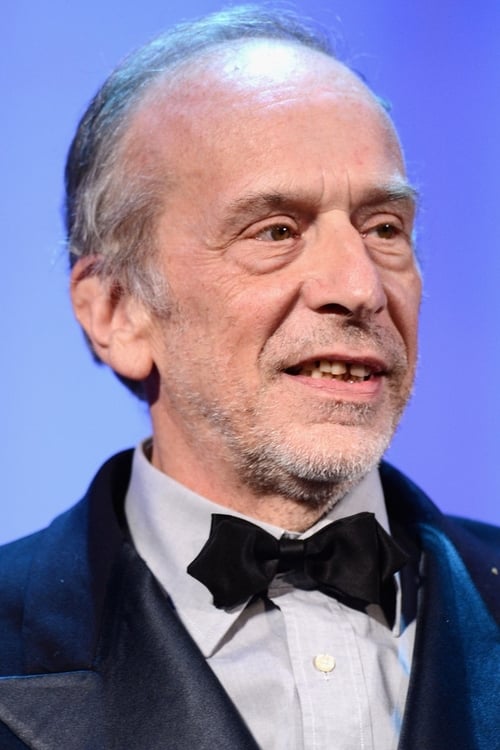
"Here the text is not recited to please the spectator. It is neither spoken well nor badly: it is the inner voice that speaks. Here the versification does not serve to puff up or intoxicate the actors; they do not use the words as mouthwash."
Little did I know, diving head first into Sicilia! would be to completely skip what makes Straub-Huillet's cinema so unique. So incredibly meaningful and dense, it's hard for me to say I didn't love this on my first watch
While I absolutely love the experimental nature of the dialogue that contains so damn much information yet is delivered in a manner which I found to be nearly incomprehensible as a non-french speaker. So while I absolutely do appreciate Straub-Huillet's take on dialogue, I wouldn't say it entirely worked for me, my brain needs some training is all
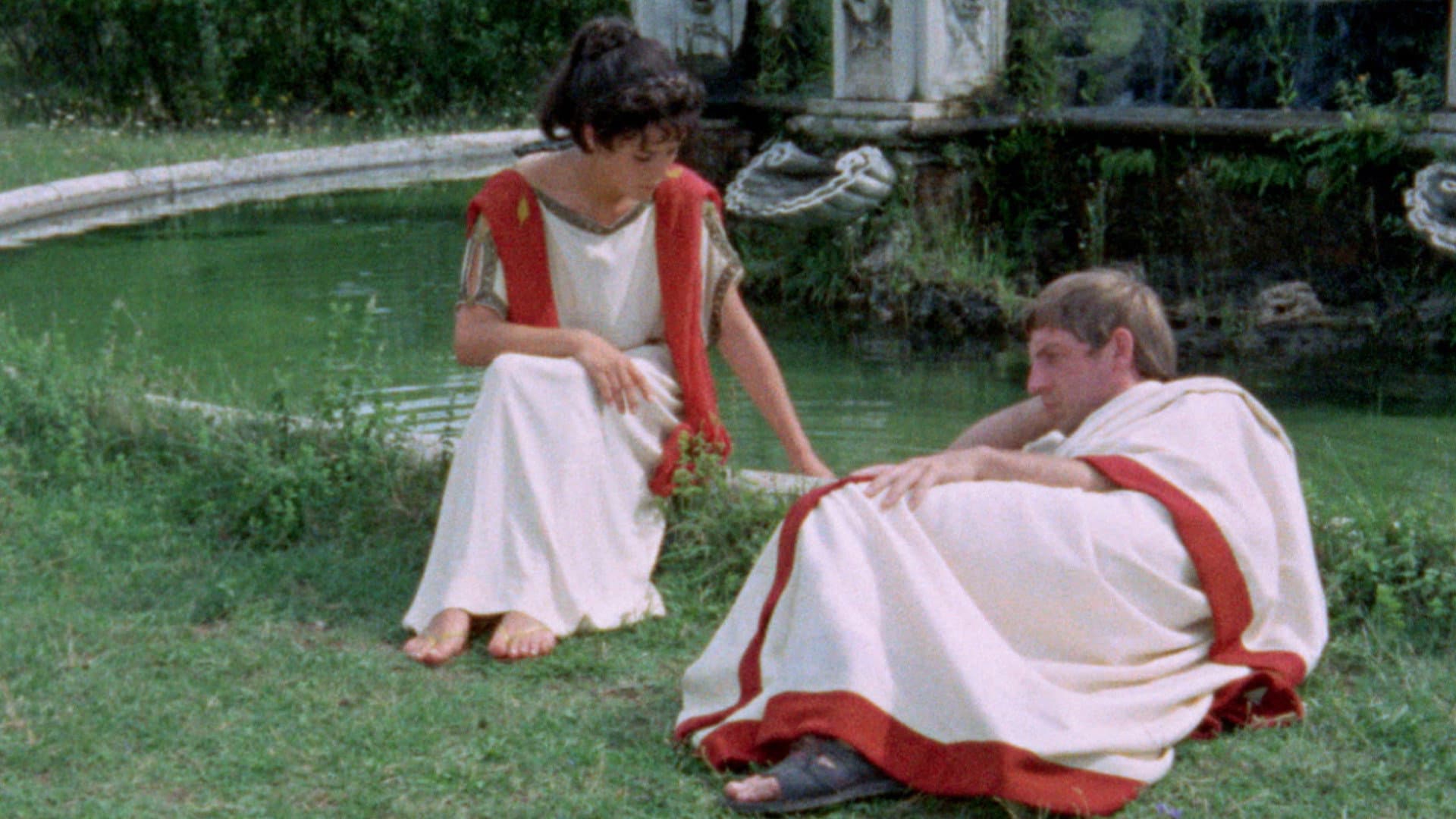
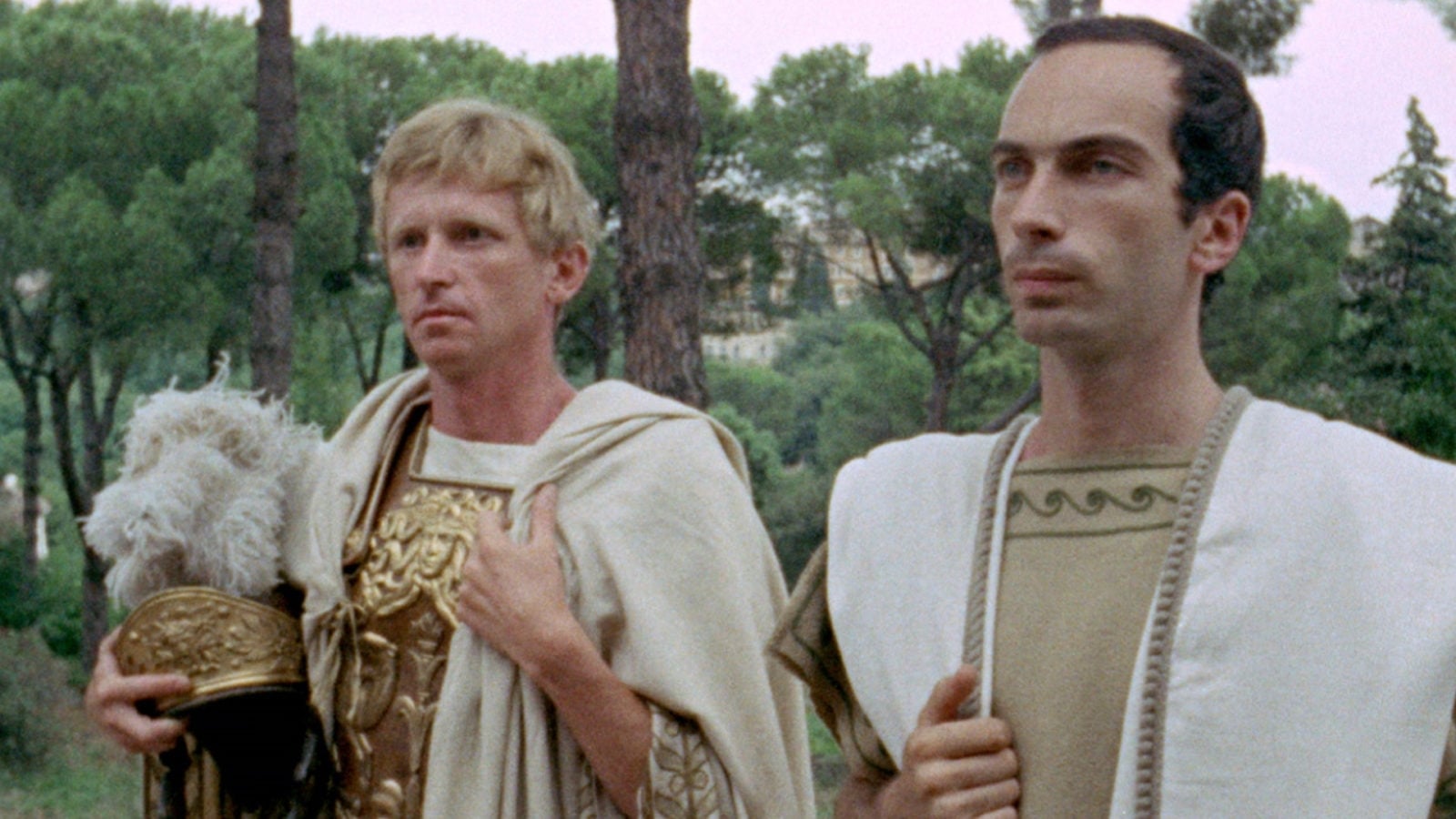
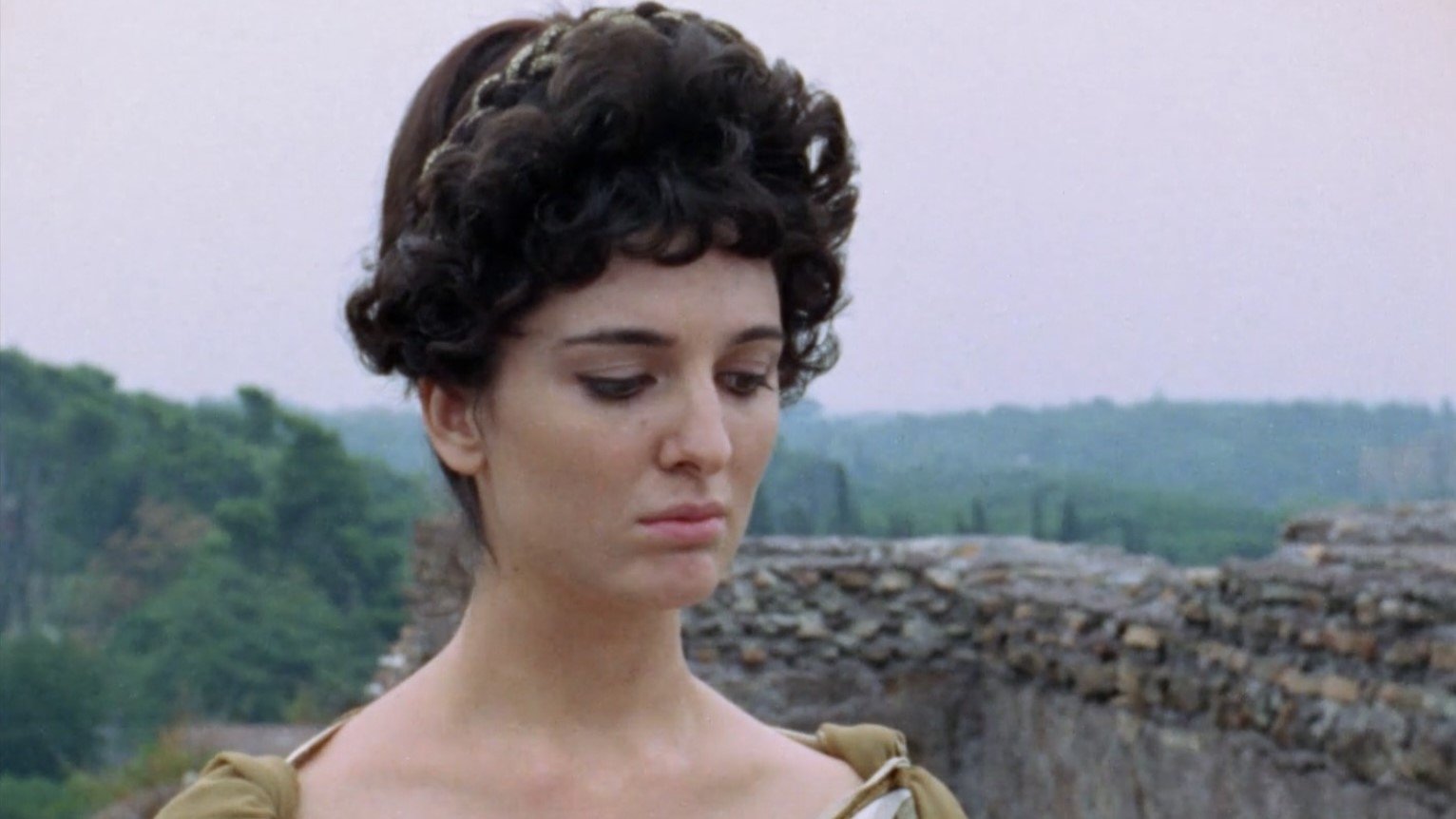
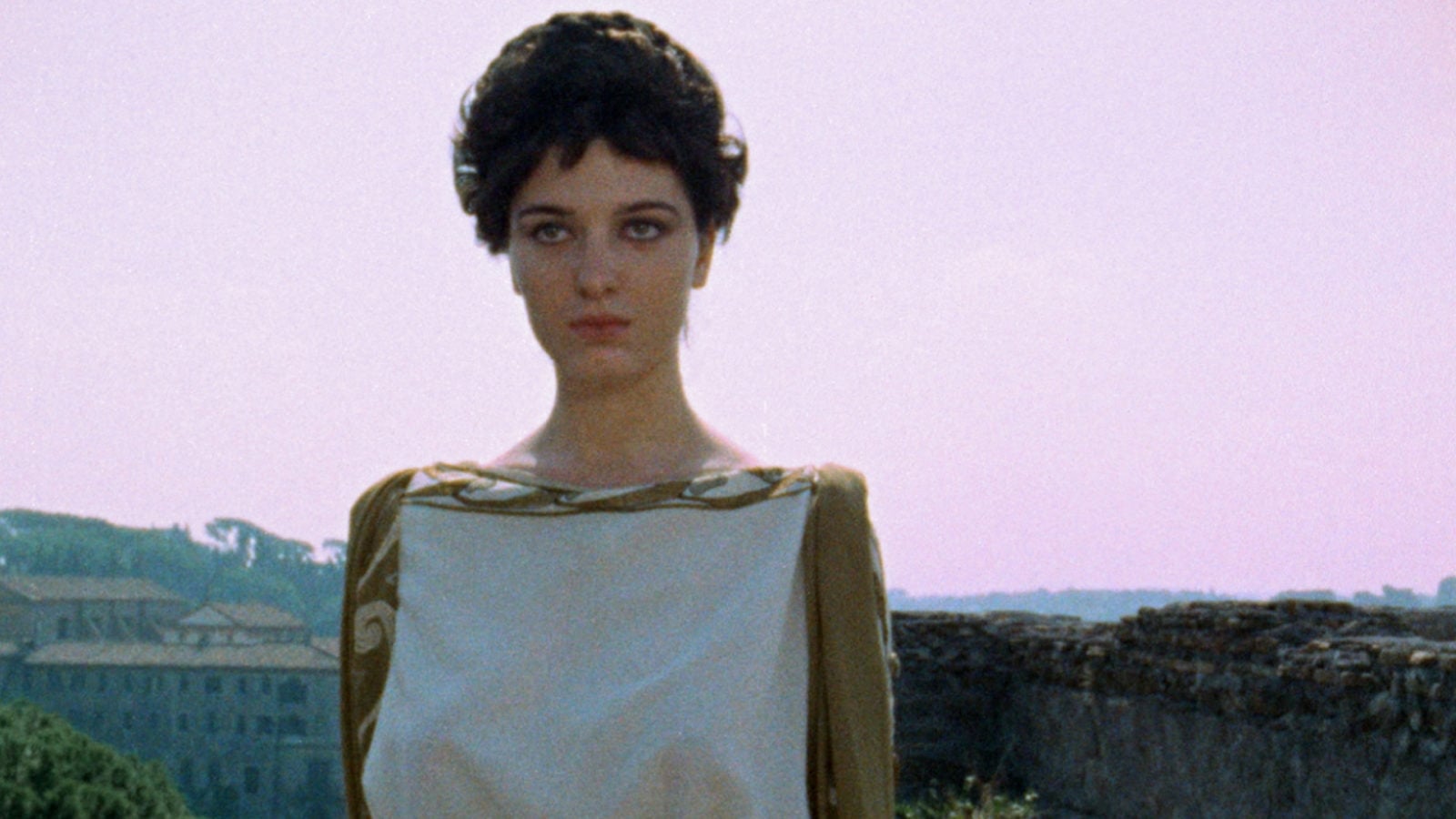
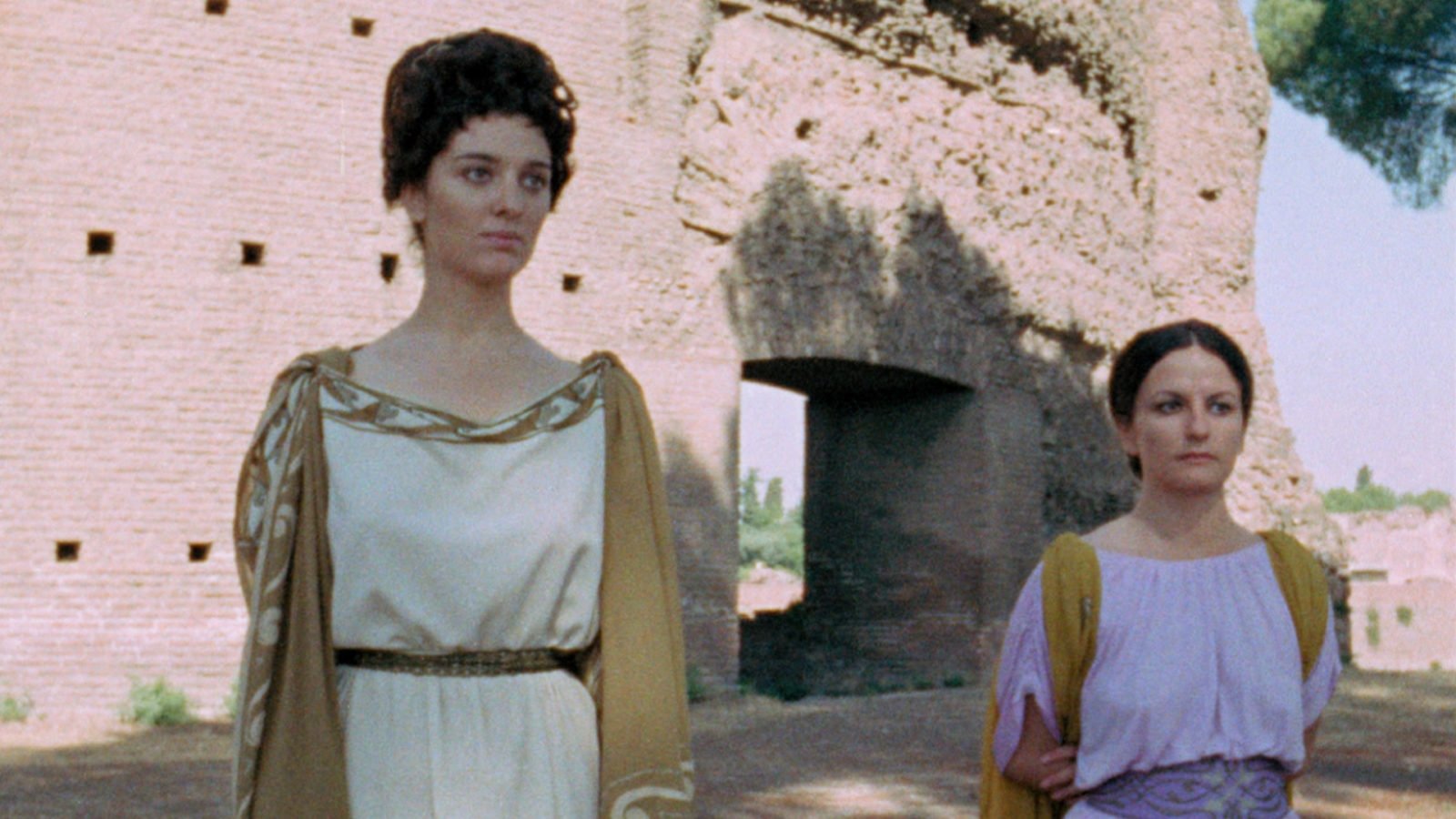
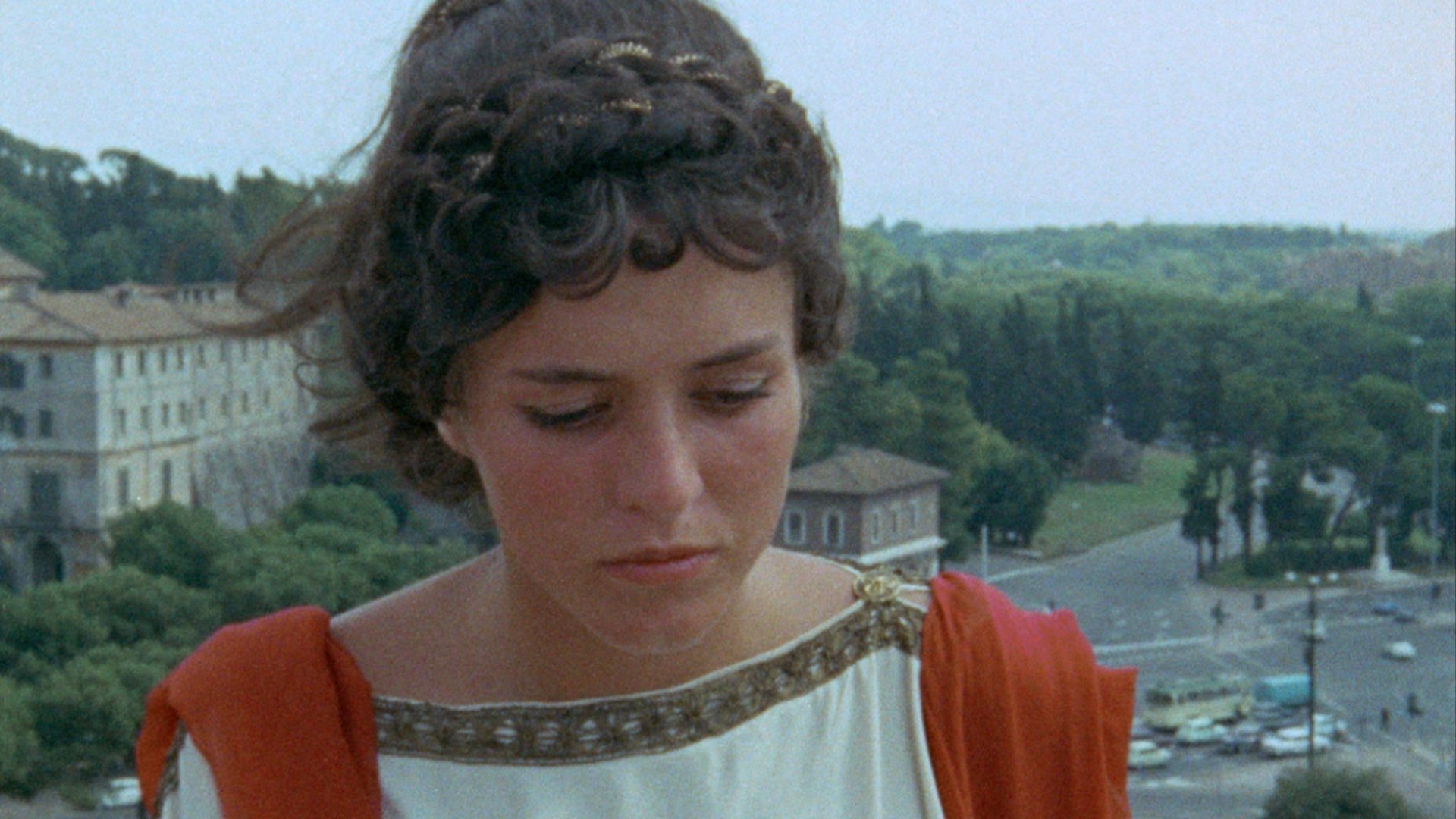
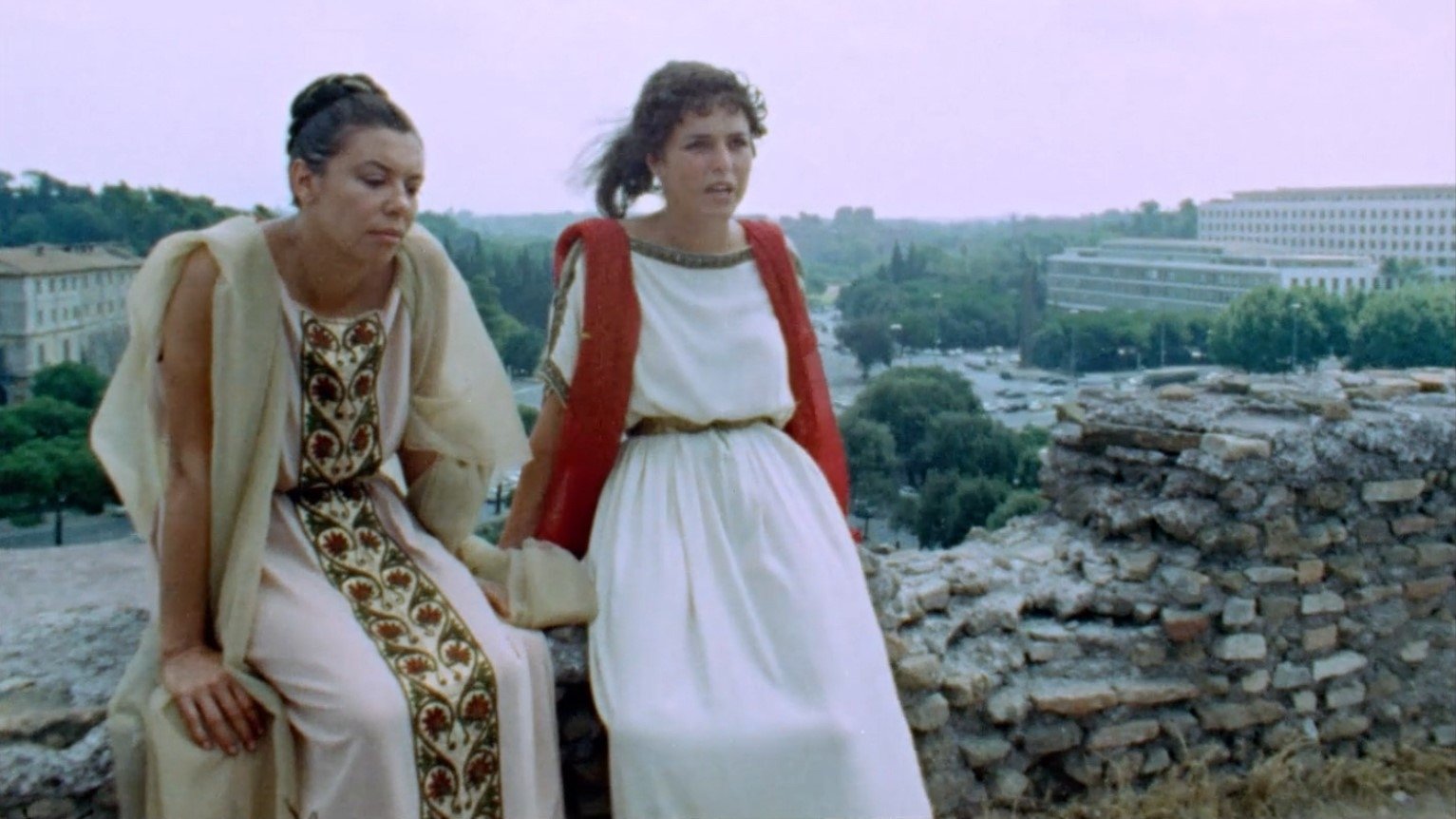
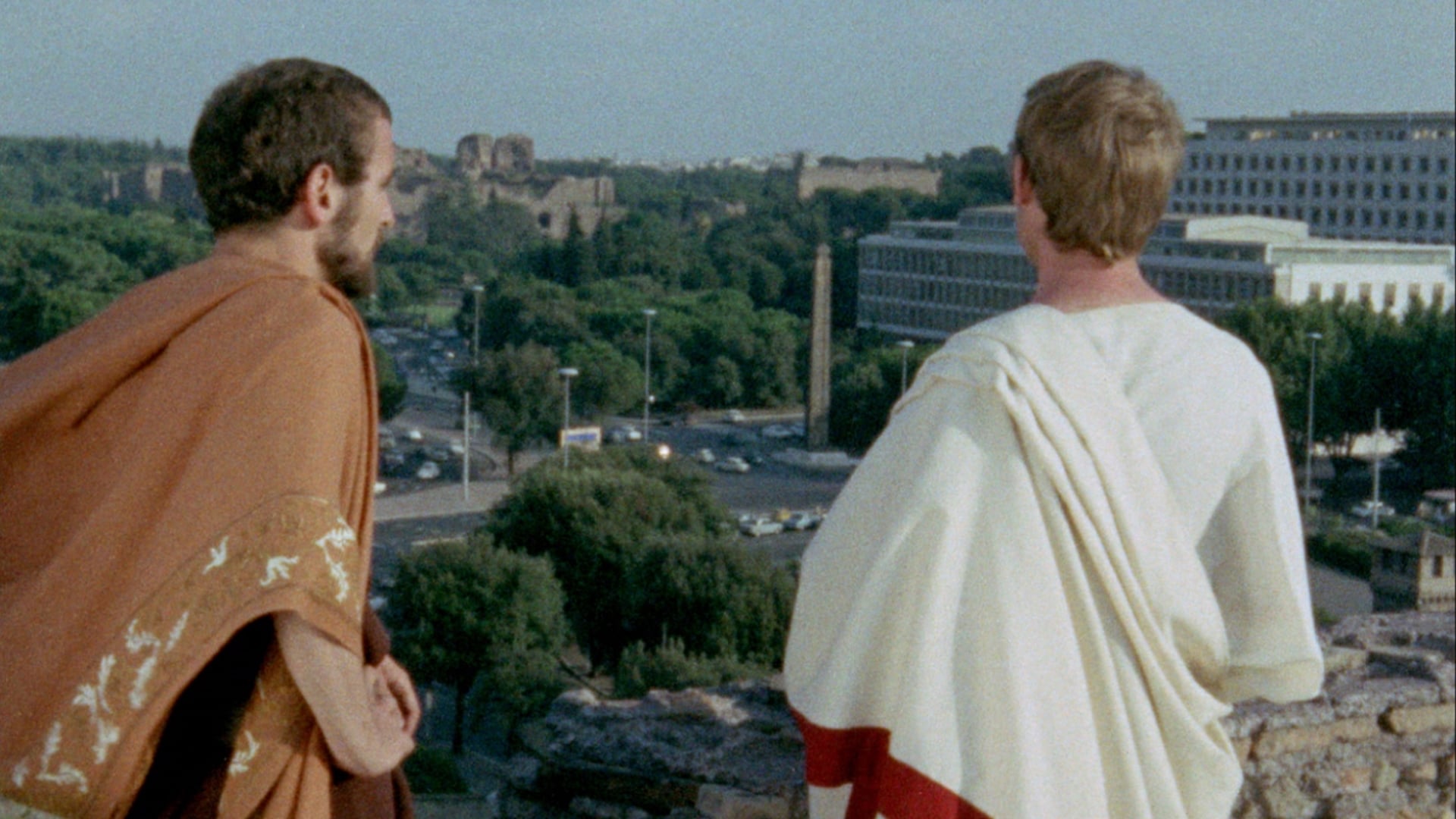
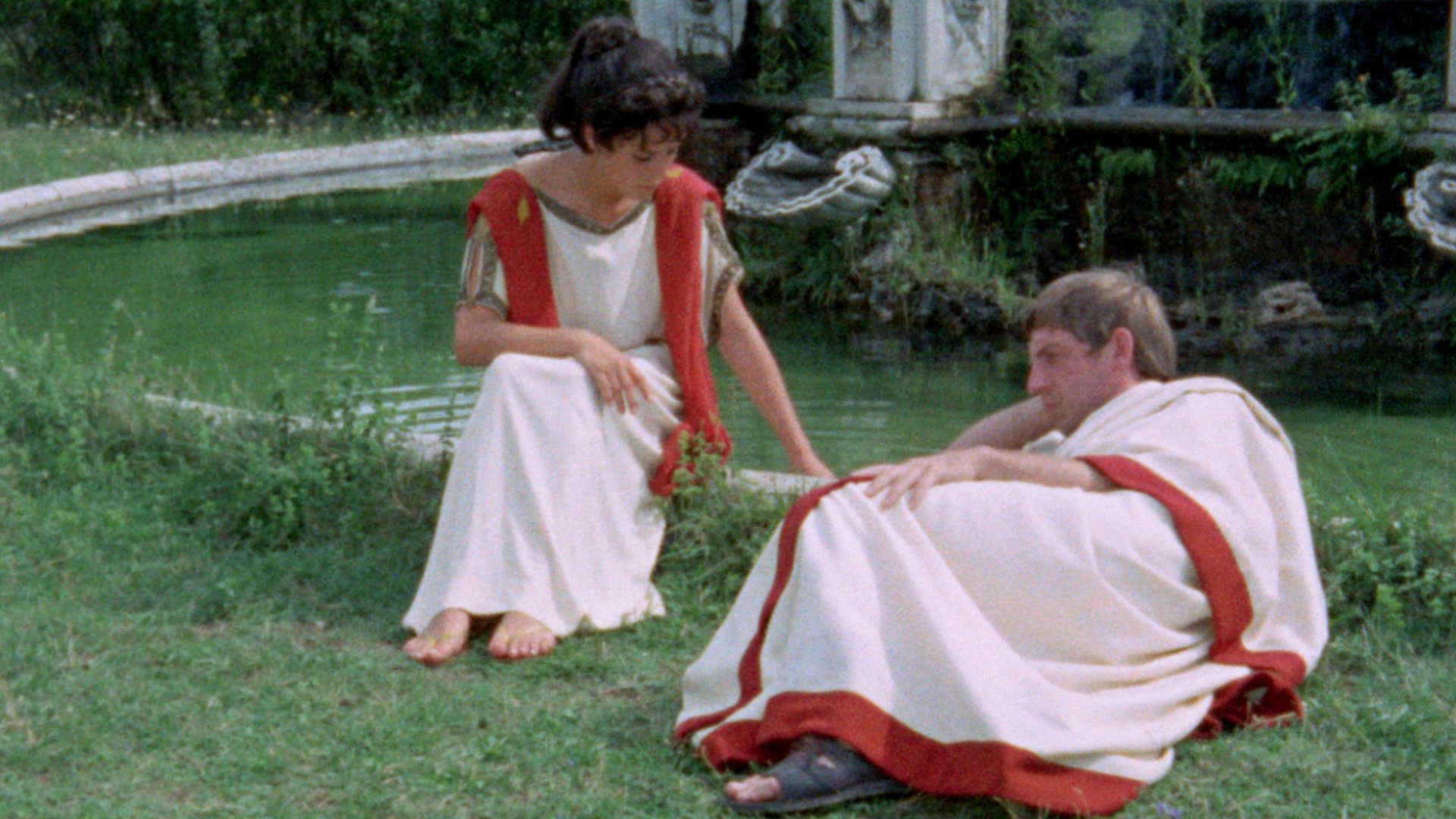
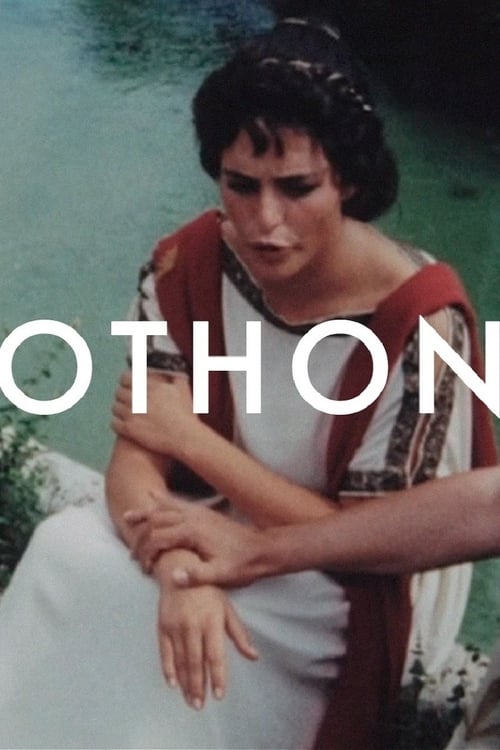
Aside from my so-so thoughts on the dialogue, the framing as well as the setting had me in awe throughout the entire runtime. The film is set in contemporary Rome with cars filling the streets yet all of the characters are wearing outfits that would be seen throughout the Roman empire. Not to mention the framing which felt similar to a shot out of an M Night movie, expanding the image past what is shown on screen. Characters are first shown then cut away from and us, the spectator, are able to visualize where they are relative to the new focus of the image. But Straub-Huillet take it one step further, characters are typically introduced by someone already on screen, in a play-like fashion. I don't even know what to think about this but it is nonetheless a very interesting choice
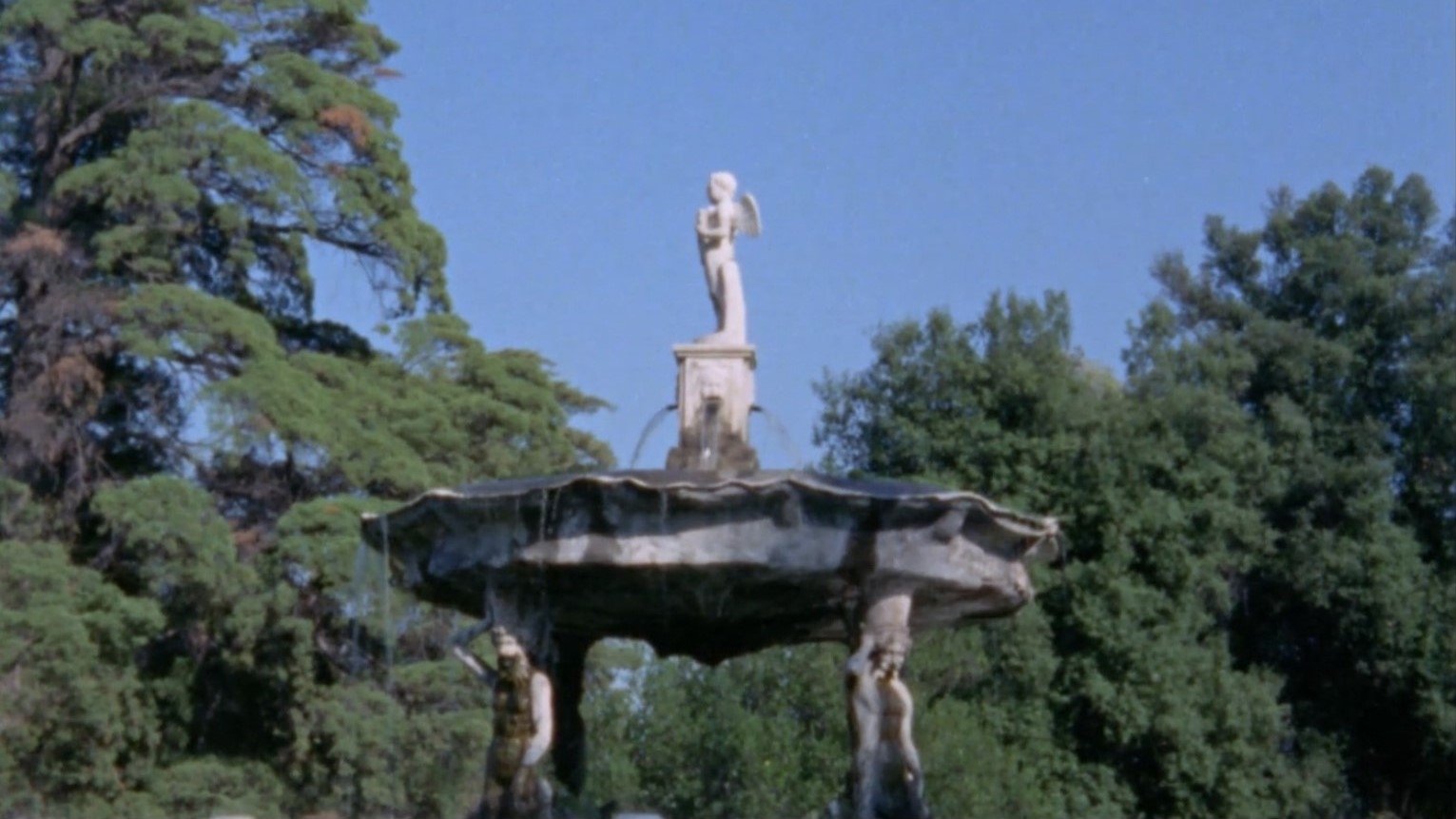
At the end of the day, I love the color in this thing, the DVD rip I saw didn't have the best color but I tried to watch it through the lens of this poster which has some of the most beautiful greens I've seen. Wish I liked watching this and actually understood it as much as I enjoyed writing about it. Othon has for sure left me intrigued, to say the least, to check out more of Straub-Huillet's work
"Here the text is not recited to please the spectator. It is neither spoken well nor badly: it is the inner voice that speaks. Here the versification does not serve to puff up or intoxicate the actors; they do not use the words as mouthwash."
Little did I know, diving head first into Sicilia! would be to completely skip what makes Straub-Huillet's cinema so unique. So incredibly meaningful and dense, it's hard for me to say I didn't love this on my first watch
While I absolutely love the experimental nature of the dialogue that contains so damn much information yet is delivered in a manner which I found to be nearly incomprehensible as a non-french speaker. So while I absolutely do appreciate Straub-Huillet's take on dialogue, I wouldn't say it entirely worked for me, my brain needs some training is all
Aside from my so-so thoughts on the dialogue, the framing as well as the setting had me in awe throughout the entire runtime. The film is set in contemporary Rome with cars filling the streets yet all of the characters are wearing outfits that would be seen throughout the Roman empire. Not to mention the framing which felt similar to a shot out of an M Night movie, expanding the image past what is shown on screen. Characters are first shown then cut away from and us, the spectator, are able to visualize where they are relative to the new focus of the image. But Straub-Huillet take it one step further, characters are typically introduced by someone already on screen, in a play-like fashion. I don't even know what to think about this but it is nonetheless a very interesting choice
At the end of the day, I love the color in this thing, the DVD rip I saw didn't have the best color but I tried to watch it through the lens of this poster which has some of the most beautiful greens I've seen. Wish I liked watching this and actually understood it as much as I enjoyed writing about it. Othon has for sure left me intrigued, to say the least, to check out more of Straub-Huillet's work