
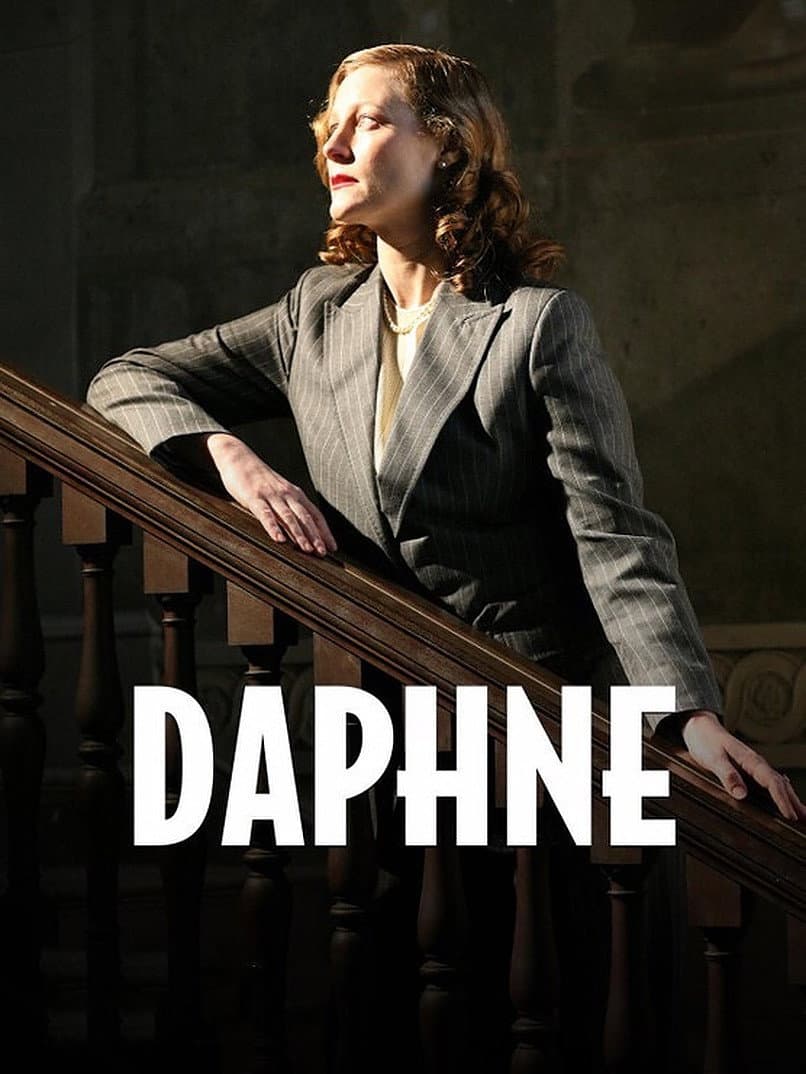
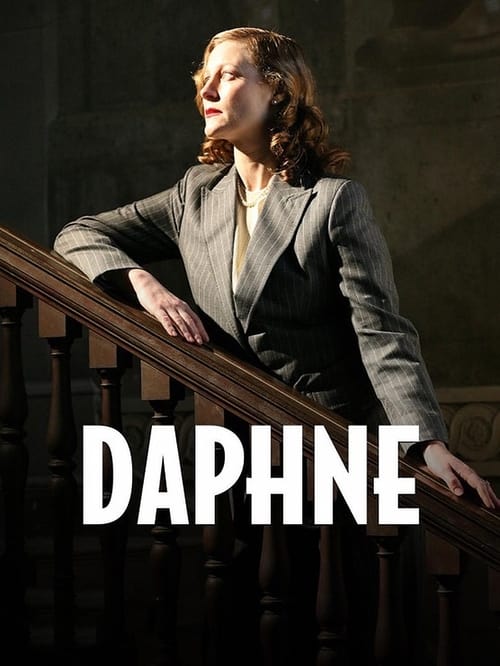
Daphne
2007·Romance·1h 30m
7.1
★
Set during the years between the "Rebecca" trial and the writing of Du Maurier's short story "The Birds", including her relationship with her husband Frederick 'Boy' Browning, and her largely unrequited infatuations with American publishing tycoon's wife Ellen Doubleday and the actress Gertrude Lawrence.
Directed by Clare Beavan
biography
based on true story
lesbian relationship
mistress
lgbt
lesbian

IMDB
N/A
Where to Watch

Cast
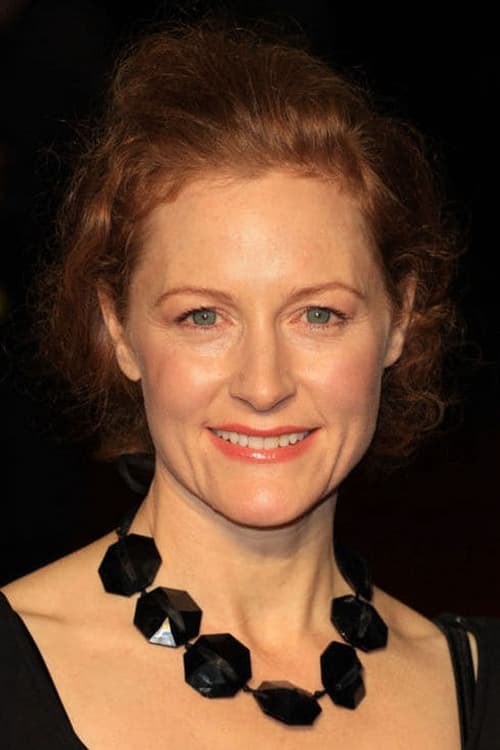
Geraldine Somerville
Daphne Du Maurier
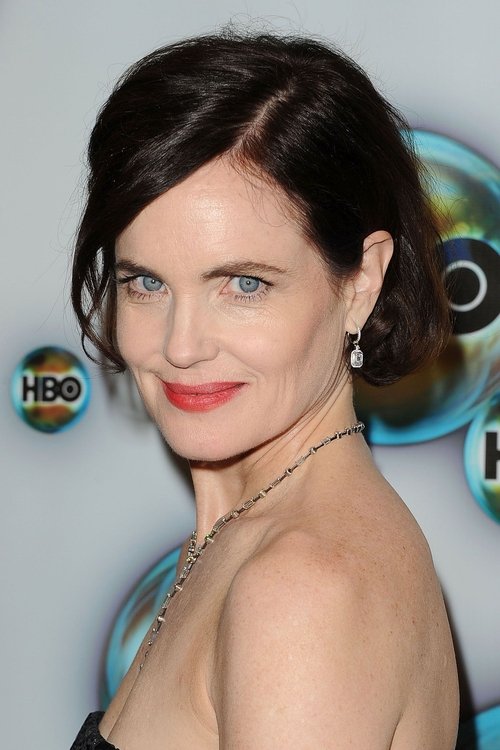
Elizabeth McGovern
Ellen Doubleday
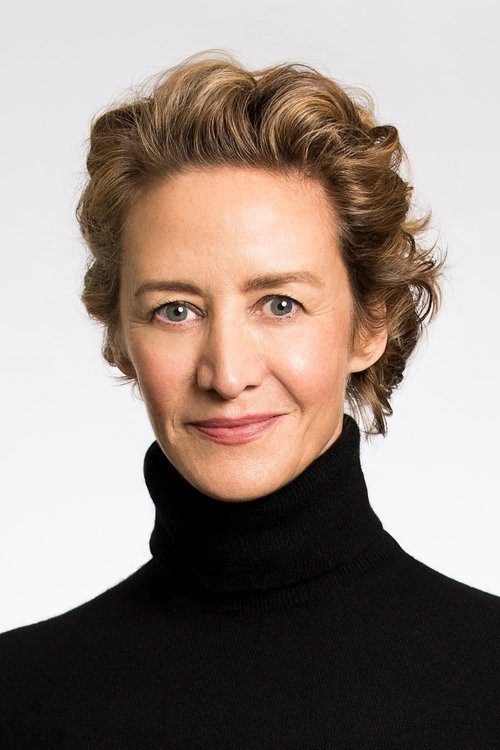
Janet McTeer
Gertrude Lawrence
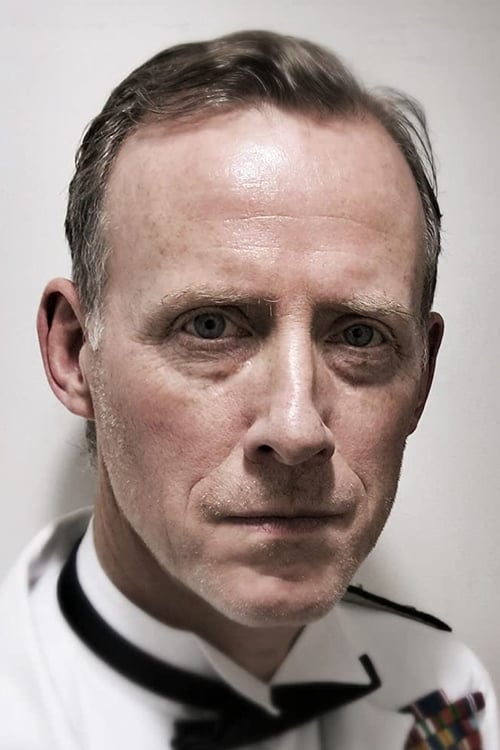
Andrew Havill
Tommy Browning

Christopher Malcolm
Nelson Doubleday
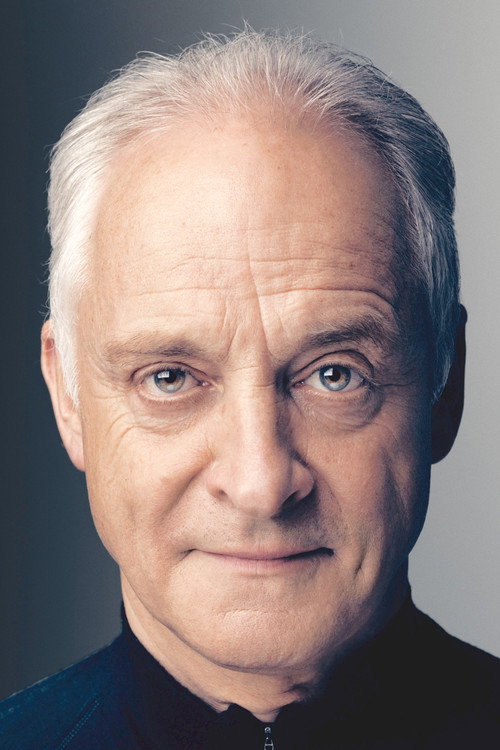
Malcolm Sinclair
Noel Coward
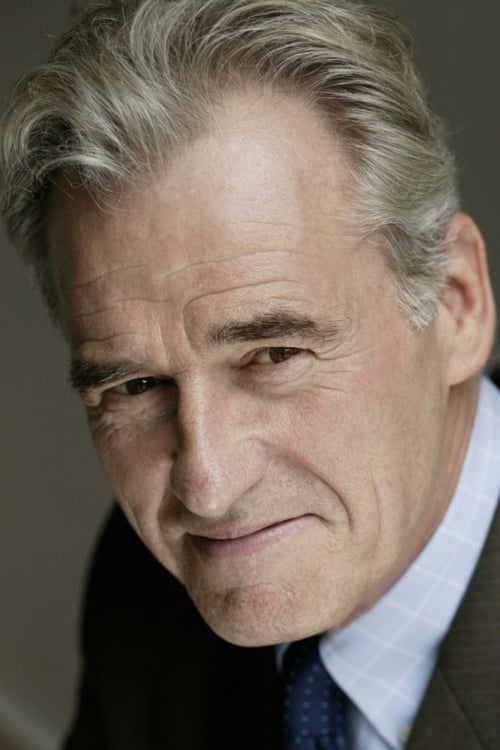
Tim Ahern
Dickie

Nicholas Murchie
New York Prosecutor
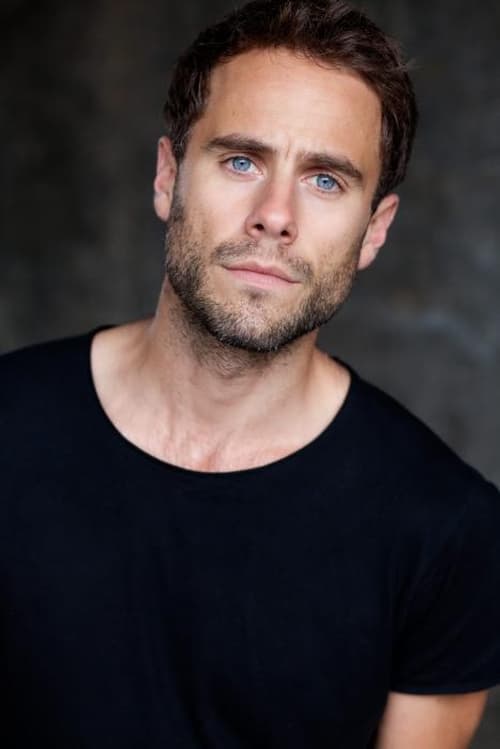
Jay Taylor
Evan Davies - Actor, 'September Tide'
Popular Reviews
3 reviews
melymbrosia
8.0★ · 03/29/26
“But when you walked into the cabin that day on the boat, I was transported back 20 years in time, to when I was a boy of 18.
*Yes, a boy, not a girl.
A boy I locked up in a box. I tried to push that boy back into his box.
God knows, I tried to write you out of my system.”*
I had no idea this ‘biopic’ (if we can call it that) would conclude with the writing of the book “My Cousin Rachel,” the film I’ve just watched. I remember reading the book when I was about fourteen, mainly because I’d seen Rachel Weisz on the cover (I own the copy with the film poster on the cover). Yet my most vivid memory is of the brief biography of Daphne du Maurier in the first few pages of the volume, especially the part describing how she thought of herself as a boy in her younger years. It’s no wonder that the lines which moved me most in this film were those in which Daphne refers to herself as “a boy of eighteen again.” I can’t find any word other than lovely to describe how she states she wanted to fight off dragons for Ellen.
Overall, such a moving portrayal of sapphic identity: especially the parts where Daphne seems so reluctant to say the word lesbian herself, instead choosing the euphemism ‘Venetian’. The way she loves Ellen and Gertrude is so deeply rooted in the discovery of queerness, at least in my experience: the love that has never been, the daze, all the giving without necessarily expecting anything in return, and then the blow when one realises one will indeed never receive anything back. And then comes the half-projection, half-passion. The love that becomes physical and never sordid, the love that cements queer love as whole; physical, tender, beautiful.
“It was never sordid. The odd thing is, that once you have loved a person physically, it makes the strangest bond. There was so much warmth there, so much generosity of giving.”
Sorry, I get emotional over sapphic writers.
And over Cornwall and a killer cinematography.
And I have a crush on Geraldine Somerville now.
“Sometimes, when I'm alone, I shall open up that box again and let the phantom who is neither boy nor girl but disembodied spirit dance in the evening, when there's no one to see.”
*Yes, a boy, not a girl.
A boy I locked up in a box. I tried to push that boy back into his box.
God knows, I tried to write you out of my system.”*
I had no idea this ‘biopic’ (if we can call it that) would conclude with the writing of the book “My Cousin Rachel,” the film I’ve just watched. I remember reading the book when I was about fourteen, mainly because I’d seen Rachel Weisz on the cover (I own the copy with the film poster on the cover). Yet my most vivid memory is of the brief biography of Daphne du Maurier in the first few pages of the volume, especially the part describing how she thought of herself as a boy in her younger years. It’s no wonder that the lines which moved me most in this film were those in which Daphne refers to herself as “a boy of eighteen again.” I can’t find any word other than lovely to describe how she states she wanted to fight off dragons for Ellen.
Overall, such a moving portrayal of sapphic identity: especially the parts where Daphne seems so reluctant to say the word lesbian herself, instead choosing the euphemism ‘Venetian’. The way she loves Ellen and Gertrude is so deeply rooted in the discovery of queerness, at least in my experience: the love that has never been, the daze, all the giving without necessarily expecting anything in return, and then the blow when one realises one will indeed never receive anything back. And then comes the half-projection, half-passion. The love that becomes physical and never sordid, the love that cements queer love as whole; physical, tender, beautiful.
“It was never sordid. The odd thing is, that once you have loved a person physically, it makes the strangest bond. There was so much warmth there, so much generosity of giving.”
Sorry, I get emotional over sapphic writers.
And over Cornwall and a killer cinematography.
And I have a crush on Geraldine Somerville now.
“Sometimes, when I'm alone, I shall open up that box again and let the phantom who is neither boy nor girl but disembodied spirit dance in the evening, when there's no one to see.”
“But when you walked into the cabin that day on the boat, I was transported back 20 years in time, to when I was a boy of 18.
*Yes, a boy, not a girl.
A boy I locked up in a box. I tried to push that boy back into his box.
God knows, I tried to write you out of my system.”*
I had no idea this ‘biopic’ (if we can call it that) would conclude with the writing of the book “My Cousin Rachel,” the film I’ve just watched. I remember reading the book when I was about fourteen, mainly because I’d seen Rachel Weisz on the cover (I own the copy with the film poster on the cover). Yet my most vivid memory is of the brief biography of Daphne du Maurier in the first few pages of the volume, especially the part describing how she thought of herself as a boy in her younger years. It’s no wonder that the lines which moved me most in this film were those in which Daphne refers to herself as “a boy of eighteen again.” I can’t find any word other than lovely to describe how she states she wanted to fight off dragons for Ellen.
Overall, such a moving portrayal of sapphic identity: especially the parts where Daphne seems so reluctant to say the word lesbian herself, instead choosing the euphemism ‘Venetian’. The way she loves Ellen and Gertrude is so deeply rooted in the discovery of queerness, at least in my experience: the love that has never been, the daze, all the giving without necessarily expecting anything in return, and then the blow when one realises one will indeed never receive anything back. And then comes the half-projection, half-passion. The love that becomes physical and never sordid, the love that cements queer love as whole; physical, tender, beautiful.
“It was never sordid. The odd thing is, that once you have loved a person physically, it makes the strangest bond. There was so much warmth there, so much generosity of giving.”
Sorry, I get emotional over sapphic writers.
And over Cornwall and a killer cinematography.
And I have a crush on Geraldine Somerville now.
“Sometimes, when I'm alone, I shall open up that box again and let the phantom who is neither boy nor girl but disembodied spirit dance in the evening, when there's no one to see.”
*Yes, a boy, not a girl.
A boy I locked up in a box. I tried to push that boy back into his box.
God knows, I tried to write you out of my system.”*
I had no idea this ‘biopic’ (if we can call it that) would conclude with the writing of the book “My Cousin Rachel,” the film I’ve just watched. I remember reading the book when I was about fourteen, mainly because I’d seen Rachel Weisz on the cover (I own the copy with the film poster on the cover). Yet my most vivid memory is of the brief biography of Daphne du Maurier in the first few pages of the volume, especially the part describing how she thought of herself as a boy in her younger years. It’s no wonder that the lines which moved me most in this film were those in which Daphne refers to herself as “a boy of eighteen again.” I can’t find any word other than lovely to describe how she states she wanted to fight off dragons for Ellen.
Overall, such a moving portrayal of sapphic identity: especially the parts where Daphne seems so reluctant to say the word lesbian herself, instead choosing the euphemism ‘Venetian’. The way she loves Ellen and Gertrude is so deeply rooted in the discovery of queerness, at least in my experience: the love that has never been, the daze, all the giving without necessarily expecting anything in return, and then the blow when one realises one will indeed never receive anything back. And then comes the half-projection, half-passion. The love that becomes physical and never sordid, the love that cements queer love as whole; physical, tender, beautiful.
“It was never sordid. The odd thing is, that once you have loved a person physically, it makes the strangest bond. There was so much warmth there, so much generosity of giving.”
Sorry, I get emotional over sapphic writers.
And over Cornwall and a killer cinematography.
And I have a crush on Geraldine Somerville now.
“Sometimes, when I'm alone, I shall open up that box again and let the phantom who is neither boy nor girl but disembodied spirit dance in the evening, when there's no one to see.”


melymbrosia
8.0★ · 04/04/26
OlliPRO
6.0★ · 01/11/26
Brooke
5.7★ · 02/20/25