

The Fake
2013·Animation·1h 41m
7.1
★
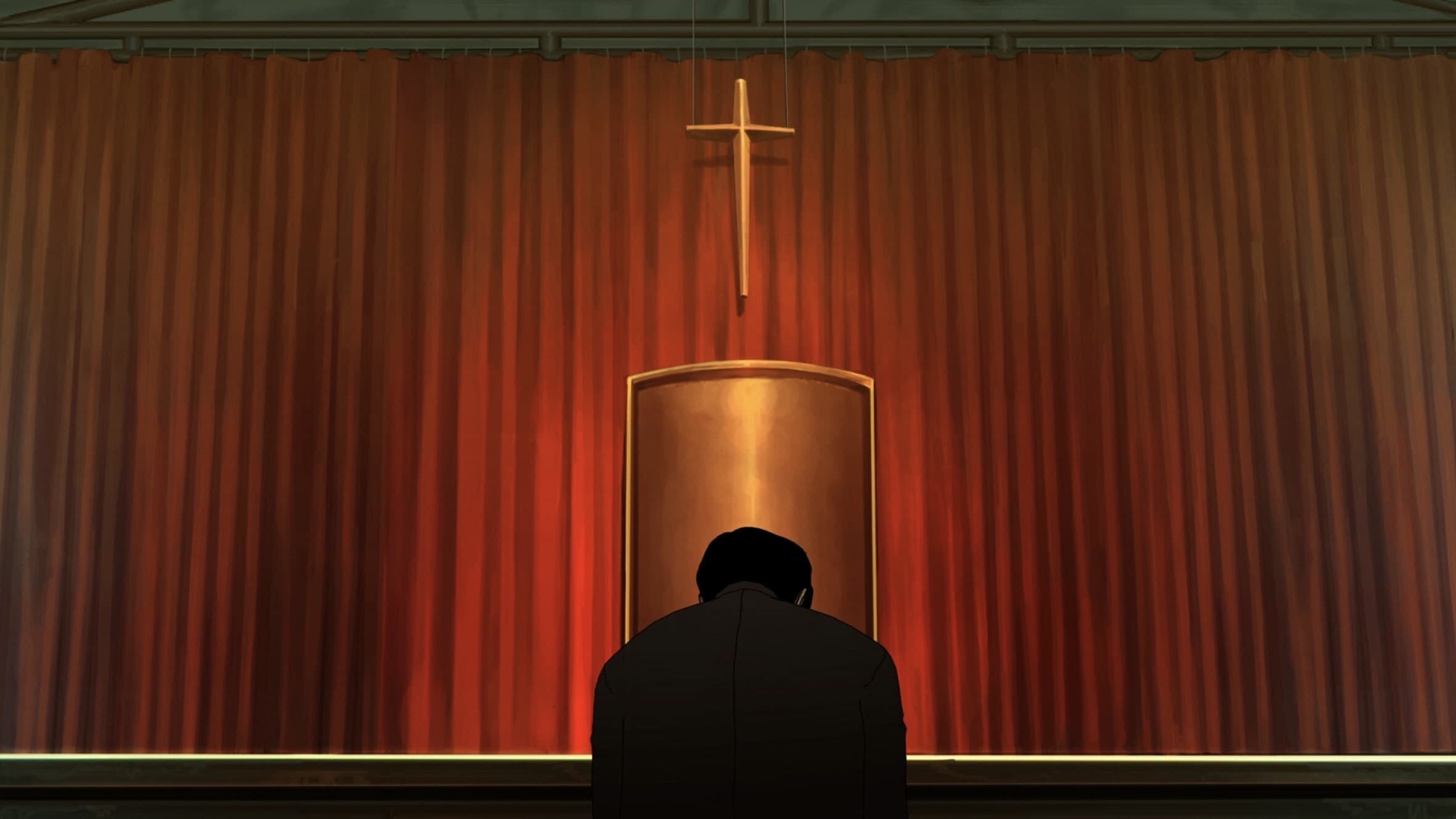

A convict returns to his home town to again torture his family, face his neighbors and try to destroy the local religious fanatics and their plans to keep money from the village people.
Directed by Yeon Sang-ho
cult
adult animation

Trailer

IMDB
N/A
Cast

Yang Ik-june
Kim Min-chul (voice)

Oh Jung-se
Sung Chul-woo (voice)

Kwon Hae-hyo
Choi Gyeong-seok (voice)

Park Hee-von
Kim Young-sun (voice)

Hwang Seok-jeong
Young-sun's Mother (voice)

Kim Jae-rok
Chil-sung (voice)

Lee Min-ji
Young-sun's Friend (voice)
Crew

Yeon Sang-ho
Director
Yeon Sang-ho
Writer

Jang Young-gyu
Original Music Composer
Yeon Sang-ho
Editor
Popular Reviews
7 reviews
Gabriel Silva
9.4★ · 08/14/24

Unironically Yeon Sang-ho’s best film. While most will be familiar with Train to Busan, it’s clear that cutting his teeth in the industry as a director on animation is what gave him his edge when it came time to swap mediums. The Fake is bleak and pessimistic. Sang-ho’s handling of an absolute asshole of a protagonist is handled so well. You want him to win purely because everyone he is set out against is clearly worse. The idea of a common criminal with fits of rage being the only one to know the truth behind a fraudster is a thrilling one. The premise itself lends itself to so much intrigue and in a live action film it probably would’ve been filmed in such a way. However, that would take away from a lot of the moments that make The Fake so good. The medium of animation is one that requires so much planning beforehand. It’s in many ways a lot more methodical. The limitations of the medium means that some rather common things to see in live-action, such as a camera move, have to be done sparingly. Even in the realm of CG animation limitations exist. You’d want to reduce render times, after all. This leads The Fake to existing in a very stilted space. This isn’t a bad thing, but rather a strength to it. This stillness focuses so much attention on the movement of the characters, with body language so important to this idea of someone being real or fake.
For this film to be disingenuous is worse than being an abuser. The funds that the fake church siphons away from the villagers to build a new worship center are done so in lieu of what the community actually needs. The impending flooding of the municipality in order to build a dam is pressing and the empty promise of a new place being built for the community coupled with the idea of one’s spot in heaven being able to be reserved through donations - a concept that would be very familiar to those close to American Evangelist churches - doesn’t offer salvation or solution. That money could have been used for members of the village to relocate themselves to new cities, an uprooting of their community, which is tragic, but a much more realistic solution with no way to oppose the dam’s construction. It is too late. It’s so harrowing, so unfortunate, and so real. It’s hard to not have sympathy for “the satan” by the end of the film here. “The satan” of course being our protagonist, branded as such by members of the church for his violence and crass behavior.
For this film to be disingenuous is worse than being an abuser. The funds that the fake church siphons away from the villagers to build a new worship center are done so in lieu of what the community actually needs. The impending flooding of the municipality in order to build a dam is pressing and the empty promise of a new place being built for the community coupled with the idea of one’s spot in heaven being able to be reserved through donations - a concept that would be very familiar to those close to American Evangelist churches - doesn’t offer salvation or solution. That money could have been used for members of the village to relocate themselves to new cities, an uprooting of their community, which is tragic, but a much more realistic solution with no way to oppose the dam’s construction. It is too late. It’s so harrowing, so unfortunate, and so real. It’s hard to not have sympathy for “the satan” by the end of the film here. “The satan” of course being our protagonist, branded as such by members of the church for his violence and crass behavior.
Unironically Yeon Sang-ho’s best film. While most will be familiar with Train to Busan, it’s clear that cutting his teeth in the industry as a director on animation is what gave him his edge when it came time to swap mediums. The Fake is bleak and pessimistic. Sang-ho’s handling of an absolute asshole of a protagonist is handled so well. You want him to win purely because everyone he is set out against is clearly worse. The idea of a common criminal with fits of rage being the only one to know the truth behind a fraudster is a thrilling one. The premise itself lends itself to so much intrigue and in a live action film it probably would’ve been filmed in such a way. However, that would take away from a lot of the moments that make The Fake so good. The medium of animation is one that requires so much planning beforehand. It’s in many ways a lot more methodical. The limitations of the medium means that some rather common things to see in live-action, such as a camera move, have to be done sparingly. Even in the realm of CG animation limitations exist. You’d want to reduce render times, after all. This leads The Fake to existing in a very stilted space. This isn’t a bad thing, but rather a strength to it. This stillness focuses so much attention on the movement of the characters, with body language so important to this idea of someone being real or fake.
For this film to be disingenuous is worse than being an abuser. The funds that the fake church siphons away from the villagers to build a new worship center are done so in lieu of what the community actually needs. The impending flooding of the municipality in order to build a dam is pressing and the empty promise of a new place being built for the community coupled with the idea of one’s spot in heaven being able to be reserved through donations - a concept that would be very familiar to those close to American Evangelist churches - doesn’t offer salvation or solution. That money could have been used for members of the village to relocate themselves to new cities, an uprooting of their community, which is tragic, but a much more realistic solution with no way to oppose the dam’s construction. It is too late. It’s so harrowing, so unfortunate, and so real. It’s hard to not have sympathy for “the satan” by the end of the film here. “The satan” of course being our protagonist, branded as such by members of the church for his violence and crass behavior.
For this film to be disingenuous is worse than being an abuser. The funds that the fake church siphons away from the villagers to build a new worship center are done so in lieu of what the community actually needs. The impending flooding of the municipality in order to build a dam is pressing and the empty promise of a new place being built for the community coupled with the idea of one’s spot in heaven being able to be reserved through donations - a concept that would be very familiar to those close to American Evangelist churches - doesn’t offer salvation or solution. That money could have been used for members of the village to relocate themselves to new cities, an uprooting of their community, which is tragic, but a much more realistic solution with no way to oppose the dam’s construction. It is too late. It’s so harrowing, so unfortunate, and so real. It’s hard to not have sympathy for “the satan” by the end of the film here. “The satan” of course being our protagonist, branded as such by members of the church for his violence and crass behavior.


shiki
6.0★ · 05/27/26
artDAJ
8.0★ · 04/28/26
Alyssa
10.0★ · 04/26/26
Kris
8.0★ · 05/07/22