
One Way Boogie Woogie
1977·Documentary·1h
7.1
★
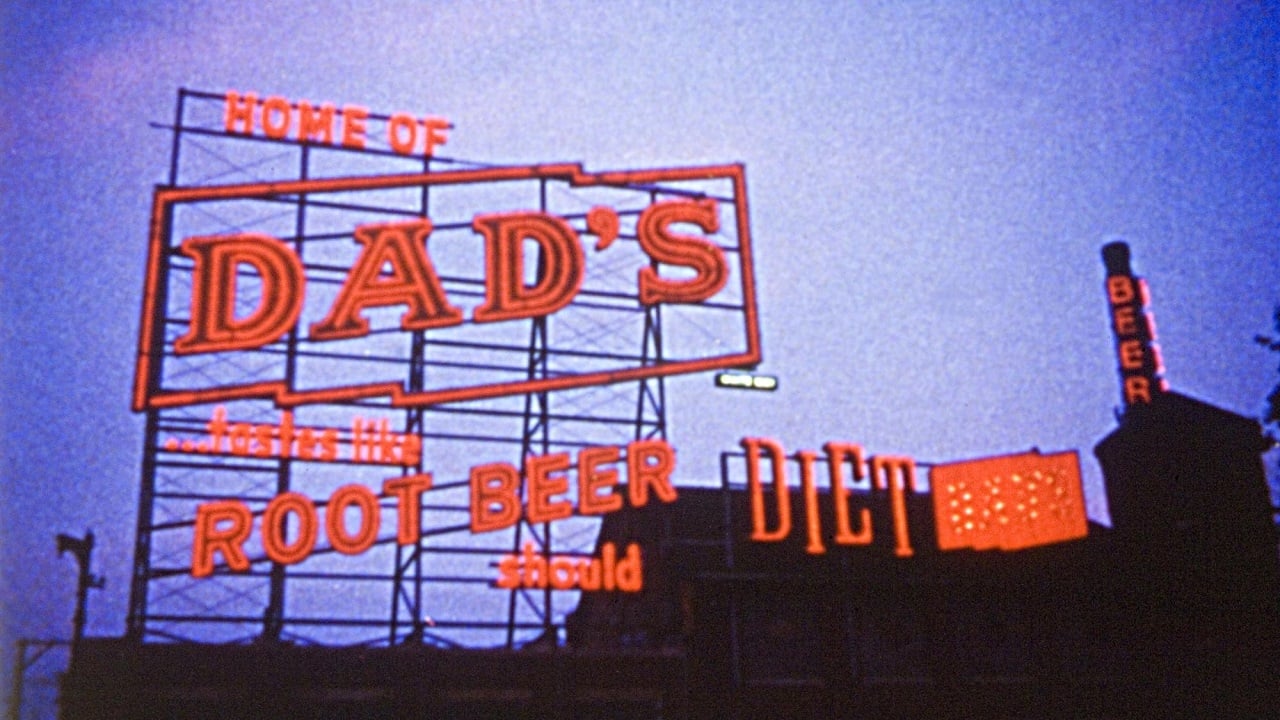
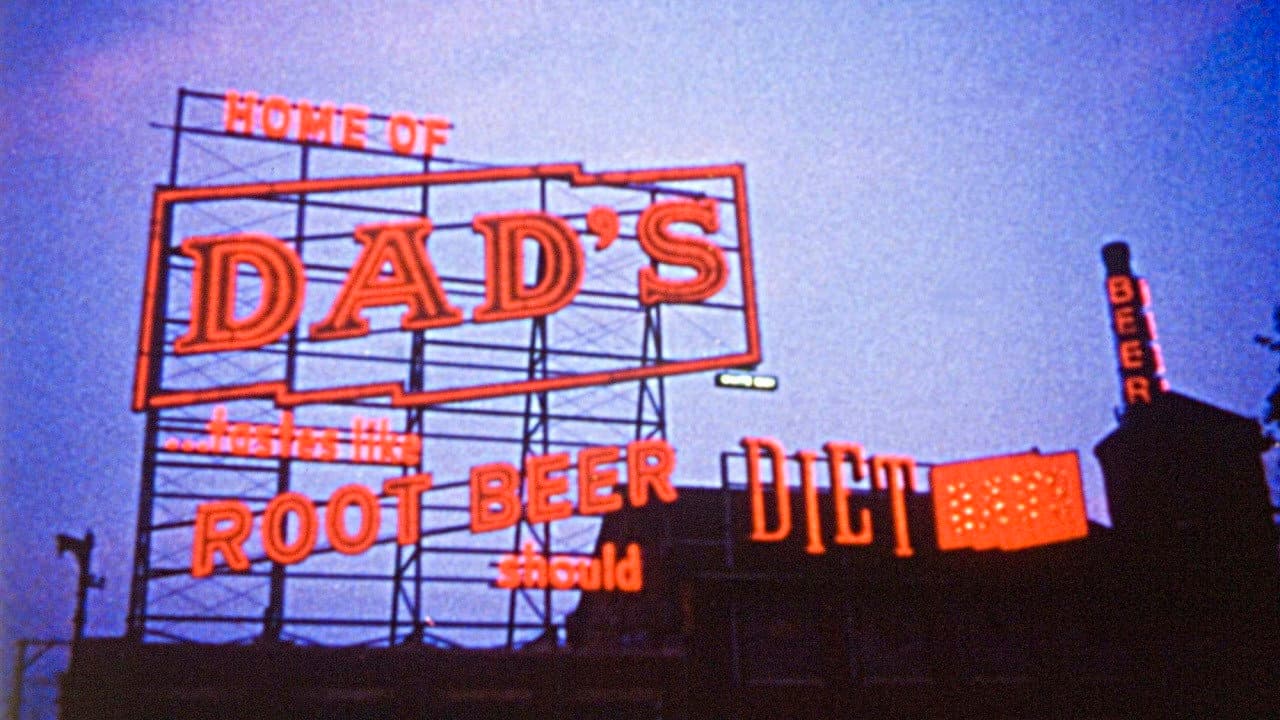
Sixty one-minute shots with no camera movement. This tension between painterly and cinematic space is not only experienced as an intellectual contrast but is also felt as a dialectic between permanence and impermanence.
Directed by James Benning

IMDB
N/A
Crew
James Benning
Director
James Benning
Writer
Popular Reviews
4 reviews
charlie
8.9★ · 04/09/25
Quite possibly Benning's most essential film. During interviews, he talks about cinematic rhythm (and similarly to Michael Snow) in completely mathematical terms, breaking down each frame to a note of music, each camera movement or cut lined up with the beat of a metronome. His line of thinking makes a lot of sense considering Benning studied math in university and if I'm being honest, I was struggling to fully realize how exactly Benning was implementing this music into his films.
It’s quite apparent in each of Benning's films that duration is in question, because why would Benning show landscapes for up to three hours if he didn't think there was anything to explore within that time period, why not just end the movie at 30 minutes? Well that depends on how much Benning thinks there is to explore within each scene, and if there is anything to feel in the space between the miniscule events that take place in his films.
Here in One Way Boogie Woogie, we have 60 shots, each one minute long. Every shot might not feel the same length, but they are, it all depends what is happening within the scene and you're level of engagement; proving Benning already has a firm grasp on time and space because of his ability to manipulate it without "doing anything," only by watching the world go 'round.
There's one scene where a car pulls into frame, you hear someone counting off-screen, and you see another person doing jumping jacks in the background. As the scene goes on, the person gets out of their car and leaves the frame, we are left in place, watching someone do jumping jacks synced up to the count of the man off-screen. This small moment recontextualizes the entire film and practically tells you to listen to your subconscious metronome that counts behind each 60 second shot. And while you watch the person do jumping jacks, you anticipate the next time he raises his hands in the air and the next number is said, giving the space, in between the counts and jumping jacks, purpose and substance.
Wrapping my head around this sort of thinking feels quite difficult when thinking about it in a broader context, but breaking it down to a single scene makes all the difference, and then causes that way of thinking to spread throughout the entire film, it's a beautiful thing
It’s quite apparent in each of Benning's films that duration is in question, because why would Benning show landscapes for up to three hours if he didn't think there was anything to explore within that time period, why not just end the movie at 30 minutes? Well that depends on how much Benning thinks there is to explore within each scene, and if there is anything to feel in the space between the miniscule events that take place in his films.
Here in One Way Boogie Woogie, we have 60 shots, each one minute long. Every shot might not feel the same length, but they are, it all depends what is happening within the scene and you're level of engagement; proving Benning already has a firm grasp on time and space because of his ability to manipulate it without "doing anything," only by watching the world go 'round.
There's one scene where a car pulls into frame, you hear someone counting off-screen, and you see another person doing jumping jacks in the background. As the scene goes on, the person gets out of their car and leaves the frame, we are left in place, watching someone do jumping jacks synced up to the count of the man off-screen. This small moment recontextualizes the entire film and practically tells you to listen to your subconscious metronome that counts behind each 60 second shot. And while you watch the person do jumping jacks, you anticipate the next time he raises his hands in the air and the next number is said, giving the space, in between the counts and jumping jacks, purpose and substance.
Wrapping my head around this sort of thinking feels quite difficult when thinking about it in a broader context, but breaking it down to a single scene makes all the difference, and then causes that way of thinking to spread throughout the entire film, it's a beautiful thing
Quite possibly Benning's most essential film. During interviews, he talks about cinematic rhythm (and similarly to Michael Snow) in completely mathematical terms, breaking down each frame to a note of music, each camera movement or cut lined up with the beat of a metronome. His line of thinking makes a lot of sense considering Benning studied math in university and if I'm being honest, I was struggling to fully realize how exactly Benning was implementing this music into his films.
It’s quite apparent in each of Benning's films that duration is in question, because why would Benning show landscapes for up to three hours if he didn't think there was anything to explore within that time period, why not just end the movie at 30 minutes? Well that depends on how much Benning thinks there is to explore within each scene, and if there is anything to feel in the space between the miniscule events that take place in his films.
Here in One Way Boogie Woogie, we have 60 shots, each one minute long. Every shot might not feel the same length, but they are, it all depends what is happening within the scene and you're level of engagement; proving Benning already has a firm grasp on time and space because of his ability to manipulate it without "doing anything," only by watching the world go 'round.
There's one scene where a car pulls into frame, you hear someone counting off-screen, and you see another person doing jumping jacks in the background. As the scene goes on, the person gets out of their car and leaves the frame, we are left in place, watching someone do jumping jacks synced up to the count of the man off-screen. This small moment recontextualizes the entire film and practically tells you to listen to your subconscious metronome that counts behind each 60 second shot. And while you watch the person do jumping jacks, you anticipate the next time he raises his hands in the air and the next number is said, giving the space, in between the counts and jumping jacks, purpose and substance.
Wrapping my head around this sort of thinking feels quite difficult when thinking about it in a broader context, but breaking it down to a single scene makes all the difference, and then causes that way of thinking to spread throughout the entire film, it's a beautiful thing
It’s quite apparent in each of Benning's films that duration is in question, because why would Benning show landscapes for up to three hours if he didn't think there was anything to explore within that time period, why not just end the movie at 30 minutes? Well that depends on how much Benning thinks there is to explore within each scene, and if there is anything to feel in the space between the miniscule events that take place in his films.
Here in One Way Boogie Woogie, we have 60 shots, each one minute long. Every shot might not feel the same length, but they are, it all depends what is happening within the scene and you're level of engagement; proving Benning already has a firm grasp on time and space because of his ability to manipulate it without "doing anything," only by watching the world go 'round.
There's one scene where a car pulls into frame, you hear someone counting off-screen, and you see another person doing jumping jacks in the background. As the scene goes on, the person gets out of their car and leaves the frame, we are left in place, watching someone do jumping jacks synced up to the count of the man off-screen. This small moment recontextualizes the entire film and practically tells you to listen to your subconscious metronome that counts behind each 60 second shot. And while you watch the person do jumping jacks, you anticipate the next time he raises his hands in the air and the next number is said, giving the space, in between the counts and jumping jacks, purpose and substance.
Wrapping my head around this sort of thinking feels quite difficult when thinking about it in a broader context, but breaking it down to a single scene makes all the difference, and then causes that way of thinking to spread throughout the entire film, it's a beautiful thing


NatoNator
Watched for film class. Interesting meditation on time and our expectations with the film form.
Watched for film class. Interesting meditation on time and our expectations with the film form.
PabloescrobarPRO
6.0★ · 07/12/26
mintbanana
7.0★ · 12/21/25
Kris
5.0★ · 02/23/23