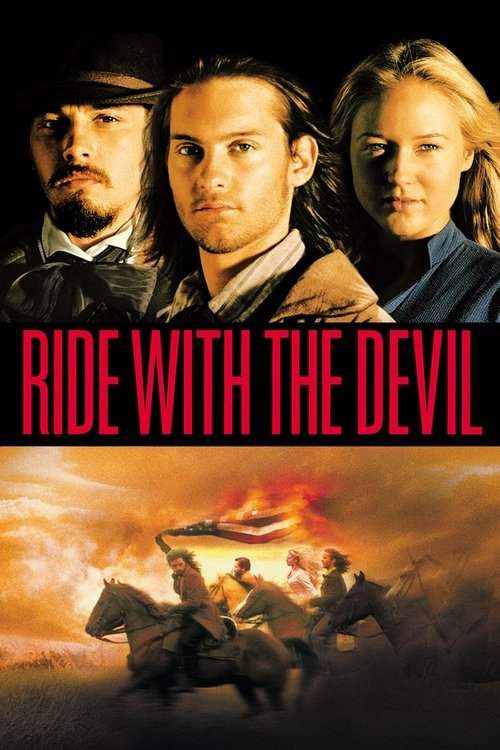
Set during the US Civil War, this film (and, I assume, the novel upon which it was based) attempts to sidestep the issue of being about the US Civil War by trying to mention slavery as little as possible (while simultaneously affording opportunities for the mostly young & white cast to use the so-called ‘n-word’ with a certain amount of impunity) and instead forcing focus on a very narrow (though certainly real) percentage of the population who lived on the Kansas/Missouri border & who found that their neighbors or even family members might have opinions differing from their own. It tries to make a distinction between people fighting for the Confederacy and those fighting for ‘the South’ (the definition of which is very malleable, both in the film and, it must be said, IRL).
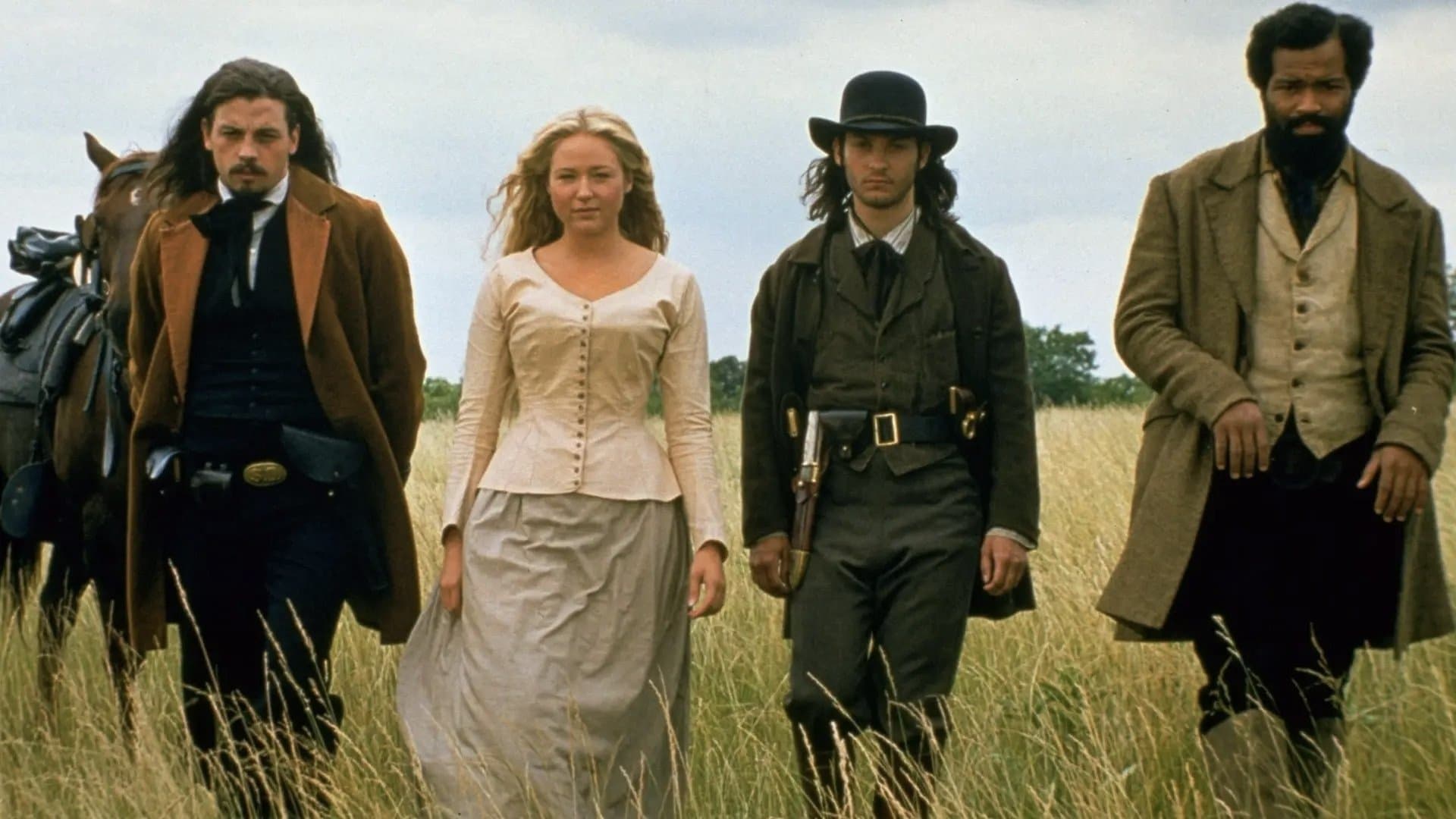
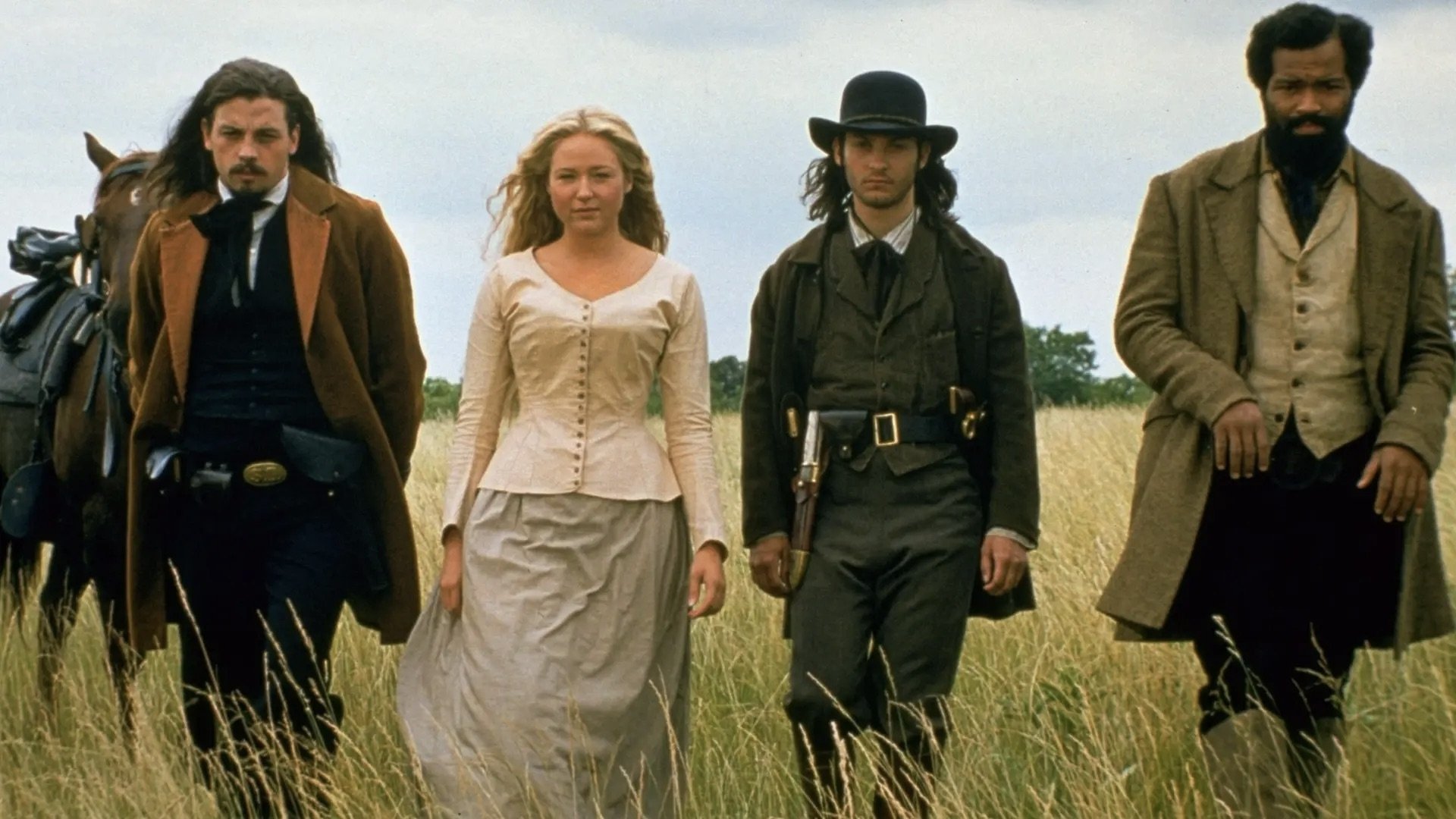
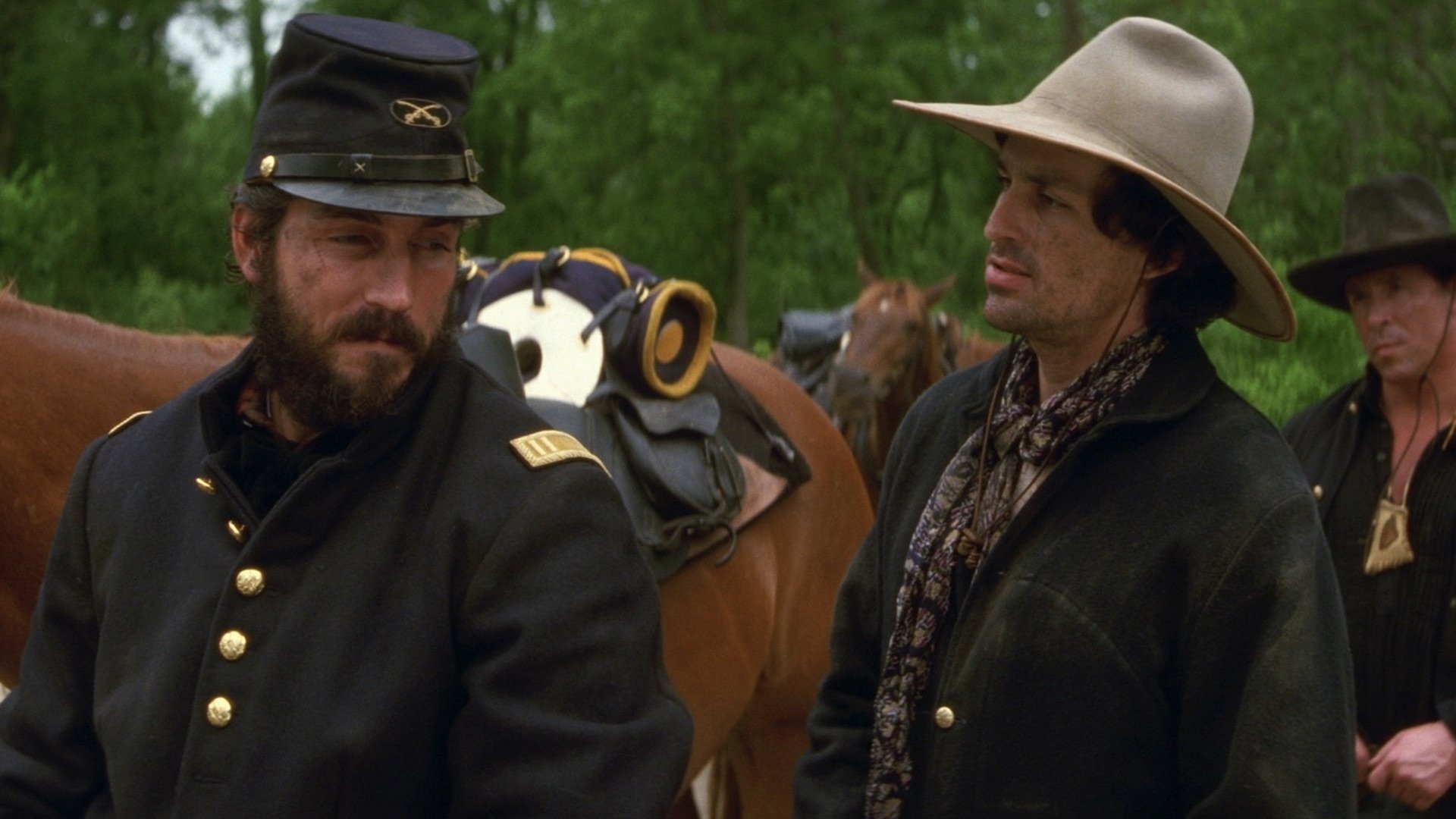
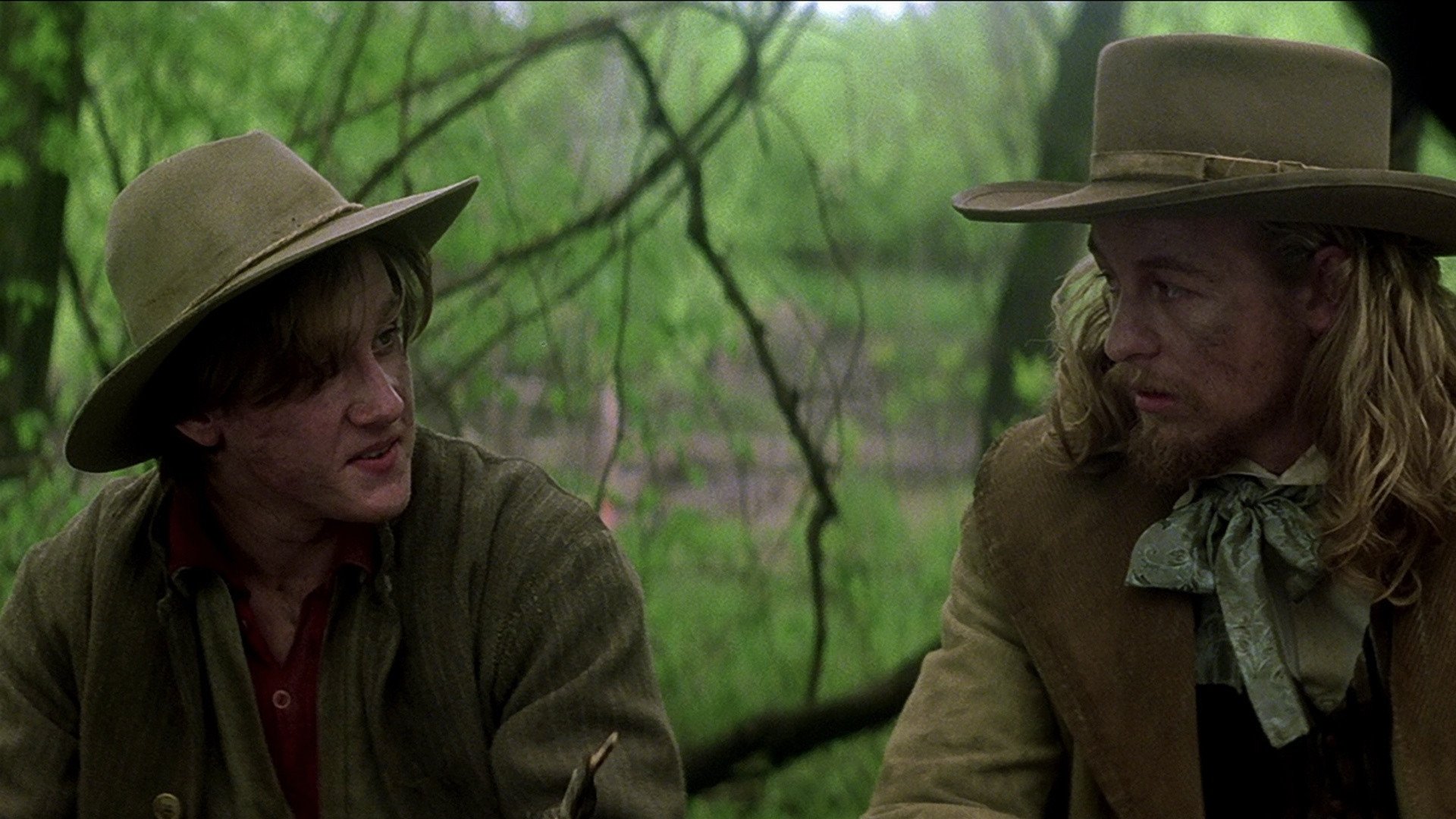
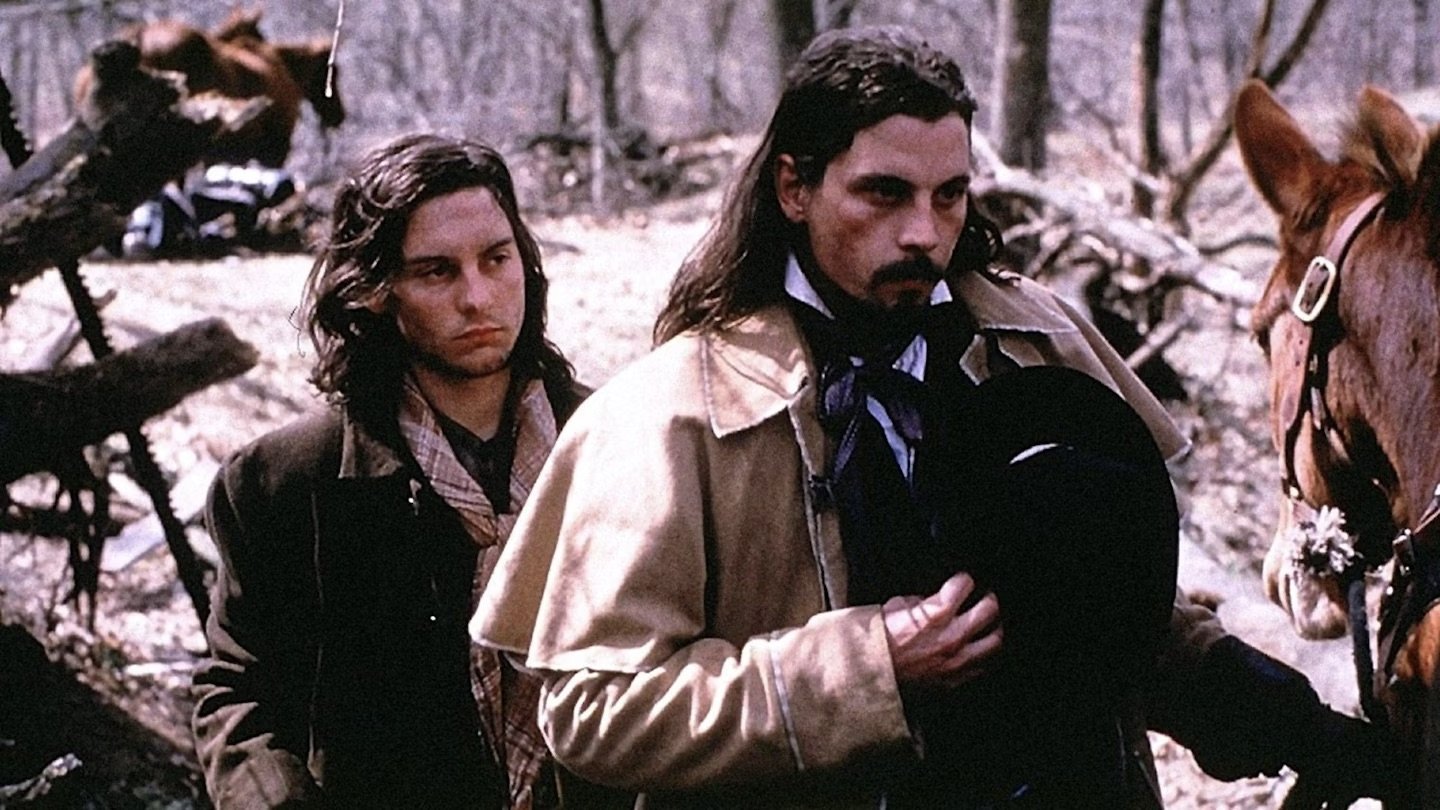
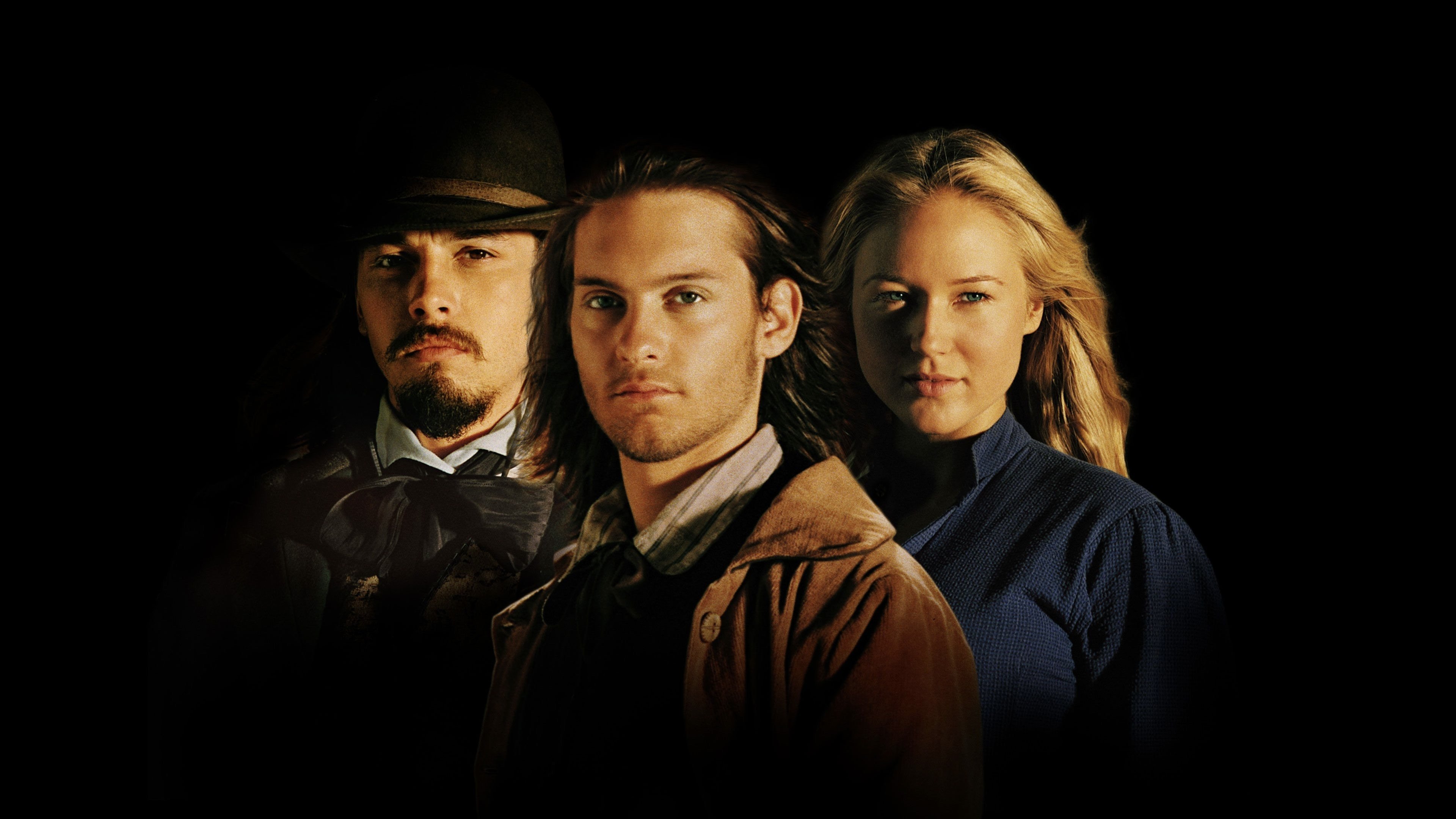
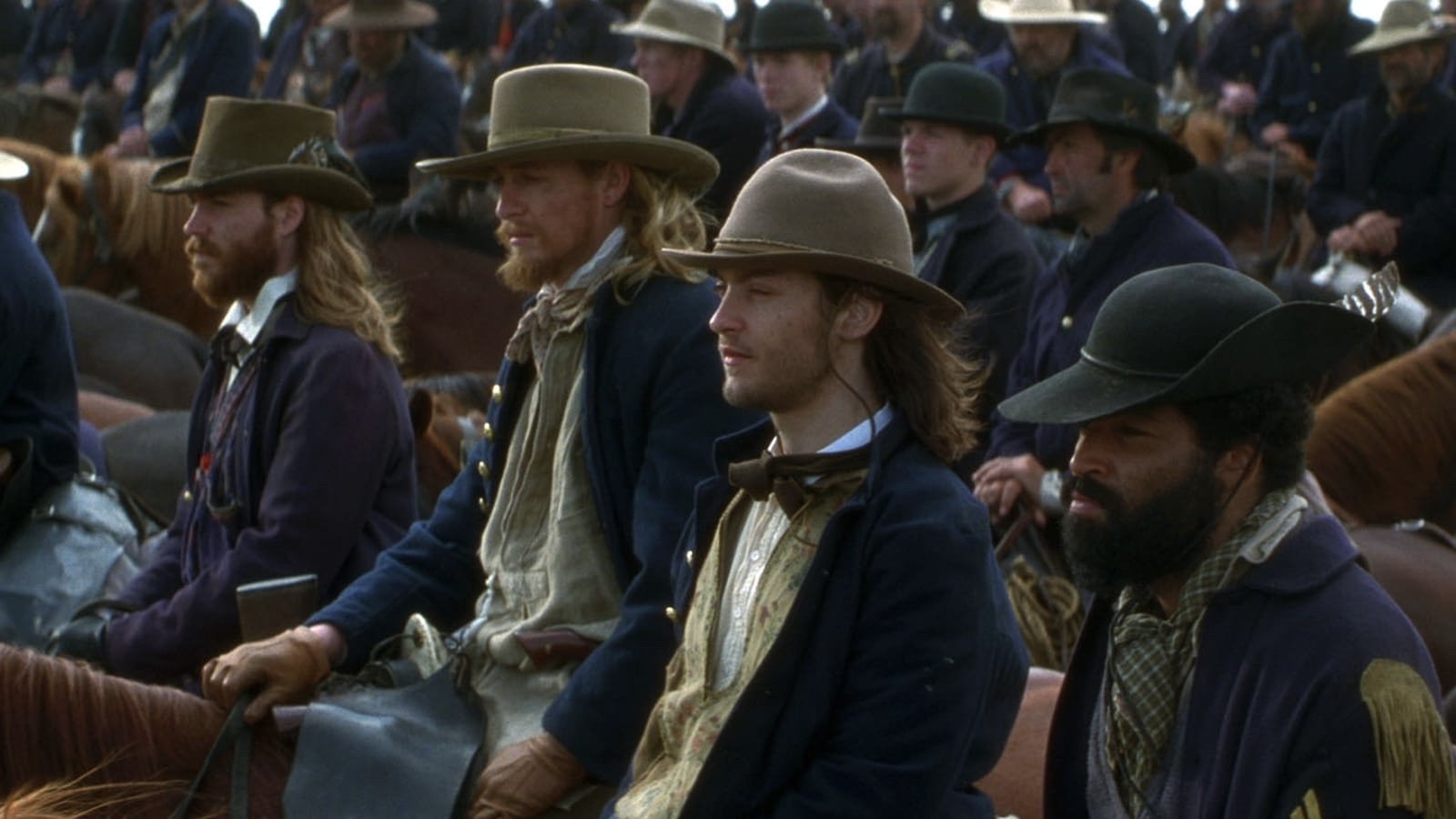
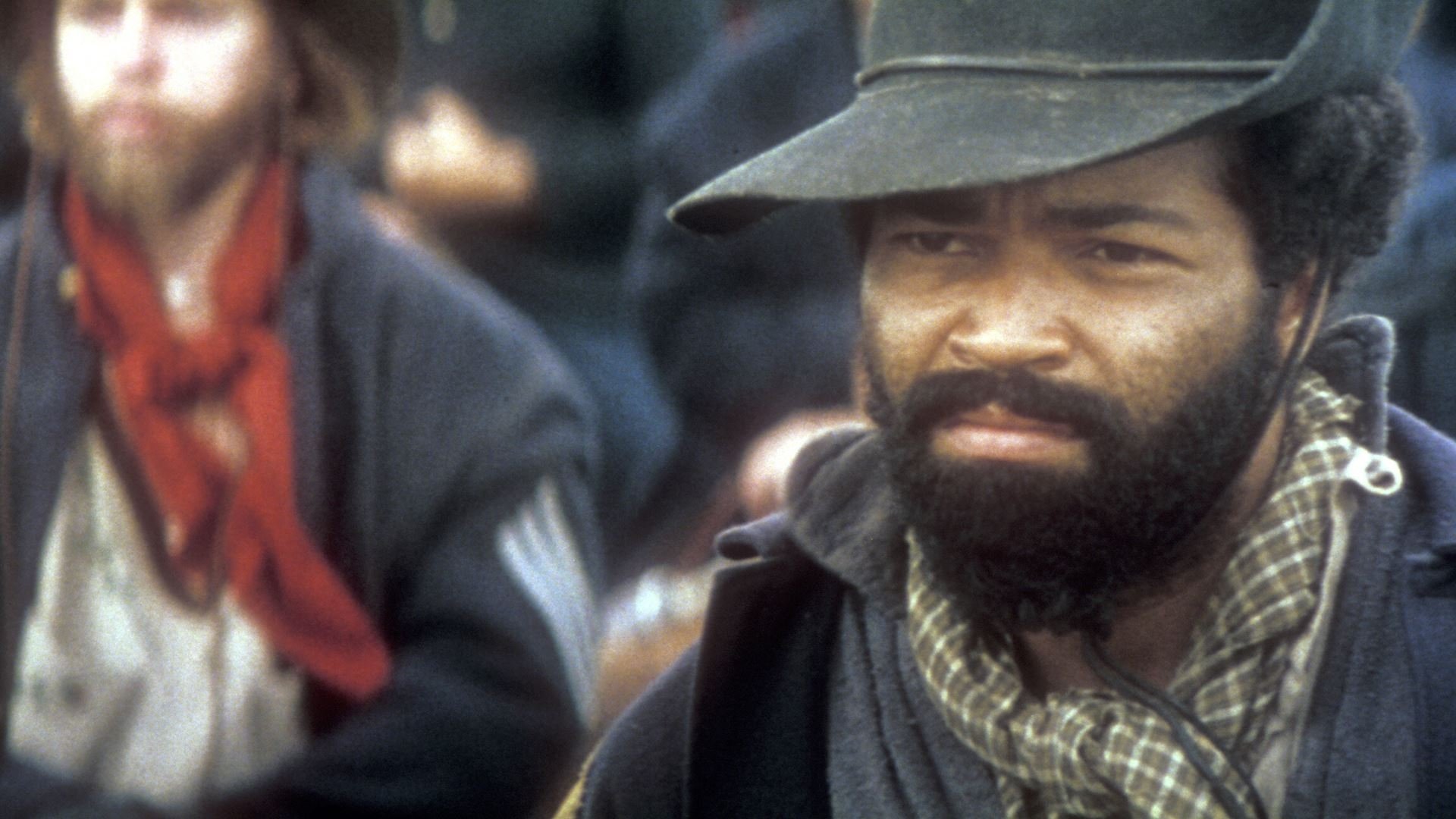
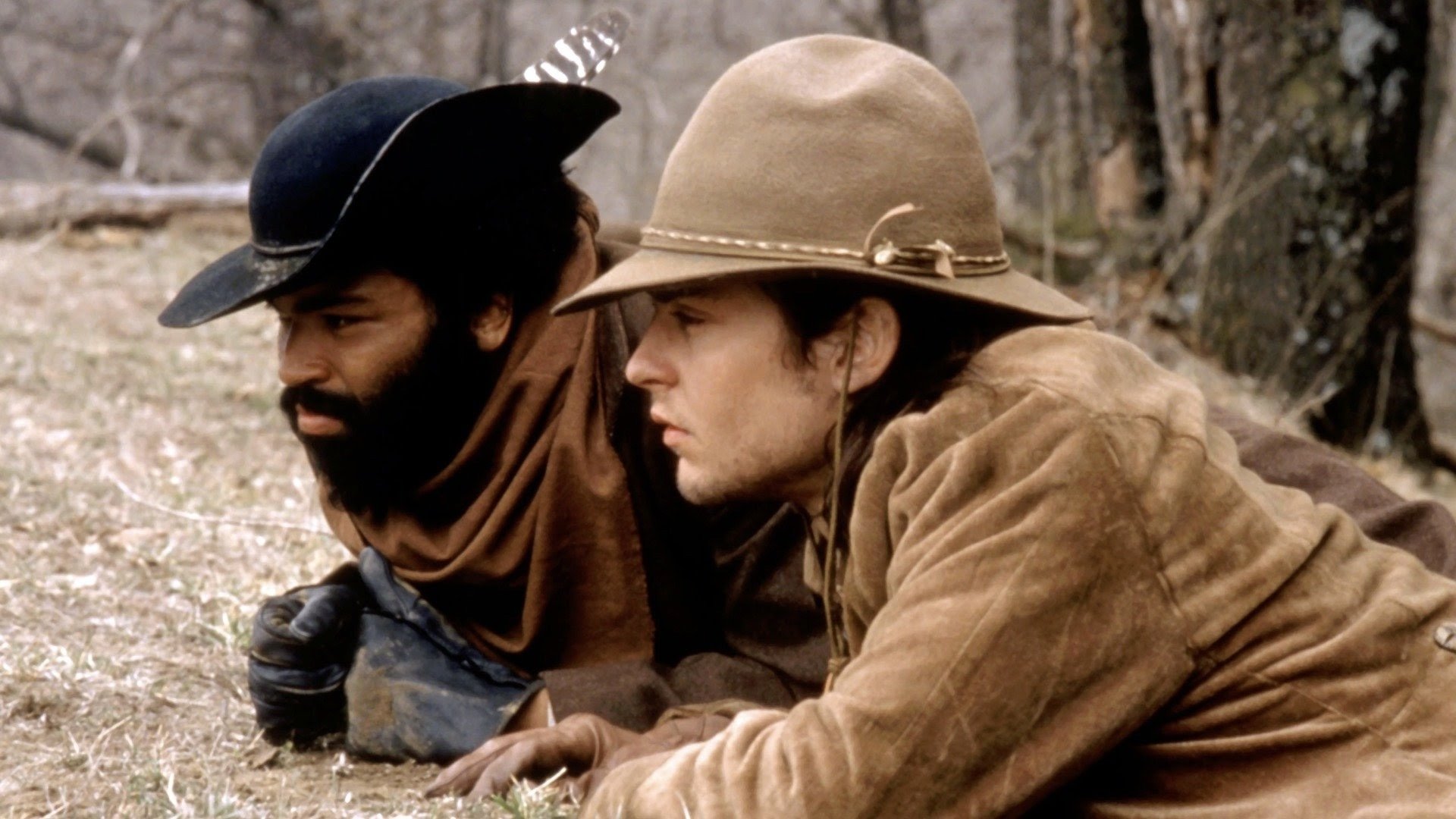
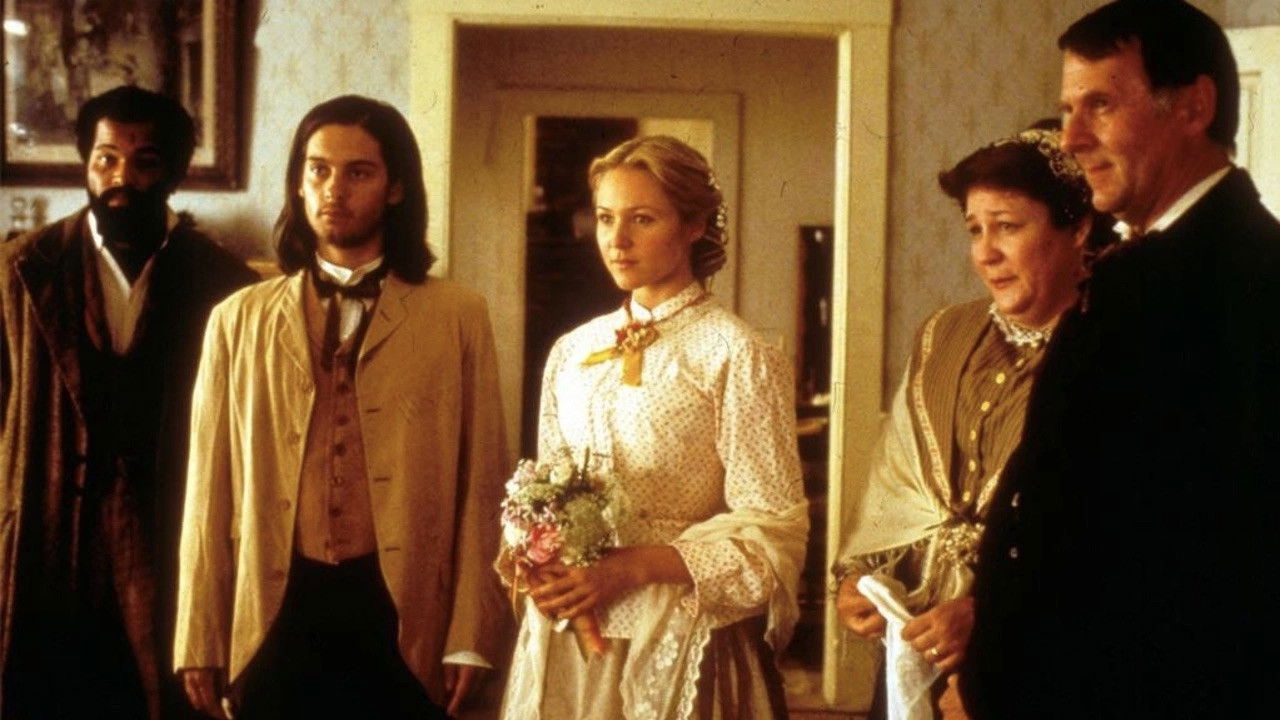
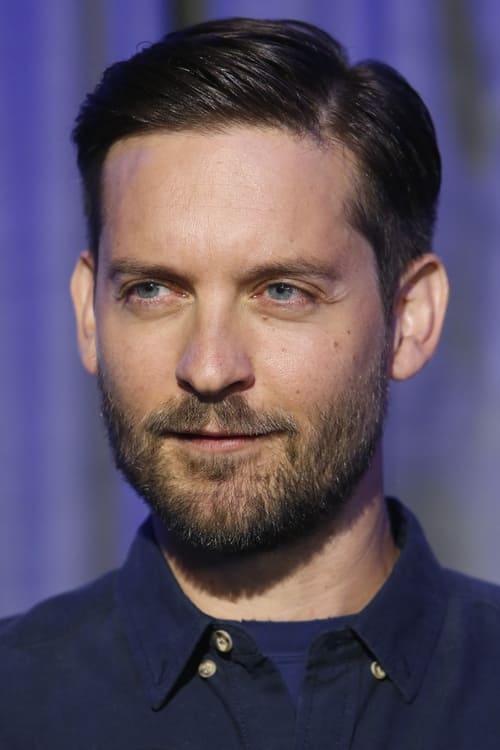
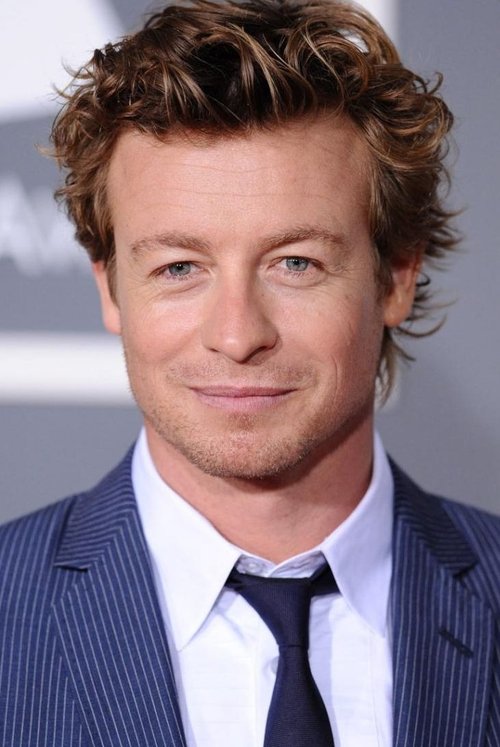
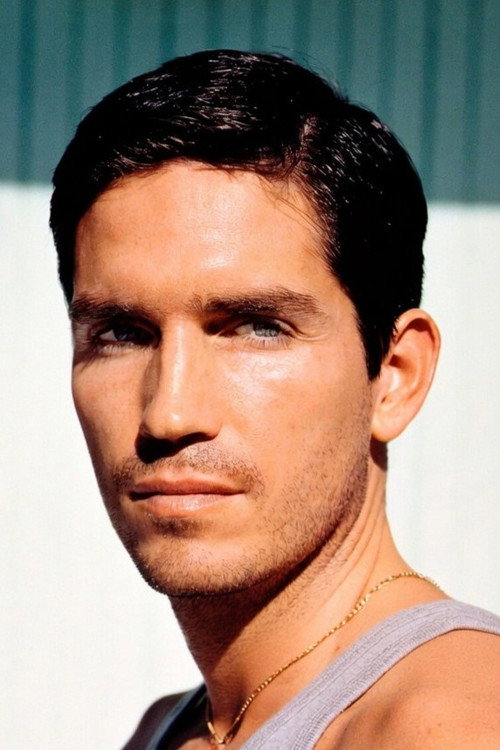
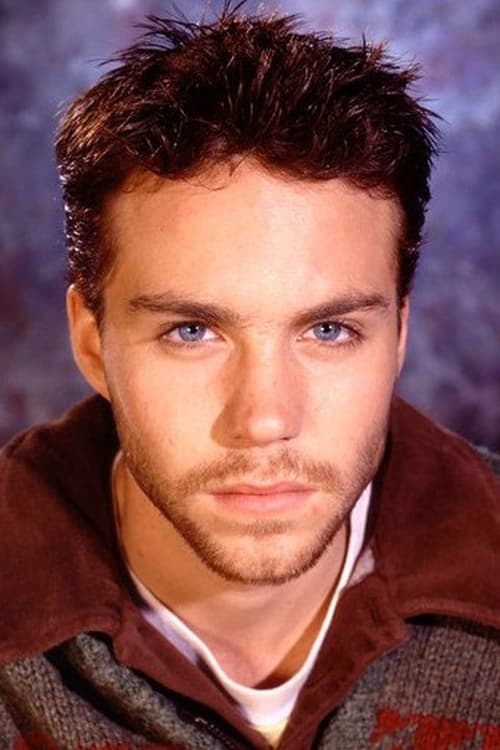
We follow a group of 90s-vintage actors playing paramilitary Bushwackers as they fight a guerrilla war against Jayhawks (the Bushwackers’ abolitionist counterparts) and any collateral Union soldiers they see. They live, they laugh, and they love (enter folk/pop/country musician, but first-time actress, Jewel) while having, we are constantly reminded, a ‘complicated’ relationship with emancipated Black man Holt (played by Jeffrey Wright).
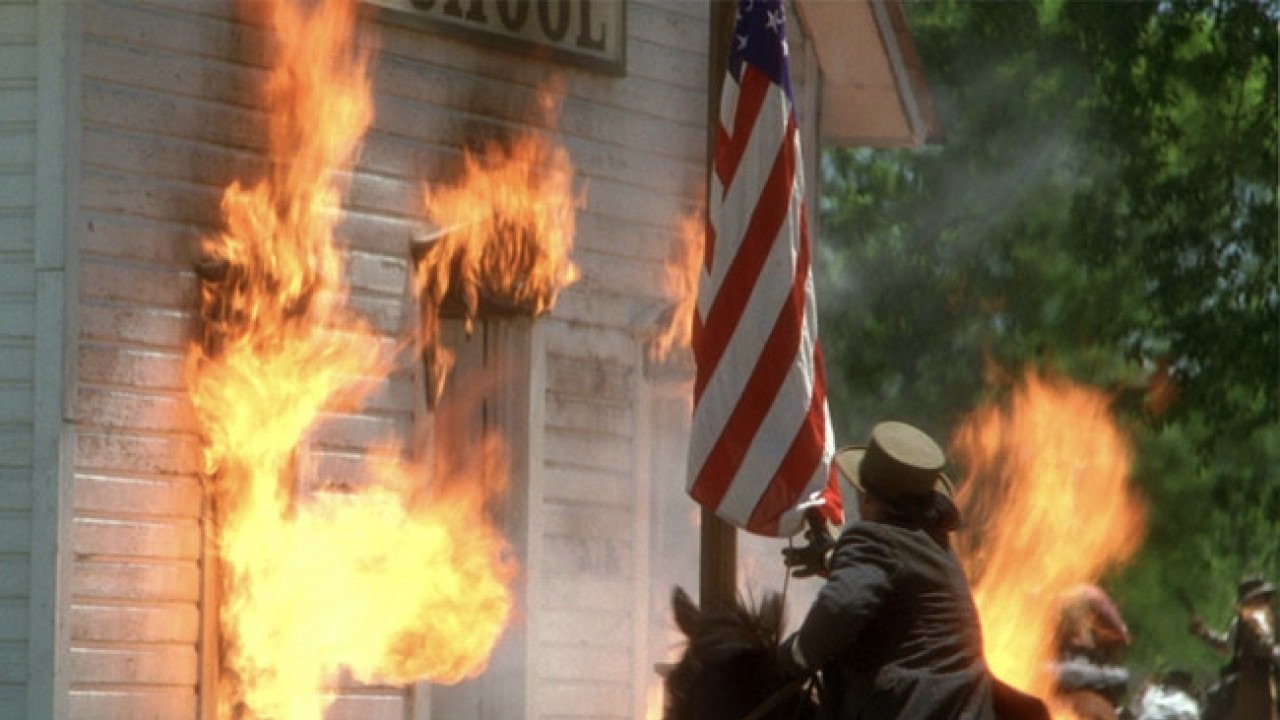
The problem with all of this is that, basically, it is a ‘there are good people on both sides’ type of an argument. And, while this is true about some arguments, it is just not true of this argument. Further, the film tries to imply that Quantrill’s razing of Lawrence, Kansas (including the murders of most of its male population) is a turning point, of sorts, for the characters however the effect of showing it is much more of a very late attempt to appeal directly to the film’s audience, who up until then could have been largely forgiven for thinking ‘hey, these good ole boys ain’t so bad after all.’ But the character’s patently don’t have any sort of epiphany after the slaughter, rather they just move on, if a little more exhausted with fighting (though neither the reasons for it nor effects of it)—the story shifting to domesticity (and an excuse to show Jewel breastfeeding an infant—twice!) and personal vendettas. And so showing the raid at all is little more than a gory set-piece.
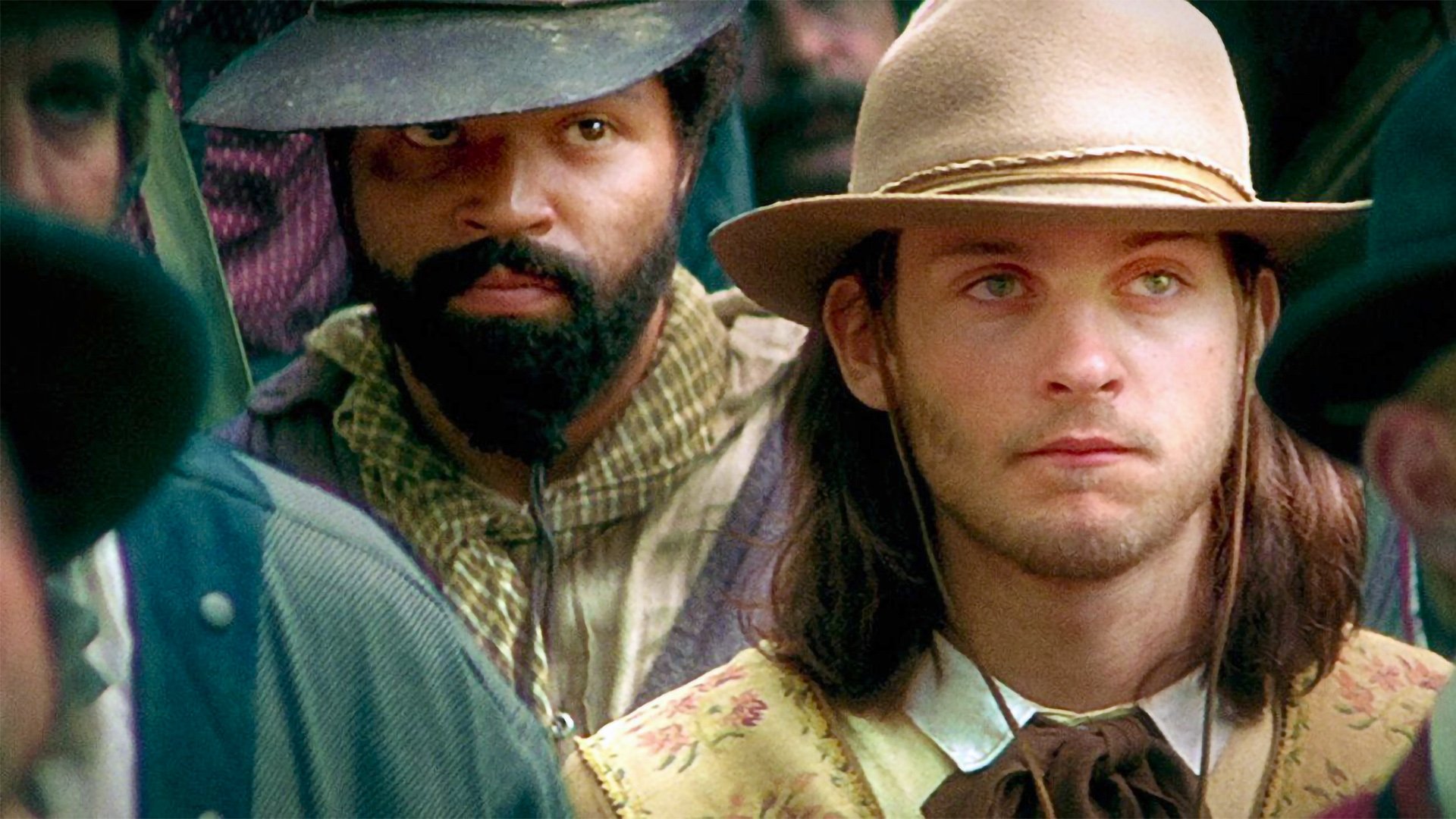
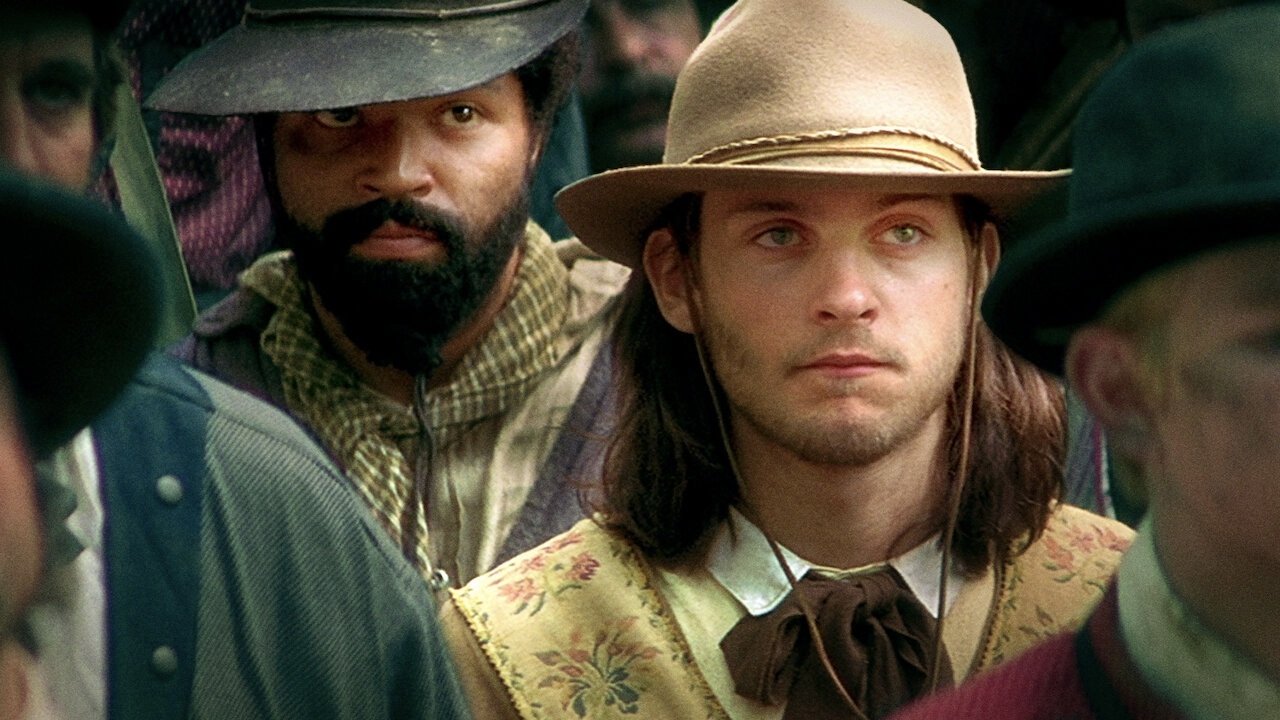
That said, the film looks great, with Frederick Elmes’ cinematography working overtime (not quite sure how, but between this and ‘The Ice Storm,’ he shoots some of the most immediately recognizable snow footage I think I’ve ever seen). The cast is decent; Maguire, while having the ‘wrong’ voice is better at inhabiting his character than I’d have guessed, and Ulrich is able to transcend, for the first time for me, his dopey nickname & genuinely disappear into a role, but Wright is the obvious standout here—if I watch this again, it will be exclusively to see what he’s doing in the background of the frames. There is one other thing that I need to mention—I really hated the score; its heroic swells, its contemplative ebbs, its abrupt transitions between. I’ve liked a lot of composer Mychael Danna’s work both before and after this, but this seemed very mechanical and unrelated to the film as a whole, instead being built solely on the pace of the editing.
I guess I’ve gone with a straight down the middle rating as most of its element are quite good, but it’s message is very, very awkwardly argued.
Set during the US Civil War, this film (and, I assume, the novel upon which it was based) attempts to sidestep the issue of being about the US Civil War by trying to mention slavery as little as possible (while simultaneously affording opportunities for the mostly young & white cast to use the so-called ‘n-word’ with a certain amount of impunity) and instead forcing focus on a very narrow (though certainly real) percentage of the population who lived on the Kansas/Missouri border & who found that their neighbors or even family members might have opinions differing from their own. It tries to make a distinction between people fighting for the Confederacy and those fighting for ‘the South’ (the definition of which is very malleable, both in the film and, it must be said, IRL).
We follow a group of 90s-vintage actors playing paramilitary Bushwackers as they fight a guerrilla war against Jayhawks (the Bushwackers’ abolitionist counterparts) and any collateral Union soldiers they see. They live, they laugh, and they love (enter folk/pop/country musician, but first-time actress, Jewel) while having, we are constantly reminded, a ‘complicated’ relationship with emancipated Black man Holt (played by Jeffrey Wright).
The problem with all of this is that, basically, it is a ‘there are good people on both sides’ type of an argument. And, while this is true about some arguments, it is just not true of this argument. Further, the film tries to imply that Quantrill’s razing of Lawrence, Kansas (including the murders of most of its male population) is a turning point, of sorts, for the characters however the effect of showing it is much more of a very late attempt to appeal directly to the film’s audience, who up until then could have been largely forgiven for thinking ‘hey, these good ole boys ain’t so bad after all.’ But the character’s patently don’t have any sort of epiphany after the slaughter, rather they just move on, if a little more exhausted with fighting (though neither the reasons for it nor effects of it)—the story shifting to domesticity (and an excuse to show Jewel breastfeeding an infant—twice!) and personal vendettas. And so showing the raid at all is little more than a gory set-piece.
That said, the film looks great, with Frederick Elmes’ cinematography working overtime (not quite sure how, but between this and ‘The Ice Storm,’ he shoots some of the most immediately recognizable snow footage I think I’ve ever seen). The cast is decent; Maguire, while having the ‘wrong’ voice is better at inhabiting his character than I’d have guessed, and Ulrich is able to transcend, for the first time for me, his dopey nickname & genuinely disappear into a role, but Wright is the obvious standout here—if I watch this again, it will be exclusively to see what he’s doing in the background of the frames. There is one other thing that I need to mention—I really hated the score; its heroic swells, its contemplative ebbs, its abrupt transitions between. I’ve liked a lot of composer Mychael Danna’s work both before and after this, but this seemed very mechanical and unrelated to the film as a whole, instead being built solely on the pace of the editing.
I guess I’ve gone with a straight down the middle rating as most of its element are quite good, but it’s message is very, very awkwardly argued.