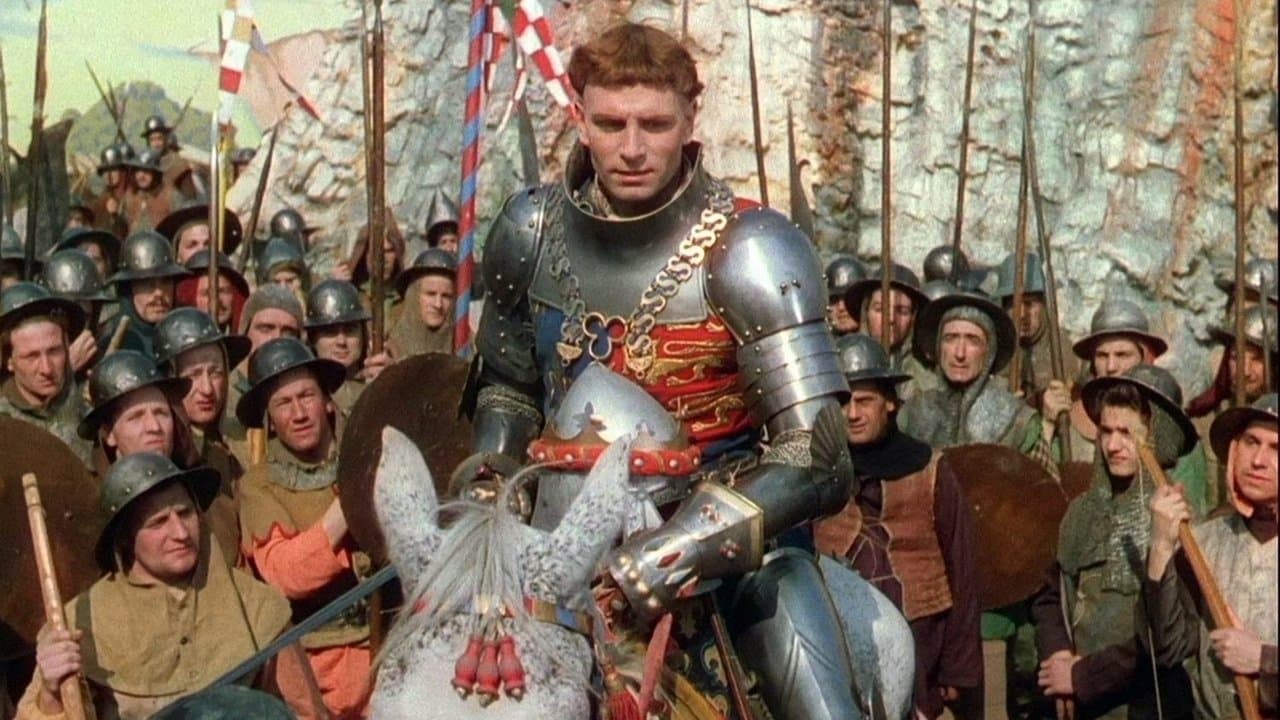
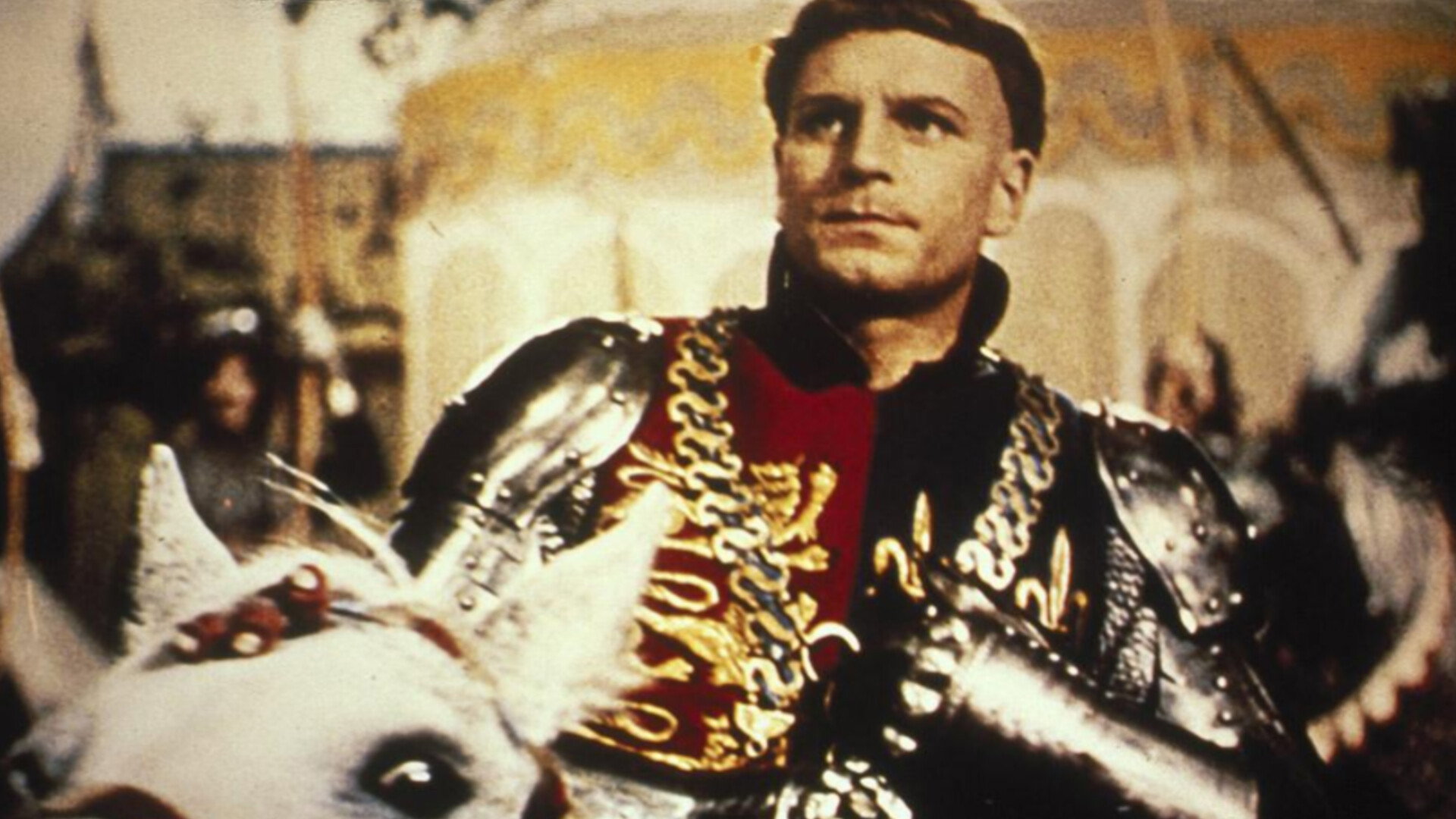
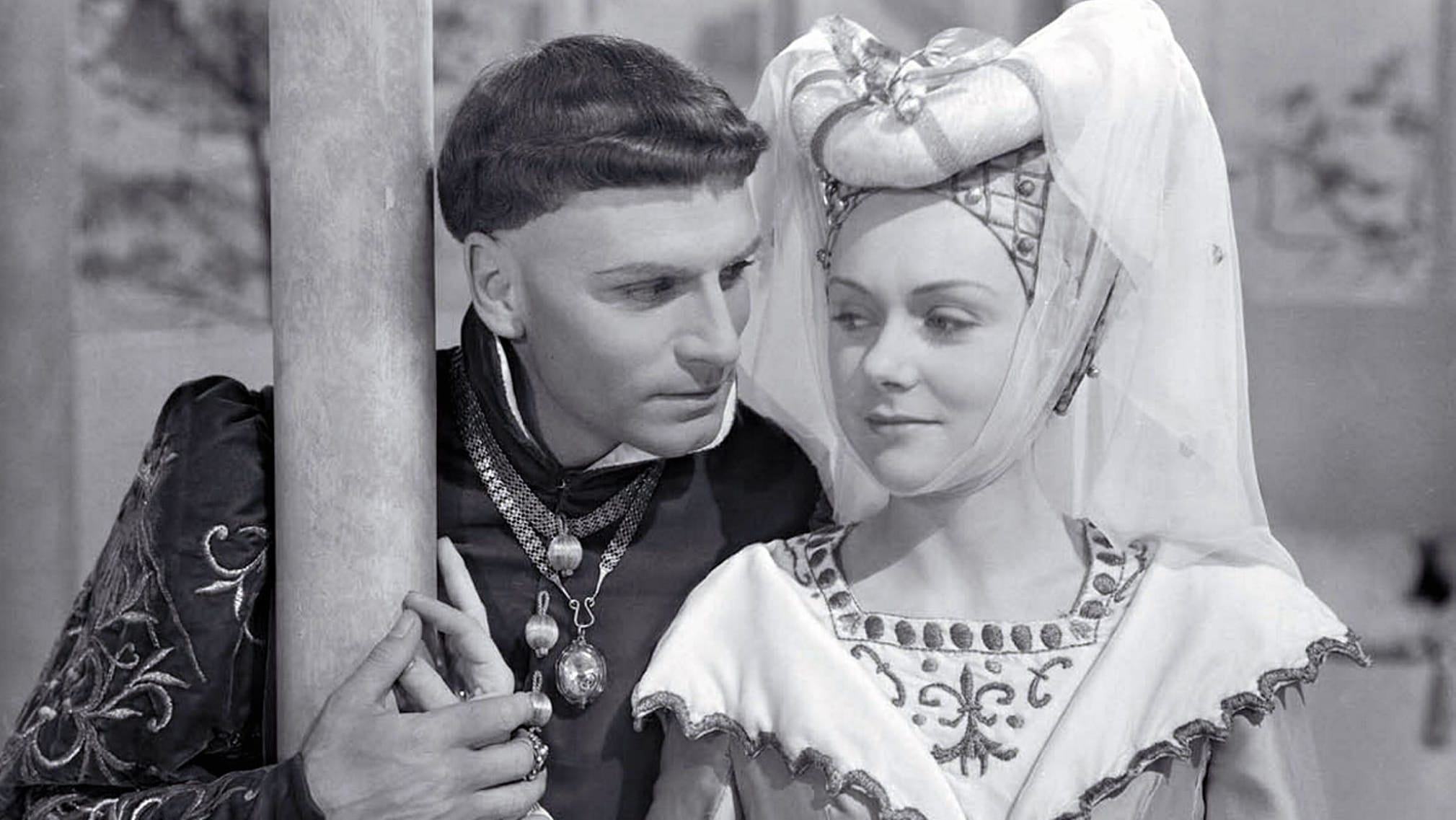
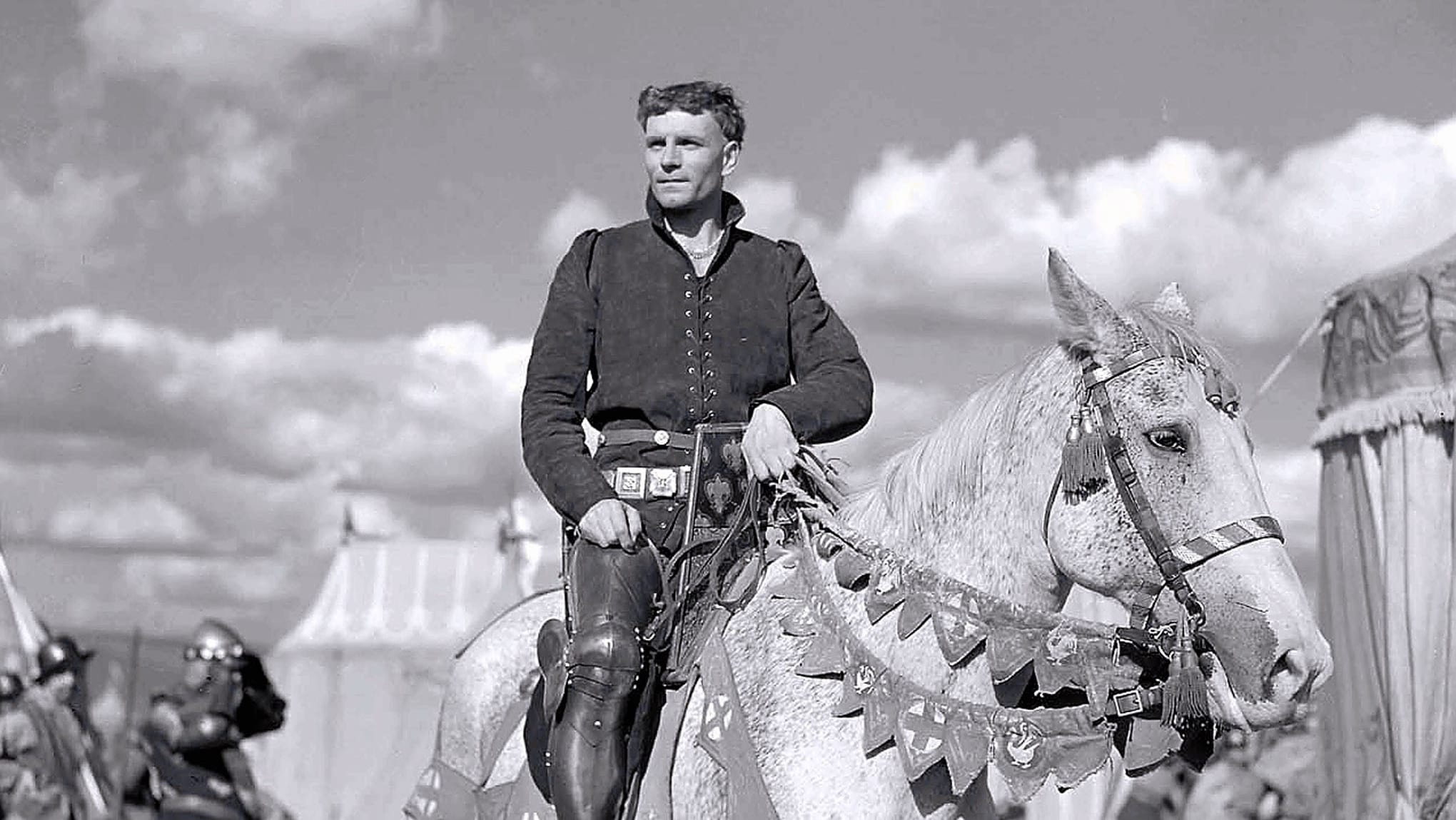
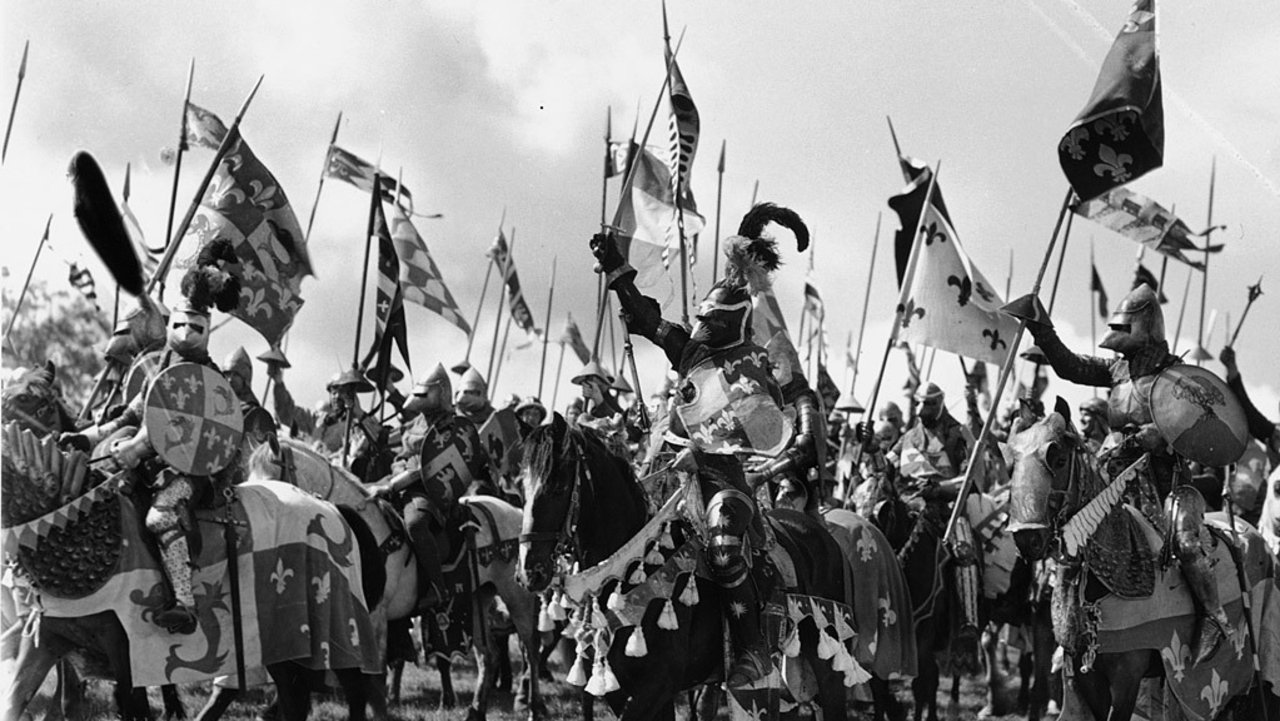
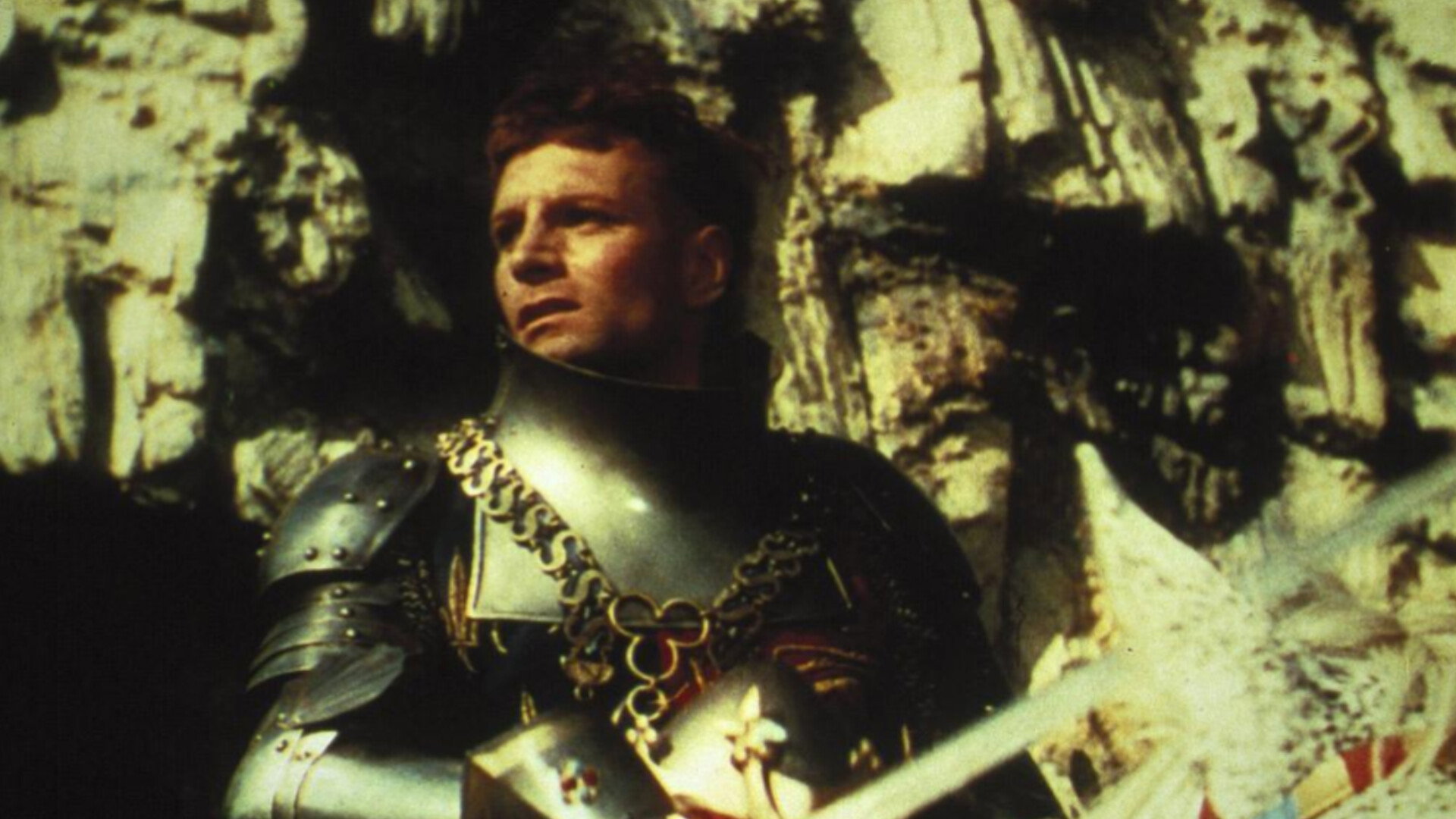
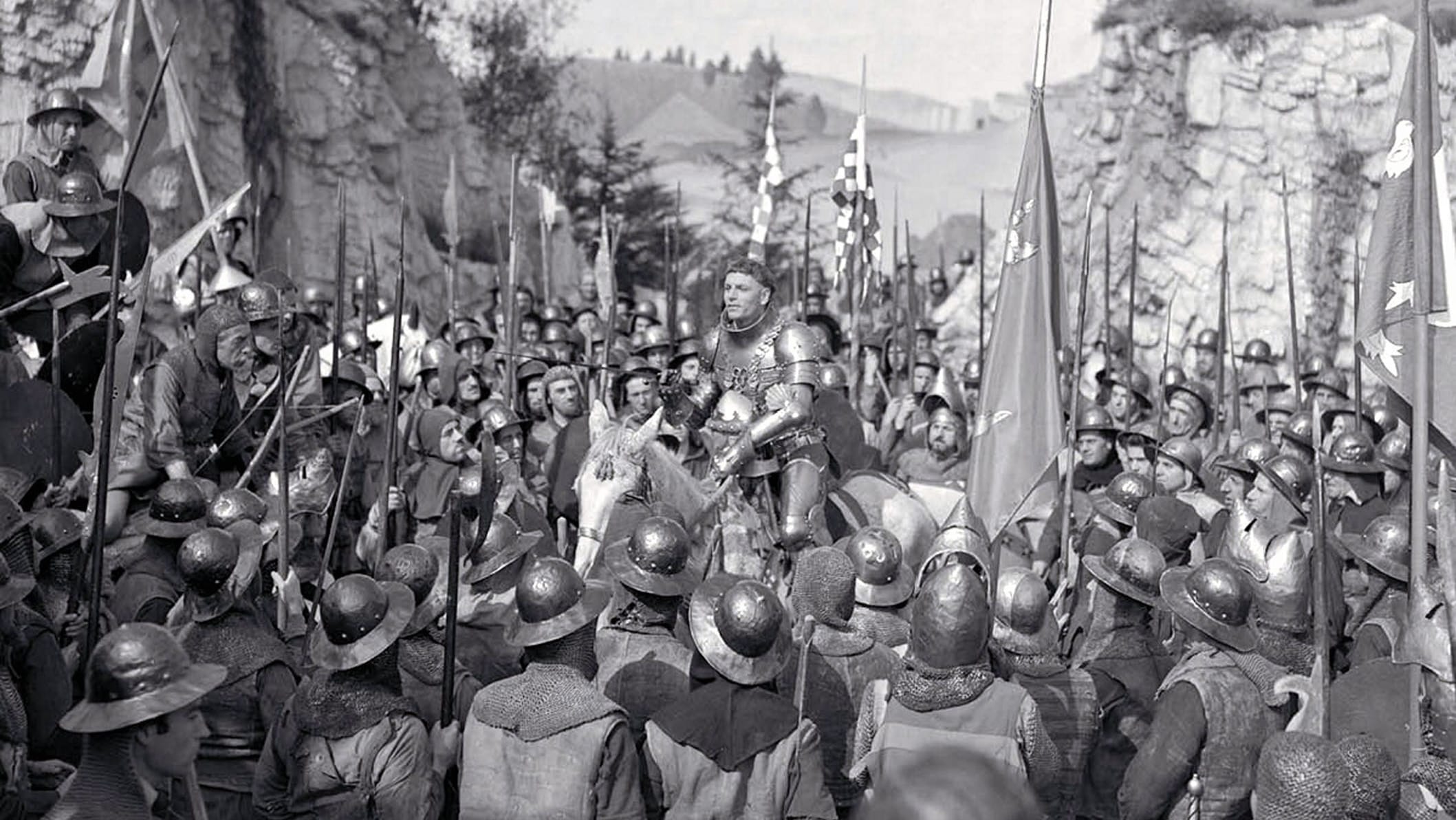
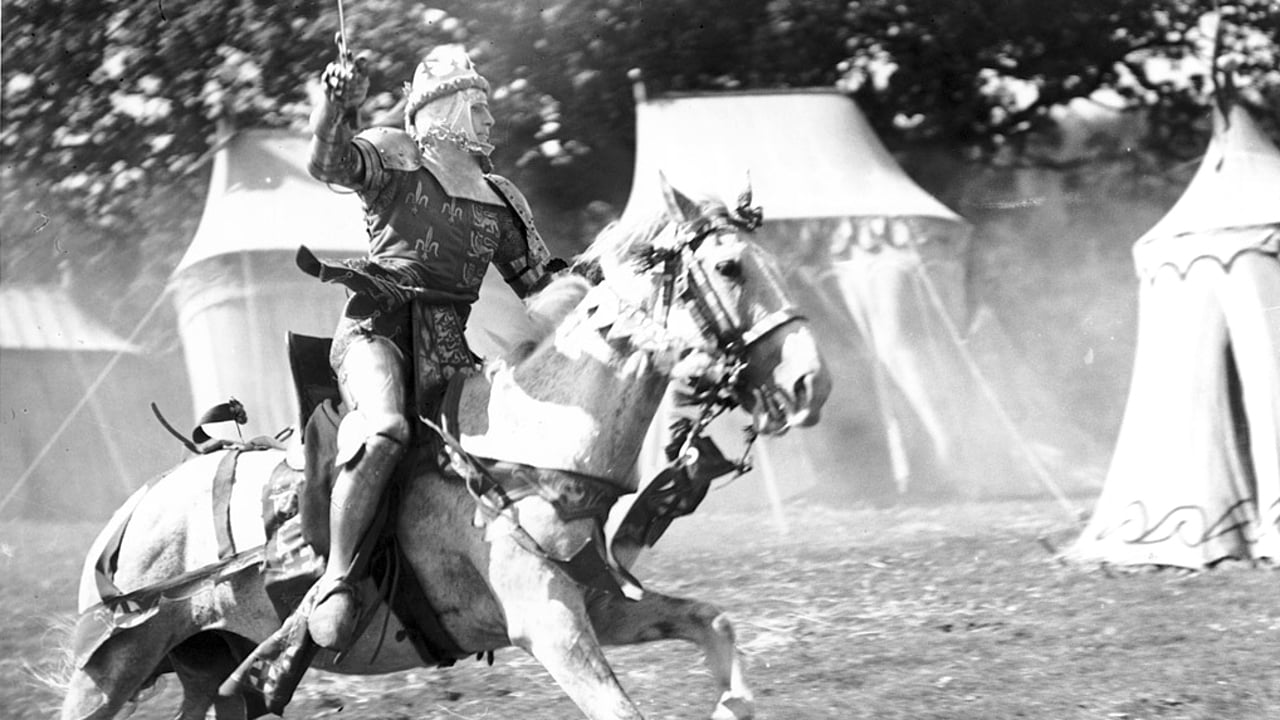
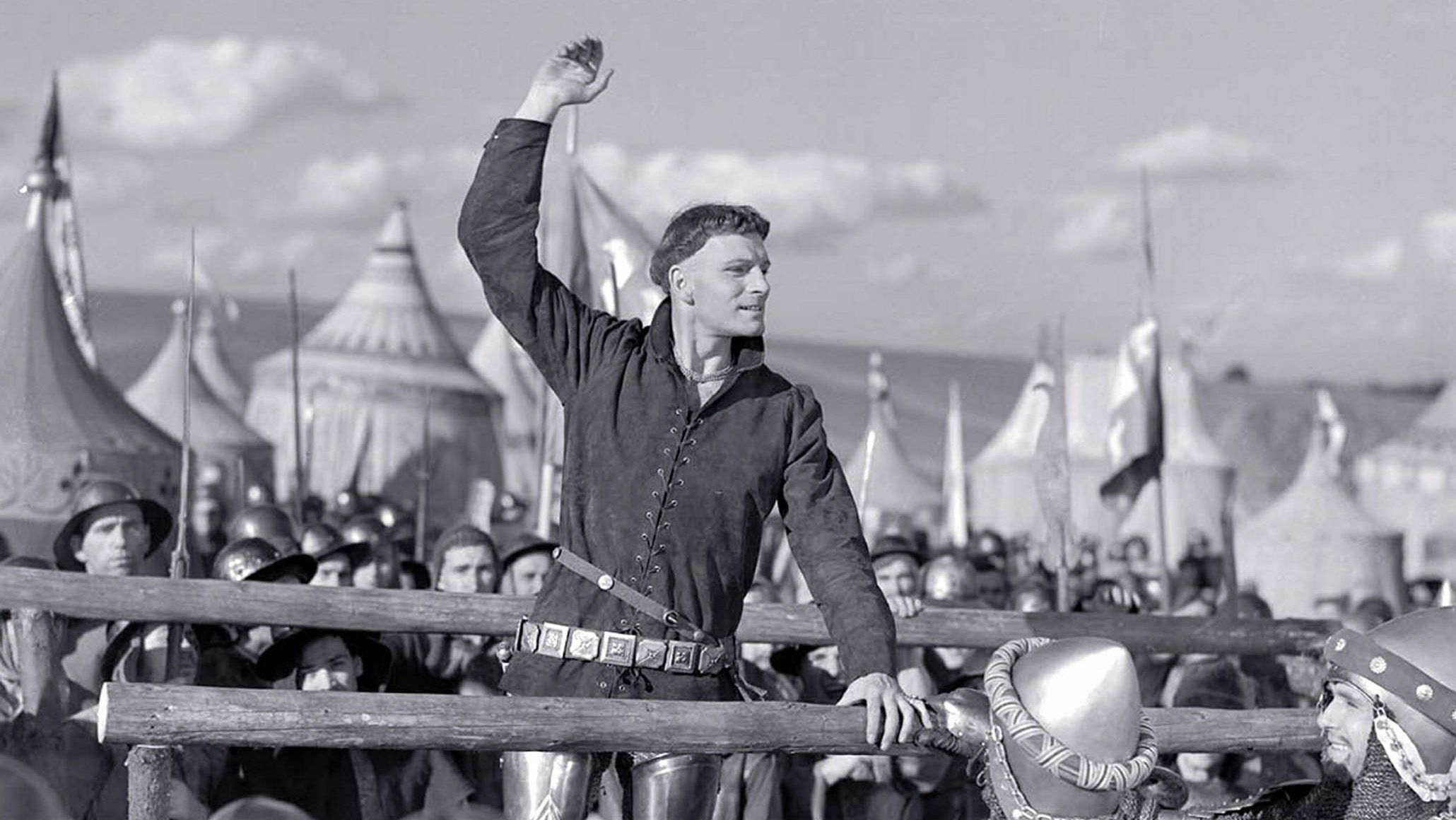
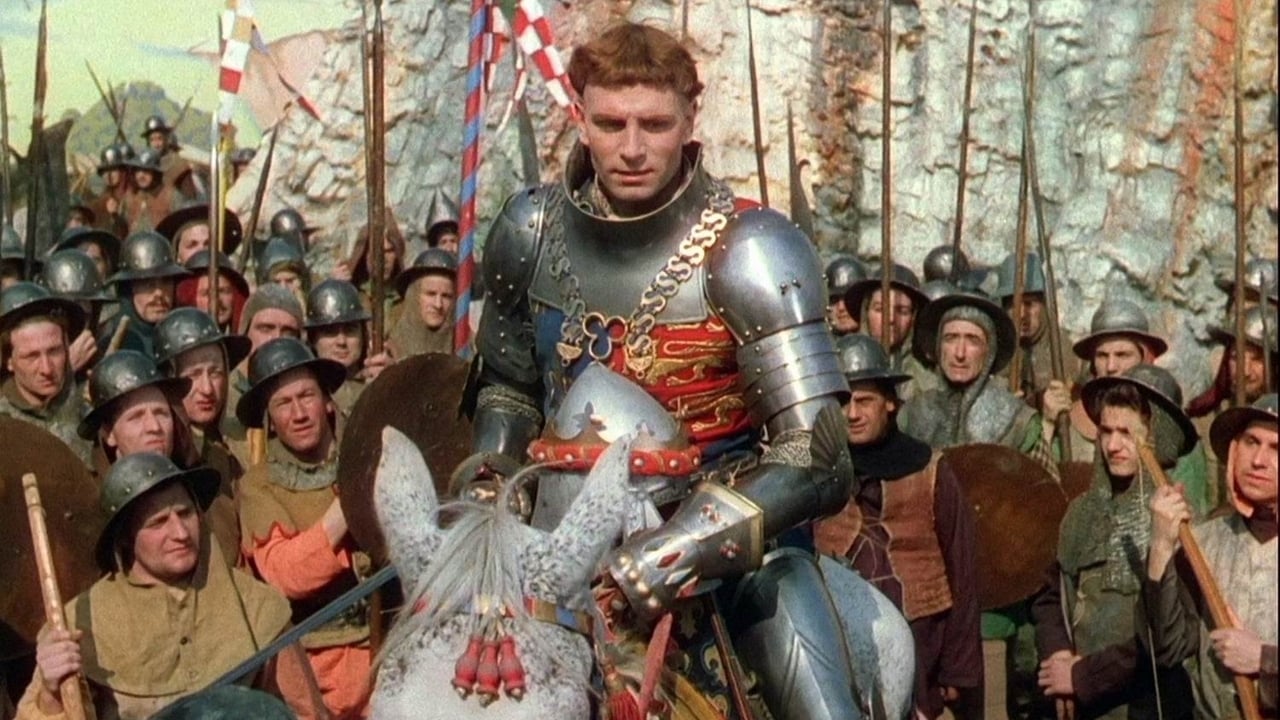
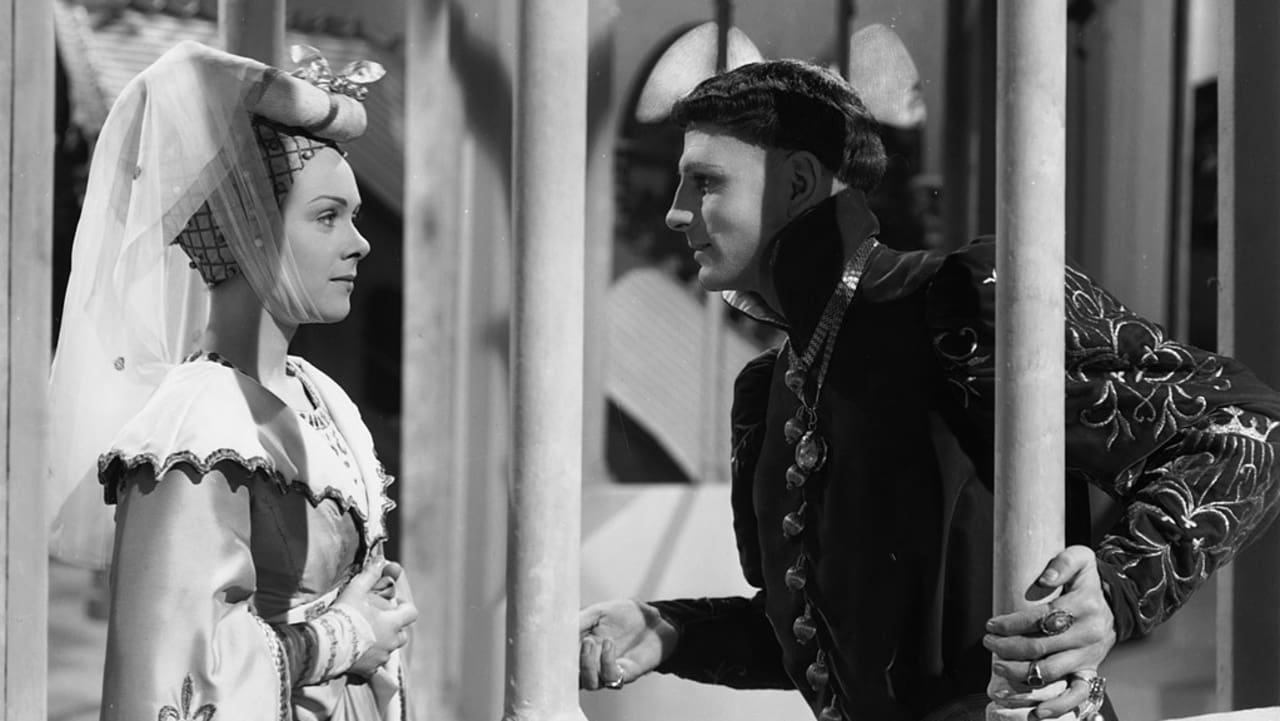
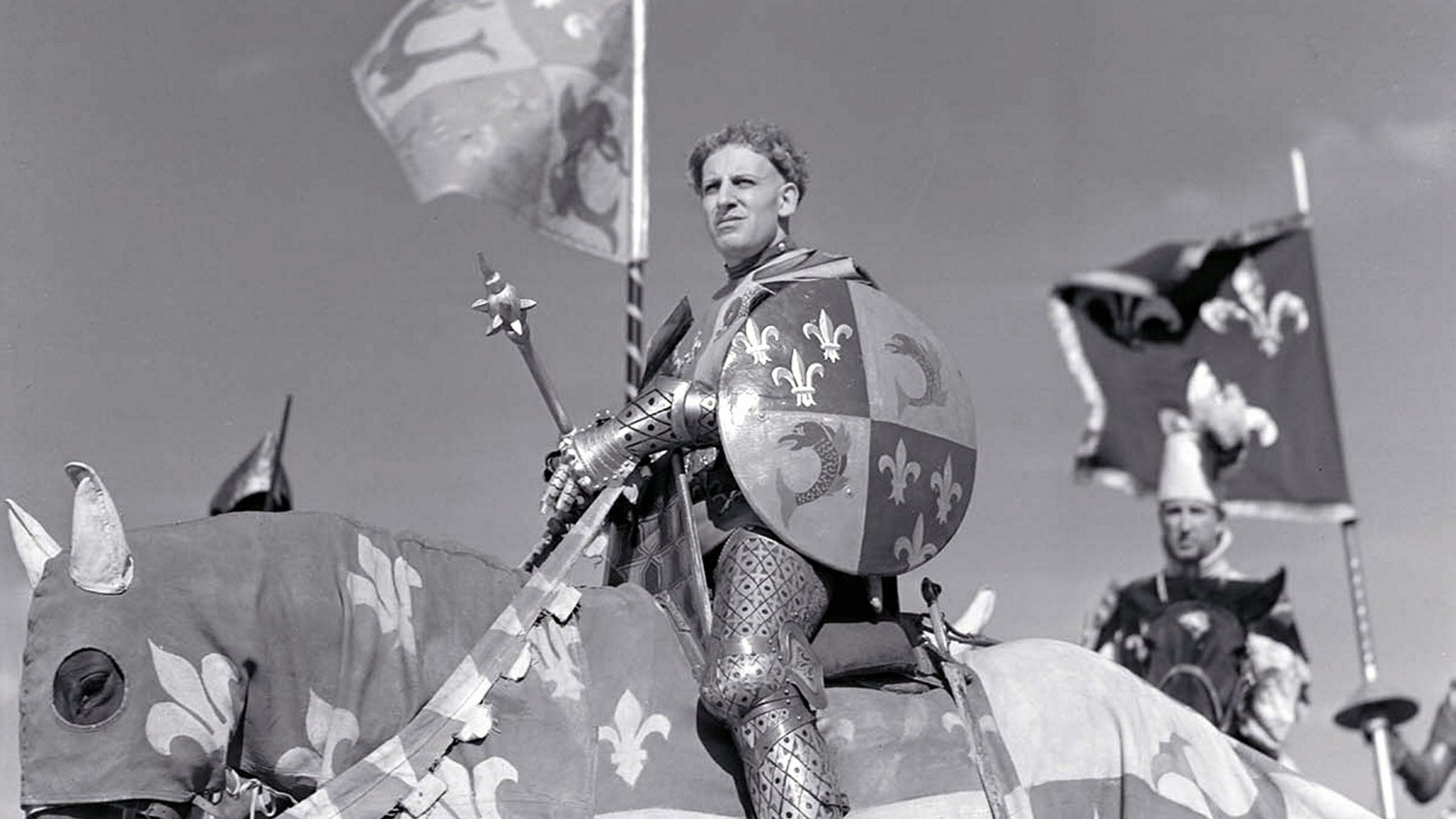
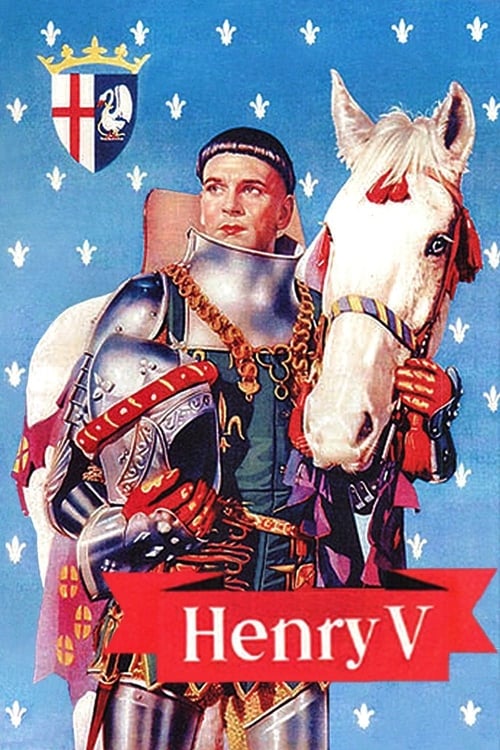
In 28 Years Later, brief clips of Olivier’s Henry V, or as the original title exclaims The Chronicle History of King Henry the Fifth with His Battell Fought at Agincourt in France, are used broadly. As Britain lies in ruins after a viral outbreak, Danny Boyle draws a visual parallel between the nation's past and its desolate present (Brexit, I think). Including one of the most sophisticated British films of the 1940s ironically underscores how far civilization has fallen. It’s not just a cinematic nod; it’s a haunting juxtaposition of lost grandeur and present despair.
By just incorporating a single clip of this film into a modern movie creates a ton of baggage. Because it's a slippery slope into pretentious wankery with this specific film, The Chronicle History of King Henry the Fifth with His Battell Fought at Agincourt in France. I'm not gonna sit here and pretend with you that I understood any of the shit coming out of their mouths. I don't.
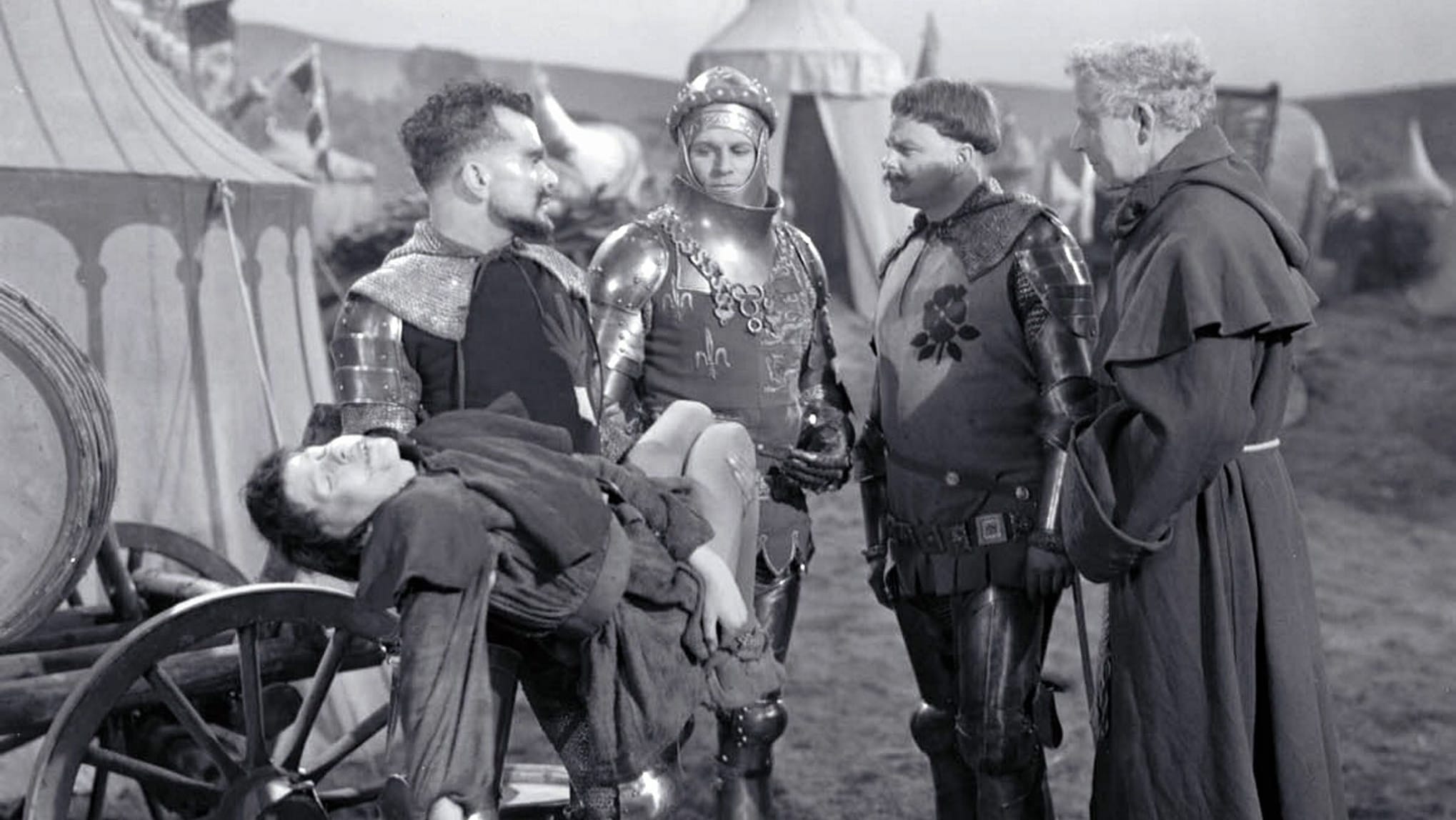
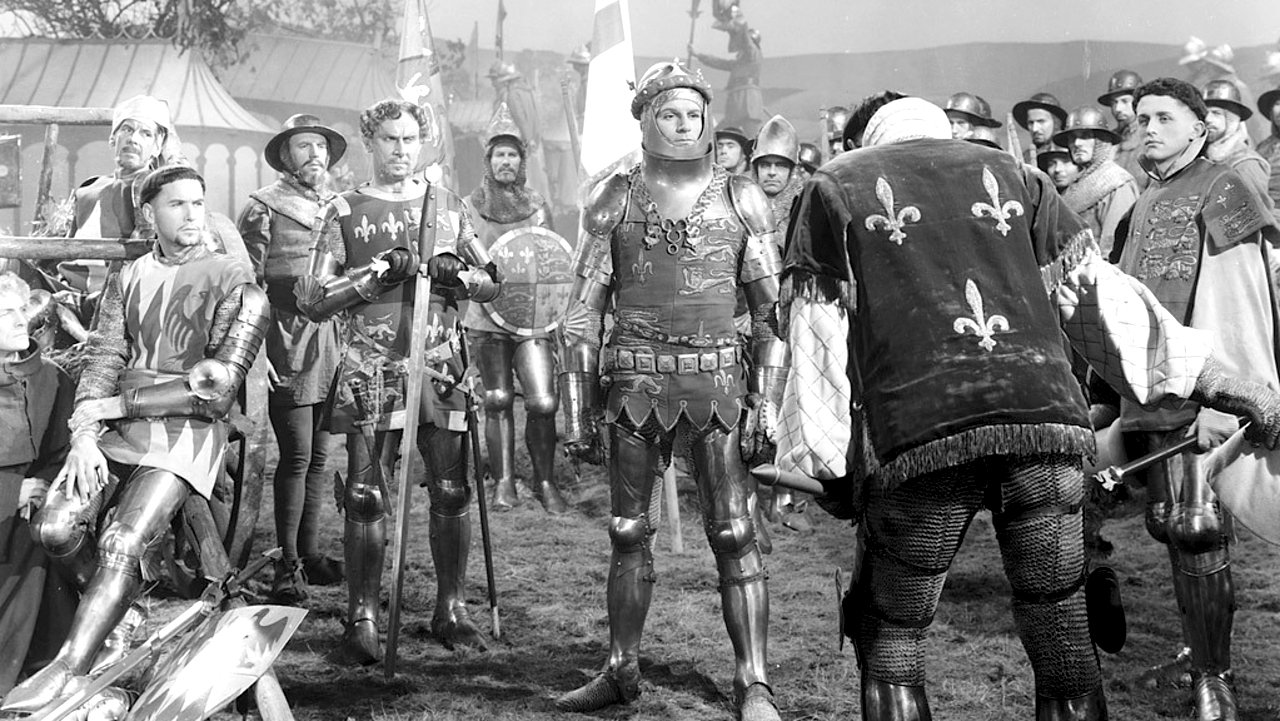
I understand that Shakespeare's texts are a love of the English language, a love for communication. The film itself stands as a history of wartime cinema. The entire film is a patriotic call to action because the lengthy speeches of Henry communicate a rallying cry of brotherhood and courage. It's to uplift British troops. Olivier made strategic edits to shape Henry into a more idealized figure. It elevates Henry as a symbol of virtuous leadership at a time when Britain needed moral reinforcement. Like later adaptations have delved into Henry’s inner demons, Olivier’s version lives on as a pristine icon of national idealism: even in times of darkness, nations don’t just fight with arms, they fight with meaning.
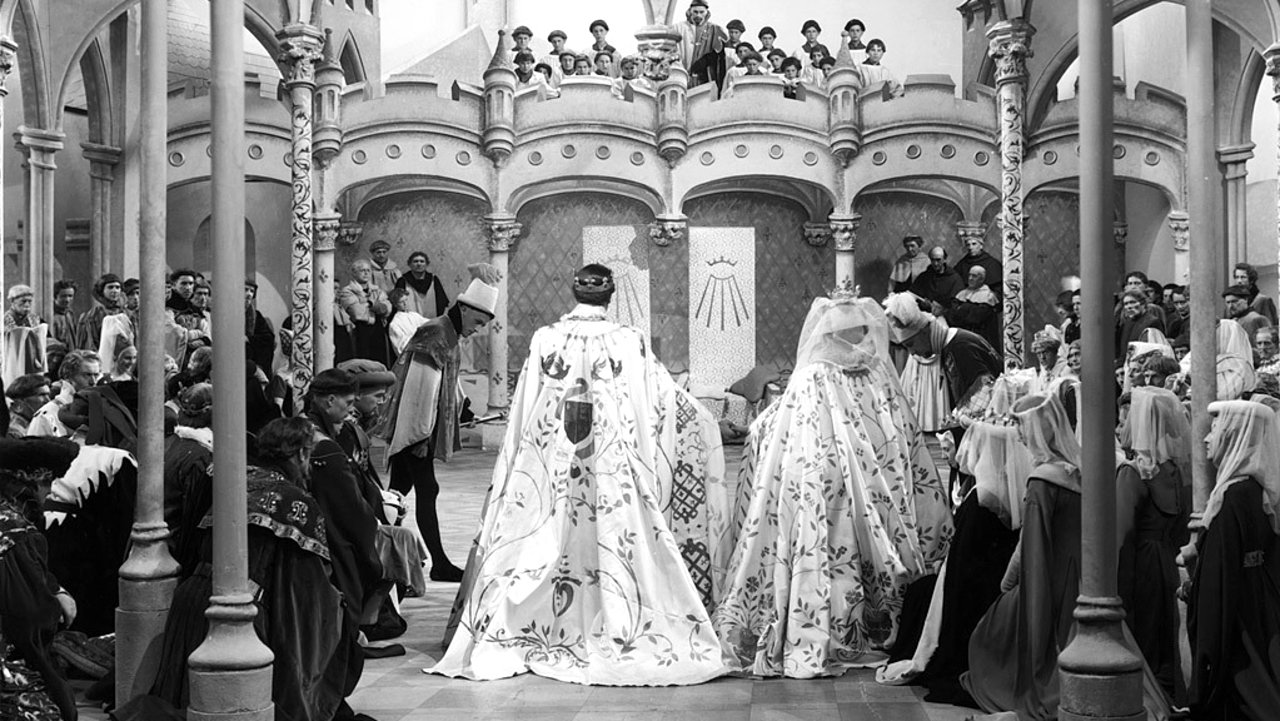
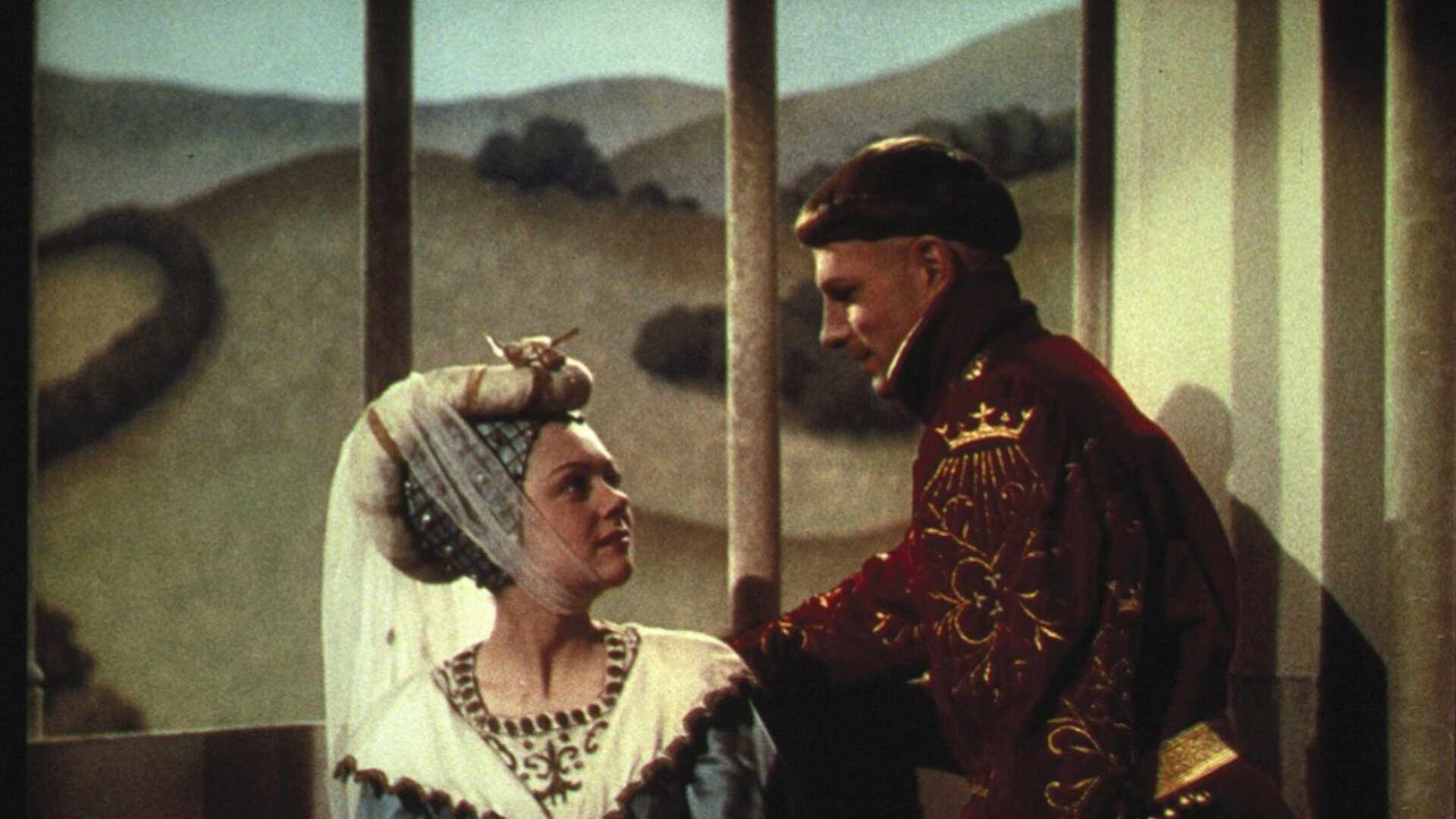
The film begins with a clever meta-theatrical device: a literal staging of Henry V in the Globe Theatre in 1600. The film stages a transition from highbrow backstage melodrama to "peak cinema." This transition mirrors the film’s deeper ambition: to draw viewers from distant reverence into immediate emotional engagement. That will be difficult for modern audiences today. This stylization creates a dreamlike historical myth; the notion of national identity being timeless and unbound.
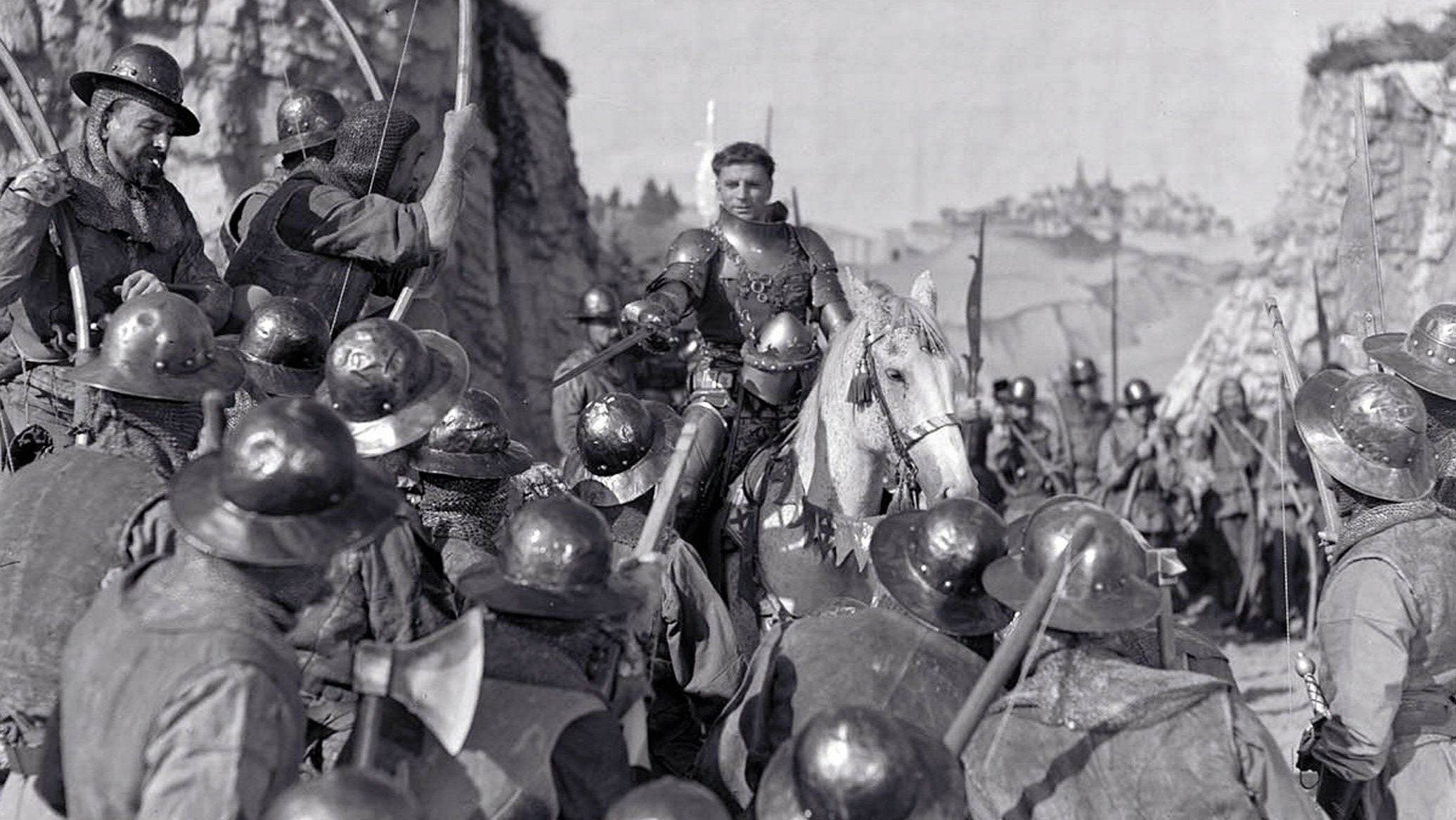
Its lasting power lies in how the film intertwines cultural prestige with wartime urgency, elevating art into an instrument of national purpose. The play wants to be a beacon of unity, Olivier wants a celebration of British resilience and leadership. Its an embodiment of how cultural storytelling reinforces national mythology during a time of existential threat. Henry’s triumph at Agincourt is not just historical memory; it becomes an allegorical reassurance that moral clarity and collective sacrifice lead to victory against overwhelming odds. In 1944, as Allied forces prepared for the D-Day invasion, this message could not have been more timely.
Filmed in Technicolor at a time when resources were scarce, Henry V was one of the most lavish British productions of its era. The deeper purpose of all this grandeur reaffirms British cultural supremacy even in wartime austerity. Every frame radiates confidence in artistic depth. In doing so, the film subtly rebukes fascist cultural destruction by championing Shakespearean values as eternal and unassailable.
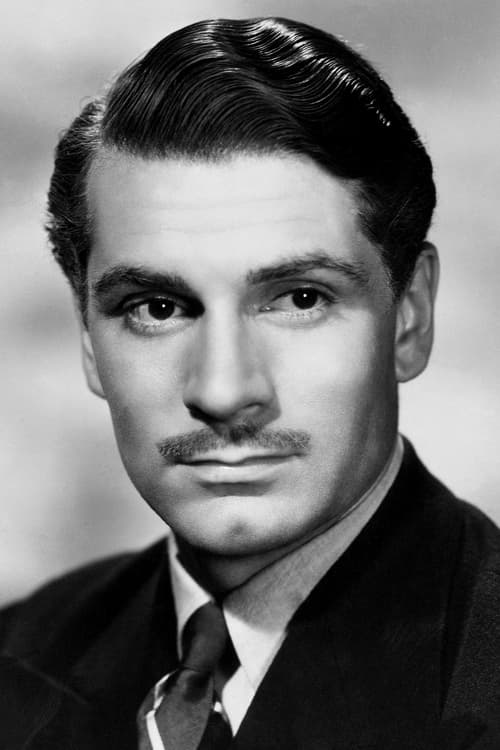
Laurence Olivier didn’t just bring Shakespeare to the screen; he transformed a dense historical text into a stirring cinematic statement about unity. The power of language to bind a nation together. Whether used earnestly in wartime or reframed ironically in post-apocalyptic cinema like 28 Years Later, the film endures because it speaks to something universal: our longing for meaning amid chaos. Our need to believe that, even in ruin, the soul of a civilization can still be heard.
In 28 Years Later, brief clips of Olivier’s Henry V, or as the original title exclaims The Chronicle History of King Henry the Fifth with His Battell Fought at Agincourt in France, are used broadly. As Britain lies in ruins after a viral outbreak, Danny Boyle draws a visual parallel between the nation's past and its desolate present (Brexit, I think). Including one of the most sophisticated British films of the 1940s ironically underscores how far civilization has fallen. It’s not just a cinematic nod; it’s a haunting juxtaposition of lost grandeur and present despair.
By just incorporating a single clip of this film into a modern movie creates a ton of baggage. Because it's a slippery slope into pretentious wankery with this specific film, The Chronicle History of King Henry the Fifth with His Battell Fought at Agincourt in France. I'm not gonna sit here and pretend with you that I understood any of the shit coming out of their mouths. I don't.
I understand that Shakespeare's texts are a love of the English language, a love for communication. The film itself stands as a history of wartime cinema. The entire film is a patriotic call to action because the lengthy speeches of Henry communicate a rallying cry of brotherhood and courage. It's to uplift British troops. Olivier made strategic edits to shape Henry into a more idealized figure. It elevates Henry as a symbol of virtuous leadership at a time when Britain needed moral reinforcement. Like later adaptations have delved into Henry’s inner demons, Olivier’s version lives on as a pristine icon of national idealism: even in times of darkness, nations don’t just fight with arms, they fight with meaning.
The film begins with a clever meta-theatrical device: a literal staging of Henry V in the Globe Theatre in 1600. The film stages a transition from highbrow backstage melodrama to "peak cinema." This transition mirrors the film’s deeper ambition: to draw viewers from distant reverence into immediate emotional engagement. That will be difficult for modern audiences today. This stylization creates a dreamlike historical myth; the notion of national identity being timeless and unbound.
Its lasting power lies in how the film intertwines cultural prestige with wartime urgency, elevating art into an instrument of national purpose. The play wants to be a beacon of unity, Olivier wants a celebration of British resilience and leadership. Its an embodiment of how cultural storytelling reinforces national mythology during a time of existential threat. Henry’s triumph at Agincourt is not just historical memory; it becomes an allegorical reassurance that moral clarity and collective sacrifice lead to victory against overwhelming odds. In 1944, as Allied forces prepared for the D-Day invasion, this message could not have been more timely.
Filmed in Technicolor at a time when resources were scarce, Henry V was one of the most lavish British productions of its era. The deeper purpose of all this grandeur reaffirms British cultural supremacy even in wartime austerity. Every frame radiates confidence in artistic depth. In doing so, the film subtly rebukes fascist cultural destruction by championing Shakespearean values as eternal and unassailable.
Laurence Olivier didn’t just bring Shakespeare to the screen; he transformed a dense historical text into a stirring cinematic statement about unity. The power of language to bind a nation together. Whether used earnestly in wartime or reframed ironically in post-apocalyptic cinema like 28 Years Later, the film endures because it speaks to something universal: our longing for meaning amid chaos. Our need to believe that, even in ruin, the soul of a civilization can still be heard.