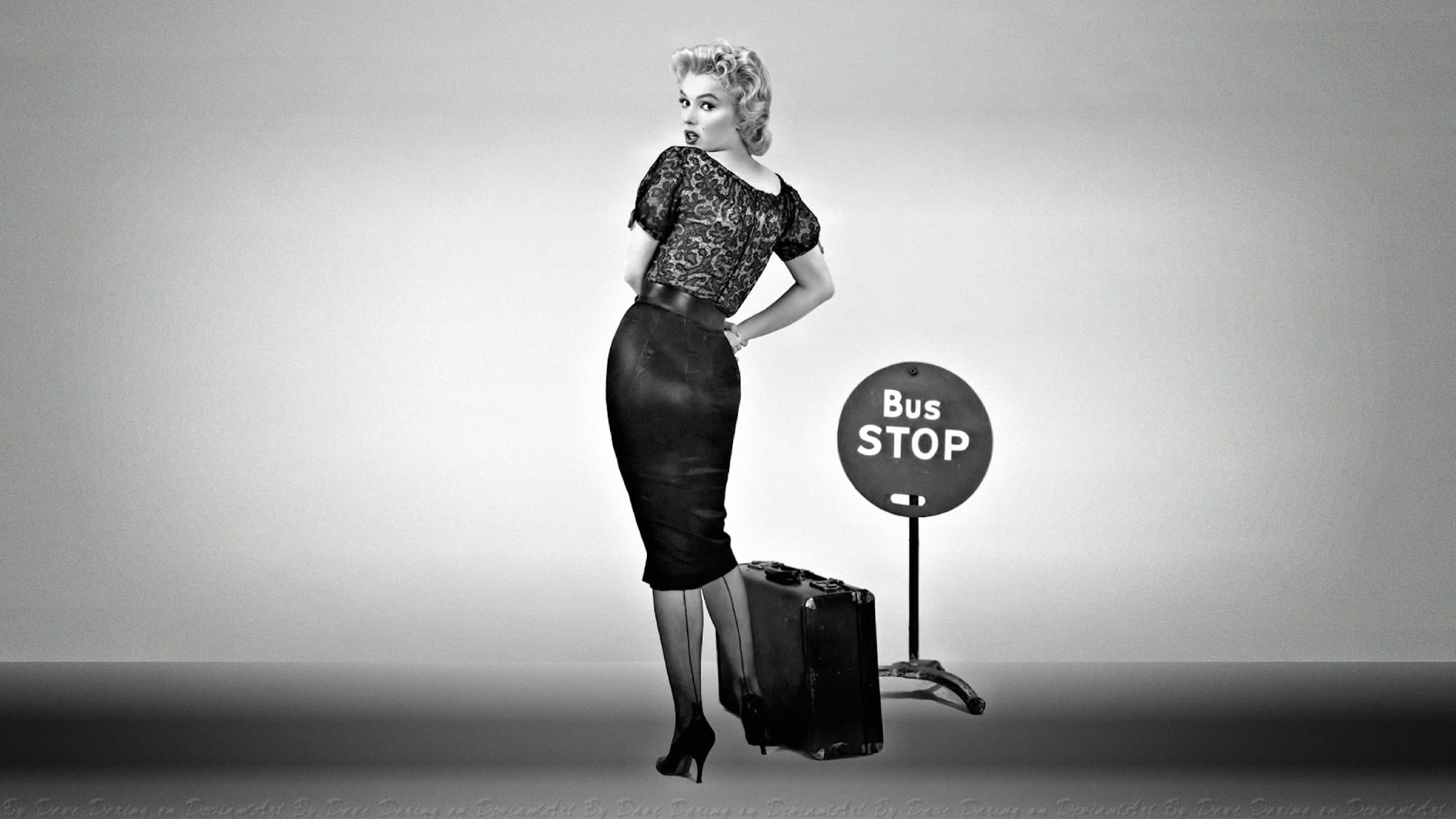
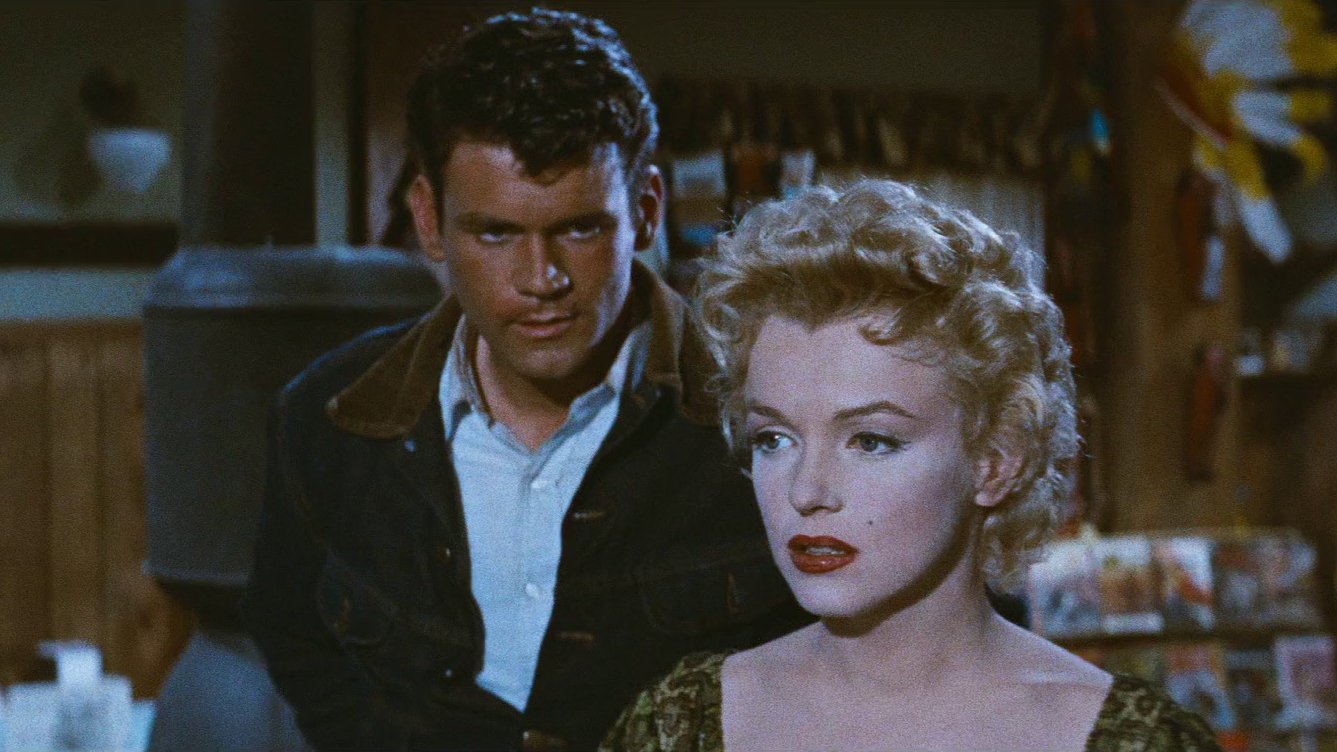
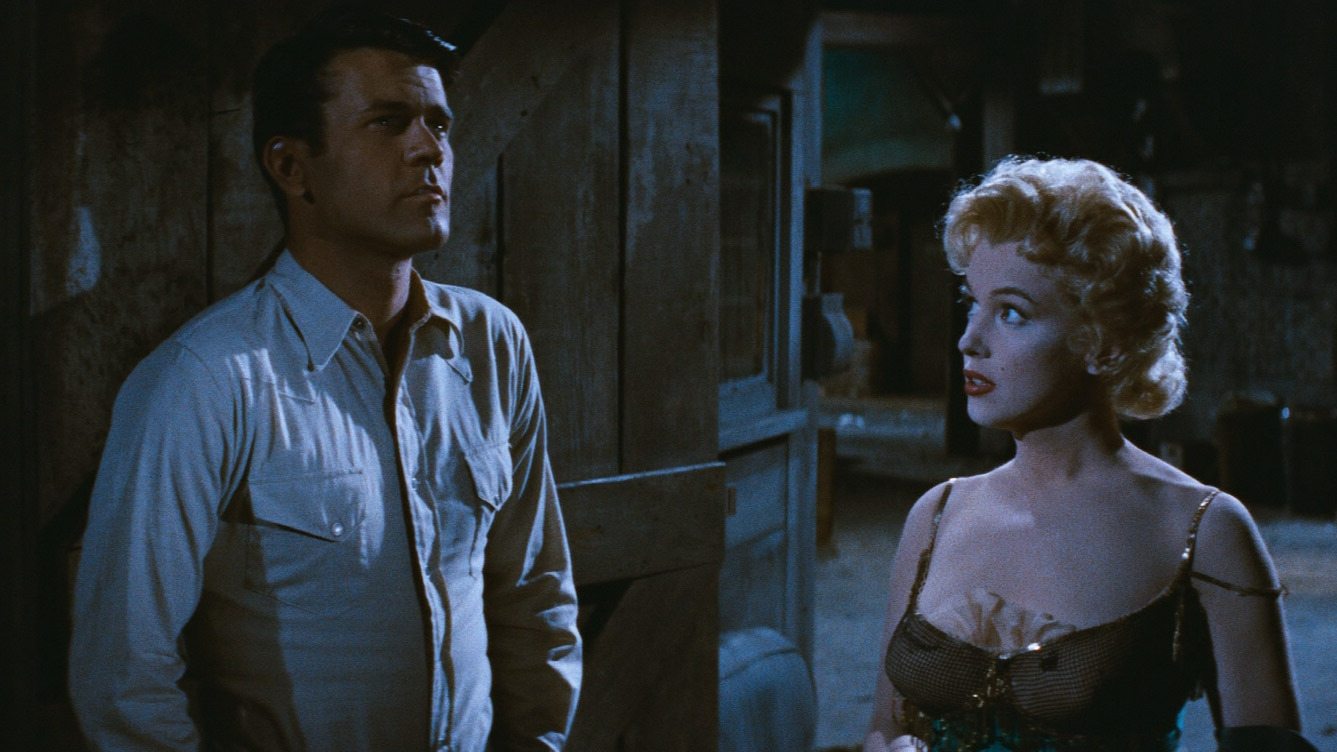
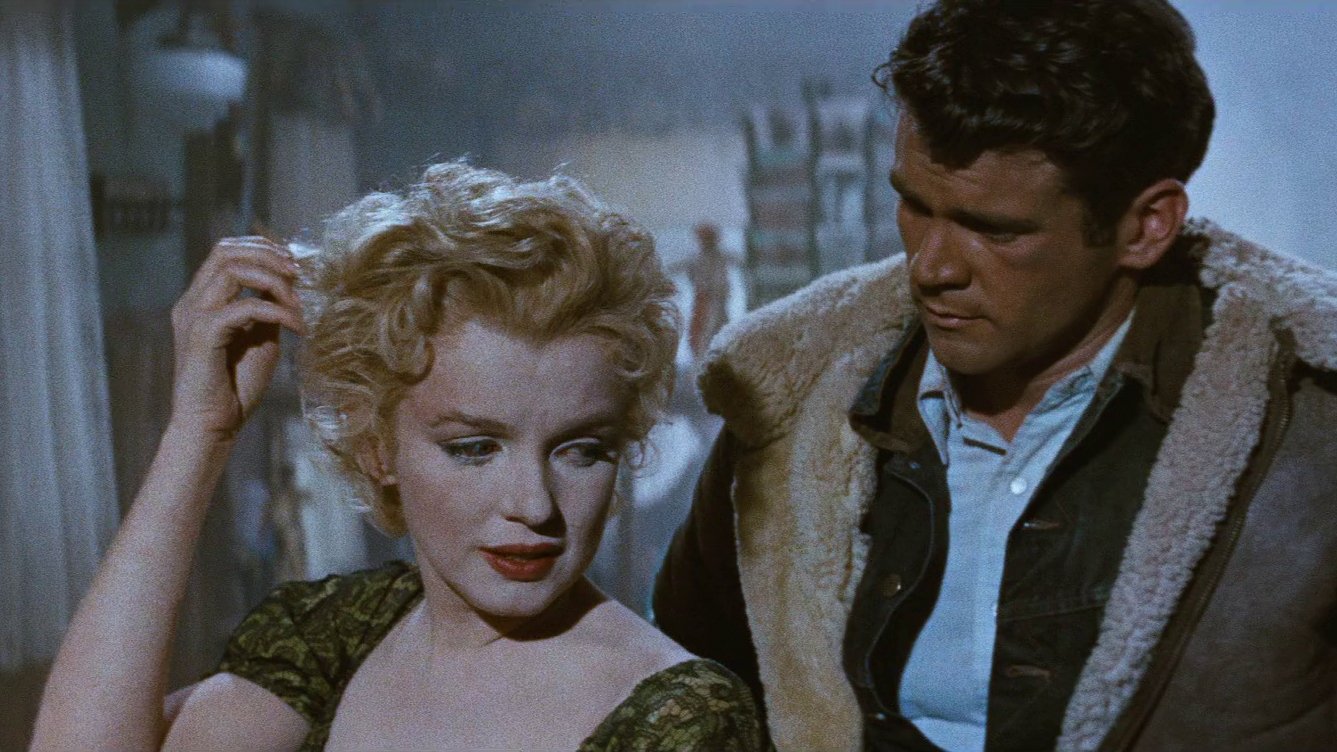
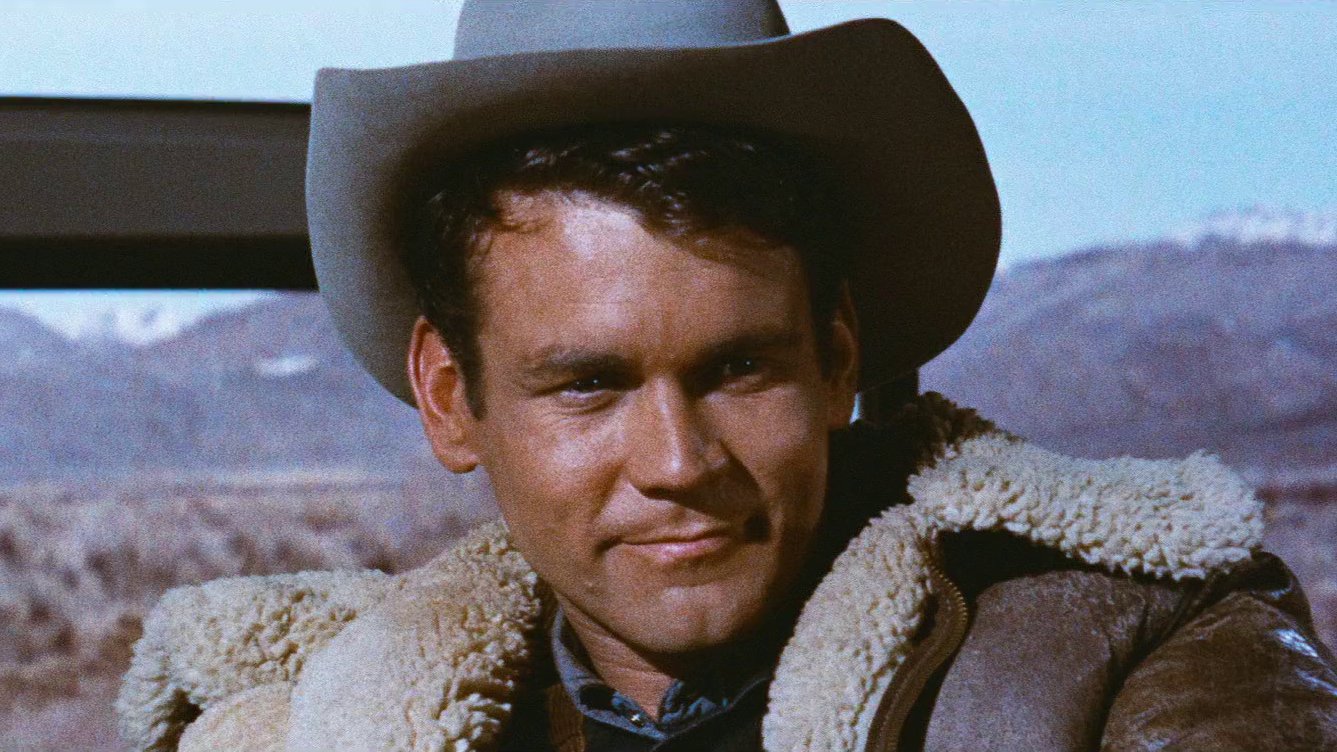
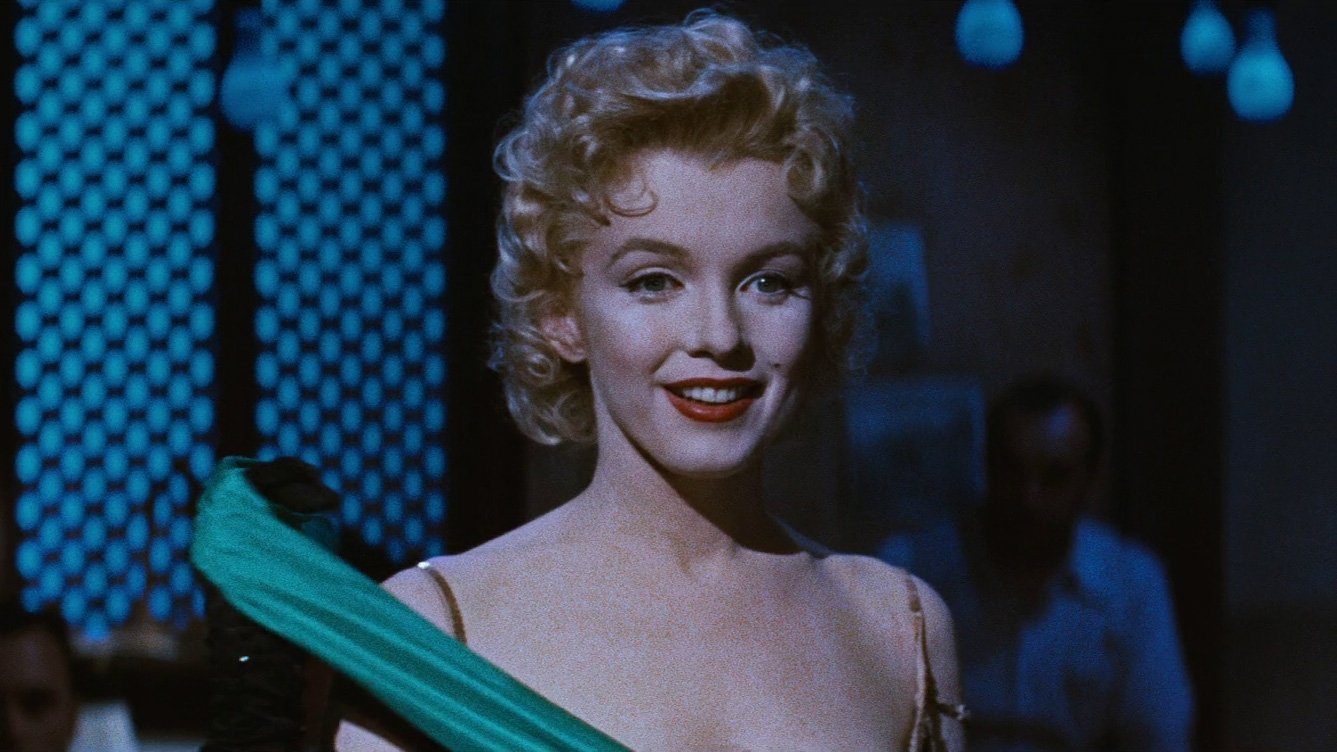
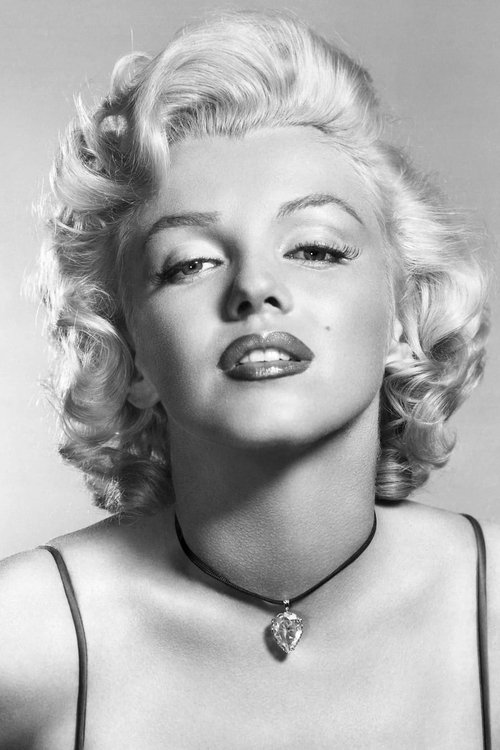
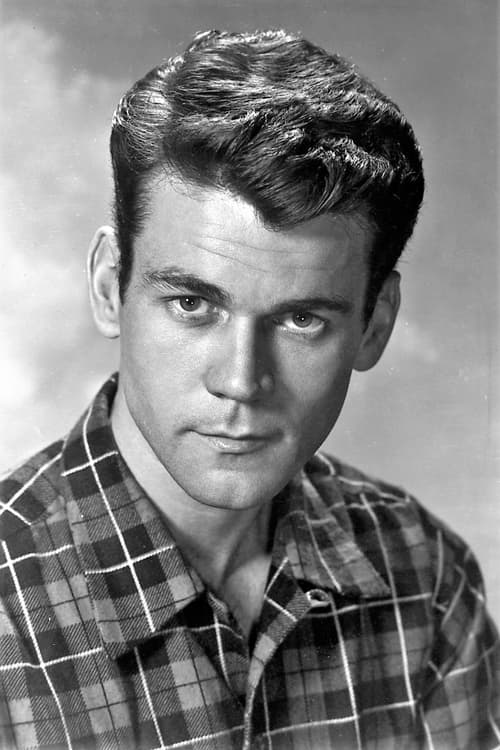
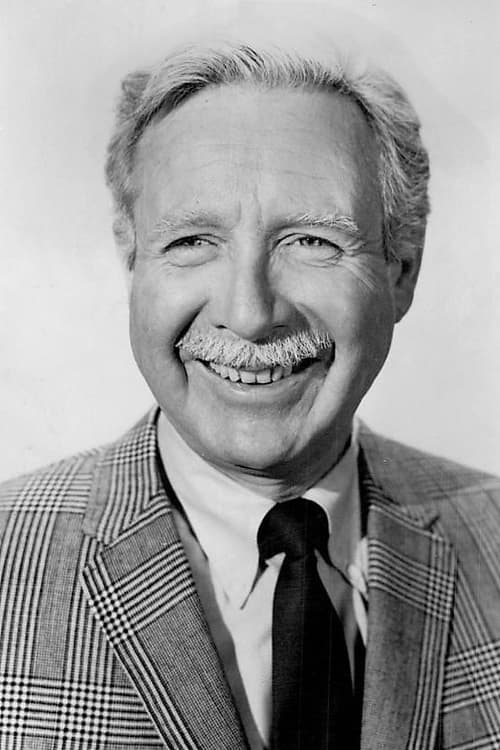
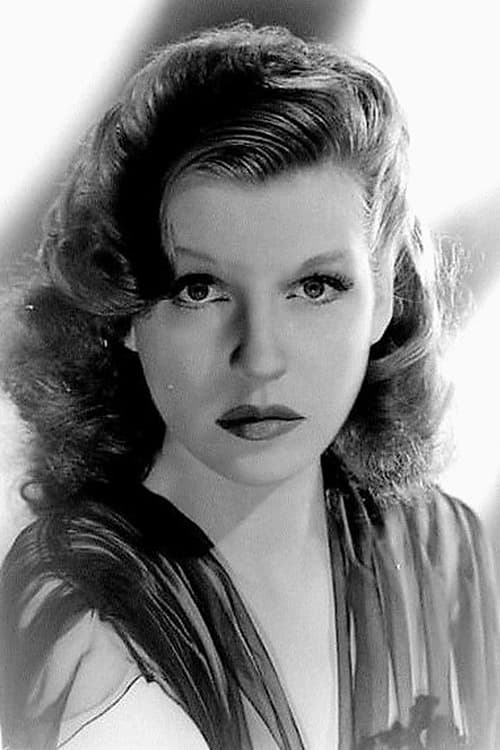
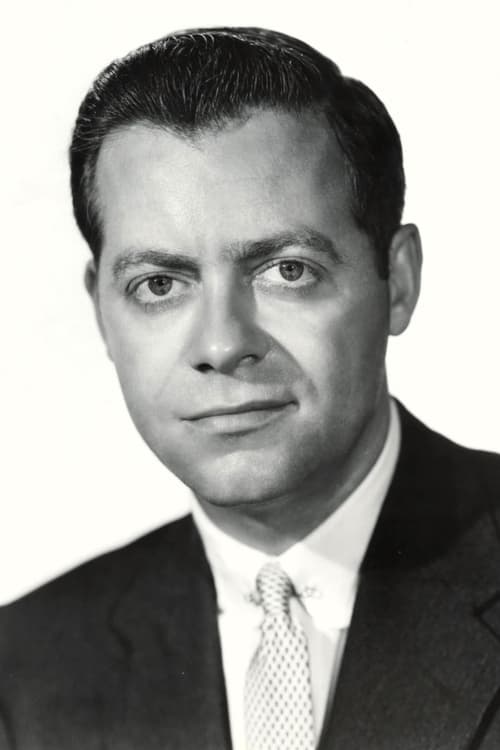
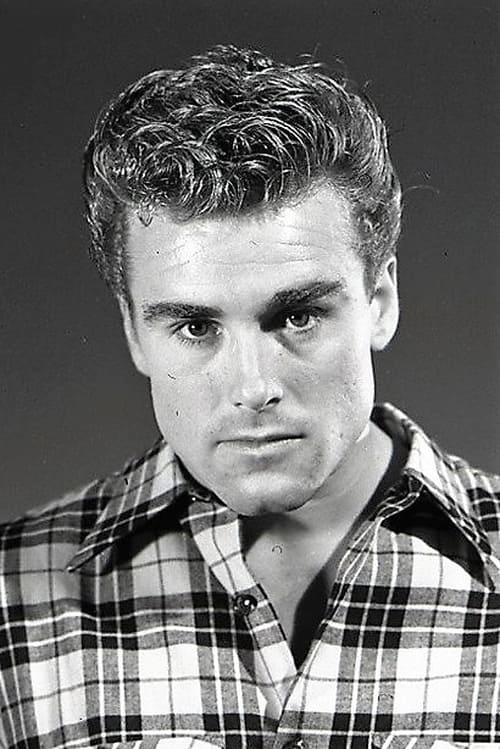
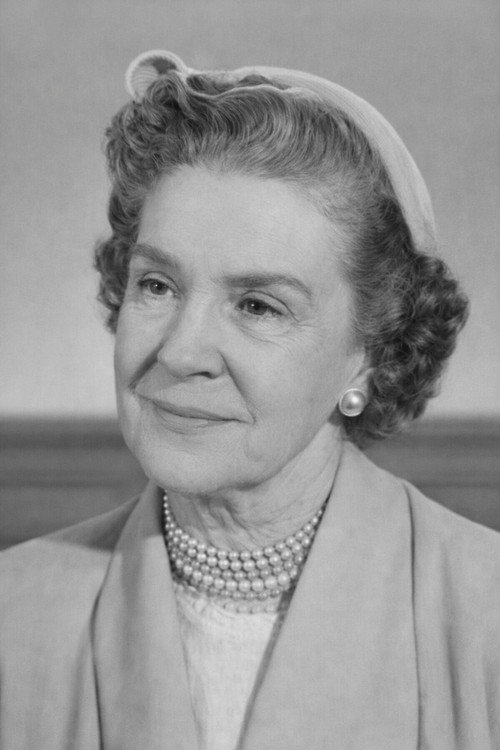
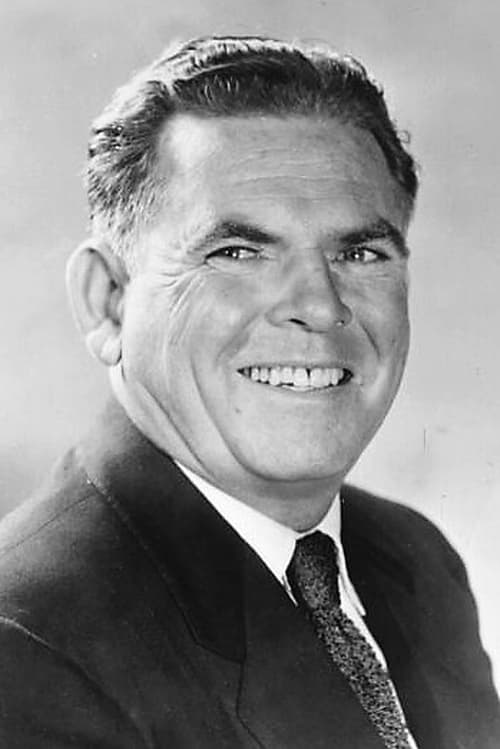
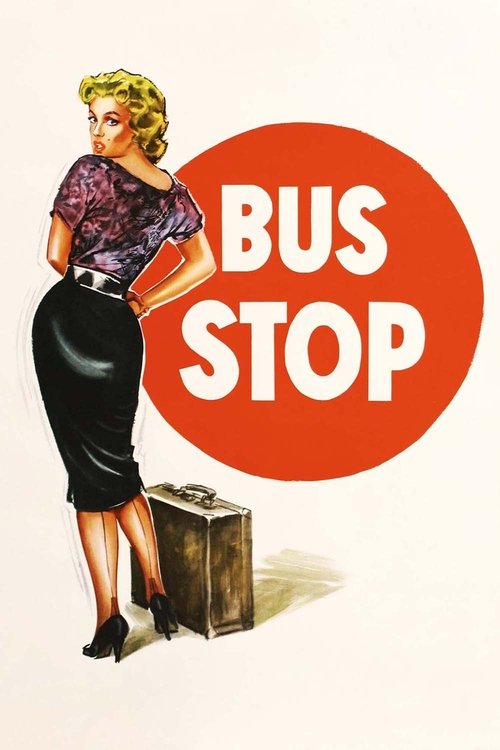
The writing is some of the most affecting writing I’ve ever seen (even while exaggerating real life). It made me (and my co-watchers) have visceral reactions to Don Murray’s character because of how real his violence feels to us, and to Norma, yes I’m gonna say Norma (her real name) instead of Marilyn (her stage name) because this movie is so Norma Jeane, really. Murray’s character starts as a dumb blonde kind of character (dumb, naive, virgin); role reversing, all the while Norma is playing a sort of parody/exaggeration of her stereotypes, by putting even paler makeup etc., but also a very different character than them by being much less glamorous and much more tragic, much closer to herself. Then, he slowly transforms into a sort of amalgamation of all the societal exploitation she endures (from her abusive husbands, sexual assaults, horrible childhood), a real symbol of the virile Hollywood man coming down on her, he is patriarchal order to the point that, in the tragic, tragic ending of this film she gives up and “lives happily ever after”; but the end scene is especially intelligent because it is a workaround the production code: the code forced women who had been "loose", aka had been with many men,had to be redeemed through a "good man's love", this scene works around this: Bo is not a good man, but he's artificially made one (but obviously and in such an exaggerating manner) in order to criticize this very rule. All the very disturbing and violent rodeo scenes were absolutely special, such a necessary gore element to the male more-than-gaze… touch Hollywood loved so much. My favorite scene is when she’s sitting, in all sisterhood, with Hope Lange (her debut!) telling her about love and asking if she’d ever really known love. Knowing that Norma went through 12 foster homes and was married at 16 when her character was married at 14 is just so heartbreaking and makes the scene the most amazing, maybe in all of golden age Hollywood. This movie was Marilyn in her most Norma.
The writing is some of the most affecting writing I’ve ever seen (even while exaggerating real life). It made me (and my co-watchers) have visceral reactions to Don Murray’s character because of how real his violence feels to us, and to Norma, yes I’m gonna say Norma (her real name) instead of Marilyn (her stage name) because this movie is so Norma Jeane, really. Murray’s character starts as a dumb blonde kind of character (dumb, naive, virgin); role reversing, all the while Norma is playing a sort of parody/exaggeration of her stereotypes, by putting even paler makeup etc., but also a very different character than them by being much less glamorous and much more tragic, much closer to herself. Then, he slowly transforms into a sort of amalgamation of all the societal exploitation she endures (from her abusive husbands, sexual assaults, horrible childhood), a real symbol of the virile Hollywood man coming down on her, he is patriarchal order to the point that, in the tragic, tragic ending of this film she gives up and “lives happily ever after”; but the end scene is especially intelligent because it is a workaround the production code: the code forced women who had been "loose", aka had been with many men,had to be redeemed through a "good man's love", this scene works around this: Bo is not a good man, but he's artificially made one (but obviously and in such an exaggerating manner) in order to criticize this very rule. All the very disturbing and violent rodeo scenes were absolutely special, such a necessary gore element to the male more-than-gaze… touch Hollywood loved so much. My favorite scene is when she’s sitting, in all sisterhood, with Hope Lange (her debut!) telling her about love and asking if she’d ever really known love. Knowing that Norma went through 12 foster homes and was married at 16 when her character was married at 14 is just so heartbreaking and makes the scene the most amazing, maybe in all of golden age Hollywood. This movie was Marilyn in her most Norma.