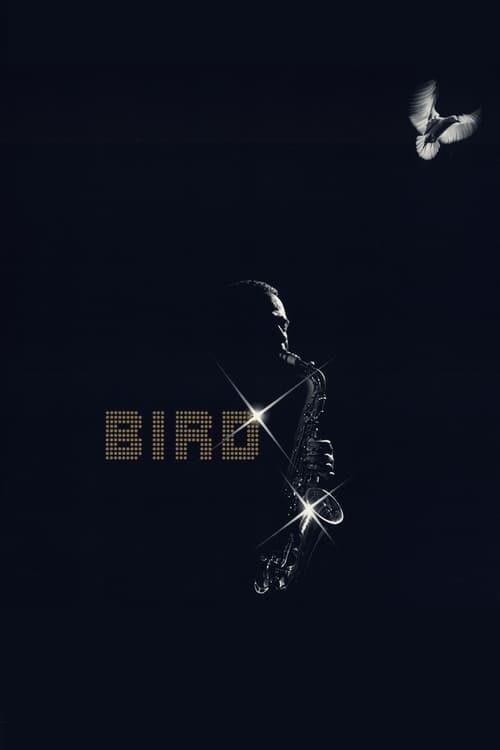
what struck me most about bird wasn’t its biographical detail or its period aesthetics, but its unnervingly accurate grasp of what bebop actually felt like from the inside – the cognitive velocity, the emotional volatility, the physiological strain of improvising at a level that almost defies neural processing. the film doesn’t explain parker; it simulates the storm inside his skull. and for anyone who understands the behavioral neuroscience of rhythm, harmonic anticipation, or the historical tectonics of jazz, it becomes shockingly easy to see what eastwood is doing.
what fascinates me is that the movie isn’t fixated on re-creating the 1940s. its real obsession is reconstructing the internal logic of bebop’s birth – the psychological, acoustic, and sociocultural pressures that produced a genre built on speed, density, and defiance. it’s not a museum piece; it’s a stress test. it understands that bebop wasn’t just fast music. it was a cognitive uprising: a move from swing’s collective groove toward a hyper-individualized, harmonically vertical, rhythmically compressed idiom. the film essentially stages bebop as an evolutionary event in real time.
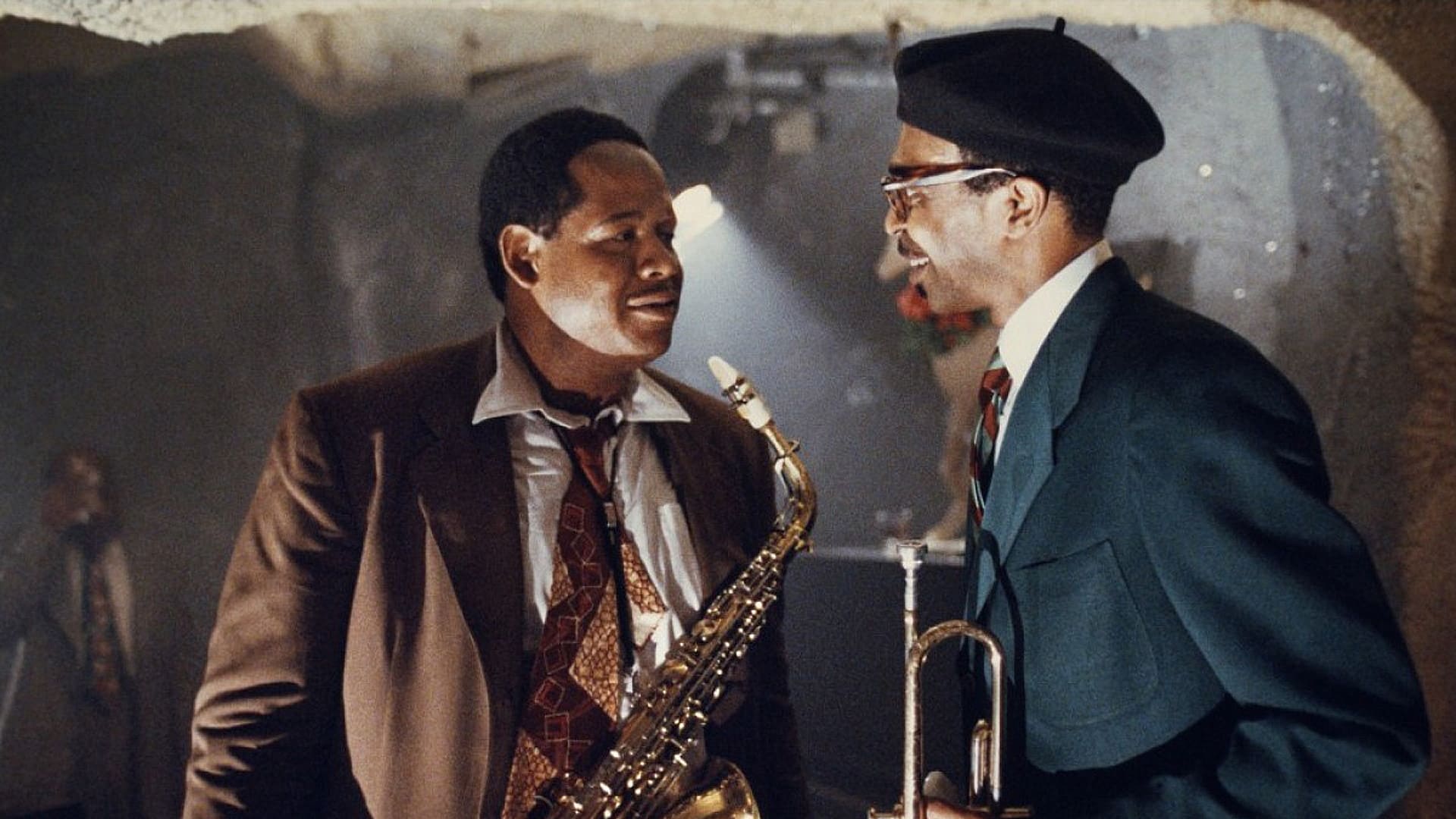
and there’s this one moment – the “just around” line – that crystallizes the entire ethos of that evolution in a single exchange. parker is asked where he’s played before, and he answers, almost self-effacingly, “just around.” the others start calling him "charlie from just around". on the surface it’s a joke, but the film uses it as a microcosm of jazz history. parker enters the room without institutional legitimacy, without a pedigree, without the sanctioned résumé musicians were “supposed” to have. “just around” becomes a quiet declaration that he comes from the unsupervised after-hours ecosystems where bebop actually incubated – the informal, overlooked, marginal spaces where innovation happens because no one is policing it. the nickname is both dismissive and prophetic: he’s written off as someone from nowhere until he detonates the entire harmonic language of the room. it’s the perfect metaphor for how geniuses emerge from the periphery, and how the structures meant to validate talent always lag behind the people rewriting the rules.
charlie parker’s improvisation, as the film portrays it, is almost biologically unreasonable. his lines don’t just push tempo; they push prediction. the motor cortex, auditory cortex, and cerebellum all have to coordinate at a rate that the human nervous system usually reserves for panic responses. the movie channels that sensation through its pacing and structure – the way scenes fragment, overlap, and return like motifs in a solo. the editing behaves like parker’s phrasing: jagged, fluid, associative, unstable, yet anchored to an internal logic only he fully understands.
and here’s the part the film gets terrifyingly right: parker’s genius is inseparable from collapse. not in the romantic “tortured artist” cliché, but in the neurophysiological sense. prolonged high-tempo improvisation demands dopamine and cortisol spikes that can destabilize emotional regulation. the film never says this outright, but you can see it – the mood swings, the volatility, the quiet dissociation behind his eyes. it’s the body struggling to keep pace with a brain firing too fast. addiction becomes less a vice and more a maladaptive coping mechanism for someone existing in a perpetual state of internal overclocking.
the sound design leans into this. there’s a specific psychoacoustic trick the film keeps using: when parker’s internal state frays, the room’s noise either thickens or thins, mirroring how musicians under stress actually perceive sound, the auditory equivalent of tunnel vision. this is what makes the film feel so claustrophobic. it’s not the lighting. it’s the perceptual narrowing.
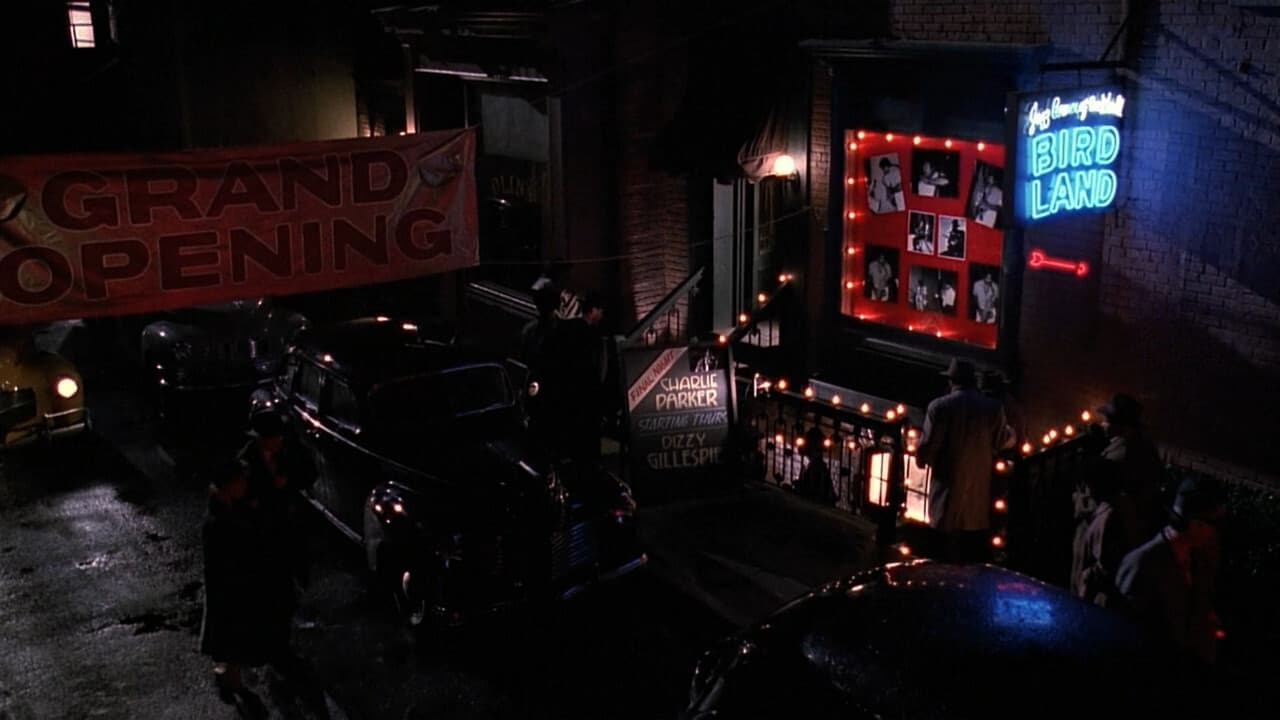
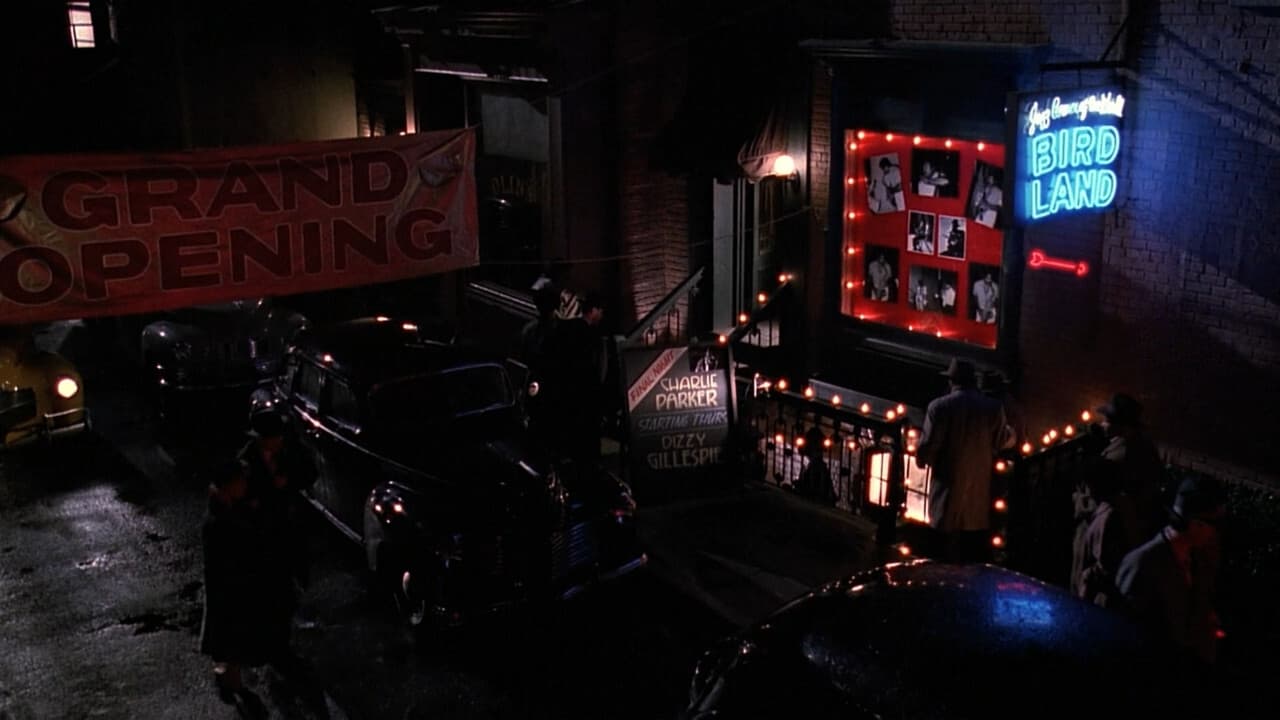
visually, the movie constructs a geography of night. parker’s world barely touches daylight, and when it does, daylight looks cold and brutally honest. the clubs, on the other hand, are caves: wombs of amber and shadow where time dilates and the world feels pliable. that visual dialectic mirrors bebop’s historical reality – the scene thrived in liminal spaces, outside the gaze of respectability, where innovation didn’t need permission to exist. the film’s aesthetic darkness isn’t stylistic; it’s sociological.
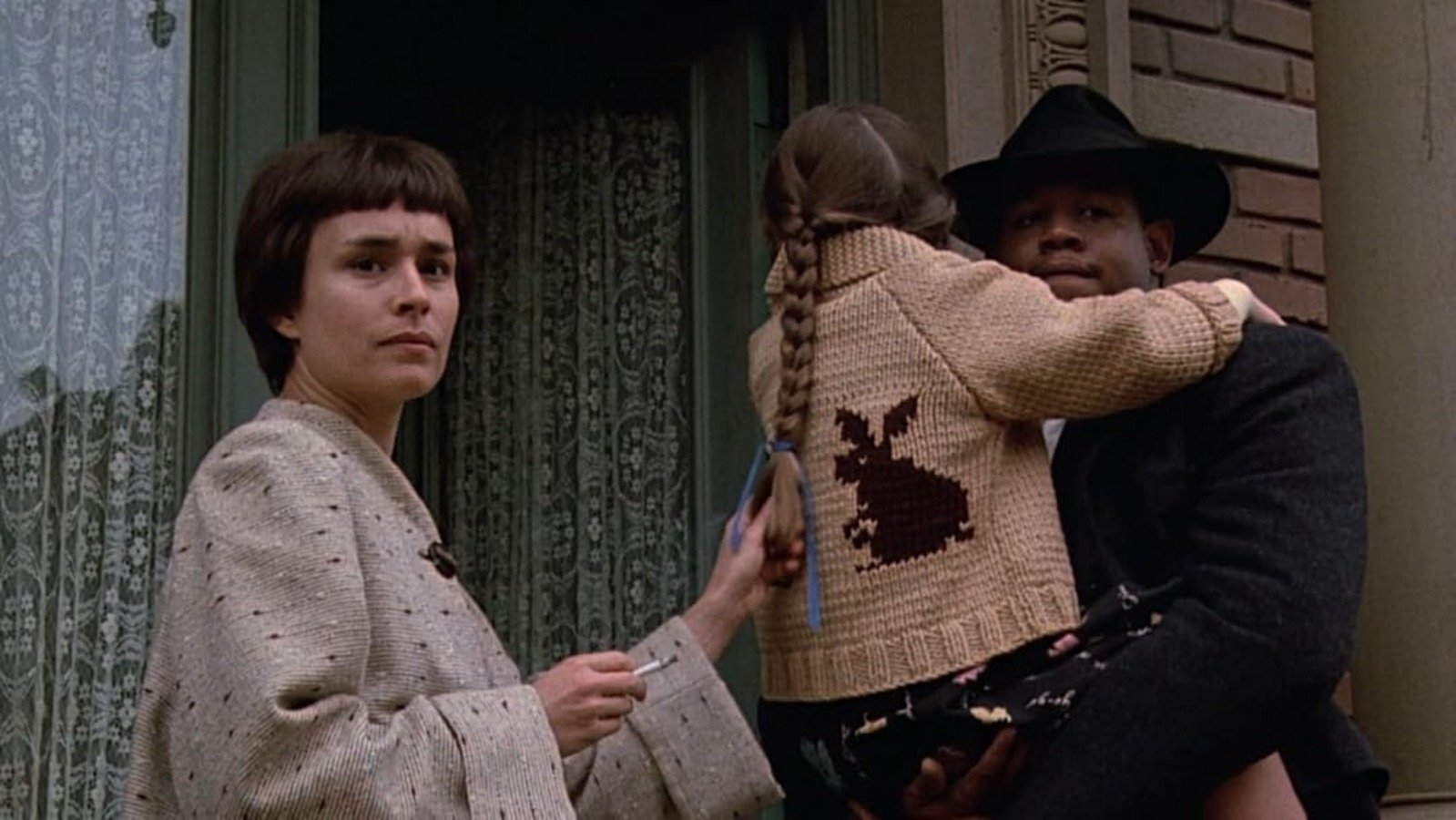
what hit me hardest is how bird captures the cultural violence embedded in the narrative of musical “genius.” parker isn’t destroyed by some vague personal flaw. he’s crushed by a perfect storm of systemic racism, industry exploitation, impossible expectations, and a society eager to consume brilliance while refusing to sustain the human producing it. the movie shows how innovation becomes a lonely task; how pioneers are celebrated abstractly but abandoned concretely; how a genre built on community transformed into a crucible of individuality partly because the world outside the club remained hostile.
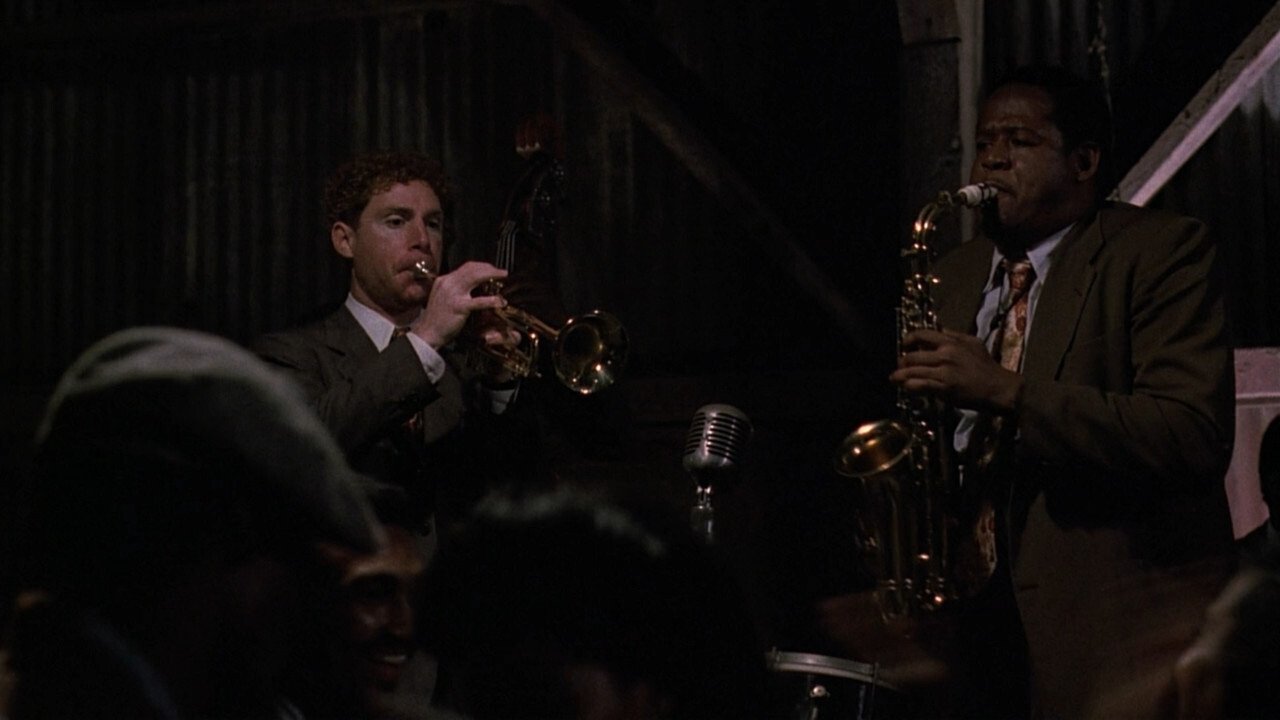
and then there’s the music itself. even from one viewing, the performance sequences are startling for how accurately they depict the phenomenology of improvisation. the slight temporal expansions, the breath patterns, the way parker seems half-present and half-elsewhere – it’s the hallmark of flow state, but with an edge of danger. improvisation here isn’t portrayed as spontaneous freedom; it’s framed as a neurological event with physical consequences, a state where intention and action fuse so tightly the rest of reality becomes peripheral noise.
the emotional core hits precisely because of that framing: parker’s tragedy isn’t that he failed. it’s that he succeeded too intensely for a world unequipped to handle it. his virtuosity becomes isolating, not elevating. the film doesn’t turn him into a myth. it turns him into a warning about the cost of being historically early, neurophysiologically extreme, and emotionally porous in a world built on extraction.
in the end, bird isn’t a biography. it’s a study of musical cognition under duress. it’s about what happens when a human being becomes a conduit for an entire genre’s evolutionary leap, and how the very abilities that rewrite musical history can simultaneously dissolve the self holding them together. it’s long, slow, messy, devastating – because that’s what bebop actually was: not glamorous genius, but a crucible of innovation fueled by exhaustion, brilliance, and survival.
what struck me most about bird wasn’t its biographical detail or its period aesthetics, but its unnervingly accurate grasp of what bebop actually felt like from the inside – the cognitive velocity, the emotional volatility, the physiological strain of improvising at a level that almost defies neural processing. the film doesn’t explain parker; it simulates the storm inside his skull. and for anyone who understands the behavioral neuroscience of rhythm, harmonic anticipation, or the historical tectonics of jazz, it becomes shockingly easy to see what eastwood is doing.
what fascinates me is that the movie isn’t fixated on re-creating the 1940s. its real obsession is reconstructing the internal logic of bebop’s birth – the psychological, acoustic, and sociocultural pressures that produced a genre built on speed, density, and defiance. it’s not a museum piece; it’s a stress test. it understands that bebop wasn’t just fast music. it was a cognitive uprising: a move from swing’s collective groove toward a hyper-individualized, harmonically vertical, rhythmically compressed idiom. the film essentially stages bebop as an evolutionary event in real time.
and there’s this one moment – the “just around” line – that crystallizes the entire ethos of that evolution in a single exchange. parker is asked where he’s played before, and he answers, almost self-effacingly, “just around.” the others start calling him "charlie from just around". on the surface it’s a joke, but the film uses it as a microcosm of jazz history. parker enters the room without institutional legitimacy, without a pedigree, without the sanctioned résumé musicians were “supposed” to have. “just around” becomes a quiet declaration that he comes from the unsupervised after-hours ecosystems where bebop actually incubated – the informal, overlooked, marginal spaces where innovation happens because no one is policing it. the nickname is both dismissive and prophetic: he’s written off as someone from nowhere until he detonates the entire harmonic language of the room. it’s the perfect metaphor for how geniuses emerge from the periphery, and how the structures meant to validate talent always lag behind the people rewriting the rules.
charlie parker’s improvisation, as the film portrays it, is almost biologically unreasonable. his lines don’t just push tempo; they push prediction. the motor cortex, auditory cortex, and cerebellum all have to coordinate at a rate that the human nervous system usually reserves for panic responses. the movie channels that sensation through its pacing and structure – the way scenes fragment, overlap, and return like motifs in a solo. the editing behaves like parker’s phrasing: jagged, fluid, associative, unstable, yet anchored to an internal logic only he fully understands.
and here’s the part the film gets terrifyingly right: parker’s genius is inseparable from collapse. not in the romantic “tortured artist” cliché, but in the neurophysiological sense. prolonged high-tempo improvisation demands dopamine and cortisol spikes that can destabilize emotional regulation. the film never says this outright, but you can see it – the mood swings, the volatility, the quiet dissociation behind his eyes. it’s the body struggling to keep pace with a brain firing too fast. addiction becomes less a vice and more a maladaptive coping mechanism for someone existing in a perpetual state of internal overclocking.
the sound design leans into this. there’s a specific psychoacoustic trick the film keeps using: when parker’s internal state frays, the room’s noise either thickens or thins, mirroring how musicians under stress actually perceive sound, the auditory equivalent of tunnel vision. this is what makes the film feel so claustrophobic. it’s not the lighting. it’s the perceptual narrowing.
visually, the movie constructs a geography of night. parker’s world barely touches daylight, and when it does, daylight looks cold and brutally honest. the clubs, on the other hand, are caves: wombs of amber and shadow where time dilates and the world feels pliable. that visual dialectic mirrors bebop’s historical reality – the scene thrived in liminal spaces, outside the gaze of respectability, where innovation didn’t need permission to exist. the film’s aesthetic darkness isn’t stylistic; it’s sociological.
what hit me hardest is how bird captures the cultural violence embedded in the narrative of musical “genius.” parker isn’t destroyed by some vague personal flaw. he’s crushed by a perfect storm of systemic racism, industry exploitation, impossible expectations, and a society eager to consume brilliance while refusing to sustain the human producing it. the movie shows how innovation becomes a lonely task; how pioneers are celebrated abstractly but abandoned concretely; how a genre built on community transformed into a crucible of individuality partly because the world outside the club remained hostile.
and then there’s the music itself. even from one viewing, the performance sequences are startling for how accurately they depict the phenomenology of improvisation. the slight temporal expansions, the breath patterns, the way parker seems half-present and half-elsewhere – it’s the hallmark of flow state, but with an edge of danger. improvisation here isn’t portrayed as spontaneous freedom; it’s framed as a neurological event with physical consequences, a state where intention and action fuse so tightly the rest of reality becomes peripheral noise.
the emotional core hits precisely because of that framing: parker’s tragedy isn’t that he failed. it’s that he succeeded too intensely for a world unequipped to handle it. his virtuosity becomes isolating, not elevating. the film doesn’t turn him into a myth. it turns him into a warning about the cost of being historically early, neurophysiologically extreme, and emotionally porous in a world built on extraction.
in the end, bird isn’t a biography. it’s a study of musical cognition under duress. it’s about what happens when a human being becomes a conduit for an entire genre’s evolutionary leap, and how the very abilities that rewrite musical history can simultaneously dissolve the self holding them together. it’s long, slow, messy, devastating – because that’s what bebop actually was: not glamorous genius, but a crucible of innovation fueled by exhaustion, brilliance, and survival.