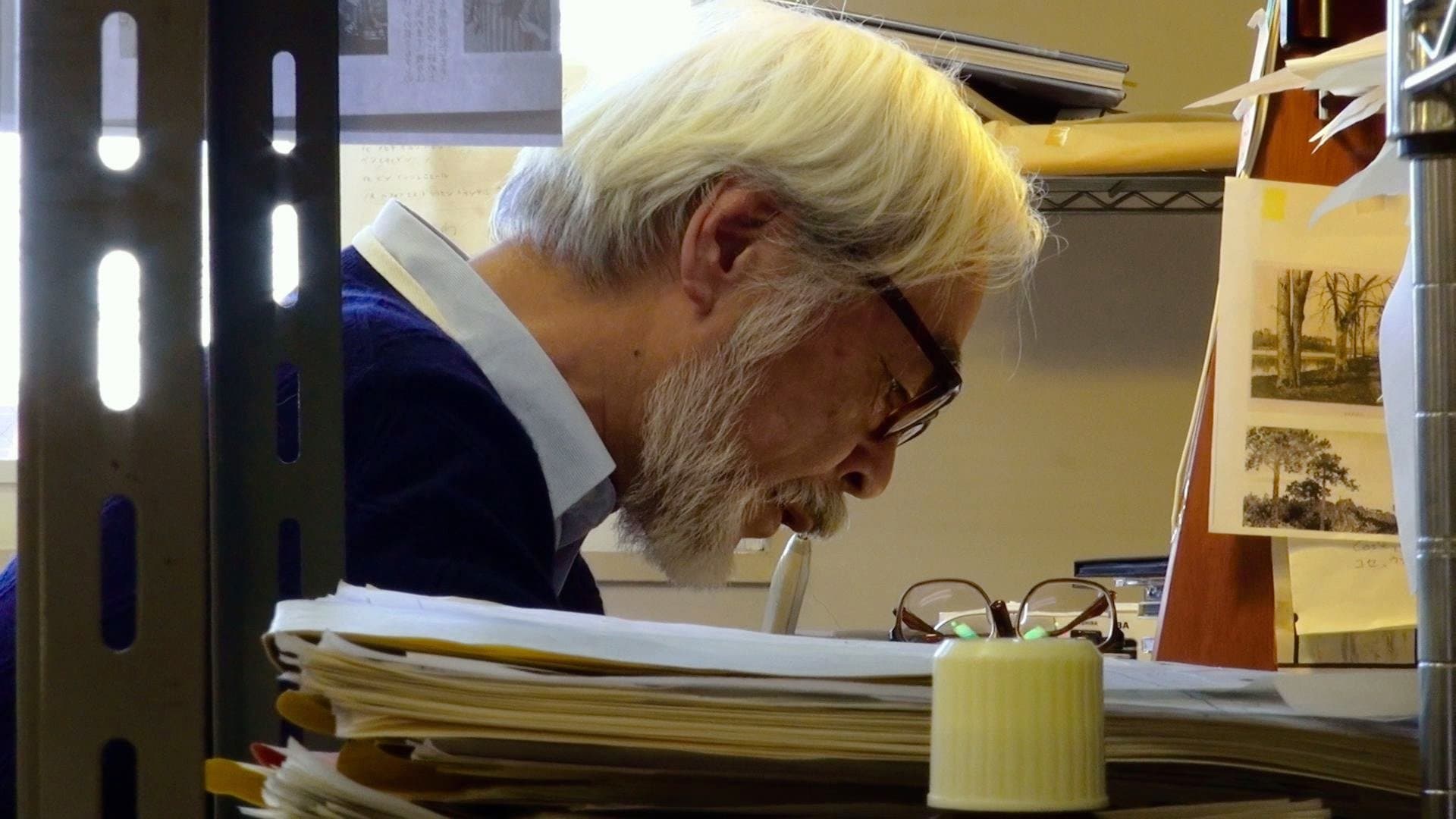
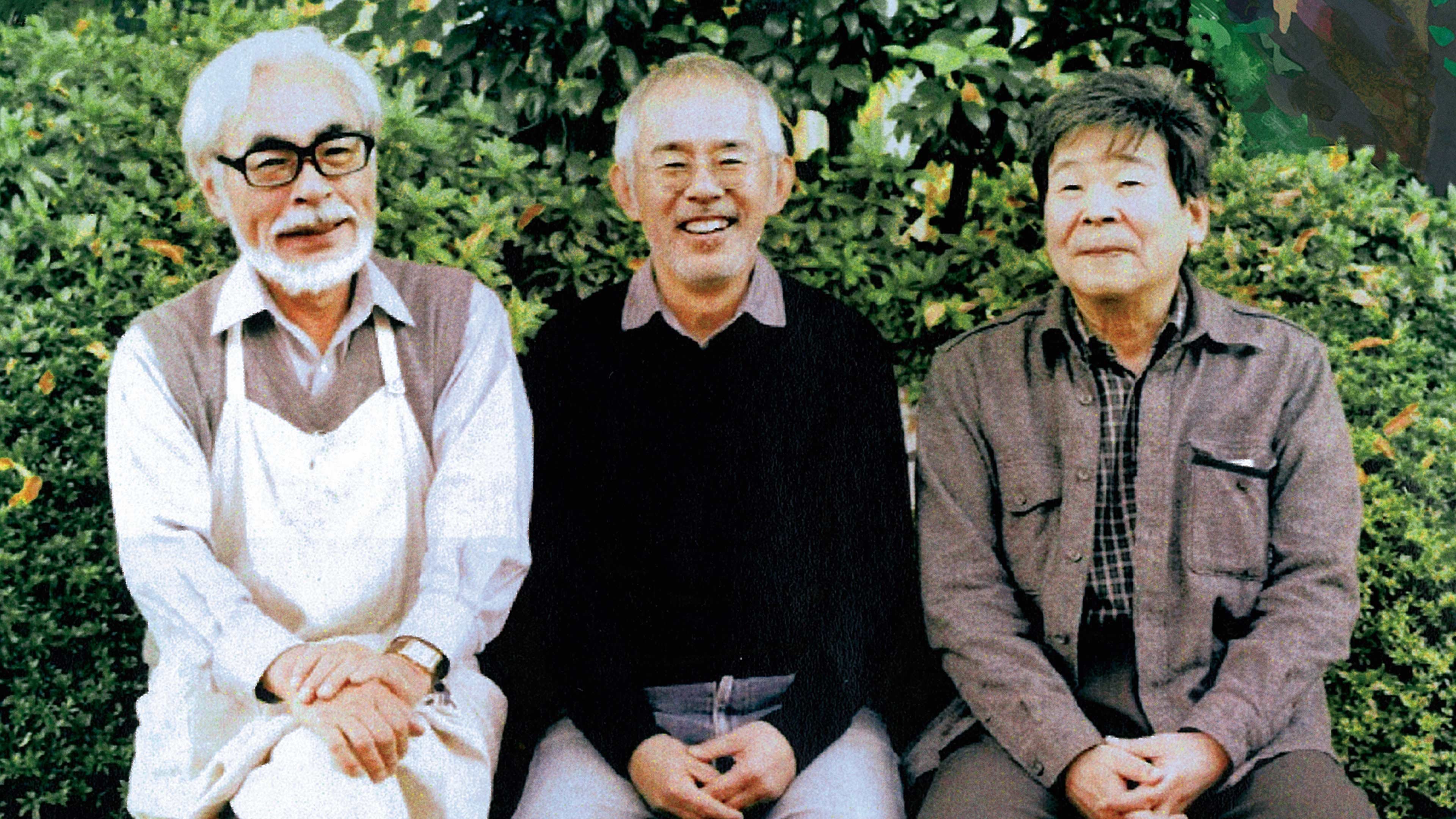
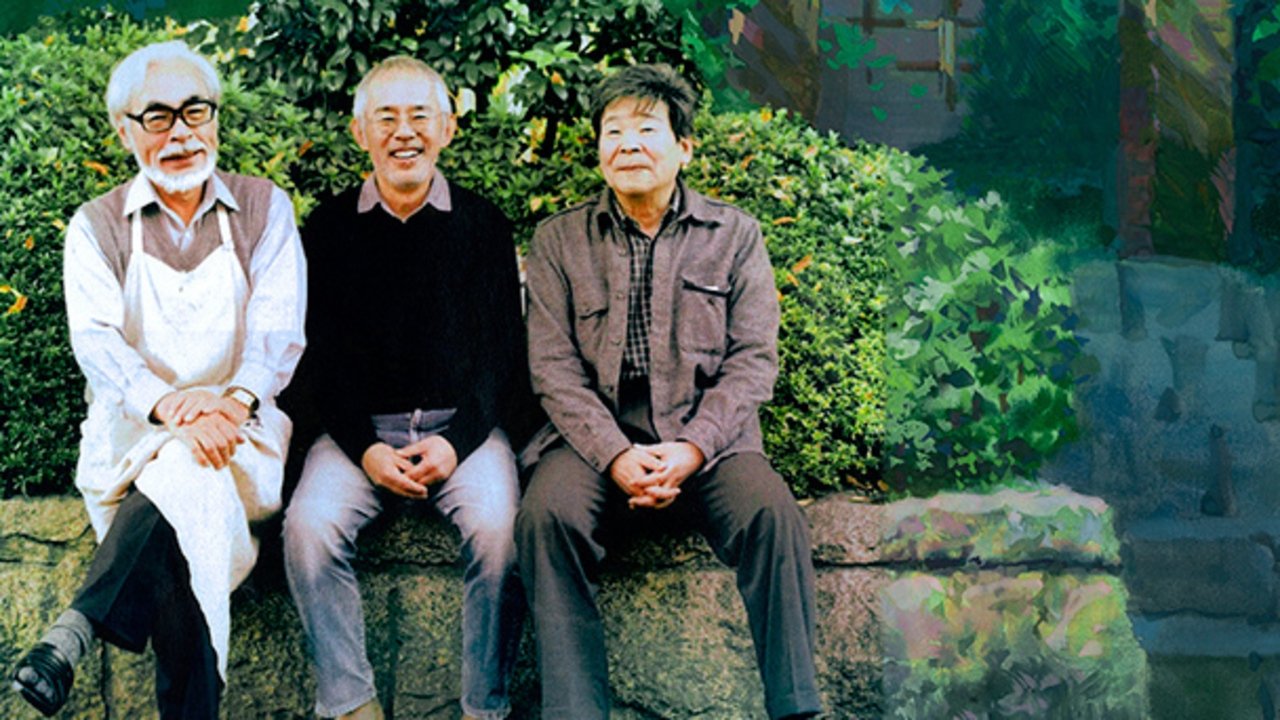
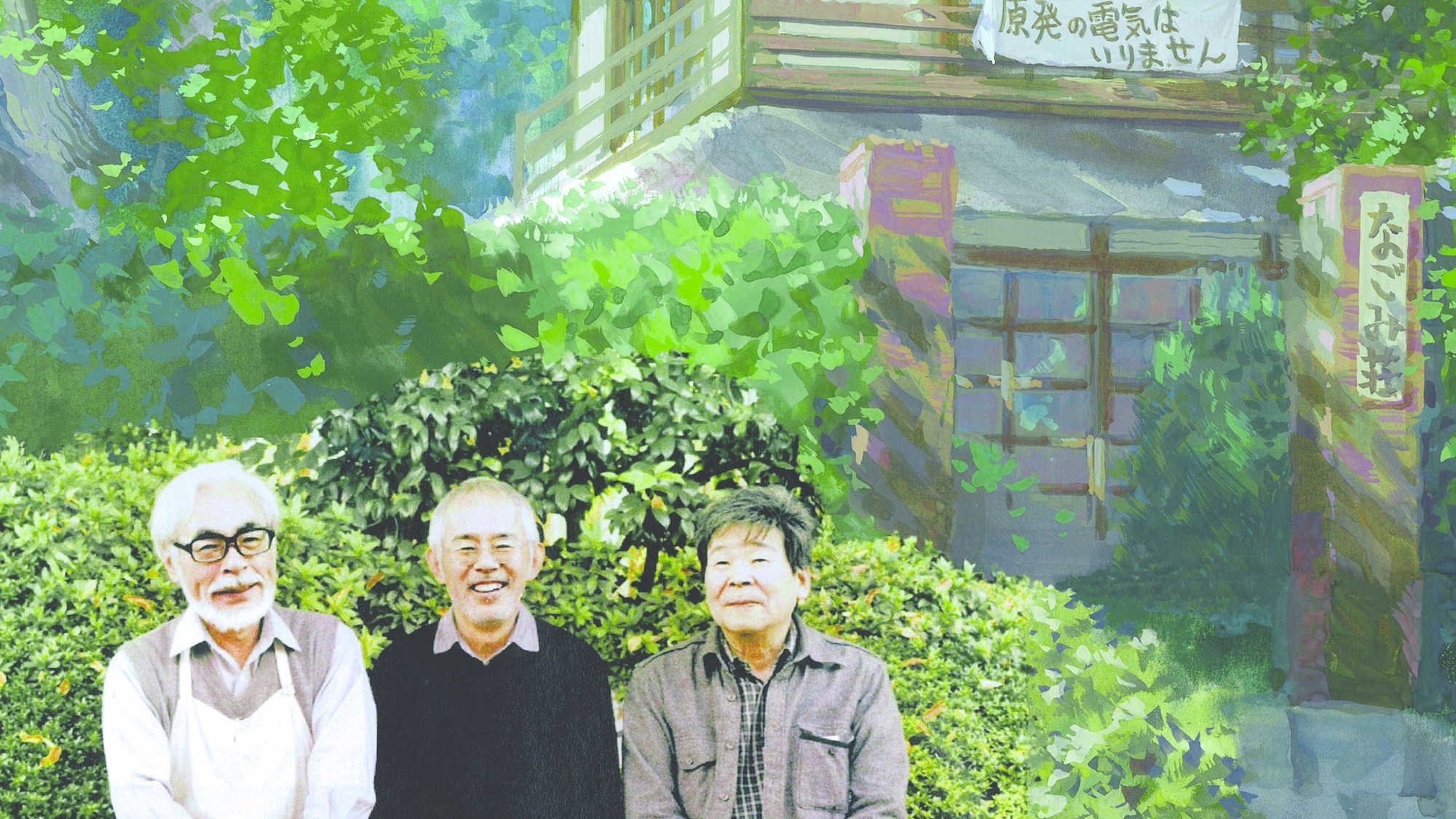
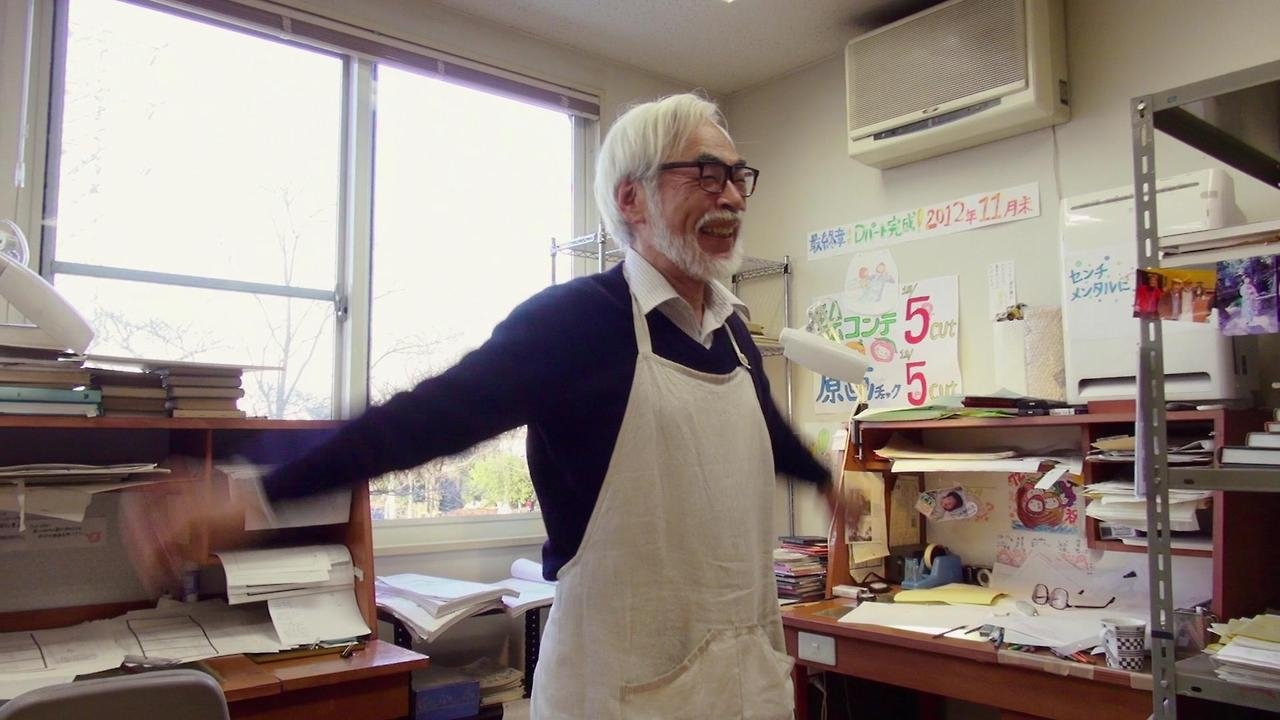
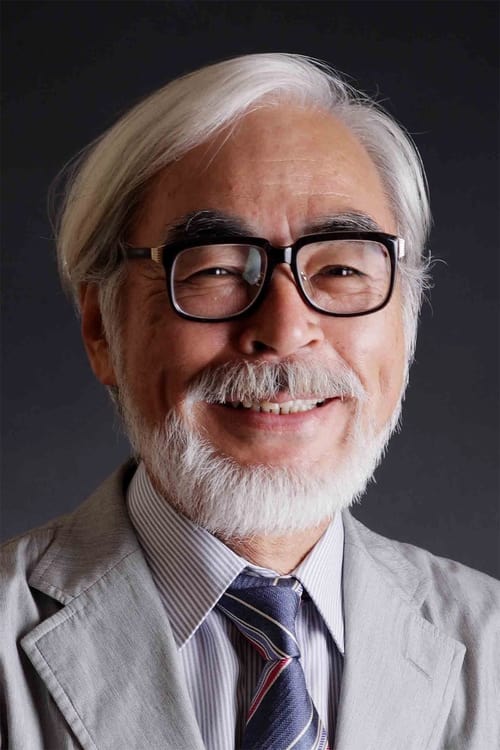
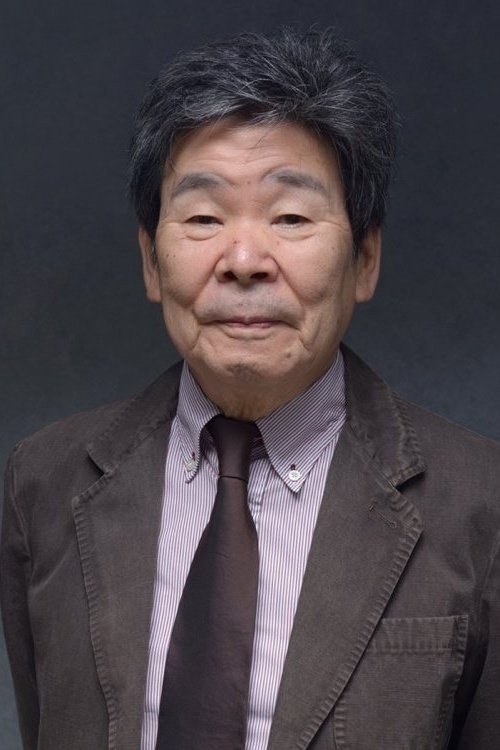
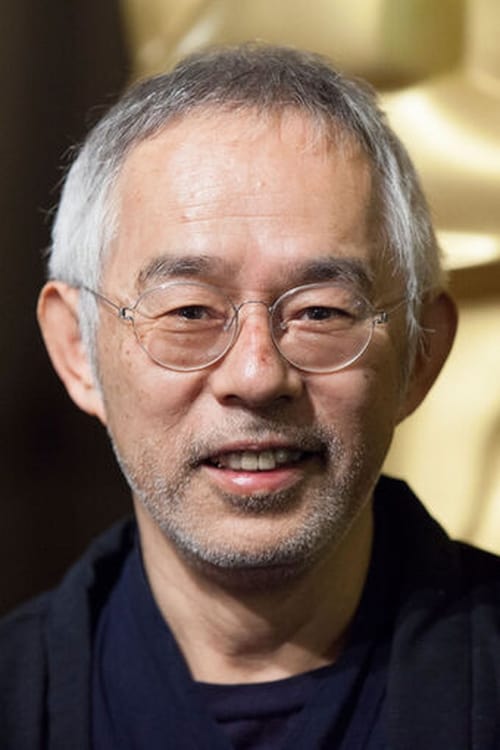
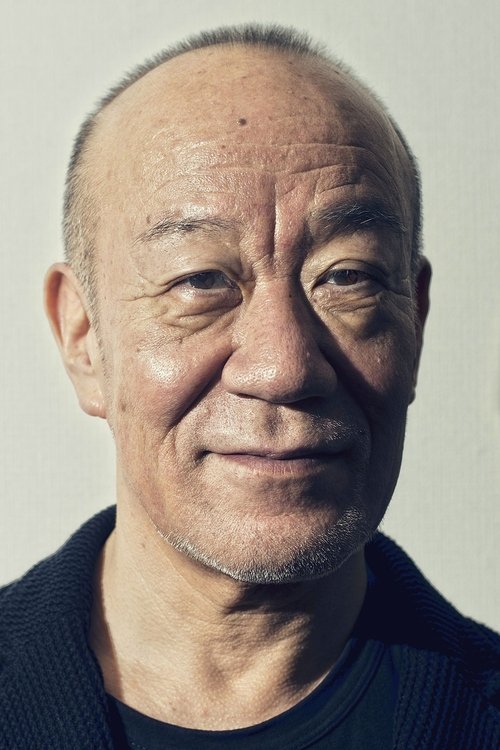
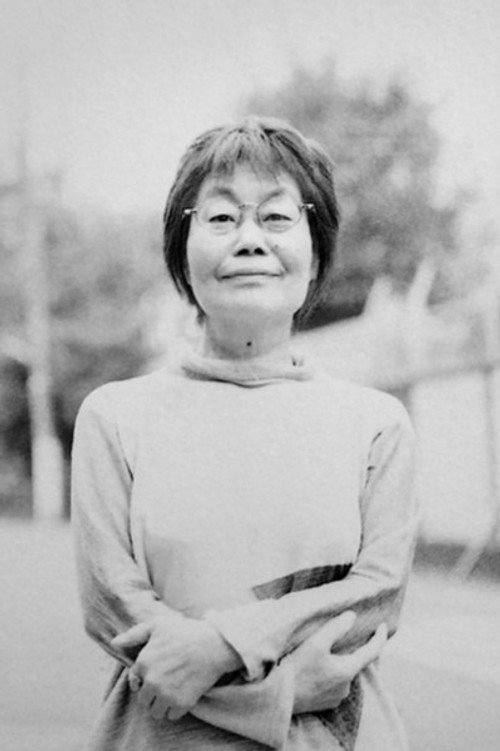
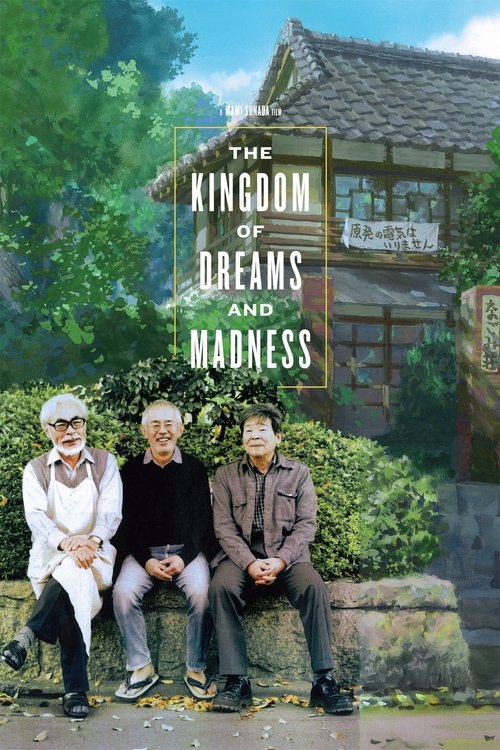
The Kingdom of Dreams and Madness is a quiet, intimate documentary that takes you inside Studio Ghibli during one of its most intense and transitional periods. Directed by Mami Sunada, the film follows legendary figures Hayao Miyazaki, Isao Takahata, and producer Toshio Suzuki as they each work on their respective final (or seemingly final) projects—The Wind Rises and The Tale of the Princess Kaguya. What makes this documentary special isn’t just the access it grants to one of the most secretive animation studios in the world, but how it captures the emotional and philosophical weight of creation. Miyazaki is shown not as a mythical genius, but as a deeply reflective, sometimes cynical, often funny man grappling with the end of his career, the future of Ghibli, and the meaning of art itself. Takahata, more elusive, floats in the background, quietly contrasting Miyazaki’s structured intensity with his own chaotic genius. Meanwhile, Suzuki holds everything together with a kind of weary charm. The film doesn’t over-narrate or dramatize; it just observes, letting quiet moments—like Miyazaki sweeping the studio or talking about war and peace—say more than any voiceover could. There’s something beautiful in that restraint. It’s not just about how Ghibli films are made—it’s about why they matter, and what it costs to make something so full of life in a world that often feels like it’s running out of dreams.
The Kingdom of Dreams and Madness is a quiet, intimate documentary that takes you inside Studio Ghibli during one of its most intense and transitional periods. Directed by Mami Sunada, the film follows legendary figures Hayao Miyazaki, Isao Takahata, and producer Toshio Suzuki as they each work on their respective final (or seemingly final) projects—The Wind Rises and The Tale of the Princess Kaguya. What makes this documentary special isn’t just the access it grants to one of the most secretive animation studios in the world, but how it captures the emotional and philosophical weight of creation. Miyazaki is shown not as a mythical genius, but as a deeply reflective, sometimes cynical, often funny man grappling with the end of his career, the future of Ghibli, and the meaning of art itself. Takahata, more elusive, floats in the background, quietly contrasting Miyazaki’s structured intensity with his own chaotic genius. Meanwhile, Suzuki holds everything together with a kind of weary charm. The film doesn’t over-narrate or dramatize; it just observes, letting quiet moments—like Miyazaki sweeping the studio or talking about war and peace—say more than any voiceover could. There’s something beautiful in that restraint. It’s not just about how Ghibli films are made—it’s about why they matter, and what it costs to make something so full of life in a world that often feels like it’s running out of dreams.