

1982·History·1h 53m
7.1
★
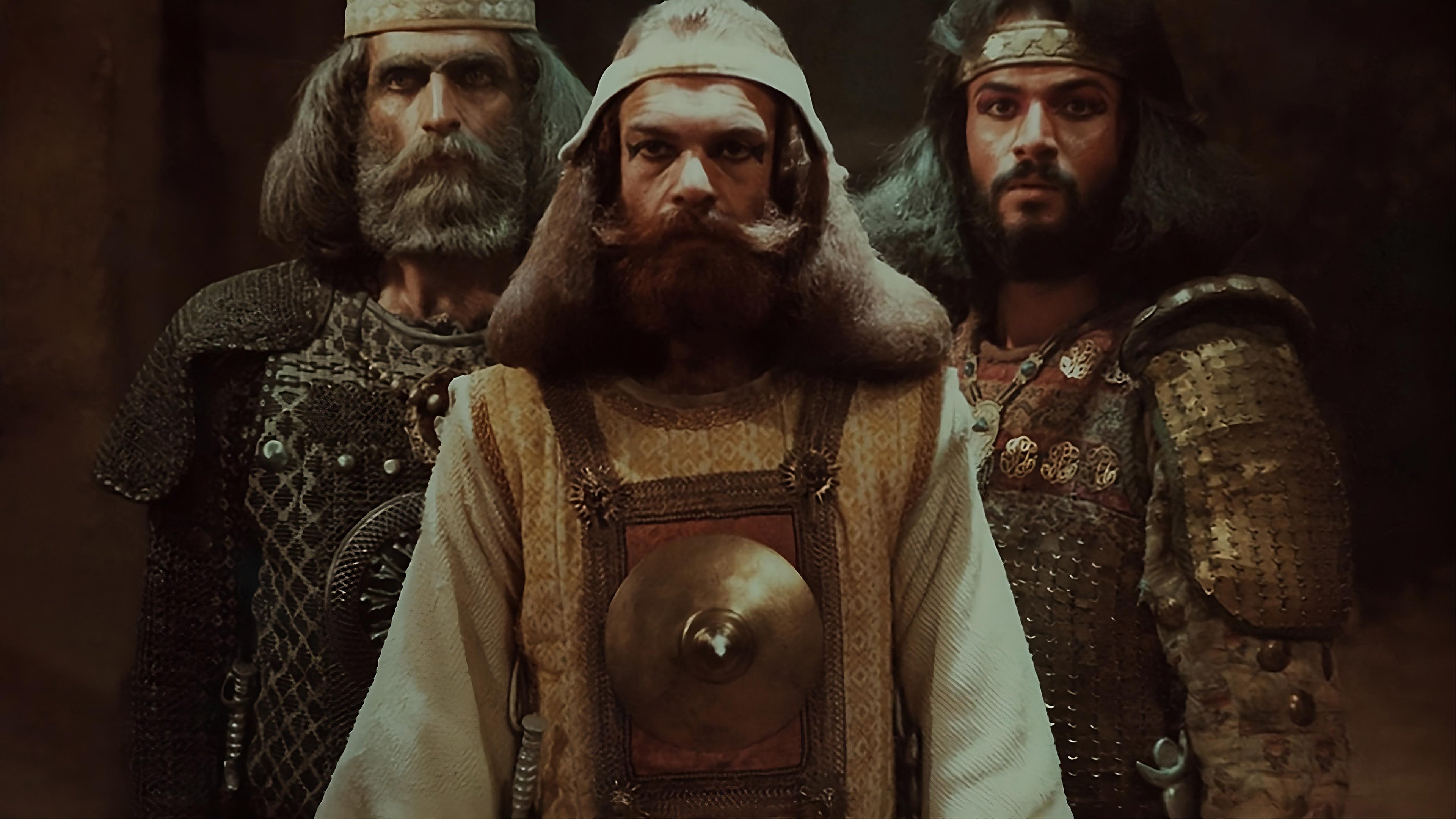
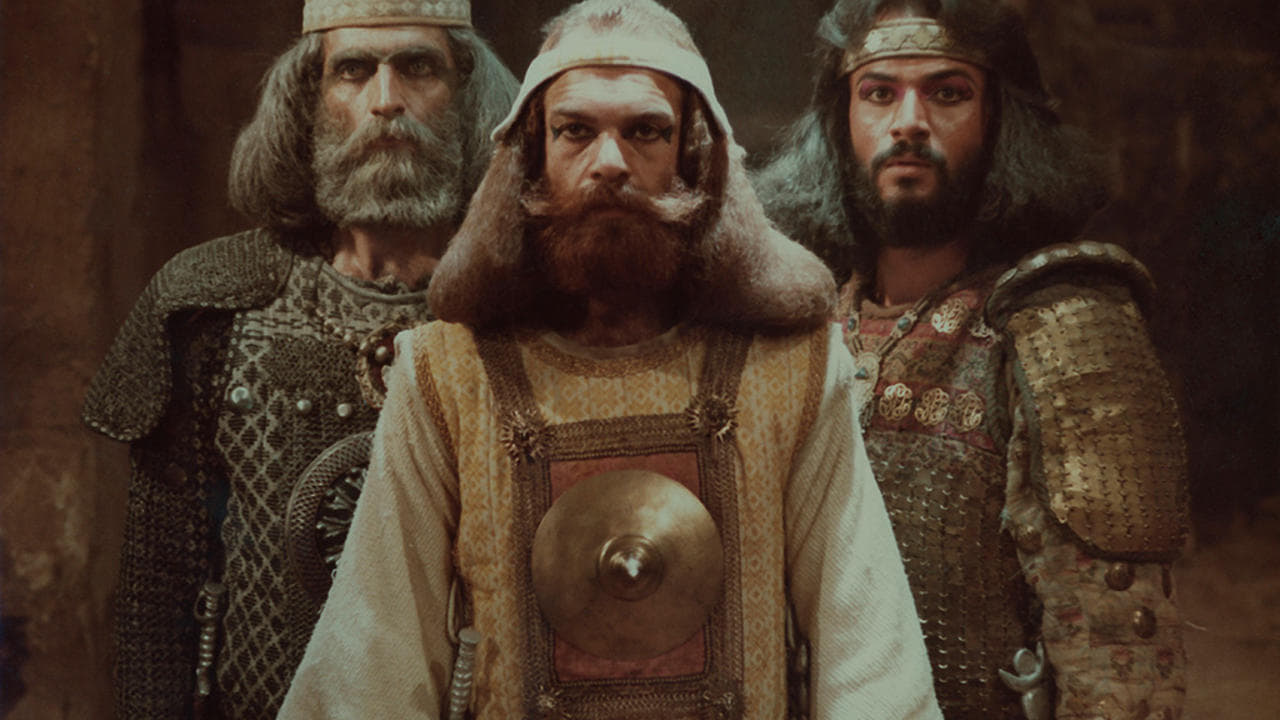
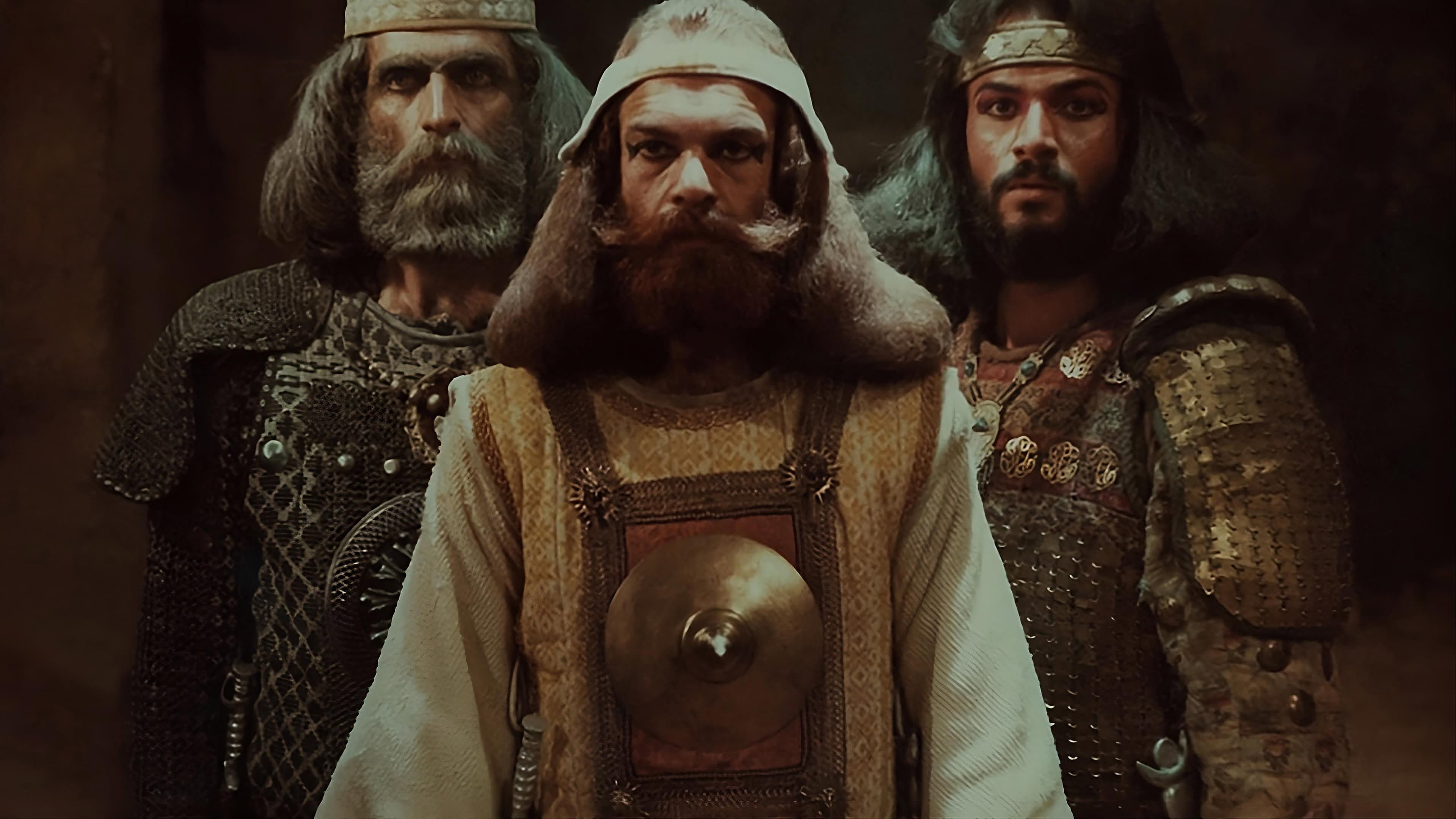
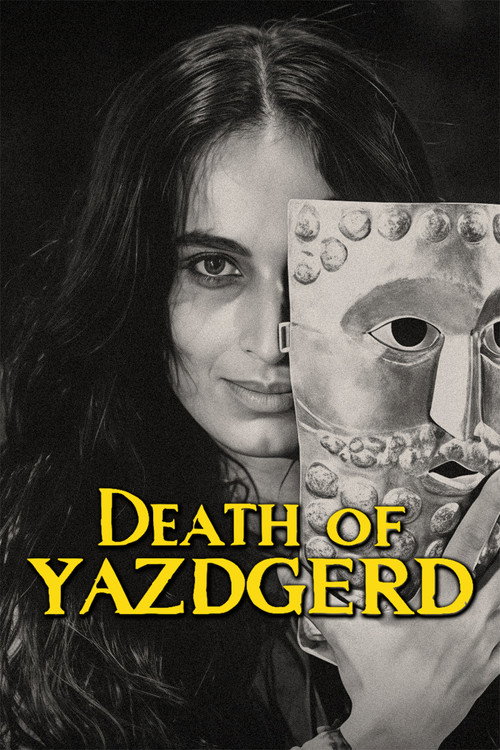
Bahram Beyzai's poetic imagining of the circumstances that led to the death of Yazdgerd III, the last of the Sassanid kings of Iran. His death in 651, during the Arab invasions that brought Islam to this Zoroastrian realm, was mysterious: his corpse was discovered in a mill, but the cause of his death—and the whereabouts of his remains—are unknown.
Directed by Bahram Beyzai
iran
regicide
7th century
sasanian empire
early muslim conquests

Trailer

IMDB
N/A
Cast

Susan Taslimi
The Miller's Wife
Mehdi Hashemi
The Miller

Mahmoud Behrouzian
The Priest
Amin Tarokh
The General

Karim Akbari Mobarakeh
The Army Chief

Yasaman Arami
The Miller's Daughter
Alireza Khamseh
The Soldier
Crew
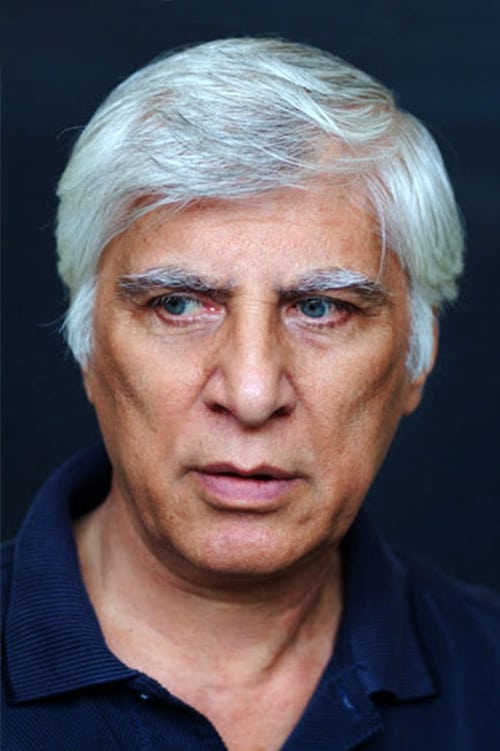
Bahram Beyzai
Director
Bahram Beyzai
Writer
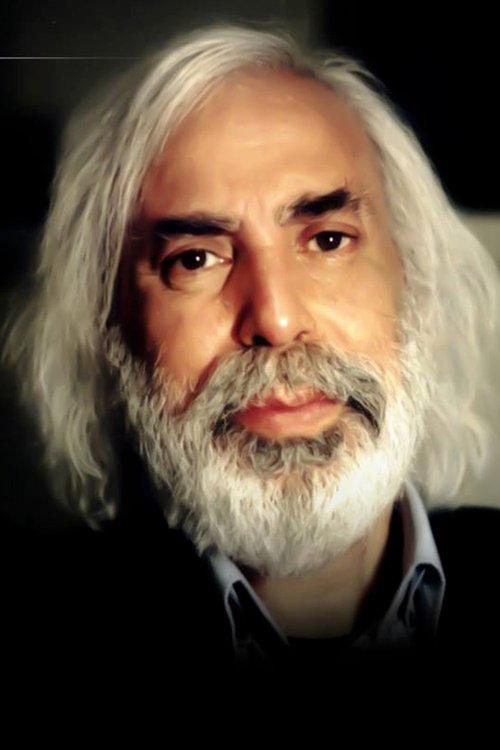
Babak Bayat
Original Music Composer
Bahram Beyzai
Editor

Iraj Raminfar
Set Decoration
Iraj Raminfar
Costume Design
Popular Reviews
18 reviews
MopudPRO
10.0★ · 03/12/26
A deeply literary kind of cinema philosophical and tragic. Great power collapses in the most ordinary places. When history shakes the world, it is often the smallest people who are blamed. And history itself is rarely the truth only the story that survives.
The performances are incredible. As someone who loves theatre, I was especially impressed by how unapologetically theatrical it is.
The performances are incredible. As someone who loves theatre, I was especially impressed by how unapologetically theatrical it is.
A deeply literary kind of cinema philosophical and tragic. Great power collapses in the most ordinary places. When history shakes the world, it is often the smallest people who are blamed. And history itself is rarely the truth only the story that survives.
The performances are incredible. As someone who loves theatre, I was especially impressed by how unapologetically theatrical it is.
The performances are incredible. As someone who loves theatre, I was especially impressed by how unapologetically theatrical it is.

1

kknvch
10.0★ · 03/15/26
A rather dual layered film to understand: it is a movie about the mystery of the death of Yazdgerd III and at the same time an allegory of the 1979 Islamic Revolution. Since the death of Yazdgerd literally marked the end of the Sassanid dynasty, and consequently the doom of ancient persian civilization, it can also be interpreted as the end of secular Iran after the overthrow of Mohammad Reza Pahlavi.
The film also suggests that history is always written by the victors, and it is not necessarily true or just that is why it is important to keep history independent and unbiased, unlike how some countries today use it to cultivate hatred among the people.
P.S. At the end, the symphony Khorramshahr by Majid Entezami or Mars, the bringer of WAR (like the arab invasion in the end of the film) by Gustav Holst would have been perfect.
The film also suggests that history is always written by the victors, and it is not necessarily true or just that is why it is important to keep history independent and unbiased, unlike how some countries today use it to cultivate hatred among the people.
P.S. At the end, the symphony Khorramshahr by Majid Entezami or Mars, the bringer of WAR (like the arab invasion in the end of the film) by Gustav Holst would have been perfect.
A rather dual layered film to understand: it is a movie about the mystery of the death of Yazdgerd III and at the same time an allegory of the 1979 Islamic Revolution. Since the death of Yazdgerd literally marked the end of the Sassanid dynasty, and consequently the doom of ancient persian civilization, it can also be interpreted as the end of secular Iran after the overthrow of Mohammad Reza Pahlavi.
The film also suggests that history is always written by the victors, and it is not necessarily true or just that is why it is important to keep history independent and unbiased, unlike how some countries today use it to cultivate hatred among the people.
P.S. At the end, the symphony Khorramshahr by Majid Entezami or Mars, the bringer of WAR (like the arab invasion in the end of the film) by Gustav Holst would have been perfect.
The film also suggests that history is always written by the victors, and it is not necessarily true or just that is why it is important to keep history independent and unbiased, unlike how some countries today use it to cultivate hatred among the people.
P.S. At the end, the symphony Khorramshahr by Majid Entezami or Mars, the bringer of WAR (like the arab invasion in the end of the film) by Gustav Holst would have been perfect.
adalbert
8.0★ · 12/10/25
najbardziej i najmniej monumentalny film jednoczesnie
najbardziej i najmniej monumentalny film jednoczesnie
Nick
8.0★ · 10/29/25
this movie has got some sick quotes and some cool stuff but for the life of me i have no idea what happened
this movie has got some sick quotes and some cool stuff but for the life of me i have no idea what happened
josie
i wasn’t really paying attention
i wasn’t really paying attention