58/100
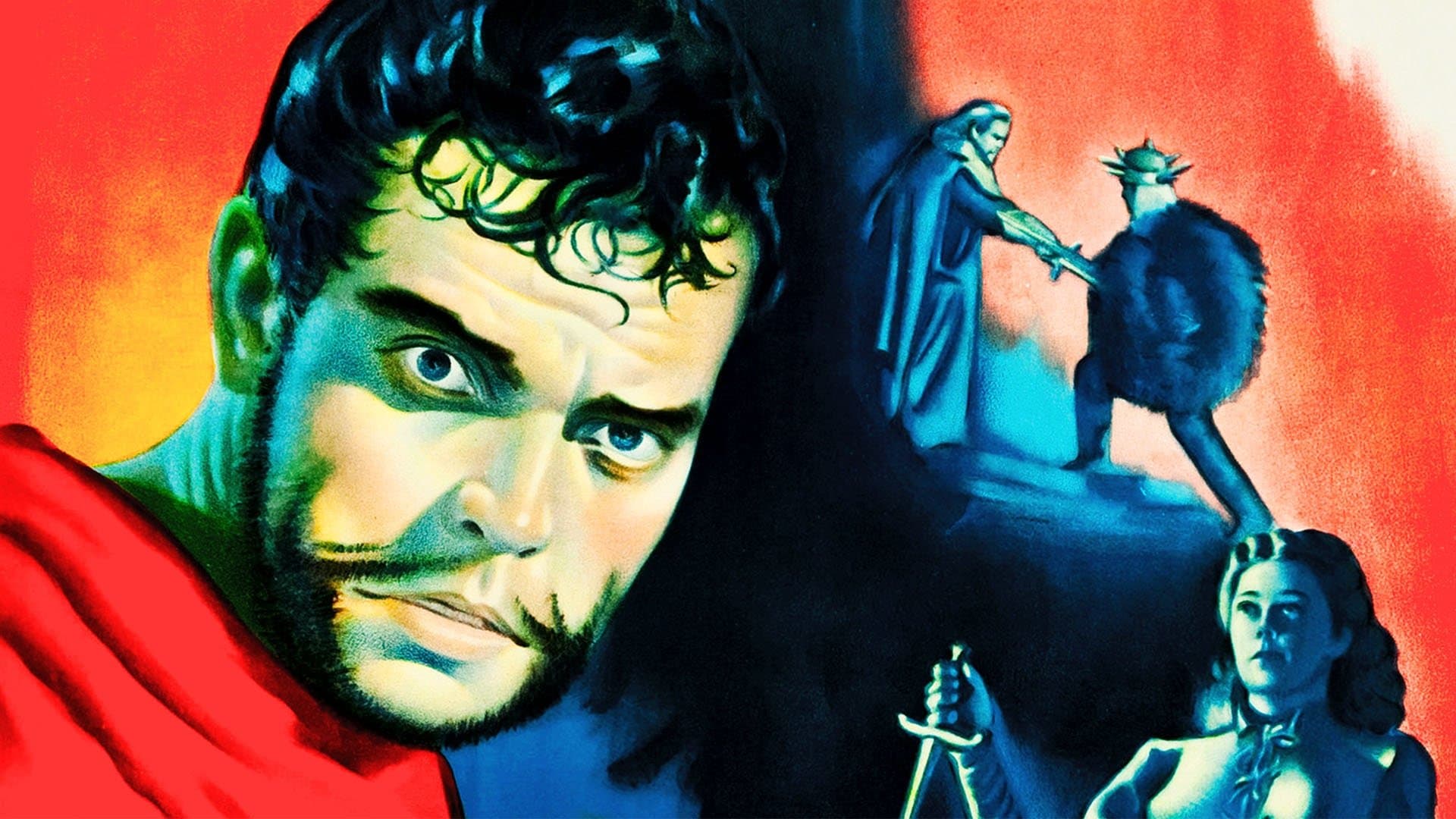
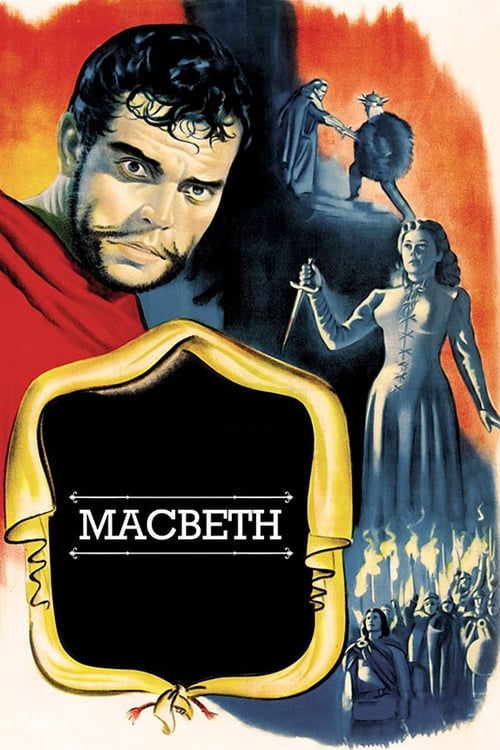
Orson Welles’ Macbeth is a film that by every practical measure should collapse under its own weight, and yet, somehow, it doesn’t. Shot in less than a month on repurposed Western sets for Republic Pictures, and draped in heavy shadows and even heavier Scottish accents, this adaptation feels like a pagan ritual shot in a cave with cardboard rocks, fog machines, and pure cinematic defiance. It is not a refined work. It is ragged, uneven, and occasionally incomprehensible. And yet, against all odds, it works.
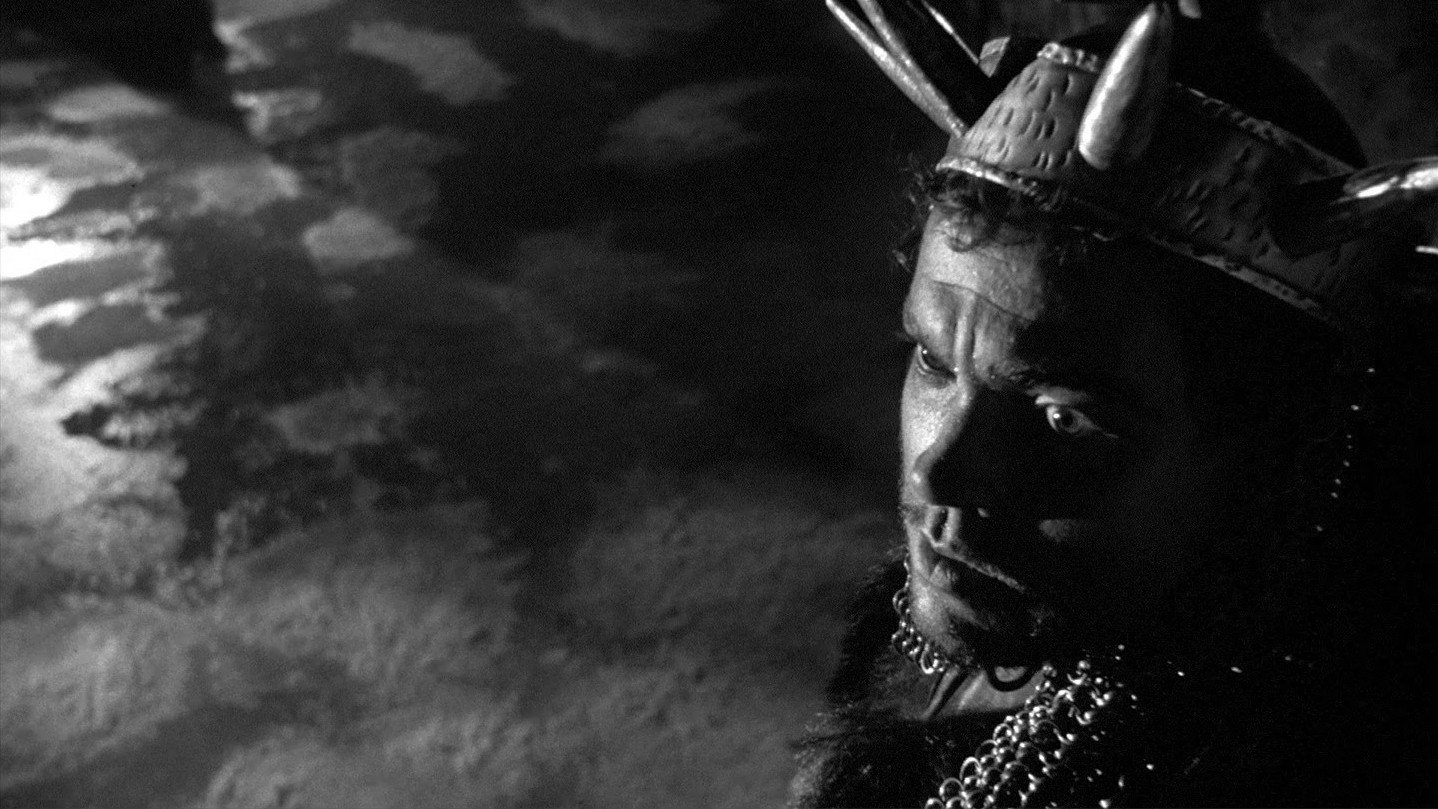
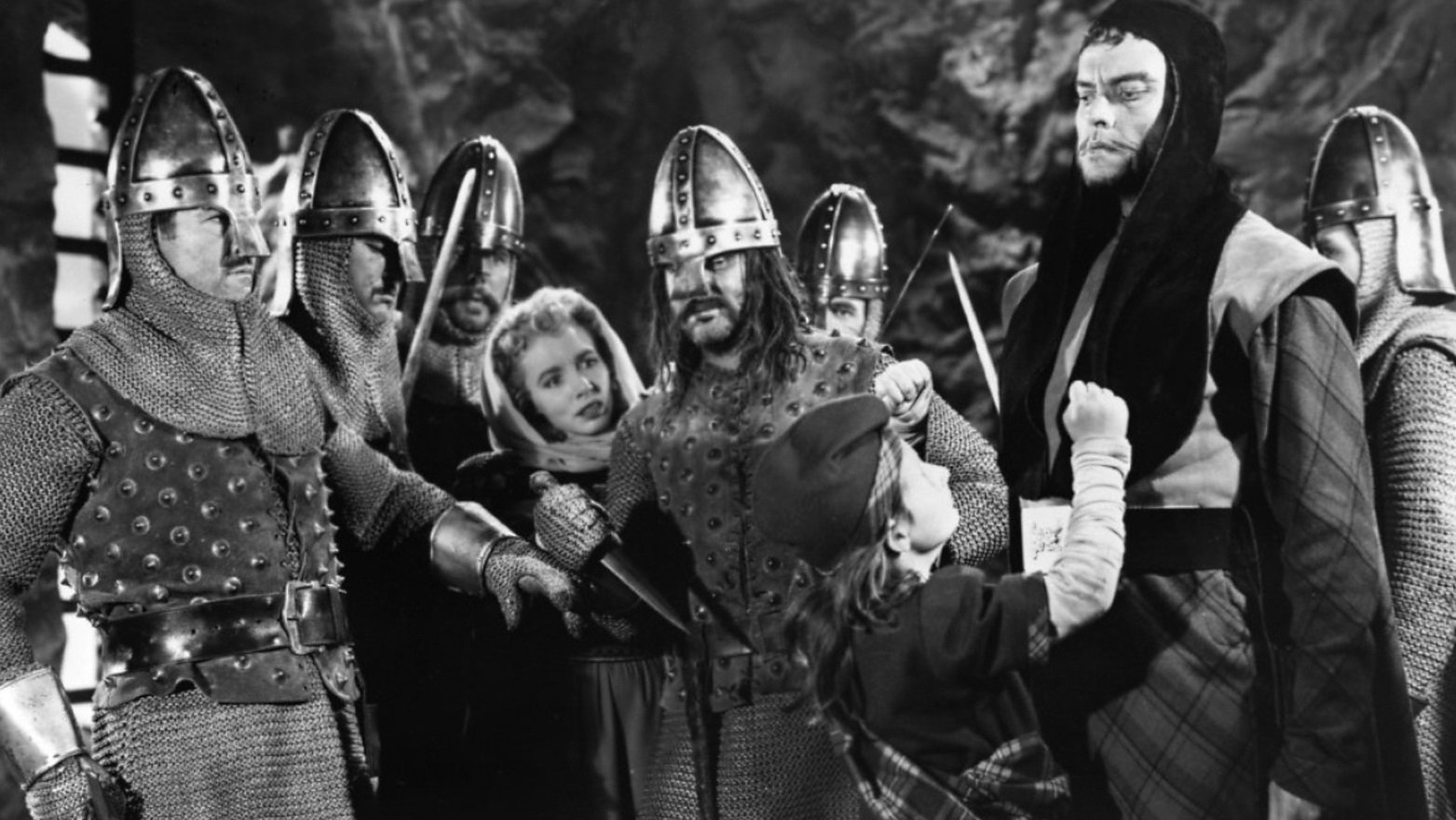
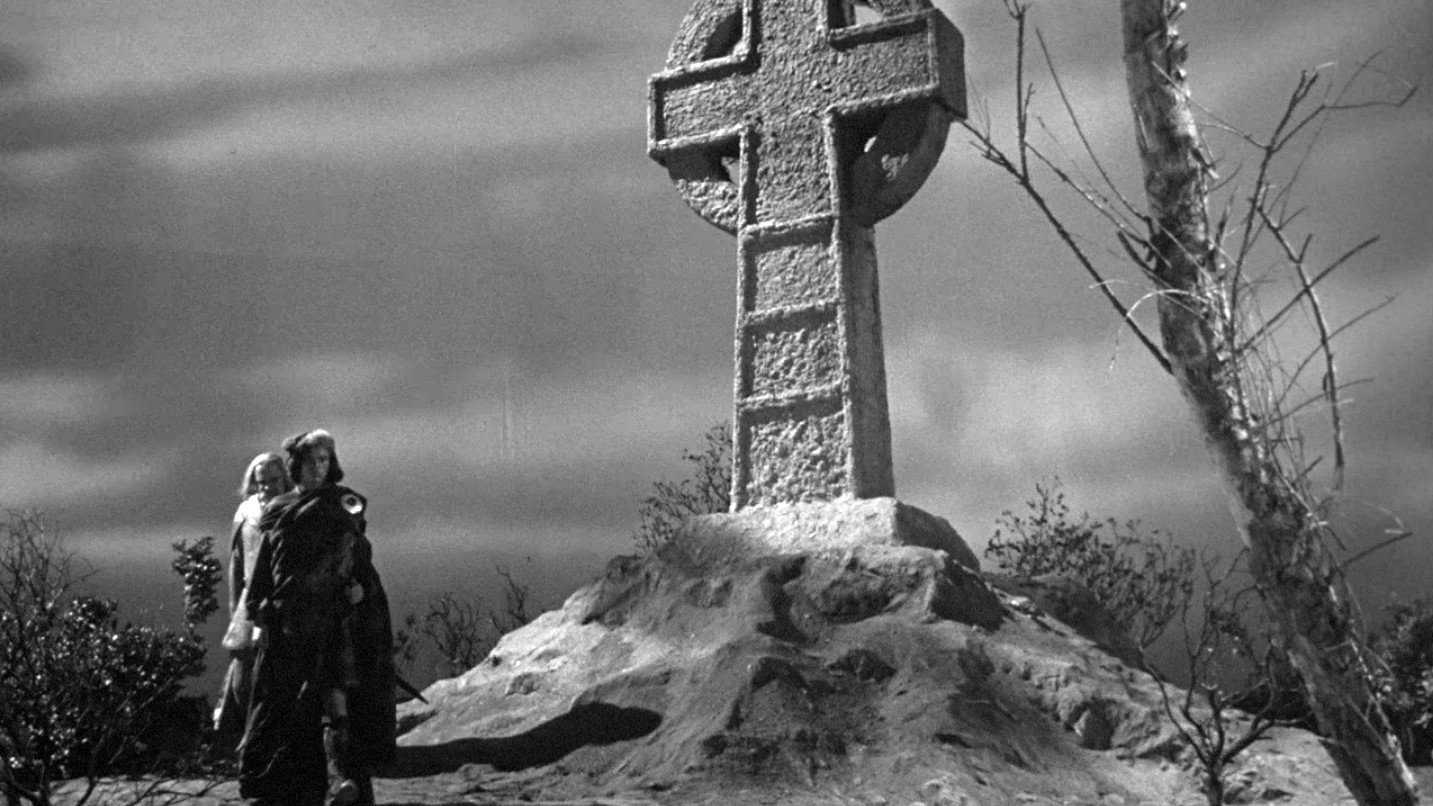
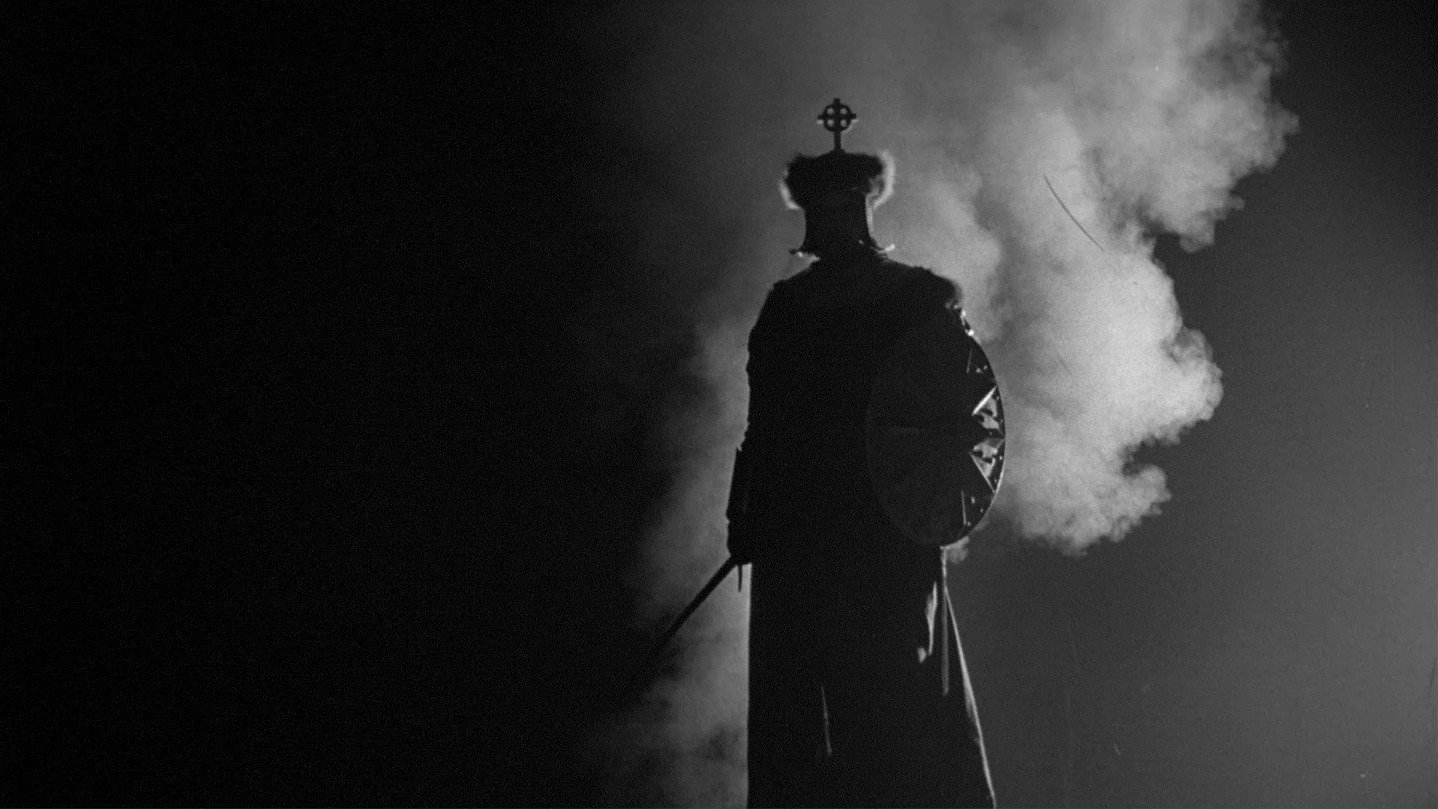
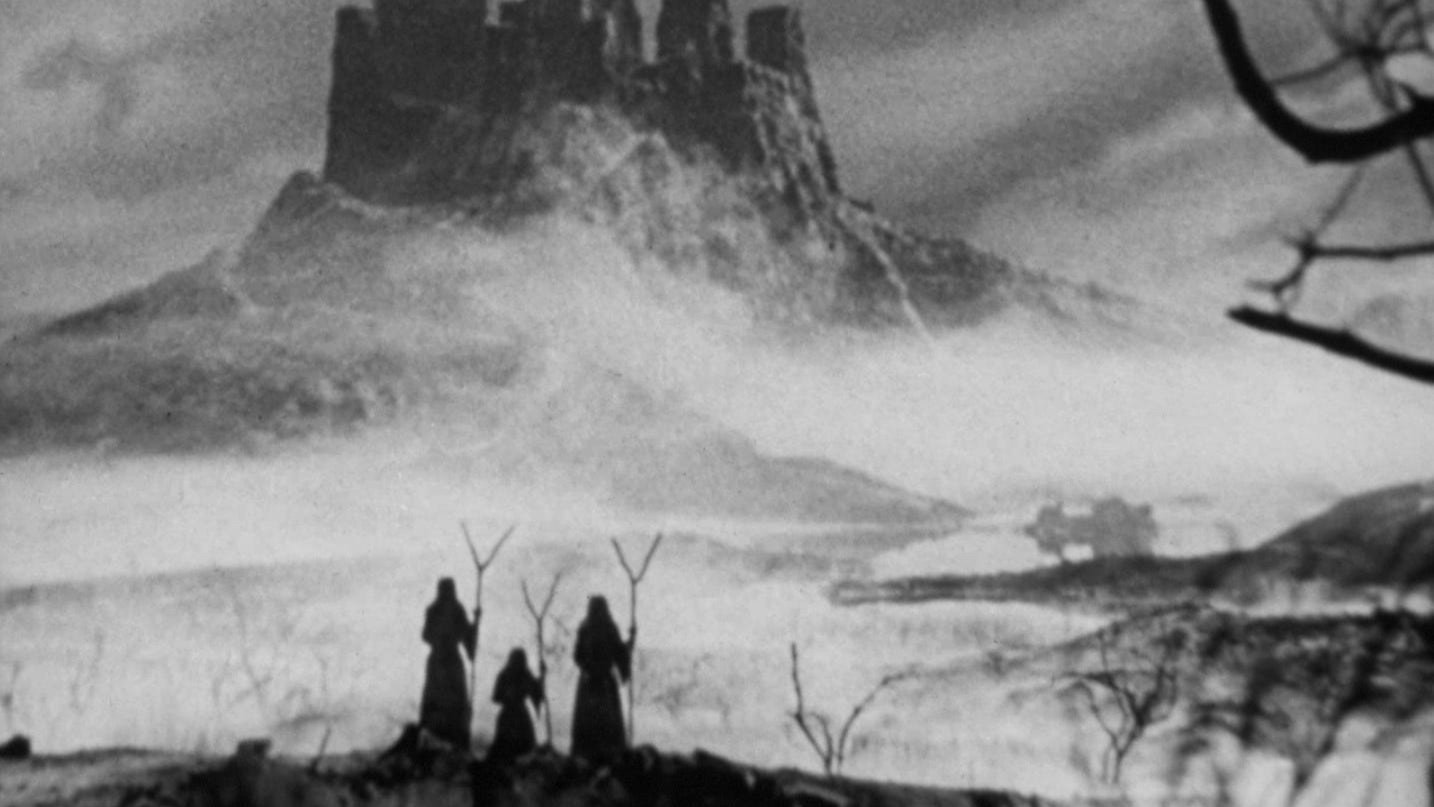
Welles directs with an intensity that almost seems at war with the physical limitations of the production. The sets are primitive, everything is “rocks,” literally everything. There’s no real geography, no architecture, no sense of lived-in space. The characters don’t walk through a world, they haunt it, float through shadowy voids and jagged textures that feel more like purgatory than Scotland. But that’s part of what makes the film strangely compelling: it doesn’t look like history, or even Shakespeare. It looks like death, ritualistic, mythic, decayed.
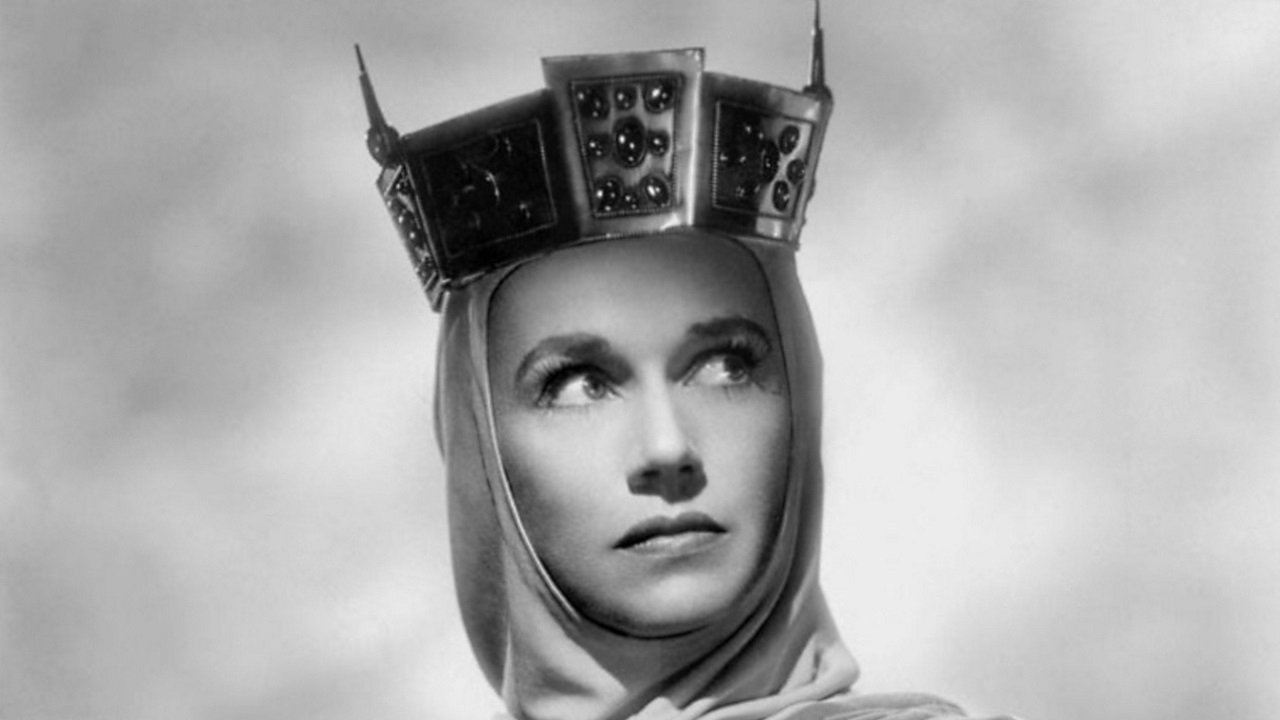
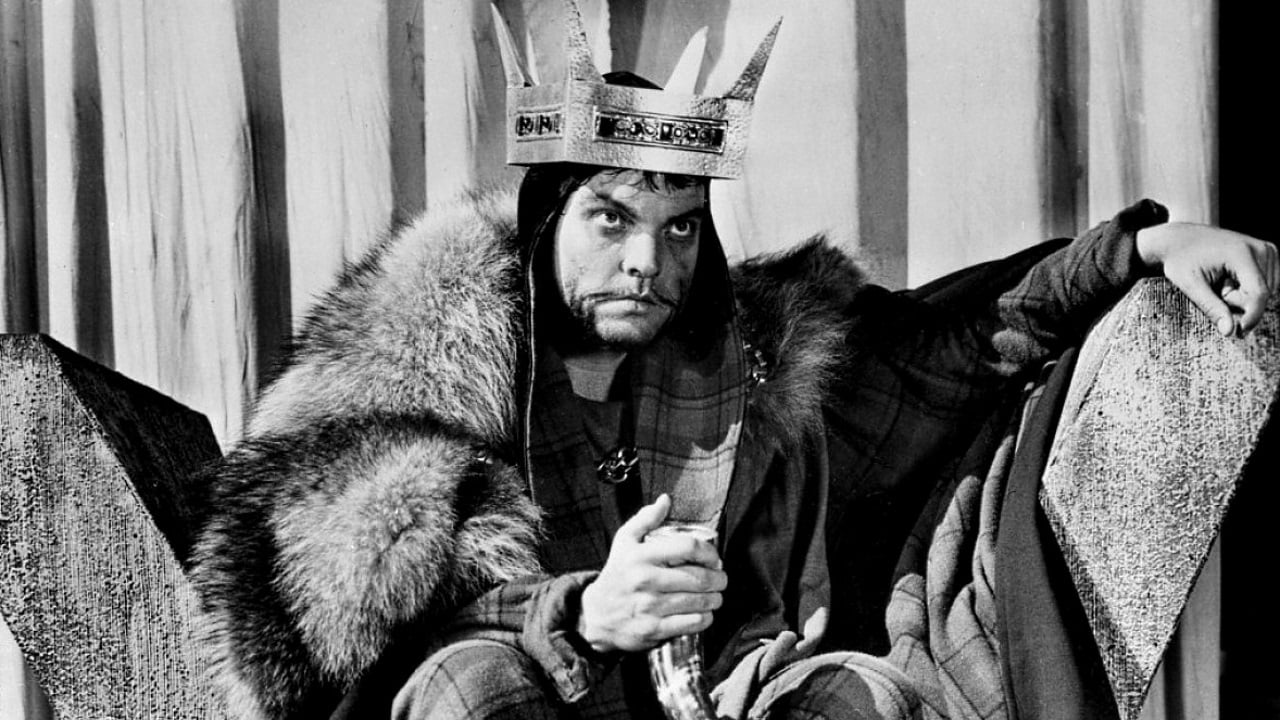
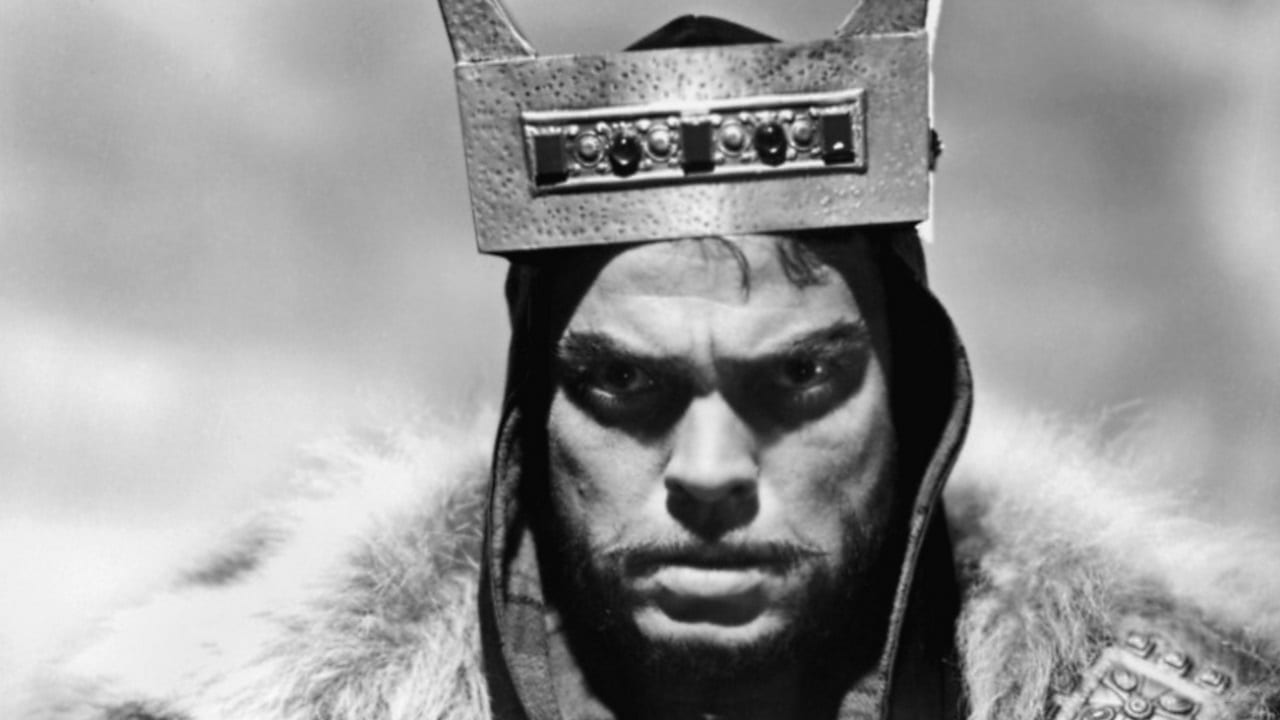
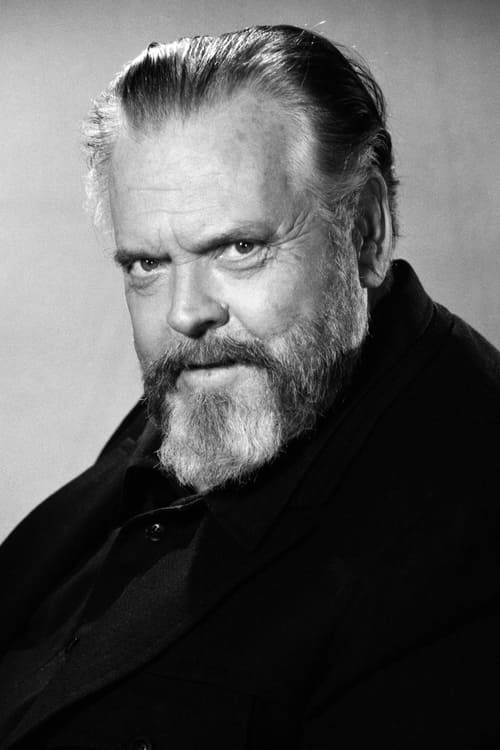
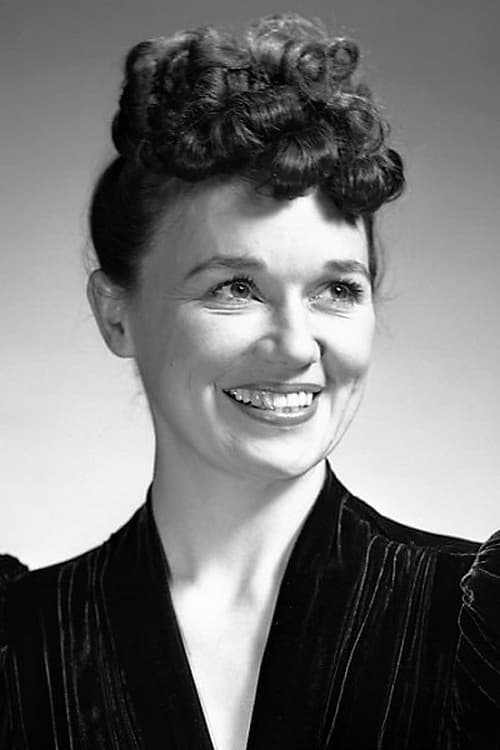
Welles himself gives a performance of operatic fury, all scorched ambition and cracking bravado. It’s not subtle, but it doesn’t need to be. He plays Macbeth as a man already damned, crushed beneath the weight of prophecy before the first dagger even appears. Jeanette Nolan, as Lady Macbeth, goes full shrill from the start, never building toward madness so much as beginning inside it. It’s a broad performance, but one that mirrors the film’s refusal to tiptoe.
The Scottish accents, left intact in the cut I watched, are a challenge. The dialogue is murky, thick, and at times barely intelligible. But the language becomes part of the film’s texture: echoing, other worldly, enchanting. You don’t always understand what’s being said, but you feel the psychic weight behind it.
And that’s really the key to Macbeth’s strange power. It’s a deeply flawed film, with uneven performances, lifeless supporting cast, suffocating repetition, and a visual language sabotaged by the absence of real production design. But it is also a film of uncompromising atmosphere and ambition. You can feel Welles reaching beyond his means in every frame, trying to sculpt cinema out of fog, plywood, and raw conviction. It’s not a great film by most standards. But it’s an honest one. An obsessed one. And for some viewers, myself included, a really good experience.
Orson Welles Ranked
58/100
Orson Welles’ Macbeth is a film that by every practical measure should collapse under its own weight, and yet, somehow, it doesn’t. Shot in less than a month on repurposed Western sets for Republic Pictures, and draped in heavy shadows and even heavier Scottish accents, this adaptation feels like a pagan ritual shot in a cave with cardboard rocks, fog machines, and pure cinematic defiance. It is not a refined work. It is ragged, uneven, and occasionally incomprehensible. And yet, against all odds, it works.
Welles directs with an intensity that almost seems at war with the physical limitations of the production. The sets are primitive, everything is “rocks,” literally everything. There’s no real geography, no architecture, no sense of lived-in space. The characters don’t walk through a world, they haunt it, float through shadowy voids and jagged textures that feel more like purgatory than Scotland. But that’s part of what makes the film strangely compelling: it doesn’t look like history, or even Shakespeare. It looks like death, ritualistic, mythic, decayed.
Welles himself gives a performance of operatic fury, all scorched ambition and cracking bravado. It’s not subtle, but it doesn’t need to be. He plays Macbeth as a man already damned, crushed beneath the weight of prophecy before the first dagger even appears. Jeanette Nolan, as Lady Macbeth, goes full shrill from the start, never building toward madness so much as beginning inside it. It’s a broad performance, but one that mirrors the film’s refusal to tiptoe.
The Scottish accents, left intact in the cut I watched, are a challenge. The dialogue is murky, thick, and at times barely intelligible. But the language becomes part of the film’s texture: echoing, other worldly, enchanting. You don’t always understand what’s being said, but you feel the psychic weight behind it.
And that’s really the key to Macbeth’s strange power. It’s a deeply flawed film, with uneven performances, lifeless supporting cast, suffocating repetition, and a visual language sabotaged by the absence of real production design. But it is also a film of uncompromising atmosphere and ambition. You can feel Welles reaching beyond his means in every frame, trying to sculpt cinema out of fog, plywood, and raw conviction. It’s not a great film by most standards. But it’s an honest one. An obsessed one. And for some viewers, myself included, a really good experience.
Orson Welles Ranked