
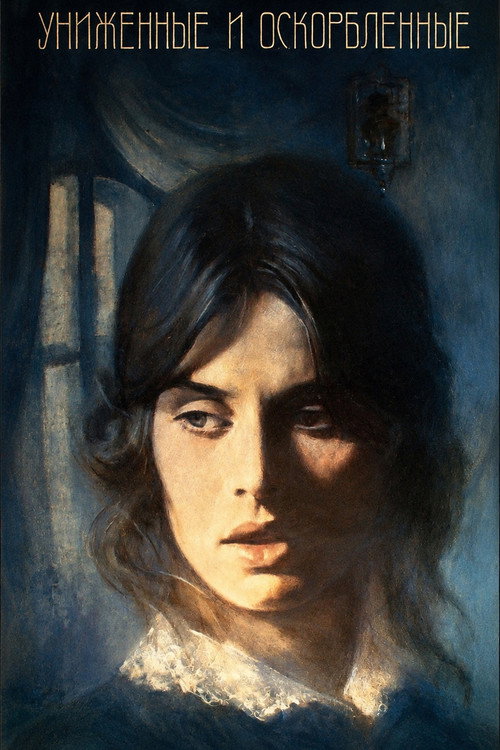
Humiliated and Insulted
1990·Drama·1h 46m
7.1
★
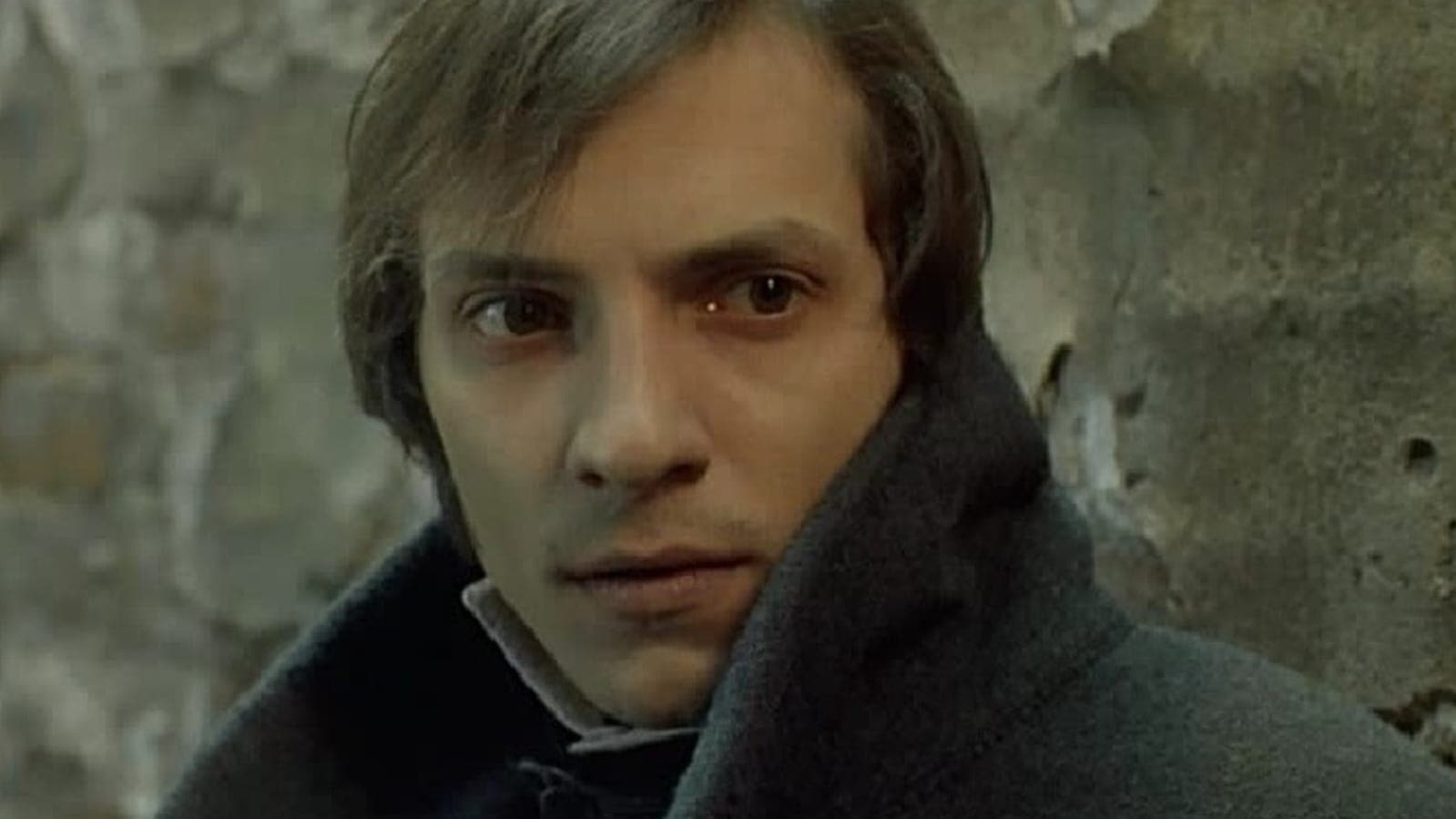
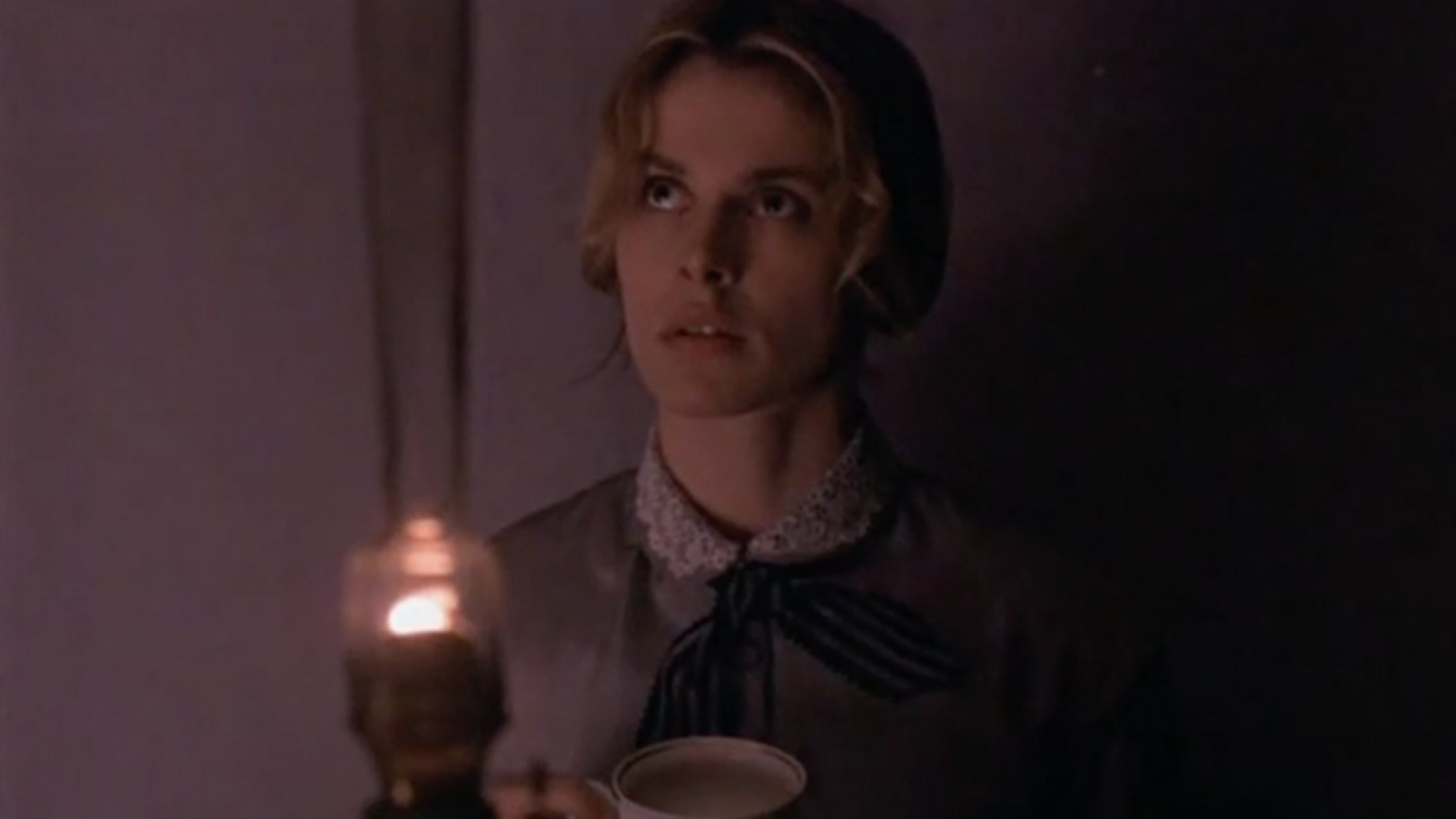
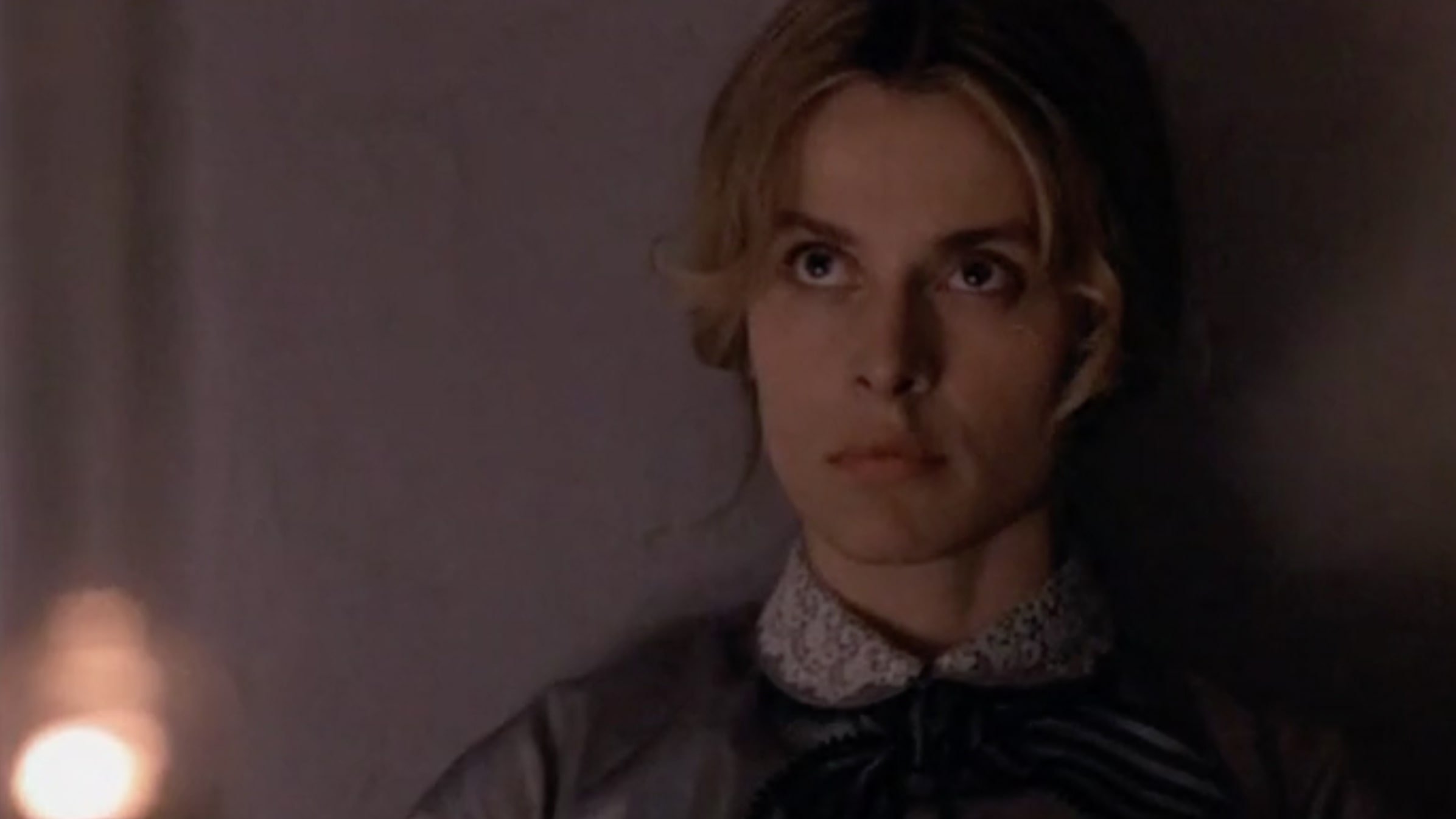
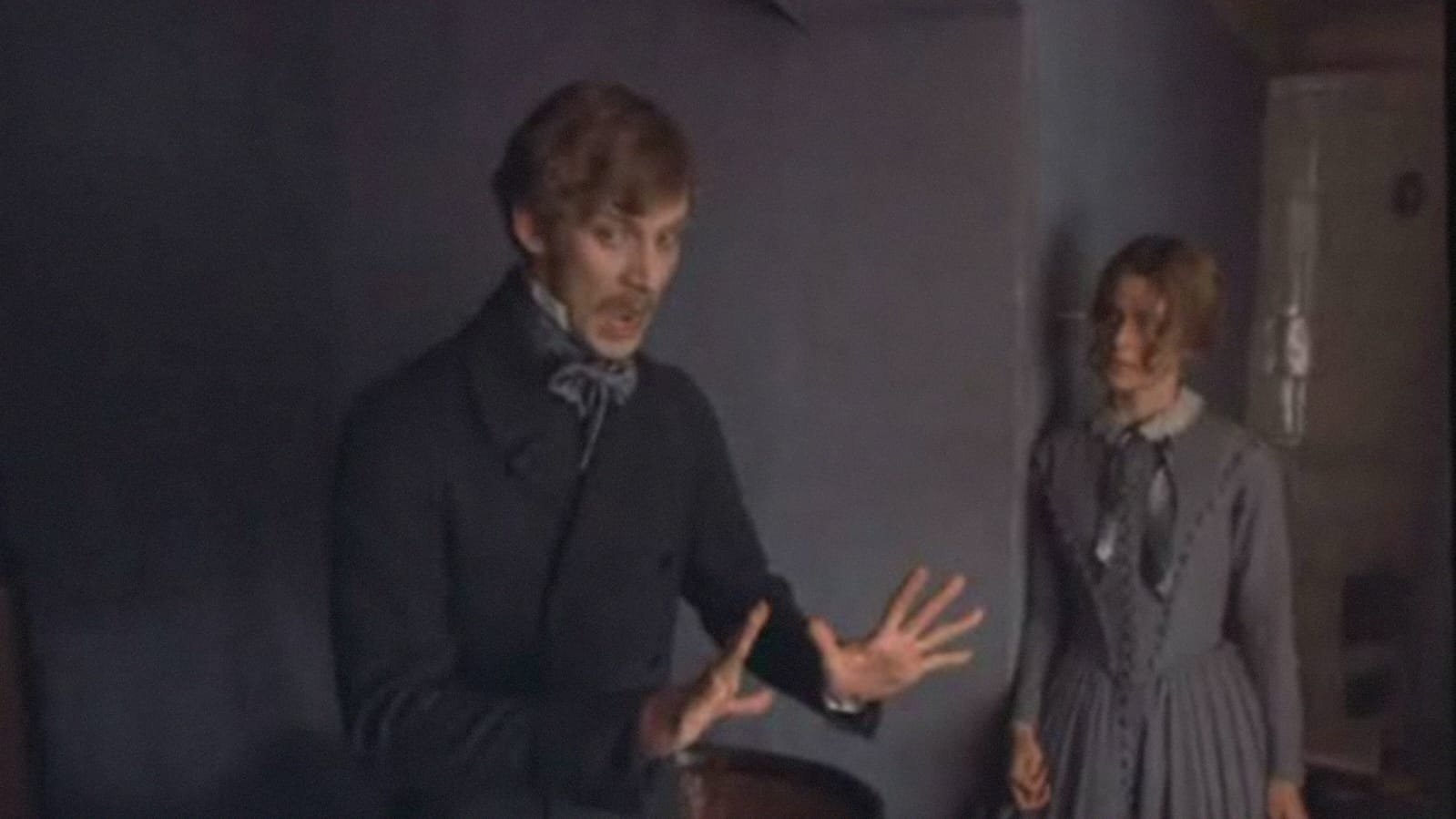
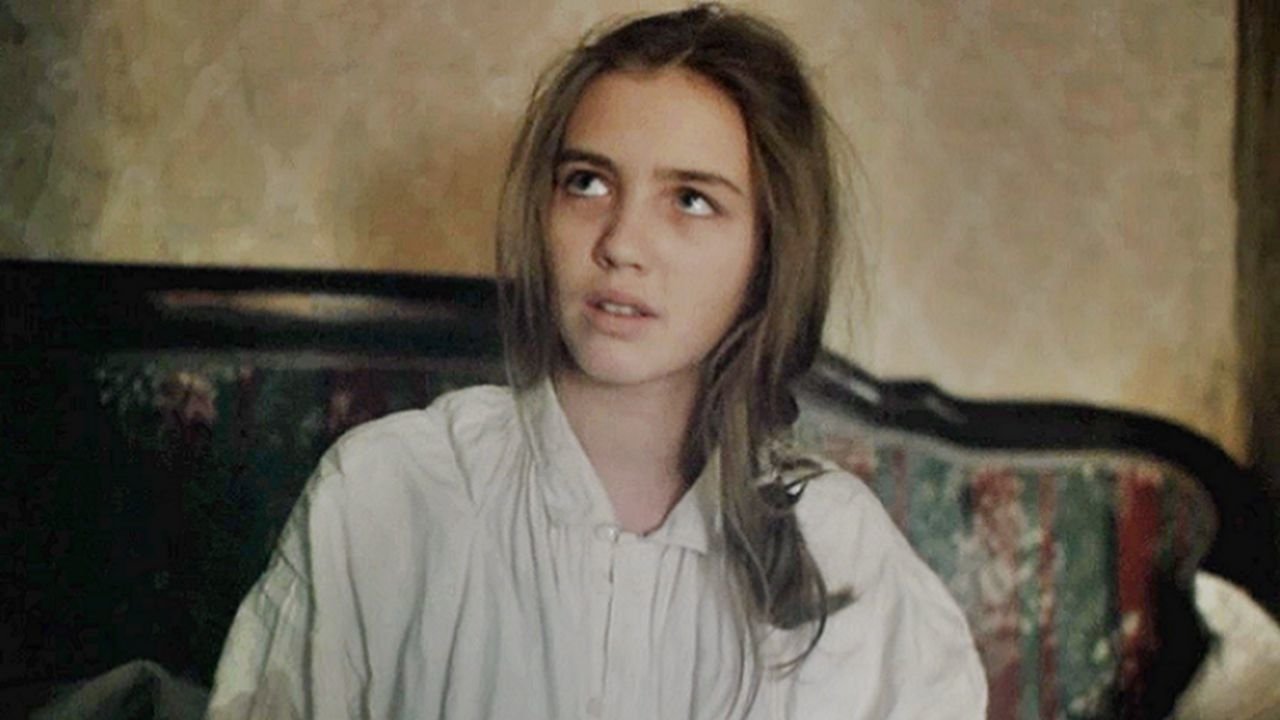
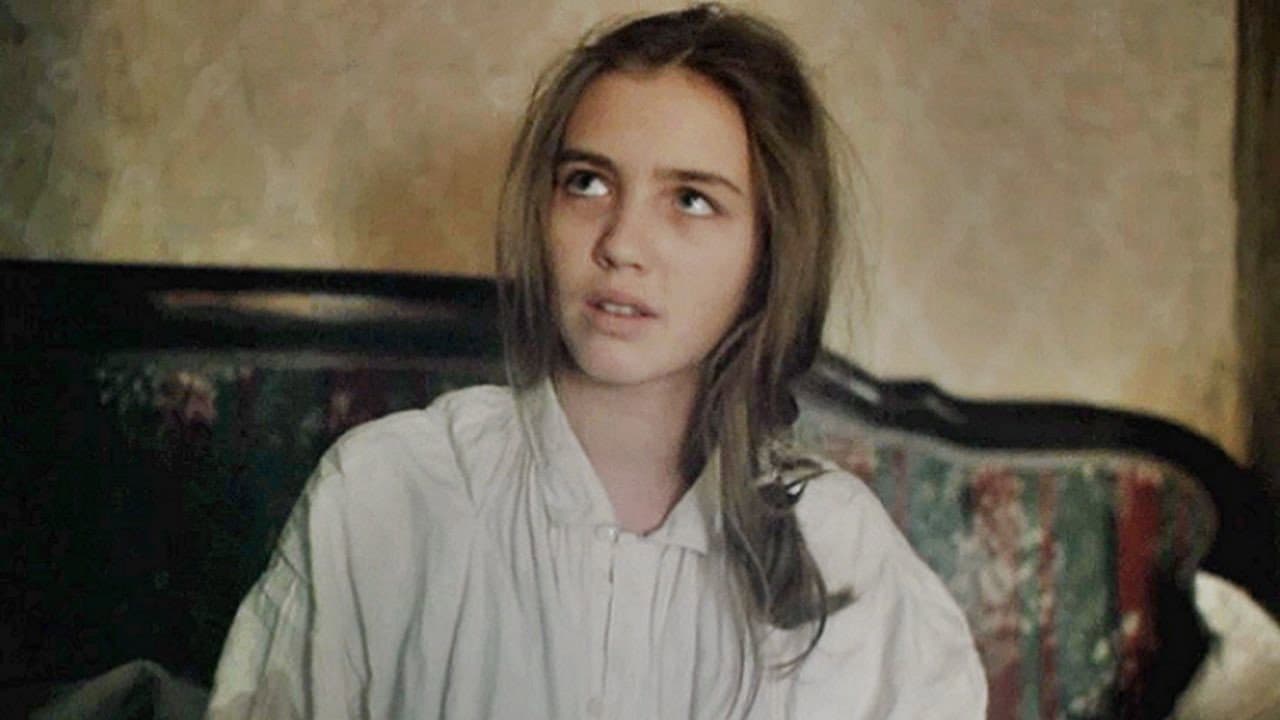
Based on the Fyodor Dostoevsky novel about a young woman who leaves her family to live with her lover whose father dead set on keeping them apart.
Directed by Andrey Eshpay

IMDB
N/A
Cast
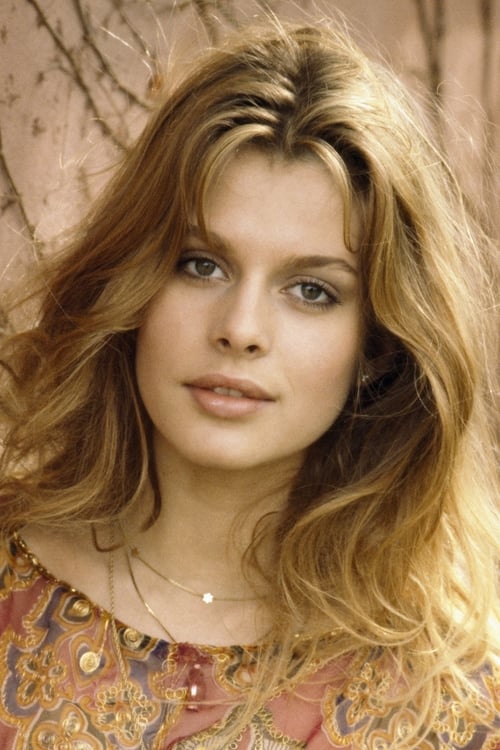
Nastassja Kinski
Natasha
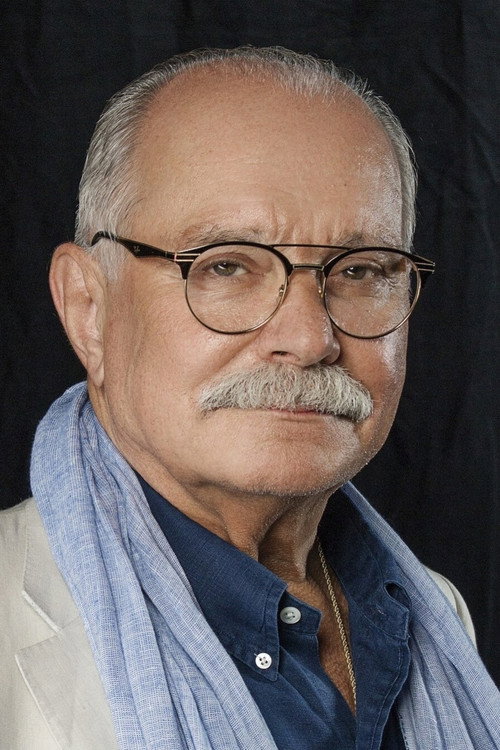
Nikita Mikhalkov
Prince Valkovky
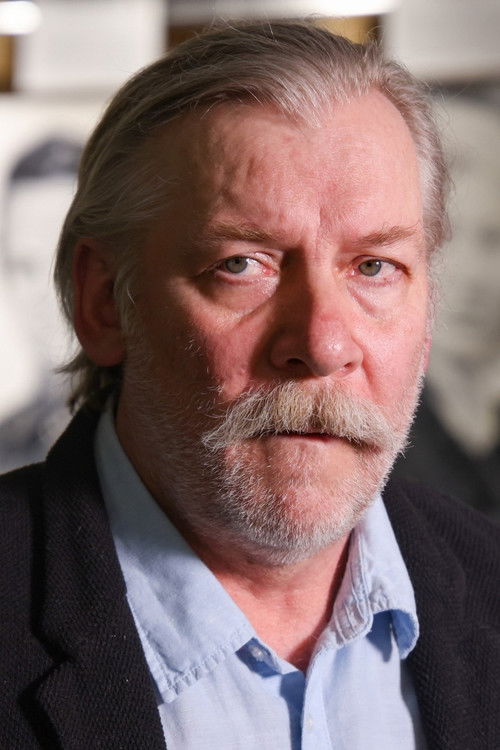
Viktor Rakov
Alyosha Valkovsky
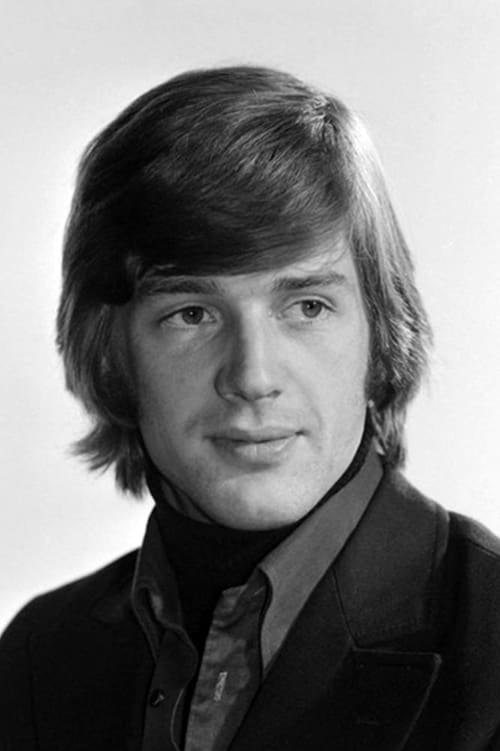
Aleksandr Abdulov
Masloboyev

Boris Romanov
Nikolai Ikhmenev

Lyudmila Polyakova
Anna Ikhmeneva
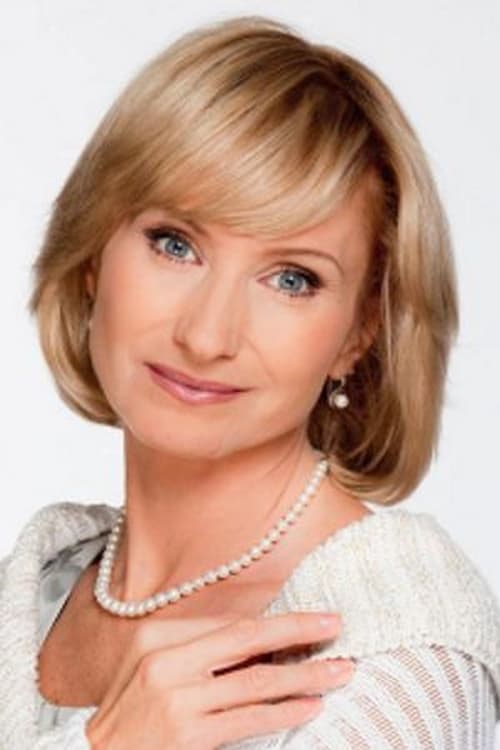
Olga Prokofeva
Alexandra Semionovna
Heinz Braun
Doktor
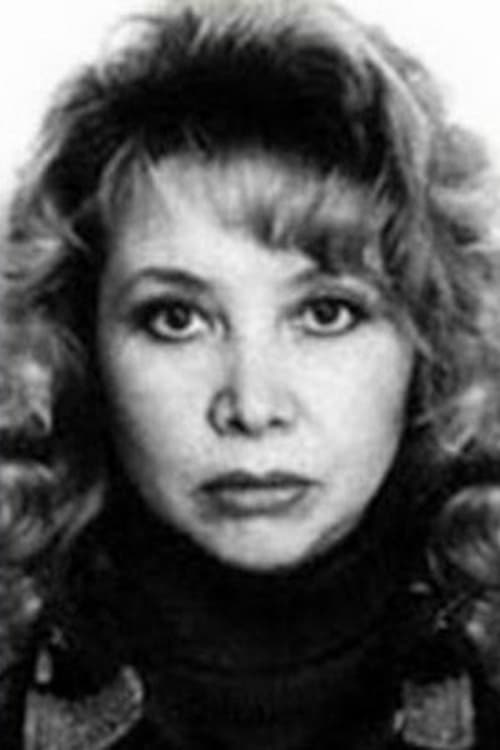
Valentina Klyagina
Mavra
Aleksandr Rakhlenko
Crew
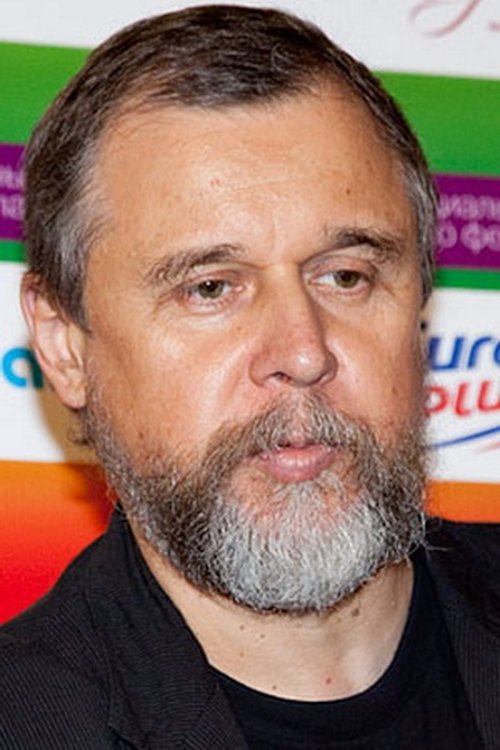
Andrey Eshpay
Director
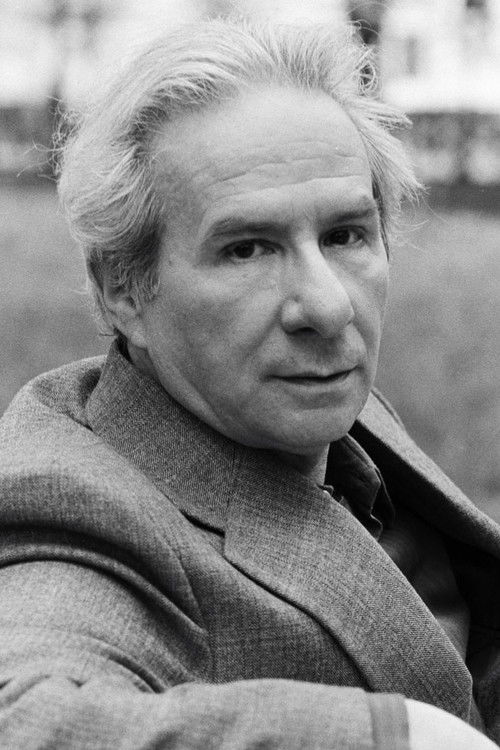
Aleksandr Volodin
Writer
Andrey Eshpay
Original Music Composer
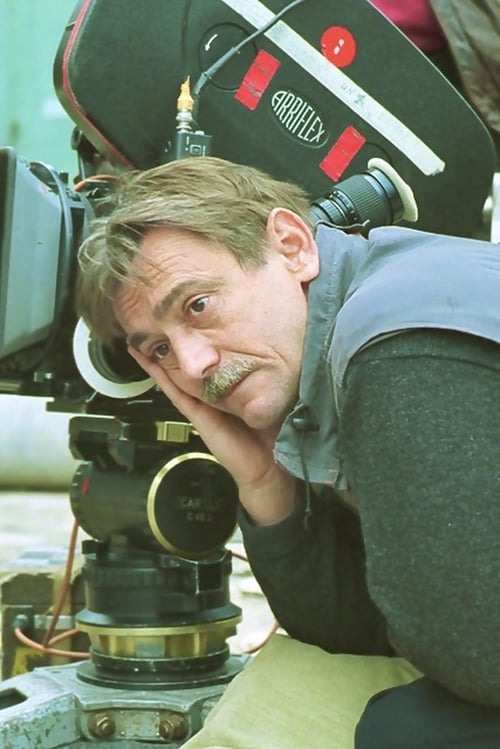
Sergey Yurizditskiy
Director of Photography
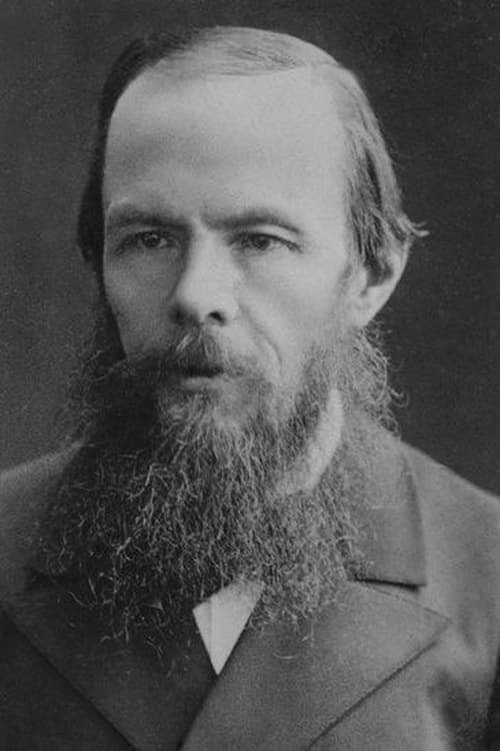
Fyodor Dostoevsky
Novel

Eleonora Maklakova
Costume Design
Popular Reviews
5 reviews
Nick
6.0★ · 11/17/25
As an adaptation, it’s quite literal, albeit shortened. The thing about Dostoevsky, and what’s largely lacking here, is the detail of the interior of our characters, whether through dialogue or internal monologue. This particular novel is written from Vanya’s point of view. But the story largely neglects Vanya. This isn’t entirely incorrect in a literal sense, as Vanya is basically cucked the entire novel and often relegated to a helpless bystander. But because it is written from his pov, we still experience what he experiences.
I was surprised when the film almost immediately abandons his perspective because it starts promising, including the very first shot nicely visualizing a man within his own head. I think the reason this film fails to capture the book’s essence is because there is rarely any effort given to transitions from scene to scene. It’s a very literal iteration of chapter progression, but totally forgets the spirit of the book’s momentum.
I have few qualms about some of the things left out. In fact, Eshpai probably could have benefited from excluding more in favour of some patience and style. There’s little in the way of unique formalism; you get a handful of nice close-ups or establishing scenery shots. I particularly recall one of Alyosha’s returns where Natasha is reluctant to embrace him. The camera focuses on her hesitant expression, holding so we can empathize with her wounded gaze. But these moments are sparse. The movie is in such a hurry to get to the next scene, it rushes the dialogue and has an almost breakneck pace. The few scenery shots are more complimentary to the spirit of the prose as it emphasizes the interiority of our characters’ thoughts.
The ending being totally changed is an interesting choice. I’m willing to give Eshpai the benefit of the doubt. Maybe he thought he needed something more straightforward and wrapped with a pretty bow because of all the narrative tidbits that were missing. Who knows what influential and bureaucratic logistics he had to deal with.
I can’t imagine anyone who hasn’t read this would enjoy it much. It’s flat, hollow, and brief. The music is cheesy, reminiscent of made-for-tv movies. The one standout scene is Vanya’s dinner with the prince. It’s the closest we get to feeling anything for these characters.
I’m torn to call this a failure because it covers the basic bits, but completely fails to capture more than the literal writing. And if you know/like Dostoevsky, you know the prose is only the vessel to the mind. Nothing stirs here. It’s very basic. Probably good for a seventh grade substitute teacher in Russia to show the class on a rainy day.
I was surprised when the film almost immediately abandons his perspective because it starts promising, including the very first shot nicely visualizing a man within his own head. I think the reason this film fails to capture the book’s essence is because there is rarely any effort given to transitions from scene to scene. It’s a very literal iteration of chapter progression, but totally forgets the spirit of the book’s momentum.
I have few qualms about some of the things left out. In fact, Eshpai probably could have benefited from excluding more in favour of some patience and style. There’s little in the way of unique formalism; you get a handful of nice close-ups or establishing scenery shots. I particularly recall one of Alyosha’s returns where Natasha is reluctant to embrace him. The camera focuses on her hesitant expression, holding so we can empathize with her wounded gaze. But these moments are sparse. The movie is in such a hurry to get to the next scene, it rushes the dialogue and has an almost breakneck pace. The few scenery shots are more complimentary to the spirit of the prose as it emphasizes the interiority of our characters’ thoughts.
The ending being totally changed is an interesting choice. I’m willing to give Eshpai the benefit of the doubt. Maybe he thought he needed something more straightforward and wrapped with a pretty bow because of all the narrative tidbits that were missing. Who knows what influential and bureaucratic logistics he had to deal with.
I can’t imagine anyone who hasn’t read this would enjoy it much. It’s flat, hollow, and brief. The music is cheesy, reminiscent of made-for-tv movies. The one standout scene is Vanya’s dinner with the prince. It’s the closest we get to feeling anything for these characters.
I’m torn to call this a failure because it covers the basic bits, but completely fails to capture more than the literal writing. And if you know/like Dostoevsky, you know the prose is only the vessel to the mind. Nothing stirs here. It’s very basic. Probably good for a seventh grade substitute teacher in Russia to show the class on a rainy day.
As an adaptation, it’s quite literal, albeit shortened. The thing about Dostoevsky, and what’s largely lacking here, is the detail of the interior of our characters, whether through dialogue or internal monologue. This particular novel is written from Vanya’s point of view. But the story largely neglects Vanya. This isn’t entirely incorrect in a literal sense, as Vanya is basically cucked the entire novel and often relegated to a helpless bystander. But because it is written from his pov, we still experience what he experiences.
I was surprised when the film almost immediately abandons his perspective because it starts promising, including the very first shot nicely visualizing a man within his own head. I think the reason this film fails to capture the book’s essence is because there is rarely any effort given to transitions from scene to scene. It’s a very literal iteration of chapter progression, but totally forgets the spirit of the book’s momentum.
I have few qualms about some of the things left out. In fact, Eshpai probably could have benefited from excluding more in favour of some patience and style. There’s little in the way of unique formalism; you get a handful of nice close-ups or establishing scenery shots. I particularly recall one of Alyosha’s returns where Natasha is reluctant to embrace him. The camera focuses on her hesitant expression, holding so we can empathize with her wounded gaze. But these moments are sparse. The movie is in such a hurry to get to the next scene, it rushes the dialogue and has an almost breakneck pace. The few scenery shots are more complimentary to the spirit of the prose as it emphasizes the interiority of our characters’ thoughts.
The ending being totally changed is an interesting choice. I’m willing to give Eshpai the benefit of the doubt. Maybe he thought he needed something more straightforward and wrapped with a pretty bow because of all the narrative tidbits that were missing. Who knows what influential and bureaucratic logistics he had to deal with.
I can’t imagine anyone who hasn’t read this would enjoy it much. It’s flat, hollow, and brief. The music is cheesy, reminiscent of made-for-tv movies. The one standout scene is Vanya’s dinner with the prince. It’s the closest we get to feeling anything for these characters.
I’m torn to call this a failure because it covers the basic bits, but completely fails to capture more than the literal writing. And if you know/like Dostoevsky, you know the prose is only the vessel to the mind. Nothing stirs here. It’s very basic. Probably good for a seventh grade substitute teacher in Russia to show the class on a rainy day.
I was surprised when the film almost immediately abandons his perspective because it starts promising, including the very first shot nicely visualizing a man within his own head. I think the reason this film fails to capture the book’s essence is because there is rarely any effort given to transitions from scene to scene. It’s a very literal iteration of chapter progression, but totally forgets the spirit of the book’s momentum.
I have few qualms about some of the things left out. In fact, Eshpai probably could have benefited from excluding more in favour of some patience and style. There’s little in the way of unique formalism; you get a handful of nice close-ups or establishing scenery shots. I particularly recall one of Alyosha’s returns where Natasha is reluctant to embrace him. The camera focuses on her hesitant expression, holding so we can empathize with her wounded gaze. But these moments are sparse. The movie is in such a hurry to get to the next scene, it rushes the dialogue and has an almost breakneck pace. The few scenery shots are more complimentary to the spirit of the prose as it emphasizes the interiority of our characters’ thoughts.
The ending being totally changed is an interesting choice. I’m willing to give Eshpai the benefit of the doubt. Maybe he thought he needed something more straightforward and wrapped with a pretty bow because of all the narrative tidbits that were missing. Who knows what influential and bureaucratic logistics he had to deal with.
I can’t imagine anyone who hasn’t read this would enjoy it much. It’s flat, hollow, and brief. The music is cheesy, reminiscent of made-for-tv movies. The one standout scene is Vanya’s dinner with the prince. It’s the closest we get to feeling anything for these characters.
I’m torn to call this a failure because it covers the basic bits, but completely fails to capture more than the literal writing. And if you know/like Dostoevsky, you know the prose is only the vessel to the mind. Nothing stirs here. It’s very basic. Probably good for a seventh grade substitute teacher in Russia to show the class on a rainy day.


Kris
8.0★ · 03/05/26
Kris
8.0★ · 03/05/26
dinabebrik
7.0★ · 08/25/25
lizPRO
10.0★ · 04/20/25