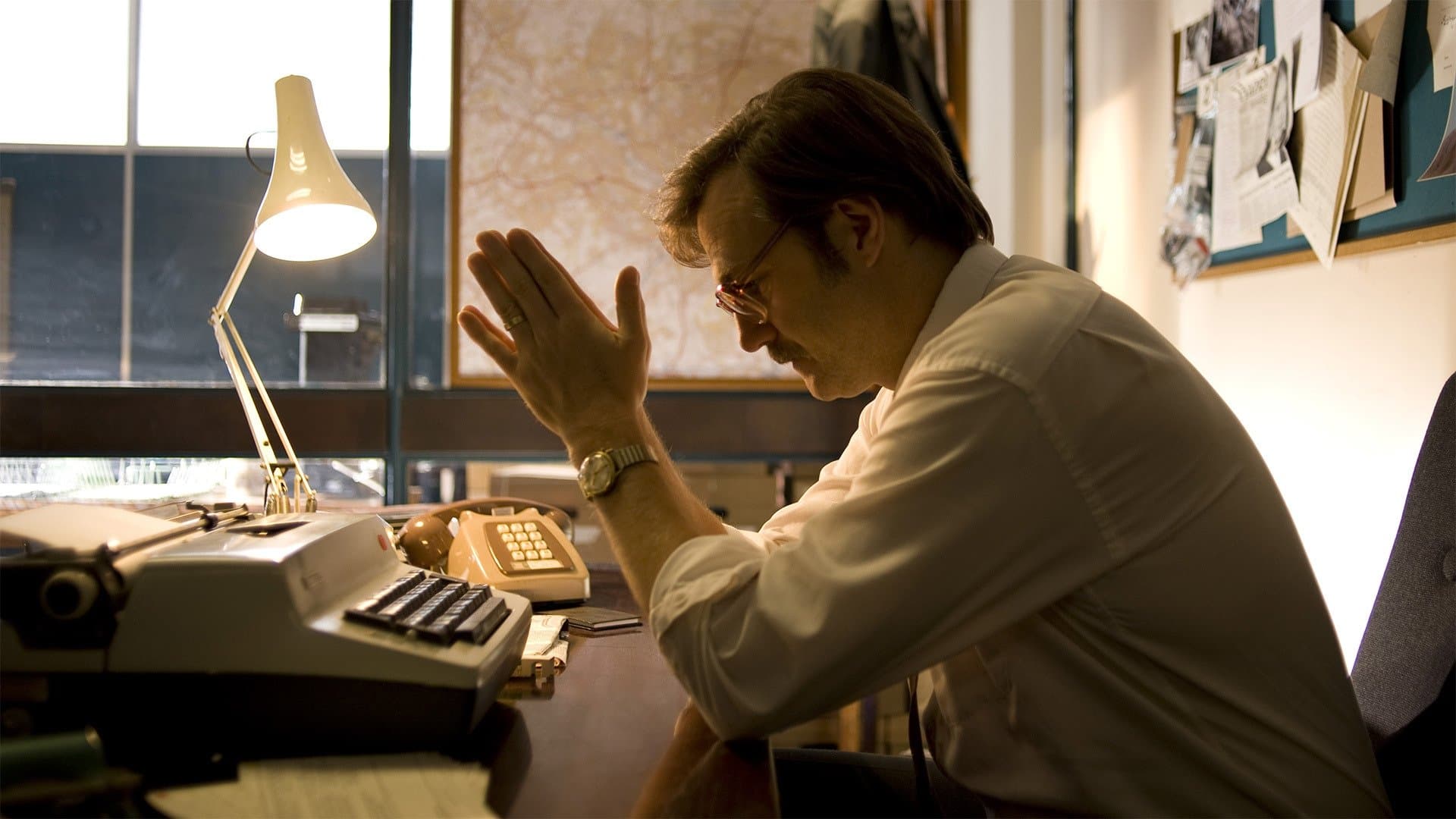
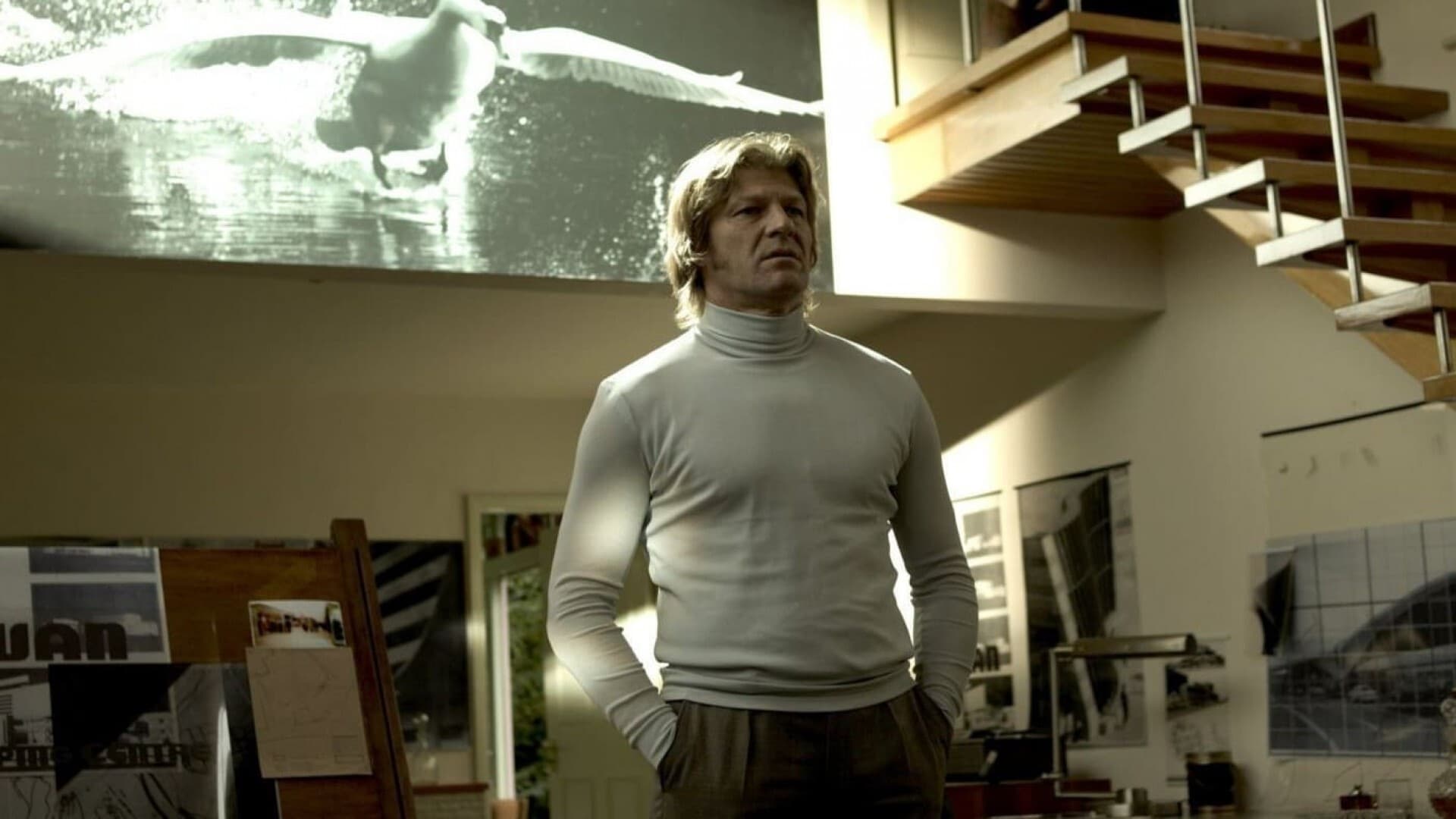
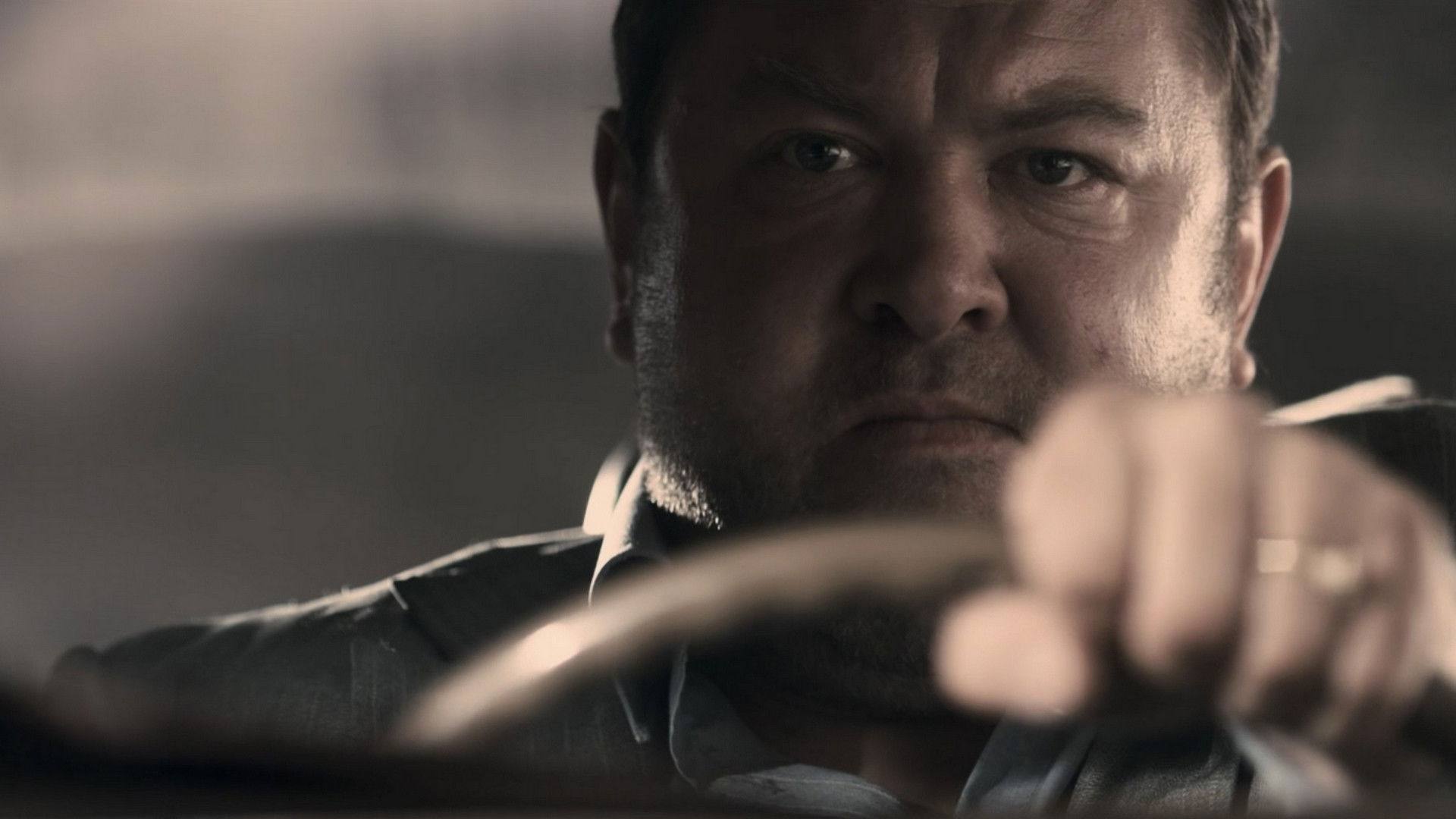
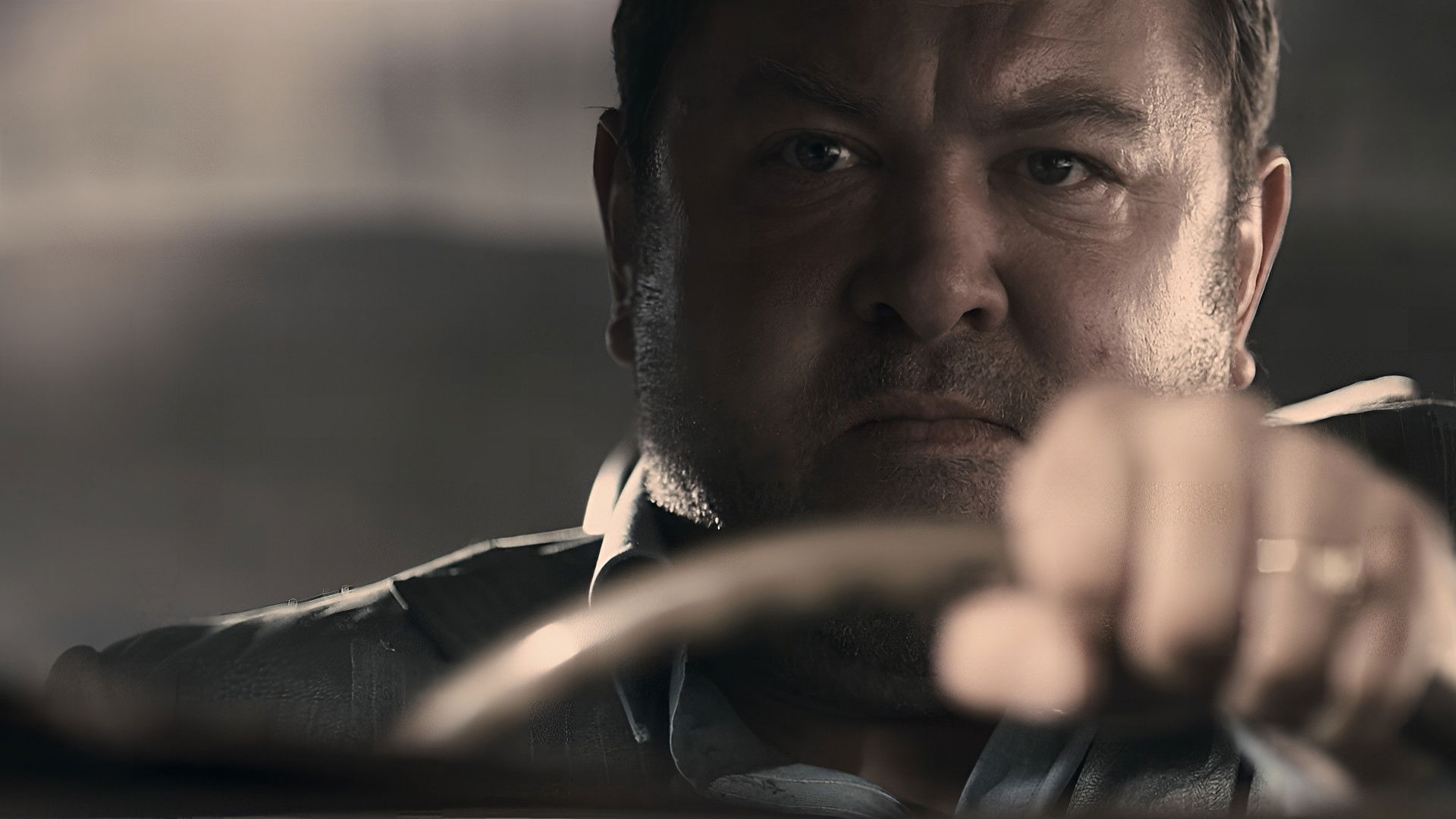
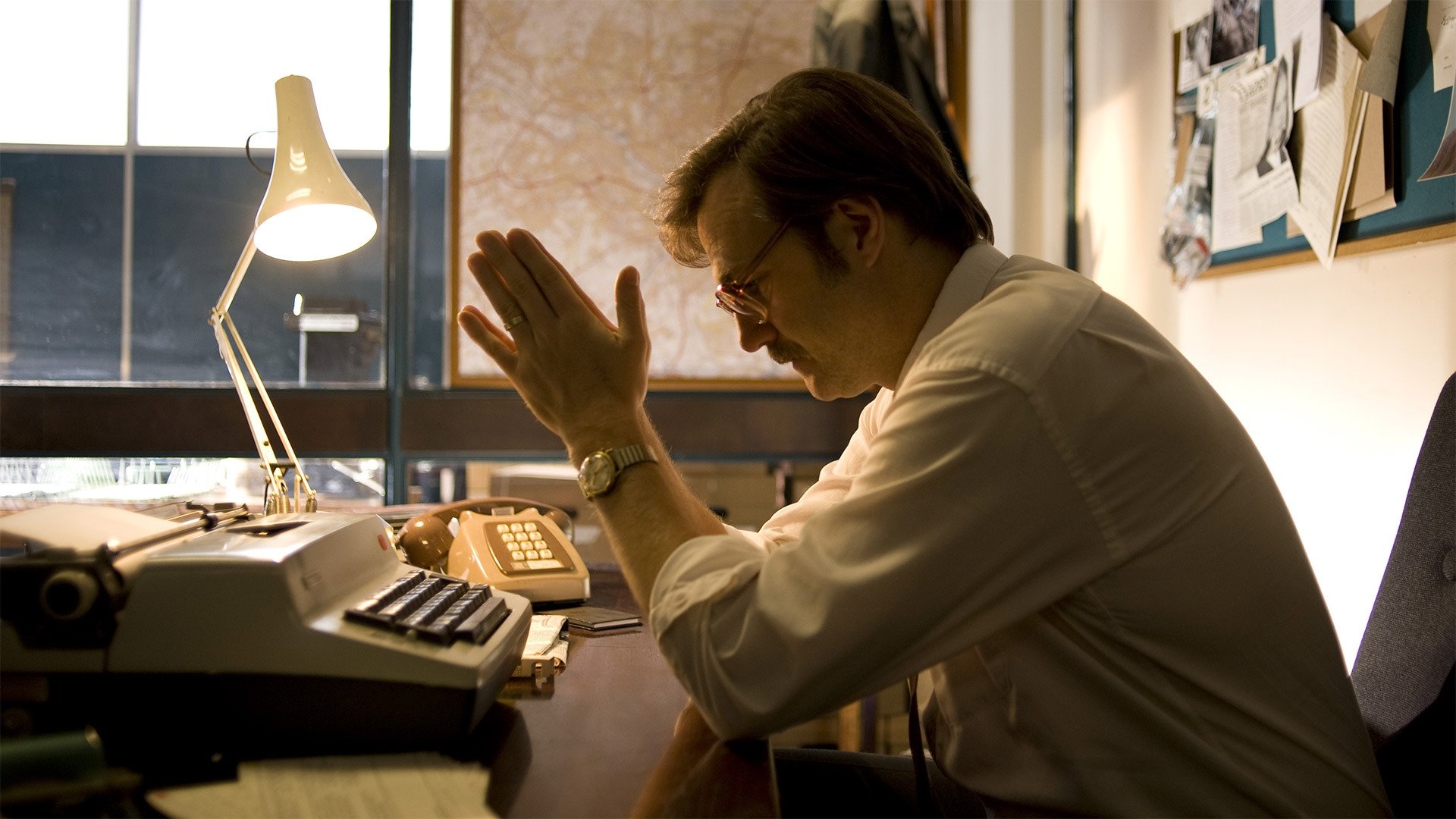
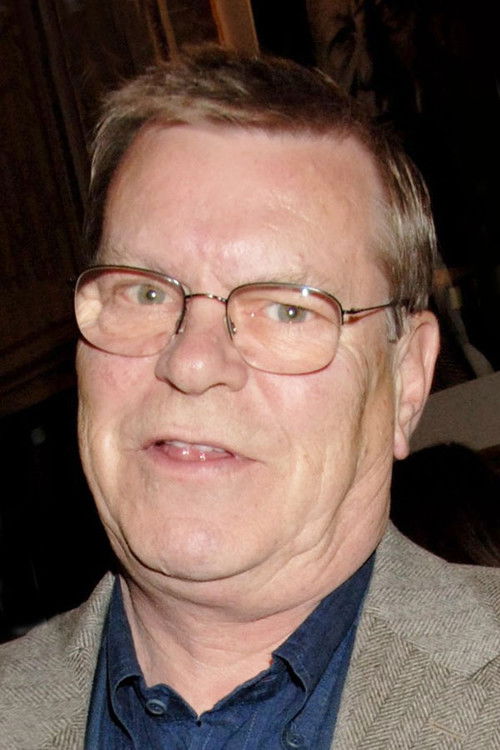
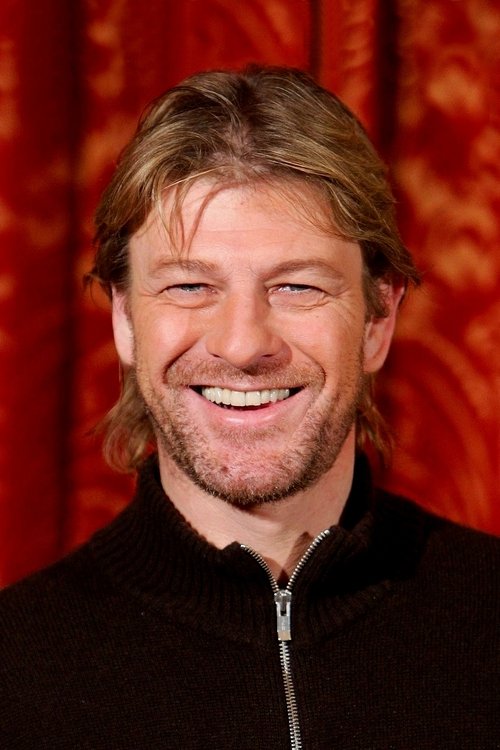
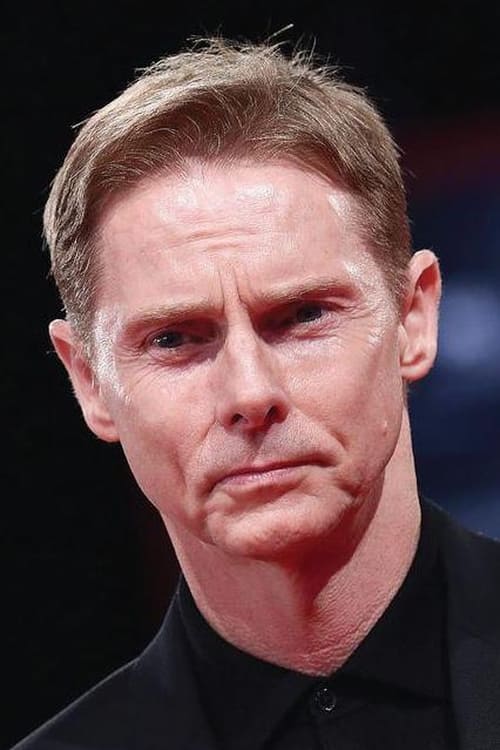
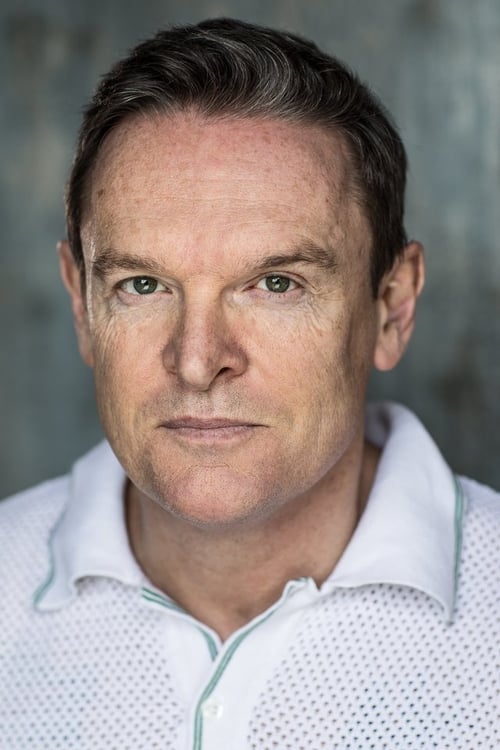
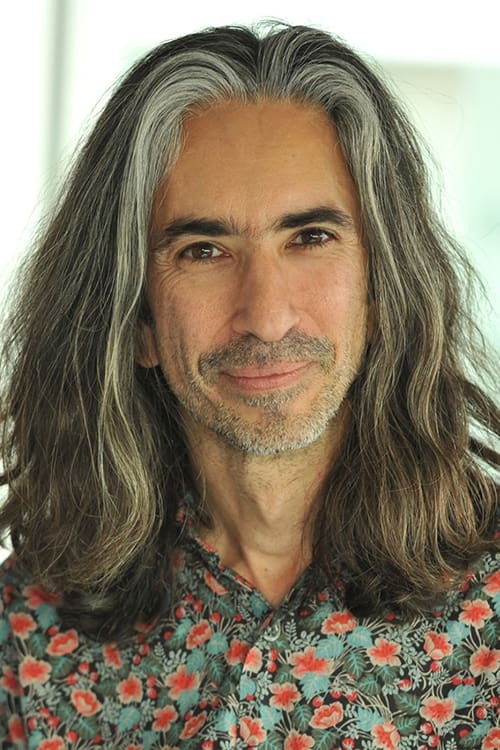
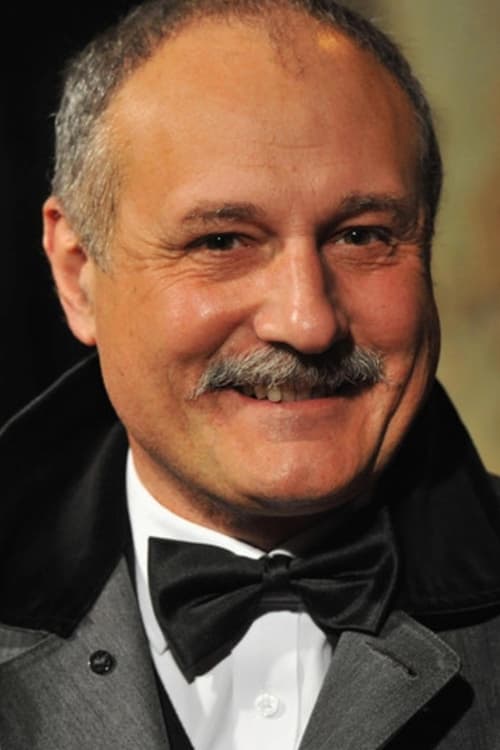
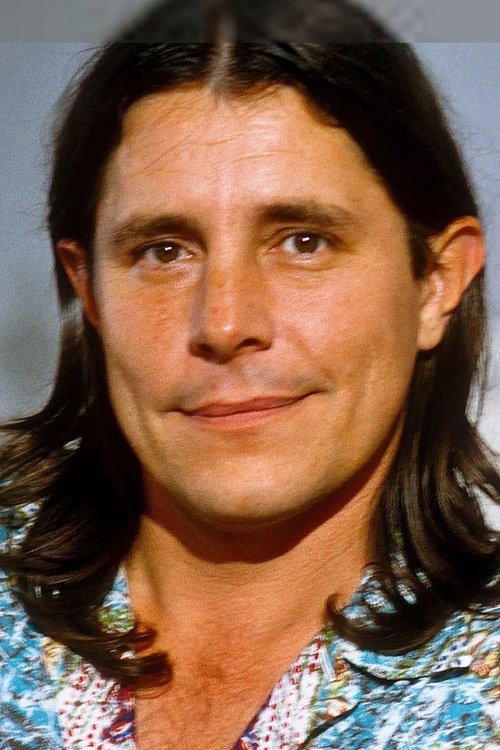
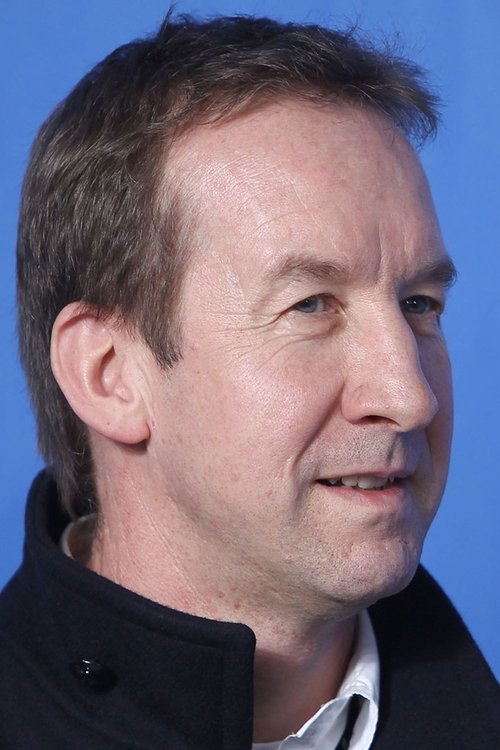
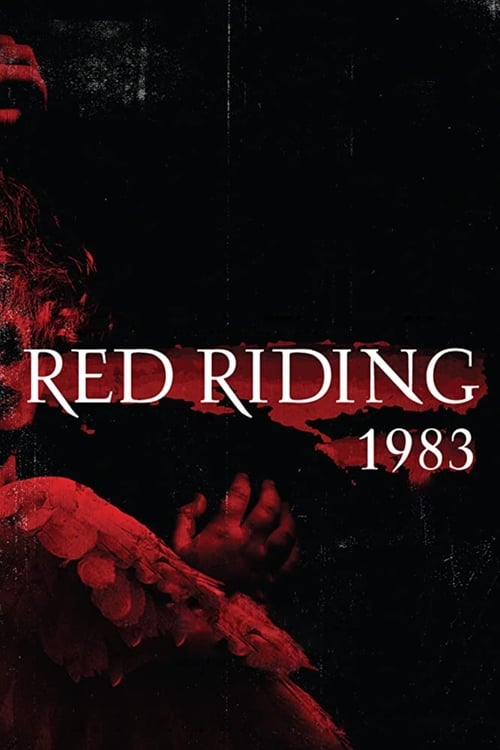
And so, we arrive at 'The Year of Our Lord 1983,' the third and final film in the 'Red Riding' trilogy. This time out, things are shot digitally (the previous parts being on 16 & 35mm, respectively) and we now begin to follow several characters who have been hanging about in both of the other films but existing mostly in the background -- David Morrissey's newly minted Detective Chief Superintendent Maurice Jobson, Peter Mullen's Reverend Laws, murder suspect Michael Myshkin (played by Daniel Mays), and others -- along with a few new ones, most prominently, lawyer John Piggott (played by Mark Addy).
Piggott is asked to look into Myshkin's case, which was a holdover from '1974,' and winds up taking him on a very twisted path (in all senses of the word) that intersects, eventually, with Jobson's conscience, Laws' past, and rent boy BJ, played by Robert Sheehan and who was around in the first film, had a bigger role in the second, and here, provides voice-over narration as all four men finally arrive at the same godforsaken place, albeit for very different reasons.
I'm going to try and avoid spoilers here, but fair warning....
As I mentioned when talking about '1973,' when I first saw these films, it was in one, single screening and I remember thinking that this film sort of flubbed the ending of the book (well, books is more, I think, accurate). Watching it last night, I understand more what screenwriter Tony Grisoni was going for, and I think it maybe works for what it is, but there is no way to avoid saying that it completely alters the tone of the piece as a whole. The film of '1983' brings a sense of 'emerging from the darkness' to it that is absolutely not was David Peace's books are about. Where the film brings a measure of hope, the novel gets just about a black and bleak and horrible as possible (if you've read people like James Ellroy, you are only about halfway there, if you've read Derek Raymond, you'll have a much better idea). For the record, I don't think Peace's vision is, you know, filmable (perhaps 'releasable' would be a better term), but Grisoni's retelling really gives it a 180.
As a film, '1983' does resolve almost all of the lingering plot points from both of the previous films, but to do so (and to seed the revised ending) it does have to rely on a few coincidences, plot-contrivances, and the odd reframing. Still, taken alone (or at least, as part of the series), it mostly works, particularly if you've let go of the book's angle.
The digital look isn't terribly different to the last film, largely due to muted palate of the series, and I suspect it was chosen to first keep down costs but also to allow for having a rather more mobile camera. Again, the performances are good, as is the direction. And again, it may be the script trying to do to much (in addition to the changes it makes) that is the film's biggest flaw.
If I'm to rank them, I do like this more than '1980' but not as much '1974' (even if I ended up giving them the same rating).
And with that, I feel I need to move on from cinematic representations of the North of England in the 1970s and 1980 for a while. 10 and a half (give or take) hours of murder, rain, mist, and everything being so god-damned brown is enough for now.
And so, we arrive at 'The Year of Our Lord 1983,' the third and final film in the 'Red Riding' trilogy. This time out, things are shot digitally (the previous parts being on 16 & 35mm, respectively) and we now begin to follow several characters who have been hanging about in both of the other films but existing mostly in the background -- David Morrissey's newly minted Detective Chief Superintendent Maurice Jobson, Peter Mullen's Reverend Laws, murder suspect Michael Myshkin (played by Daniel Mays), and others -- along with a few new ones, most prominently, lawyer John Piggott (played by Mark Addy).
Piggott is asked to look into Myshkin's case, which was a holdover from '1974,' and winds up taking him on a very twisted path (in all senses of the word) that intersects, eventually, with Jobson's conscience, Laws' past, and rent boy BJ, played by Robert Sheehan and who was around in the first film, had a bigger role in the second, and here, provides voice-over narration as all four men finally arrive at the same godforsaken place, albeit for very different reasons.
I'm going to try and avoid spoilers here, but fair warning....
As I mentioned when talking about '1973,' when I first saw these films, it was in one, single screening and I remember thinking that this film sort of flubbed the ending of the book (well, books is more, I think, accurate). Watching it last night, I understand more what screenwriter Tony Grisoni was going for, and I think it maybe works for what it is, but there is no way to avoid saying that it completely alters the tone of the piece as a whole. The film of '1983' brings a sense of 'emerging from the darkness' to it that is absolutely not was David Peace's books are about. Where the film brings a measure of hope, the novel gets just about a black and bleak and horrible as possible (if you've read people like James Ellroy, you are only about halfway there, if you've read Derek Raymond, you'll have a much better idea). For the record, I don't think Peace's vision is, you know, filmable (perhaps 'releasable' would be a better term), but Grisoni's retelling really gives it a 180.
As a film, '1983' does resolve almost all of the lingering plot points from both of the previous films, but to do so (and to seed the revised ending) it does have to rely on a few coincidences, plot-contrivances, and the odd reframing. Still, taken alone (or at least, as part of the series), it mostly works, particularly if you've let go of the book's angle.
The digital look isn't terribly different to the last film, largely due to muted palate of the series, and I suspect it was chosen to first keep down costs but also to allow for having a rather more mobile camera. Again, the performances are good, as is the direction. And again, it may be the script trying to do to much (in addition to the changes it makes) that is the film's biggest flaw.
If I'm to rank them, I do like this more than '1980' but not as much '1974' (even if I ended up giving them the same rating).
And with that, I feel I need to move on from cinematic representations of the North of England in the 1970s and 1980 for a while. 10 and a half (give or take) hours of murder, rain, mist, and everything being so god-damned brown is enough for now.