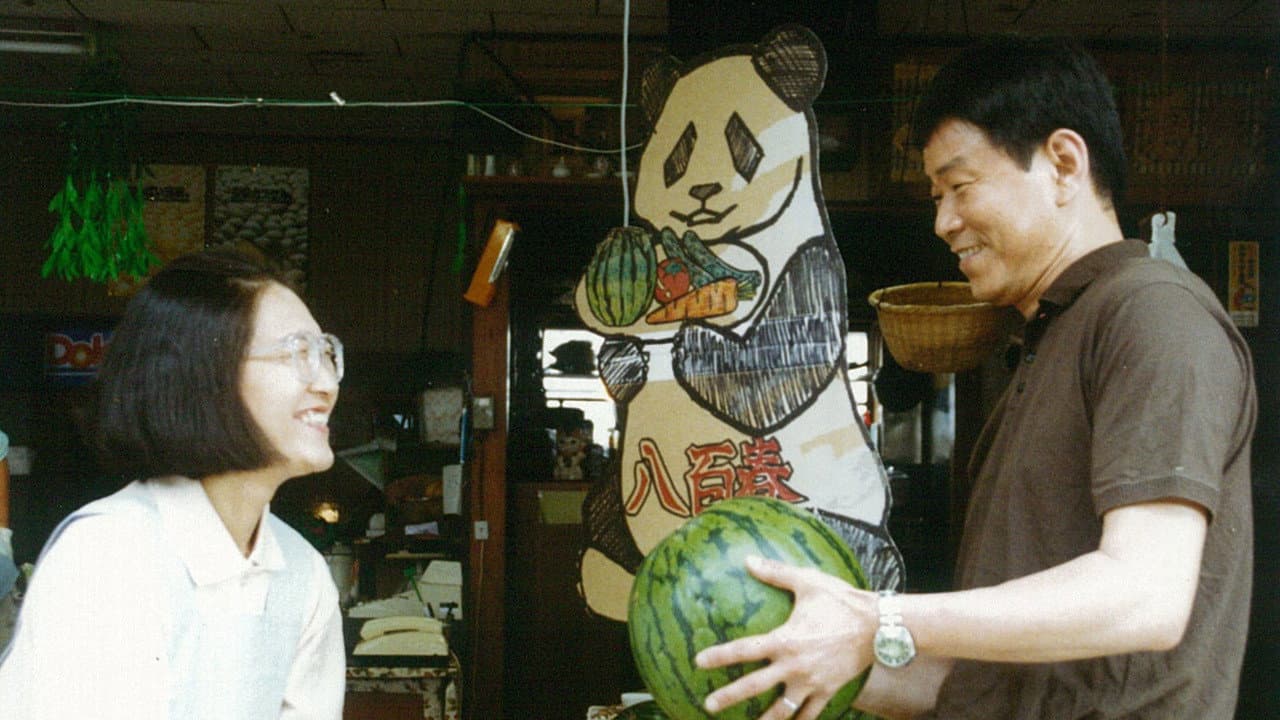
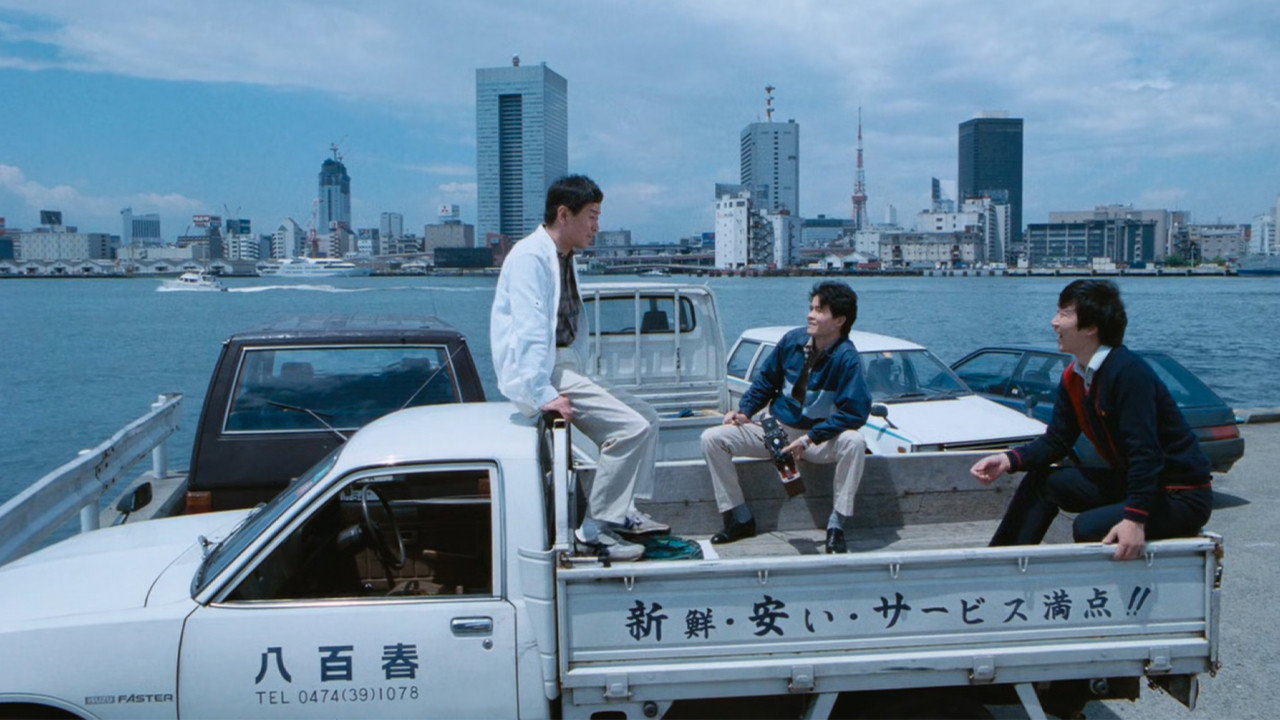
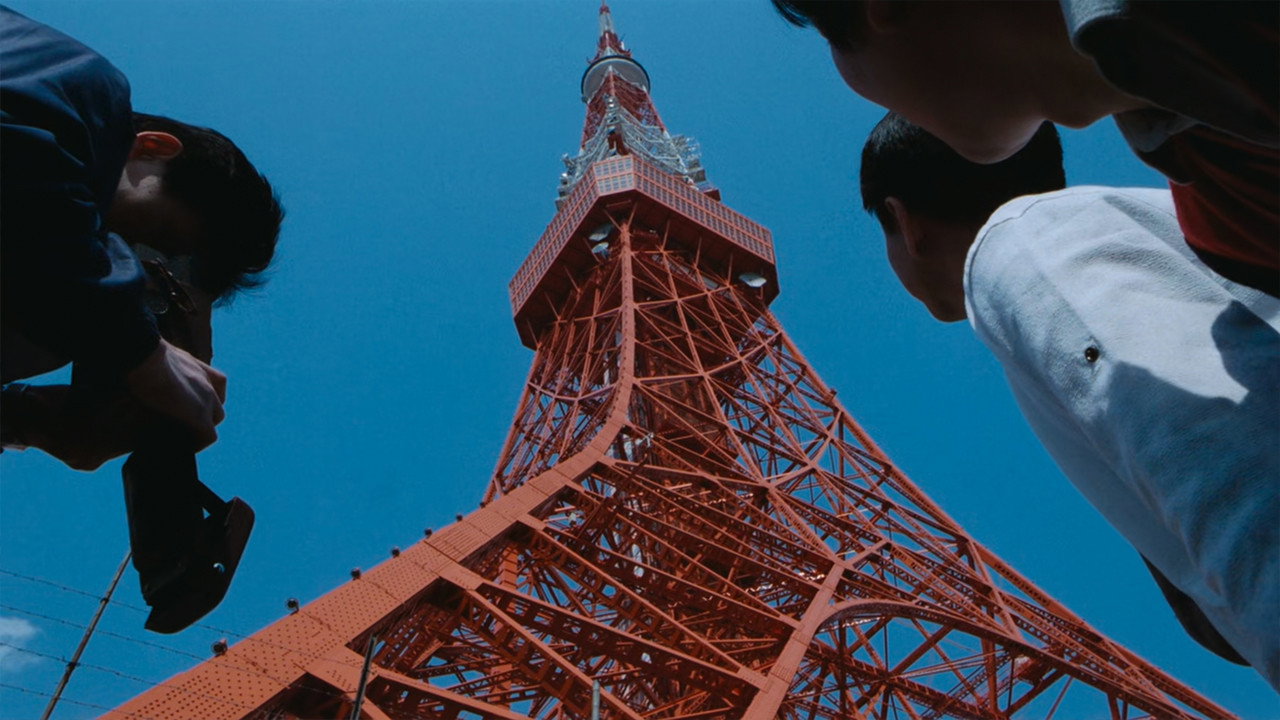
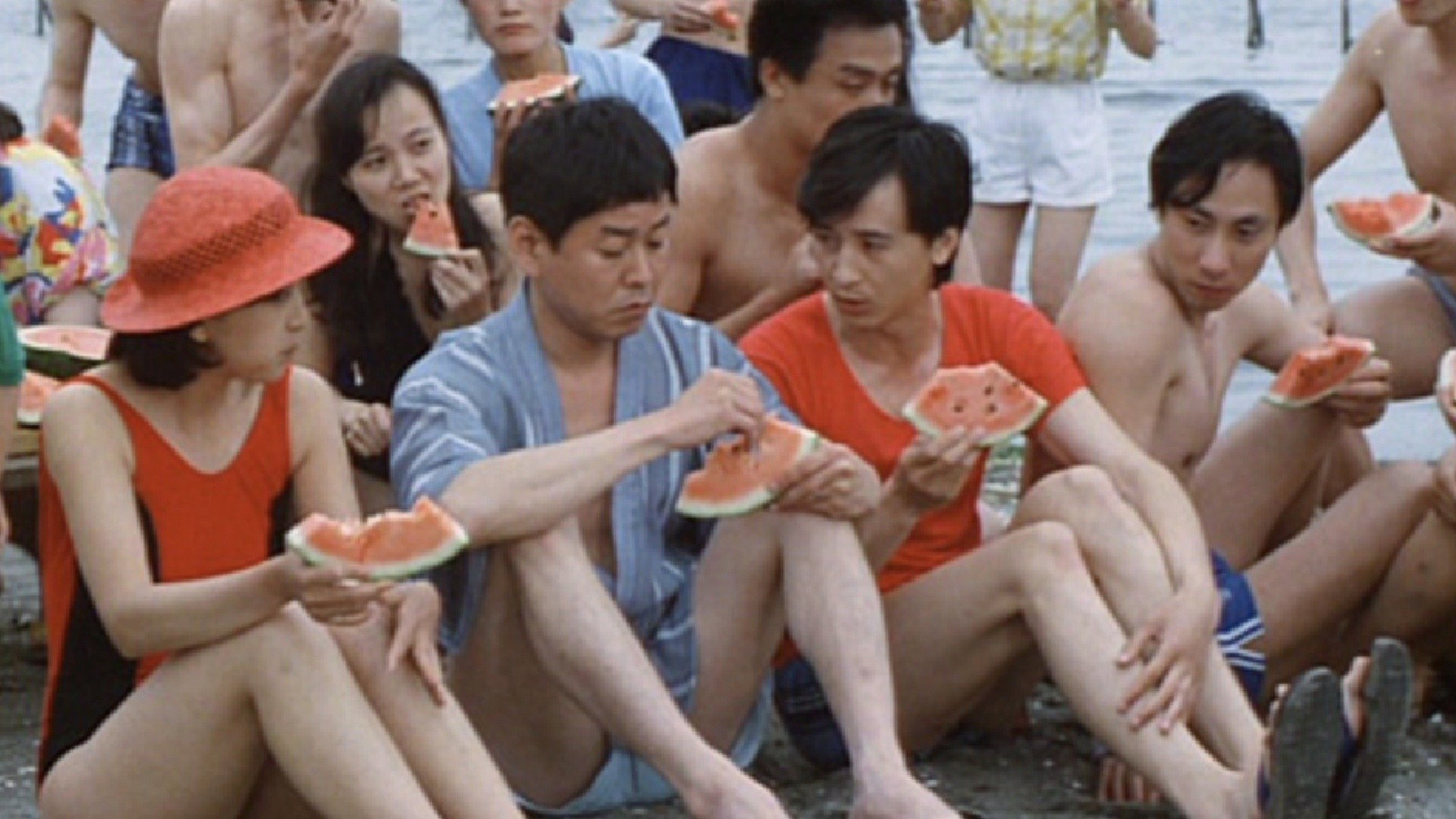
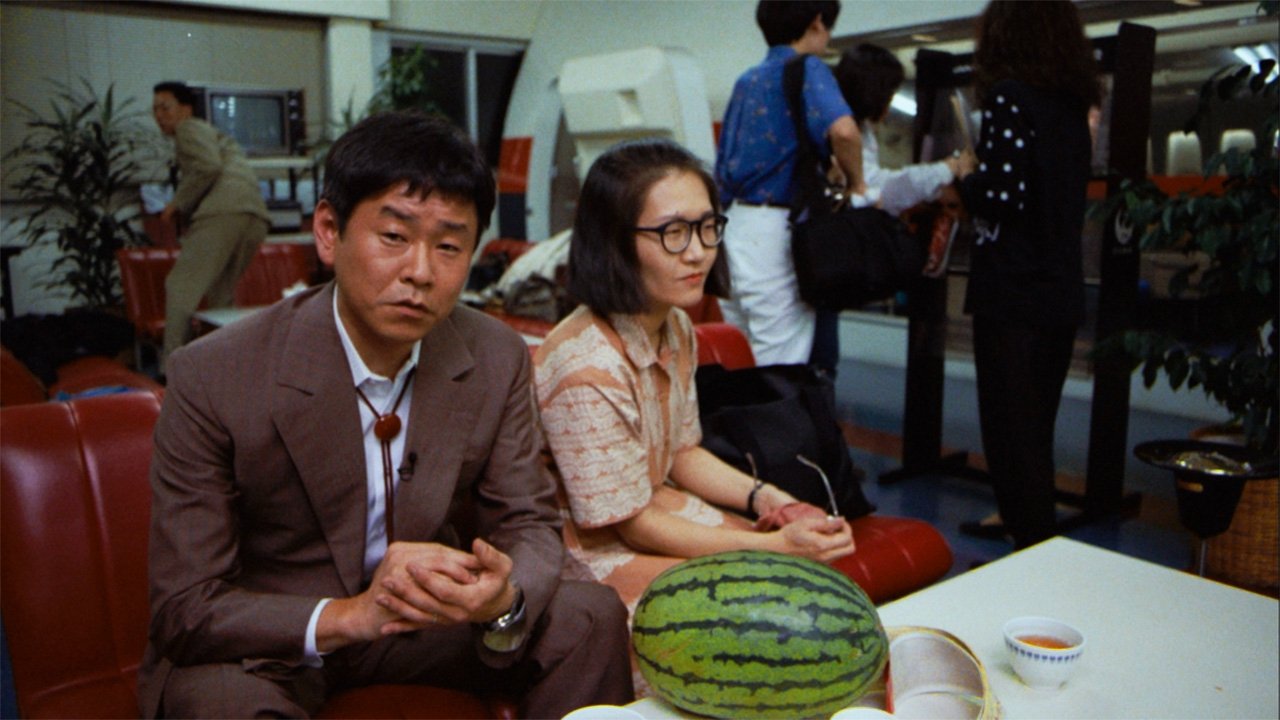
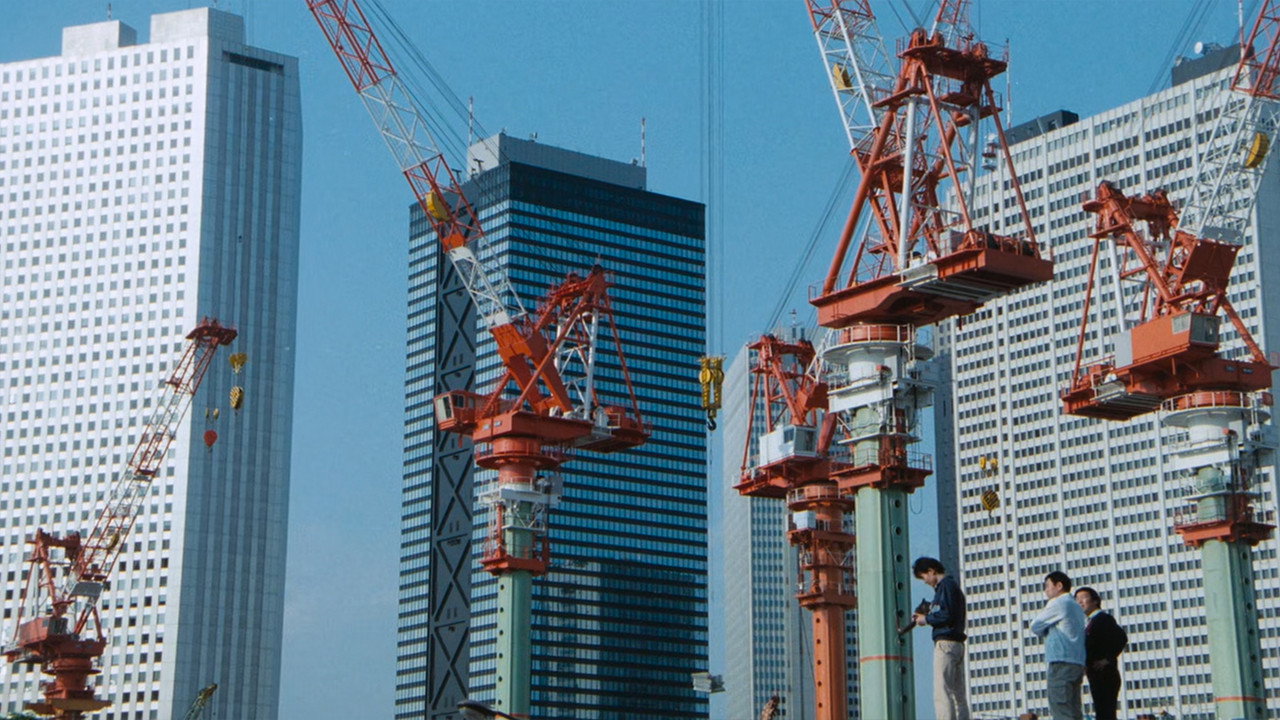
I'm still a novice at Obayashi even as his films have become more accessible in the West following his passing. My favorite film of all time for years now has been his most well-known title, the midnight phantasmagoria that is House, but each time I've caught up with his work I've found myself impressed to find a new side of his directorial voice that isn't captured in most cinephiles' impression of him. Sada injected psychosexuality, Labyrinth of Cinema made his anti-war sentiments more explicit and tender, The Little Girl Who Conquered Time brought a youthful innocence, and His Motorbike, Her Island shows his romantic bona fides, but Beijing Watermelon is something fairly novel for him to me. See, even with all these films, there has always been a sense of Obayashi as a fantastical visionary, a man with a cinematic bag of tricks from freeze frames to coloring to looping sequences, all creating a dreamlike element to otherwise standard stories. Beijing Watermelon in contrast is almost neorealist in approach, completely naked in its presentation of a grocer's selflessness with a group of Chinese exchange students (save for the ending but we'll get to that). Truthfully, I was worried for a fair amount of the runtime that I was misled; not by the lack of distinctly Obayashi flourishes but by the universal notion in all the films' reviews that this was a heartwarming and humanist story. I don't think it's that simple, at least not for the majority of the central hour of the film. At first, our central grocer and his wife (Haruzo & Michi) are at odds with how to approach a meek Chinese student who claims the vegetables on sale are too expensive. Michi suggests a game of rock, paper, scissors, which the student wins which allows him to gather a supply of vegetables for cheap. He tries to recreate this discount and is at first rebuffed by the grocer until the student falls ill from malnutrition. A community of exchange students arrive both to help nurse their friend to health and thank the couple for their generosity. It's at this point that the roles switch and almost fall into polar opposites as Haruzo becomes destructively selfless. At first, he offers to drive a student interested in architecture around Japan, neglecting the store for an afternoon, then two, then nearly everyday. When a student has issues paying for rent, he goes to the landlord and begs them to make an exception in the name of "Japan-China friendship" (which becomes a mantra for Haruzo) and even steals from his store's register to fund them. This support in both food and finance comes at such a detriment to his family and their store that it almost becomes hard to be sympathetic for Haruzo's charity. Perhaps the nadir of this generosity comes when he gathers a handful of coins and accidentally includes Michi's necklace. Rather than admit his mistake, he claims it was a gift which Michi tearfully mourns. It takes the store threatening to close amid tax investigations and Haruzo's health scare for the students to band together and help the couple they've lovingly referred to as Mom and Dad. And then we hit the finale. It's no spoiler to say that when we see a title card for Beijing in June 1989 followed by a white screen something has changed. Haruzo addresses the camera as his actor, Bengal, and explains that this portion of the film would have shot on location in China to recreate the reunion of Mom and Dad with the now dozens of prosperous students they've supported, a truly touching moment of acts of kindness being rewarded with a community who return the favor by surprising the couple with 80,000 yen. But they couldn't do that. Real life has caught up to this recreation of a true story and has spoiled its ending for reasons unforeseen to Obayashi and the actual couple and students at its center. So, Bengal talks to us about how they've artificially recreated these moments. A dining hall in Japan to stand in for the location in Beijing, a few props to recreate the Great Wall, and a mock airplane and airport instead of the real deal. It's a finale caught off guard and having to improvise, but it's also fatefully a reminder of how important its central message is. This sort of cross-cultural friendship is clearly vital to Obayashi even amidst a narrative that at times is so willing to sacrifice everything for these students that it threatens to destroy a family in the process. And yet, importantly, Michi never blames the students. She never truly resents them or their needs because she understands that they aren't demanding anything but are being given by a man who views this as his life's mission. Even as some neighbors and friends disparagingly refer to their foreignness, there isn't a sense in the household that the students are to blame because they aren't. Even at their lowest moment, when Haruzo has fallen ill and seems intent on selling the store, Michi politely refuses the students' offer to help out. It's that sense of dignity that keeps the film afloat, that makes the second act's outer reaches more worth it. I wasn't expecting this sort of stripped-back neorealism from Obayashi but he seems just as comfortable in this mode as he is in sci-fi influenced narratives or decades-spanning journeys through Japanese cinema. It took me a while to get into this but by the end it had won me over and shown Obayashi once again as one of cinema's most vital and versatile voices.