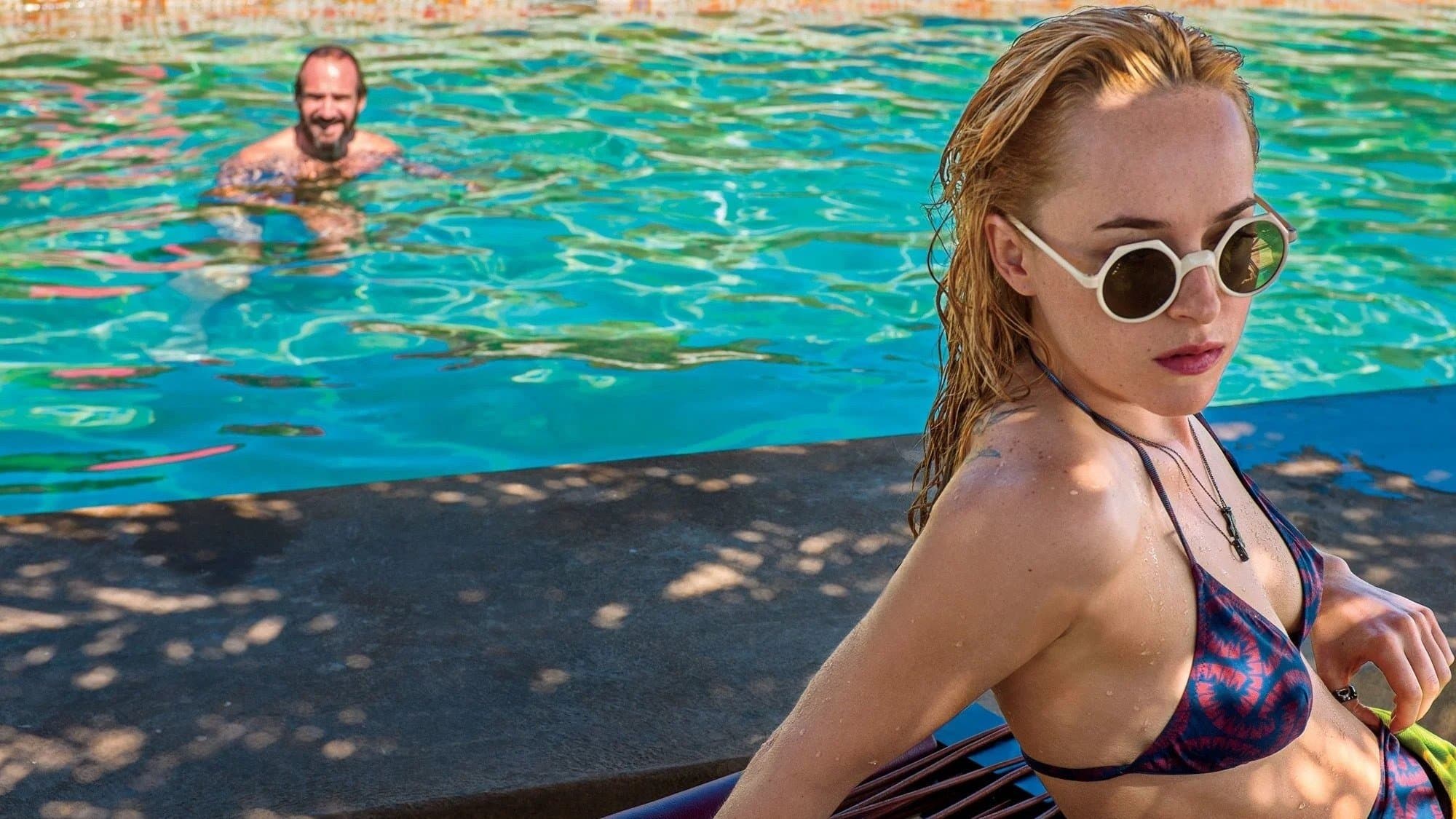
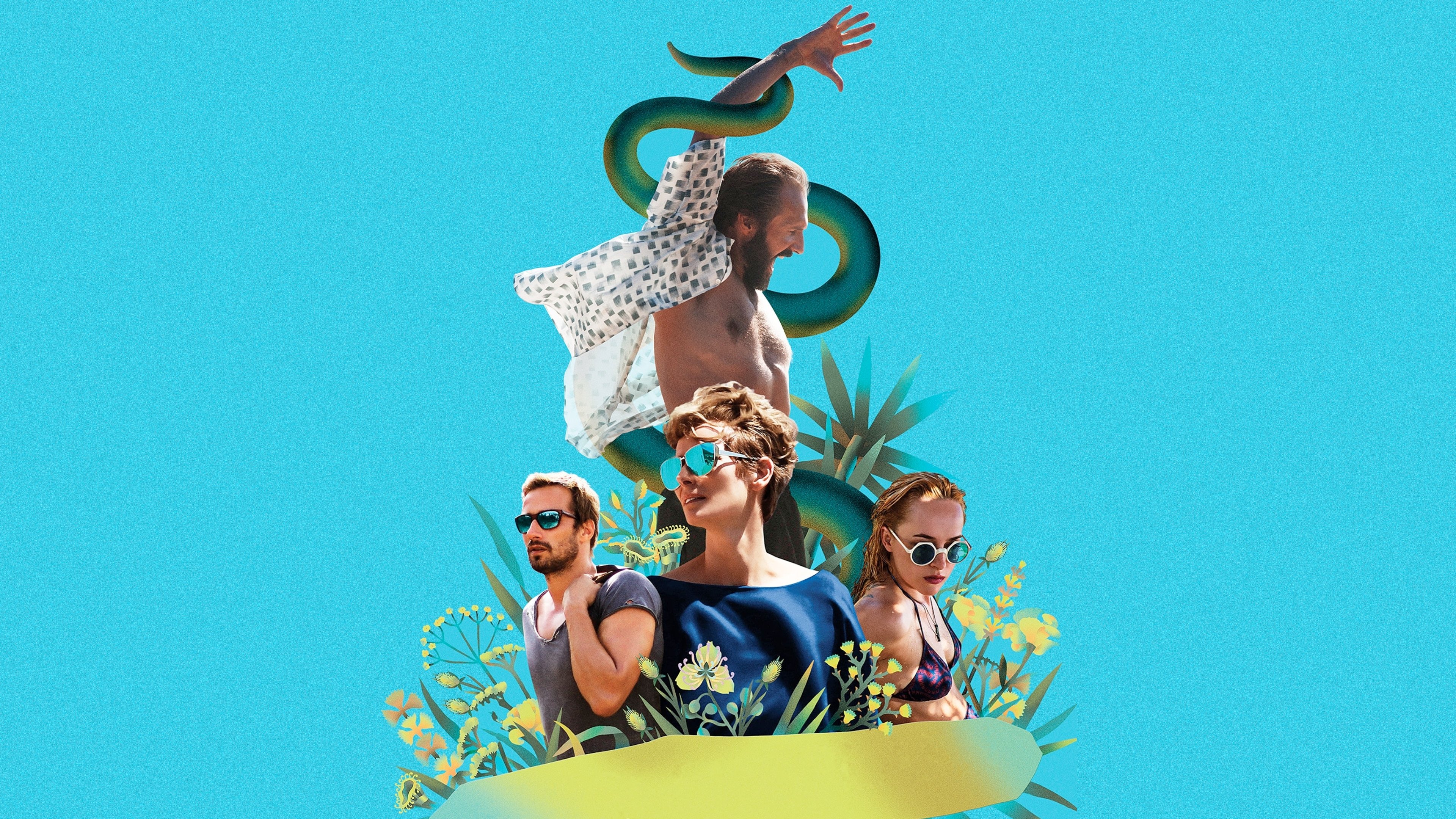
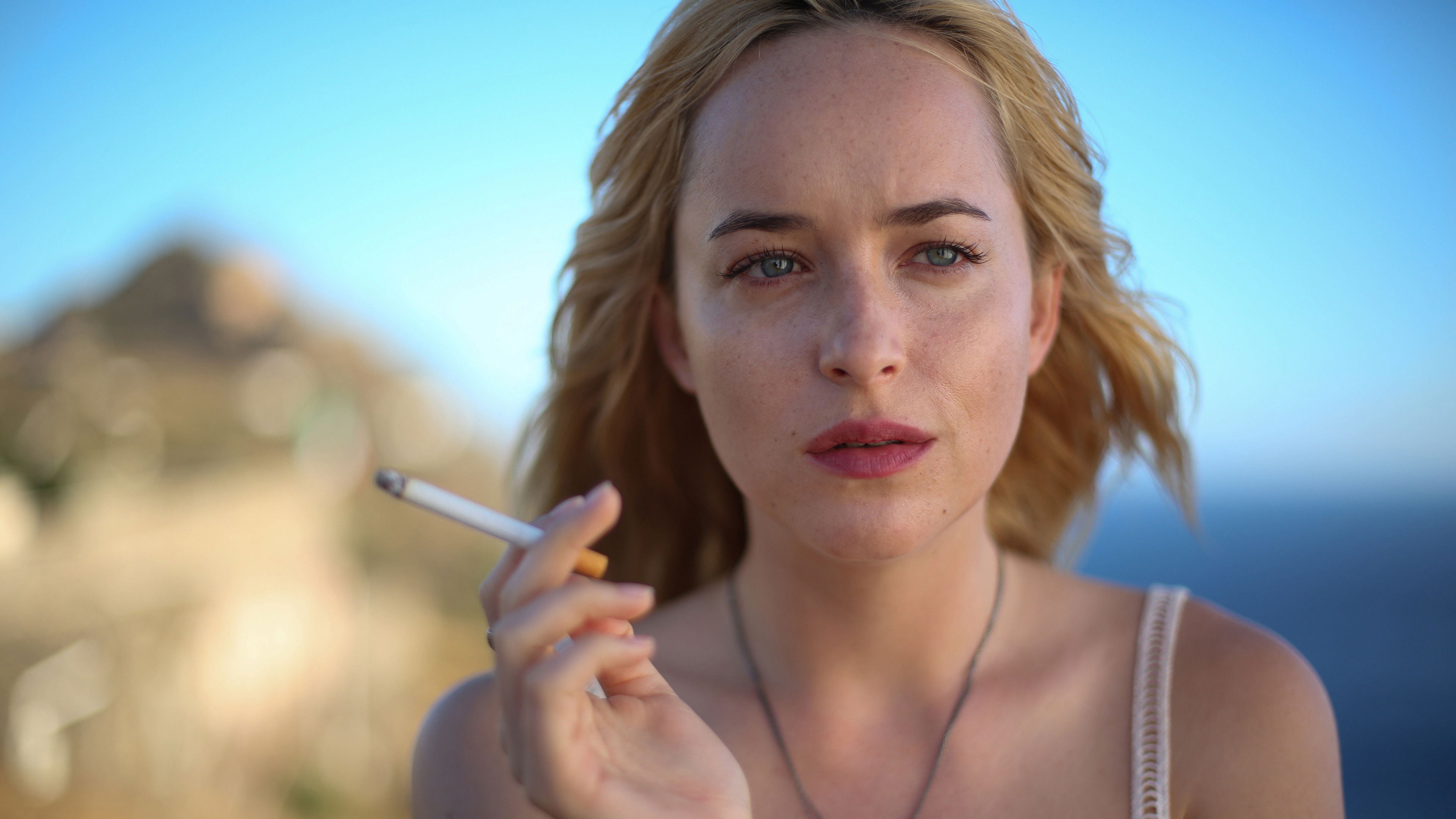
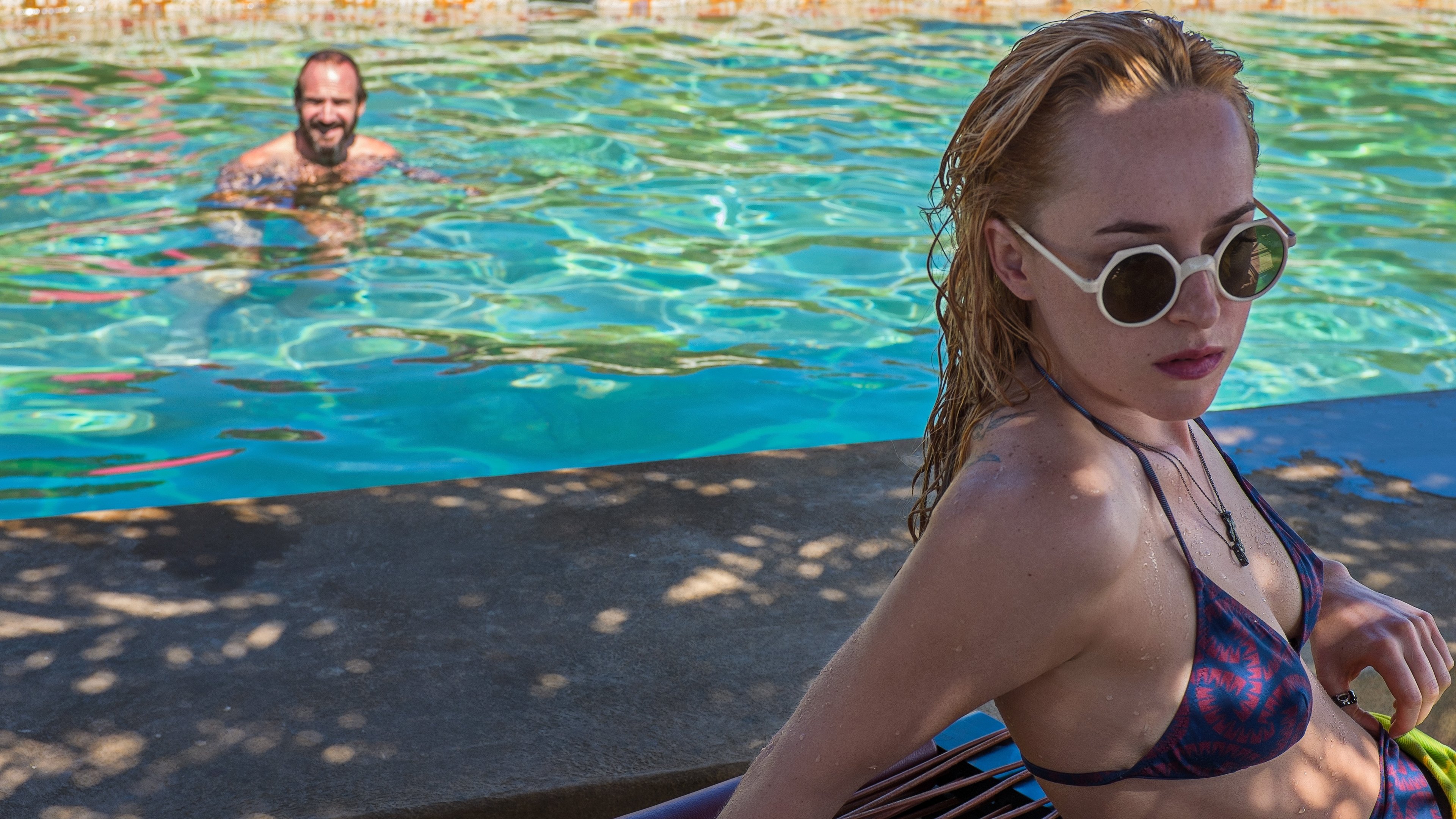
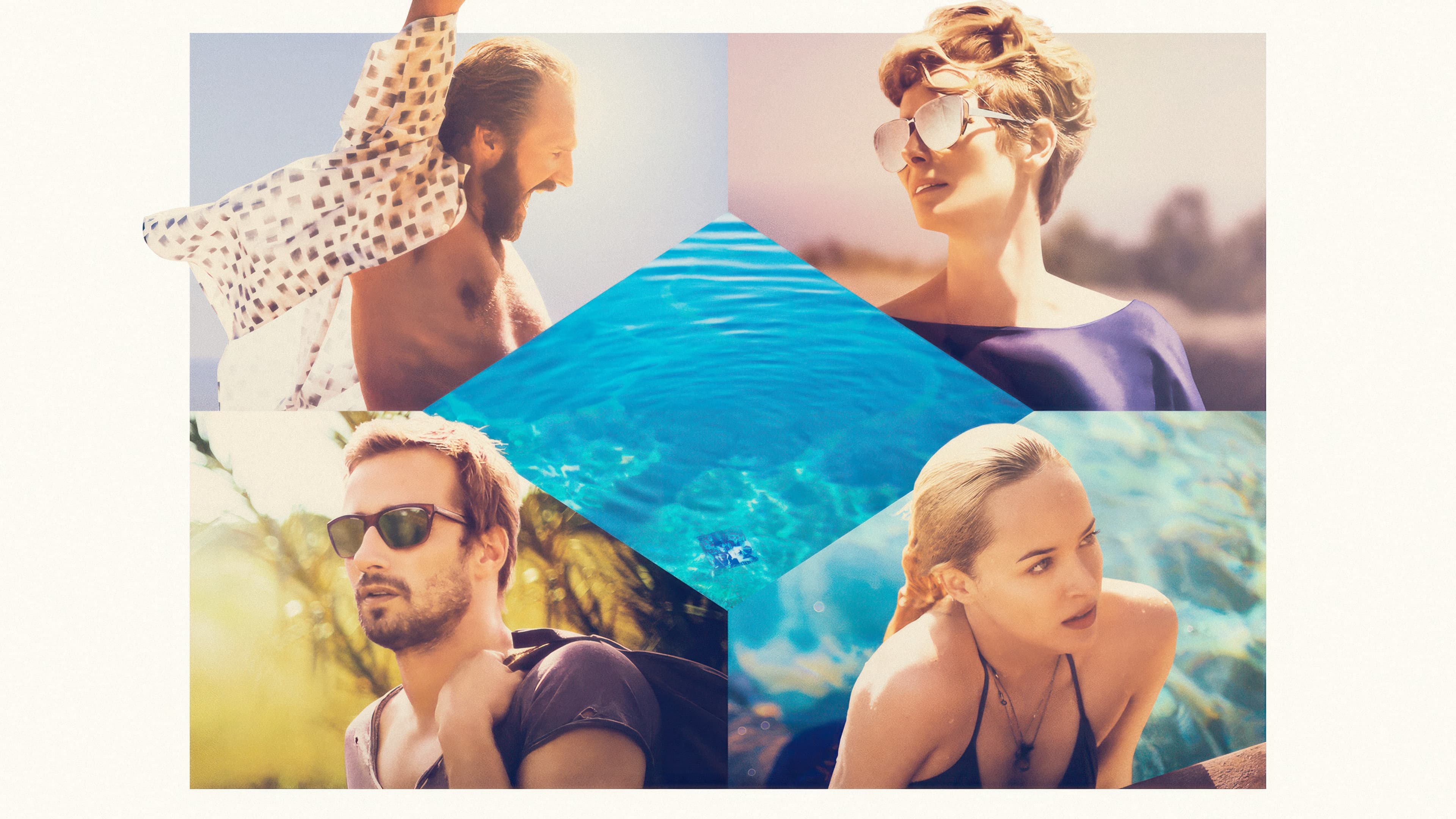
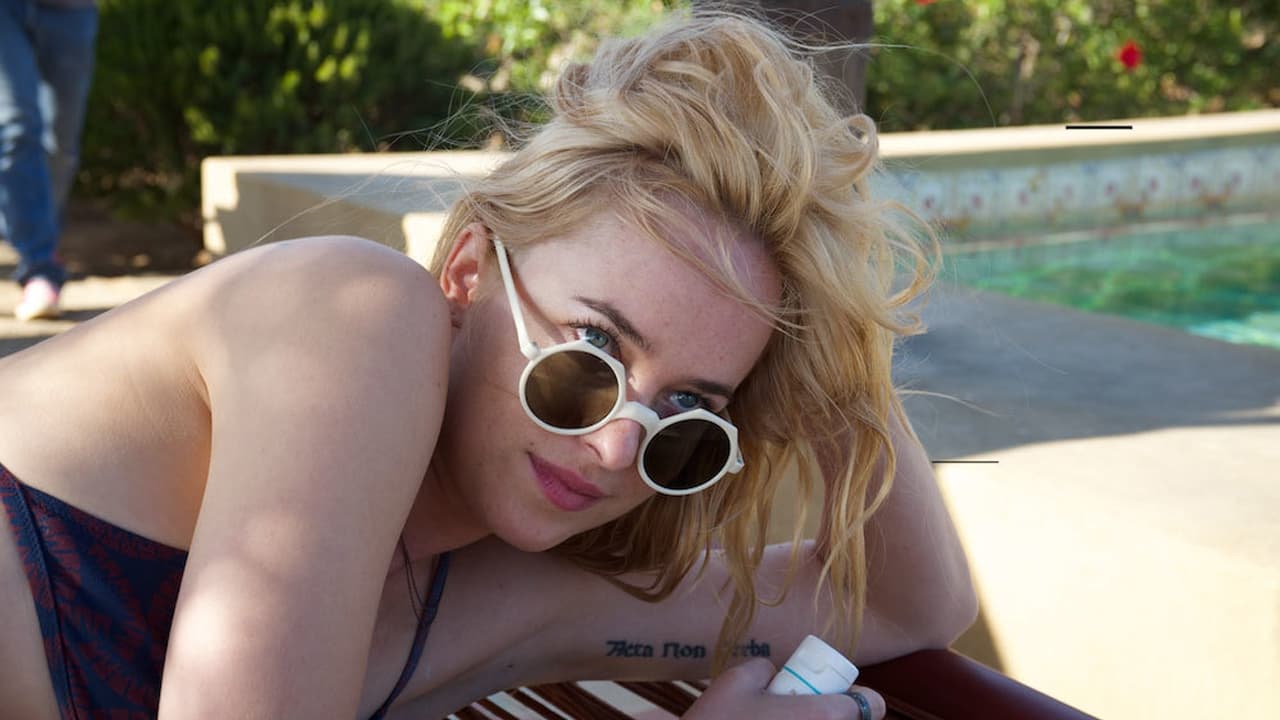
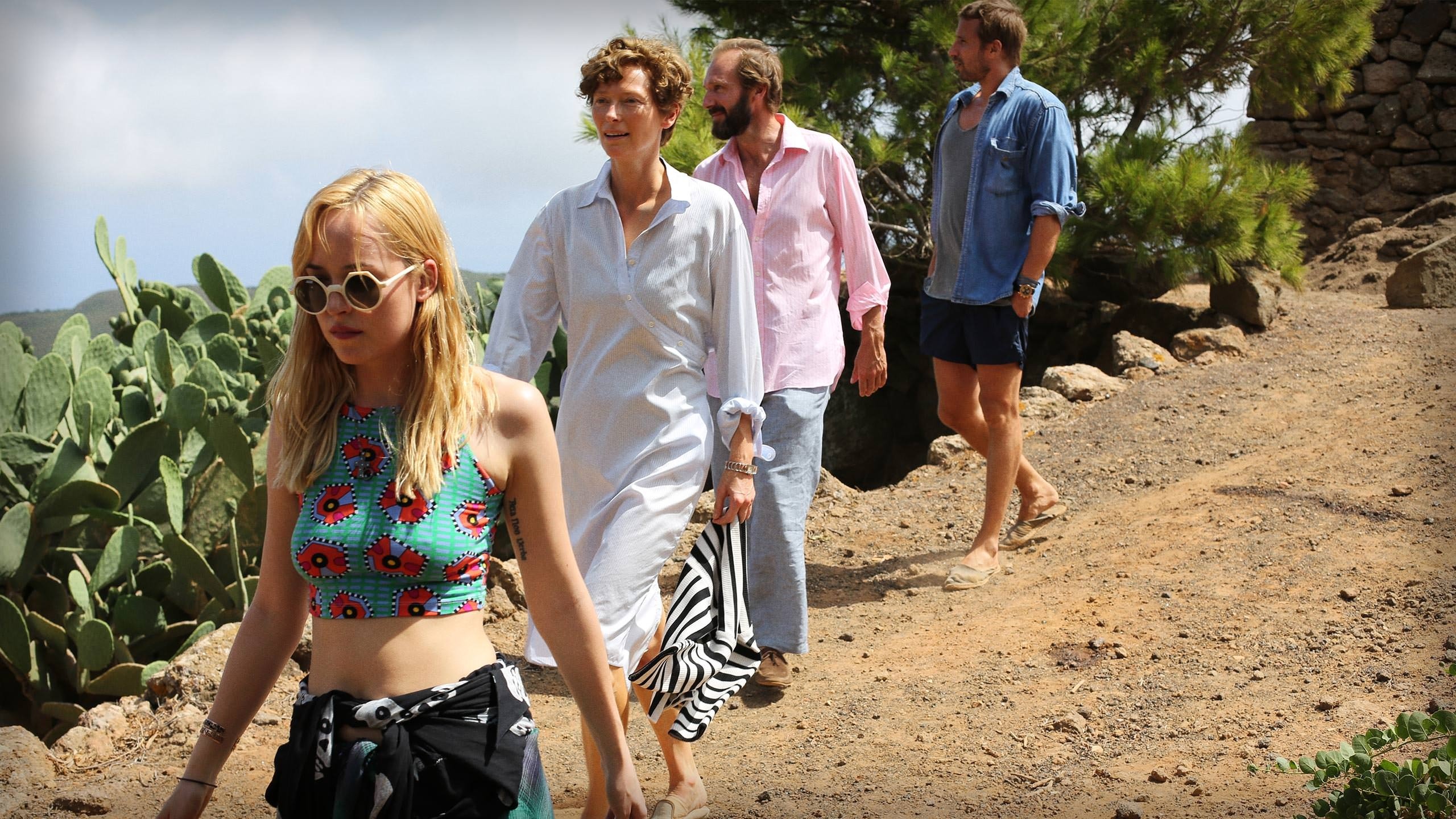
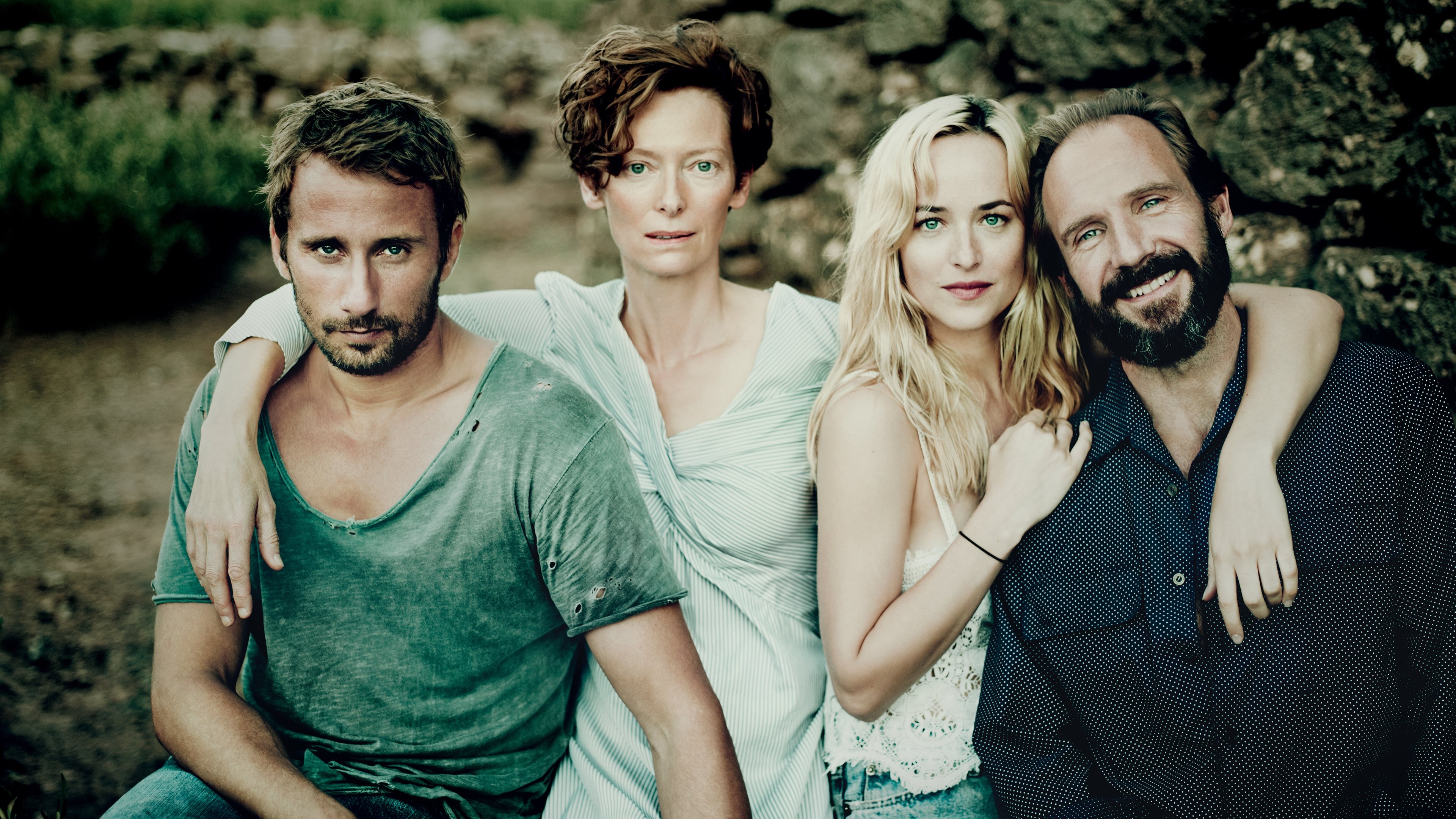
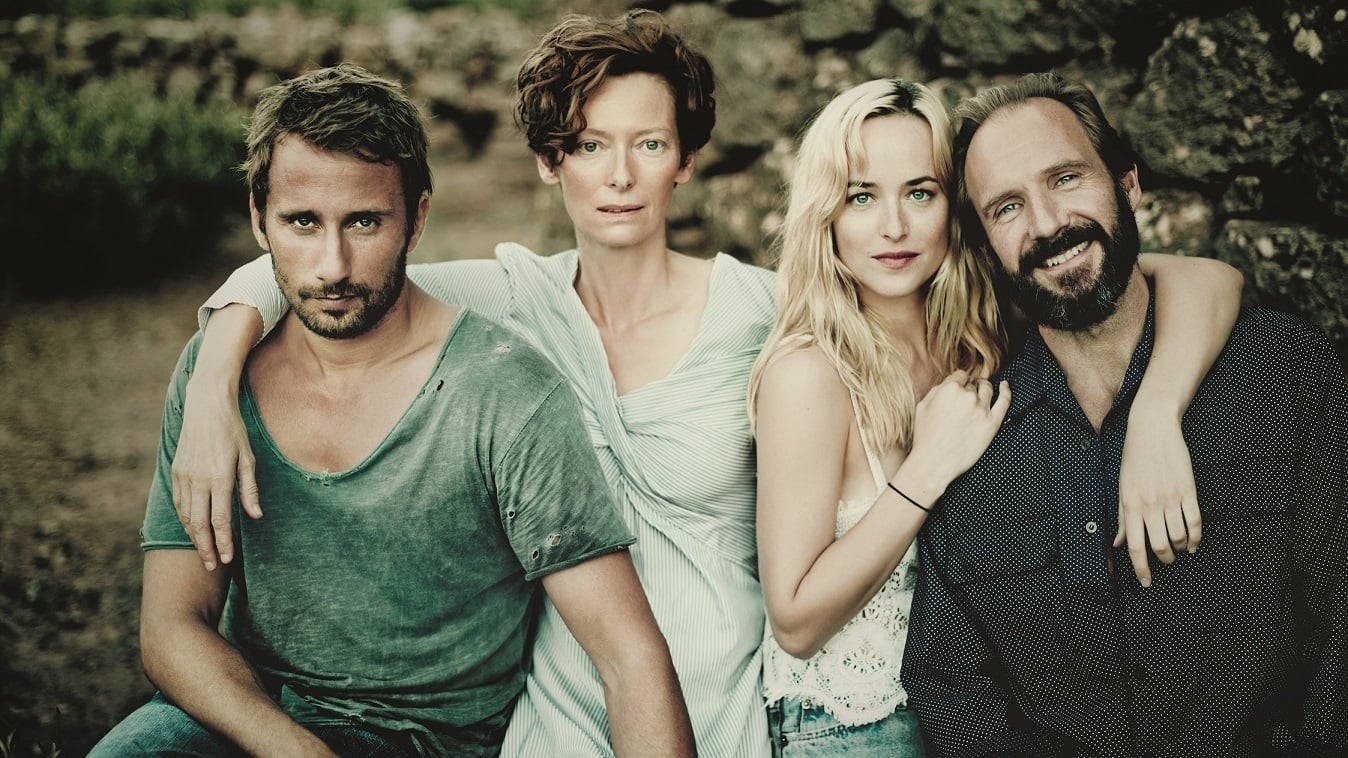
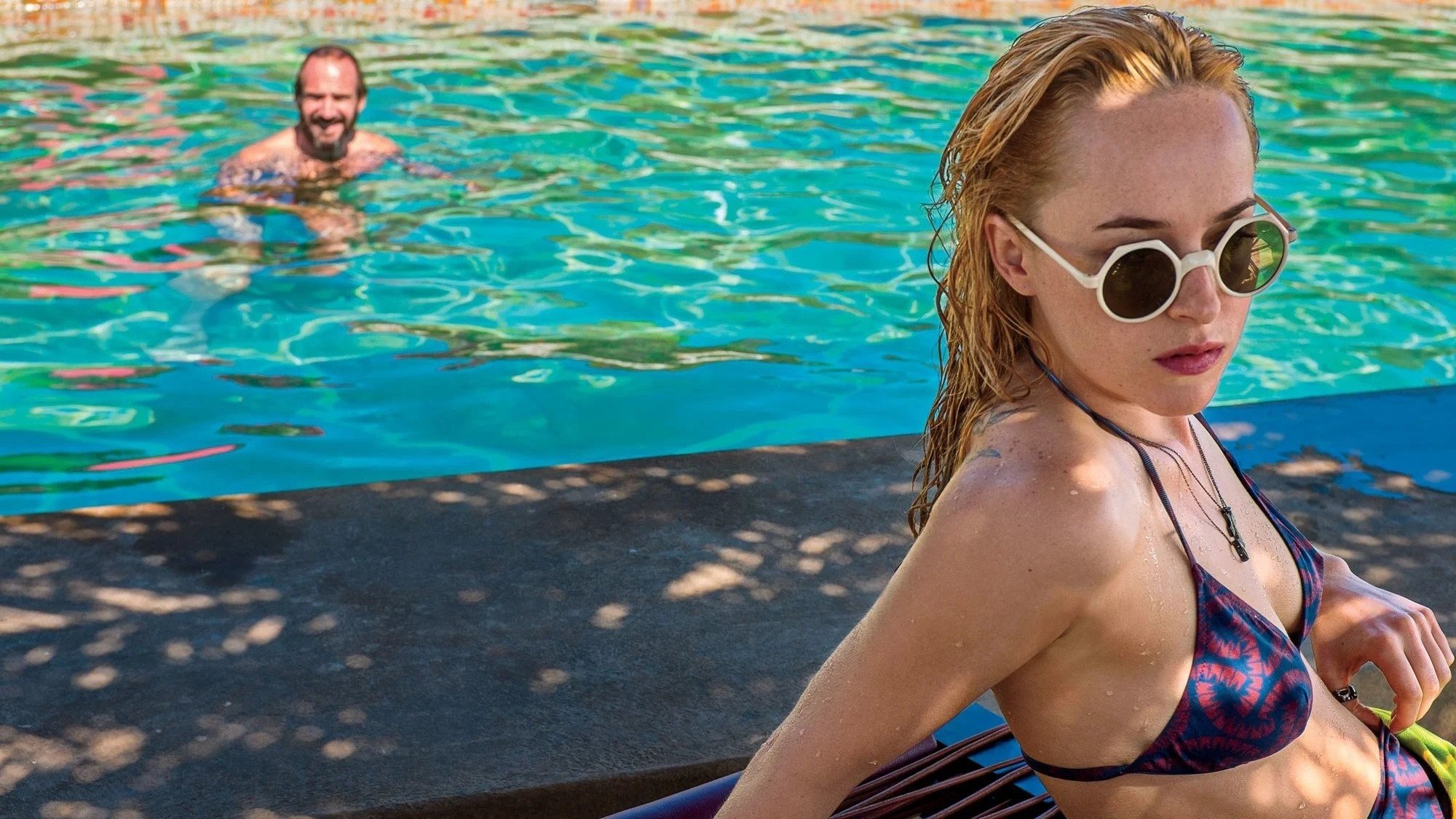
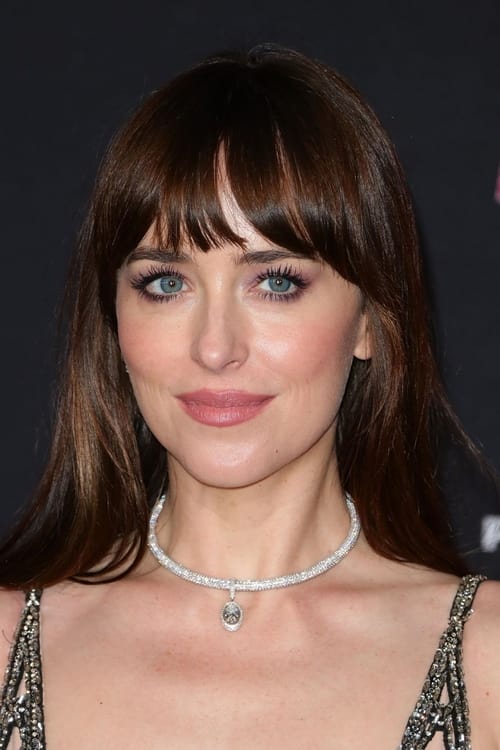
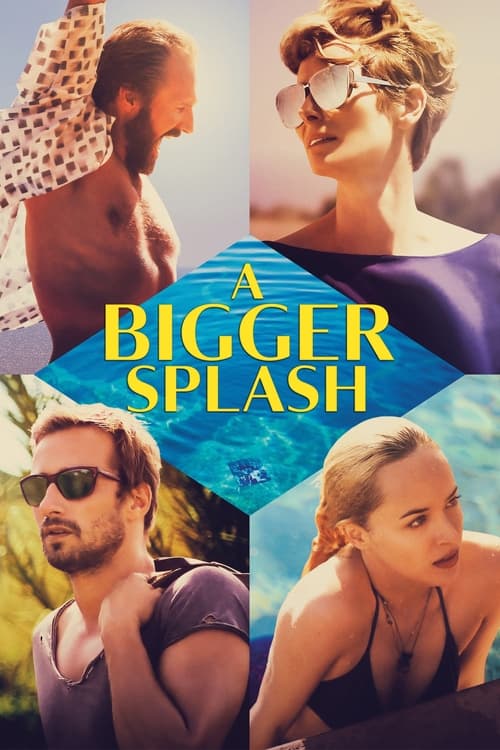
My trouble is that i always fall in love with every pretty little thing.A great homage to French New Wave and early '60s cinema, especially La Piscine. It almost feels like a remake of that classic, but it still manages to be its own thing. I have to start this review by trying to understand what the deal was with Penelope, played by Dakota Johnson. She is a complex character, to say the least. Her presence is enough to shift the entire mood of the movie. At first, Penelope seems like a carefree girl just trying to have a nice vacation—much like the original Penelope played by Jane Birkin—but that turns out to be just a facade. Her motivations for doing what she does remain a mystery, which only adds to her allure and the tension in the narrative. Penelope’s role in the film is more of a catalyst; she changes and accelerates the process leading to the climax, even though she’s never directly involved in it. Her arrival with Harry is what sets the events of the movie into motion. Her motivations are never fully clear, oscillating between a desire for control and a search for identity. She uses her sexuality—Dakota is hot as fuck in this, by the way🥵—and the effect she has on others as tools to explore the complex dynamics between the adults she’s always watching. If you pay attention to her, you’ll notice she doesn’t talk much but is constantly observing, making her a crucial character in the film's exploration of power, desire, and manipulation.
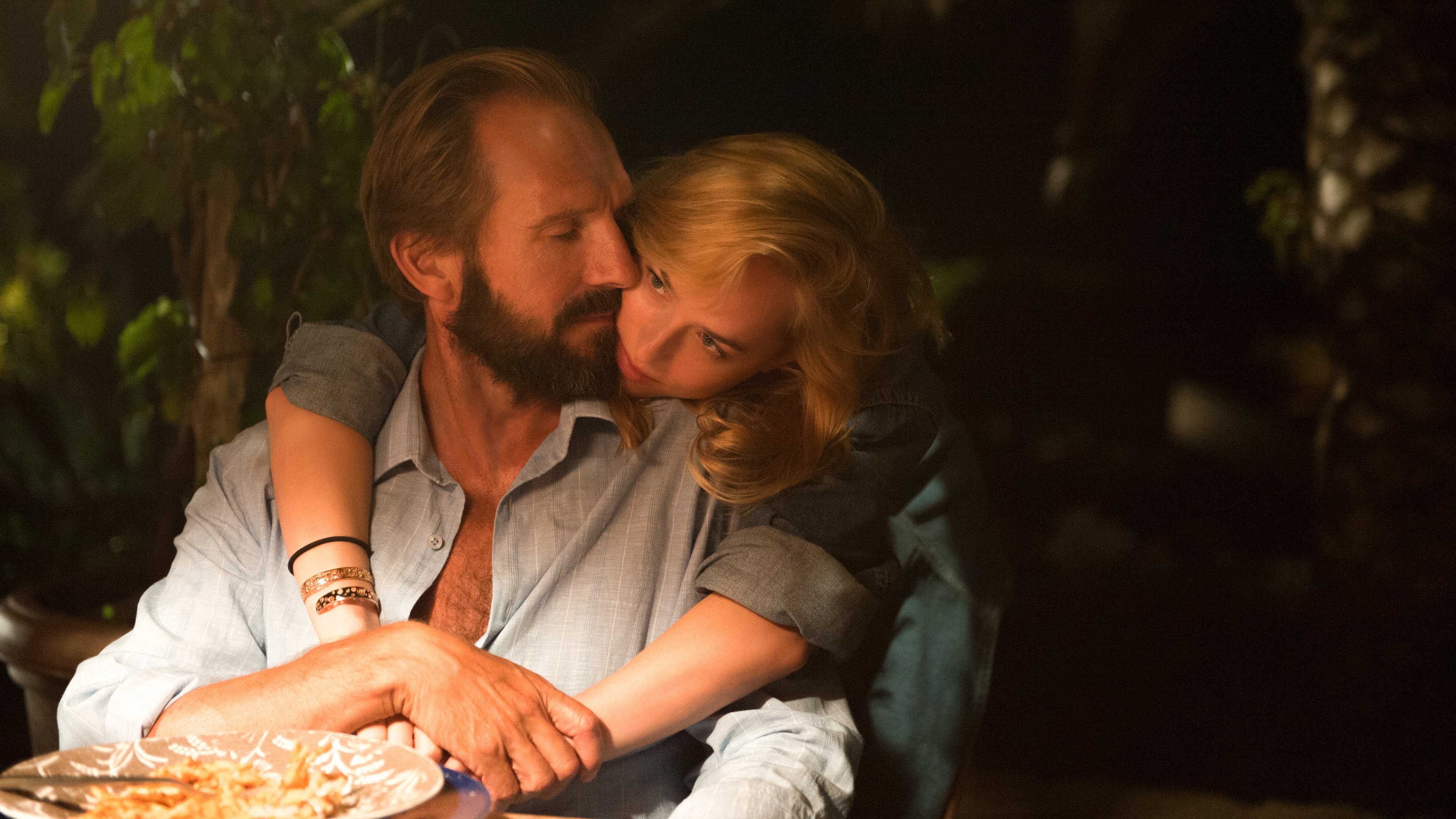
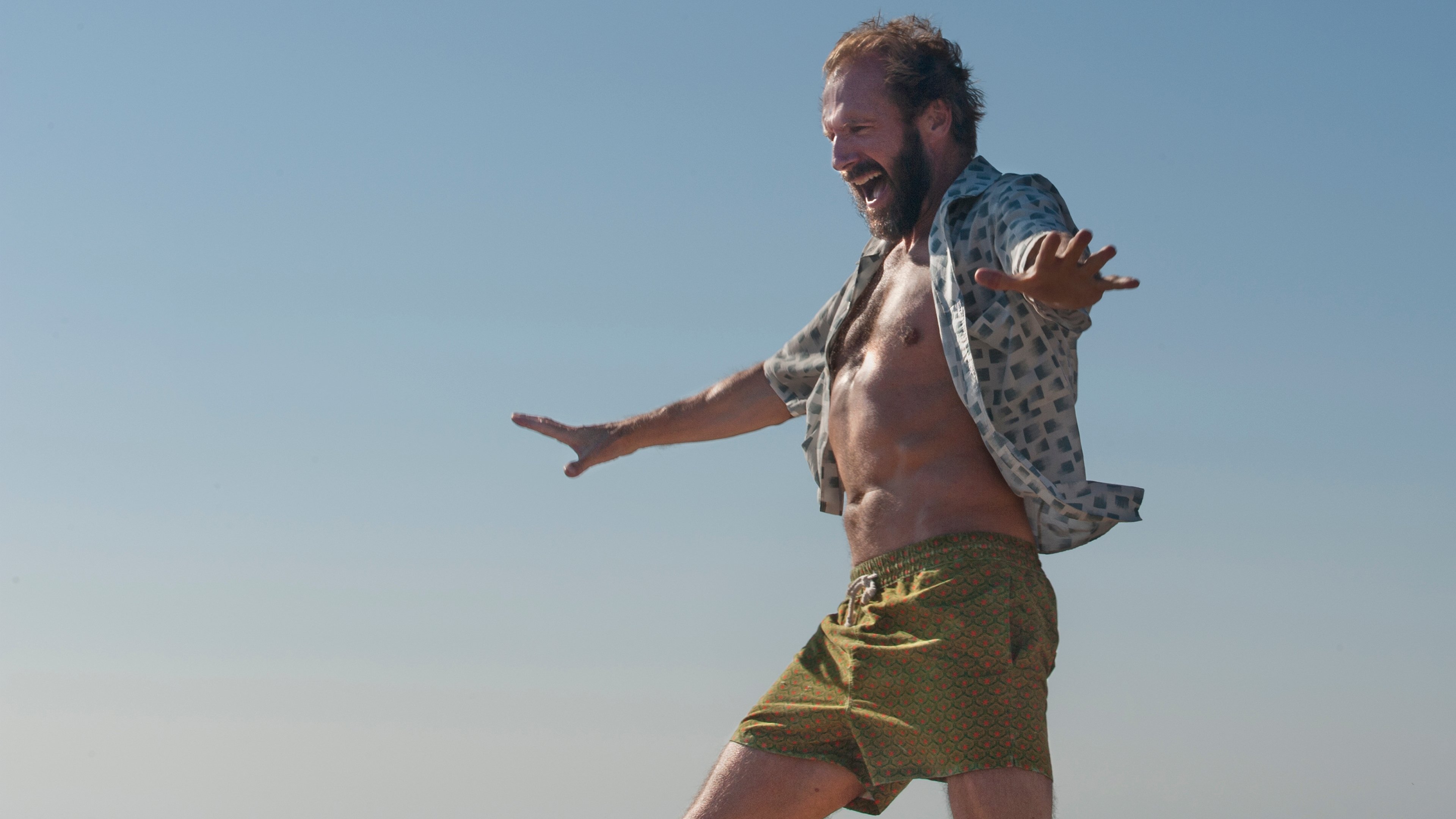
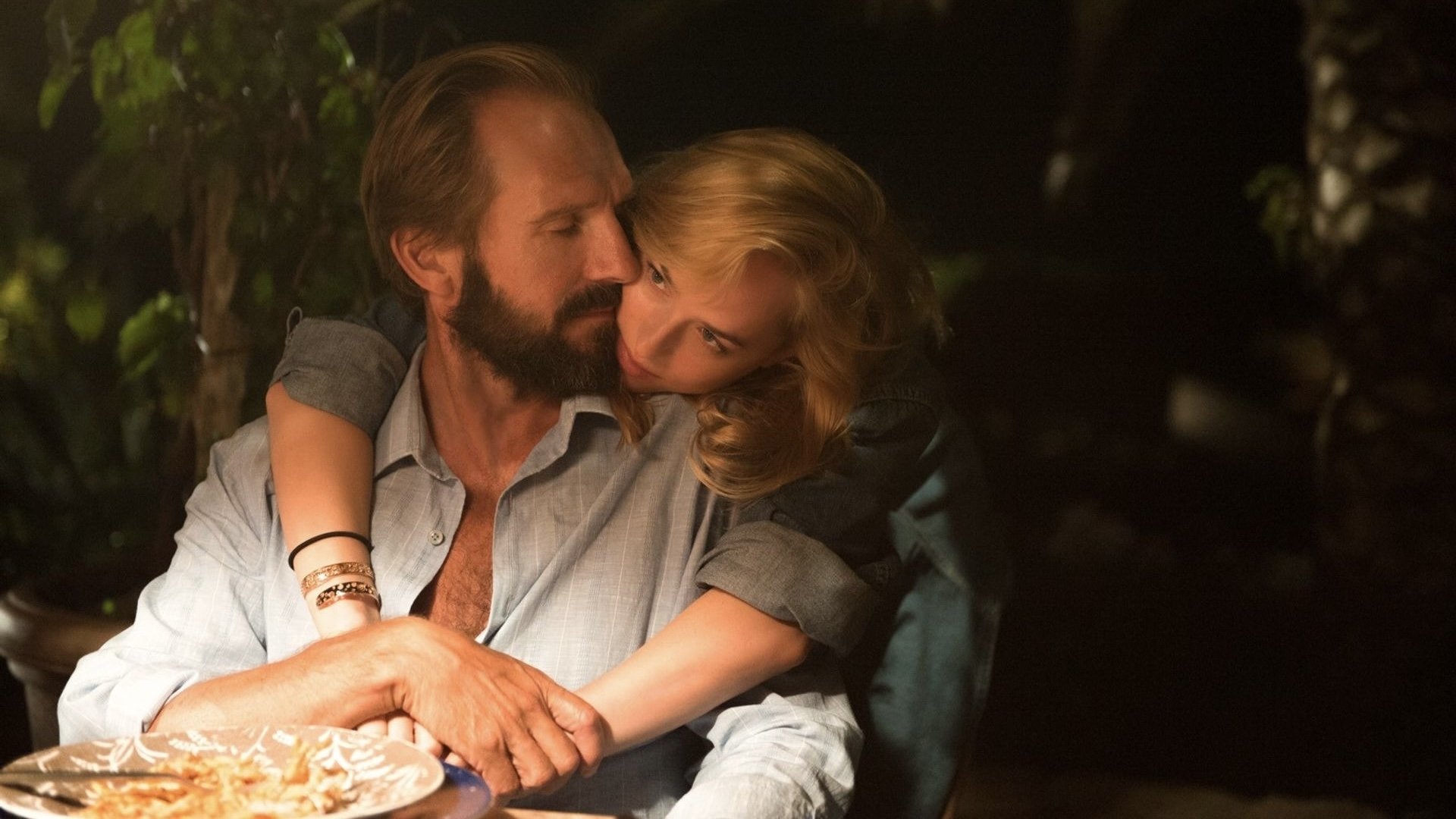
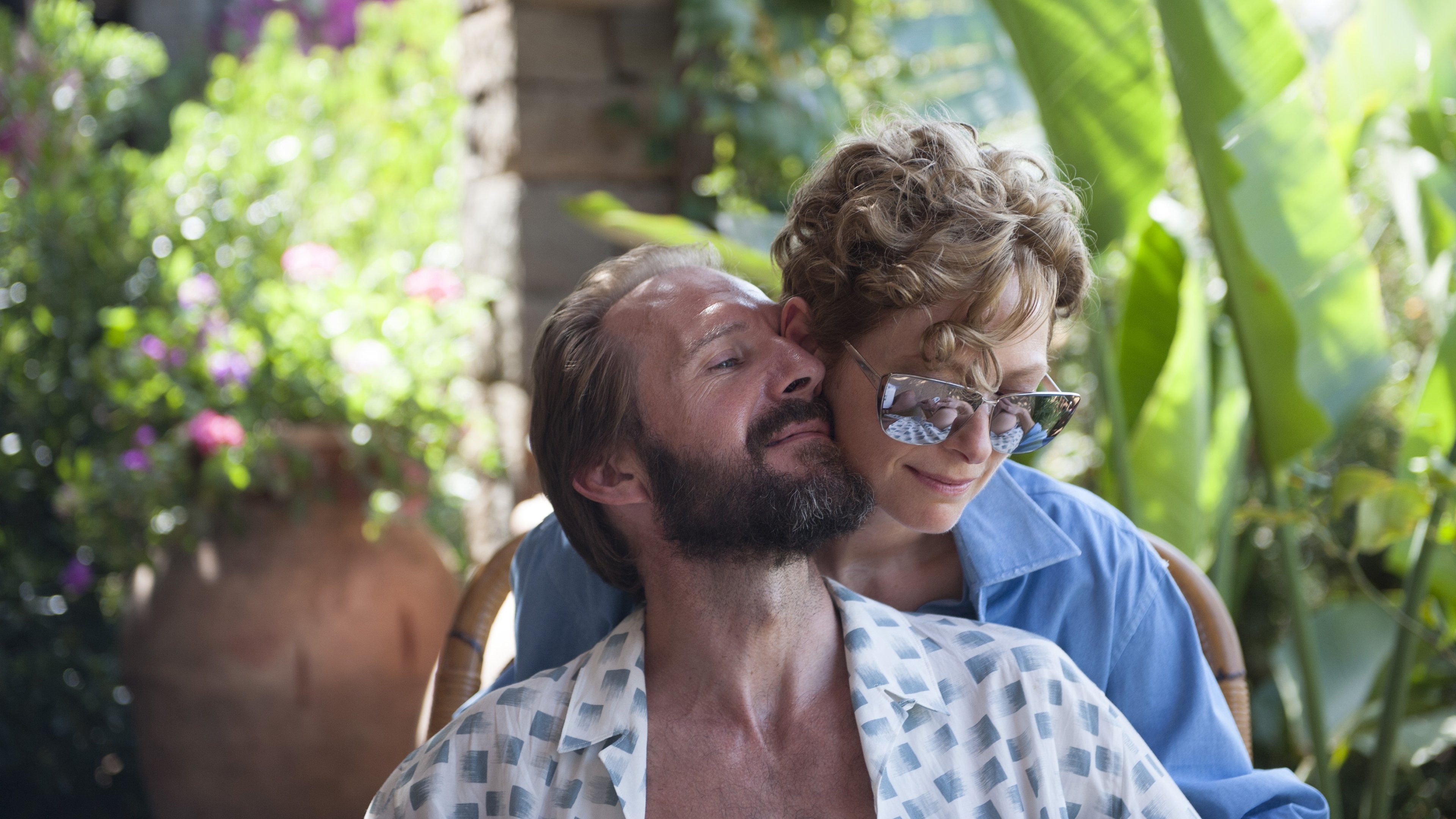
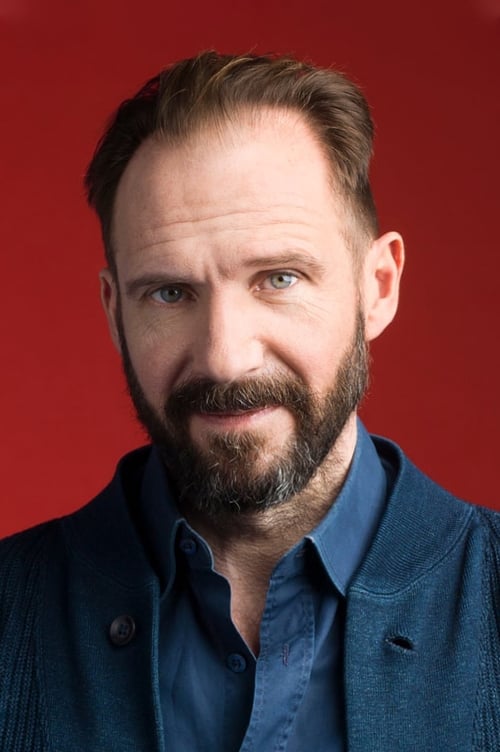
I honestly believe Ralph Fiennes deserved an Oscar for how electrifyingly and energetically he played Harry. He might not be the main character, but he is the heart of A Bigger Splash. Harry is clearly a man who lives on the edge; he chases after his youth and, like they say, would fuck anything that is fuckable. His arrival on the island is a bomb going off. Fiennes’ portrayal of Harry is nothing short of remarkable and is honestly one of the most underrated acting performances I’ve seen. He embodies his character perfectly, representing the magnetic effect Harry has on people while also showing just how fucking repulsive he can be. Harry’s strong personality and relentless need to be the center of attention, in my opinion, are what immediately start creating the tension between the three other main characters. He refuses to be forgotten, whether through his career as a rock star producer or through his past relationship with Marianne, played by Tilda Swinton. Harry’s motivations are driven by a desperate need to reclaim the past—to go back to a time when he was fully in control, particularly over Marianne. His reckless and thoughtless behavior is nothing but a mask for his deeper insecurities and fear of being left behind. That mask only drops during the movie’s climax. Fiennes gives Harry a manic energy that makes him infuriating at times. His interactions with the other characters, particularly Marianne and Penelope, reveal a man who is desperately clinging to an illusion of himself that is slowly crumbling.
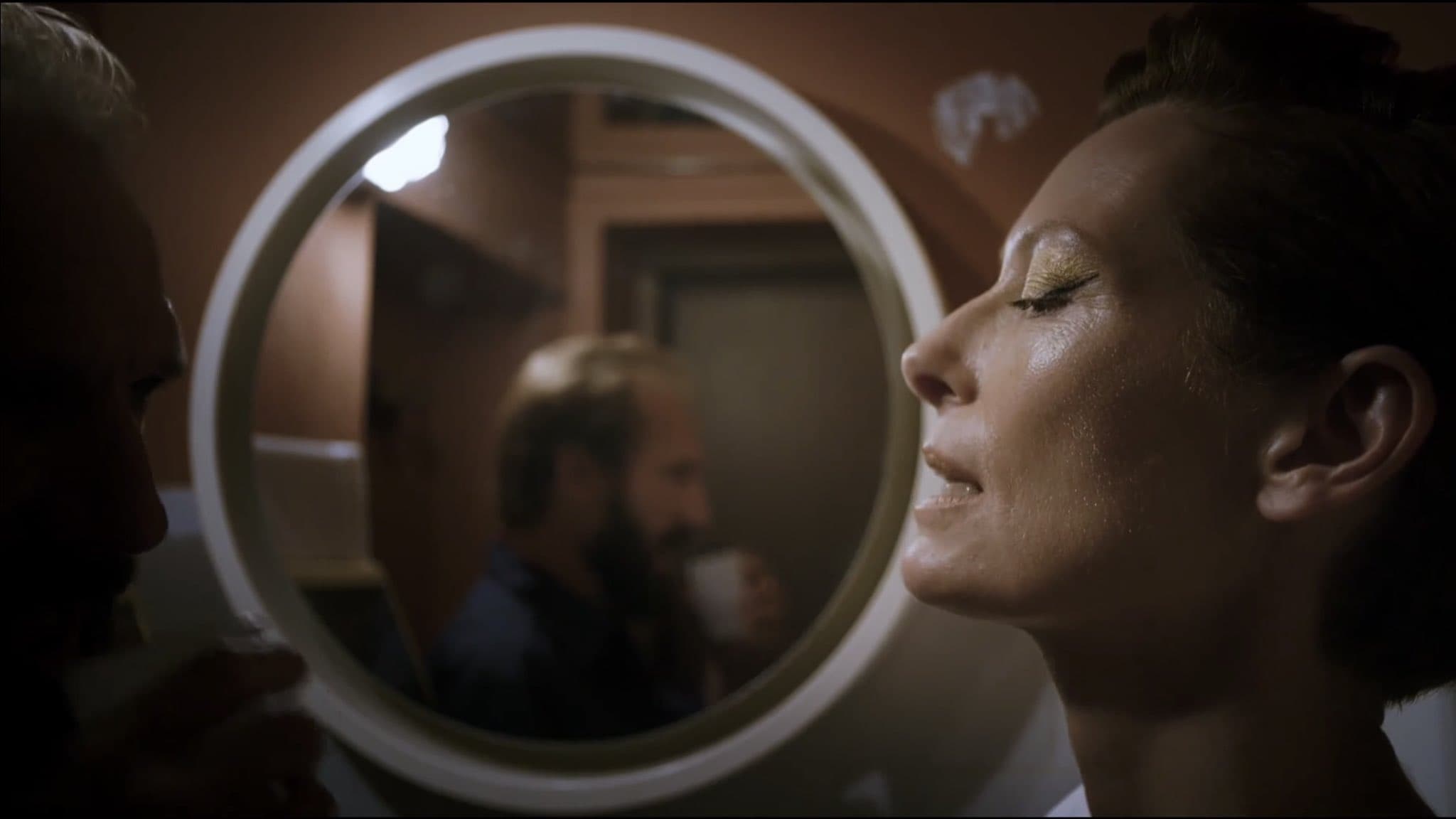
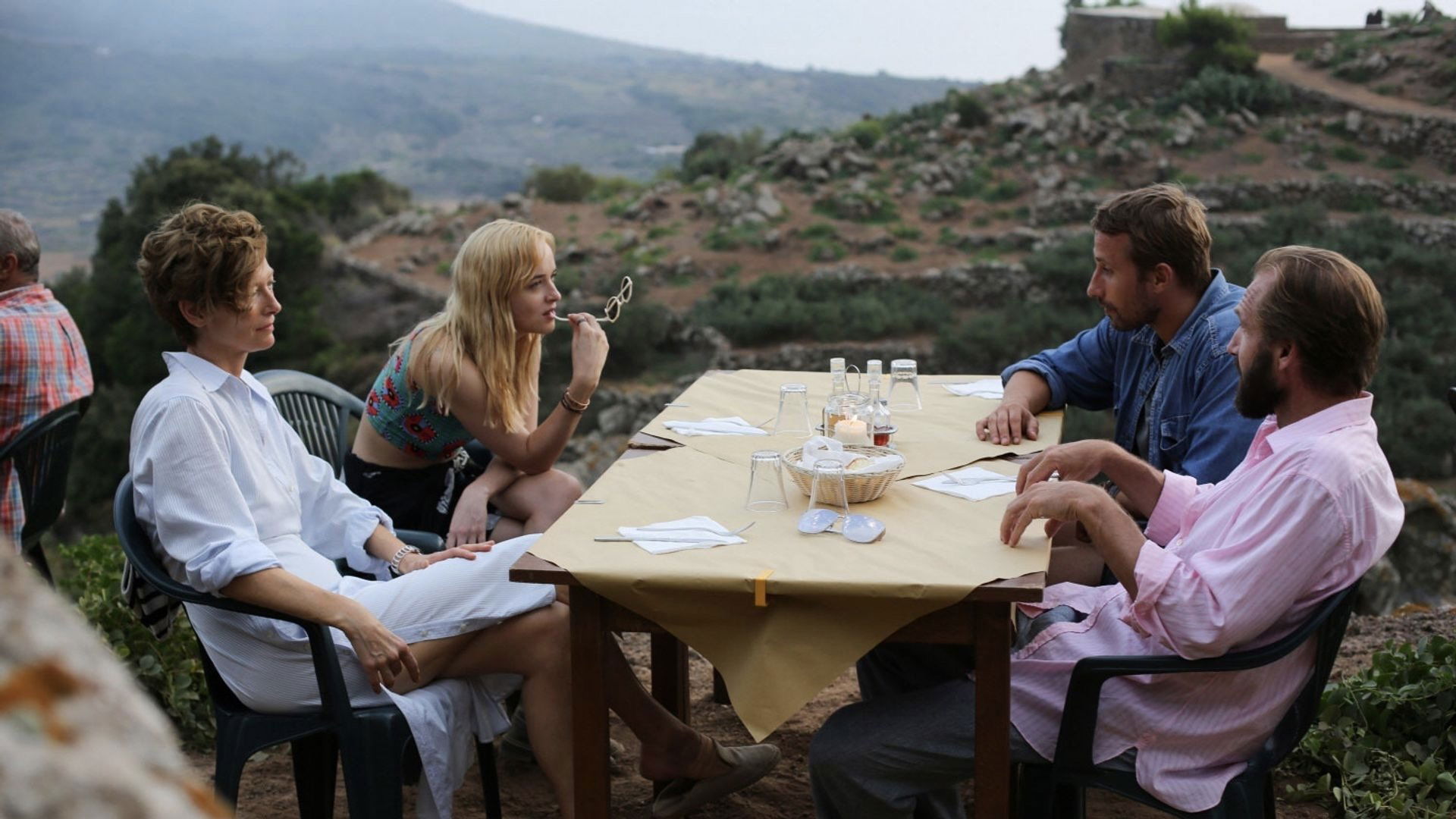
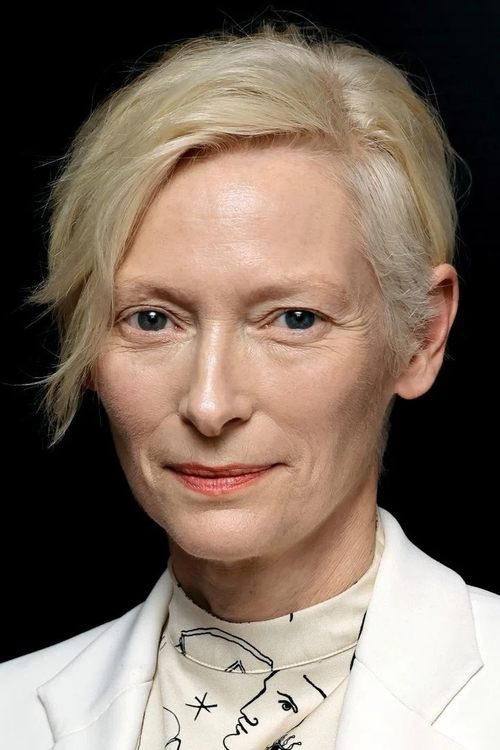
The movie dives into a lot of rich themes, most importantly the complexities of human desire and the allure, danger, and destruction that come with it—something Guadagnino explores in all his movies, like Suspiria, Bones and All, and Challengers. But it’s also, in a way, about the passage of time. The characters are all, in one way or another, grappling with the tension between their public personas and their private selves. Marianne, who has lost her voice, represents the fragility of celebrity, the physical toll of fame, and how it affects her. Her relationship with Harry is tinged with nostalgia and unresolved feelings (or desires of getting freaky 😏), where both of them are trapped in a longing for a past that is now long gone. Penelope represents a younger generation that is both drawn to and repelled by the excesses of the previous one. The film explores how these past memories and emotions can be very destructive, leading the characters to make impulsive choices that have deep consequences. The island setting serves as a metaphorical space where these tensions play out. It’s isolated from the real world, where normal rules don’t apply, and where the characters are free to explore the darker sides of their psyches in a closed environment with not much room to escape.
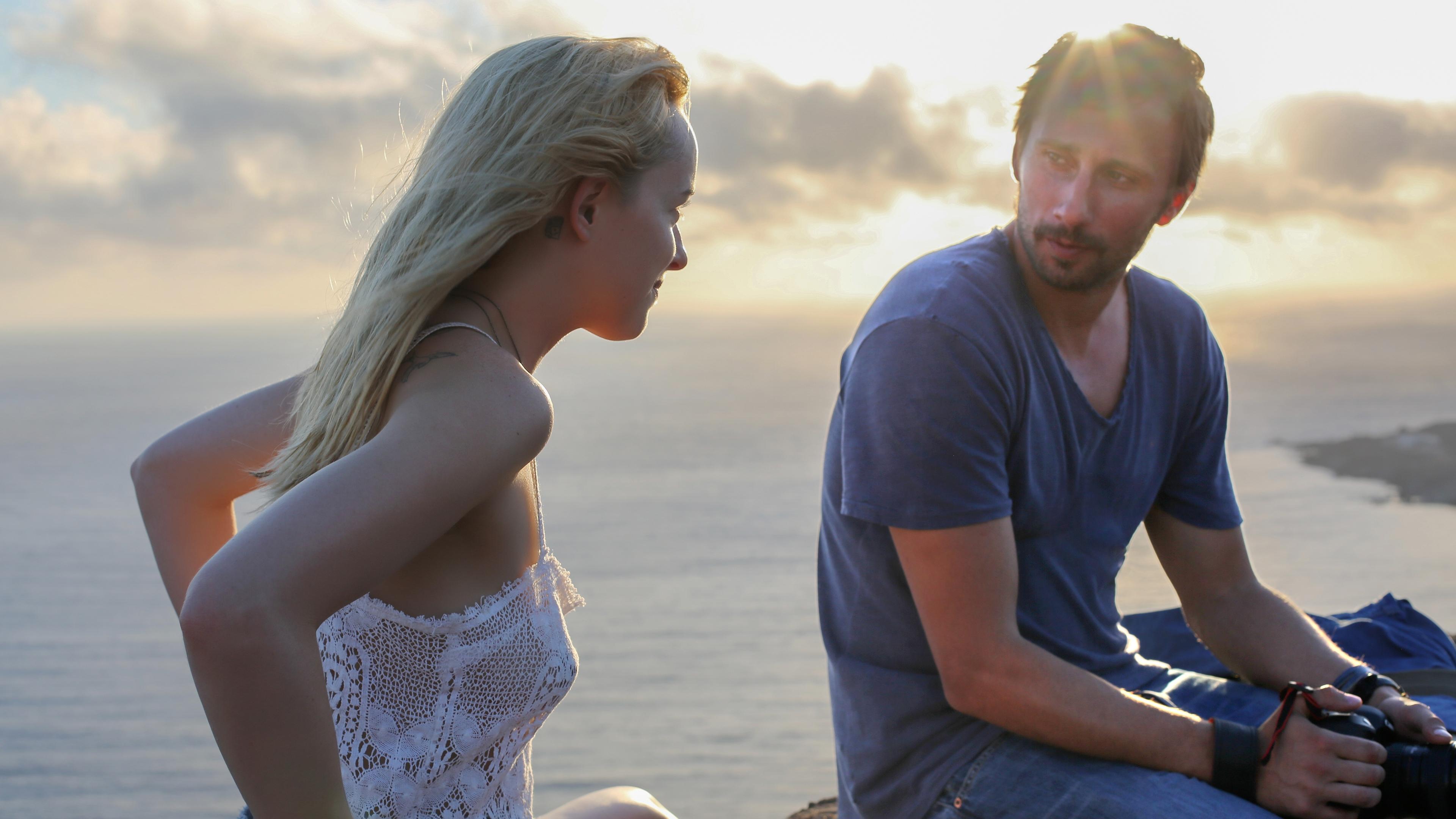
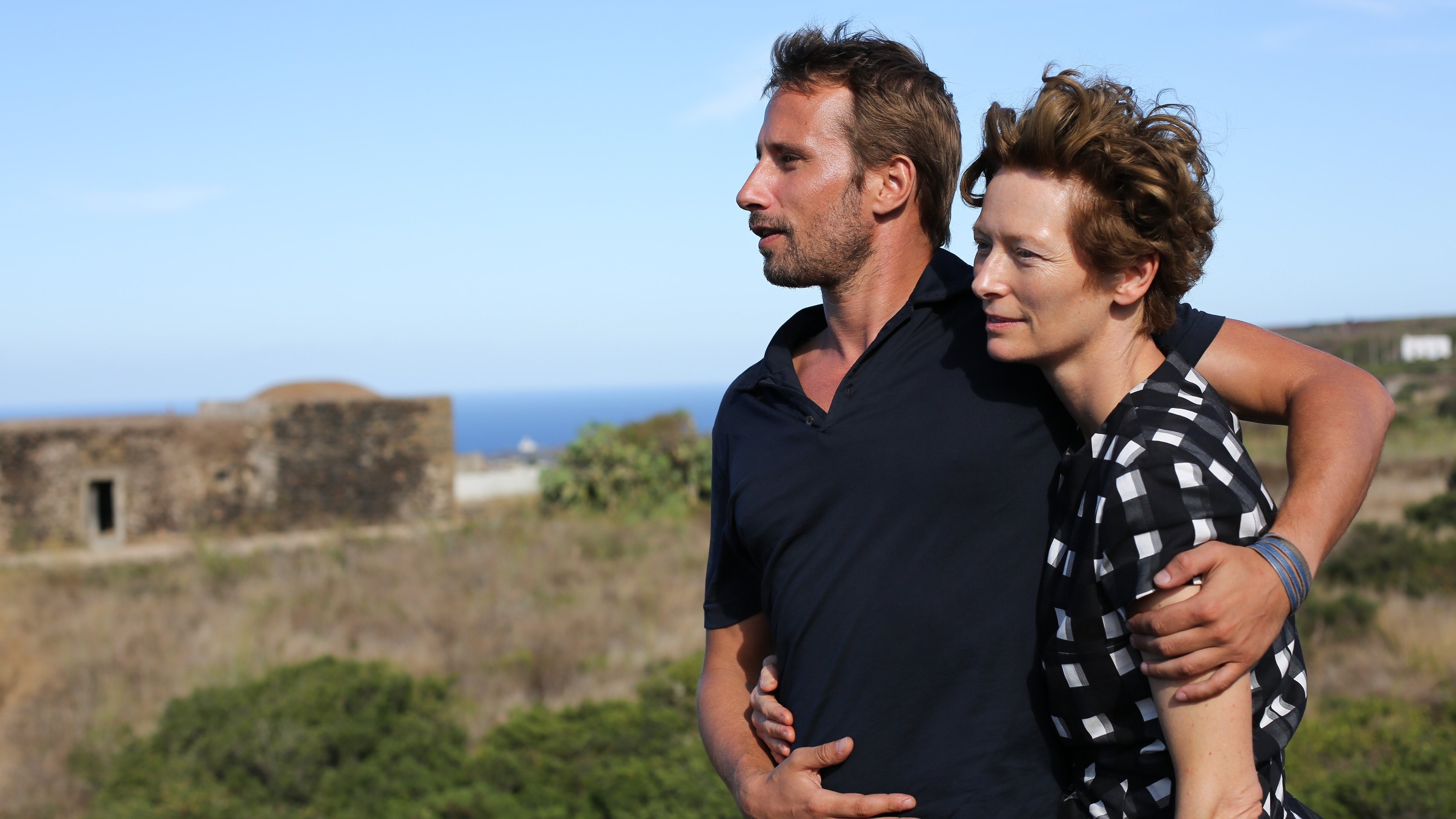
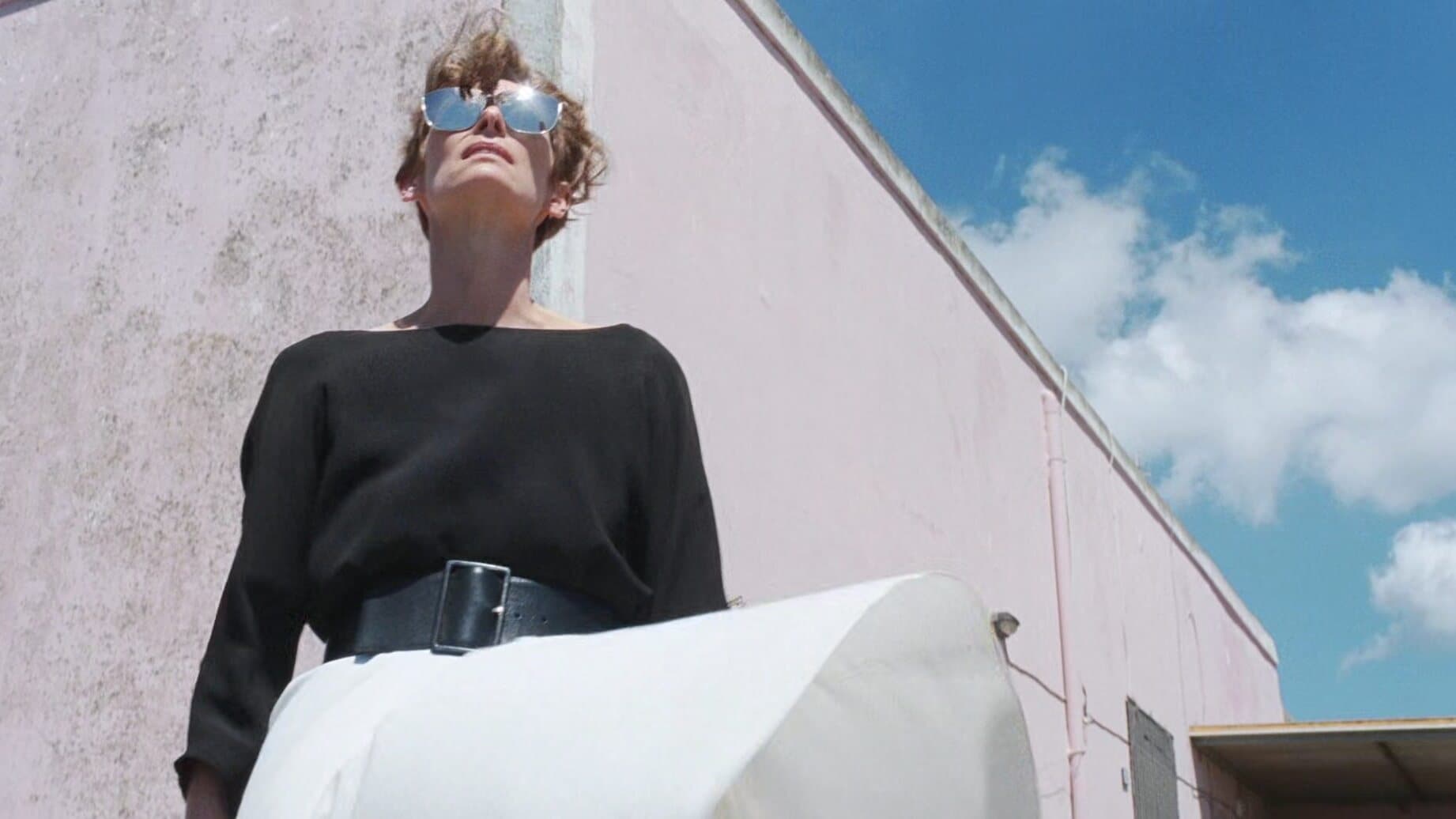
The visuals of this movie are obviously a beautiful homage to the stylish cinema of the '60s and '70s. It’s a masterful blend of sun-soaked locations and close-ups that capture the intensity of what’s going on in the story. The island itself is a contrast to the characters: its vibrant colors and shining beauty contrast with the characters' dull, inner lives. The use of natural lighting and the way the movie quickly jumps from one day to the next make it feel kind of lost, like time isn’t quite right—like it’s both standing still and passing too quickly. That’s exactly how my vacations feel now that they’re almost over (only two days left, 😪). The film’s visual style pays tribute to the Italian cinema of the 1960s, with its emphasis on mood and atmosphere over plot, and its exploration of the human condition through a lens that is both beautiful and melancholic.
Overall, A Bigger Splash is a stylish homage to French New Wave cinema, especially La Piscine, while still standing on its own. Dakota Johnson’s Penelope is a complex character who subtly shifts the film's mood, serving as a catalyst for the story's climax. Ralph Fiennes delivers an electrifying, underrated performance as Harry, a man desperately clinging to his past. The film explores rich themes of desire, nostalgia, and identity, all captured through visually stunning, sun-soaked cinematography.