
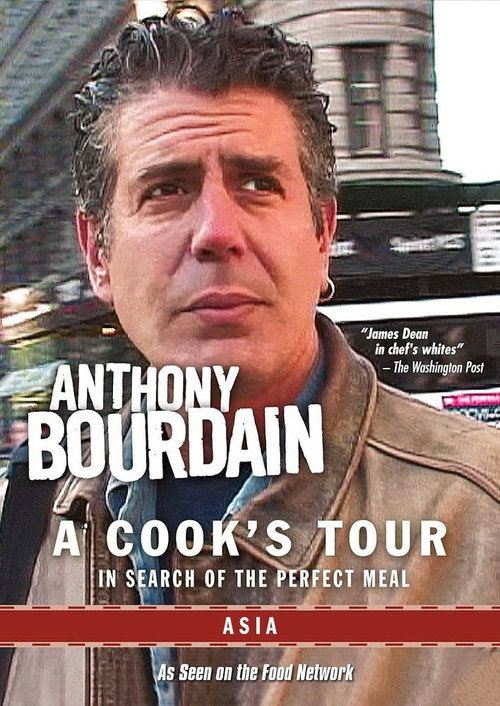
Anthony Bourdain: A Cook's Tour - Asia
2002·Documentary·2h 34m
7.1
★
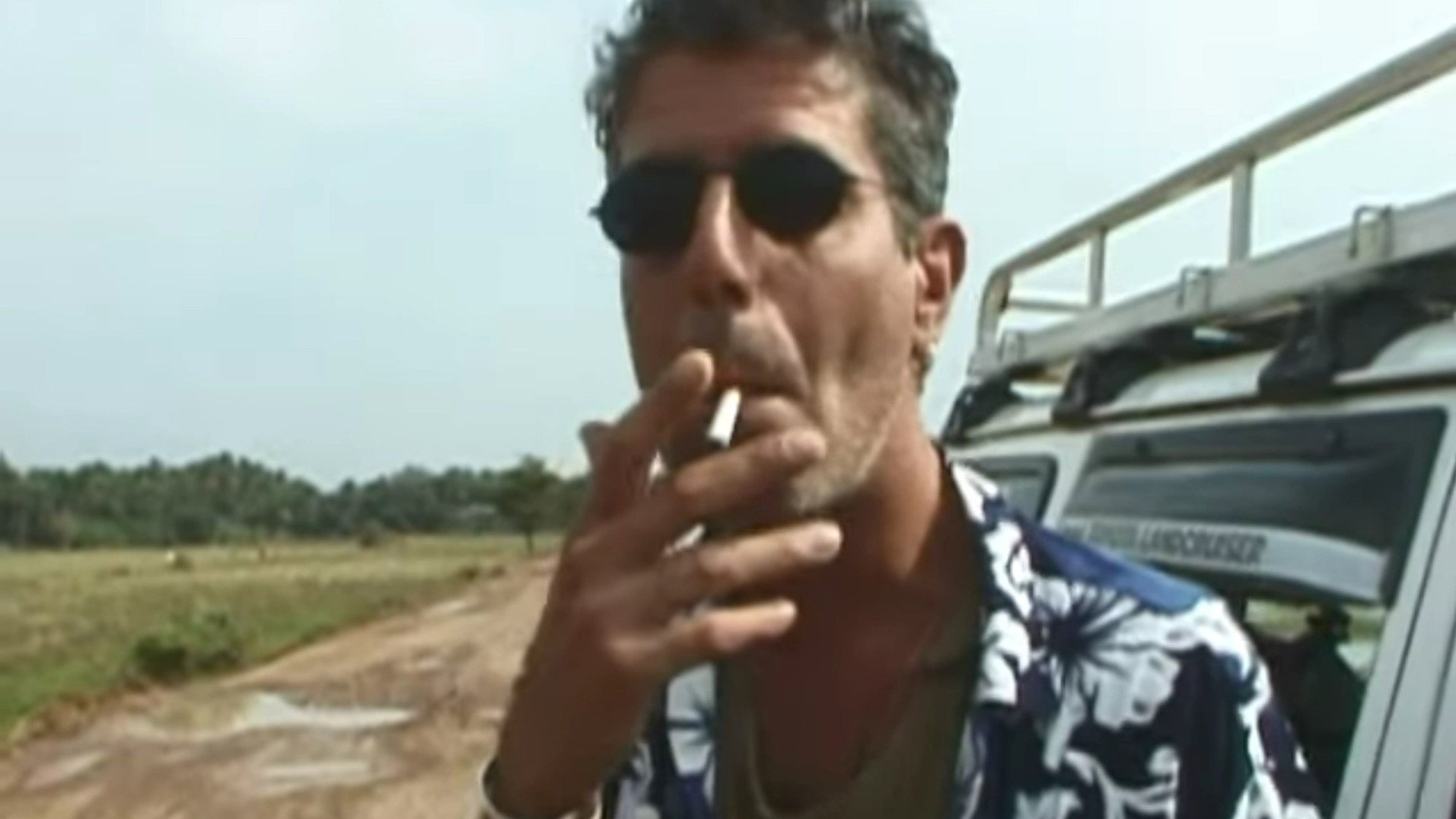
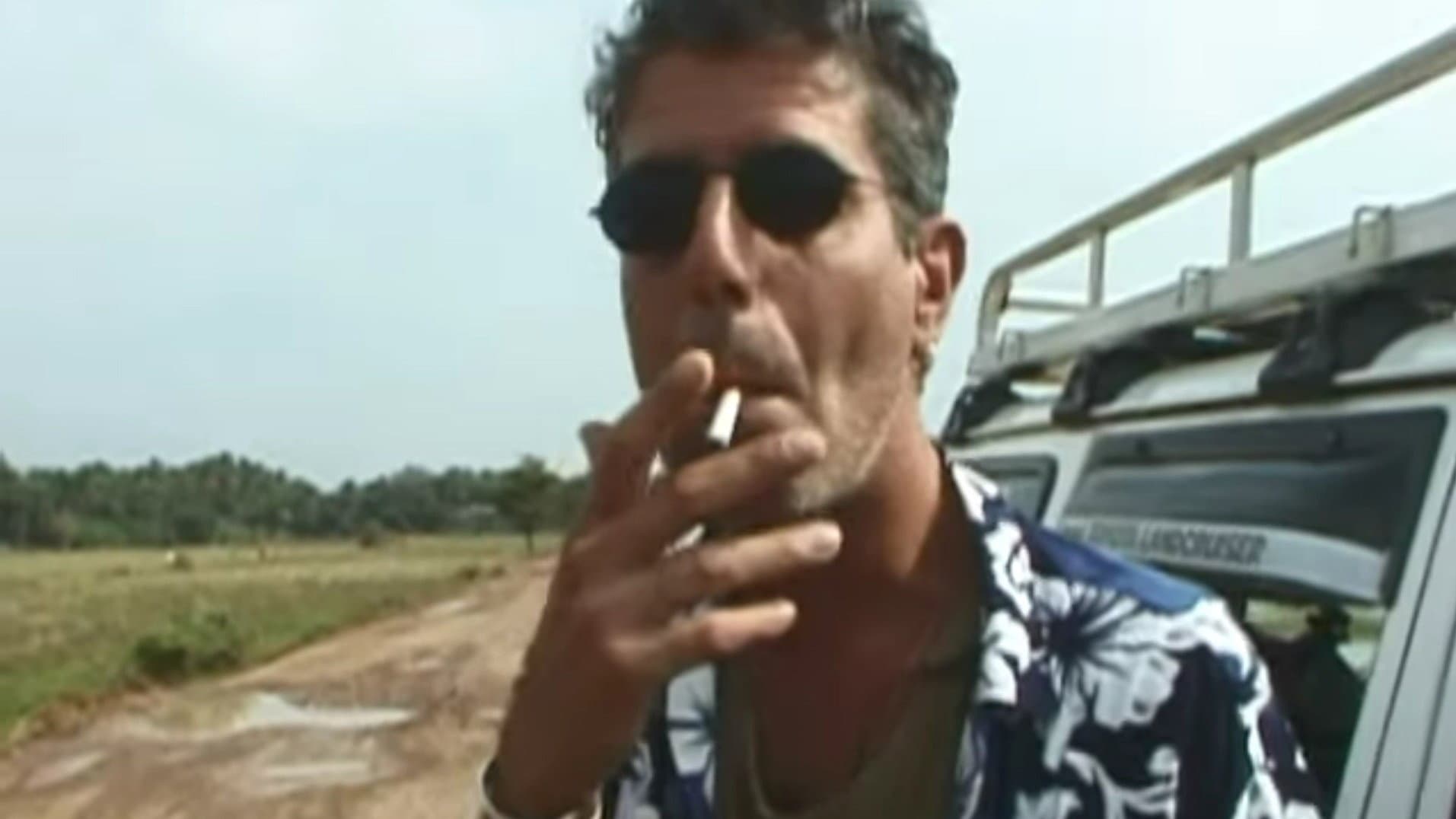
Cooking and dining with Anthony Bourdain! Asia - 7 episodes. Tony has a spontaneous adventure in Bangkok where he tries foods such as deep fried frog skins and pla rah, a fish paste that has fermented for three months.
Directed by Lydia Tenaglia and Christopher Collins
cooking
travel
food
Cast
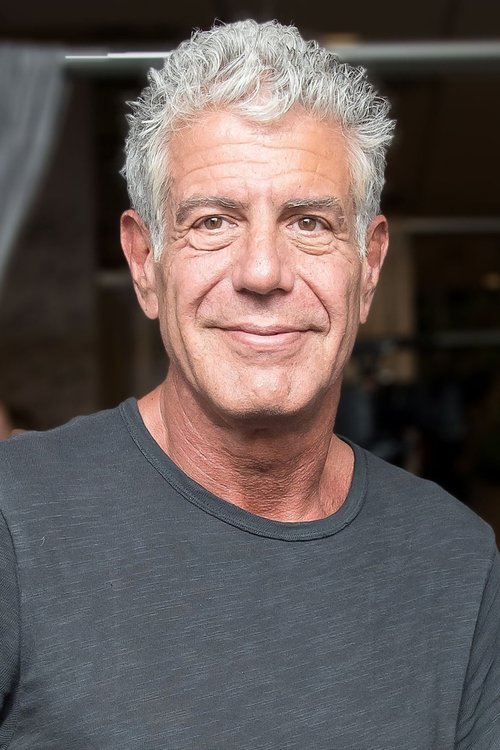
Anthony Bourdain
Self
Crew
Anthony Bourdain
Writer
Popular Reviews
6 reviews
Hendra Syahnanda
Anthony Bourdain is one of the effortlessly cool food influencer who ever lived. The way he's not only radiates swagger apparent and genuine enthusiasm to all those delicious food, but also his complex awareness toward the culture beneath every bite is what makes his journey feels religious and personal. Food is never just a food for him, it's history, identity and a walk down memory lane. Maybe someday i'll retrace his itinerary path and the way he sees the world through cuisine and culture.
Anthony Bourdain is one of the effortlessly cool food influencer who ever lived. The way he's not only radiates swagger apparent and genuine enthusiasm to all those delicious food, but also his complex awareness toward the culture beneath every bite is what makes his journey feels religious and personal. Food is never just a food for him, it's history, identity and a walk down memory lane. Maybe someday i'll retrace his itinerary path and the way he sees the world through cuisine and culture.

1

Marcos Molina
7.0★ · 02/13/26
move.
move.
armi
Man, some people, when they smile, it makes me want to cry. Anthony Bourdain is one of them. Some of these dead men really get to the heart of me. And it's with a very specific kind of temperament. Jeff Buckley has it too. This exuding sensitivity in the way they face the world and meet it as if without armor.
Jeff Buckley frames it like this when talking about his album Grace:
“Grace is what matters in anything, especially life, especially growth, tragedy, pain, love, death. That’s a quality I admire very greatly. It keeps you from reaching out for the gun too quickly. It keeps you from destroying things too foolishly. It sort of keeps you alive.”
That idea of grace as restraint feels like the ethic behind Bourdain’s work. It is a way of feeling deeply without turning that feeling into something negative.
I imagine myself beside him on his travels, smoking, drinking, floating down rivers, eating food that is strange to me. I used to watch him religiously as a child, fascinated by a man who seemed unafraid of the land, and of what it had to feed him. I wanted to return to his work now, with the hindsight of his death, to look more closely at the person behind such a generous, human project.
I notice new things to love. The way he sticks out everywhere, unmistakably a stranger, too tall, ducking through doorways. The single earring. The humor. The cinephile references: how he seems to just be re-experiencing the world because he already has done so through movies and is now only remembering it. But most of all, I love that being a chef was only ever a gateway to being a storyteller.
I love people who know how to tell even the simplest story in a way that makes you feel like your life has changed somehow for having heard it. I love any good storyteller really. Anthony was a down-to-earth writer, and an anthropologist, who spoke simply and without unnecessarily pretentious, floral language. But he got out what needed to get out.
It terrifies me how deeply I resonate with his parts of his perceived personality, and how clearly I recognize similar desires.
I wonder, like most viewers, if he was chasing a high through his work. Was he traveling, as he says in the opening, “searching for extremes of emotion and experience” just to feel something worthwhile about being alive? Was it pure investigation, or was there some degree of escapism to it? Was it the old truth that no matter where you go, you carry yourself with you?
I can’t possibly know. I see Anthony Bourdain the television figure, not the man that is, after the cameras shut off. So how could I know what got to him? And yet, he was achingly honest on camera so much of the time that it’s hard to believe he was far from what he showed us. He never seemed to be playing a character.
All I know is that when he says, “we are wallowing in blood,” I understand exactly what he means when I'm walking through the most calm and quiet pine trees on the outskirts of Seattle. I, too, love the earth. I, too, want to see all of it, and to take in as much as I possibly can. And I, too, am horrified by the trail we’ve left behind, and continue to leave behind, as we walk over it, pierce it, detonate it, extract from it, and pump poison back into it.
That includes our humanity, and not just the physical earth.
I keep circling back to the idea of grace as a brake on violence toward the world and toward oneself. You can make yourself permeable to the world, open to its tastes, contradictions, and embarrassments, and allow yourself to be changed by places instead of mastering them, through grace. It is the thing that intervenes between feeling too much and acting destructively.
Anthony had that restraint when working on this projecr, I think. He moved through places marked by poverty, war, exploitation, and history without turning them into moral theater. He didn’t rush to judgment, and didn’t aestheticize suffering. Instead, there’s a constant negotiation on how to stay alive without becoming brutal, or numb, or dishonest.
I fear that being too attentive and too noticing of everything can make one fragile. The tragic irony is that all this care, all this beauty, and all this attempt at being graceful does not guarantee survival. Grace does not always win. It doesn’t immunize against despair. Maybe it delays destruction. Maybe it buys you time. Music, food, travel, are all methods of endurance. And sometimes, those methods fail.
Thank you, Anthony, for your honest life. I wished to see more of you.
Jeff Buckley frames it like this when talking about his album Grace:
“Grace is what matters in anything, especially life, especially growth, tragedy, pain, love, death. That’s a quality I admire very greatly. It keeps you from reaching out for the gun too quickly. It keeps you from destroying things too foolishly. It sort of keeps you alive.”
That idea of grace as restraint feels like the ethic behind Bourdain’s work. It is a way of feeling deeply without turning that feeling into something negative.
I imagine myself beside him on his travels, smoking, drinking, floating down rivers, eating food that is strange to me. I used to watch him religiously as a child, fascinated by a man who seemed unafraid of the land, and of what it had to feed him. I wanted to return to his work now, with the hindsight of his death, to look more closely at the person behind such a generous, human project.
I notice new things to love. The way he sticks out everywhere, unmistakably a stranger, too tall, ducking through doorways. The single earring. The humor. The cinephile references: how he seems to just be re-experiencing the world because he already has done so through movies and is now only remembering it. But most of all, I love that being a chef was only ever a gateway to being a storyteller.
I love people who know how to tell even the simplest story in a way that makes you feel like your life has changed somehow for having heard it. I love any good storyteller really. Anthony was a down-to-earth writer, and an anthropologist, who spoke simply and without unnecessarily pretentious, floral language. But he got out what needed to get out.
It terrifies me how deeply I resonate with his parts of his perceived personality, and how clearly I recognize similar desires.
I wonder, like most viewers, if he was chasing a high through his work. Was he traveling, as he says in the opening, “searching for extremes of emotion and experience” just to feel something worthwhile about being alive? Was it pure investigation, or was there some degree of escapism to it? Was it the old truth that no matter where you go, you carry yourself with you?
I can’t possibly know. I see Anthony Bourdain the television figure, not the man that is, after the cameras shut off. So how could I know what got to him? And yet, he was achingly honest on camera so much of the time that it’s hard to believe he was far from what he showed us. He never seemed to be playing a character.
All I know is that when he says, “we are wallowing in blood,” I understand exactly what he means when I'm walking through the most calm and quiet pine trees on the outskirts of Seattle. I, too, love the earth. I, too, want to see all of it, and to take in as much as I possibly can. And I, too, am horrified by the trail we’ve left behind, and continue to leave behind, as we walk over it, pierce it, detonate it, extract from it, and pump poison back into it.
That includes our humanity, and not just the physical earth.
I keep circling back to the idea of grace as a brake on violence toward the world and toward oneself. You can make yourself permeable to the world, open to its tastes, contradictions, and embarrassments, and allow yourself to be changed by places instead of mastering them, through grace. It is the thing that intervenes between feeling too much and acting destructively.
Anthony had that restraint when working on this projecr, I think. He moved through places marked by poverty, war, exploitation, and history without turning them into moral theater. He didn’t rush to judgment, and didn’t aestheticize suffering. Instead, there’s a constant negotiation on how to stay alive without becoming brutal, or numb, or dishonest.
I fear that being too attentive and too noticing of everything can make one fragile. The tragic irony is that all this care, all this beauty, and all this attempt at being graceful does not guarantee survival. Grace does not always win. It doesn’t immunize against despair. Maybe it delays destruction. Maybe it buys you time. Music, food, travel, are all methods of endurance. And sometimes, those methods fail.
Thank you, Anthony, for your honest life. I wished to see more of you.
Man, some people, when they smile, it makes me want to cry. Anthony Bourdain is one of them. Some of these dead men really get to the heart of me. And it's with a very specific kind of temperament. Jeff Buckley has it too. This exuding sensitivity in the way they face the world and meet it as if without armor.
Jeff Buckley frames it like this when talking about his album Grace:
“Grace is what matters in anything, especially life, especially growth, tragedy, pain, love, death. That’s a quality I admire very greatly. It keeps you from reaching out for the gun too quickly. It keeps you from destroying things too foolishly. It sort of keeps you alive.”
That idea of grace as restraint feels like the ethic behind Bourdain’s work. It is a way of feeling deeply without turning that feeling into something negative.
I imagine myself beside him on his travels, smoking, drinking, floating down rivers, eating food that is strange to me. I used to watch him religiously as a child, fascinated by a man who seemed unafraid of the land, and of what it had to feed him. I wanted to return to his work now, with the hindsight of his death, to look more closely at the person behind such a generous, human project.
I notice new things to love. The way he sticks out everywhere, unmistakably a stranger, too tall, ducking through doorways. The single earring. The humor. The cinephile references: how he seems to just be re-experiencing the world because he already has done so through movies and is now only remembering it. But most of all, I love that being a chef was only ever a gateway to being a storyteller.
I love people who know how to tell even the simplest story in a way that makes you feel like your life has changed somehow for having heard it. I love any good storyteller really. Anthony was a down-to-earth writer, and an anthropologist, who spoke simply and without unnecessarily pretentious, floral language. But he got out what needed to get out.
It terrifies me how deeply I resonate with his parts of his perceived personality, and how clearly I recognize similar desires.
I wonder, like most viewers, if he was chasing a high through his work. Was he traveling, as he says in the opening, “searching for extremes of emotion and experience” just to feel something worthwhile about being alive? Was it pure investigation, or was there some degree of escapism to it? Was it the old truth that no matter where you go, you carry yourself with you?
I can’t possibly know. I see Anthony Bourdain the television figure, not the man that is, after the cameras shut off. So how could I know what got to him? And yet, he was achingly honest on camera so much of the time that it’s hard to believe he was far from what he showed us. He never seemed to be playing a character.
All I know is that when he says, “we are wallowing in blood,” I understand exactly what he means when I'm walking through the most calm and quiet pine trees on the outskirts of Seattle. I, too, love the earth. I, too, want to see all of it, and to take in as much as I possibly can. And I, too, am horrified by the trail we’ve left behind, and continue to leave behind, as we walk over it, pierce it, detonate it, extract from it, and pump poison back into it.
That includes our humanity, and not just the physical earth.
I keep circling back to the idea of grace as a brake on violence toward the world and toward oneself. You can make yourself permeable to the world, open to its tastes, contradictions, and embarrassments, and allow yourself to be changed by places instead of mastering them, through grace. It is the thing that intervenes between feeling too much and acting destructively.
Anthony had that restraint when working on this projecr, I think. He moved through places marked by poverty, war, exploitation, and history without turning them into moral theater. He didn’t rush to judgment, and didn’t aestheticize suffering. Instead, there’s a constant negotiation on how to stay alive without becoming brutal, or numb, or dishonest.
I fear that being too attentive and too noticing of everything can make one fragile. The tragic irony is that all this care, all this beauty, and all this attempt at being graceful does not guarantee survival. Grace does not always win. It doesn’t immunize against despair. Maybe it delays destruction. Maybe it buys you time. Music, food, travel, are all methods of endurance. And sometimes, those methods fail.
Thank you, Anthony, for your honest life. I wished to see more of you.
Jeff Buckley frames it like this when talking about his album Grace:
“Grace is what matters in anything, especially life, especially growth, tragedy, pain, love, death. That’s a quality I admire very greatly. It keeps you from reaching out for the gun too quickly. It keeps you from destroying things too foolishly. It sort of keeps you alive.”
That idea of grace as restraint feels like the ethic behind Bourdain’s work. It is a way of feeling deeply without turning that feeling into something negative.
I imagine myself beside him on his travels, smoking, drinking, floating down rivers, eating food that is strange to me. I used to watch him religiously as a child, fascinated by a man who seemed unafraid of the land, and of what it had to feed him. I wanted to return to his work now, with the hindsight of his death, to look more closely at the person behind such a generous, human project.
I notice new things to love. The way he sticks out everywhere, unmistakably a stranger, too tall, ducking through doorways. The single earring. The humor. The cinephile references: how he seems to just be re-experiencing the world because he already has done so through movies and is now only remembering it. But most of all, I love that being a chef was only ever a gateway to being a storyteller.
I love people who know how to tell even the simplest story in a way that makes you feel like your life has changed somehow for having heard it. I love any good storyteller really. Anthony was a down-to-earth writer, and an anthropologist, who spoke simply and without unnecessarily pretentious, floral language. But he got out what needed to get out.
It terrifies me how deeply I resonate with his parts of his perceived personality, and how clearly I recognize similar desires.
I wonder, like most viewers, if he was chasing a high through his work. Was he traveling, as he says in the opening, “searching for extremes of emotion and experience” just to feel something worthwhile about being alive? Was it pure investigation, or was there some degree of escapism to it? Was it the old truth that no matter where you go, you carry yourself with you?
I can’t possibly know. I see Anthony Bourdain the television figure, not the man that is, after the cameras shut off. So how could I know what got to him? And yet, he was achingly honest on camera so much of the time that it’s hard to believe he was far from what he showed us. He never seemed to be playing a character.
All I know is that when he says, “we are wallowing in blood,” I understand exactly what he means when I'm walking through the most calm and quiet pine trees on the outskirts of Seattle. I, too, love the earth. I, too, want to see all of it, and to take in as much as I possibly can. And I, too, am horrified by the trail we’ve left behind, and continue to leave behind, as we walk over it, pierce it, detonate it, extract from it, and pump poison back into it.
That includes our humanity, and not just the physical earth.
I keep circling back to the idea of grace as a brake on violence toward the world and toward oneself. You can make yourself permeable to the world, open to its tastes, contradictions, and embarrassments, and allow yourself to be changed by places instead of mastering them, through grace. It is the thing that intervenes between feeling too much and acting destructively.
Anthony had that restraint when working on this projecr, I think. He moved through places marked by poverty, war, exploitation, and history without turning them into moral theater. He didn’t rush to judgment, and didn’t aestheticize suffering. Instead, there’s a constant negotiation on how to stay alive without becoming brutal, or numb, or dishonest.
I fear that being too attentive and too noticing of everything can make one fragile. The tragic irony is that all this care, all this beauty, and all this attempt at being graceful does not guarantee survival. Grace does not always win. It doesn’t immunize against despair. Maybe it delays destruction. Maybe it buys you time. Music, food, travel, are all methods of endurance. And sometimes, those methods fail.
Thank you, Anthony, for your honest life. I wished to see more of you.
yara
8.0★ · 02/14/25
this and a bottle of red wine >>>
this and a bottle of red wine >>>
valenvstheworld
just another weekday searching for the meaning of life in anthony bourdain's a cook tour
just another weekday searching for the meaning of life in anthony bourdain's a cook tour