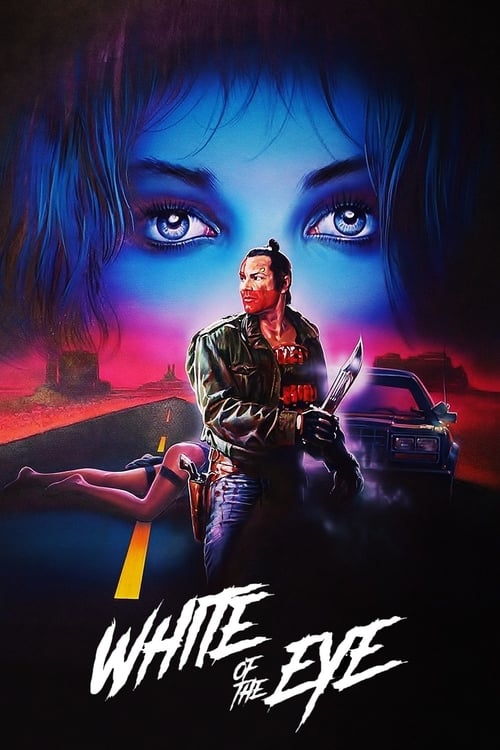
I started watching this a couple of weeks ago on one or another streaming service and about 10 minutes in I'd concluded that 1) the quality available was awful (as in worse than streaming usually is) and 2) it was clear how deliberately composed the film was, visually speaking, so I stopped watching and ordered up a blu ray, which arrived the other day. So let me get this out of the way up front, having now watched it, I am not necessarily recommending that you do the above -- it does has several issues which may leave a lot of people sort of scratching their heads -- but if you are the sort of person who already likes Donald Cammell's work, is interested in mid to late 80s, 'erotic thriller' adjacent wig outs, or are just interested in what it might have been like had Dario Argento made a US film 5 years before 'Trauma' and partly set it in a town outside of Tucson instead of Minneapolis, then you might want to get on board. It's very clearly a Giallo-influenced film, restaged in the burnt and rusty orange of the desert, with some questionable Native American appropriation chucked in for good measure
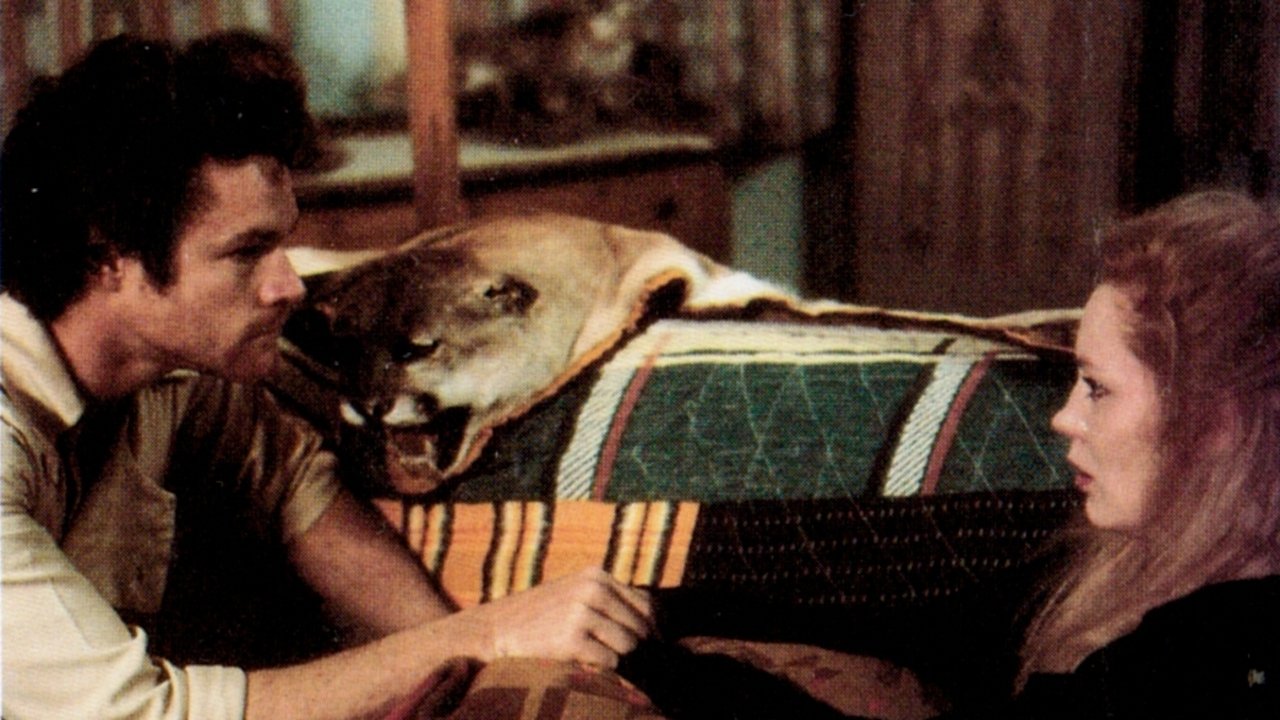
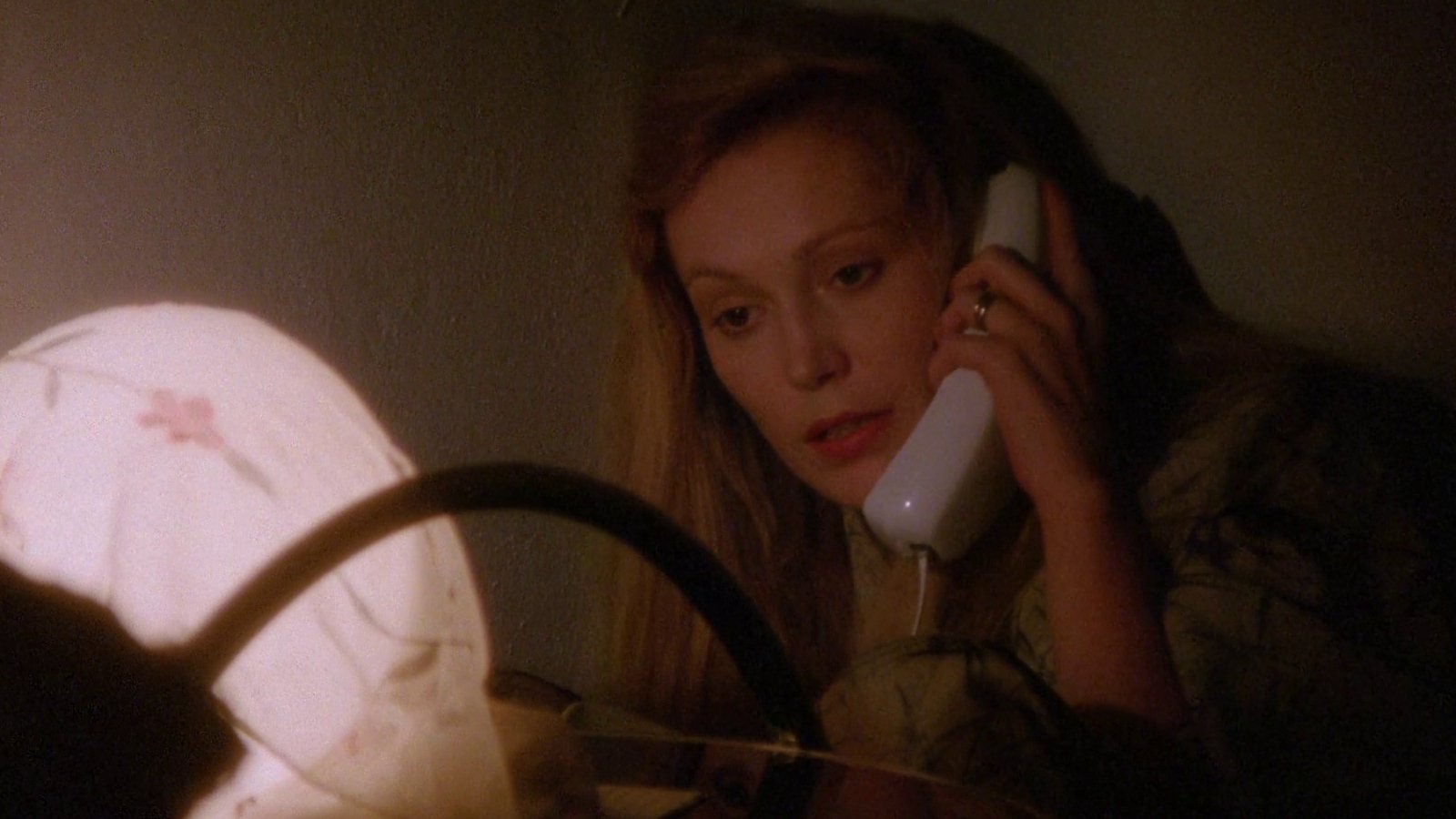
Plotwise, after an early kill, we meet audio engineer Paul (who has a weird talent which turns out to be entirely unrelated to the story) employed to install high end stereos in the homes of the wealthy on the outskirts of Tucson. He's married (to Cathy Moriarty), has a daughter, and also has a past which somehow involves hunting and of which everyone seems to be both aware and at least slightly suspicious. Anyway, as should be obvious, our guy Paul (played by David Keith) had the opportunity to commit the murder (and the subsequent subsequent ones -- though they are all filmed with the killer's face obscured) and there is all manner of circumstantial evidence which further casts suspicion upon him. Hence, we have the bones of a 'normal' thriller. From this point on, where your average film would be an exploration of how our hero proves his innocence against mounting opposition and ultimately reveals the real criminal to be either someone distressingly close to him, someone completely unrelated to the story until the conclusion, or someone to whom the viewers had been briefly introduced but had been misdirected to discount. 'White of the Eye' does not do this, nor, frankly, does it seem to be aware of the convention of doing it. Instead, after this set up, we get flashbacks explaining how Moriarty's character ended up in this town, how she met Keith's character, their life together, and so on, which is presented in linearly arranged sequences (and to which the film has been specially treated to look different). However, at a certain point, it begins to be clear that somewhere along the way, timelines were getting jumbled and confused, and it unclear when, and in what order, some of this stuff happened, before finally --and it must be said, in true Giallo sense -- it all just stops making any conventional sense at all.
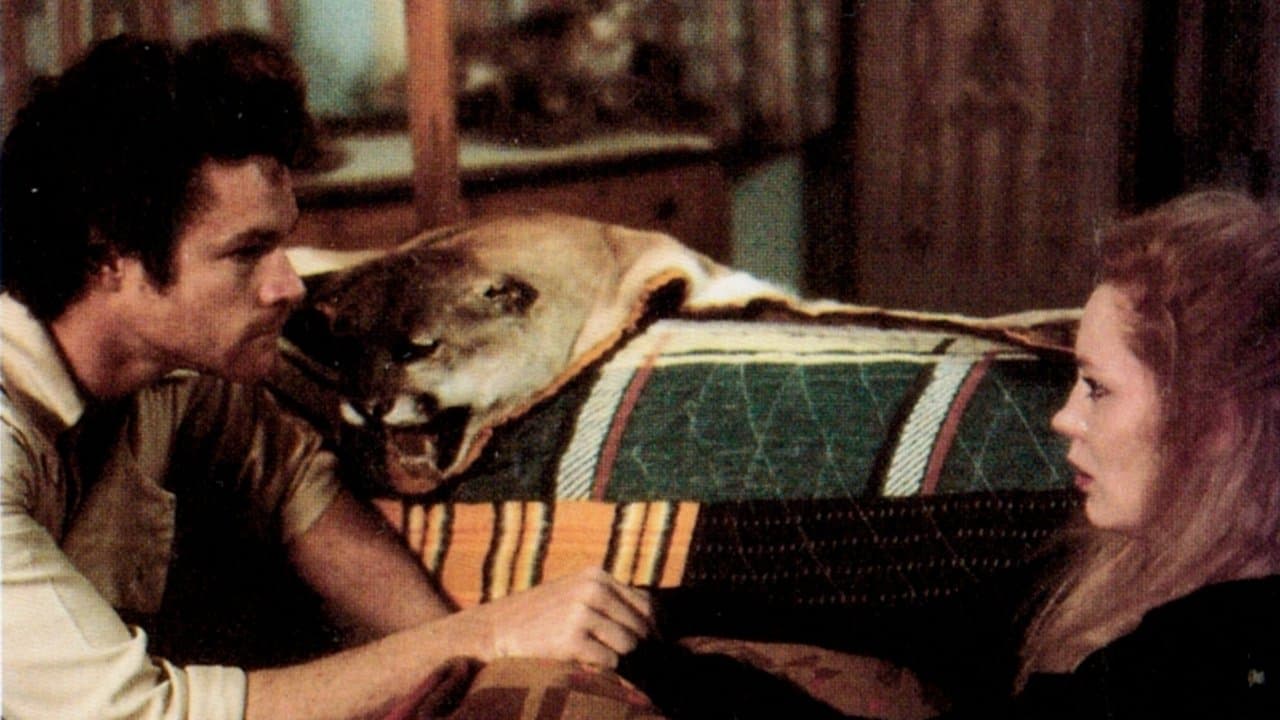
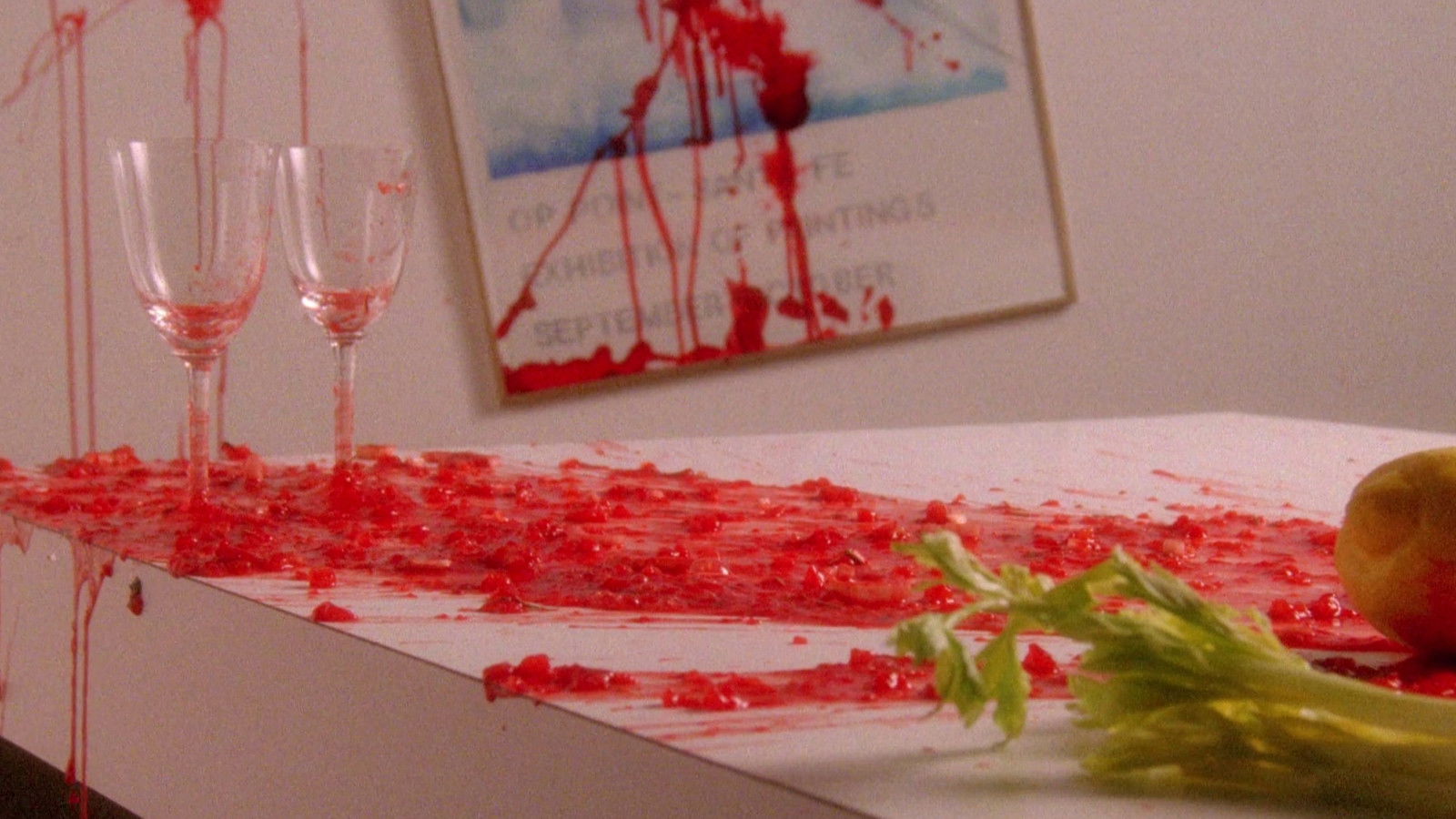
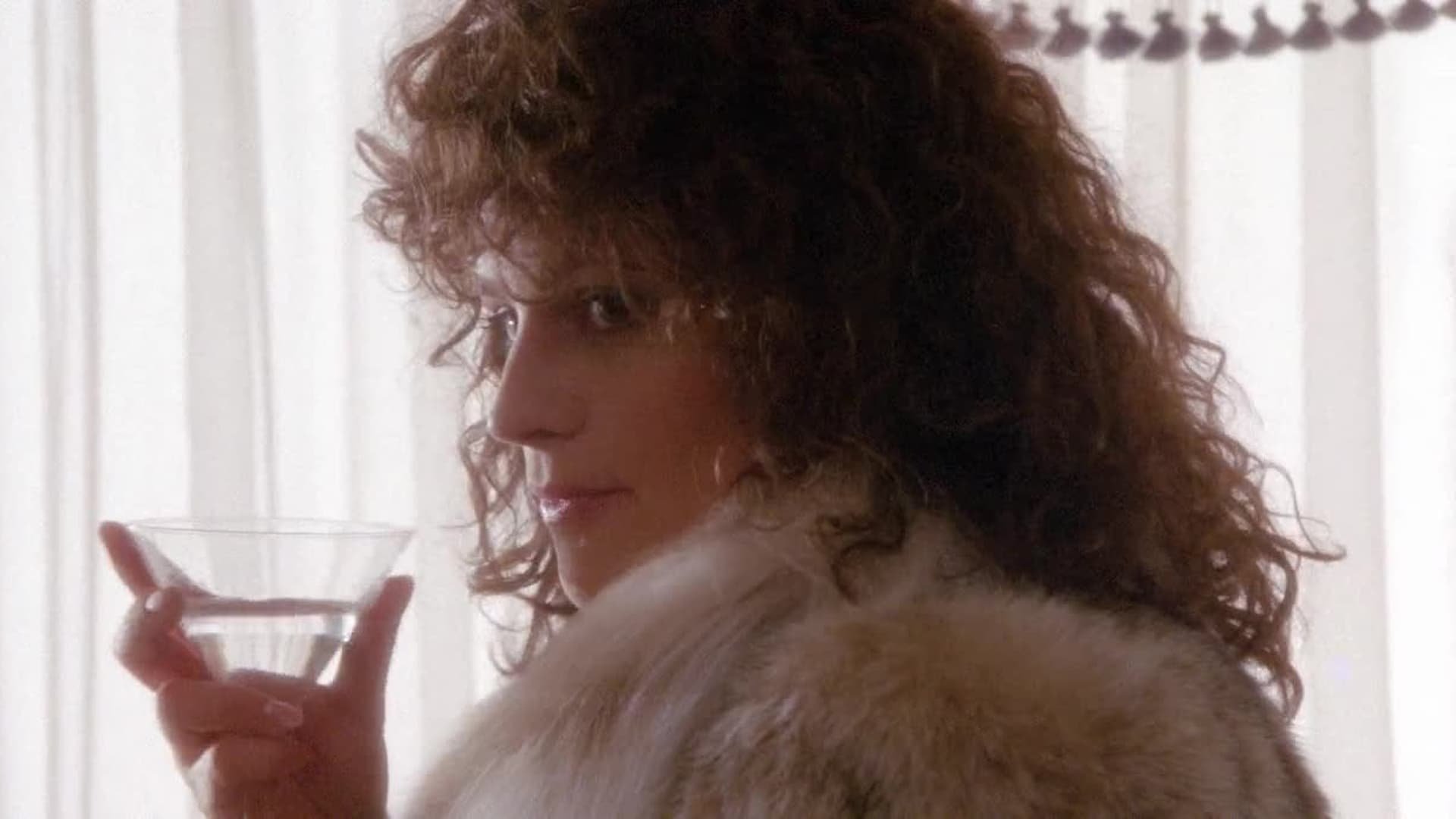
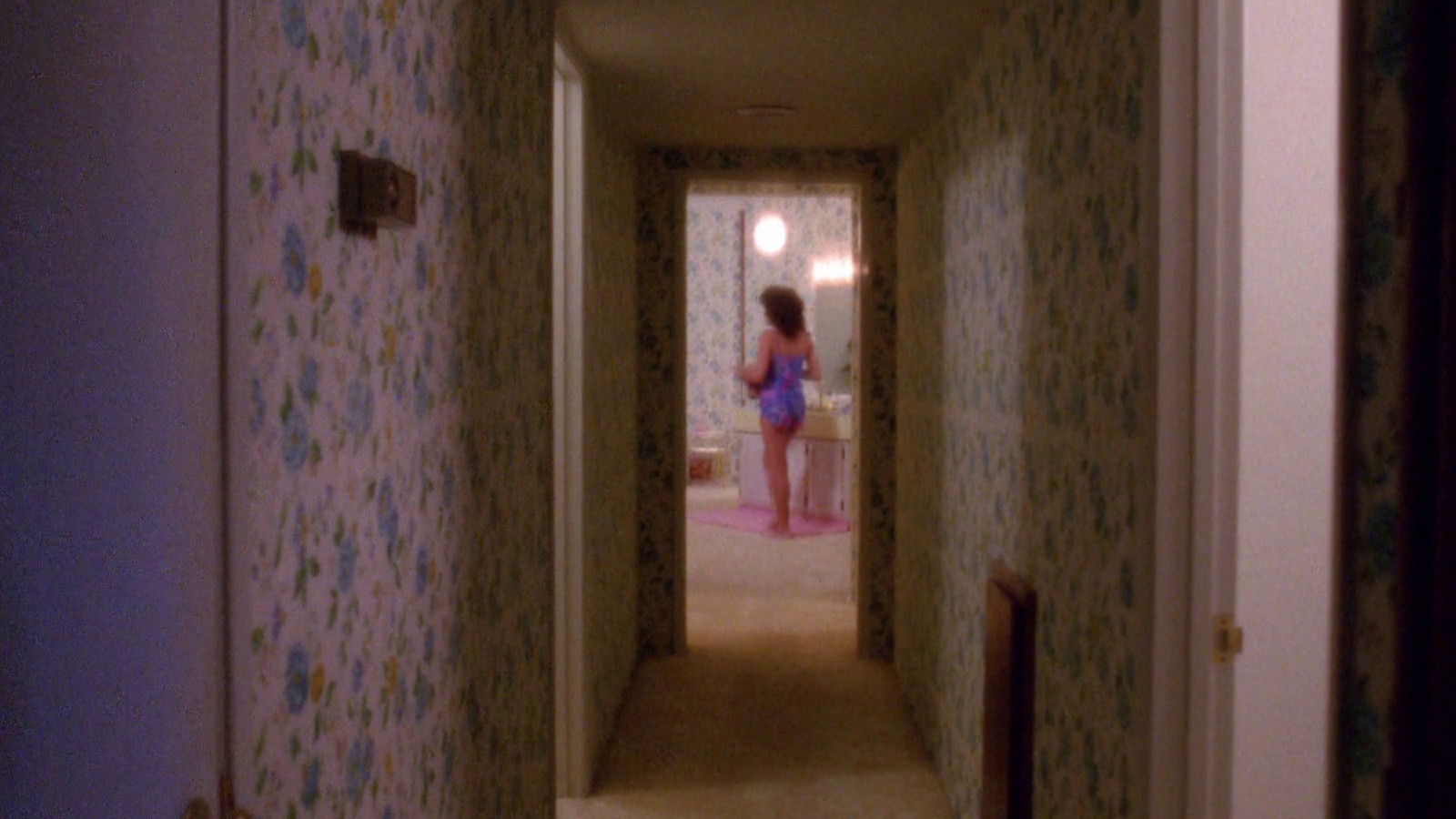
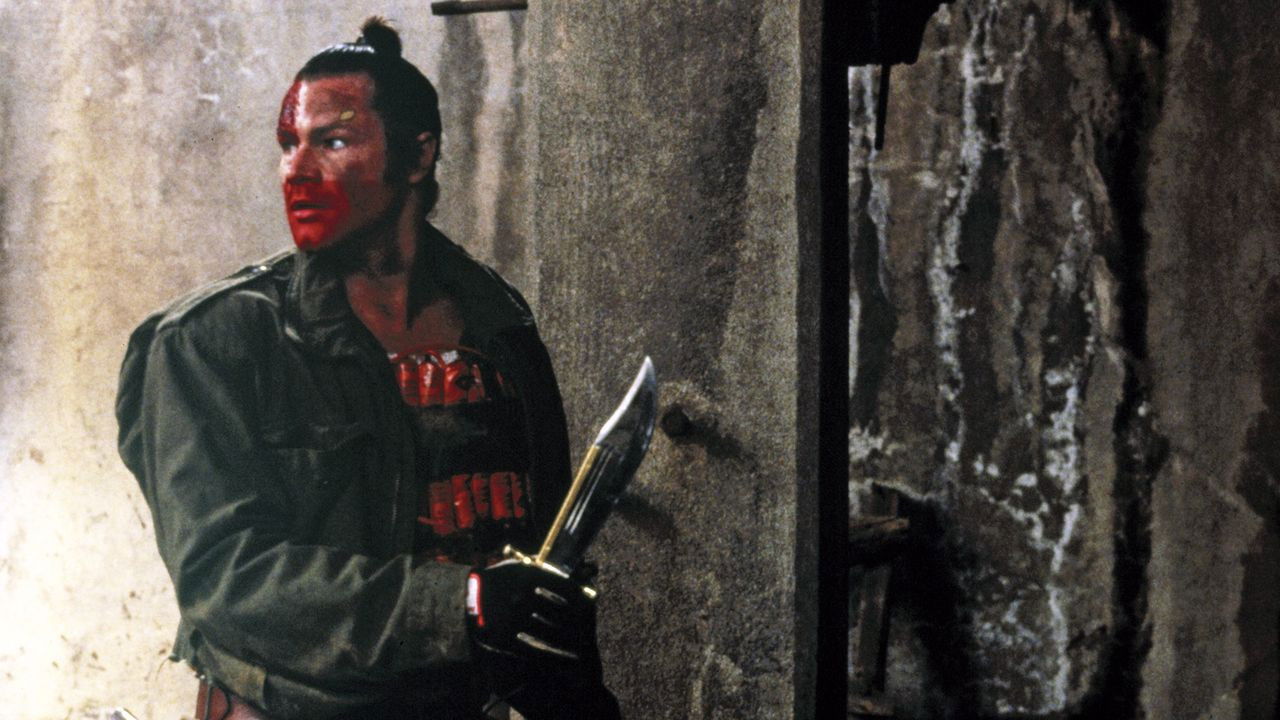
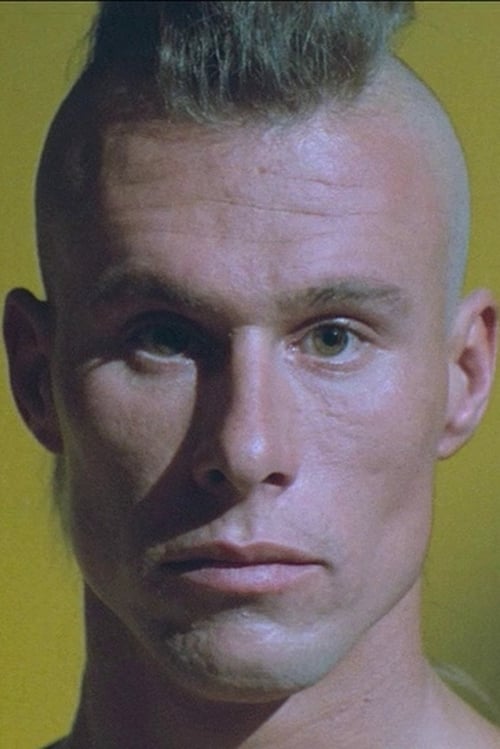
If you've seen Cammell's work, you probably know the kinds of visual flair you're going to get, including solarized frames, 360 camera swirls, extreme smash close-up, the aforementioned treatments to the film (in this case, bleach washing), disorienting blocking and framing, etc, all of which are present and correct here. The story is fairly nonsense (and I'd imagine rather tweaked from the source novel), but it's about watching Keith's erratic character who nonetheless thinks he's pretty put together, and even more, it's about the overall weird, dreamlike quality that sort of seems to be gelling until you suddenly notice that rails are rather a long way behind you.
Also, at some point it dawns on you that the soundtrack is a collaborative work between a guy from 10cc and a guy from Pink Floyd. And then, if you are me, you watch one interviews on the blu ray and learn the Cammell's wife's first name, China, is pronounced Cheena and not like the country, which I can't at all explain why I find even more baffling than some bits of the movie -- perhaps, though, this last thing is just me.
It's odd. If you like odd, you'll get along just fine with it. If you don't though, well....
I started watching this a couple of weeks ago on one or another streaming service and about 10 minutes in I'd concluded that 1) the quality available was awful (as in worse than streaming usually is) and 2) it was clear how deliberately composed the film was, visually speaking, so I stopped watching and ordered up a blu ray, which arrived the other day. So let me get this out of the way up front, having now watched it, I am not necessarily recommending that you do the above -- it does has several issues which may leave a lot of people sort of scratching their heads -- but if you are the sort of person who already likes Donald Cammell's work, is interested in mid to late 80s, 'erotic thriller' adjacent wig outs, or are just interested in what it might have been like had Dario Argento made a US film 5 years before 'Trauma' and partly set it in a town outside of Tucson instead of Minneapolis, then you might want to get on board. It's very clearly a Giallo-influenced film, restaged in the burnt and rusty orange of the desert, with some questionable Native American appropriation chucked in for good measure
Plotwise, after an early kill, we meet audio engineer Paul (who has a weird talent which turns out to be entirely unrelated to the story) employed to install high end stereos in the homes of the wealthy on the outskirts of Tucson. He's married (to Cathy Moriarty), has a daughter, and also has a past which somehow involves hunting and of which everyone seems to be both aware and at least slightly suspicious. Anyway, as should be obvious, our guy Paul (played by David Keith) had the opportunity to commit the murder (and the subsequent subsequent ones -- though they are all filmed with the killer's face obscured) and there is all manner of circumstantial evidence which further casts suspicion upon him. Hence, we have the bones of a 'normal' thriller. From this point on, where your average film would be an exploration of how our hero proves his innocence against mounting opposition and ultimately reveals the real criminal to be either someone distressingly close to him, someone completely unrelated to the story until the conclusion, or someone to whom the viewers had been briefly introduced but had been misdirected to discount. 'White of the Eye' does not do this, nor, frankly, does it seem to be aware of the convention of doing it. Instead, after this set up, we get flashbacks explaining how Moriarty's character ended up in this town, how she met Keith's character, their life together, and so on, which is presented in linearly arranged sequences (and to which the film has been specially treated to look different). However, at a certain point, it begins to be clear that somewhere along the way, timelines were getting jumbled and confused, and it unclear when, and in what order, some of this stuff happened, before finally --and it must be said, in true Giallo sense -- it all just stops making any conventional sense at all.
If you've seen Cammell's work, you probably know the kinds of visual flair you're going to get, including solarized frames, 360 camera swirls, extreme smash close-up, the aforementioned treatments to the film (in this case, bleach washing), disorienting blocking and framing, etc, all of which are present and correct here. The story is fairly nonsense (and I'd imagine rather tweaked from the source novel), but it's about watching Keith's erratic character who nonetheless thinks he's pretty put together, and even more, it's about the overall weird, dreamlike quality that sort of seems to be gelling until you suddenly notice that rails are rather a long way behind you.
Also, at some point it dawns on you that the soundtrack is a collaborative work between a guy from 10cc and a guy from Pink Floyd. And then, if you are me, you watch one interviews on the blu ray and learn the Cammell's wife's first name, China, is pronounced Cheena and not like the country, which I can't at all explain why I find even more baffling than some bits of the movie -- perhaps, though, this last thing is just me.
It's odd. If you like odd, you'll get along just fine with it. If you don't though, well....