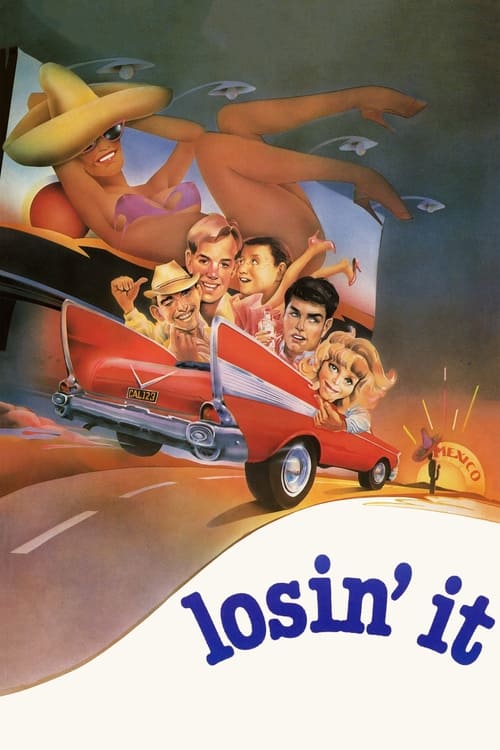

For me, the film struggles to balance coming-of-age comedy with something more emotionally grounded. On the surface, it’s about four young men heading to Tijuana in search of sex, alcohol, and a little rebellion, but beneath that setup are glimpses of a more interesting story about uncertainty, insecurity, and impulsiveness. I could see moments where the characters’ vulnerability peeked through, and I wanted the film to lean into that. Instead, it often drowned those moments in juvenile humor that felt more like filler than a natural extension of the plot. That uneven tone made it hard for me to feel fully invested.
One thing I did connect with was the theme of searching for identity. I noticed that each character had a slightly different motivation—one wanted sexual experience, another wanted to escape routine, another seemed to crave independence. Their road trip became, at least symbolically, a step into adulthood. But the movie rarely pushed those ideas far enough. I was waiting for a real sense of change by the end, but it felt like most of them ended up right where they started, which made the journey feel incomplete for me.
The film leans heavily on impulsive decision-making as a driving force, and while that does create a lot of chaotic comedy, it also reminded me of how immaturity can lead to self-sabotage. Watching the characters deal with the fallout from their own bad choices was sometimes funny, but it didn’t leave me with much to think about afterward. I kept hoping the story would explore what those mistakes meant for them beyond the moment, but it didn’t. The result, for me, was more like a collection of funny situations than a true coming-of-age arc.
Tijuana itself could have been an amazing storytelling tool. In my mind, it had the potential to work as a mirror, showing the difference between the characters’ fantasies and the reality they encounter. I was hoping for moments where the setting would challenge them, force them to see themselves differently. Instead, it mostly came across as a chaotic playground where anything goes, which was fun in short bursts but didn’t deepen the story the way it could have.
The one part that really stood out to me was the subplot between one of the boys and an older, unhappily married woman. There, I saw flashes of vulnerability, longing, and a desire for connection that felt more honest than anything else in the movie. I found myself wanting more of that emotional complexity, but the film treated it almost like a quirky detour instead of a central thread. Still, those quieter, more human moments were some of my favorites.
While the movie captured the restless, impulsive energy of youth, it didn’t deliver the kind of growth or emotional payoff I look for. There’s something authentic in how it depicts awkwardness and recklessness, but it’s buried under broad humor and shallow resolutions. I enjoyed it here and there, but it didn’t stay with me once the credits rolled.
For me, the film struggles to balance coming-of-age comedy with something more emotionally grounded. On the surface, it’s about four young men heading to Tijuana in search of sex, alcohol, and a little rebellion, but beneath that setup are glimpses of a more interesting story about uncertainty, insecurity, and impulsiveness. I could see moments where the characters’ vulnerability peeked through, and I wanted the film to lean into that. Instead, it often drowned those moments in juvenile humor that felt more like filler than a natural extension of the plot. That uneven tone made it hard for me to feel fully invested.
One thing I did connect with was the theme of searching for identity. I noticed that each character had a slightly different motivation—one wanted sexual experience, another wanted to escape routine, another seemed to crave independence. Their road trip became, at least symbolically, a step into adulthood. But the movie rarely pushed those ideas far enough. I was waiting for a real sense of change by the end, but it felt like most of them ended up right where they started, which made the journey feel incomplete for me.
The film leans heavily on impulsive decision-making as a driving force, and while that does create a lot of chaotic comedy, it also reminded me of how immaturity can lead to self-sabotage. Watching the characters deal with the fallout from their own bad choices was sometimes funny, but it didn’t leave me with much to think about afterward. I kept hoping the story would explore what those mistakes meant for them beyond the moment, but it didn’t. The result, for me, was more like a collection of funny situations than a true coming-of-age arc.
Tijuana itself could have been an amazing storytelling tool. In my mind, it had the potential to work as a mirror, showing the difference between the characters’ fantasies and the reality they encounter. I was hoping for moments where the setting would challenge them, force them to see themselves differently. Instead, it mostly came across as a chaotic playground where anything goes, which was fun in short bursts but didn’t deepen the story the way it could have.
The one part that really stood out to me was the subplot between one of the boys and an older, unhappily married woman. There, I saw flashes of vulnerability, longing, and a desire for connection that felt more honest than anything else in the movie. I found myself wanting more of that emotional complexity, but the film treated it almost like a quirky detour instead of a central thread. Still, those quieter, more human moments were some of my favorites.
While the movie captured the restless, impulsive energy of youth, it didn’t deliver the kind of growth or emotional payoff I look for. There’s something authentic in how it depicts awkwardness and recklessness, but it’s buried under broad humor and shallow resolutions. I enjoyed it here and there, but it didn’t stay with me once the credits rolled.