

Pass Thru
2016·Science Fiction·1h 30m
6.9
★
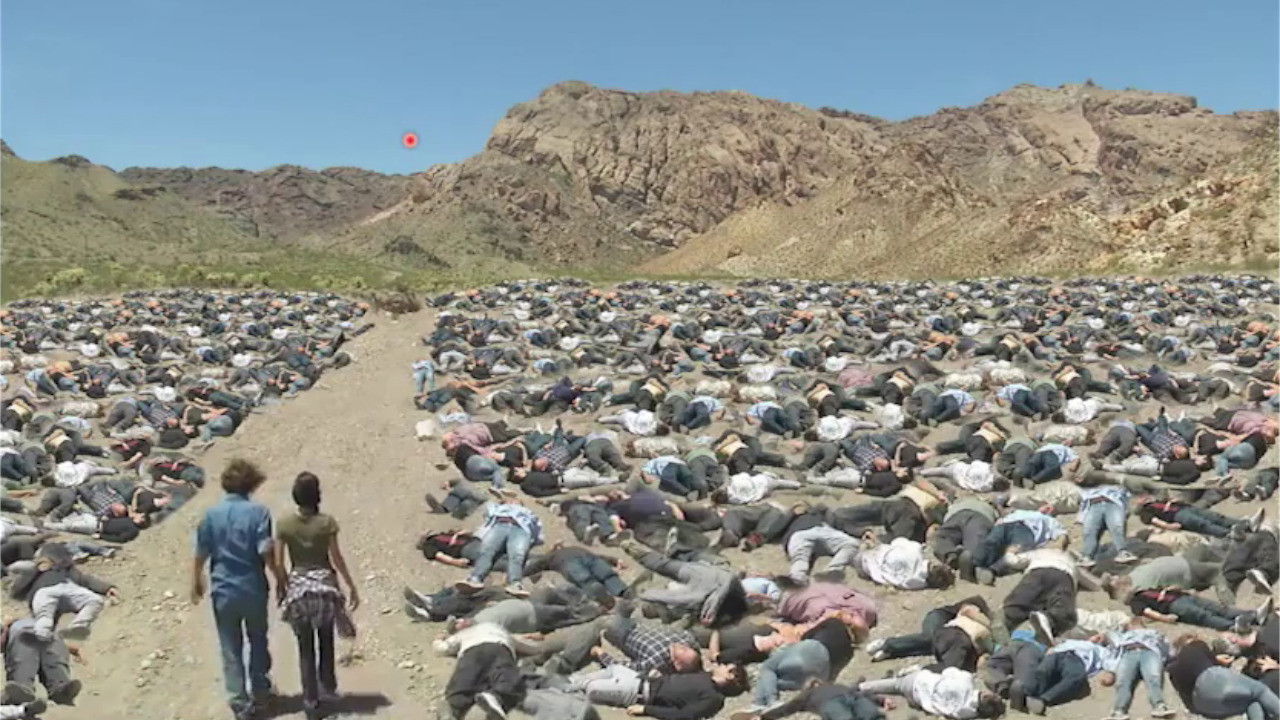

An artificial Intelligence from far into the future arrives to immediately cleanse the human species of millions of humans who are harmful to other humans.
Directed by Neil Breen
artificial intelligence (a.i.)
genocide
holy man

Trailer

IMDB
N/A
Cast

Neil Breen
A.I. / Thgil

Kathy Corpus
Amanda - Immigrant

Chaize Macklin
Kim - Immigrant

Abraham Rodriguez
Boy Astronomer
Crew
Neil Breen
Director
Neil Breen
Writer
Neil Breen
Editor
Neil Breen
Director of Photography
Neil Breen
Producer
Neil Breen
Casting
Popular Reviews
24 reviews
Yams Andy
10.0★ · 10/09/25

Holy peak this is Neil Breen's perfect ending
Holy peak this is Neil Breen's perfect ending


Moose
9.0★ · 07/08/25
Even by Neil Breen film standards this is pretty fucking incoherent.
Even by Neil Breen film standards this is pretty fucking incoherent.
Finn Hay
I wasn't expecting a Genocidal movie from Breen.
I wasn't expecting a Genocidal movie from Breen.
thomo
9.0★ · 11/20/23
"Man has responsibility, not power"
-Tuscarora Proverb/Neil Breen
Breen continues his run of elusive yet didactic films with an immigration/smuggling centered sci-fi drama in which he again plays an enlightened and all-powerful being on a mission to save humanity from itself. It's another refinement/reiteration of the environmentalist and anti-corruption messages that have dominated all his films, and agitates for revolution even more bluntly than Fateful Findings.
Breen is perhaps the most radically political (and politically radical) filmmaker working today, but his approach and interests diverge from those of previous radical filmmakers whom he could be compared to. While Godard was certainly a more cogent political thinker, not to mention a more thoughtful and precise stylist with a better grasp of cinematic grammar, Breen goes further in terms of utilizing his work as a call to arms. Where Godard is all Theory and pontification, Breen is Praxis and direct action. This would seem to put his work more in line with Eisenstein's uprising masterpieces (particularly Strike and Potemkin) but notably Eisenstein was producing his propaganda after the fact, celebrating a revolution that already occurred with the support of the resulting government where Breen is attempting to instigate a new revolution from outside the political system.
The other major distinction between Breen and most other artists typically regarded as 'political' is that the precise nature of his politics is still largely vague. He hones in on a small handful of specific issues (mostly boiling down to the broad concept of 'corruption') and encourages a mass uprising against the ruling class without commenting on social issues, incorporating theory, or providing an established ideological corrective of any kind. There's no regard for local issues or party affiliations because Breen's concerns are truly universal.
This lack of clarity could be seen as a shortcoming, or it could be his greatest strength as a political agitator. Because it's not clear whether he's a Maoist, an Anarchist, a Libertarian, or what, his righteous anger against the ruling class can potentially resonate with a broad coalition of the proletariat, even some who otherwise lean to the right.
Pass Thru has some incredible moments, particularly in its second half. The "Isn't that corrupt?" scene is a masterpiece, and the section in which Breen hijacks the news broadcast in order to demand civil disobedience and revolution is exhilarating in how audacious and dangerous it feels. Breen comes so close to the line in some of his monologs that a real argument could be made for this being incitement of violence and not even constitutionally protected speech.
-Tuscarora Proverb/Neil Breen
Breen continues his run of elusive yet didactic films with an immigration/smuggling centered sci-fi drama in which he again plays an enlightened and all-powerful being on a mission to save humanity from itself. It's another refinement/reiteration of the environmentalist and anti-corruption messages that have dominated all his films, and agitates for revolution even more bluntly than Fateful Findings.
Breen is perhaps the most radically political (and politically radical) filmmaker working today, but his approach and interests diverge from those of previous radical filmmakers whom he could be compared to. While Godard was certainly a more cogent political thinker, not to mention a more thoughtful and precise stylist with a better grasp of cinematic grammar, Breen goes further in terms of utilizing his work as a call to arms. Where Godard is all Theory and pontification, Breen is Praxis and direct action. This would seem to put his work more in line with Eisenstein's uprising masterpieces (particularly Strike and Potemkin) but notably Eisenstein was producing his propaganda after the fact, celebrating a revolution that already occurred with the support of the resulting government where Breen is attempting to instigate a new revolution from outside the political system.
The other major distinction between Breen and most other artists typically regarded as 'political' is that the precise nature of his politics is still largely vague. He hones in on a small handful of specific issues (mostly boiling down to the broad concept of 'corruption') and encourages a mass uprising against the ruling class without commenting on social issues, incorporating theory, or providing an established ideological corrective of any kind. There's no regard for local issues or party affiliations because Breen's concerns are truly universal.
This lack of clarity could be seen as a shortcoming, or it could be his greatest strength as a political agitator. Because it's not clear whether he's a Maoist, an Anarchist, a Libertarian, or what, his righteous anger against the ruling class can potentially resonate with a broad coalition of the proletariat, even some who otherwise lean to the right.
Pass Thru has some incredible moments, particularly in its second half. The "Isn't that corrupt?" scene is a masterpiece, and the section in which Breen hijacks the news broadcast in order to demand civil disobedience and revolution is exhilarating in how audacious and dangerous it feels. Breen comes so close to the line in some of his monologs that a real argument could be made for this being incitement of violence and not even constitutionally protected speech.
"Man has responsibility, not power"
-Tuscarora Proverb/Neil Breen
Breen continues his run of elusive yet didactic films with an immigration/smuggling centered sci-fi drama in which he again plays an enlightened and all-powerful being on a mission to save humanity from itself. It's another refinement/reiteration of the environmentalist and anti-corruption messages that have dominated all his films, and agitates for revolution even more bluntly than Fateful Findings.
Breen is perhaps the most radically political (and politically radical) filmmaker working today, but his approach and interests diverge from those of previous radical filmmakers whom he could be compared to. While Godard was certainly a more cogent political thinker, not to mention a more thoughtful and precise stylist with a better grasp of cinematic grammar, Breen goes further in terms of utilizing his work as a call to arms. Where Godard is all Theory and pontification, Breen is Praxis and direct action. This would seem to put his work more in line with Eisenstein's uprising masterpieces (particularly Strike and Potemkin) but notably Eisenstein was producing his propaganda after the fact, celebrating a revolution that already occurred with the support of the resulting government where Breen is attempting to instigate a new revolution from outside the political system.
The other major distinction between Breen and most other artists typically regarded as 'political' is that the precise nature of his politics is still largely vague. He hones in on a small handful of specific issues (mostly boiling down to the broad concept of 'corruption') and encourages a mass uprising against the ruling class without commenting on social issues, incorporating theory, or providing an established ideological corrective of any kind. There's no regard for local issues or party affiliations because Breen's concerns are truly universal.
This lack of clarity could be seen as a shortcoming, or it could be his greatest strength as a political agitator. Because it's not clear whether he's a Maoist, an Anarchist, a Libertarian, or what, his righteous anger against the ruling class can potentially resonate with a broad coalition of the proletariat, even some who otherwise lean to the right.
Pass Thru has some incredible moments, particularly in its second half. The "Isn't that corrupt?" scene is a masterpiece, and the section in which Breen hijacks the news broadcast in order to demand civil disobedience and revolution is exhilarating in how audacious and dangerous it feels. Breen comes so close to the line in some of his monologs that a real argument could be made for this being incitement of violence and not even constitutionally protected speech.
-Tuscarora Proverb/Neil Breen
Breen continues his run of elusive yet didactic films with an immigration/smuggling centered sci-fi drama in which he again plays an enlightened and all-powerful being on a mission to save humanity from itself. It's another refinement/reiteration of the environmentalist and anti-corruption messages that have dominated all his films, and agitates for revolution even more bluntly than Fateful Findings.
Breen is perhaps the most radically political (and politically radical) filmmaker working today, but his approach and interests diverge from those of previous radical filmmakers whom he could be compared to. While Godard was certainly a more cogent political thinker, not to mention a more thoughtful and precise stylist with a better grasp of cinematic grammar, Breen goes further in terms of utilizing his work as a call to arms. Where Godard is all Theory and pontification, Breen is Praxis and direct action. This would seem to put his work more in line with Eisenstein's uprising masterpieces (particularly Strike and Potemkin) but notably Eisenstein was producing his propaganda after the fact, celebrating a revolution that already occurred with the support of the resulting government where Breen is attempting to instigate a new revolution from outside the political system.
The other major distinction between Breen and most other artists typically regarded as 'political' is that the precise nature of his politics is still largely vague. He hones in on a small handful of specific issues (mostly boiling down to the broad concept of 'corruption') and encourages a mass uprising against the ruling class without commenting on social issues, incorporating theory, or providing an established ideological corrective of any kind. There's no regard for local issues or party affiliations because Breen's concerns are truly universal.
This lack of clarity could be seen as a shortcoming, or it could be his greatest strength as a political agitator. Because it's not clear whether he's a Maoist, an Anarchist, a Libertarian, or what, his righteous anger against the ruling class can potentially resonate with a broad coalition of the proletariat, even some who otherwise lean to the right.
Pass Thru has some incredible moments, particularly in its second half. The "Isn't that corrupt?" scene is a masterpiece, and the section in which Breen hijacks the news broadcast in order to demand civil disobedience and revolution is exhilarating in how audacious and dangerous it feels. Breen comes so close to the line in some of his monologs that a real argument could be made for this being incitement of violence and not even constitutionally protected speech.
Alex Olsson
1.0★ · 06/29/21
10/10
Genocide is no laughing matter but you can't help but laugh at this piece of cinema.
Genocide is no laughing matter but you can't help but laugh at this piece of cinema.
10/10
Genocide is no laughing matter but you can't help but laugh at this piece of cinema.
Genocide is no laughing matter but you can't help but laugh at this piece of cinema.