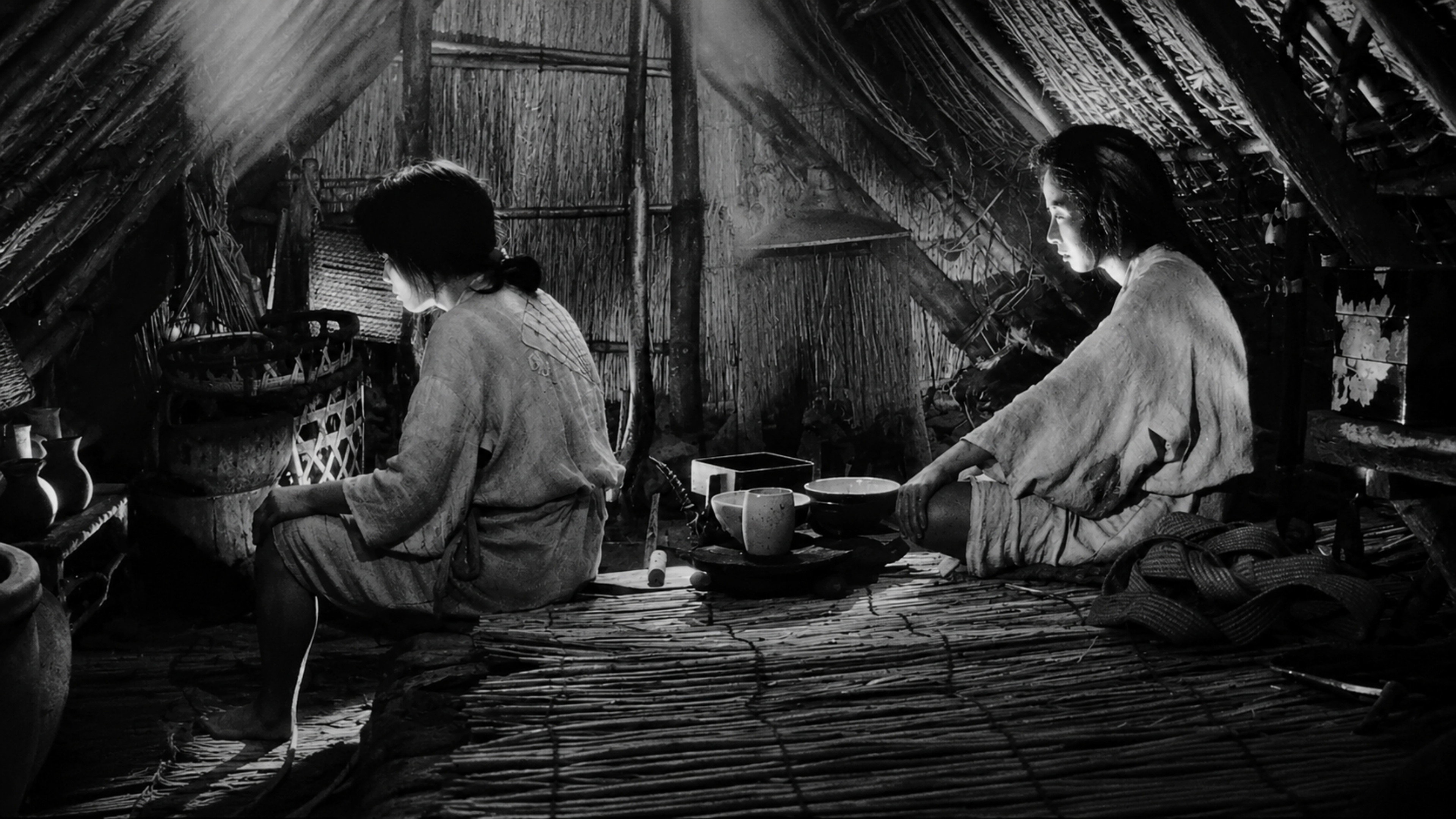
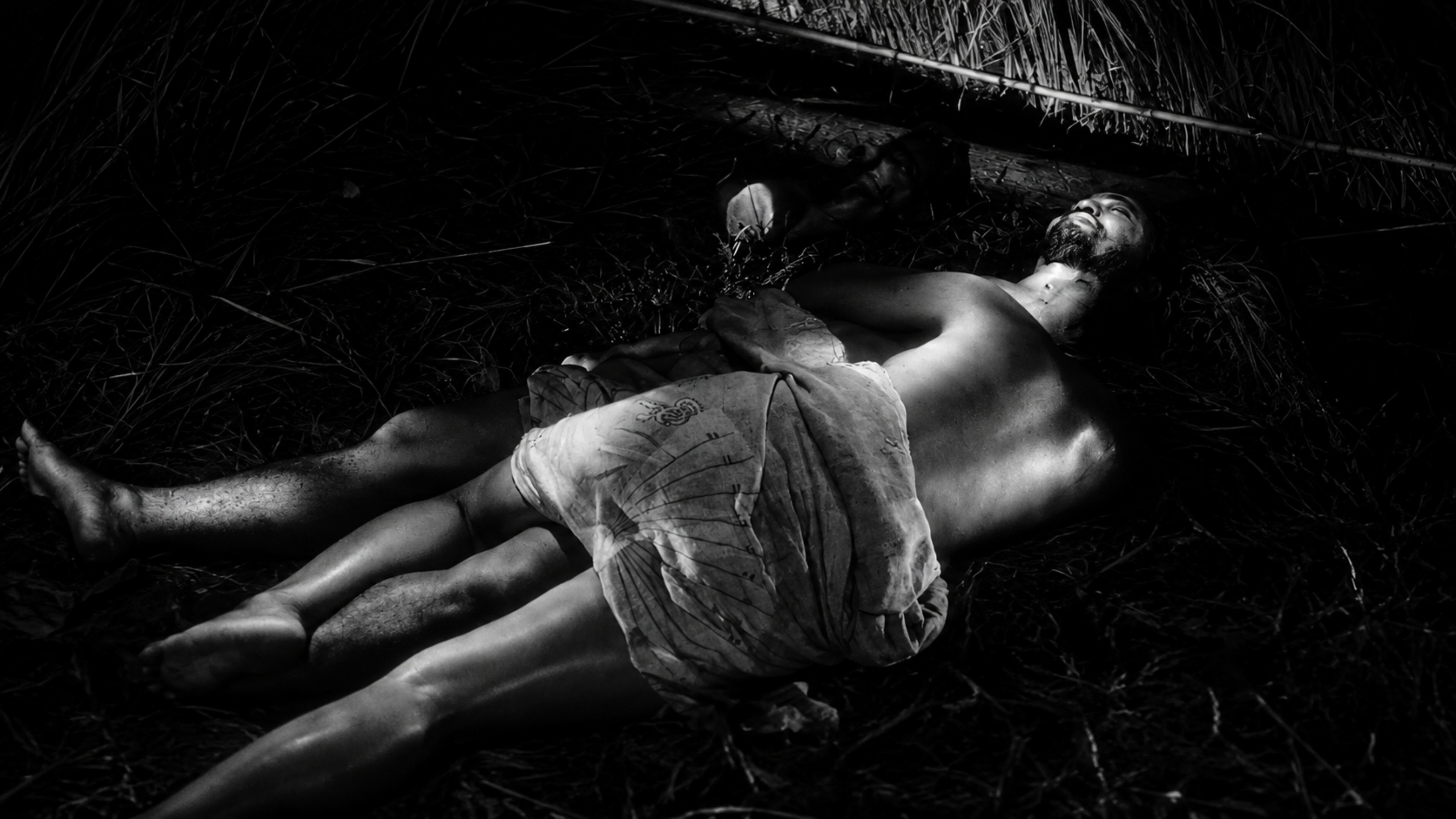
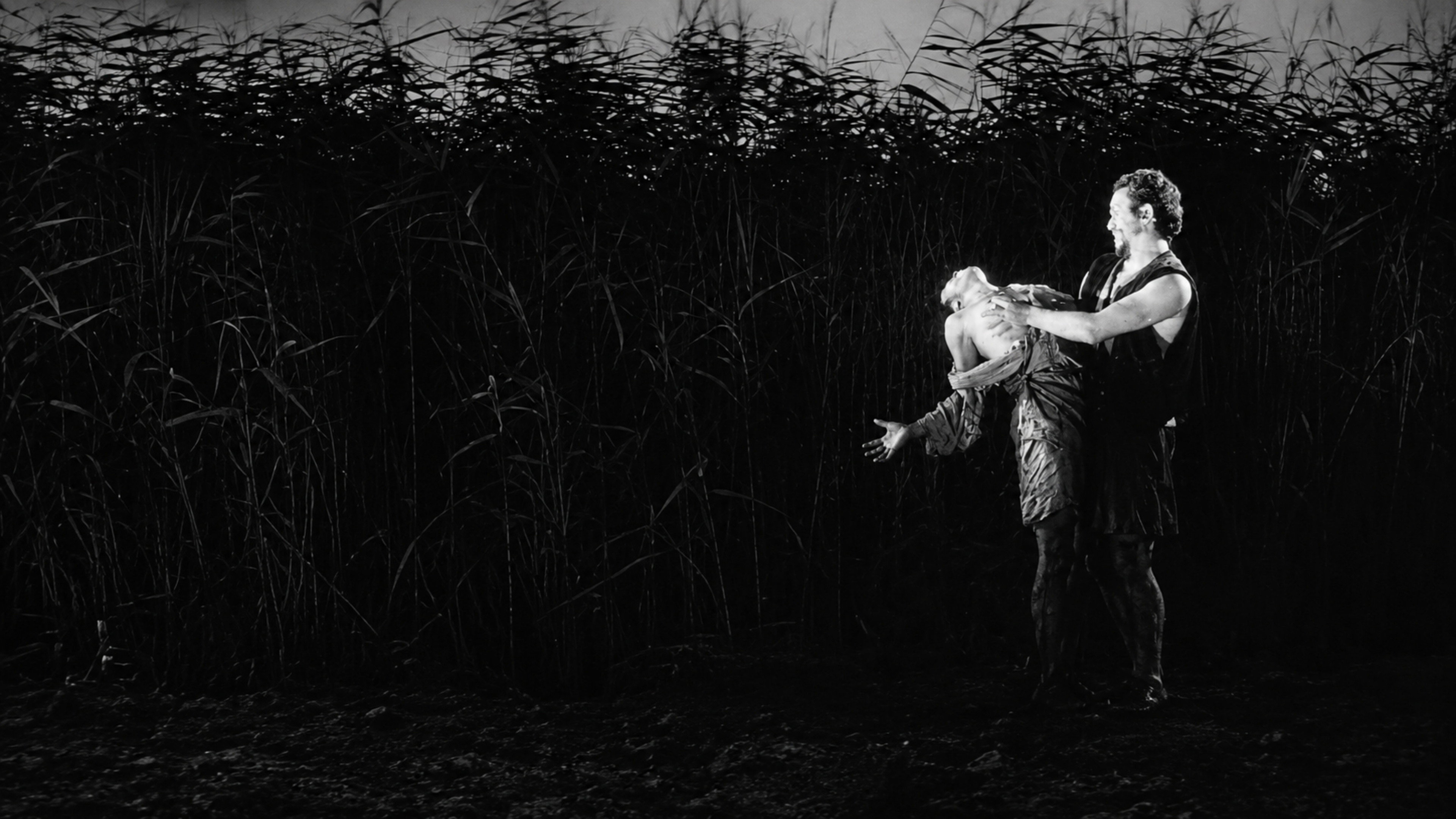
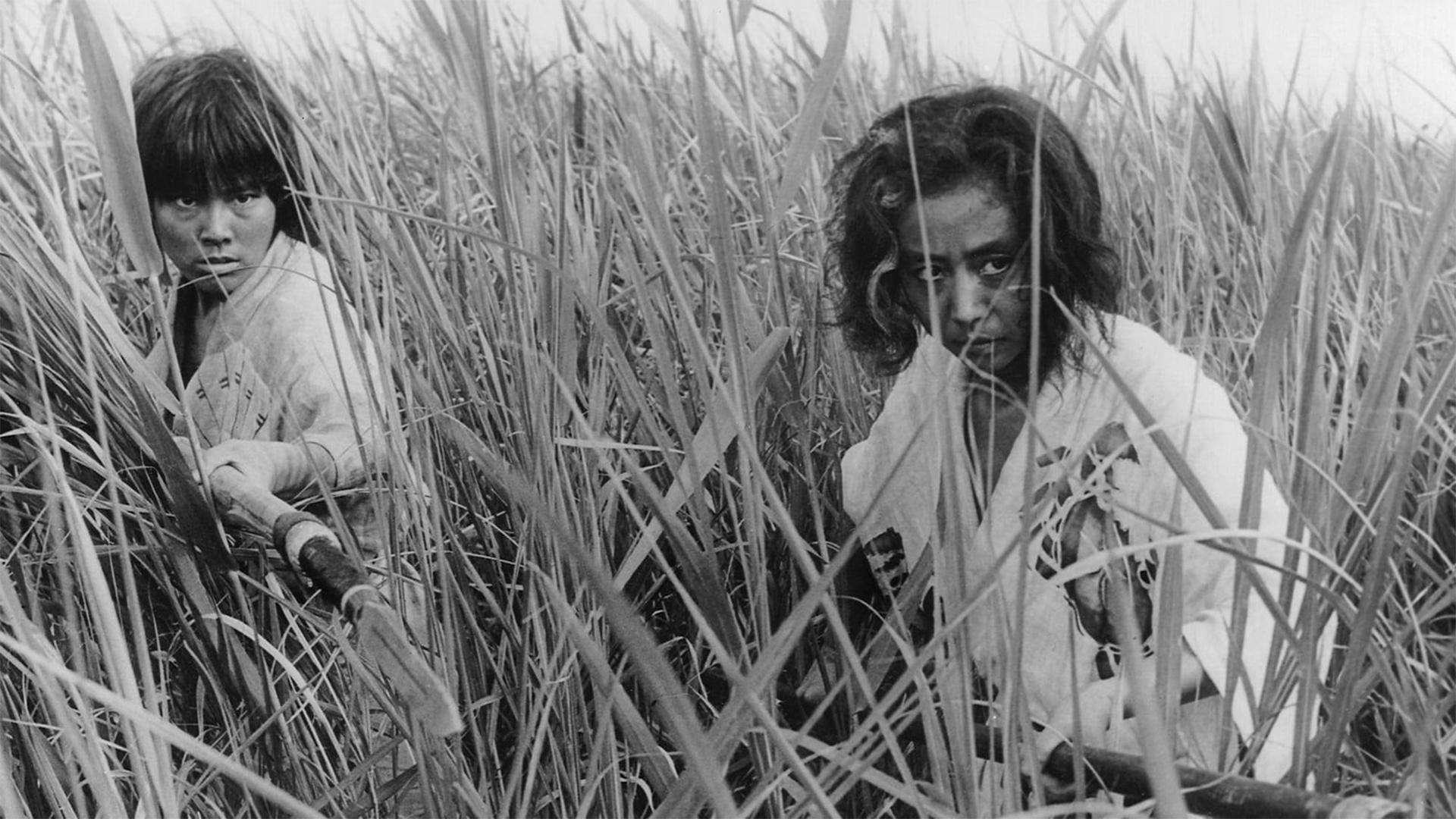
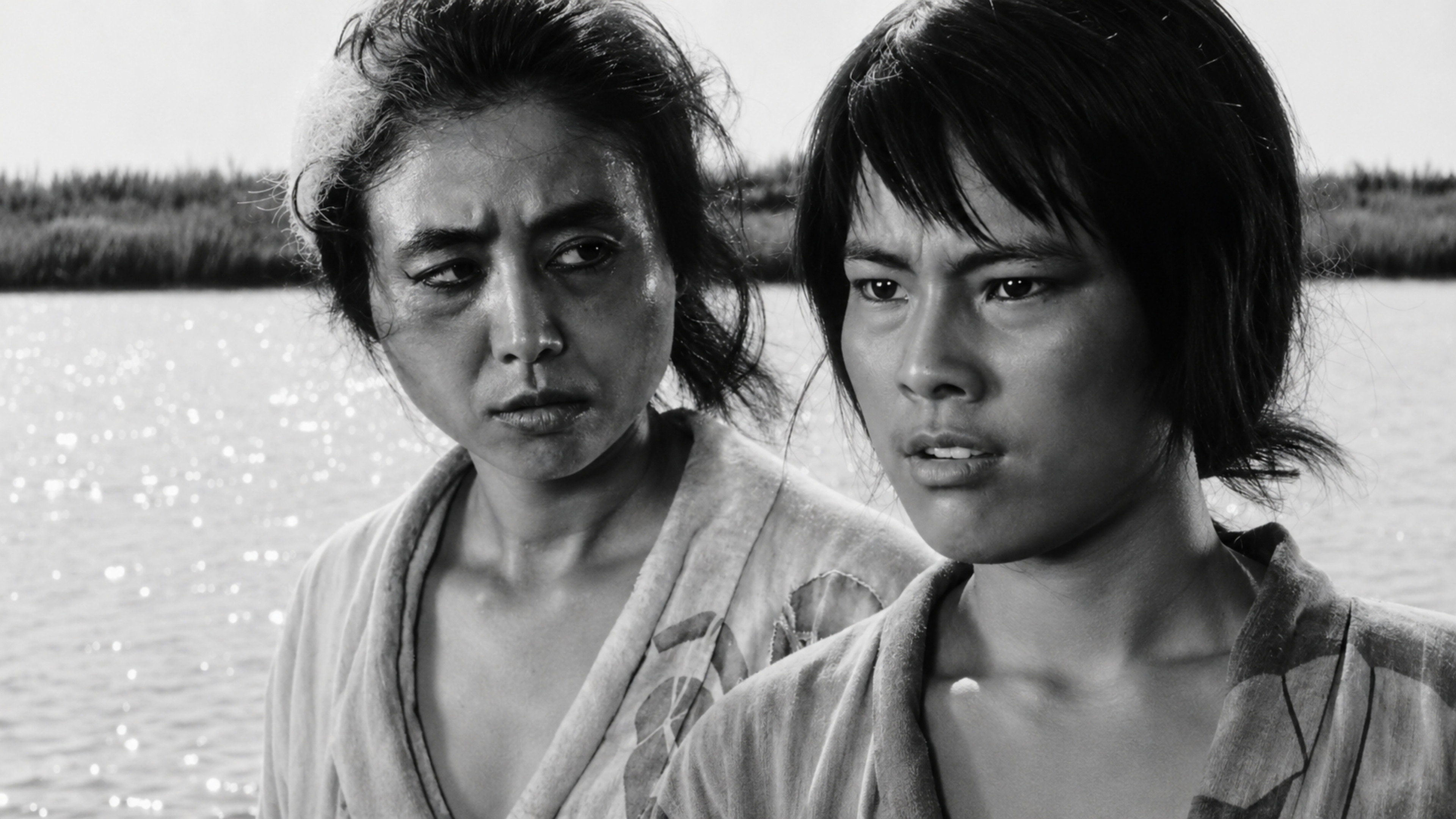
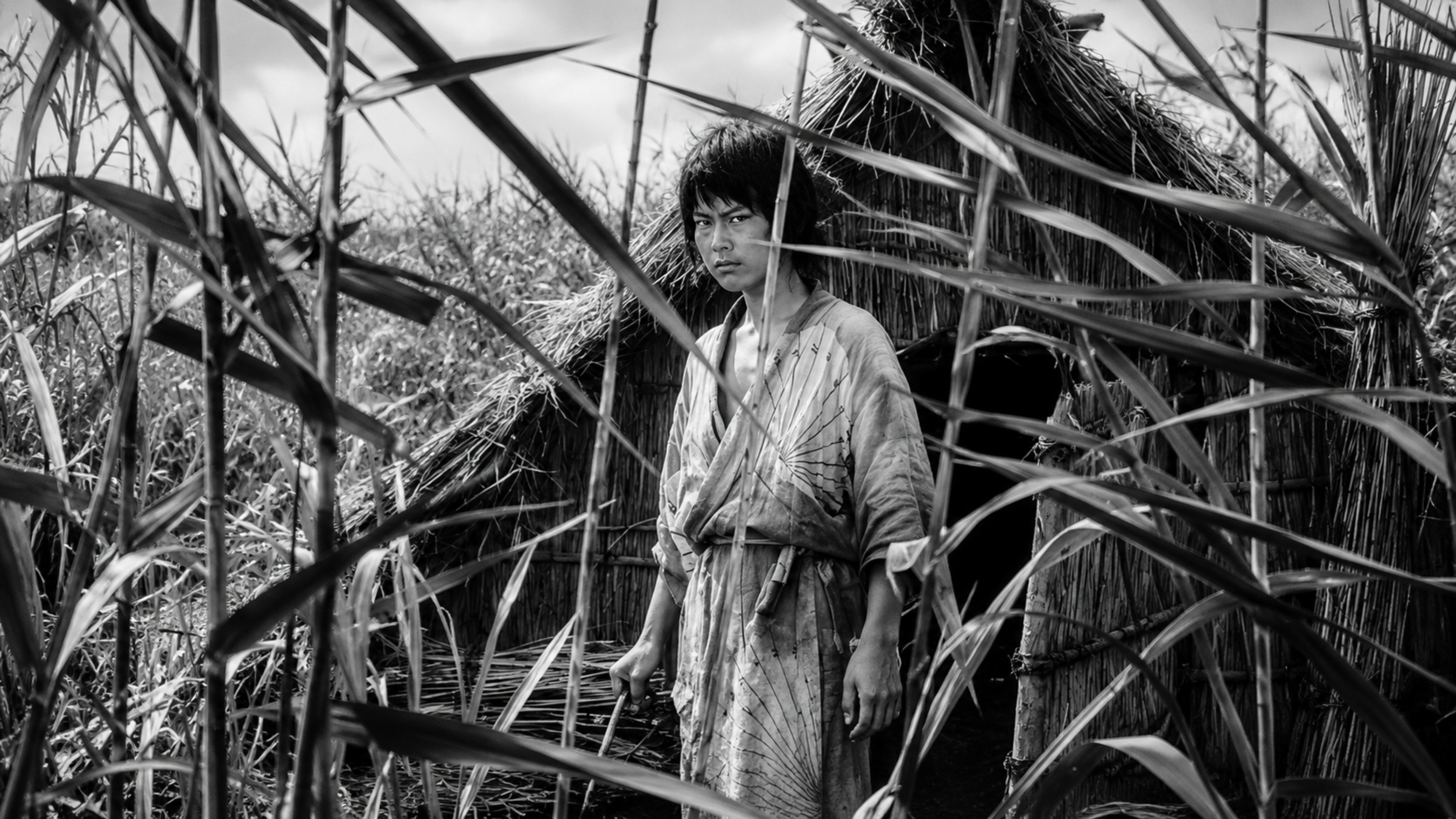
Onibaba is set in one place, a huge, sweeping field of susuki grass in 14th century Japan, where a mother and her daughter-in-law survive the civil war by killing lost samurai and selling their armor for money., that is essentially the setup for this film, what follows is a gradual, choking decline into moral decay, and the horror is not supernatural (though it engages with it brilliantly). It's the misery of seeing two individuals persuade themselves that murder is merely a job, until desperation takes them somewhere worse.
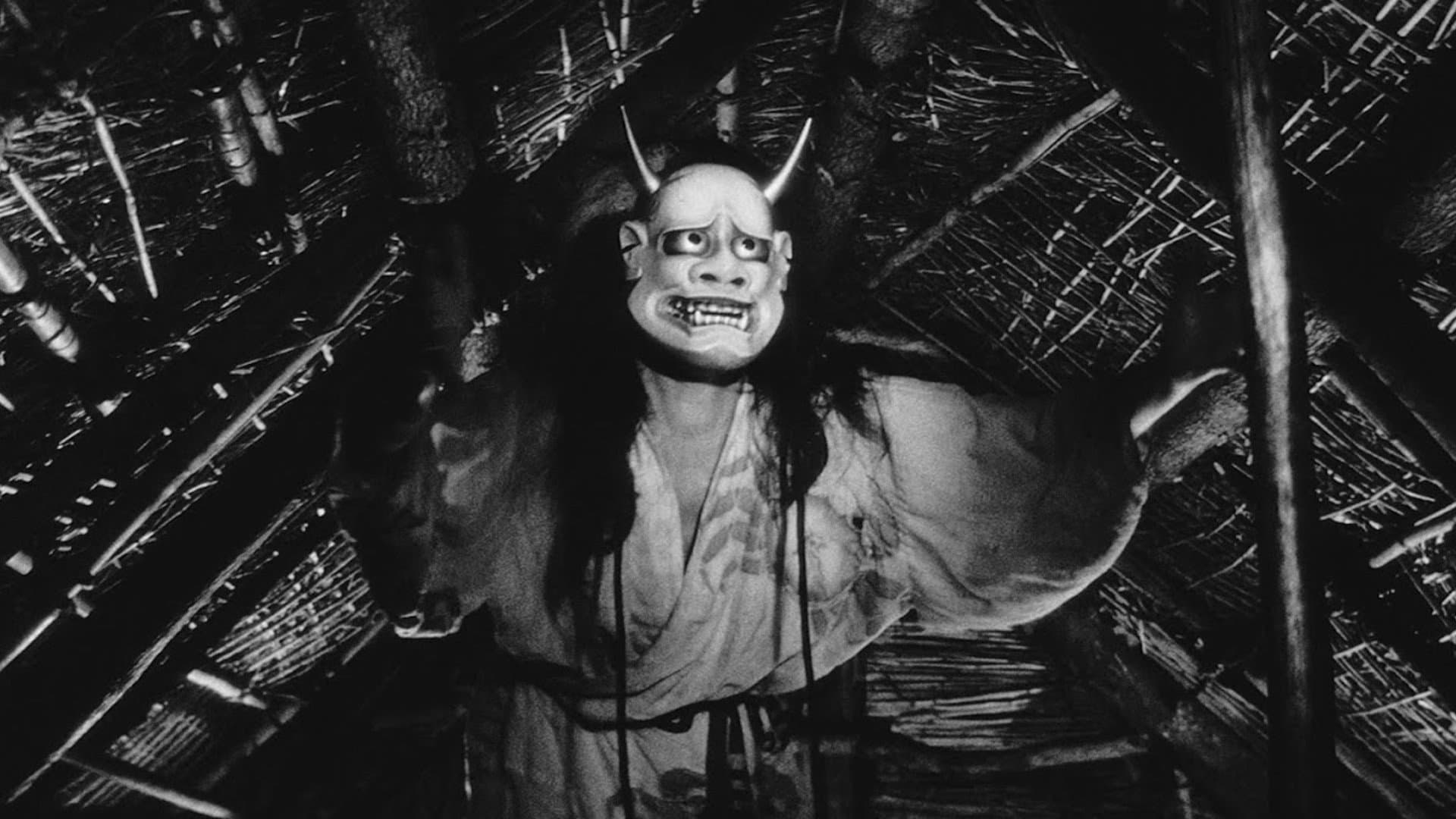
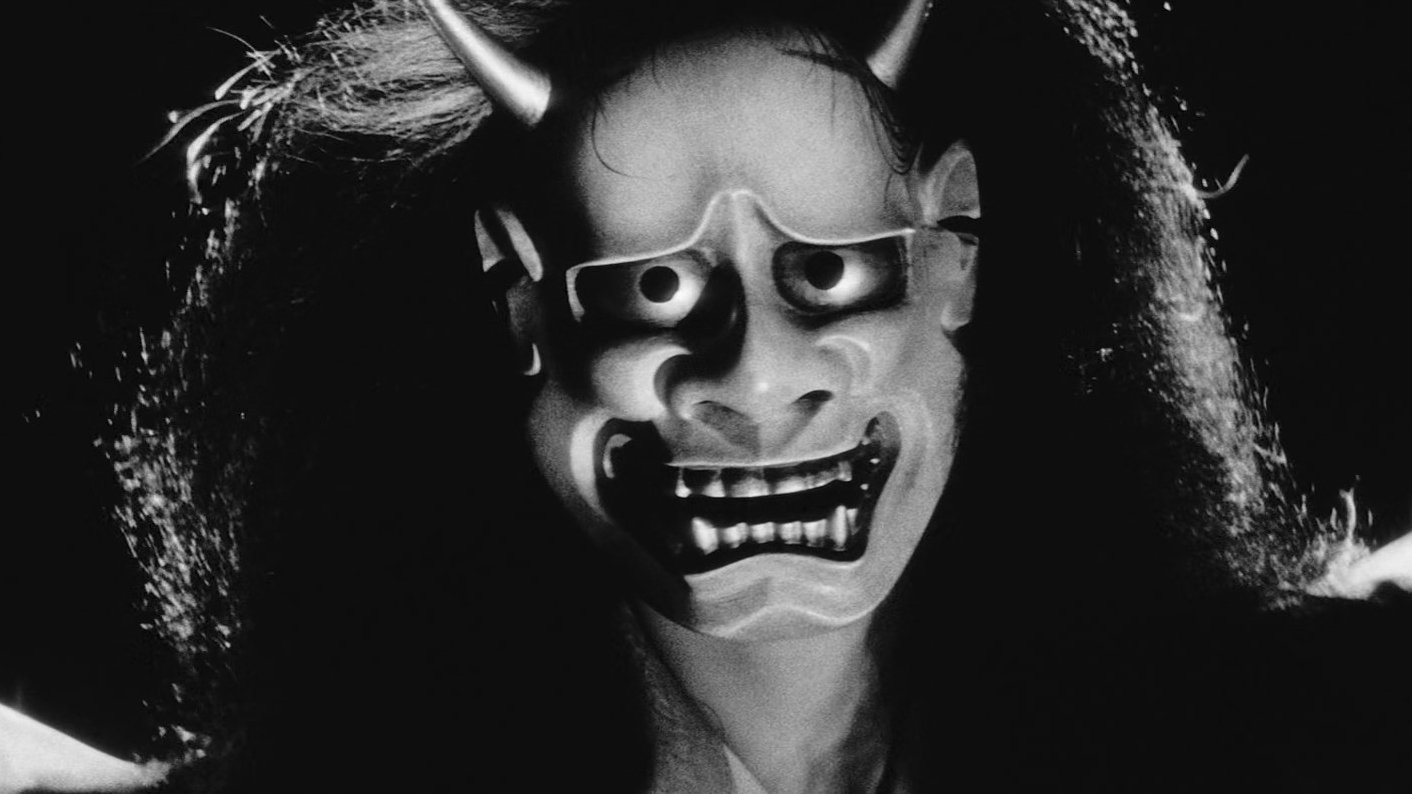
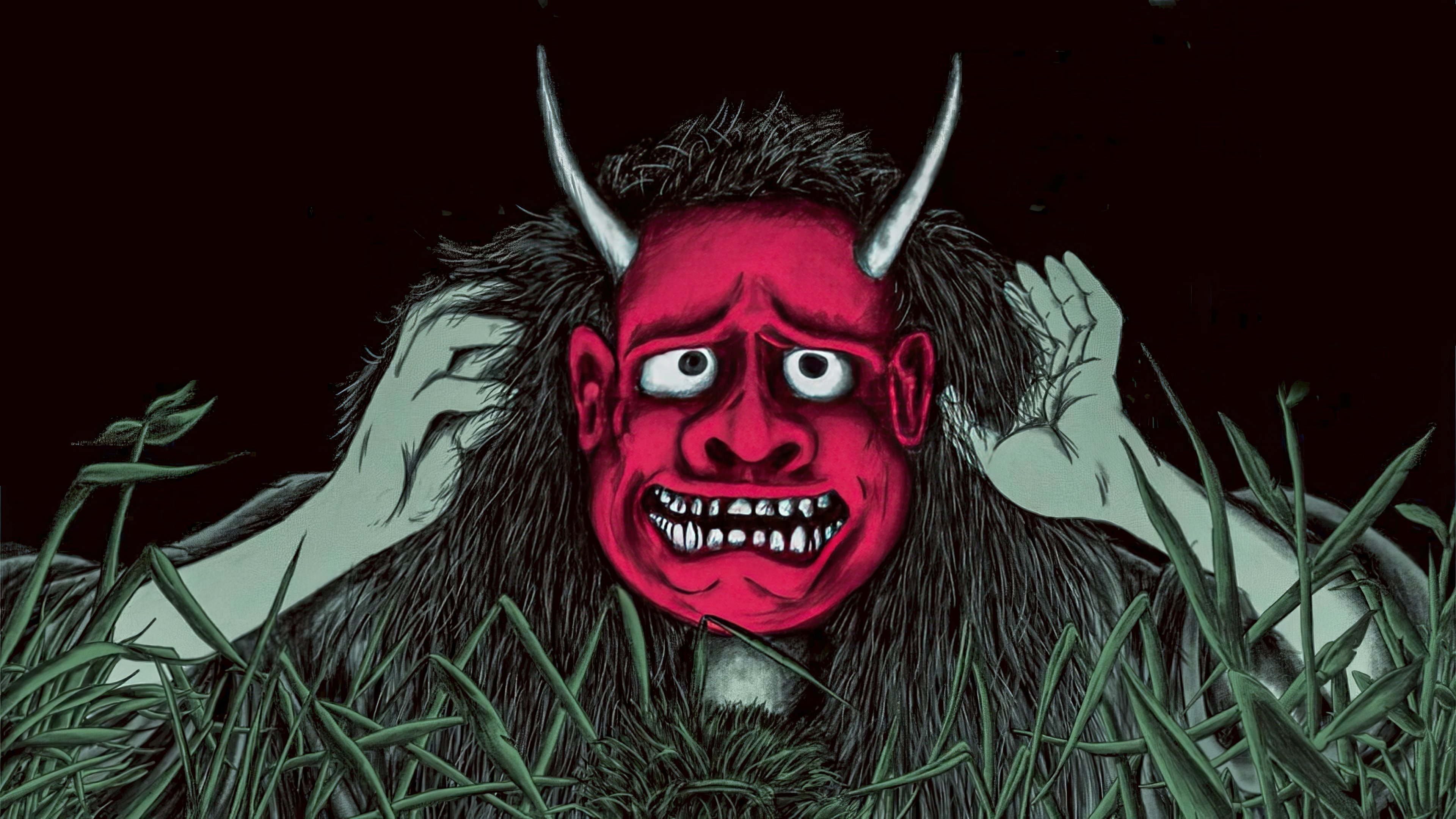
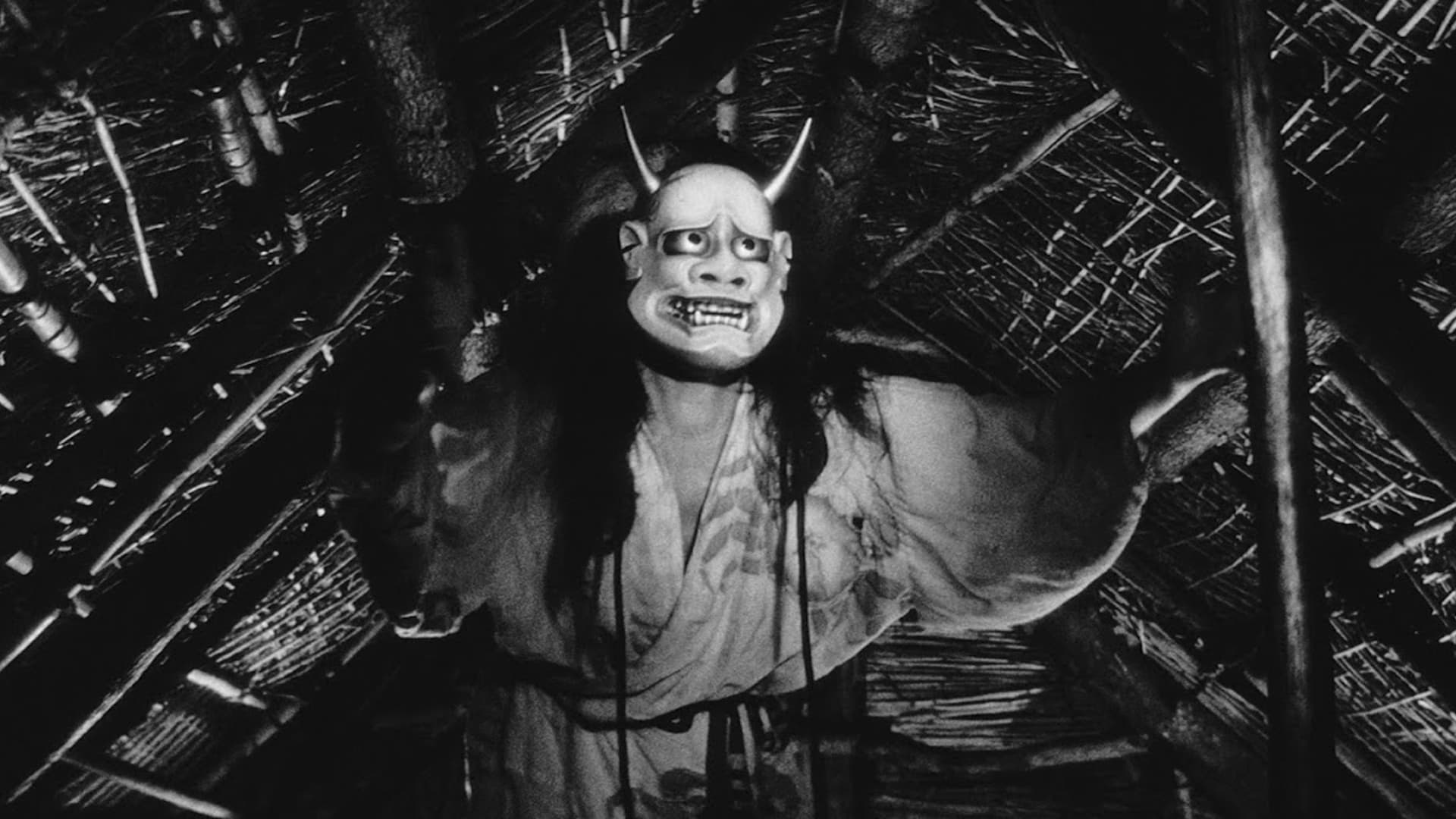
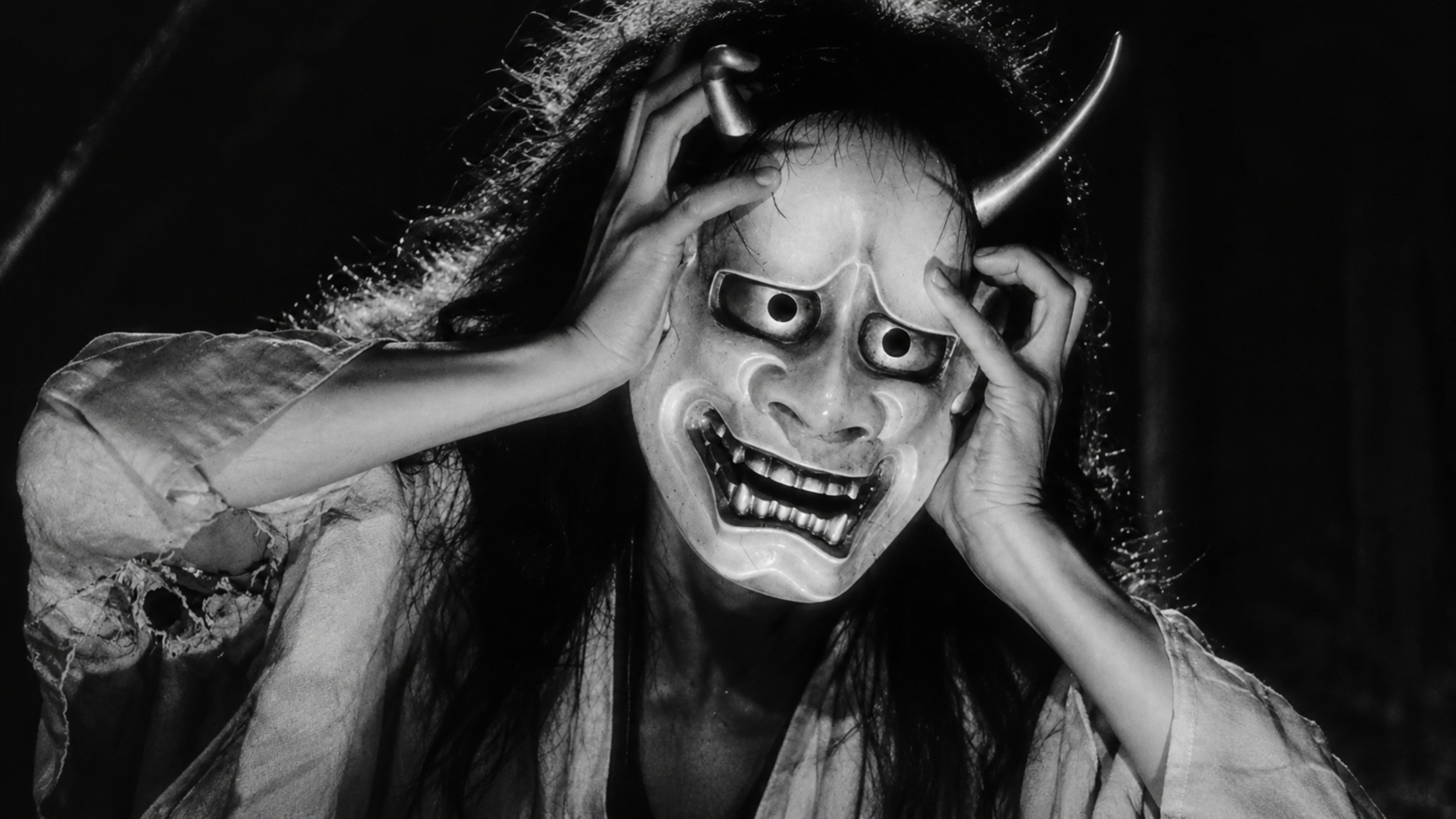
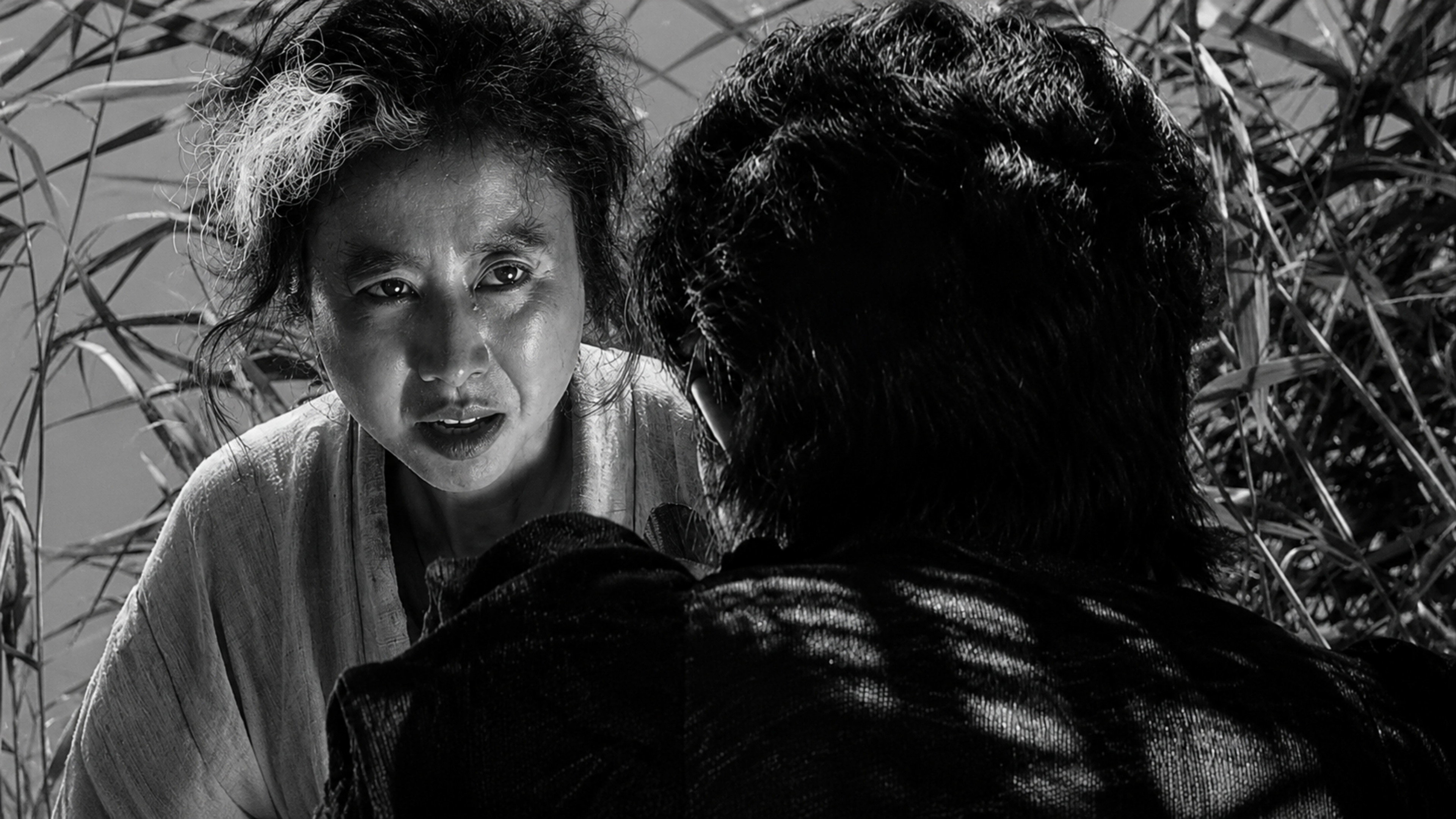
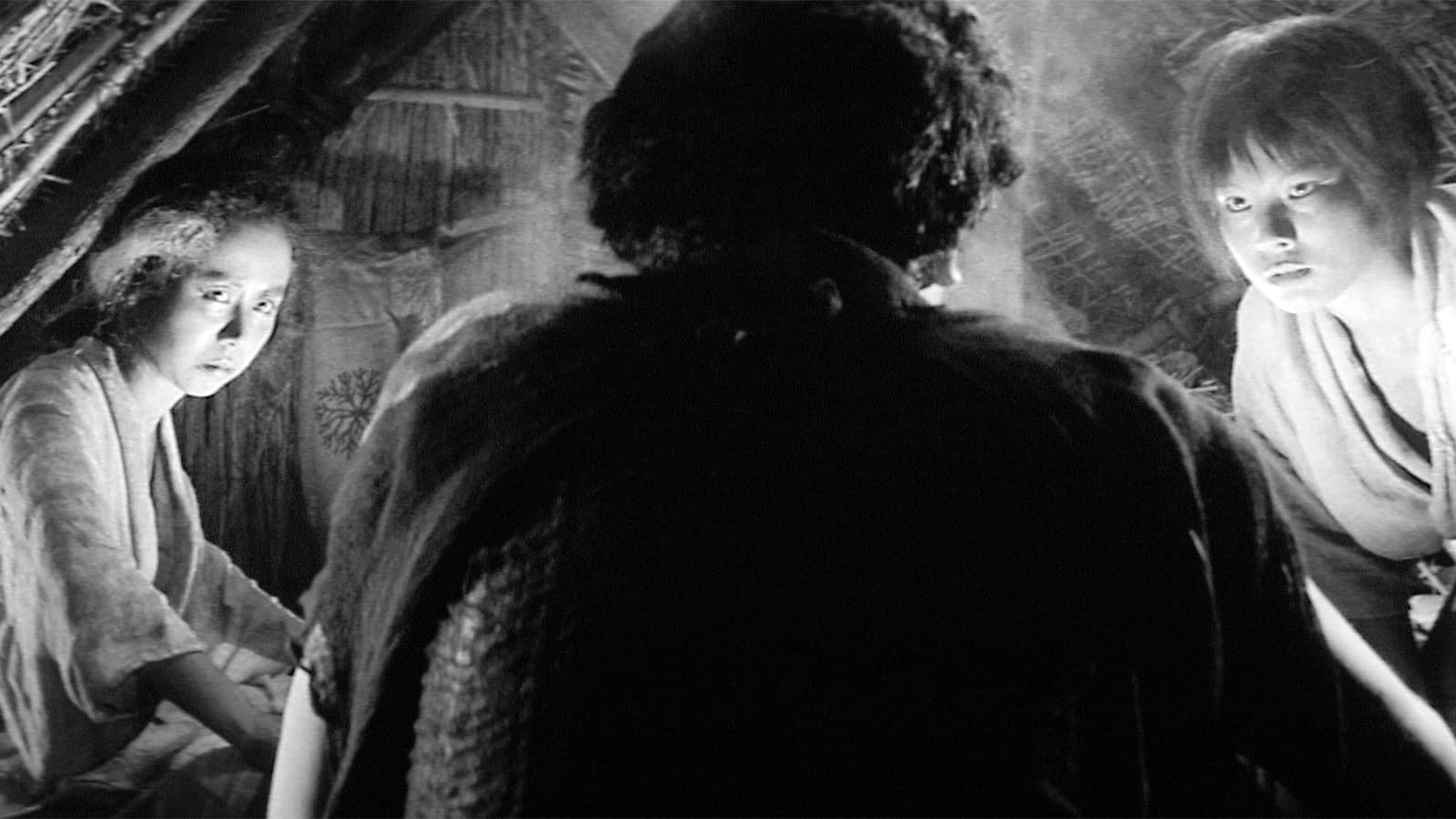
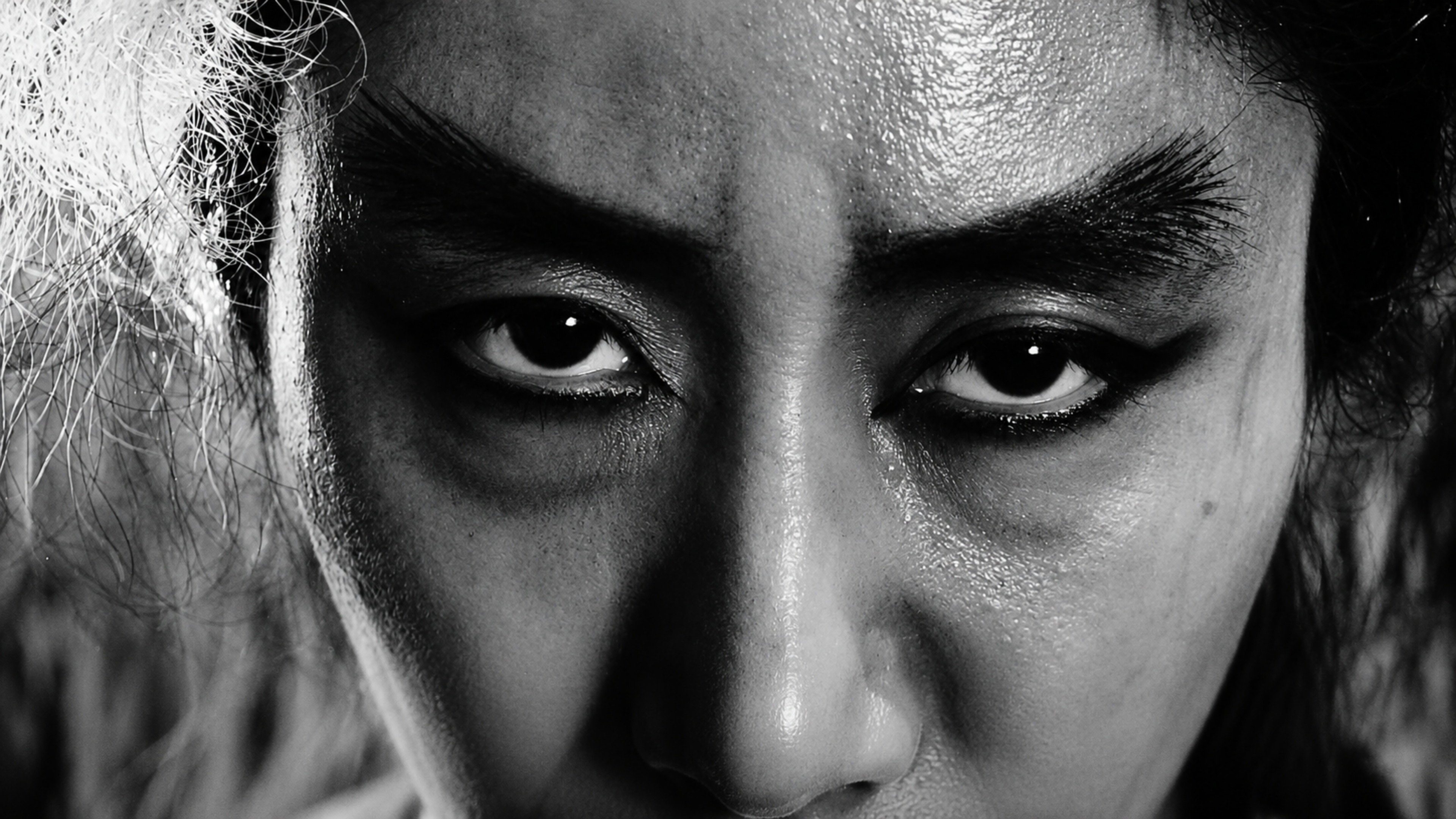
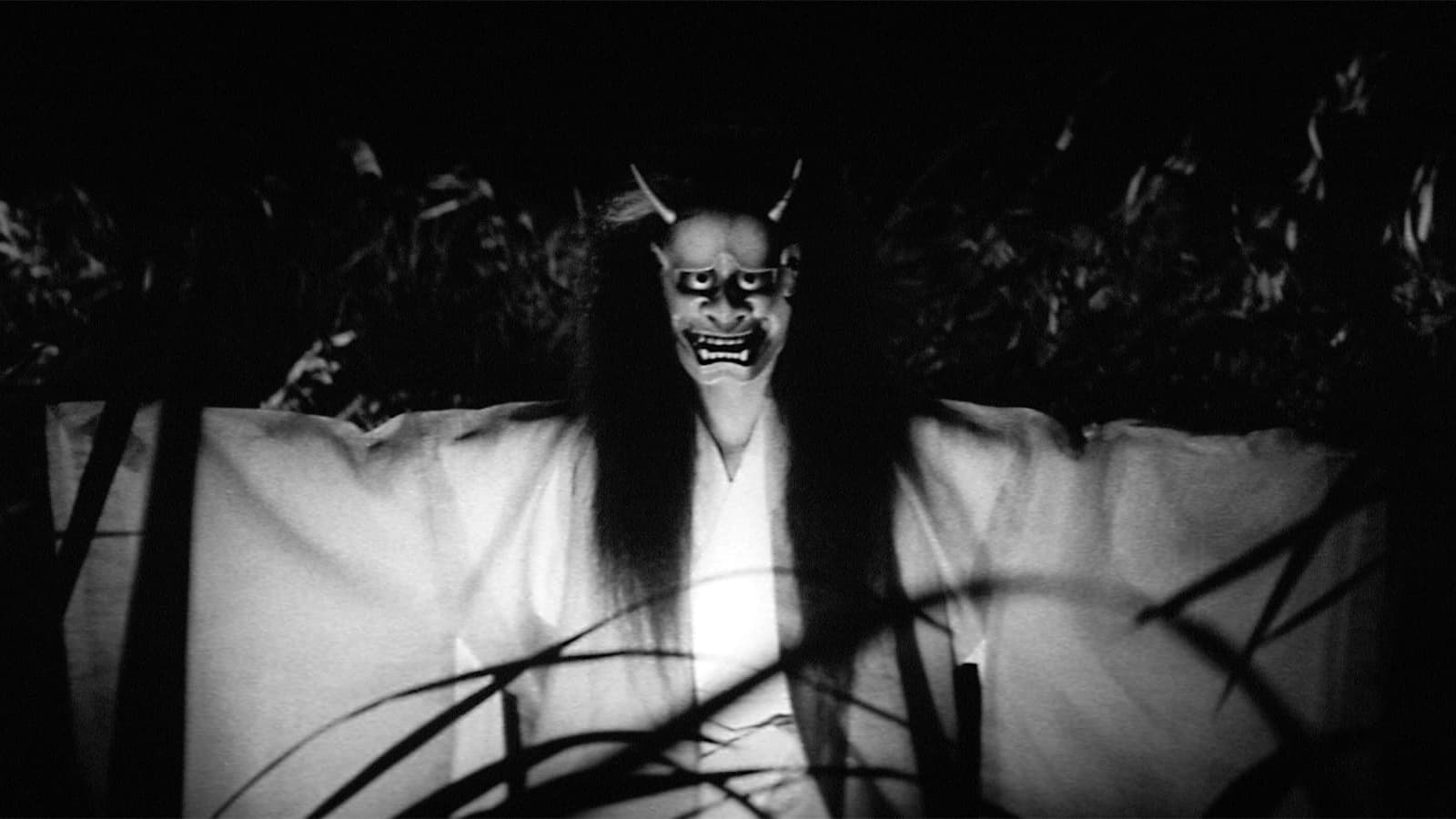
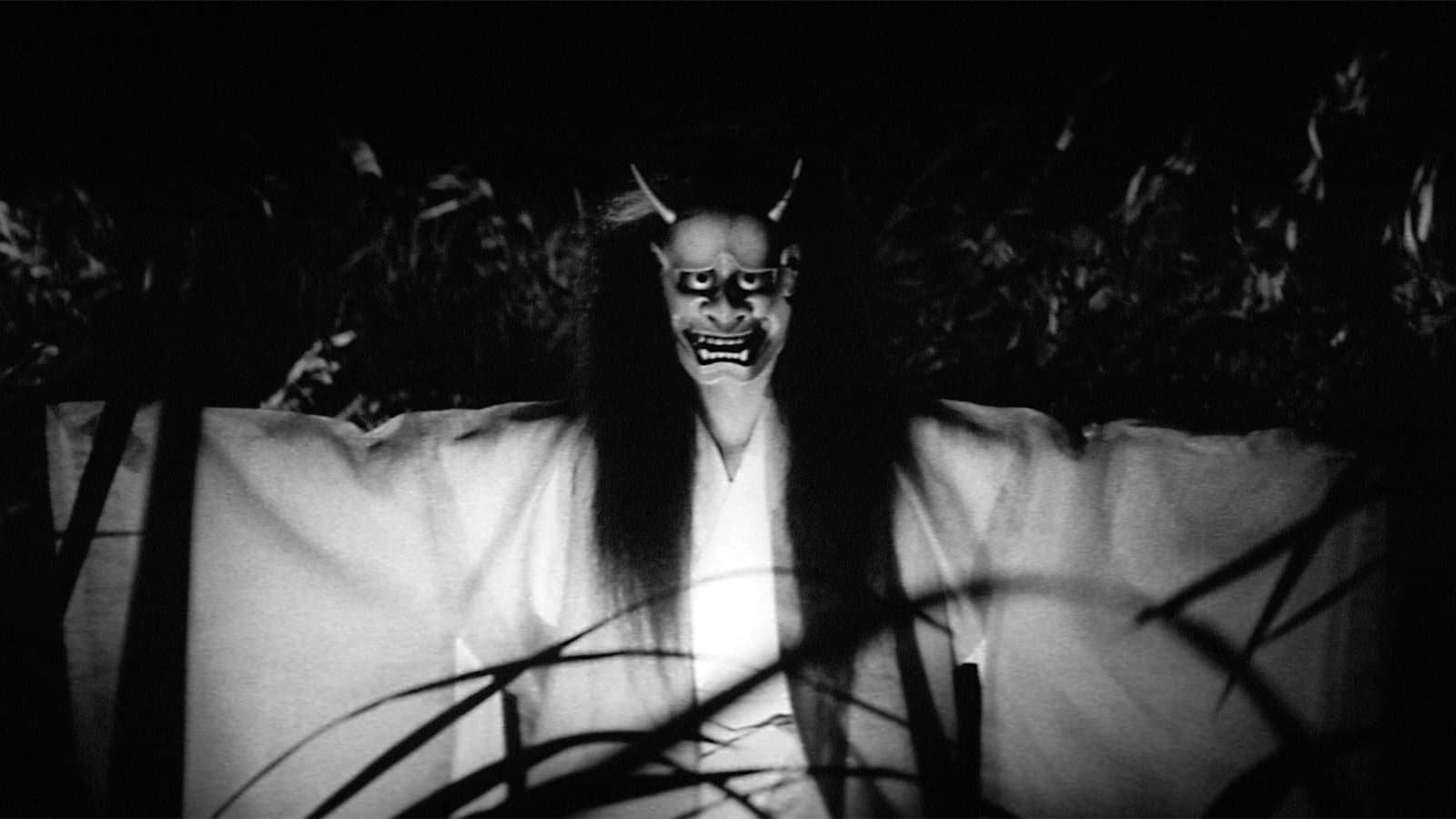
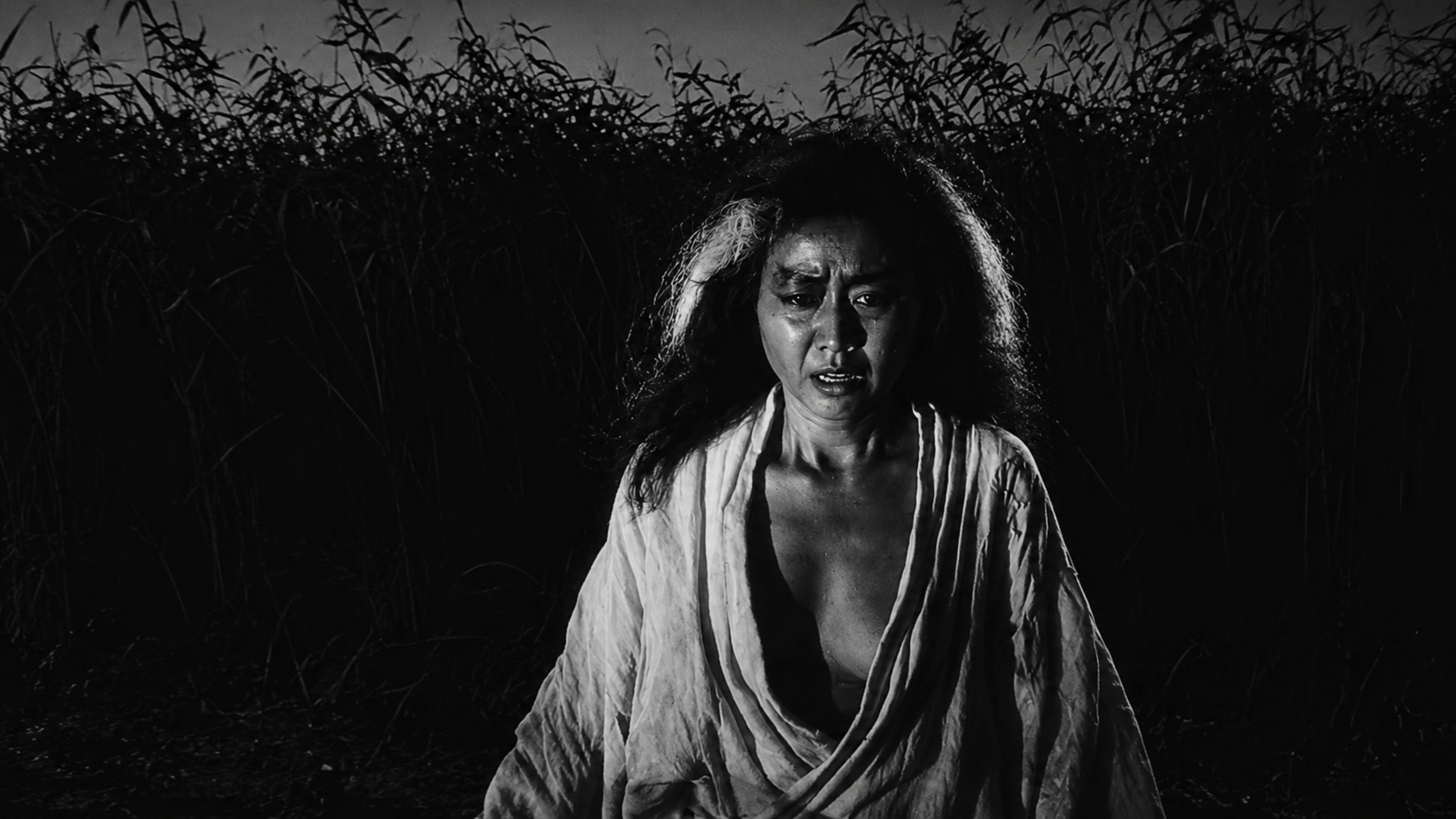
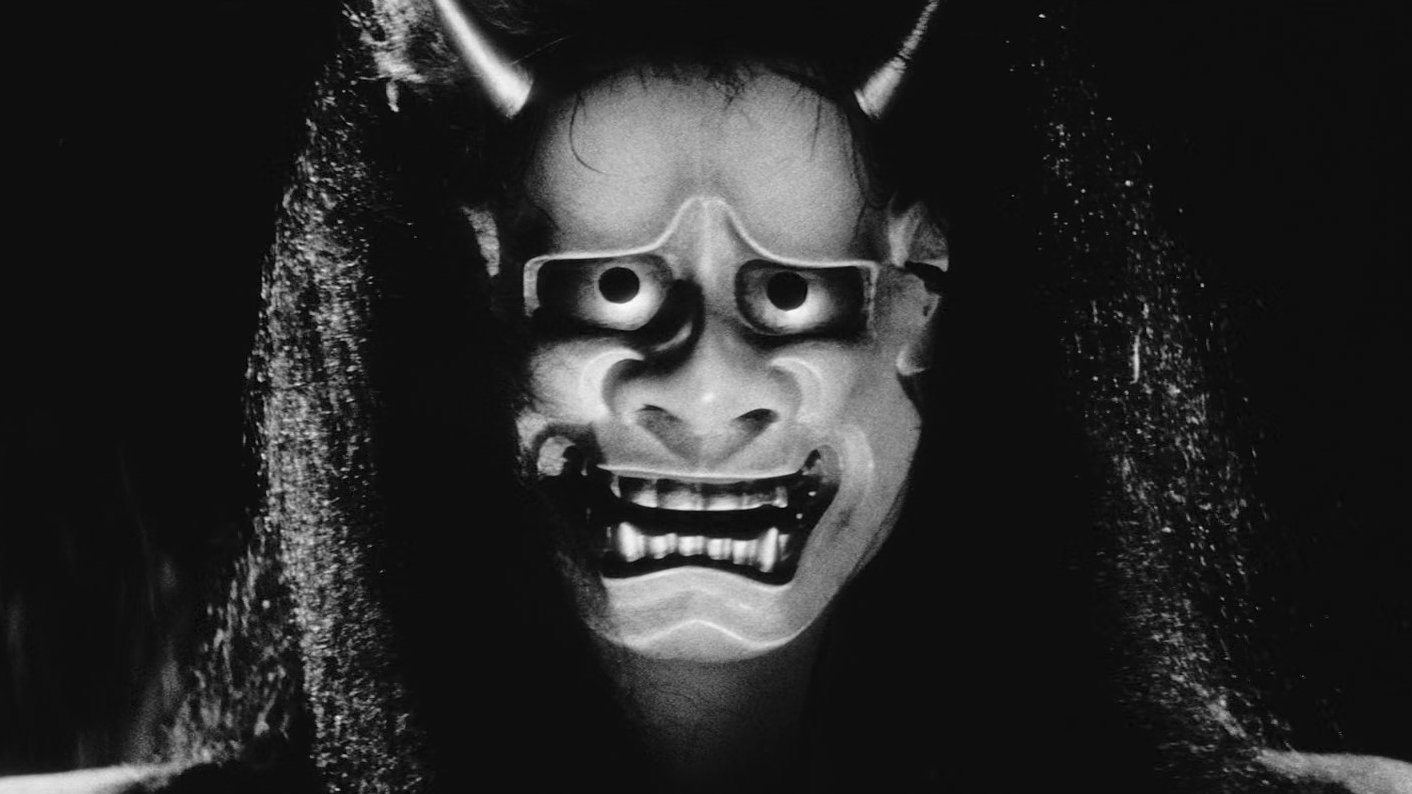
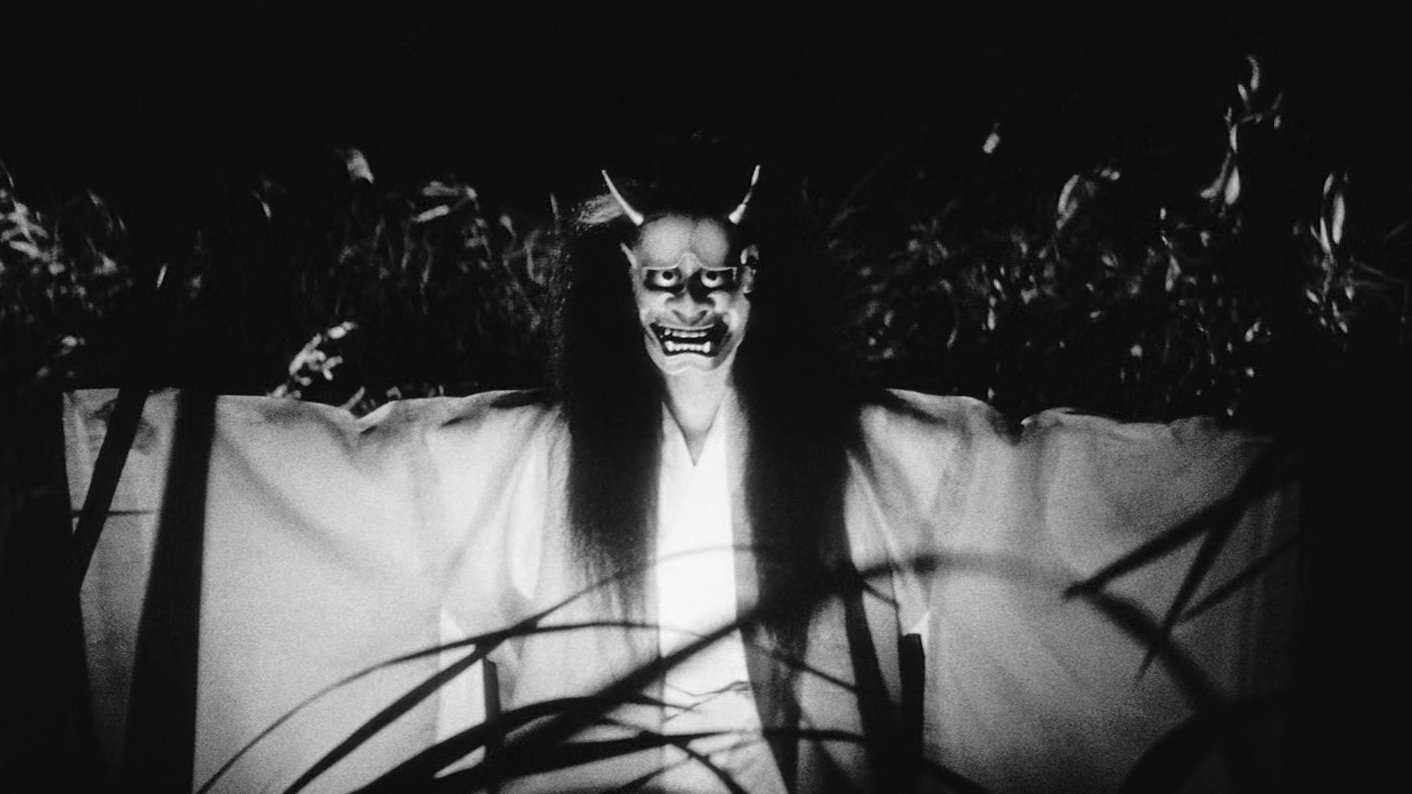
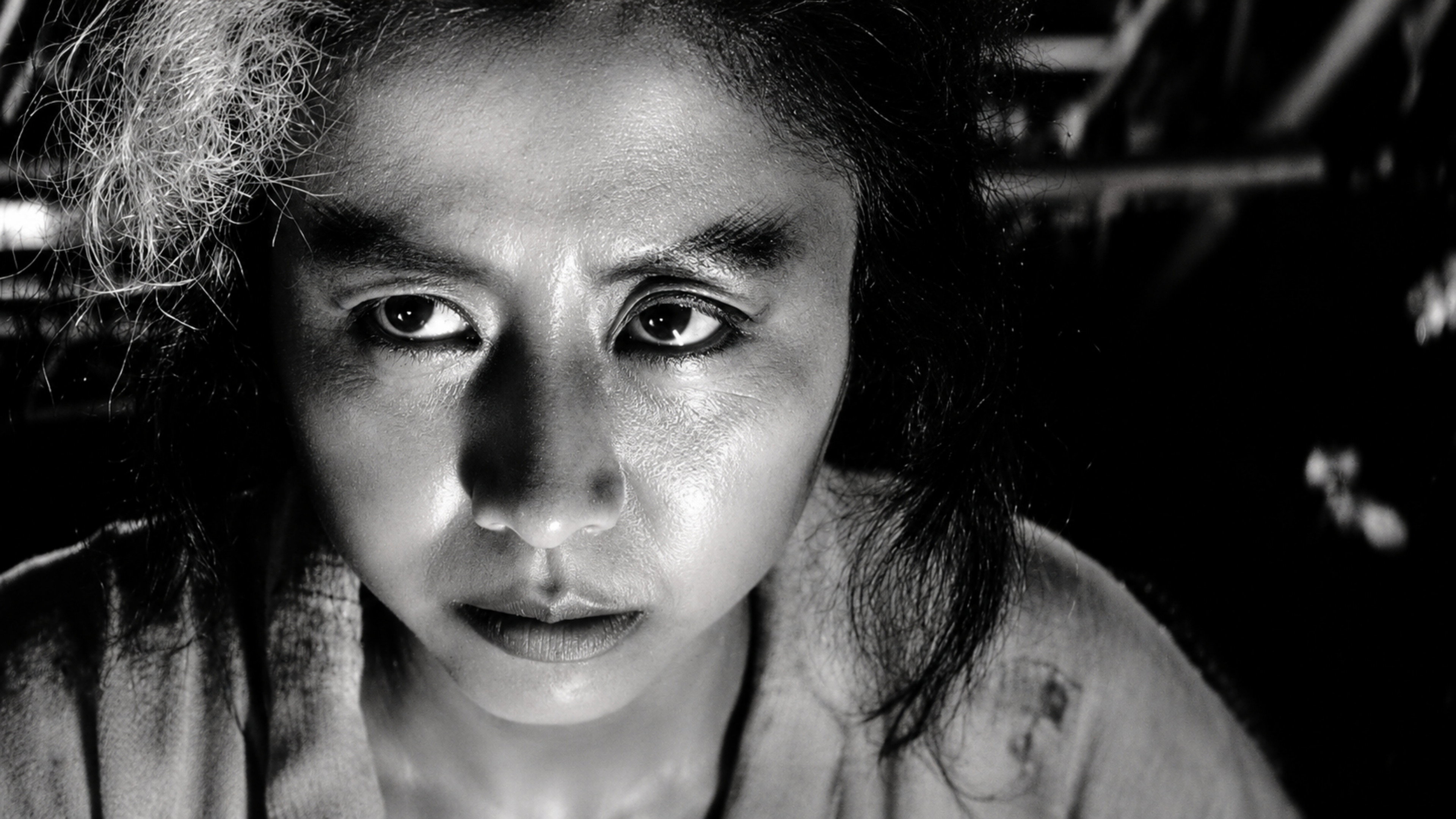
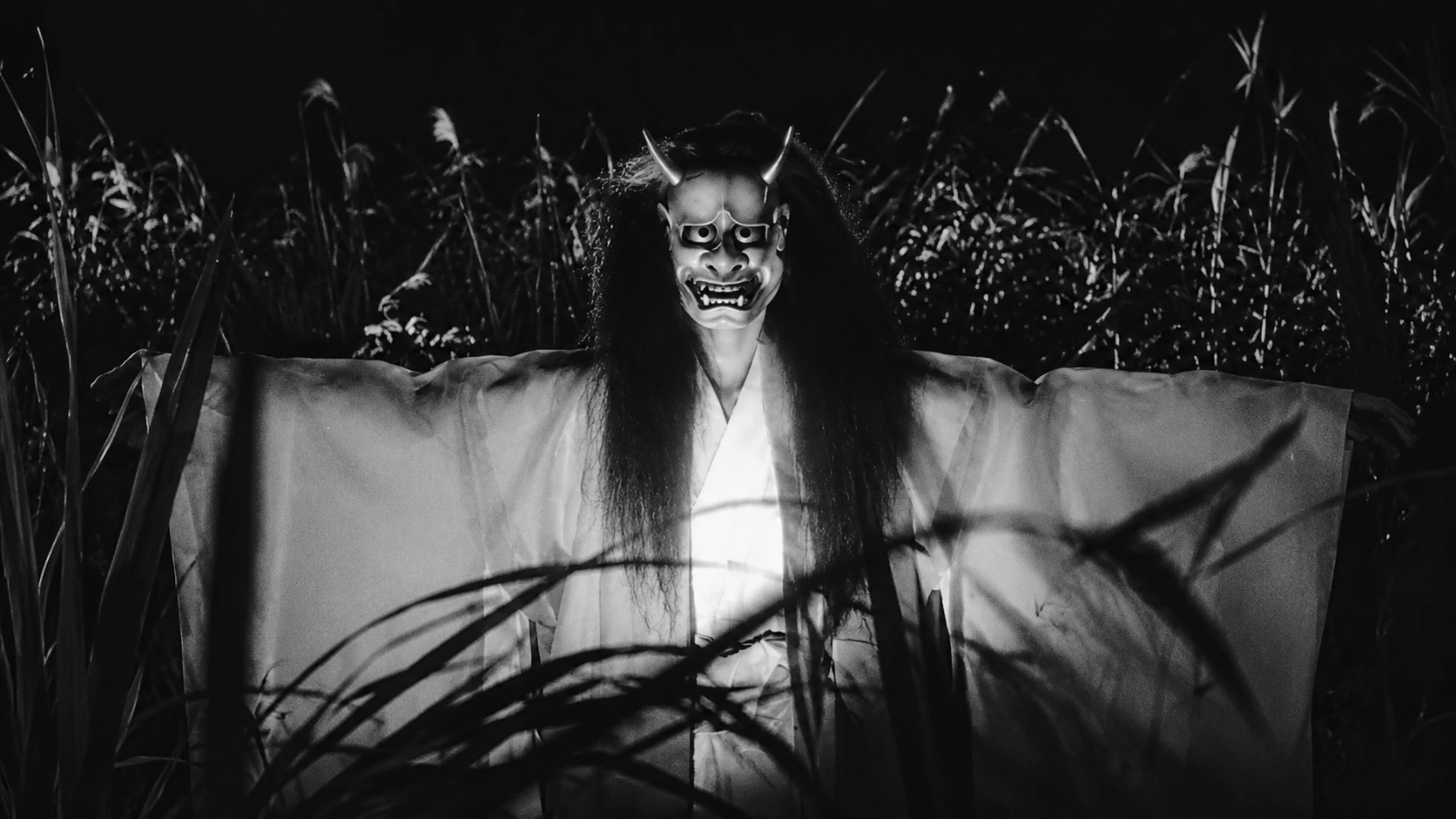
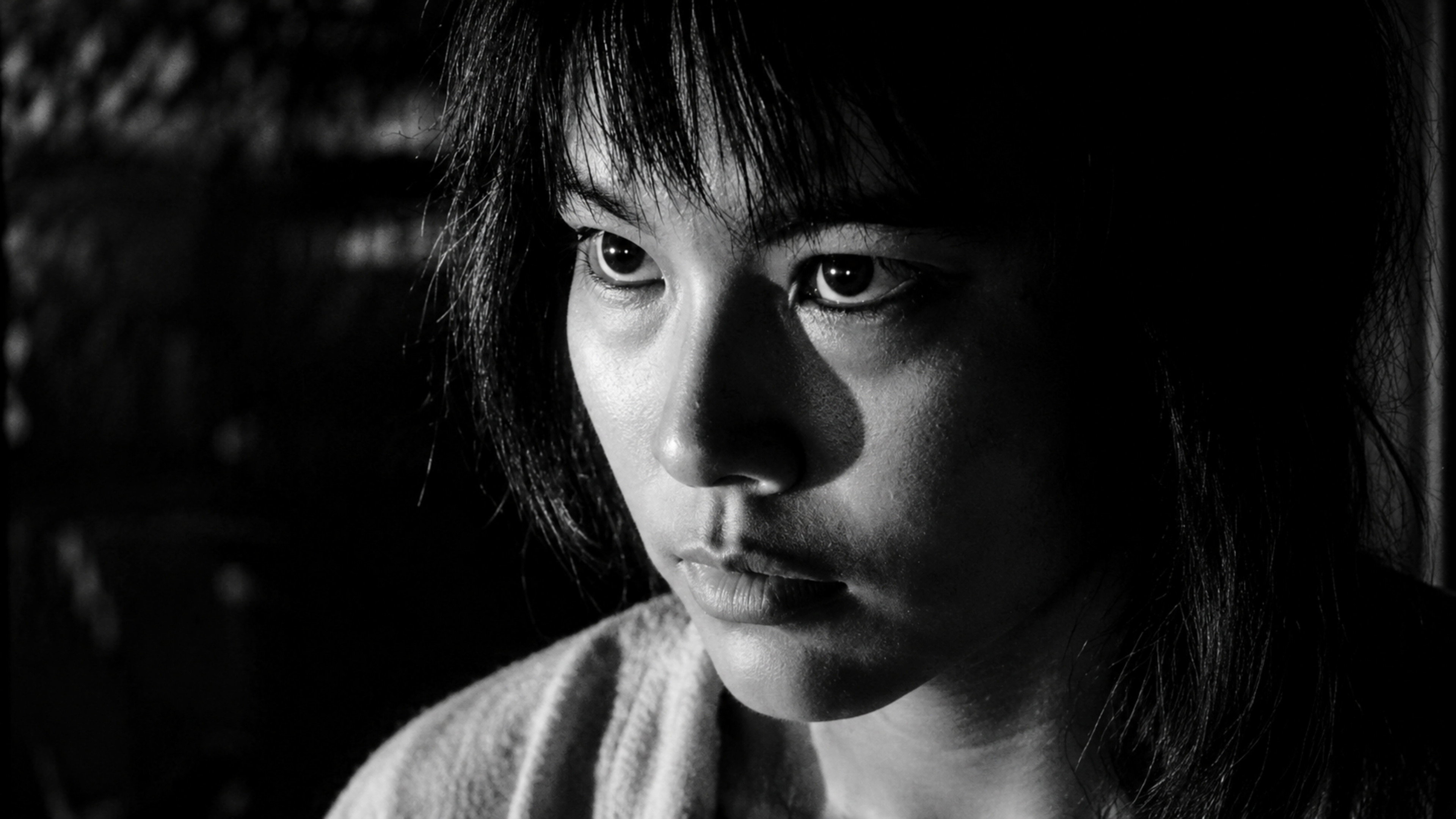
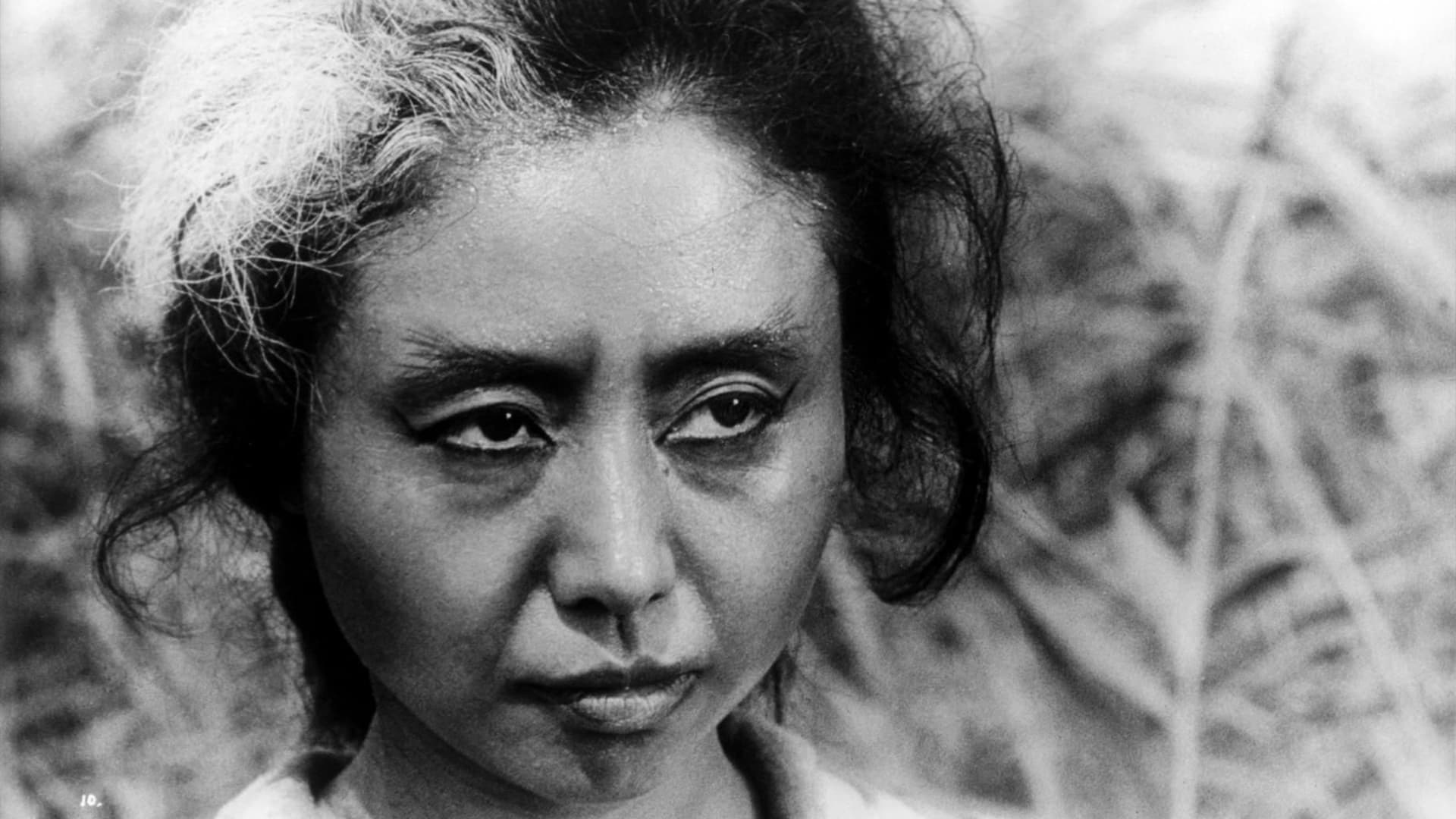
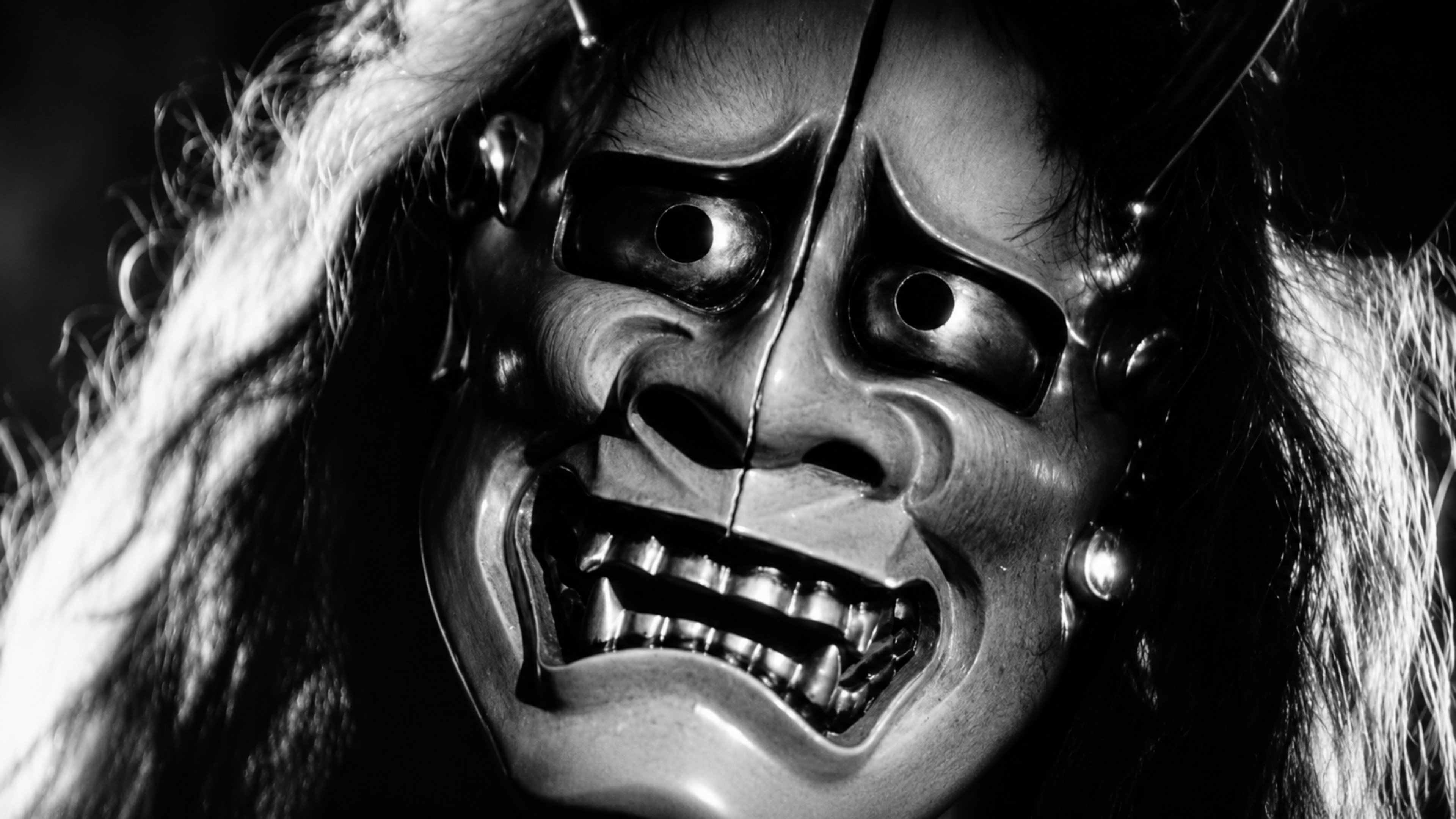
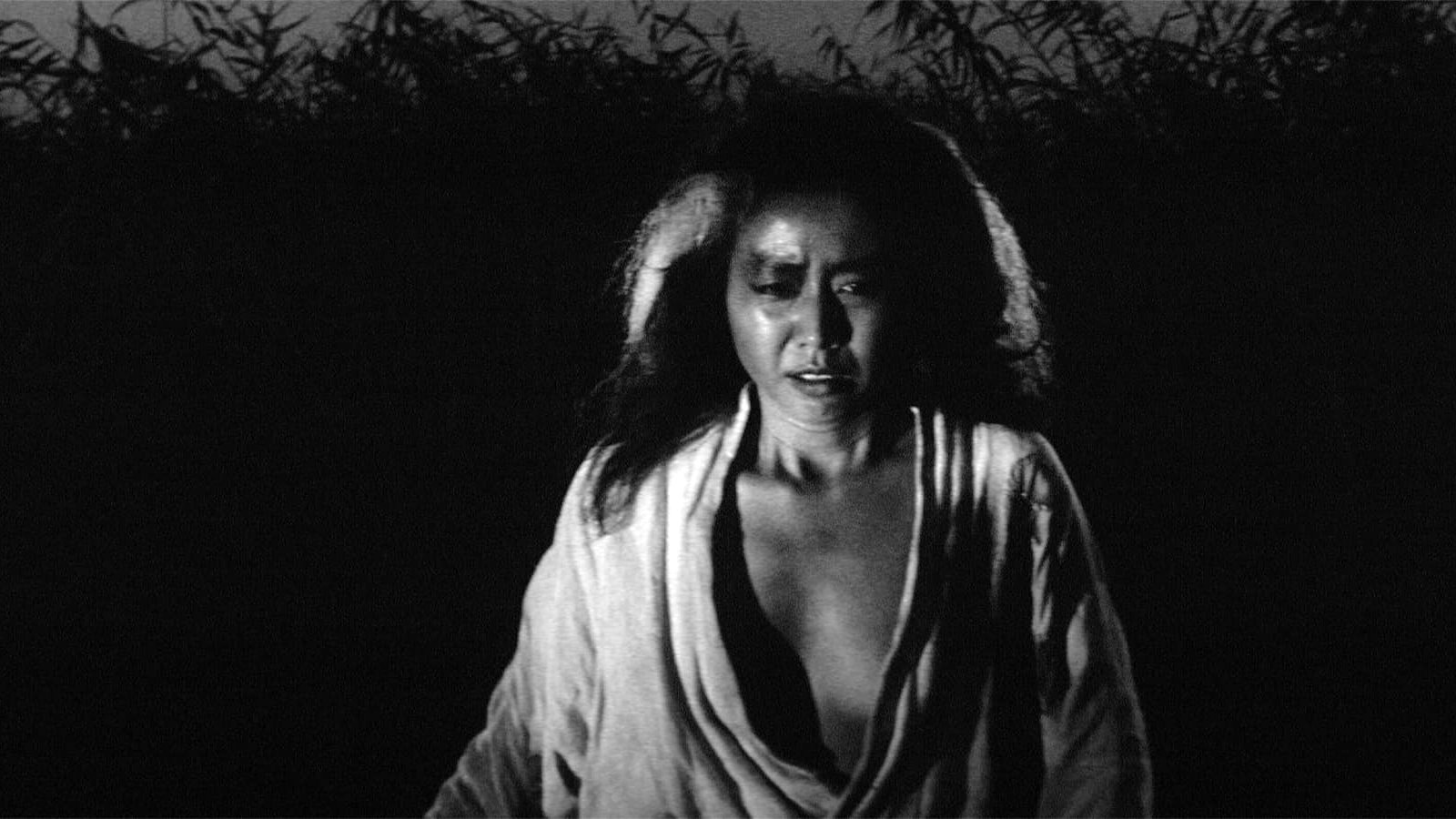
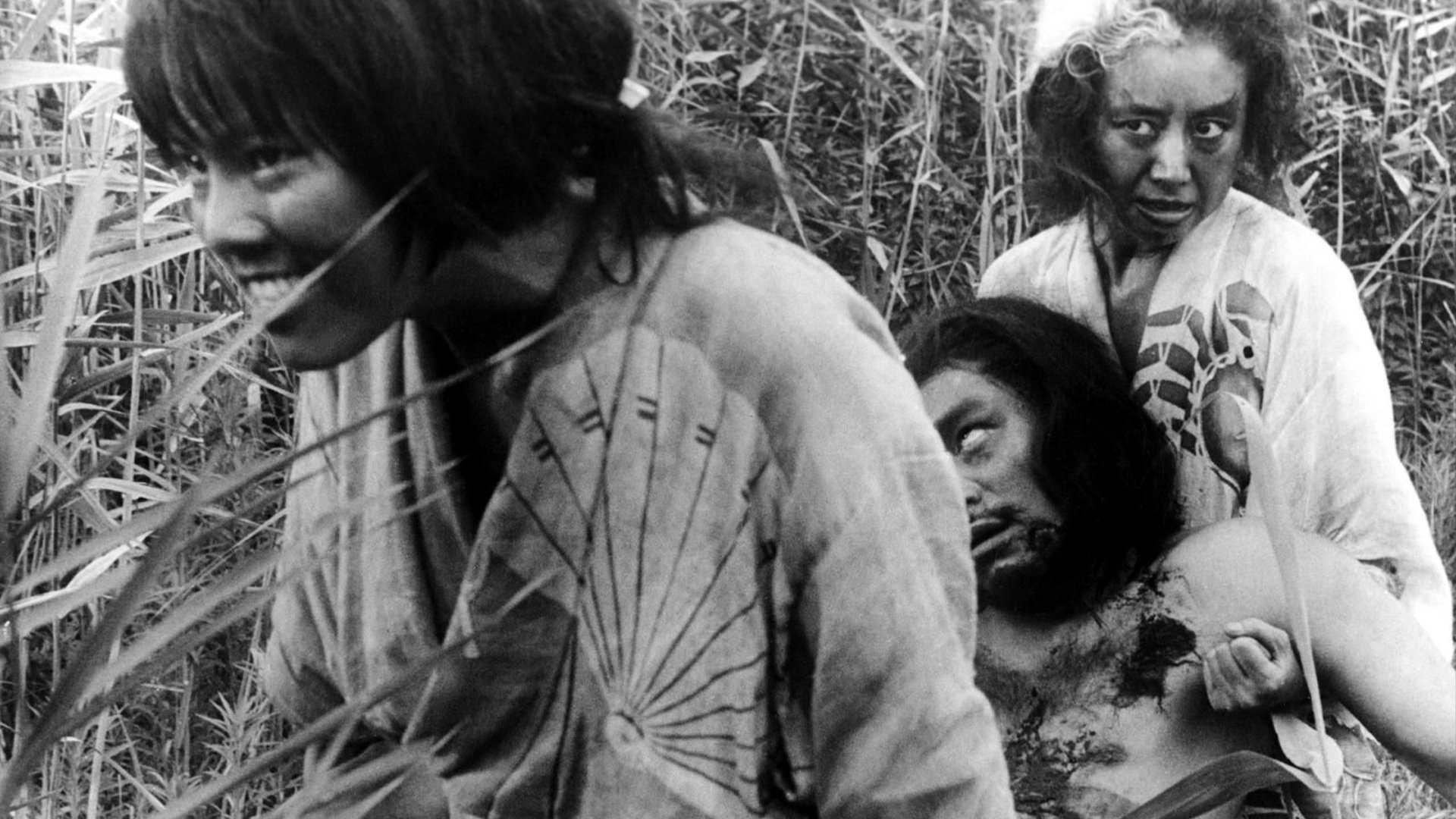
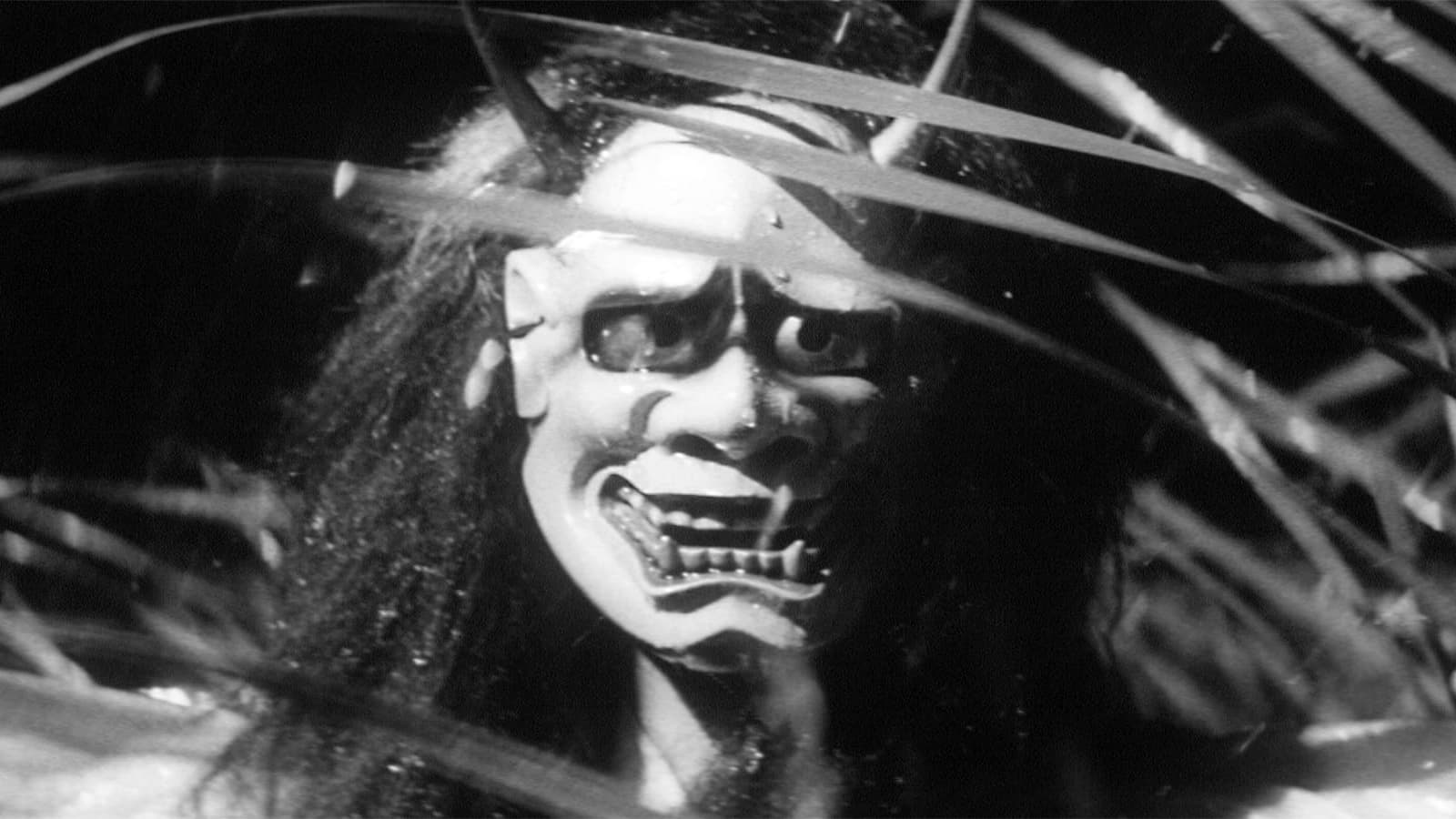
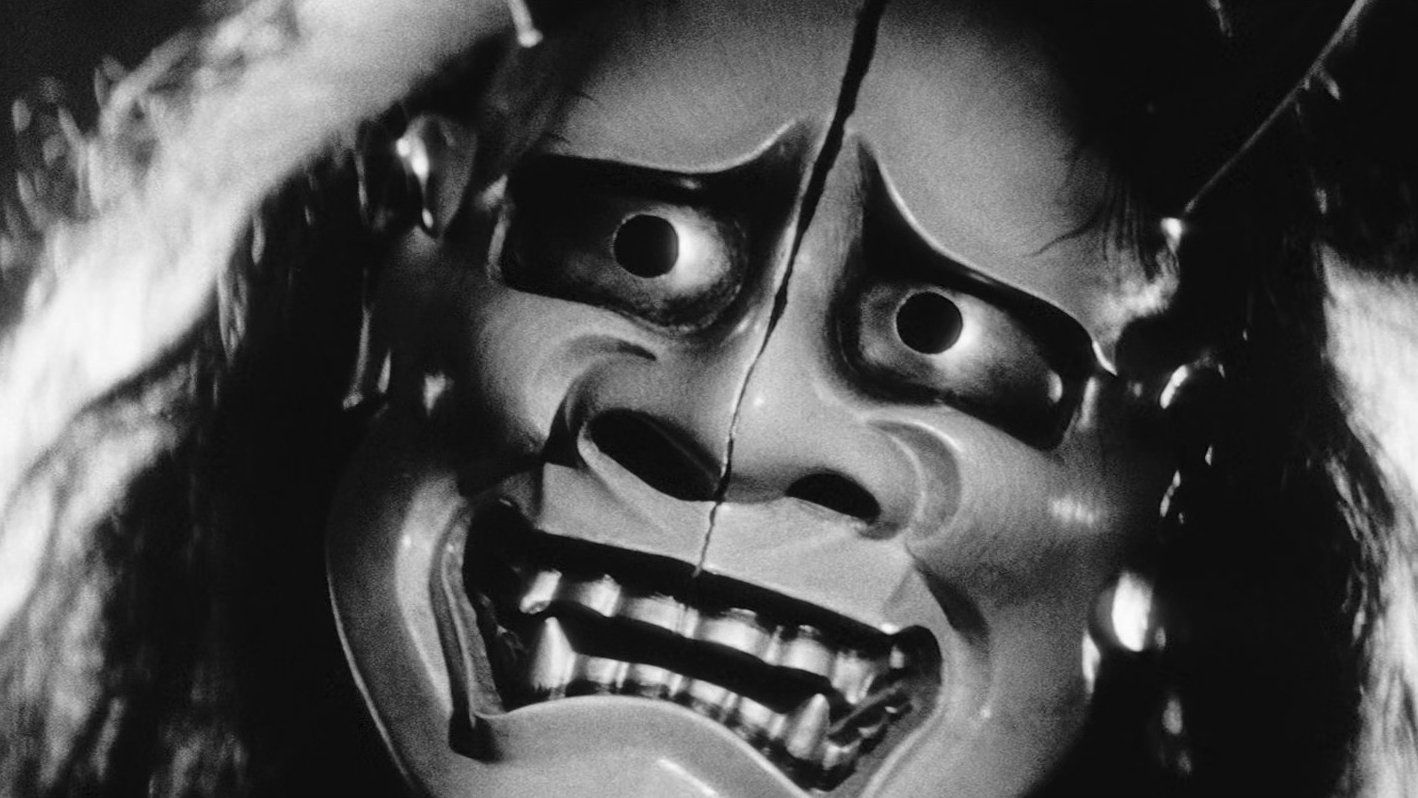
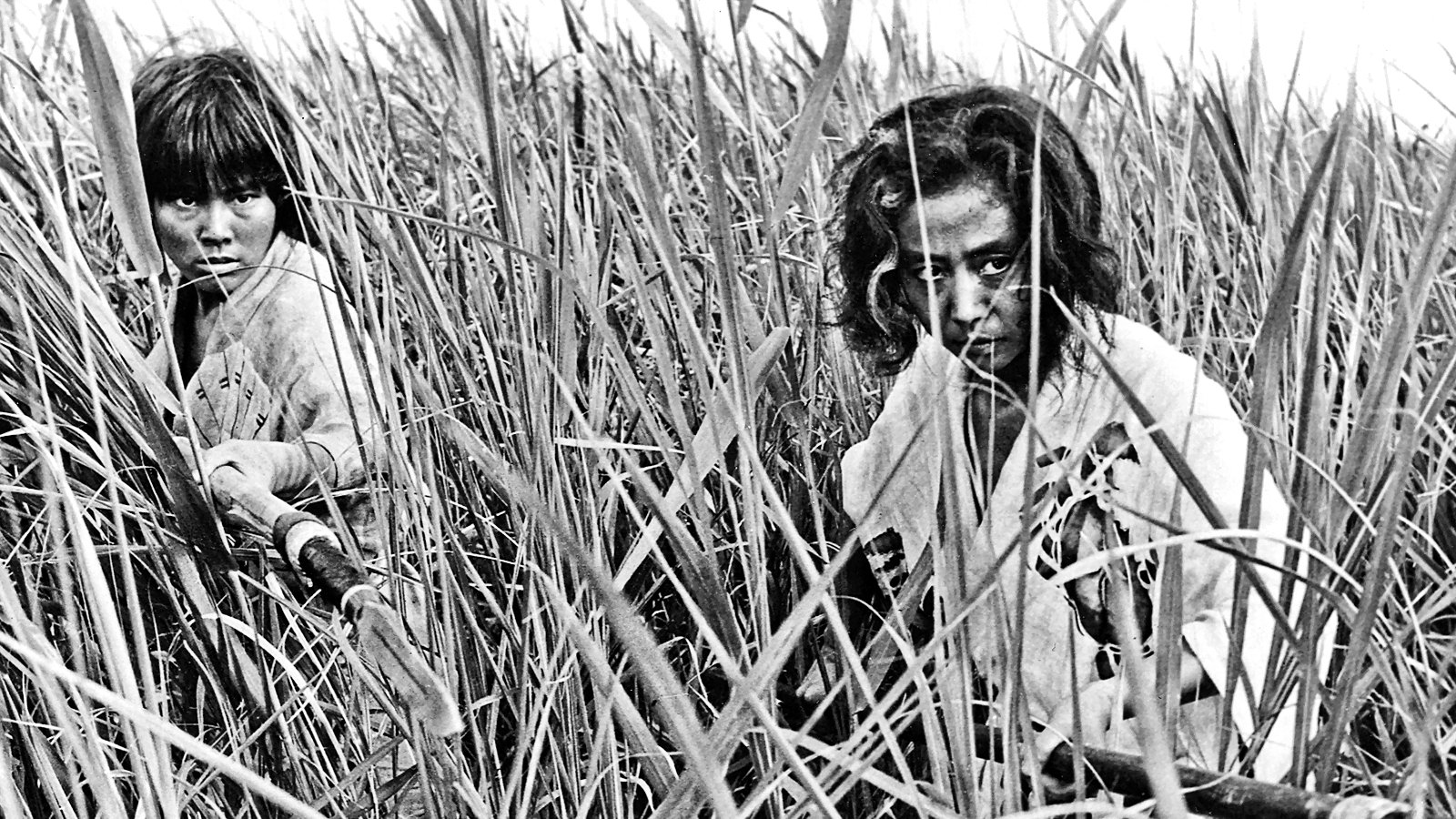
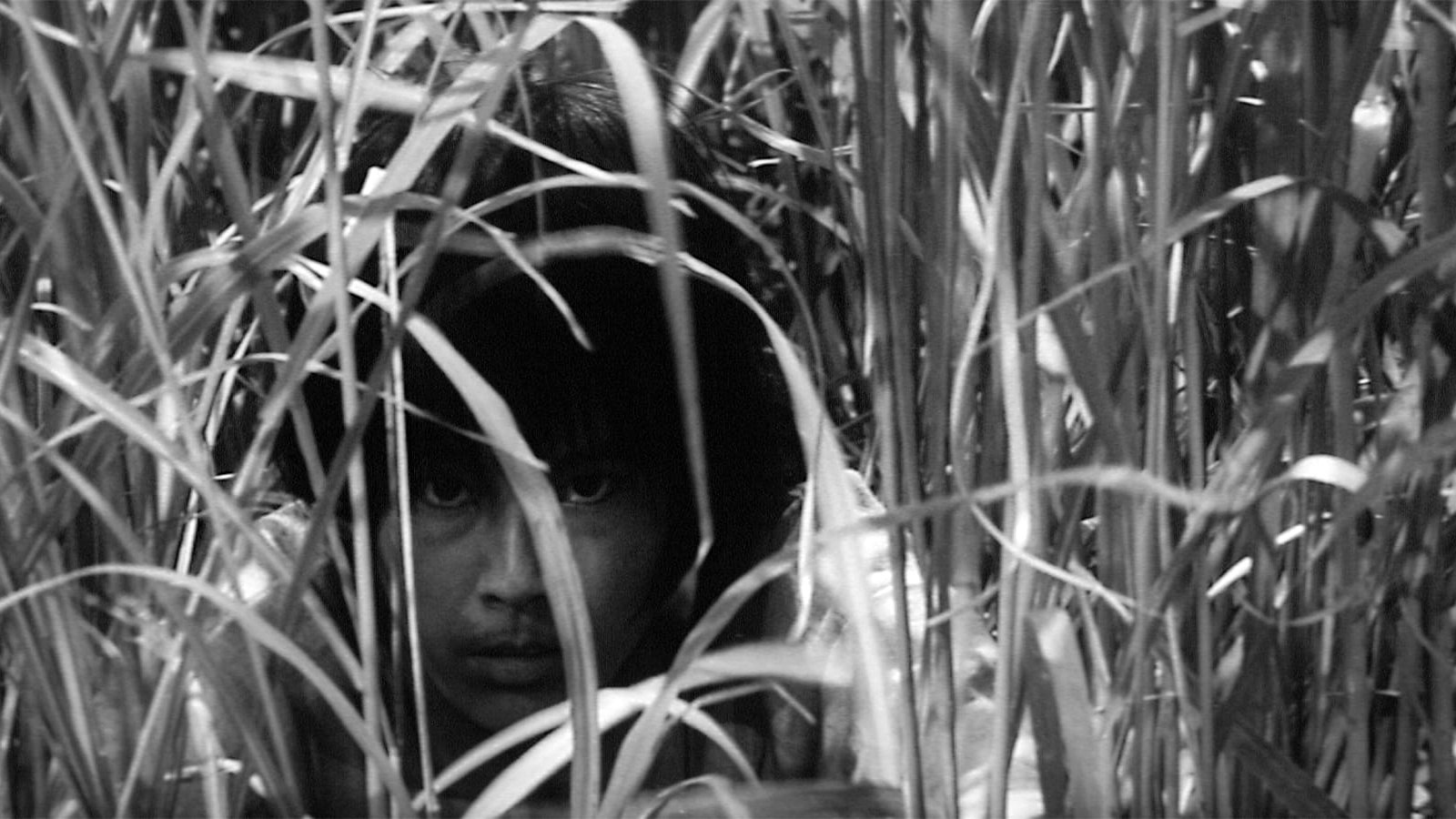
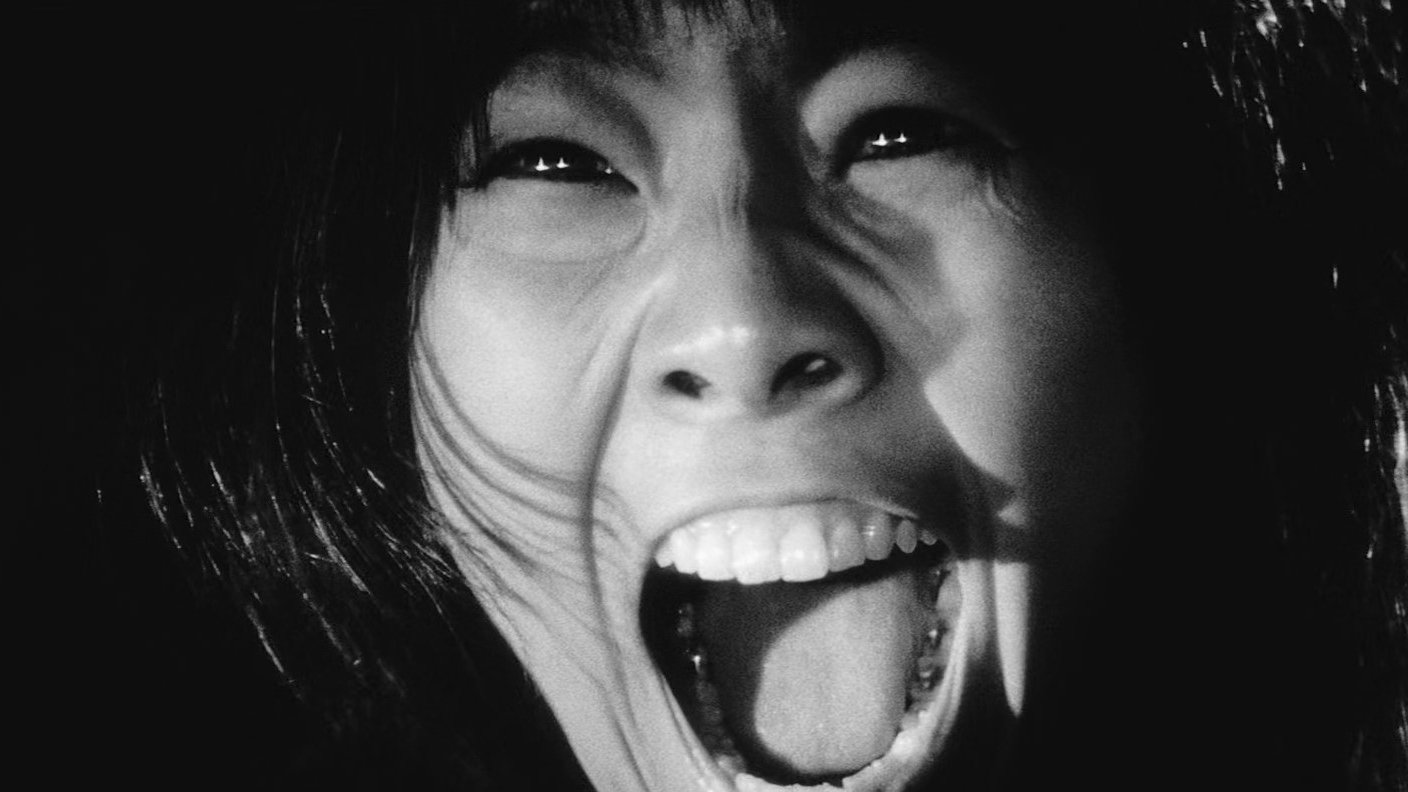
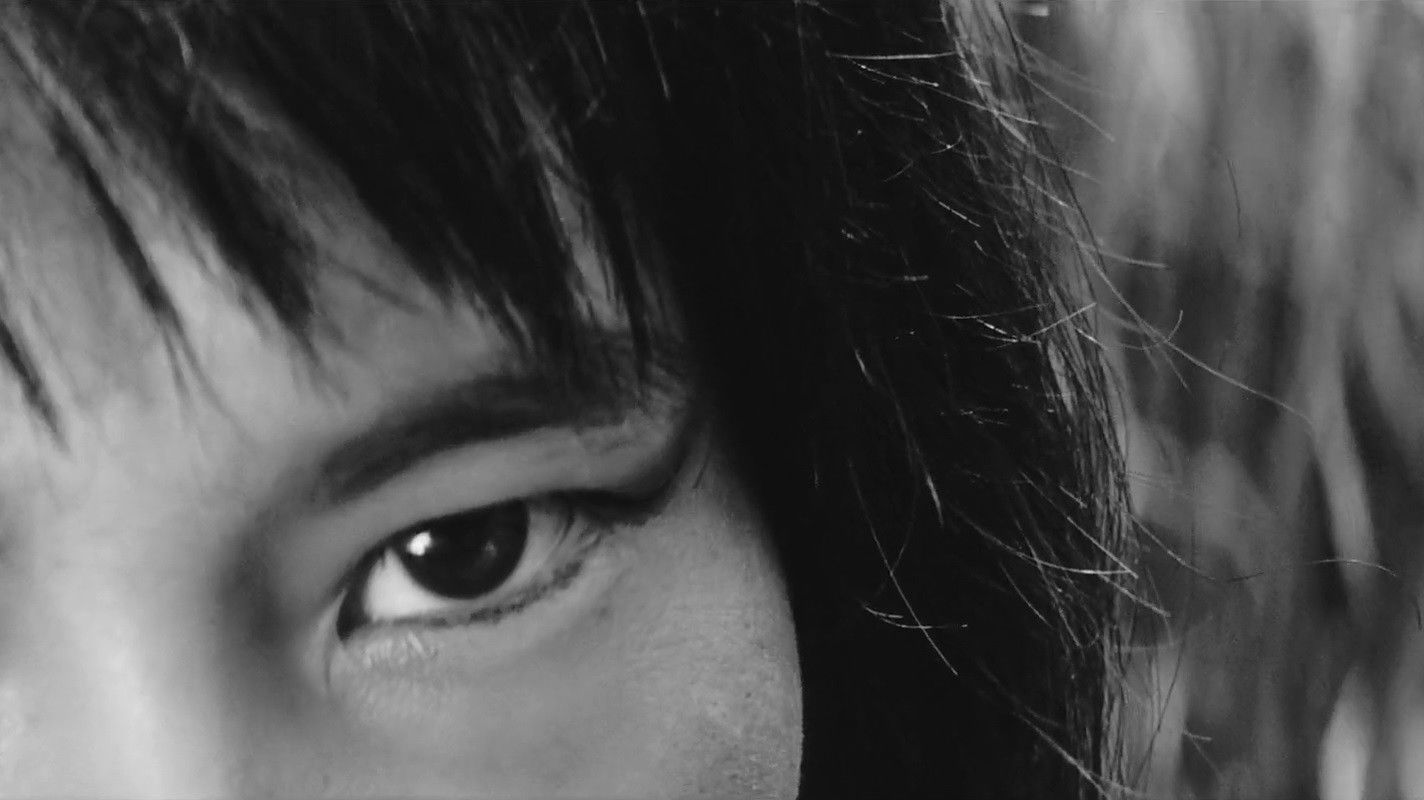
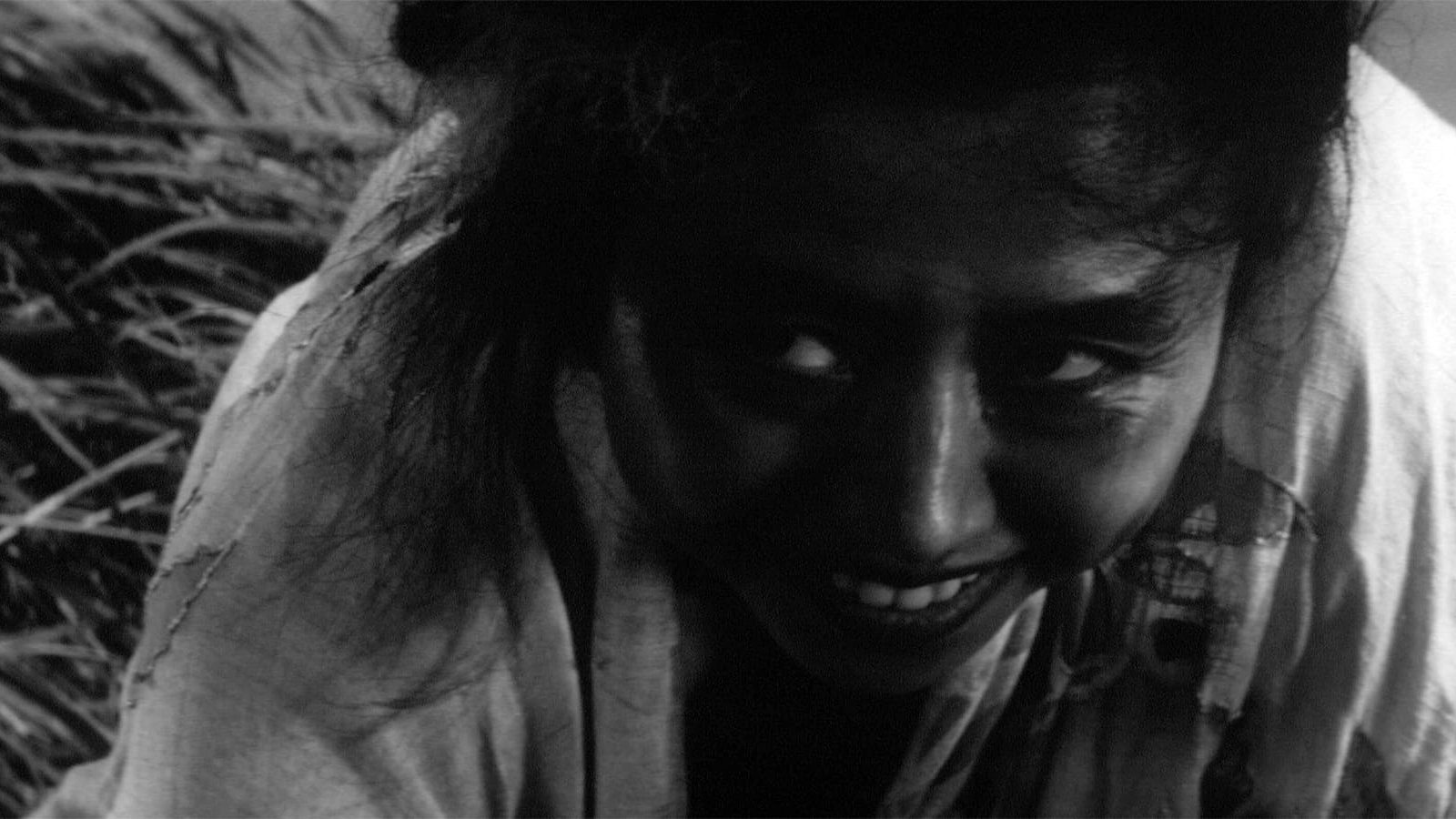
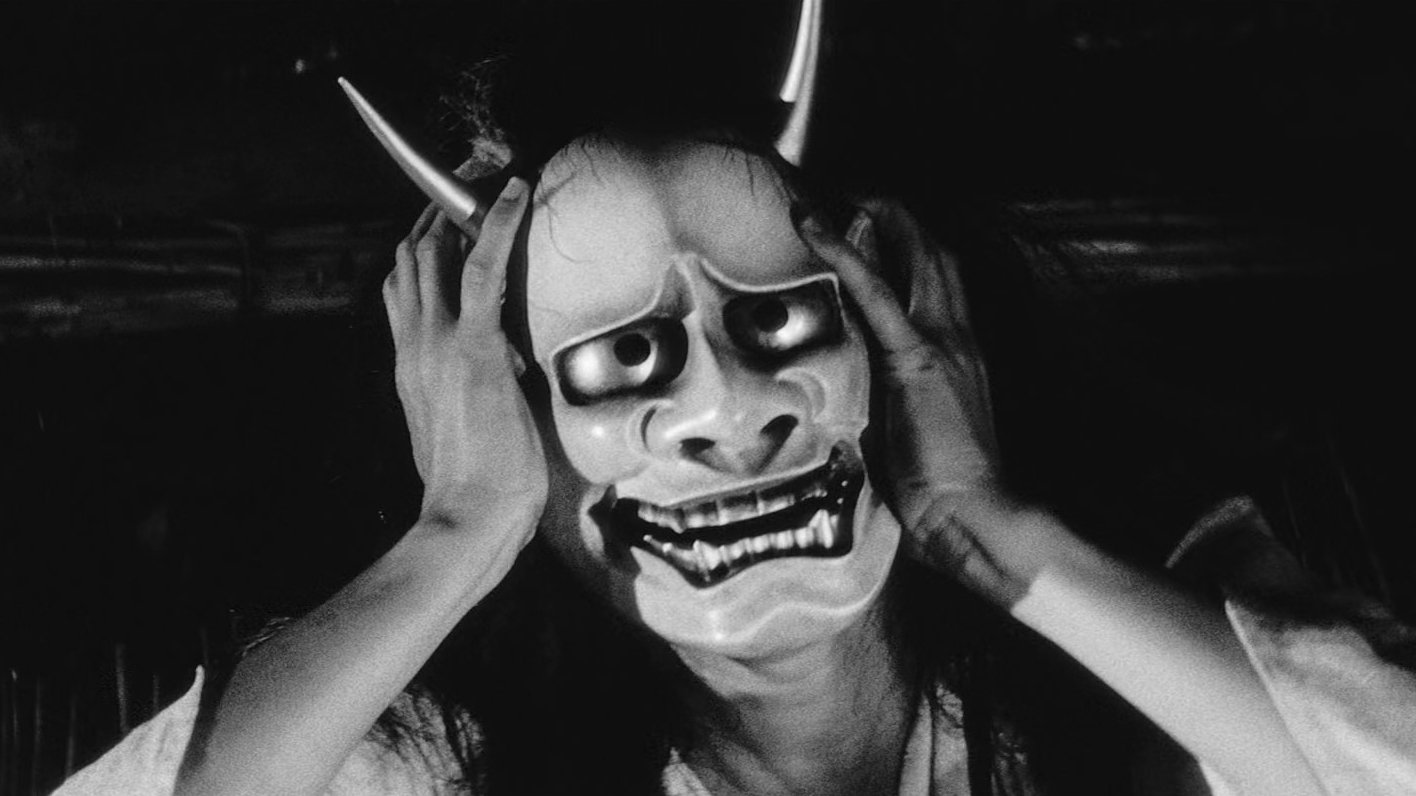
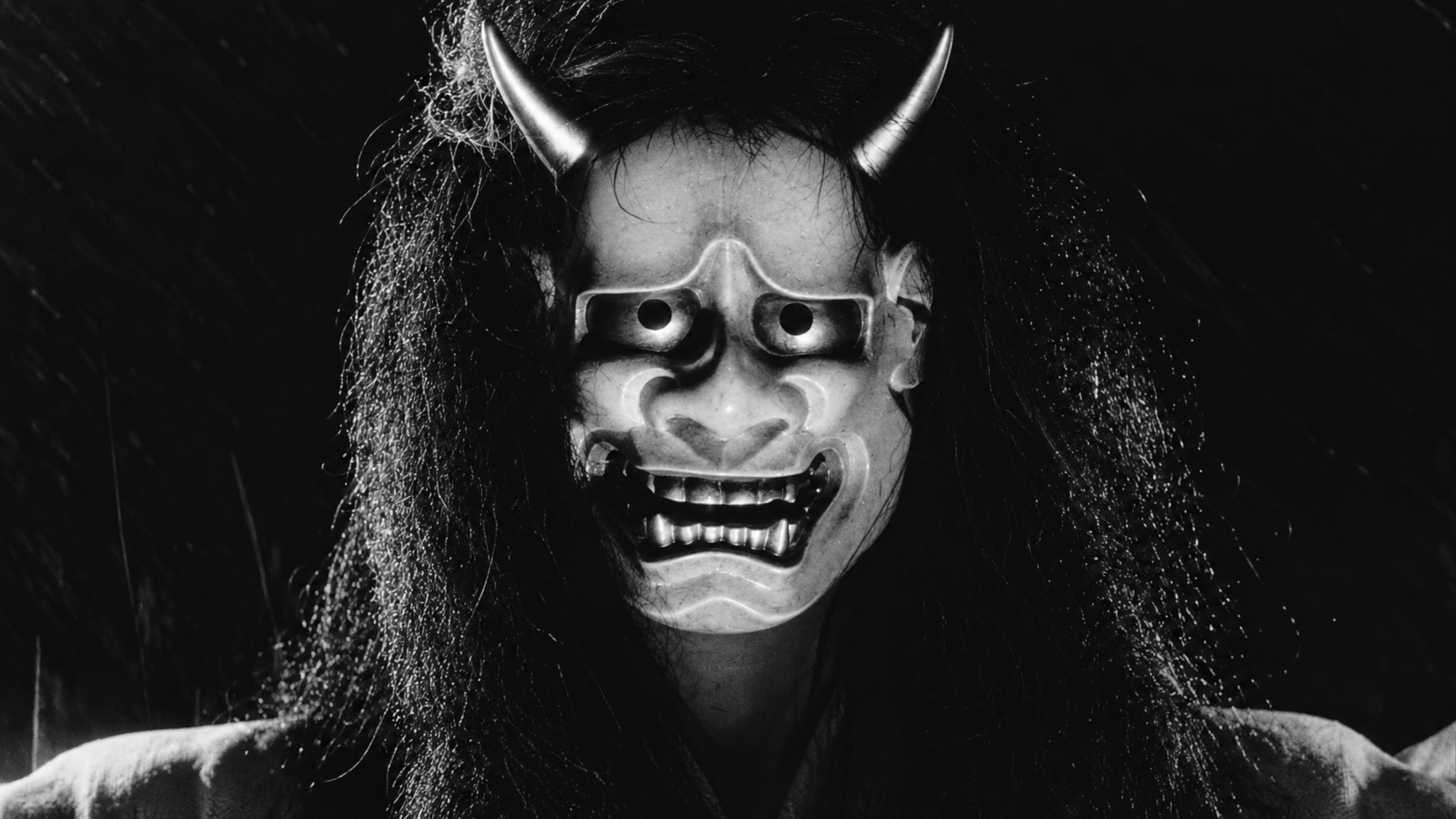
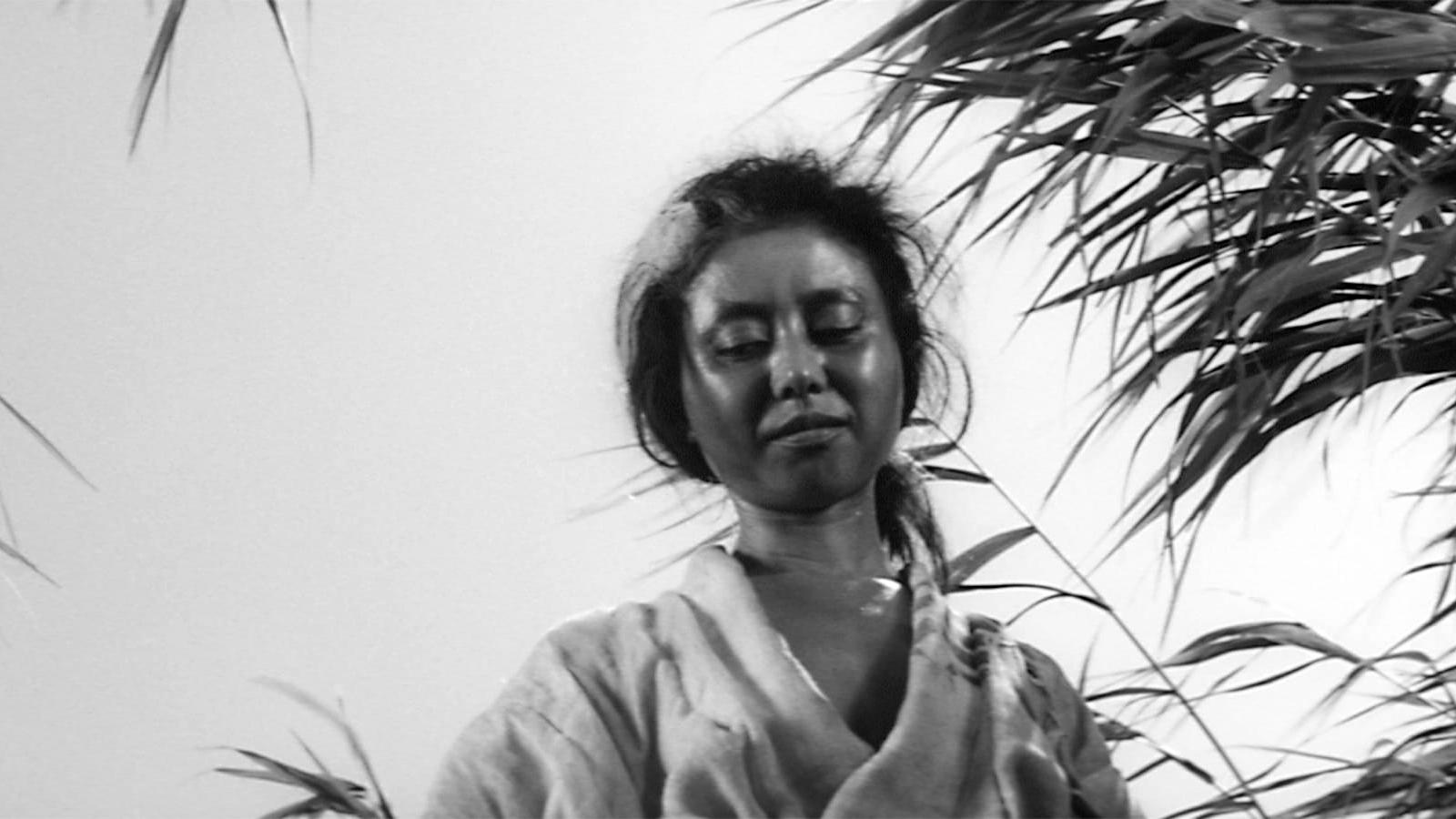
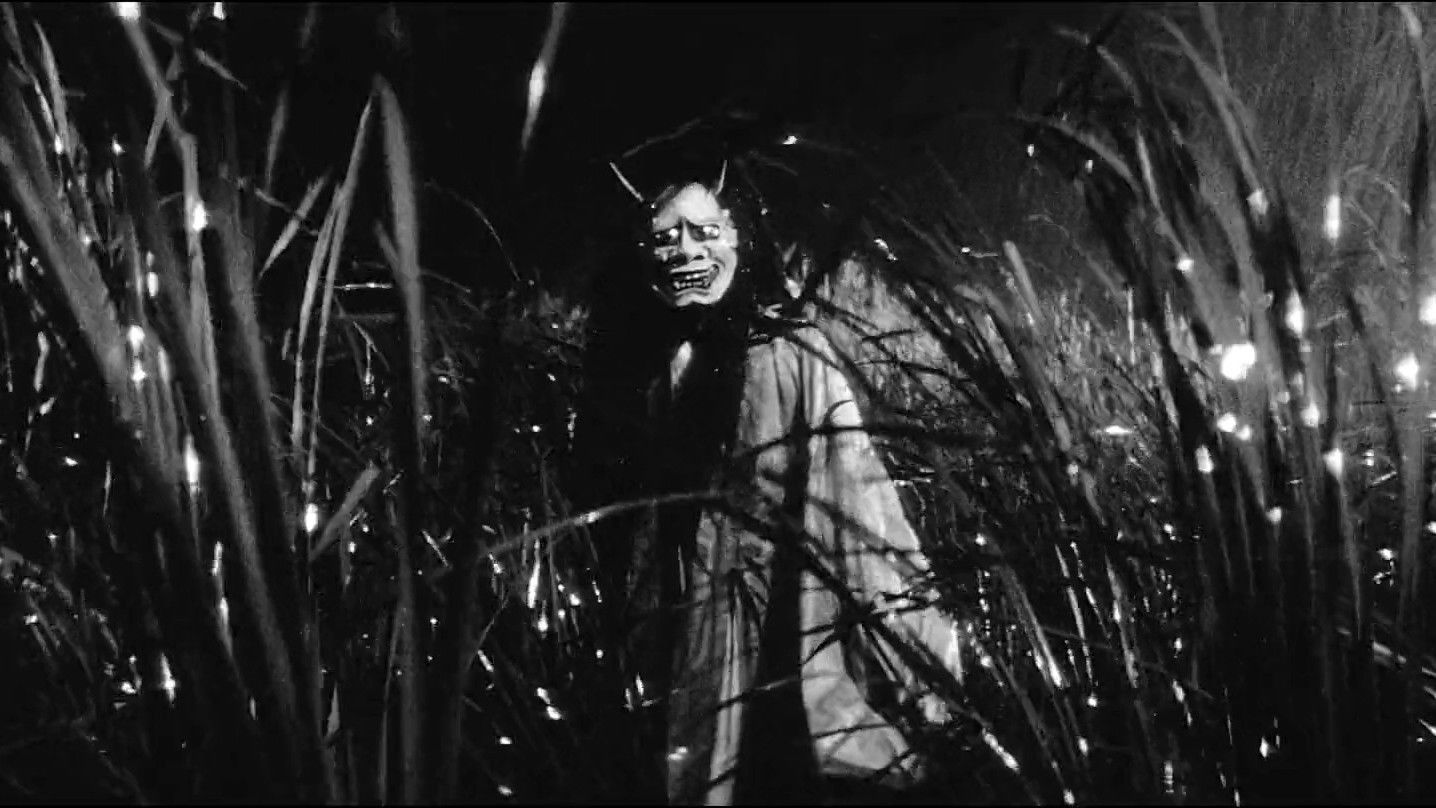
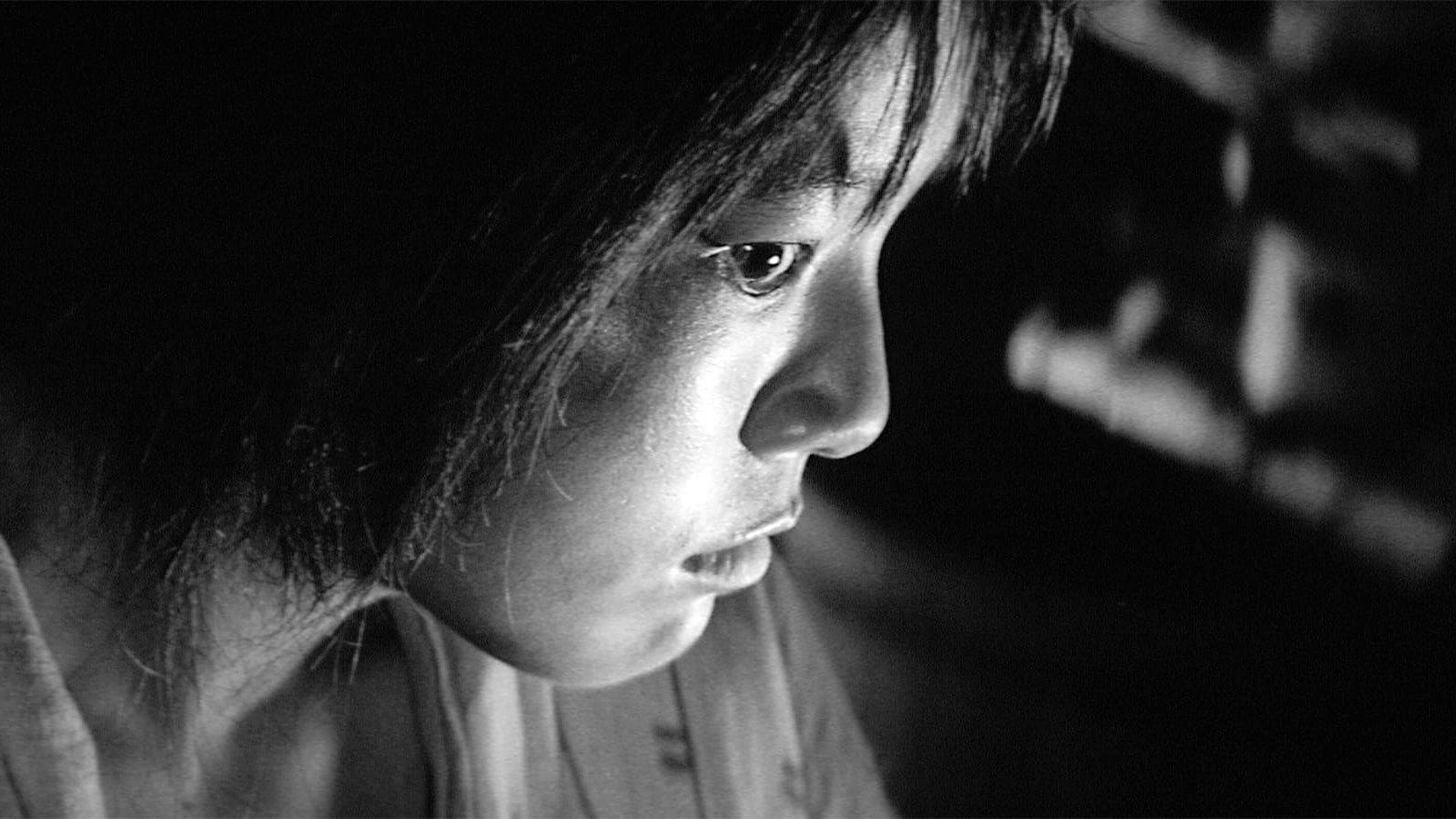
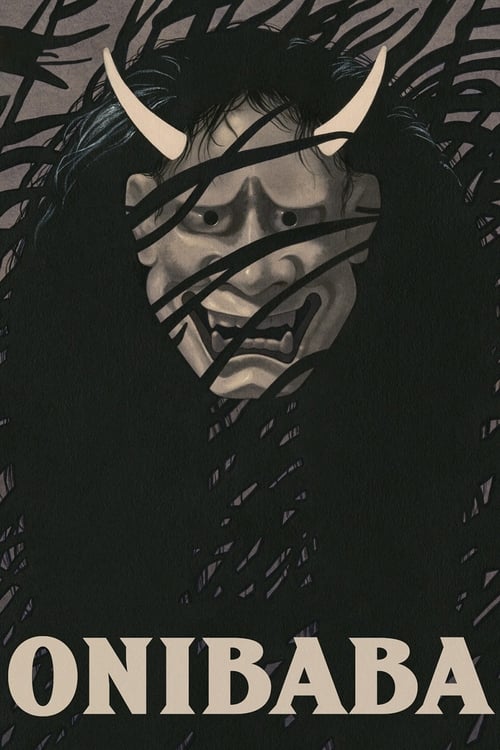
The film’s horror is in its visuals. The grass becomes a claustrophobic maze, leaves rubbing on faces like gripping fingers. Bodies drop into muddy pits with horrible moist realism. Shindo shoots the faces of each character with a shadow that almost devoured them, their eyes shining out of the dark like creatures in a tunnel. And then there's the mask, a wooden demonic face worn by a deserter that enters the plot like a curse, turning the final act into something ancient, folkloric and honestly frightening. Not only is the mask is disturbing in itself (it is don't get me wrong, like fuck and it's in black and white too???), but the more disturbing thing is what the old woman decides to do with it.
The horror of Onibaba is in its emotional realism. There are no heroes in this. No jump scares. It is the logic of starvation: kill a man today, eat tomorrow. And after a while you cease to flinch. Then you do something worse, and the grass keeps waving, it does not care, devours every scream.
A pure, more patient form of horror, the sort that sits in your chest and rots slowly. A must-see for anyone who believes “atmospheric” implies just fog machines and abandoned asylums, this is perfect in my eyes and shows us what Japanese horror cinema is truly is.
Onibaba is set in one place, a huge, sweeping field of susuki grass in 14th century Japan, where a mother and her daughter-in-law survive the civil war by killing lost samurai and selling their armor for money., that is essentially the setup for this film, what follows is a gradual, choking decline into moral decay, and the horror is not supernatural (though it engages with it brilliantly). It's the misery of seeing two individuals persuade themselves that murder is merely a job, until desperation takes them somewhere worse.
The film’s horror is in its visuals. The grass becomes a claustrophobic maze, leaves rubbing on faces like gripping fingers. Bodies drop into muddy pits with horrible moist realism. Shindo shoots the faces of each character with a shadow that almost devoured them, their eyes shining out of the dark like creatures in a tunnel. And then there's the mask, a wooden demonic face worn by a deserter that enters the plot like a curse, turning the final act into something ancient, folkloric and honestly frightening. Not only is the mask is disturbing in itself (it is don't get me wrong, like fuck and it's in black and white too???), but the more disturbing thing is what the old woman decides to do with it.
The horror of Onibaba is in its emotional realism. There are no heroes in this. No jump scares. It is the logic of starvation: kill a man today, eat tomorrow. And after a while you cease to flinch. Then you do something worse, and the grass keeps waving, it does not care, devours every scream.
A pure, more patient form of horror, the sort that sits in your chest and rots slowly. A must-see for anyone who believes “atmospheric” implies just fog machines and abandoned asylums, this is perfect in my eyes and shows us what Japanese horror cinema is truly is.