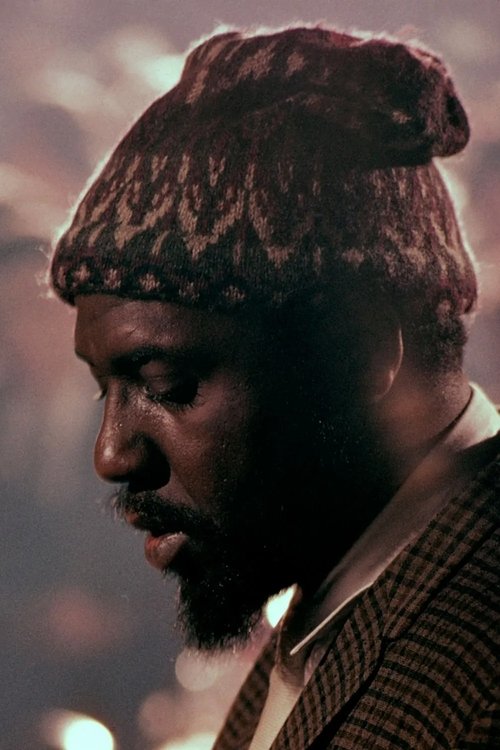
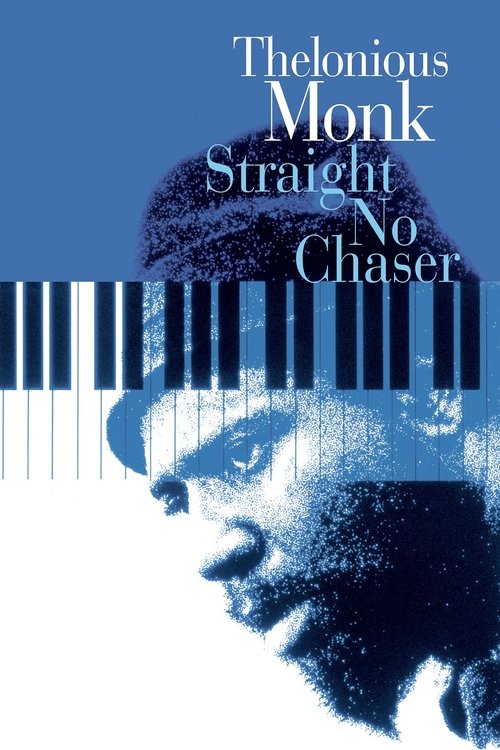
i went into "straight, no chaser" cold – zero prior monk lore, zero discography in memory. and what stunned me wasn’t nostalgia or nostalgia-coated genius, but the brutal clarity of what his music does. the film doesn’t mythologize monk. it presents his work as a functioning musical logic – percussive, dissonant, angular, unpredictable – and lets you experience it almost as neuro-acoustic code.
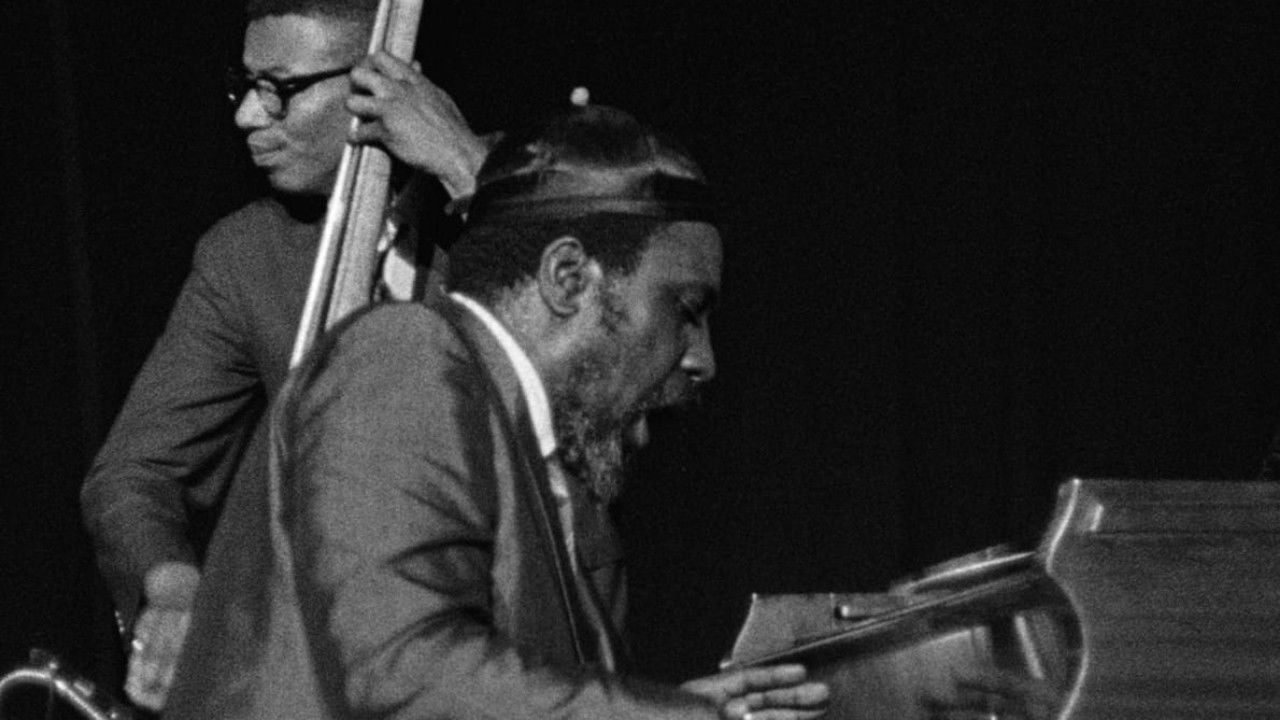
what hits hardest is how monk’s harmonic and rhythmic language consistently subverts conventional jazz syntax. his improvisations and compositions are built on dissonances, unexpected intervals, and abrupt chord-voicings – often paired with dramatic silences, hesitations, and stop-starts. that percussive, staccato piano attack combined with space and pause is not a stylistic flourish. it’s structural. 
monk doesn’t simply “play around” 12- or 32-bar forms: he reframes them. traditional choruses become elastic surfaces on which he stretches harmonic tension and rhythmic displacement. pieces like "evidence" demonstrate his use of metrical displacement: group-interaction beneath shifting grooves, where bandmates negotiate a moving centre of gravity rather than lock into a predictable time grid. 
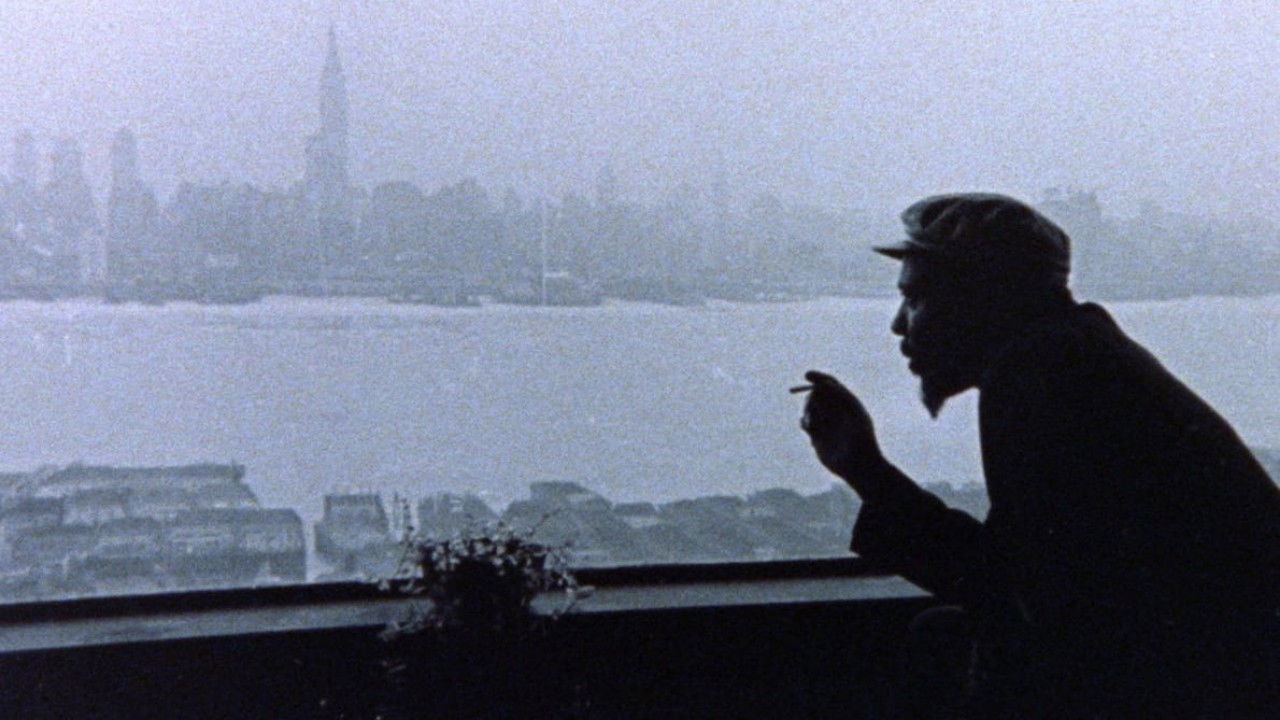
watching him pacing, hesitating, tapping, drifting – those are not “eccentricities.” they look, feel, and sound like a musician mentally scanning for harmonic vectors, spacing out musical tensions, mapping out voicings before a single key touches. monk treats silence, pause, and space as compositional tools – equal to notes. the effect is a music that breathes as it fractures, music that “thinks” as much as it plays. 
by the end of the film – even without prior exposure to his catalogue – you don’t just hear monk. you begin to understand why his piano feels like an alternate temporal engine. the patterns, the dissonances, the tremors of rhythm: they resolve into something that feels dangerous, alive, and structurally unstable – but coherent. it’s jazz not as performance, but as cognition.
“straight, no chaser” doesn’t want you to like monk. it wants you to witness him – as a composer, as a mind rearranging the sonic world in real time. and watching him blind makes that revelation heavier, sharper, more necessary.
i went into "straight, no chaser" cold – zero prior monk lore, zero discography in memory. and what stunned me wasn’t nostalgia or nostalgia-coated genius, but the brutal clarity of what his music does. the film doesn’t mythologize monk. it presents his work as a functioning musical logic – percussive, dissonant, angular, unpredictable – and lets you experience it almost as neuro-acoustic code.
what hits hardest is how monk’s harmonic and rhythmic language consistently subverts conventional jazz syntax. his improvisations and compositions are built on dissonances, unexpected intervals, and abrupt chord-voicings – often paired with dramatic silences, hesitations, and stop-starts. that percussive, staccato piano attack combined with space and pause is not a stylistic flourish. it’s structural. 
monk doesn’t simply “play around” 12- or 32-bar forms: he reframes them. traditional choruses become elastic surfaces on which he stretches harmonic tension and rhythmic displacement. pieces like "evidence" demonstrate his use of metrical displacement: group-interaction beneath shifting grooves, where bandmates negotiate a moving centre of gravity rather than lock into a predictable time grid. 
watching him pacing, hesitating, tapping, drifting – those are not “eccentricities.” they look, feel, and sound like a musician mentally scanning for harmonic vectors, spacing out musical tensions, mapping out voicings before a single key touches. monk treats silence, pause, and space as compositional tools – equal to notes. the effect is a music that breathes as it fractures, music that “thinks” as much as it plays. 
by the end of the film – even without prior exposure to his catalogue – you don’t just hear monk. you begin to understand why his piano feels like an alternate temporal engine. the patterns, the dissonances, the tremors of rhythm: they resolve into something that feels dangerous, alive, and structurally unstable – but coherent. it’s jazz not as performance, but as cognition.
“straight, no chaser” doesn’t want you to like monk. it wants you to witness him – as a composer, as a mind rearranging the sonic world in real time. and watching him blind makes that revelation heavier, sharper, more necessary.