

2007·Drama·3h 10m
7.1
★

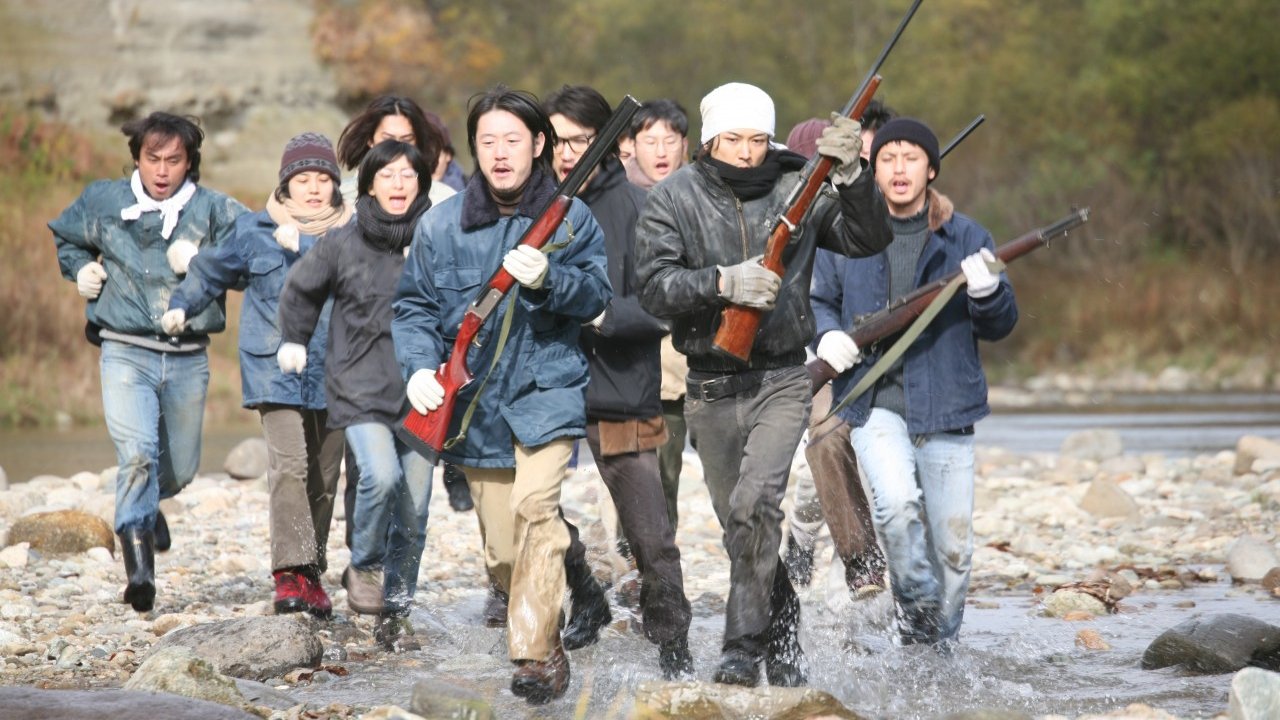
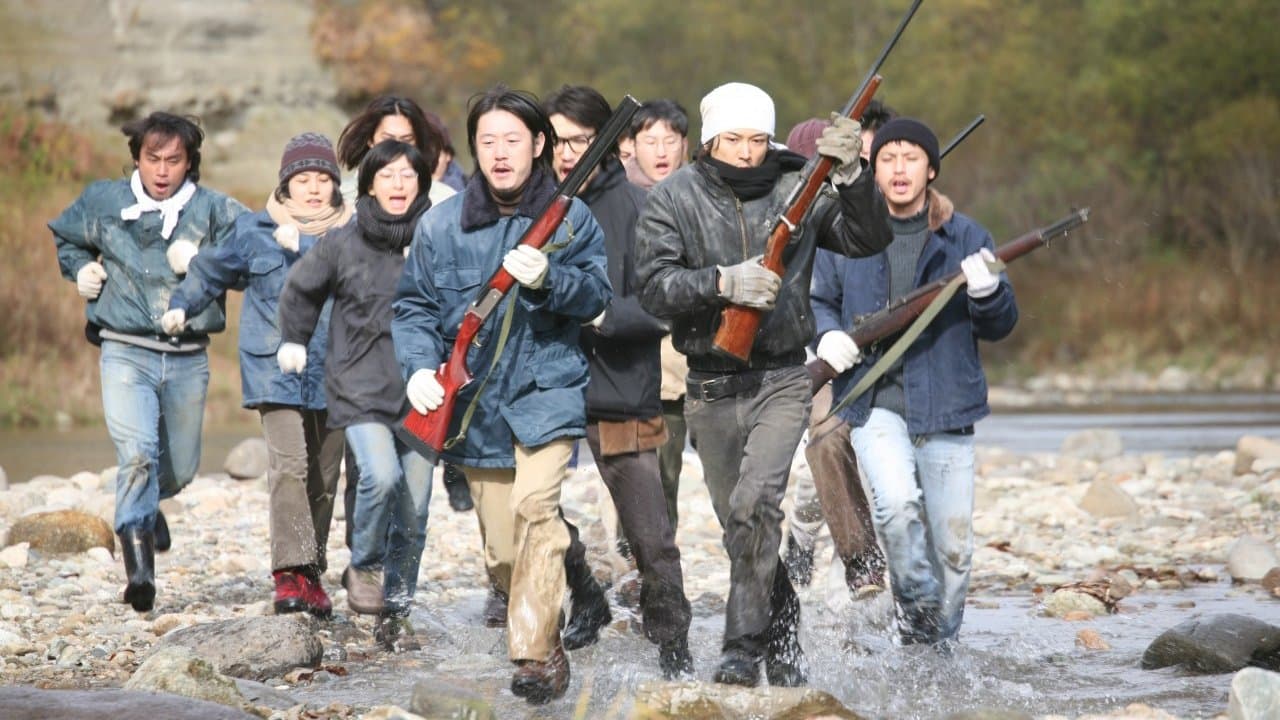
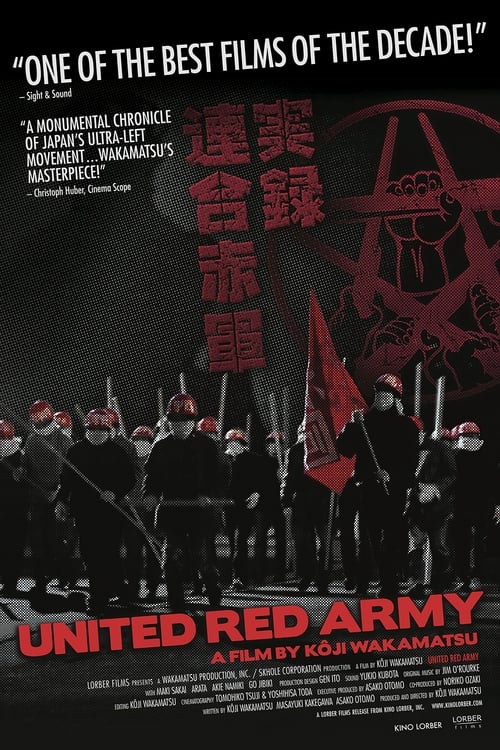
Two of the most radical student groups form the United Red Army (URA) and head into the mountains to conduct a training camp. Ideology devolves into despotism, and the URA's leaders begin to arbitrarily persecute their followers, a harrowing ordeal that culminates in violence and murder.
Directed by Kōji Wakamatsu
resolution
maoism
contestation
political purge
student revolt

Trailer

IMDB
N/A
Where to Watch

Cast

Maki Sakai
Mieko Toyama

Arata Iura
Hiroshi Sakaguchi

Akie Namiki
Hiroko Nagata

Go Jibiki
Tsuneo Mori
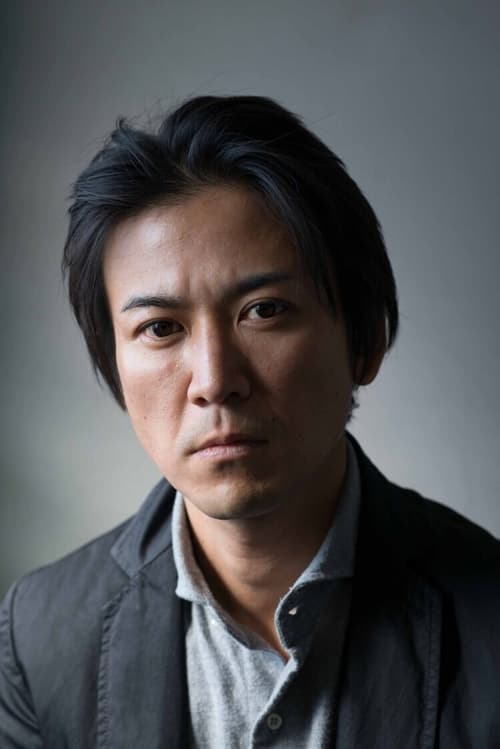
Shima Onishi
Kunio Bando

Akiko Monou

Kaoru Okunuki

Tak Sakaguchi

Yugo Saso

Hideo Nakaizumi

Tomori Abe

Anri Ban
Crew
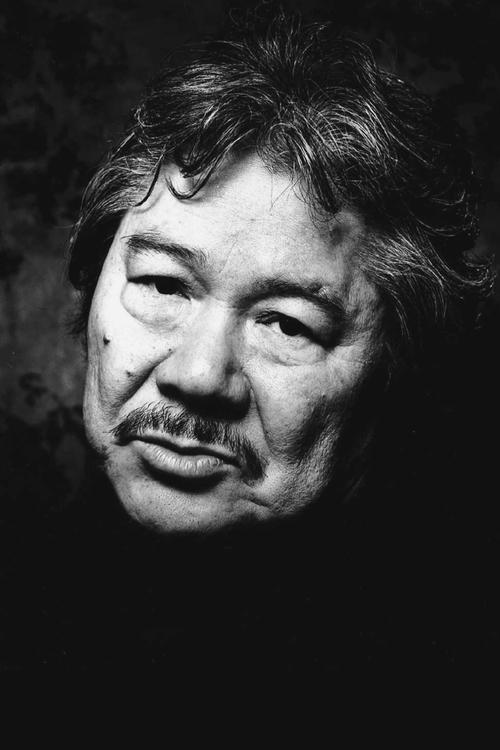
Kōji Wakamatsu
Director
Kōji Wakamatsu
Writer

Jim O'Rourke
Original Music Composer
Kōji Wakamatsu
Editor
Kōji Wakamatsu
Executive Producer
Popular Reviews
6 reviews
Medhansh
9.7★ · 09/06/25
Director- Wakamatsu Koji.This is the second film I have seen of his.I watched the film too early due to my anticipation for it. Instead, I should have first watched a good chunk of Japanese New Wave films surrounding the Anpo riots and the events that followed it before deciding to contend against this monstrosity stretching to three hours and ten minutes. The film tackles the Japanese Red Army movement of Japan that rose out of the Zengakuren. It shows us how aspirations from the sixties later on got twisted into entirely new contortions, which now appear foreign while viewed alongside the original.I don't know much about the ideological differences between the factions, and hence I won't try to address what they were trying to achieve in that domain.The film lacks dull moments during the whole ordeal, keeping the viewers intrigued throughout the runtime. The film is a semi-detailed run-through of the creation and demise of the Japanese Red Army. This is the best we could ever get on the material in the form of a film, as it would be a gargantuan effort to summarise sixteen months of events in a format of a series, let alone a film and still maintain its captivation over the viewers. The film is made in the format of a documentary mocking the existence of the faction while demonising their very essence, rightfully so. Terrorism can never be excused, no matter what situations one is living under, till there is not a credible threat to one's life. From the adaptation of the police and those in power during the events of the film, the members appear to be snotty-nosed basterds still living in their edgy teenage years, while forcing others to do so as well duress. Assuming that they didn't go through an evolution of ideals and ideas as they grew older is a fallacy, as they indeed evolved, but in the wrong direction, as it got worse instead of better.The film is an excellent detail of what went through the minds of those sociopathic, greedy individuals who only thought about themselves and disregarded thoughts about what their family would have to go through because of their ill actions. The film excellently critiques the rot of oneself due to external stimulus pushing one further and further into ideas that were artificial to begin with, and aspirations so far that they will forever be unachievable.The film shows us how internal strife leads to the wrong people rising from within the ranks, who in turn lead to a systematic collapse of a movement as a whole by making it stray incredibly farther from what it originally stood for.The film also excellently portrays how it is human nature that destroys the unity within a faction or clique due to ill feelings of jealousy and anger, driving one to take steps to ensure that they still hold power over the rest, which instead causes distrust among the members due to the severe actions the ones being punished for no reason are subjected to. The film doesn't shy away from showing the gory details and the negative actions of the factions, true to reality. Thus, it is not meant for the viewing of those who are faint-hearted.The final nail in the coffin that nailed the aspirations for a left-leaning extremism shut forever is shot superbly. The inner strife of the members still left standing at the lodge at Mount Asama is shown excellently. I drew parallels between that scene and the final confrontation in Shootout at Lokhandwala. What I couldn't understand in that scene is the leniency the armed forces showed to the terrorists in the lodge. Their not barraging the group with tear gas, if not bullets, seems counterintuitive to me, as they truly were a credible threat to safety.Overall, this is a highly important work to view to understand more about the political climate of the 60s Japan and the conclusion to the Anpo struggles.
Director- Wakamatsu Koji.This is the second film I have seen of his.I watched the film too early due to my anticipation for it. Instead, I should have first watched a good chunk of Japanese New Wave films surrounding the Anpo riots and the events that followed it before deciding to contend against this monstrosity stretching to three hours and ten minutes. The film tackles the Japanese Red Army movement of Japan that rose out of the Zengakuren. It shows us how aspirations from the sixties later on got twisted into entirely new contortions, which now appear foreign while viewed alongside the original.I don't know much about the ideological differences between the factions, and hence I won't try to address what they were trying to achieve in that domain.The film lacks dull moments during the whole ordeal, keeping the viewers intrigued throughout the runtime. The film is a semi-detailed run-through of the creation and demise of the Japanese Red Army. This is the best we could ever get on the material in the form of a film, as it would be a gargantuan effort to summarise sixteen months of events in a format of a series, let alone a film and still maintain its captivation over the viewers. The film is made in the format of a documentary mocking the existence of the faction while demonising their very essence, rightfully so. Terrorism can never be excused, no matter what situations one is living under, till there is not a credible threat to one's life. From the adaptation of the police and those in power during the events of the film, the members appear to be snotty-nosed basterds still living in their edgy teenage years, while forcing others to do so as well duress. Assuming that they didn't go through an evolution of ideals and ideas as they grew older is a fallacy, as they indeed evolved, but in the wrong direction, as it got worse instead of better.The film is an excellent detail of what went through the minds of those sociopathic, greedy individuals who only thought about themselves and disregarded thoughts about what their family would have to go through because of their ill actions. The film excellently critiques the rot of oneself due to external stimulus pushing one further and further into ideas that were artificial to begin with, and aspirations so far that they will forever be unachievable.The film shows us how internal strife leads to the wrong people rising from within the ranks, who in turn lead to a systematic collapse of a movement as a whole by making it stray incredibly farther from what it originally stood for.The film also excellently portrays how it is human nature that destroys the unity within a faction or clique due to ill feelings of jealousy and anger, driving one to take steps to ensure that they still hold power over the rest, which instead causes distrust among the members due to the severe actions the ones being punished for no reason are subjected to. The film doesn't shy away from showing the gory details and the negative actions of the factions, true to reality. Thus, it is not meant for the viewing of those who are faint-hearted.The final nail in the coffin that nailed the aspirations for a left-leaning extremism shut forever is shot superbly. The inner strife of the members still left standing at the lodge at Mount Asama is shown excellently. I drew parallels between that scene and the final confrontation in Shootout at Lokhandwala. What I couldn't understand in that scene is the leniency the armed forces showed to the terrorists in the lodge. Their not barraging the group with tear gas, if not bullets, seems counterintuitive to me, as they truly were a credible threat to safety.Overall, this is a highly important work to view to understand more about the political climate of the 60s Japan and the conclusion to the Anpo struggles.


Ángel
9.0★ · 05/08/26
Joey_Sockitume
7.0★ · 06/08/25
Nezevrom
7.0★ · 02/05/25
Klaus BARBIE
8.0★ · 04/25/24