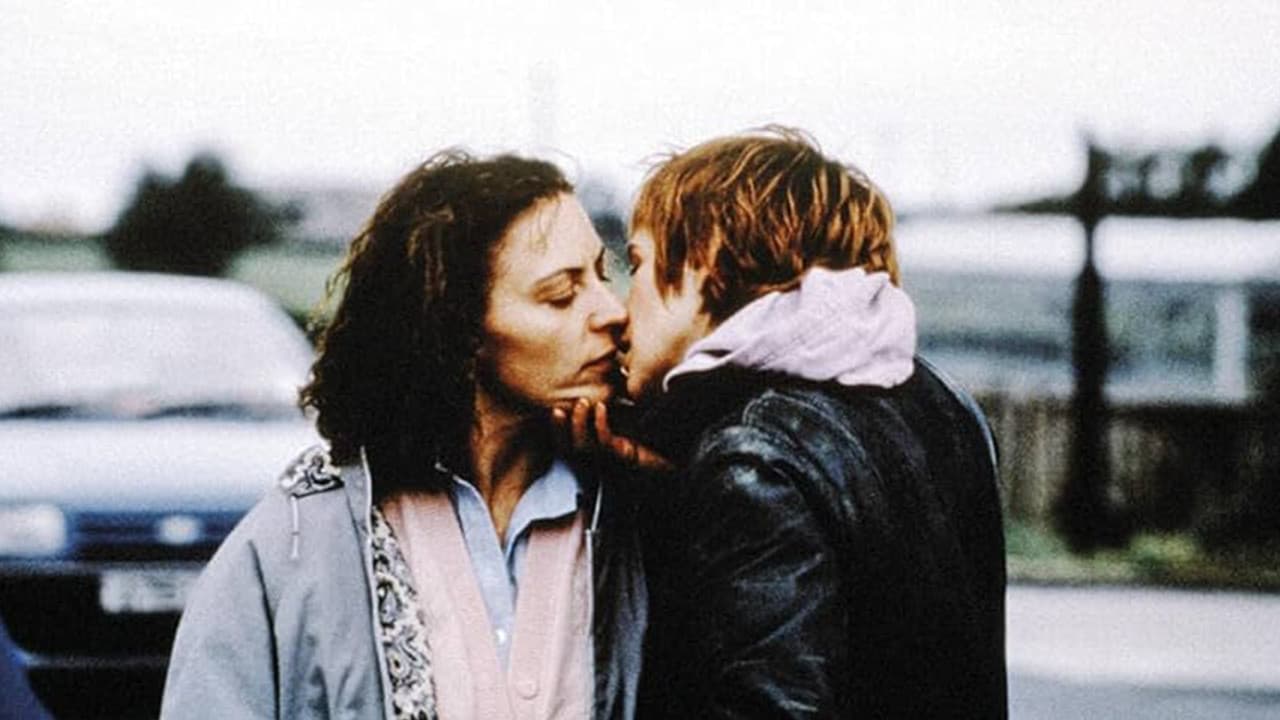


Most of the codependent relationships in film often seem to involve drugs, but this one is starkly sober. The illogic of Mi seemingly confounds, yet her decisions feel believable. The narrative admirably builds an amorphous form of autonomy for Mi, despite her seeming subjugation. It makes the final union all the more cathartic, accenting the proverbial death-baptism. For a relationship like this, the only reasonable fate is death, but if you can die by your codependent’s hand, you can achieve sainthood.
The final shot cements its religious container, even if its spirit is secular. It adopts a number of Catholic devices such as self-punishment, Jesus’ death, biblical story references, and a sincere desire for commune with God. I think the religiosity of the film is a shell to make sense of the deep feelings/troubles within our characters. The yearning Eunice has for her desired Judith is akin to a devotee’s desire to find god. As such, Eunice wraps herself in chains in an analogous self-flagellation state of punishment until she finds her god.
This was a lot of things. Lonely characters are desperate for connection. They miss what’s standing right in front of them. How far will you go for a breadcrumb of validation?
Most of the codependent relationships in film often seem to involve drugs, but this one is starkly sober. The illogic of Mi seemingly confounds, yet her decisions feel believable. The narrative admirably builds an amorphous form of autonomy for Mi, despite her seeming subjugation. It makes the final union all the more cathartic, accenting the proverbial death-baptism. For a relationship like this, the only reasonable fate is death, but if you can die by your codependent’s hand, you can achieve sainthood.
The final shot cements its religious container, even if its spirit is secular. It adopts a number of Catholic devices such as self-punishment, Jesus’ death, biblical story references, and a sincere desire for commune with God. I think the religiosity of the film is a shell to make sense of the deep feelings/troubles within our characters. The yearning Eunice has for her desired Judith is akin to a devotee’s desire to find god. As such, Eunice wraps herself in chains in an analogous self-flagellation state of punishment until she finds her god.
This was a lot of things. Lonely characters are desperate for connection. They miss what’s standing right in front of them. How far will you go for a breadcrumb of validation?