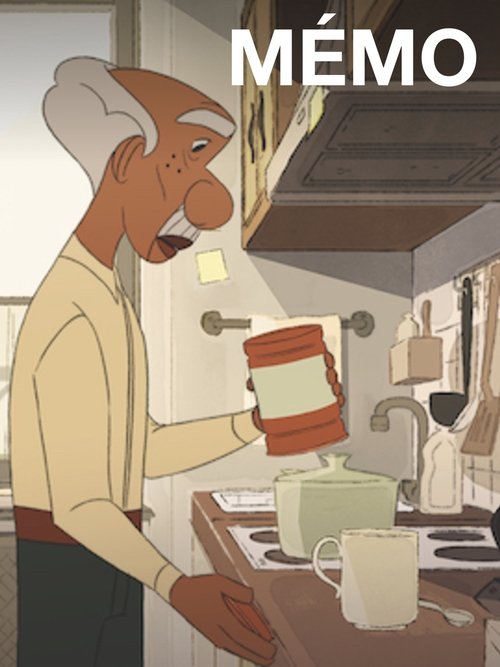
Memo doesn’t explain Alzheimer’s. It refuses to. There are no facts, no timelines, no tidy lessons for people who want to feel informed without feeling implicated. Instead, the film places you inside a mind that is still intact enough to feel pride, frustration, and the need to prove something, even as the present keeps slipping out of reach.
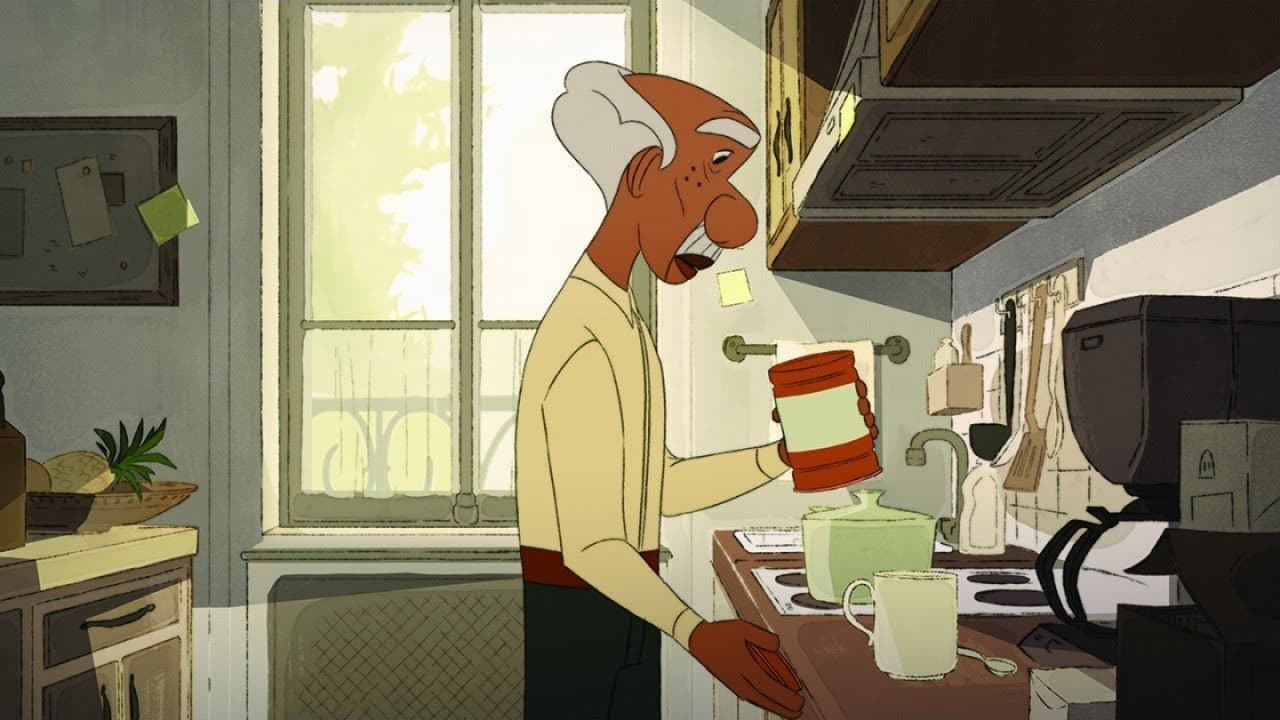
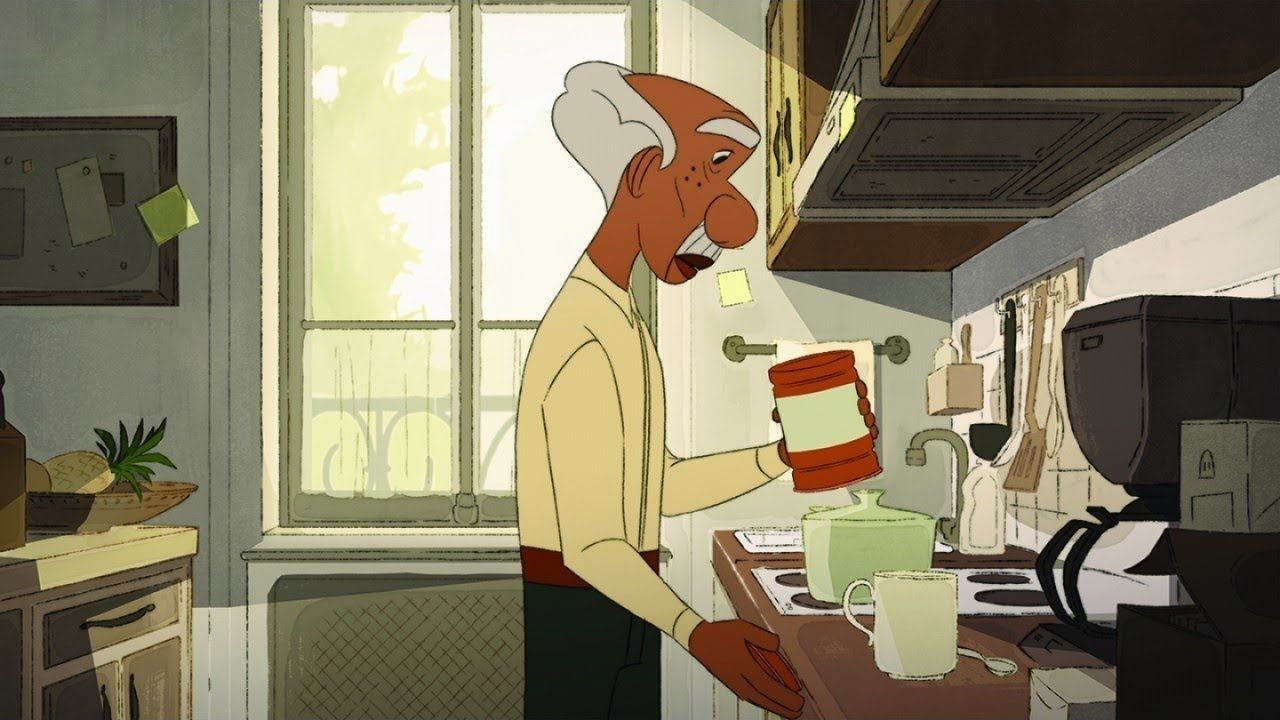
What makes the film devastating is not the forgetting itself, but the awareness of it. The character knows something is wrong. He senses the gaps. He works around them. He compensates. He insists on doing things alone, not out of stubbornness, but out of a need to preserve dignity in a world that quietly assumes it’s already gone. Alzheimer’s here is not confusion as spectacle, but effort. Constant, exhausting effort.
The short captures something rarely acknowledged: how cruel repetition becomes when patience runs out. Being corrected doesn’t restore memory. It only reinforces failure. The film understands that reminding someone they forgot does not help them remember, it only reminds them they are losing. And that loss is not abstract. It’s daily. It’s humiliating. It’s deeply human.
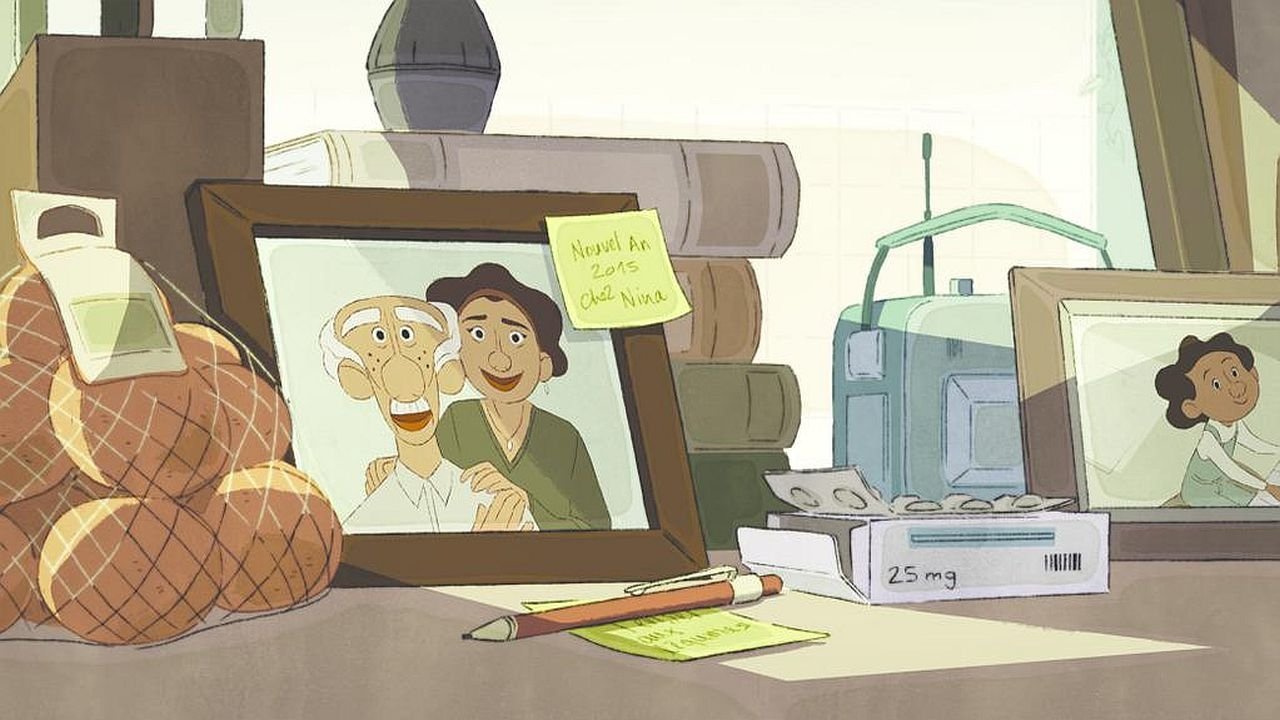
There’s also a painful contrast between past and present. Long-term memories linger, sometimes vividly, while the immediate moment dissolves almost as soon as it forms. A full day of connection can vanish overnight. Presence becomes temporary, affection becomes weightless, and the world keeps asking the person to hold onto things they no longer can. The film never dramatizes this with tears or speeches. It lets the silence do the work.
What Memo ultimately portrays is not a mind disappearing, but a person fighting to remain visible. Someone who wants to be trusted, to be capable, to be seen as more than their condition. Someone who may forget to eat, forget a visit, forget a conversation, but does not forget what it means to want autonomy. That desire survives longer than memory ever does.
By choosing animation, the film avoids realism in favor of emotional accuracy. The shifting spaces, the instability, the sense of disorientation feel closer to truth than any clinical depiction could. This is not what Alzheimer’s looks like. It’s what it feels like.
Memo is gentle, but it is not soft. It asks the viewer for patience, empathy, and restraint. And in doing so, it quietly exposes how often those things are missing in real life.
Memo doesn’t explain Alzheimer’s. It refuses to. There are no facts, no timelines, no tidy lessons for people who want to feel informed without feeling implicated. Instead, the film places you inside a mind that is still intact enough to feel pride, frustration, and the need to prove something, even as the present keeps slipping out of reach.
What makes the film devastating is not the forgetting itself, but the awareness of it. The character knows something is wrong. He senses the gaps. He works around them. He compensates. He insists on doing things alone, not out of stubbornness, but out of a need to preserve dignity in a world that quietly assumes it’s already gone. Alzheimer’s here is not confusion as spectacle, but effort. Constant, exhausting effort.
The short captures something rarely acknowledged: how cruel repetition becomes when patience runs out. Being corrected doesn’t restore memory. It only reinforces failure. The film understands that reminding someone they forgot does not help them remember, it only reminds them they are losing. And that loss is not abstract. It’s daily. It’s humiliating. It’s deeply human.
There’s also a painful contrast between past and present. Long-term memories linger, sometimes vividly, while the immediate moment dissolves almost as soon as it forms. A full day of connection can vanish overnight. Presence becomes temporary, affection becomes weightless, and the world keeps asking the person to hold onto things they no longer can. The film never dramatizes this with tears or speeches. It lets the silence do the work.
What Memo ultimately portrays is not a mind disappearing, but a person fighting to remain visible. Someone who wants to be trusted, to be capable, to be seen as more than their condition. Someone who may forget to eat, forget a visit, forget a conversation, but does not forget what it means to want autonomy. That desire survives longer than memory ever does.
By choosing animation, the film avoids realism in favor of emotional accuracy. The shifting spaces, the instability, the sense of disorientation feel closer to truth than any clinical depiction could. This is not what Alzheimer’s looks like. It’s what it feels like.
Memo is gentle, but it is not soft. It asks the viewer for patience, empathy, and restraint. And in doing so, it quietly exposes how often those things are missing in real life.