
A Corner in Wheat
1909·Drama·14m
7.0
★
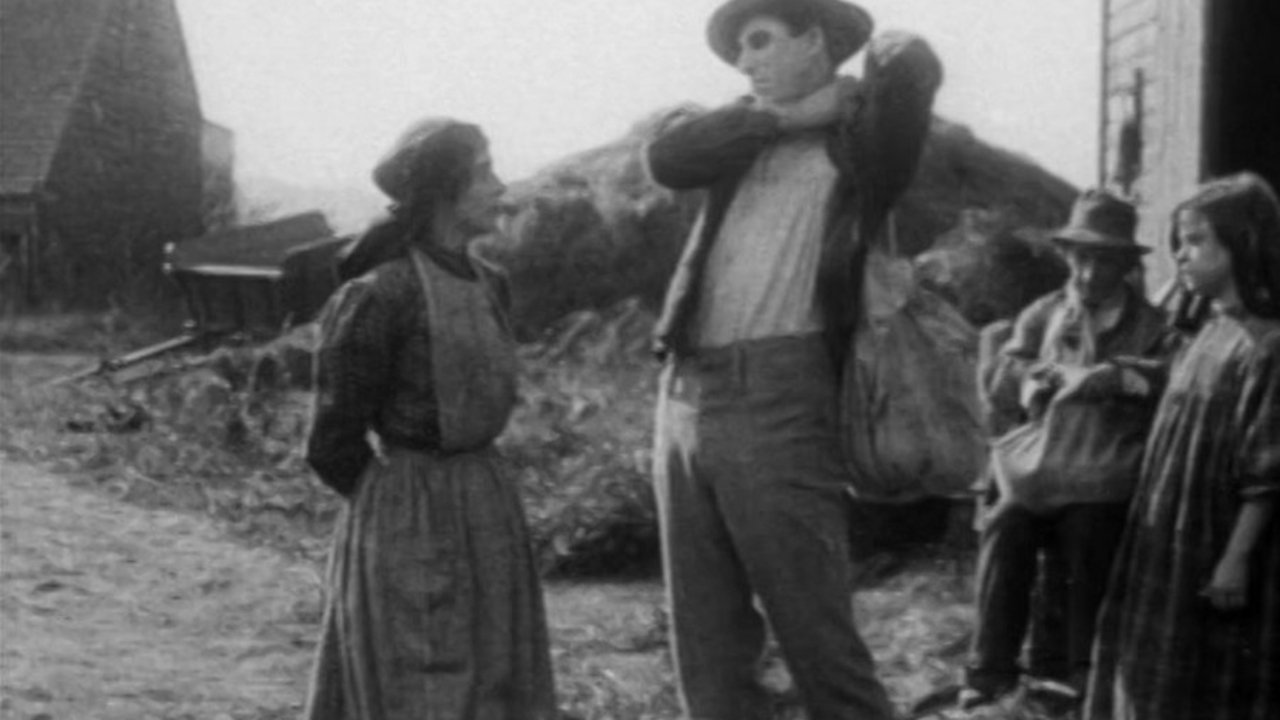
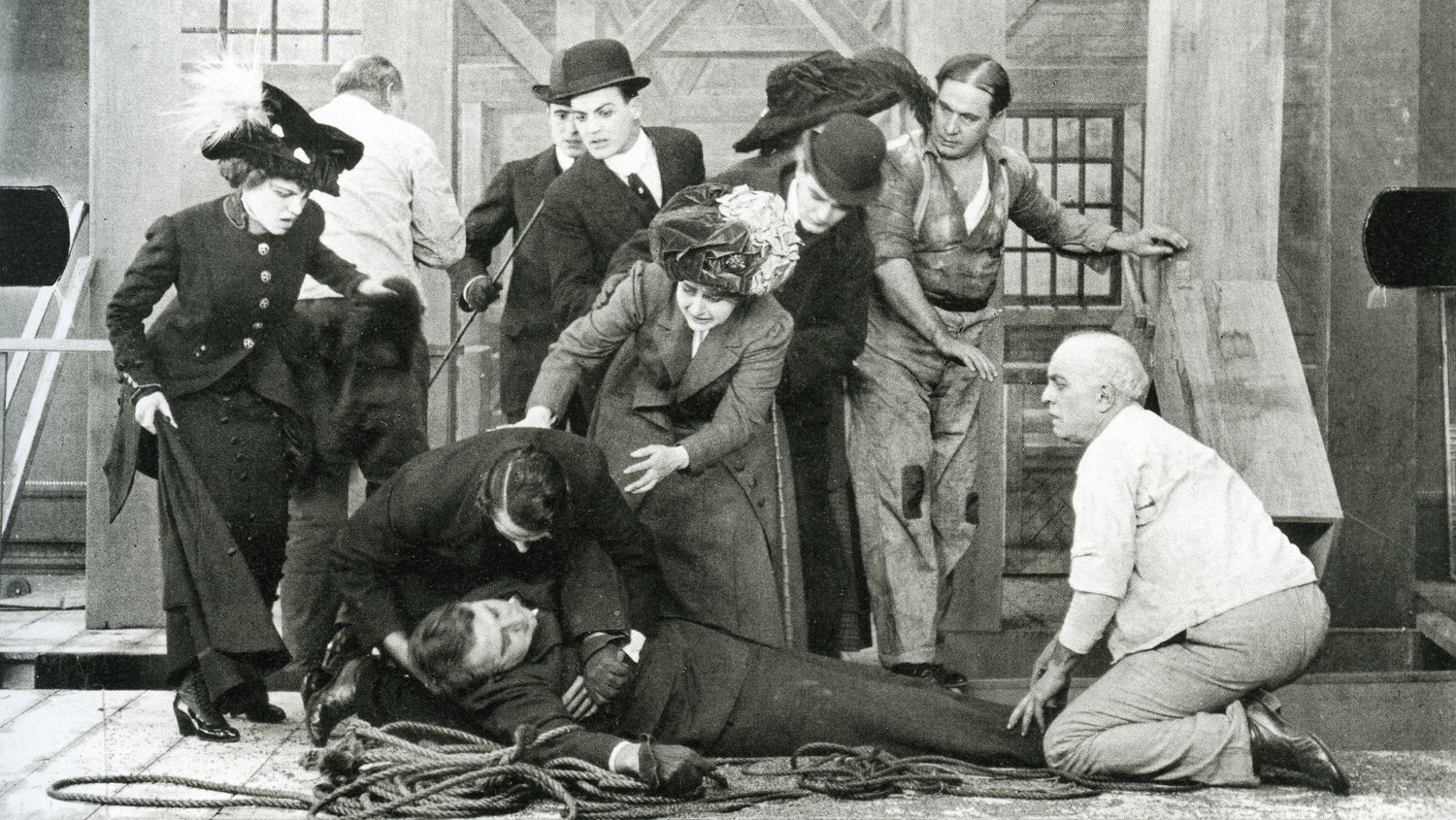
On a whim, a greedy tycoon decides to corner the world market in wheat. This doubles the price of bread, forcing grain producers into charity lines and others further into poverty. The film contrasts the differences between the lives of those who work to grow the wheat and the life of the man who dabbles in its sale for profit.
Directed by D.W. Griffith
silent film
short film

IMDB
N/A
Cast
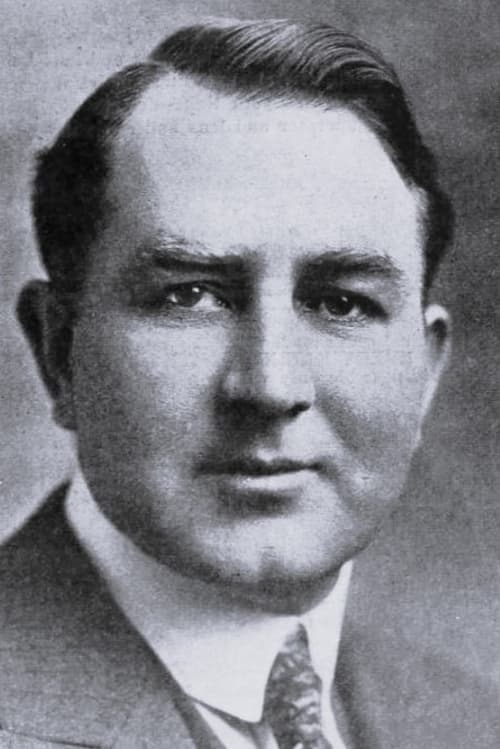
Frank Powell
The Wheat King
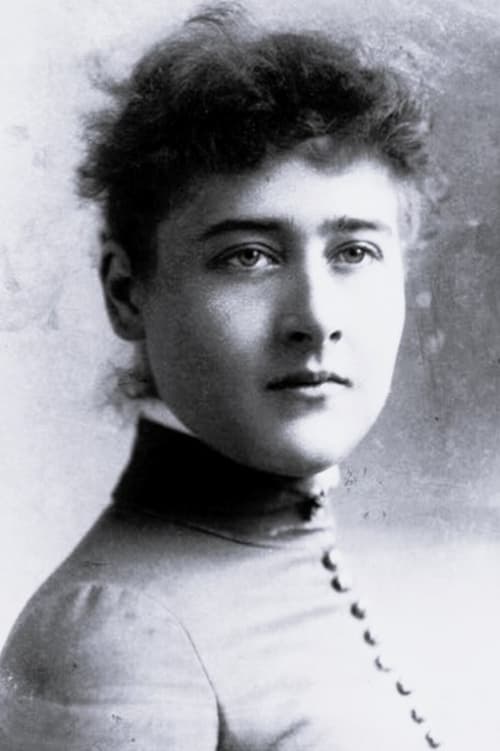
Grace Henderson
The Wheat King's Wife
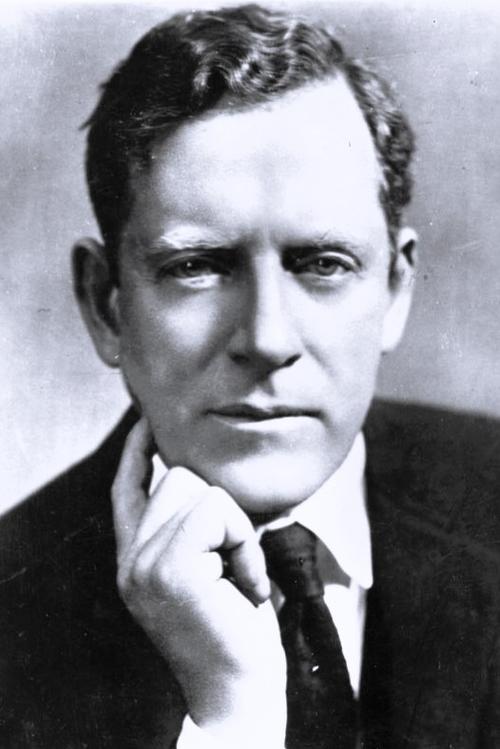
James Kirkwood
Farmer
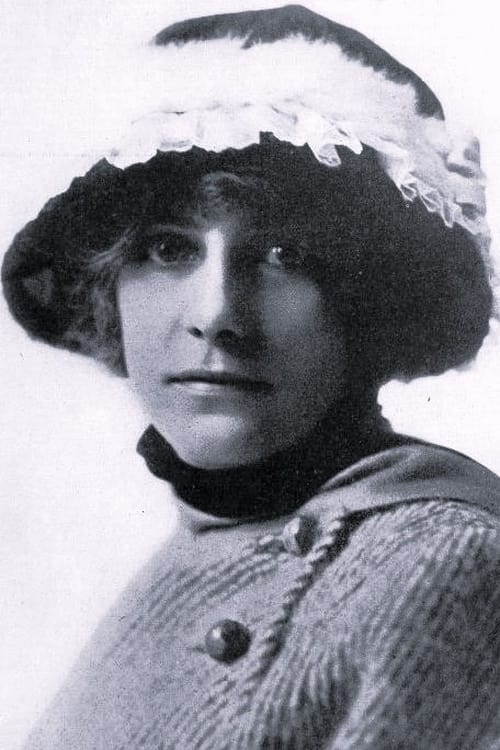
Linda Arvidson
Farmer's Wife
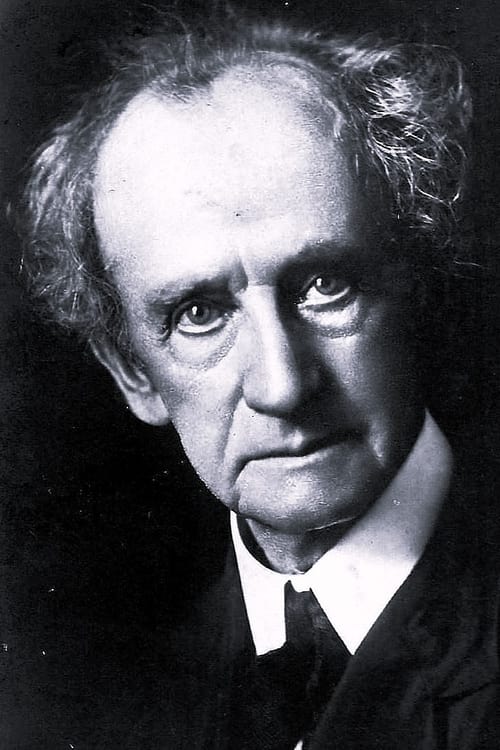
W. Chrystie Miller
Farmer's Father
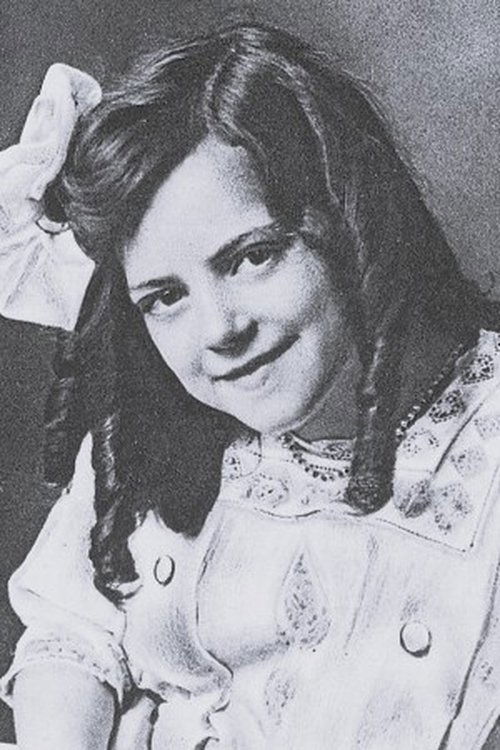
Gladys Egan
Farmer's Little Daughter
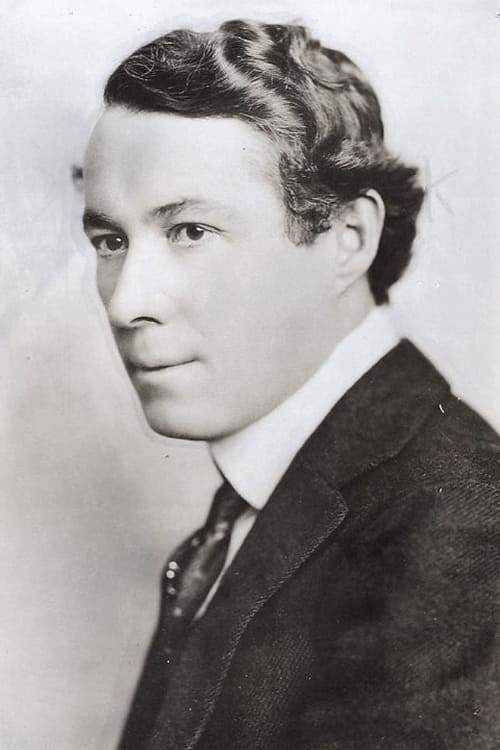
Henry B. Walthall
Wheat King's Assistant
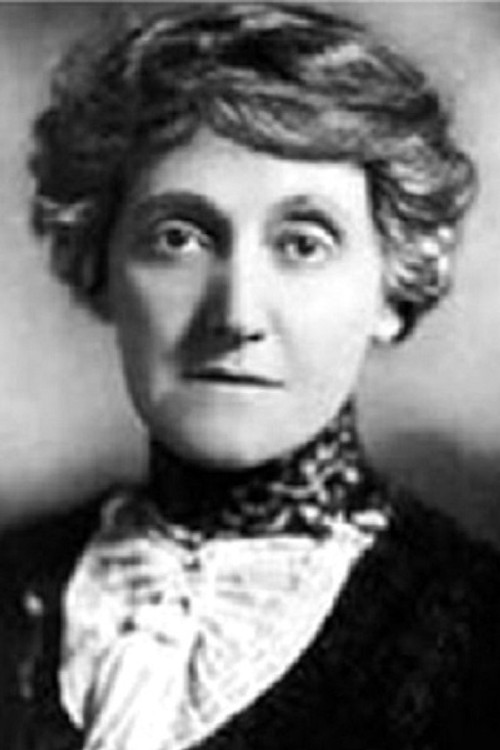
Kate Bruce
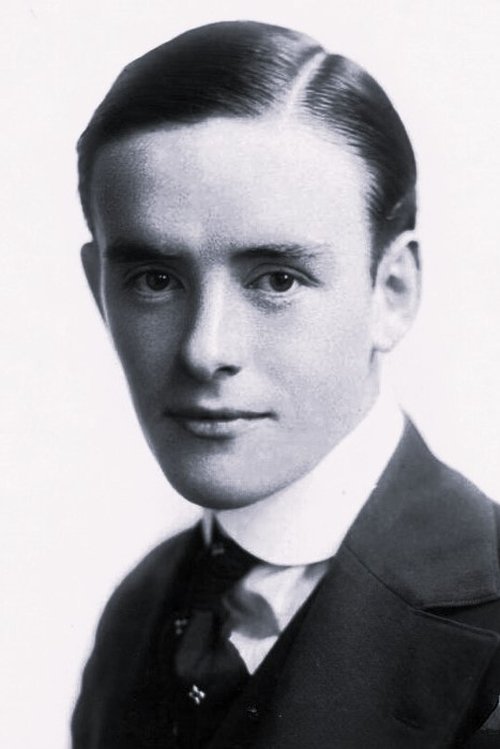
Robert Harron
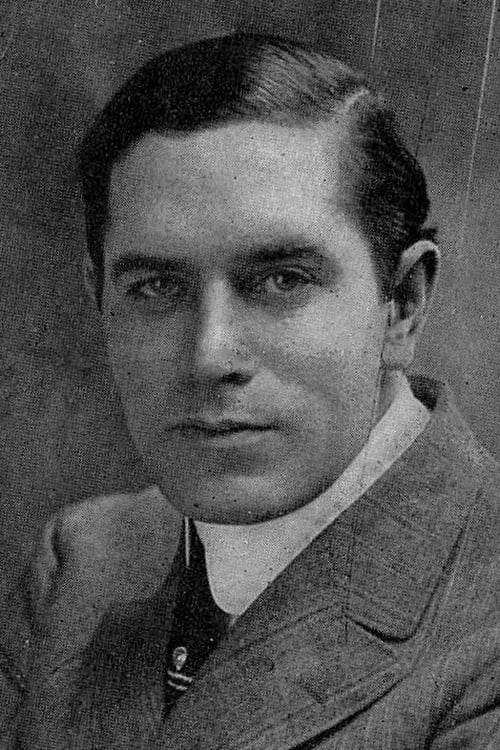
Arthur V. Johnson
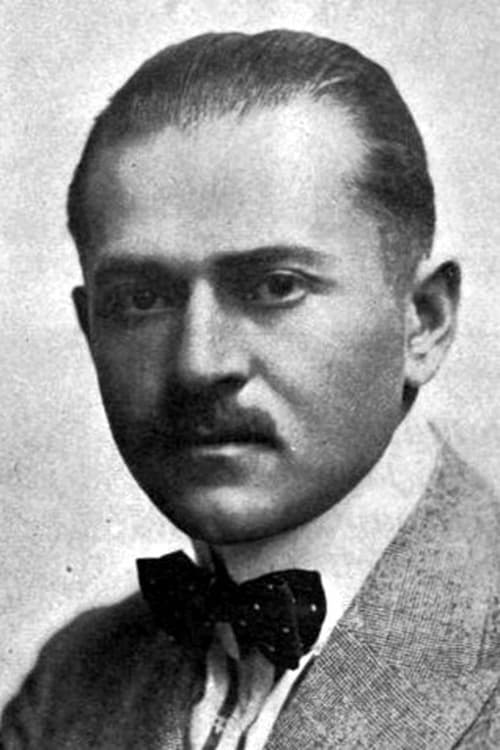
Henry Lehrman
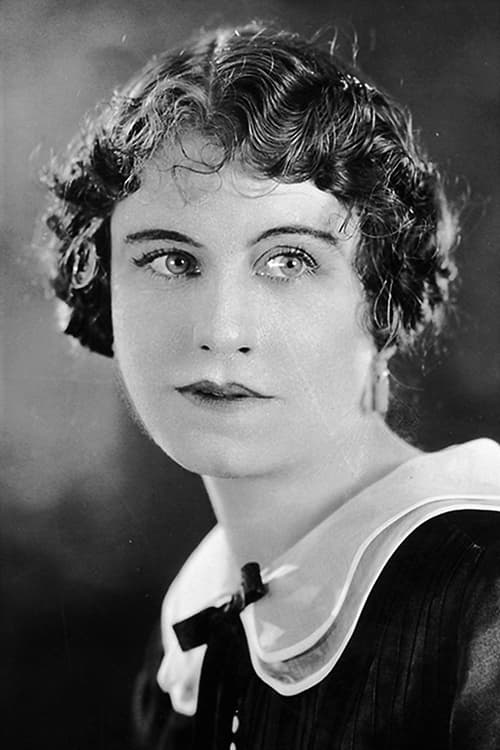
Jeanie Macpherson
Crew
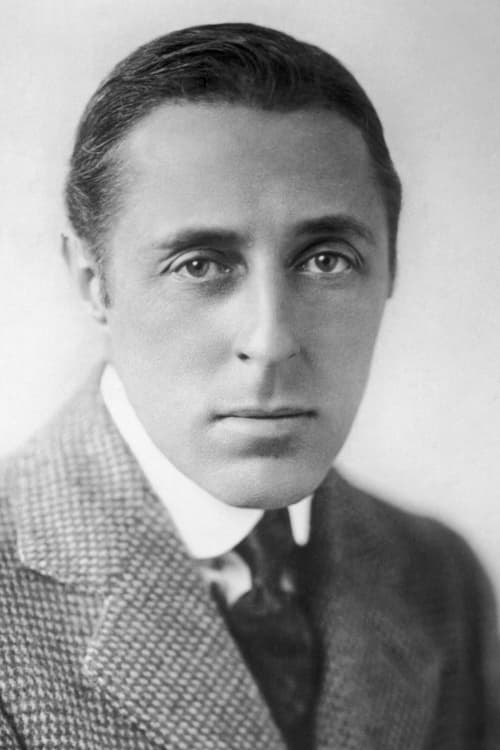
D.W. Griffith
Director
D.W. Griffith
Writer
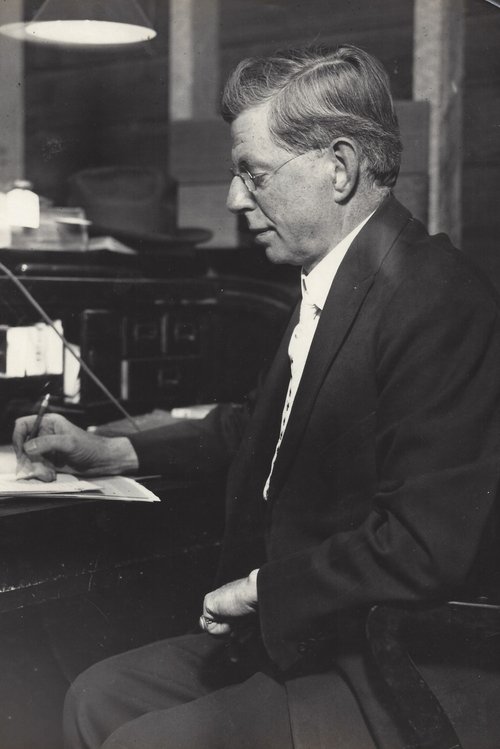
Frank E. Woods
Writer

Billy Bitzer
Director of Photography
D.W. Griffith
Producer

Frank Norris
Novel
Popular Reviews
78 reviews
JBPRO
7.0★ · 04/24/26

Over the last couple of decades or so, the dominant trend has been to malign D.W. Griffith on mention, and this is not without good reason. The Birth of a Nation is the most infamous and socially harmful film ever made. Griffith's following, quasi-response film Intolerance has undergone revision in recent years, and is now correctly understood as something far less mature than a change in direction, let alone an apology. If anything it is an apologia. Broken Blossoms holds a paradoxical position in film history: the fact that a film about racial tolerance is told through the most infamous use of yellowface in the history of cinema next only to Breakfast at Tiffany's almost too perfectly typifies the contradictory position that Griffith holds in cinema history.
But this tendency to malign Griffith extends beyond ethics. Griffith has always been, to varying degrees, a controversial figure. The main shift, the main act of malignment of late, has occurred in relation to an historical qualm - that is, an implicit opposition to the idea of Griffith's legacy.
It is of course true that Griffith lied on his own resumé. He did not invent the close-up; he did not invent the extreme-wide shot; he did not invent cross-cutting; he did not invent the fade; he wasn't even the first filmmaker to be screened in the White House. This is all common knowledge by now. There was clearly on Griffith's part a conscious effort to cultivate a personal mystique.
It is on the back of this that Griffith has in recent years been framed not only as a morally wanting and deeply backwards bigot, but also as a fraud. There are plenty of articles, web pages, YouTube videos, and social media posts that will reinforce this. Griffith created a persona for himself by taking credit for others' innovations, and exploited this in order to position himself as cinema's pre-eminent filmmaker.
We need to be careful of this distinction though, and qualify what we mean by 'fraud'. True, Griffith did not directly invent these things, but his influence and his legacy (despite Griffith's own gesturing) is not one of invention; rather it is one of application. Especially in lieu of an emerging discourse that decentres Griffith from his hegemonic position in Transition-era film historiography, and which instead seeks to platform 'rediscovered' pioneers such as Lois Weber, Alice Guy-Blaché, and Oscar Micheaux, the impulse to highlight one at the expense of the other is obvious.
The reaction against Griffith might not only be a positive effort to platform others, but also a negative effort to undercut Griffith himself. For over one-hundred years, after all, he has been by far the most discussed dramatist of the silent era. The Birth of a Nation is possibly the most watched piece of media across all film classes. Students have been asked to grit their teeth and try to isolate its influence. His legacy is quite literally as the 'Father of Film'. This movement against Griffith is thus three-pronged: it is an opposotion to his legacy, an endorsement of other filmmakers, and an objection to his perceived over-saturation.
This narrative and the logic that scaffolds it has one major flaw, however. David Wark Griffith is the most important director of the silent era. He did revolutionise film technique and film language, and to a far greater degree than Weber, Guy-Blaché, or Micheaux. His films, though not the only, were ultimtately the primary vehicle through which cinema came to be respected as an art. No filmmaker has had as transformative an effect on film marketing and advertising as Griffith has either. The Birth of a Nation is also, unfortunately, inescapably, one of the few truly epochal revolutionary steps in the development of film technique, joined perhaps only by A Trip to the Moon, Battleship Potemkin, and Citizen Kane.
The revisionist tendency against Griffith, the trend of questioning his role as an innovator, of removing him from university syllabi, and of deriding him as a kind of glorified circus promoter, is by no means baseless. It is, however, overstated. It is not unreasonable to suggest that the history of cinema without Griffith would equivalate to a history of motor cars without Ford or of English writing without Chaucer. That is to say, the general movement might have trended in a particular direction either way, but it was fundamentally shaped through the prism of this individual. Yes, George Albert Smith was using close-ups in his actualités twenty years before Griffith; James A. Williamson and Edwin S. Porter had displayed highly sophisticated uses of parallel editing a decade before Griffith as well; even the notorious Griffithian ending of numerous intersecting plot-points hurtling towards a finish line was used as the entire premise of Lois Weber's Suspense, two years before The Birth of a Nation. Indeed it is even true that the technical novelties that did occur on Griffith sets, such as the development of complex lighting techniques and iris shots, are more accolades of Billy Bitzer's than of Griffith himself.
The difference is that Griffith synthesised these things. He turned novelties into standards and gimmicks into grammar. That is his legacy. By the mid-nineteen-tens, other directors were doing similar things, but Griffith did them more comprehensively and on a larger scale. This element of scale is a particularly important point. Griffith's innovations were industrial before they were technical. Feature films existed before Griffith. The Story of the Kelly Gang, L'Inferno, Ingeborg Holm, and Quo Vadis? are among many of the very well-known examples of pre-Birth of a Nation feature-length cinema. But what separates Griffith from other early feature filmmakers is that he essentially took the early sophisticated examples of filmmaking from short films like The Great Train Robbery and Suspense, developed them into a far more complex system of film language, and sized them to scale. Under the purview of Griffith, cinema suddenly became a medium adjacent to the novel, the play, the concert, the opera. It became marketable as more than a two-bit sideshow spectacle, but as a genuine social event and cultural moment. Cinema became accessible to the tastes of the middle-classes. It was, in short, an art. As with film technique at large, Griffith was yet again the synthesising agent. Smith, Porter, Williamson, Méliès, the Lumières, Dickson, Guy-Blaché - these are all seminal figures in the development of cinema, but Griffith is their unifier.
As a side note, I would like to clarify that I am using the term 'sophisticated' merely by convention, to describe the embryonic stages of the classical continuity system that would eventually dominate American film dramaturgy throughout the Classical era. As I have previously and extensively detailed in an earlier review of Victor Sjöström's Ingeborg Holm, I firmly believe that early, pre-classical cinema was deeply sophisticated in its own right and involved a far subtler aesthetic than the 'film-play' or 'primitive' labels that it has been given would suggest. Indeed, in some ways I prefer many elements of this earlier aesthetic to the classical silent style that would go on to displace it.
It is easy to forget that Griffith was the main influence of Soviet Montage or that he was the near-solitary standard around which Hollywood would standardise its blueprint in the twenties and thirties. The most elementary survey of film history will clearly and indubitably demarcate a pre-Griffith era of cinema and a post-Griffith era of cinema. He was the initial standardiser, not the first to gesture towards, but the first to solidify, a concept of film language that extends beyond theatrical successions of completed actions in singular spaces. The impulse to qualify Griffith's legacy and reconstitute it is valid, even necessary. The impulse to question it as such is spurious. The corrective need to pedestal under-seen Transition-era filmmakers and to resituate Griffith's legacy as a synthesiser rather than an inventor has consistently given way to an over-corrective attempt to efface Griffith's primacy in silent-era discourse at large. It is especially prevalent in depictions of Griffith in popular media; that is my qualm.
Ostensibly, this is a review of A Corner in Wheat, which I am yet to so much as allude to let alone mention. But I do want to talk about it, and I want to do so specifically for two interrelated reasons. First of all, I think it is a brilliant example of just how firm a grasp Griffith had on film aesthetics, even before his, as it were, 'golden era', some five or so years later. It is, in my opinion, a perfect means of demonstrating why Griffith deserves a legacy of titanic aesthetic status as well as of titanic historical status. Secondly, I think A Corner in Wheat is another valuable demonstration of my aforesaid theory of pre-classical silent film aesthetics and their underlying, oft-ignored sophistication. I shall discuss these in tandem.
Take the opening scene of the film, for instance, composed of only two shots, both long-take, wide-shot tableaux. The first shows the family at the homestead as the men resolve to sow the wheat; they exit the frame, leaving the housewife and her daughter as its sole occupants. Even by pre-montage standards, the fifty seconds that the shot is accommodated with is a genuinely long period of time. This heightened temporality achieves something subtly remarkable, however. The movement of the two men in this shot, at first within the frame, then in moving out of it, finds a contrast in the totally inert figures of the mother and the child. The effect is sharp, if understated. As the duration of the shot expands, the attention of the audience is slowly, quietly, displaced from action to inertia, from labour to the domestic. The underlying implication conveyed by this static, unmoving presence in the frame is of dependence. Our gaze and thoughts shift as we perceive, if from a distance, the lives of those who shall be affected by the fruits of this labour, and their inability to intercede on those results. Griffith hangs onto the shot after its action has ceased. It in effect becomes durational for a couple of seconds, as its inertia acquires density. The technique in this shot is so imperceptibly simple, yet so tastefully impactful. A comparison may indeed be made with Ingeborg Holm, where a similar technique - that is, the dramatic coexistence of movement and inertia across an extended duration - creates a like impression.
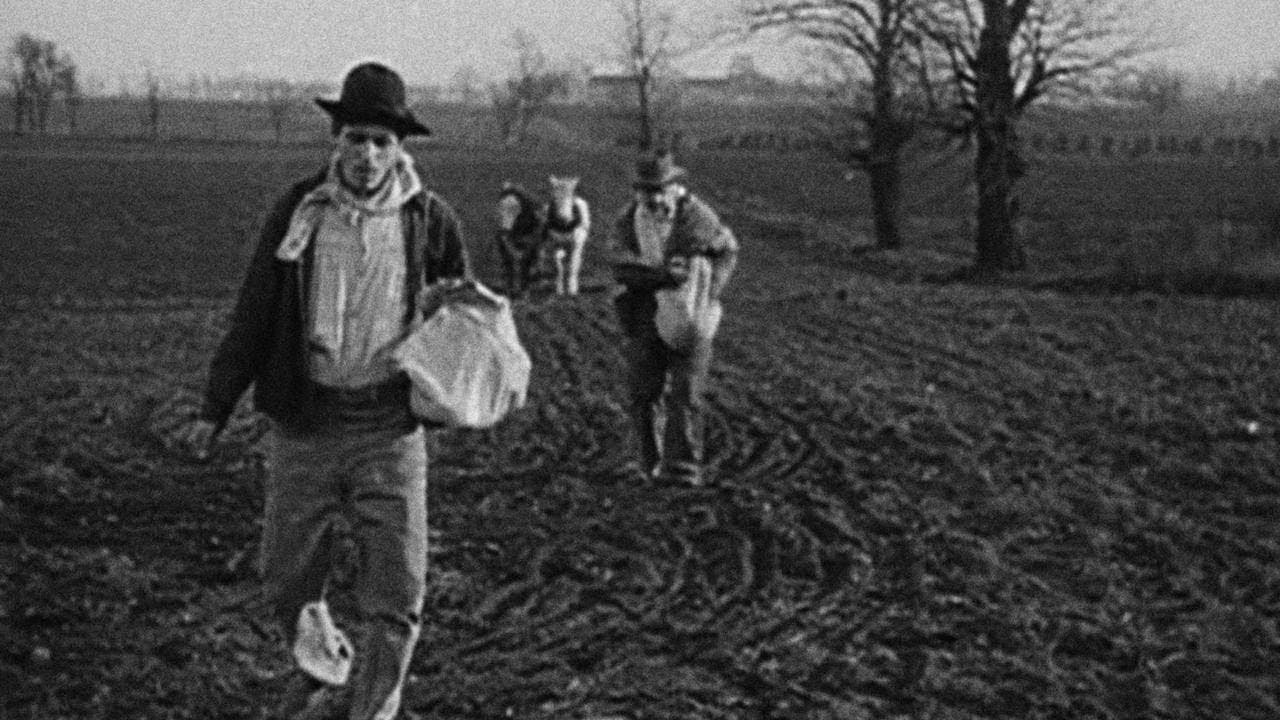
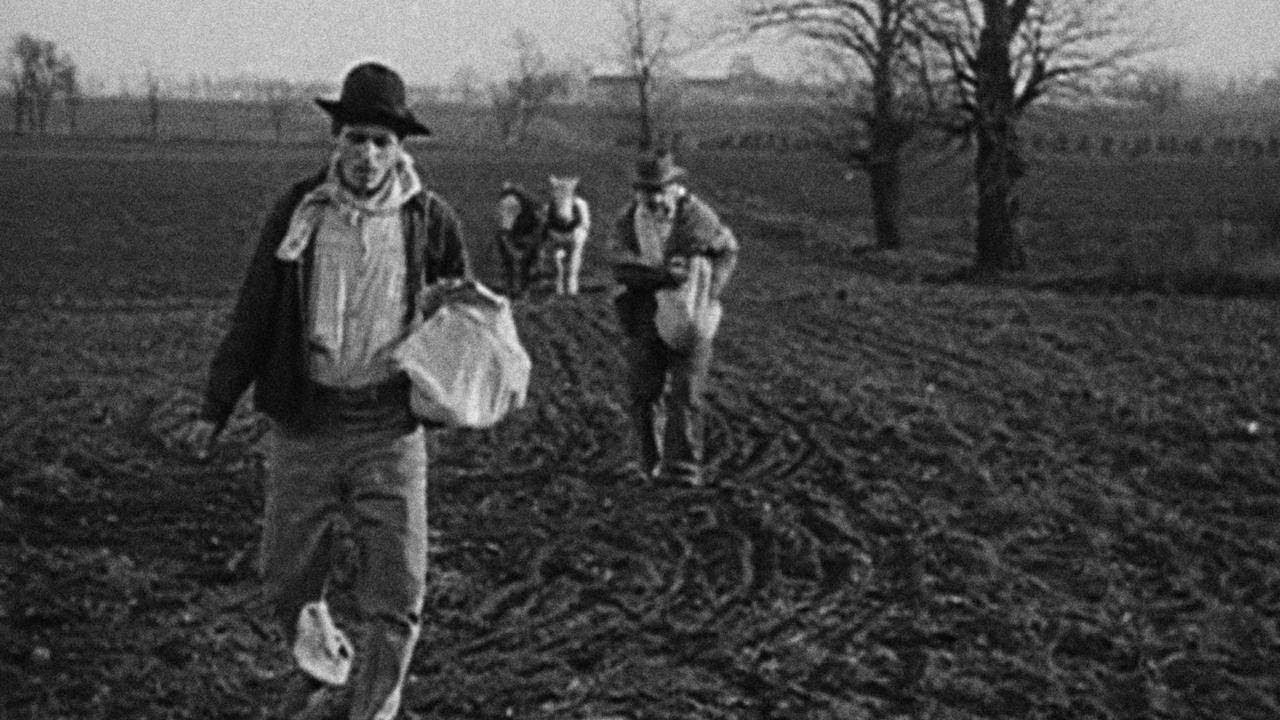
The second shot of this scene is so layered and textured, yet so simply endowed, that I would argue that it is one of the finest flourishes of Griffith's whole filmography. The two men are sowing the wheat; the field rolls backwards through the frame into infinity as the figures of the farmers approach the lens, becoming less and less minute; finally, one of the men exits the frame; as his companion also exits, he reappears, having rounded the field, now walking away from the lens, into that interminable distance.
Again, as with the last shot, the effect is exquisitely durational. For thirty uninterrupted seconds, the characters simply walk towards the lens. The viewer's sense of the scene is predicated upon a sense of its repetition and monotony across time.
The real genius of this shot is in how dynamic it is despite its deliberate monotony. Griffith's viewpoint exceeds the lateral limits of the stage and acquires the quality of visual depth as well. The act of sowing, represented with such spatial and temporal scale, becomes almost ritualistic in his hands. See not only how repetitive the action becomes, but also how it is inverted when they round the field and walk the other way. This shot in and of itself is narratively detached from the rest of the film. You could omit it and the story would remain unchanged. Yet its significance is indispensable. Within this shot is contained the social ritual of labour, the fact of labour itself and the human effort involved, the continuity of agricultural practice, and an overriding, coequal sense both of toil and of harmony.
These various impressions travel to the very epicentre of the film's conflict. The Wheat King's attempt to corner the market is on an immediate level a material violation. But the viewer, now acutely aware of the social rhythms that undulate beneath the act of labour, also perceives a further violation of the social order, of a way of being. The narrative stakes are thusly tinged with a far greater degree of significance than a synopsis of the film could possibly convey. The threat is both material and ontological specifically because of the inclusion of this solitary scene. Even though the technique at play is so remarkably simple, it is the use of visual depth, of a gradually expanding extreme long shot, and of a durational approach to cinematic time, which specifically enables the maturity of expression that Griffith achieves in this scene. It is at exactly this kind of moment where Griffith's pioneer status is located. These instances where film technique exists beyond its own novelty, exceeds the scope of spectacle, and becomes an extraneously-functioning artistic device - this is how Griffith dragged cinema into the future. Albeit, a summary glance at certain parts of The Great Train Robbery, for instance, will prove that Griffith wasn't the first to do this; but as a sustained mode of practice, it was he who first meaningfully systematised film technique.
On the continued point of dynamism, it is not just that Griffith represents spatial depth; he plays with it too. Throughout the shot, as the two men sow the seeds, two horses till the field behind them. When the time comes for the horses to round the field and walk the other way, a farmhand is revealed to have been hidden behind the horses the entire time. There is no obvious reason for this minature deception. It stands out simply for being such a delightful little flourish, a tiny means used by Griffith to emphasise the functioning of depth in the frame. Even the broader movement in the composition, how it shifts, is really subtly wonderful. What starts as a single-file movement of the men towards the lens, the horses occluded behind them, shifts when the men turn the bend, creating a parallel composition: the men walking away from the lens on one side, the adjacent horses walking towards it on the other. Finally, when the horses begin to turn, the composition becomes perpendicular: the men continue walking into the distance, whilst the horses and the farmhand travel laterally across the frame. These compositional shifts obviously serve towards the scene's ritualistic effect, but on a purely formal level, it is such a sumptuous way to visually complicate so simple a representation of a task.
The parallels between these scenes and the scenes I previously discussed in Ingeborg Holm are undeniable. Though I'm tentative about using the phrase, the essential film-play aesthetic of both films enables, ironically, a complete transcendence of the limits of theatre by means both of spatial representation and of indexicality. Both films are highly sophisticated, indeed epochal representations of a specific and relatively short-lived period in film aesthetics and technique. But I think Griffith also goes slightly further than Sjöström by demonstrating a certain regard for the principles of editing. Although A Corner in Wheat, like Ingeborg Holm, does not at all deploy montage or constructive editing, it may still be noted how Griffith is concerned with creating juxtapositions between shots, namely between images of ornate wealth and abject poverty, or between urbanity and rurality. They're not particularly nuanced, but they are a part of Griffith's narration.
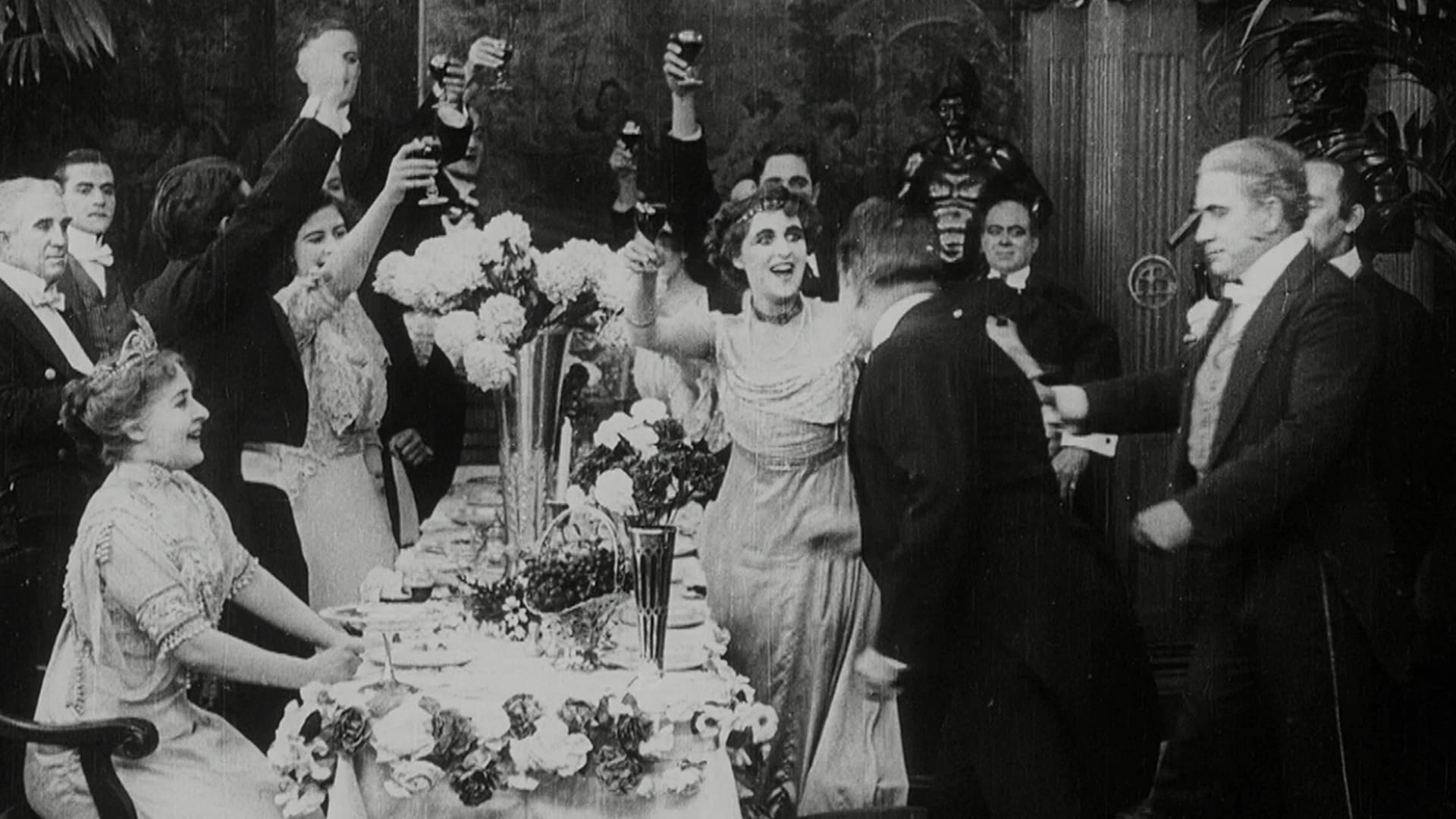
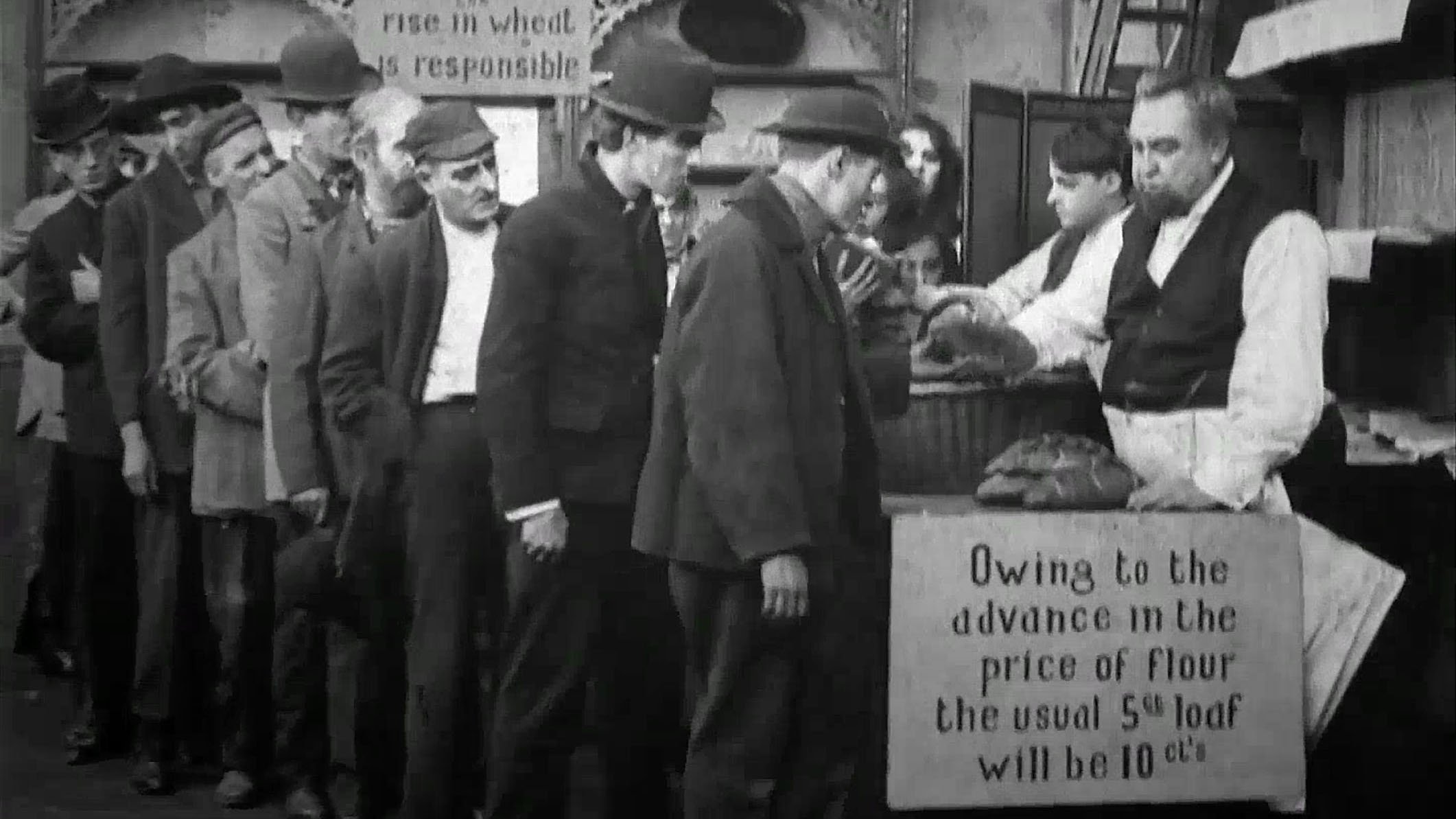
What is nuanced about Griffith's editing, however, is some of the graphic matches that he embeds in it. A particular string of graphic matches punctuate the middle of the film. In the first shot, the Wheat King celebrates his newfound monopoly, making a toast on the right hand side of the frame, while the crowd of guests join him in the rest of the frame. In the next shot, a baker stands on the right hand side of the frame as he informs a revolving door of customers in the rest of the frame that they must pay double for their bread. Griffith cuts back to the party in the same composition, only to again cut back to the bakery. This time the emphasis is heightened. The customers have become a crowd, paralleling the guests at the party. The downstream social effects of this monopoly have become crystallised in this dual image. In a final, brilliant flourish, Griffith later cuts to the exact same shot from the beginning of the film of the farming family. The same inert mother and daughter, expectant; the same father, re-entering the frame that he left at the beginning of the film, only now to report his failure. The circle of social upheaval is completed.
It is this implicit regard for cinema as a synthetic art which I think precludes the eventual move that Griffith would make towards standardising film language. Already it is clear that he is moving towards a conception of the isolated shot as a unit within a larger symphonic whole. Such a conception would of course be solidified in his subsequent 'golden age' of films.
While I am circling around a discussion of 'primitive-era', 'Transition-era', or 'film-play' cinema, I would like to touch on the treatment of the image in these films as a point of personal interest. It seems to me that the image is of a qualitatively different ontological substance in this period than in subsequent periods. The reason for this is the fixed nature of the viewpoint, the fact that it is by and large an a prori given that the camera will not move. The result of this is that the frame becomes a self-limited finite space. It is essentially the same quality of limitation that defines theatrical space, with the crucial qualification that a camera can be placed anywhere and a traditional stage cannot. Even modern filmmakers who self-abnegate by restricting camera movement such as Chantal Akerman, Yasujirō Ozu, Aki Kaurismäki, and Tsai Ming-liang, are fundamentally removed from the Transition-era image. Though they eschew movement, the images in their films are still defined by the potential of movement. The restricted viewpoint of the modern filmmaker is a self-imposed choice rather than an ontological baseline. Therefore, where the outside of the frame in the Transition-era film is in effect obsolete, the outside of the frame in a modern film is a potential image. Even when that potential is left unrealised, that act of unrealisation still necessarily occurs in opposition to and therefore in relation to movement.
A good example of what I am arguing in A Corner in Wheat occurs when the markets are shown responding to the Wheat King's acquisition. Removed from the technique of montage and from the notion of an emancipated camera, the entire drama of the scene unfolds in a single wide shot. A flurry of arms and hats, of gesticulating and fainting men, is contained within the shot as a unitary representative of the crisis at large. Where a later film would either turn this into a more directly narrational or dramatic scene, or use montage to show the broad social harm of the Wheat King's monopoly, A Corner in Wheat creates an impression of crisis by using the cinematic image as a fixed narrative unit. I do not think it is much of an exaggeration at all to suggest that no film after 1915, certainly not after 1920, would depict a financial crisis in this way. Because of its inherent status as a fixed and limited space, the image becomes the beginning and the end of the scene's narration. The immediate ontological comparison is with the photograph or the painting.
When André Bazin discusses the 'ontology of the photographic image', he both correctly identifies indexicality as something which is inextricably fundamental to the image, and correctly locates his discussion of the image within a relative and mutable industrial-aesthetic context (that is, the cinema of the nineteen-forties). This idea of the image both existing through defined and immutable, though abstract parameters, yet in concrete terms also being a mutable contingent entity, is the essential basis upon which I am arguing my case. The Transition-era image was an unattianably different entity to the modern cinematic image because of technological and industrial limitations.
What I have largely tried to do here is to situate A Corner in Wheat within its own context as a Transition-era film and to identify it as a precursor to stylistics of the later films of D.W. Griffith. Insodoing, the actual nature of Griffith's position in film history becomes clearer, not as an inventor but as a synthesising applicator. I am not suggesting that this is some discovery of mine. Griffith being a standardising agent in film history is a fairly well-accepted academic dogma. But we still need to be extremely careful about how we discuss Griffith and his legacy, especially in popular media. The rightful controversy of his films between 1915 and 1919 has undoubtedly led to an overzealous attempt to over-correct his legacy within the develolment of film art. It is a difficult line to toe as well, because it is true that Griffith's legacy was misrepresented by contemporaries, and it is also true that his dominance in discourse about the period between 1908 and 1920 has occluded other voices. But to veer too far in the opposite direction would equate to an equal misrepresentation.
I want also to stress the importance of viewing films like A Corner in Wheat in and of themselves, and of dignifying them as isolated works of art. Of course, understanding these films in terms of how they relate to the Classical era of cinema is invaluable; but the value of these films does not begin and end there. The aesthetic traditions that they are a part of are themselves deeply valuable. They are not mere presagers of a future aesthetic but agents of an extremely rich contemporary one. It is for this reason that even the term 'Transition-era', my preferred term as of now, is still to me problematic. This period of cinema is not defined by what came after it but by what it is.
It is often said, to a point even of cliché, that it is important for cinephiles and cineastes of today to learn from silent cinema. But too often, the implication behind such statements is that this value lies in and is limited to the formal extremes of Expressionism, Montage, or Impressionism. This misses the point. So much of what defines silent cinema as an art lies in the subtleties of expression. If the sound-synchronised film is the sister-art of the silent film, a closely related but undoubtedly different medium, then our observation of silent cinema should be of a more fundamental quality. What does the silence of silent cinema mean for the image? What does the silence of silent cinema mean for cinematic time? What does it mean for mise en scène or for the act of narration? These are the questions that so rarely are addressed with any kind of directness. In their own small, very particular ways, I think the films of the Transition-era offer a fruitful avenue for approaching these questions.
But this tendency to malign Griffith extends beyond ethics. Griffith has always been, to varying degrees, a controversial figure. The main shift, the main act of malignment of late, has occurred in relation to an historical qualm - that is, an implicit opposition to the idea of Griffith's legacy.
It is of course true that Griffith lied on his own resumé. He did not invent the close-up; he did not invent the extreme-wide shot; he did not invent cross-cutting; he did not invent the fade; he wasn't even the first filmmaker to be screened in the White House. This is all common knowledge by now. There was clearly on Griffith's part a conscious effort to cultivate a personal mystique.
It is on the back of this that Griffith has in recent years been framed not only as a morally wanting and deeply backwards bigot, but also as a fraud. There are plenty of articles, web pages, YouTube videos, and social media posts that will reinforce this. Griffith created a persona for himself by taking credit for others' innovations, and exploited this in order to position himself as cinema's pre-eminent filmmaker.
We need to be careful of this distinction though, and qualify what we mean by 'fraud'. True, Griffith did not directly invent these things, but his influence and his legacy (despite Griffith's own gesturing) is not one of invention; rather it is one of application. Especially in lieu of an emerging discourse that decentres Griffith from his hegemonic position in Transition-era film historiography, and which instead seeks to platform 'rediscovered' pioneers such as Lois Weber, Alice Guy-Blaché, and Oscar Micheaux, the impulse to highlight one at the expense of the other is obvious.
The reaction against Griffith might not only be a positive effort to platform others, but also a negative effort to undercut Griffith himself. For over one-hundred years, after all, he has been by far the most discussed dramatist of the silent era. The Birth of a Nation is possibly the most watched piece of media across all film classes. Students have been asked to grit their teeth and try to isolate its influence. His legacy is quite literally as the 'Father of Film'. This movement against Griffith is thus three-pronged: it is an opposotion to his legacy, an endorsement of other filmmakers, and an objection to his perceived over-saturation.
This narrative and the logic that scaffolds it has one major flaw, however. David Wark Griffith is the most important director of the silent era. He did revolutionise film technique and film language, and to a far greater degree than Weber, Guy-Blaché, or Micheaux. His films, though not the only, were ultimtately the primary vehicle through which cinema came to be respected as an art. No filmmaker has had as transformative an effect on film marketing and advertising as Griffith has either. The Birth of a Nation is also, unfortunately, inescapably, one of the few truly epochal revolutionary steps in the development of film technique, joined perhaps only by A Trip to the Moon, Battleship Potemkin, and Citizen Kane.
The revisionist tendency against Griffith, the trend of questioning his role as an innovator, of removing him from university syllabi, and of deriding him as a kind of glorified circus promoter, is by no means baseless. It is, however, overstated. It is not unreasonable to suggest that the history of cinema without Griffith would equivalate to a history of motor cars without Ford or of English writing without Chaucer. That is to say, the general movement might have trended in a particular direction either way, but it was fundamentally shaped through the prism of this individual. Yes, George Albert Smith was using close-ups in his actualités twenty years before Griffith; James A. Williamson and Edwin S. Porter had displayed highly sophisticated uses of parallel editing a decade before Griffith as well; even the notorious Griffithian ending of numerous intersecting plot-points hurtling towards a finish line was used as the entire premise of Lois Weber's Suspense, two years before The Birth of a Nation. Indeed it is even true that the technical novelties that did occur on Griffith sets, such as the development of complex lighting techniques and iris shots, are more accolades of Billy Bitzer's than of Griffith himself.
The difference is that Griffith synthesised these things. He turned novelties into standards and gimmicks into grammar. That is his legacy. By the mid-nineteen-tens, other directors were doing similar things, but Griffith did them more comprehensively and on a larger scale. This element of scale is a particularly important point. Griffith's innovations were industrial before they were technical. Feature films existed before Griffith. The Story of the Kelly Gang, L'Inferno, Ingeborg Holm, and Quo Vadis? are among many of the very well-known examples of pre-Birth of a Nation feature-length cinema. But what separates Griffith from other early feature filmmakers is that he essentially took the early sophisticated examples of filmmaking from short films like The Great Train Robbery and Suspense, developed them into a far more complex system of film language, and sized them to scale. Under the purview of Griffith, cinema suddenly became a medium adjacent to the novel, the play, the concert, the opera. It became marketable as more than a two-bit sideshow spectacle, but as a genuine social event and cultural moment. Cinema became accessible to the tastes of the middle-classes. It was, in short, an art. As with film technique at large, Griffith was yet again the synthesising agent. Smith, Porter, Williamson, Méliès, the Lumières, Dickson, Guy-Blaché - these are all seminal figures in the development of cinema, but Griffith is their unifier.
As a side note, I would like to clarify that I am using the term 'sophisticated' merely by convention, to describe the embryonic stages of the classical continuity system that would eventually dominate American film dramaturgy throughout the Classical era. As I have previously and extensively detailed in an earlier review of Victor Sjöström's Ingeborg Holm, I firmly believe that early, pre-classical cinema was deeply sophisticated in its own right and involved a far subtler aesthetic than the 'film-play' or 'primitive' labels that it has been given would suggest. Indeed, in some ways I prefer many elements of this earlier aesthetic to the classical silent style that would go on to displace it.
It is easy to forget that Griffith was the main influence of Soviet Montage or that he was the near-solitary standard around which Hollywood would standardise its blueprint in the twenties and thirties. The most elementary survey of film history will clearly and indubitably demarcate a pre-Griffith era of cinema and a post-Griffith era of cinema. He was the initial standardiser, not the first to gesture towards, but the first to solidify, a concept of film language that extends beyond theatrical successions of completed actions in singular spaces. The impulse to qualify Griffith's legacy and reconstitute it is valid, even necessary. The impulse to question it as such is spurious. The corrective need to pedestal under-seen Transition-era filmmakers and to resituate Griffith's legacy as a synthesiser rather than an inventor has consistently given way to an over-corrective attempt to efface Griffith's primacy in silent-era discourse at large. It is especially prevalent in depictions of Griffith in popular media; that is my qualm.
Ostensibly, this is a review of A Corner in Wheat, which I am yet to so much as allude to let alone mention. But I do want to talk about it, and I want to do so specifically for two interrelated reasons. First of all, I think it is a brilliant example of just how firm a grasp Griffith had on film aesthetics, even before his, as it were, 'golden era', some five or so years later. It is, in my opinion, a perfect means of demonstrating why Griffith deserves a legacy of titanic aesthetic status as well as of titanic historical status. Secondly, I think A Corner in Wheat is another valuable demonstration of my aforesaid theory of pre-classical silent film aesthetics and their underlying, oft-ignored sophistication. I shall discuss these in tandem.
Take the opening scene of the film, for instance, composed of only two shots, both long-take, wide-shot tableaux. The first shows the family at the homestead as the men resolve to sow the wheat; they exit the frame, leaving the housewife and her daughter as its sole occupants. Even by pre-montage standards, the fifty seconds that the shot is accommodated with is a genuinely long period of time. This heightened temporality achieves something subtly remarkable, however. The movement of the two men in this shot, at first within the frame, then in moving out of it, finds a contrast in the totally inert figures of the mother and the child. The effect is sharp, if understated. As the duration of the shot expands, the attention of the audience is slowly, quietly, displaced from action to inertia, from labour to the domestic. The underlying implication conveyed by this static, unmoving presence in the frame is of dependence. Our gaze and thoughts shift as we perceive, if from a distance, the lives of those who shall be affected by the fruits of this labour, and their inability to intercede on those results. Griffith hangs onto the shot after its action has ceased. It in effect becomes durational for a couple of seconds, as its inertia acquires density. The technique in this shot is so imperceptibly simple, yet so tastefully impactful. A comparison may indeed be made with Ingeborg Holm, where a similar technique - that is, the dramatic coexistence of movement and inertia across an extended duration - creates a like impression.
The second shot of this scene is so layered and textured, yet so simply endowed, that I would argue that it is one of the finest flourishes of Griffith's whole filmography. The two men are sowing the wheat; the field rolls backwards through the frame into infinity as the figures of the farmers approach the lens, becoming less and less minute; finally, one of the men exits the frame; as his companion also exits, he reappears, having rounded the field, now walking away from the lens, into that interminable distance.
Again, as with the last shot, the effect is exquisitely durational. For thirty uninterrupted seconds, the characters simply walk towards the lens. The viewer's sense of the scene is predicated upon a sense of its repetition and monotony across time.
The real genius of this shot is in how dynamic it is despite its deliberate monotony. Griffith's viewpoint exceeds the lateral limits of the stage and acquires the quality of visual depth as well. The act of sowing, represented with such spatial and temporal scale, becomes almost ritualistic in his hands. See not only how repetitive the action becomes, but also how it is inverted when they round the field and walk the other way. This shot in and of itself is narratively detached from the rest of the film. You could omit it and the story would remain unchanged. Yet its significance is indispensable. Within this shot is contained the social ritual of labour, the fact of labour itself and the human effort involved, the continuity of agricultural practice, and an overriding, coequal sense both of toil and of harmony.
These various impressions travel to the very epicentre of the film's conflict. The Wheat King's attempt to corner the market is on an immediate level a material violation. But the viewer, now acutely aware of the social rhythms that undulate beneath the act of labour, also perceives a further violation of the social order, of a way of being. The narrative stakes are thusly tinged with a far greater degree of significance than a synopsis of the film could possibly convey. The threat is both material and ontological specifically because of the inclusion of this solitary scene. Even though the technique at play is so remarkably simple, it is the use of visual depth, of a gradually expanding extreme long shot, and of a durational approach to cinematic time, which specifically enables the maturity of expression that Griffith achieves in this scene. It is at exactly this kind of moment where Griffith's pioneer status is located. These instances where film technique exists beyond its own novelty, exceeds the scope of spectacle, and becomes an extraneously-functioning artistic device - this is how Griffith dragged cinema into the future. Albeit, a summary glance at certain parts of The Great Train Robbery, for instance, will prove that Griffith wasn't the first to do this; but as a sustained mode of practice, it was he who first meaningfully systematised film technique.
On the continued point of dynamism, it is not just that Griffith represents spatial depth; he plays with it too. Throughout the shot, as the two men sow the seeds, two horses till the field behind them. When the time comes for the horses to round the field and walk the other way, a farmhand is revealed to have been hidden behind the horses the entire time. There is no obvious reason for this minature deception. It stands out simply for being such a delightful little flourish, a tiny means used by Griffith to emphasise the functioning of depth in the frame. Even the broader movement in the composition, how it shifts, is really subtly wonderful. What starts as a single-file movement of the men towards the lens, the horses occluded behind them, shifts when the men turn the bend, creating a parallel composition: the men walking away from the lens on one side, the adjacent horses walking towards it on the other. Finally, when the horses begin to turn, the composition becomes perpendicular: the men continue walking into the distance, whilst the horses and the farmhand travel laterally across the frame. These compositional shifts obviously serve towards the scene's ritualistic effect, but on a purely formal level, it is such a sumptuous way to visually complicate so simple a representation of a task.
The parallels between these scenes and the scenes I previously discussed in Ingeborg Holm are undeniable. Though I'm tentative about using the phrase, the essential film-play aesthetic of both films enables, ironically, a complete transcendence of the limits of theatre by means both of spatial representation and of indexicality. Both films are highly sophisticated, indeed epochal representations of a specific and relatively short-lived period in film aesthetics and technique. But I think Griffith also goes slightly further than Sjöström by demonstrating a certain regard for the principles of editing. Although A Corner in Wheat, like Ingeborg Holm, does not at all deploy montage or constructive editing, it may still be noted how Griffith is concerned with creating juxtapositions between shots, namely between images of ornate wealth and abject poverty, or between urbanity and rurality. They're not particularly nuanced, but they are a part of Griffith's narration.
What is nuanced about Griffith's editing, however, is some of the graphic matches that he embeds in it. A particular string of graphic matches punctuate the middle of the film. In the first shot, the Wheat King celebrates his newfound monopoly, making a toast on the right hand side of the frame, while the crowd of guests join him in the rest of the frame. In the next shot, a baker stands on the right hand side of the frame as he informs a revolving door of customers in the rest of the frame that they must pay double for their bread. Griffith cuts back to the party in the same composition, only to again cut back to the bakery. This time the emphasis is heightened. The customers have become a crowd, paralleling the guests at the party. The downstream social effects of this monopoly have become crystallised in this dual image. In a final, brilliant flourish, Griffith later cuts to the exact same shot from the beginning of the film of the farming family. The same inert mother and daughter, expectant; the same father, re-entering the frame that he left at the beginning of the film, only now to report his failure. The circle of social upheaval is completed.
It is this implicit regard for cinema as a synthetic art which I think precludes the eventual move that Griffith would make towards standardising film language. Already it is clear that he is moving towards a conception of the isolated shot as a unit within a larger symphonic whole. Such a conception would of course be solidified in his subsequent 'golden age' of films.
While I am circling around a discussion of 'primitive-era', 'Transition-era', or 'film-play' cinema, I would like to touch on the treatment of the image in these films as a point of personal interest. It seems to me that the image is of a qualitatively different ontological substance in this period than in subsequent periods. The reason for this is the fixed nature of the viewpoint, the fact that it is by and large an a prori given that the camera will not move. The result of this is that the frame becomes a self-limited finite space. It is essentially the same quality of limitation that defines theatrical space, with the crucial qualification that a camera can be placed anywhere and a traditional stage cannot. Even modern filmmakers who self-abnegate by restricting camera movement such as Chantal Akerman, Yasujirō Ozu, Aki Kaurismäki, and Tsai Ming-liang, are fundamentally removed from the Transition-era image. Though they eschew movement, the images in their films are still defined by the potential of movement. The restricted viewpoint of the modern filmmaker is a self-imposed choice rather than an ontological baseline. Therefore, where the outside of the frame in the Transition-era film is in effect obsolete, the outside of the frame in a modern film is a potential image. Even when that potential is left unrealised, that act of unrealisation still necessarily occurs in opposition to and therefore in relation to movement.
A good example of what I am arguing in A Corner in Wheat occurs when the markets are shown responding to the Wheat King's acquisition. Removed from the technique of montage and from the notion of an emancipated camera, the entire drama of the scene unfolds in a single wide shot. A flurry of arms and hats, of gesticulating and fainting men, is contained within the shot as a unitary representative of the crisis at large. Where a later film would either turn this into a more directly narrational or dramatic scene, or use montage to show the broad social harm of the Wheat King's monopoly, A Corner in Wheat creates an impression of crisis by using the cinematic image as a fixed narrative unit. I do not think it is much of an exaggeration at all to suggest that no film after 1915, certainly not after 1920, would depict a financial crisis in this way. Because of its inherent status as a fixed and limited space, the image becomes the beginning and the end of the scene's narration. The immediate ontological comparison is with the photograph or the painting.
When André Bazin discusses the 'ontology of the photographic image', he both correctly identifies indexicality as something which is inextricably fundamental to the image, and correctly locates his discussion of the image within a relative and mutable industrial-aesthetic context (that is, the cinema of the nineteen-forties). This idea of the image both existing through defined and immutable, though abstract parameters, yet in concrete terms also being a mutable contingent entity, is the essential basis upon which I am arguing my case. The Transition-era image was an unattianably different entity to the modern cinematic image because of technological and industrial limitations.
What I have largely tried to do here is to situate A Corner in Wheat within its own context as a Transition-era film and to identify it as a precursor to stylistics of the later films of D.W. Griffith. Insodoing, the actual nature of Griffith's position in film history becomes clearer, not as an inventor but as a synthesising applicator. I am not suggesting that this is some discovery of mine. Griffith being a standardising agent in film history is a fairly well-accepted academic dogma. But we still need to be extremely careful about how we discuss Griffith and his legacy, especially in popular media. The rightful controversy of his films between 1915 and 1919 has undoubtedly led to an overzealous attempt to over-correct his legacy within the develolment of film art. It is a difficult line to toe as well, because it is true that Griffith's legacy was misrepresented by contemporaries, and it is also true that his dominance in discourse about the period between 1908 and 1920 has occluded other voices. But to veer too far in the opposite direction would equate to an equal misrepresentation.
I want also to stress the importance of viewing films like A Corner in Wheat in and of themselves, and of dignifying them as isolated works of art. Of course, understanding these films in terms of how they relate to the Classical era of cinema is invaluable; but the value of these films does not begin and end there. The aesthetic traditions that they are a part of are themselves deeply valuable. They are not mere presagers of a future aesthetic but agents of an extremely rich contemporary one. It is for this reason that even the term 'Transition-era', my preferred term as of now, is still to me problematic. This period of cinema is not defined by what came after it but by what it is.
It is often said, to a point even of cliché, that it is important for cinephiles and cineastes of today to learn from silent cinema. But too often, the implication behind such statements is that this value lies in and is limited to the formal extremes of Expressionism, Montage, or Impressionism. This misses the point. So much of what defines silent cinema as an art lies in the subtleties of expression. If the sound-synchronised film is the sister-art of the silent film, a closely related but undoubtedly different medium, then our observation of silent cinema should be of a more fundamental quality. What does the silence of silent cinema mean for the image? What does the silence of silent cinema mean for cinematic time? What does it mean for mise en scène or for the act of narration? These are the questions that so rarely are addressed with any kind of directness. In their own small, very particular ways, I think the films of the Transition-era offer a fruitful avenue for approaching these questions.
Over the last couple of decades or so, the dominant trend has been to malign D.W. Griffith on mention, and this is not without good reason. The Birth of a Nation is the most infamous and socially harmful film ever made. Griffith's following, quasi-response film Intolerance has undergone revision in recent years, and is now correctly understood as something far less mature than a change in direction, let alone an apology. If anything it is an apologia. Broken Blossoms holds a paradoxical position in film history: the fact that a film about racial tolerance is told through the most infamous use of yellowface in the history of cinema next only to Breakfast at Tiffany's almost too perfectly typifies the contradictory position that Griffith holds in cinema history.
But this tendency to malign Griffith extends beyond ethics. Griffith has always been, to varying degrees, a controversial figure. The main shift, the main act of malignment of late, has occurred in relation to an historical qualm - that is, an implicit opposition to the idea of Griffith's legacy.
It is of course true that Griffith lied on his own resumé. He did not invent the close-up; he did not invent the extreme-wide shot; he did not invent cross-cutting; he did not invent the fade; he wasn't even the first filmmaker to be screened in the White House. This is all common knowledge by now. There was clearly on Griffith's part a conscious effort to cultivate a personal mystique.
It is on the back of this that Griffith has in recent years been framed not only as a morally wanting and deeply backwards bigot, but also as a fraud. There are plenty of articles, web pages, YouTube videos, and social media posts that will reinforce this. Griffith created a persona for himself by taking credit for others' innovations, and exploited this in order to position himself as cinema's pre-eminent filmmaker.
We need to be careful of this distinction though, and qualify what we mean by 'fraud'. True, Griffith did not directly invent these things, but his influence and his legacy (despite Griffith's own gesturing) is not one of invention; rather it is one of application. Especially in lieu of an emerging discourse that decentres Griffith from his hegemonic position in Transition-era film historiography, and which instead seeks to platform 'rediscovered' pioneers such as Lois Weber, Alice Guy-Blaché, and Oscar Micheaux, the impulse to highlight one at the expense of the other is obvious.
The reaction against Griffith might not only be a positive effort to platform others, but also a negative effort to undercut Griffith himself. For over one-hundred years, after all, he has been by far the most discussed dramatist of the silent era. The Birth of a Nation is possibly the most watched piece of media across all film classes. Students have been asked to grit their teeth and try to isolate its influence. His legacy is quite literally as the 'Father of Film'. This movement against Griffith is thus three-pronged: it is an opposotion to his legacy, an endorsement of other filmmakers, and an objection to his perceived over-saturation.
This narrative and the logic that scaffolds it has one major flaw, however. David Wark Griffith is the most important director of the silent era. He did revolutionise film technique and film language, and to a far greater degree than Weber, Guy-Blaché, or Micheaux. His films, though not the only, were ultimtately the primary vehicle through which cinema came to be respected as an art. No filmmaker has had as transformative an effect on film marketing and advertising as Griffith has either. The Birth of a Nation is also, unfortunately, inescapably, one of the few truly epochal revolutionary steps in the development of film technique, joined perhaps only by A Trip to the Moon, Battleship Potemkin, and Citizen Kane.
The revisionist tendency against Griffith, the trend of questioning his role as an innovator, of removing him from university syllabi, and of deriding him as a kind of glorified circus promoter, is by no means baseless. It is, however, overstated. It is not unreasonable to suggest that the history of cinema without Griffith would equivalate to a history of motor cars without Ford or of English writing without Chaucer. That is to say, the general movement might have trended in a particular direction either way, but it was fundamentally shaped through the prism of this individual. Yes, George Albert Smith was using close-ups in his actualités twenty years before Griffith; James A. Williamson and Edwin S. Porter had displayed highly sophisticated uses of parallel editing a decade before Griffith as well; even the notorious Griffithian ending of numerous intersecting plot-points hurtling towards a finish line was used as the entire premise of Lois Weber's Suspense, two years before The Birth of a Nation. Indeed it is even true that the technical novelties that did occur on Griffith sets, such as the development of complex lighting techniques and iris shots, are more accolades of Billy Bitzer's than of Griffith himself.
The difference is that Griffith synthesised these things. He turned novelties into standards and gimmicks into grammar. That is his legacy. By the mid-nineteen-tens, other directors were doing similar things, but Griffith did them more comprehensively and on a larger scale. This element of scale is a particularly important point. Griffith's innovations were industrial before they were technical. Feature films existed before Griffith. The Story of the Kelly Gang, L'Inferno, Ingeborg Holm, and Quo Vadis? are among many of the very well-known examples of pre-Birth of a Nation feature-length cinema. But what separates Griffith from other early feature filmmakers is that he essentially took the early sophisticated examples of filmmaking from short films like The Great Train Robbery and Suspense, developed them into a far more complex system of film language, and sized them to scale. Under the purview of Griffith, cinema suddenly became a medium adjacent to the novel, the play, the concert, the opera. It became marketable as more than a two-bit sideshow spectacle, but as a genuine social event and cultural moment. Cinema became accessible to the tastes of the middle-classes. It was, in short, an art. As with film technique at large, Griffith was yet again the synthesising agent. Smith, Porter, Williamson, Méliès, the Lumières, Dickson, Guy-Blaché - these are all seminal figures in the development of cinema, but Griffith is their unifier.
As a side note, I would like to clarify that I am using the term 'sophisticated' merely by convention, to describe the embryonic stages of the classical continuity system that would eventually dominate American film dramaturgy throughout the Classical era. As I have previously and extensively detailed in an earlier review of Victor Sjöström's Ingeborg Holm, I firmly believe that early, pre-classical cinema was deeply sophisticated in its own right and involved a far subtler aesthetic than the 'film-play' or 'primitive' labels that it has been given would suggest. Indeed, in some ways I prefer many elements of this earlier aesthetic to the classical silent style that would go on to displace it.
It is easy to forget that Griffith was the main influence of Soviet Montage or that he was the near-solitary standard around which Hollywood would standardise its blueprint in the twenties and thirties. The most elementary survey of film history will clearly and indubitably demarcate a pre-Griffith era of cinema and a post-Griffith era of cinema. He was the initial standardiser, not the first to gesture towards, but the first to solidify, a concept of film language that extends beyond theatrical successions of completed actions in singular spaces. The impulse to qualify Griffith's legacy and reconstitute it is valid, even necessary. The impulse to question it as such is spurious. The corrective need to pedestal under-seen Transition-era filmmakers and to resituate Griffith's legacy as a synthesiser rather than an inventor has consistently given way to an over-corrective attempt to efface Griffith's primacy in silent-era discourse at large. It is especially prevalent in depictions of Griffith in popular media; that is my qualm.
Ostensibly, this is a review of A Corner in Wheat, which I am yet to so much as allude to let alone mention. But I do want to talk about it, and I want to do so specifically for two interrelated reasons. First of all, I think it is a brilliant example of just how firm a grasp Griffith had on film aesthetics, even before his, as it were, 'golden era', some five or so years later. It is, in my opinion, a perfect means of demonstrating why Griffith deserves a legacy of titanic aesthetic status as well as of titanic historical status. Secondly, I think A Corner in Wheat is another valuable demonstration of my aforesaid theory of pre-classical silent film aesthetics and their underlying, oft-ignored sophistication. I shall discuss these in tandem.
Take the opening scene of the film, for instance, composed of only two shots, both long-take, wide-shot tableaux. The first shows the family at the homestead as the men resolve to sow the wheat; they exit the frame, leaving the housewife and her daughter as its sole occupants. Even by pre-montage standards, the fifty seconds that the shot is accommodated with is a genuinely long period of time. This heightened temporality achieves something subtly remarkable, however. The movement of the two men in this shot, at first within the frame, then in moving out of it, finds a contrast in the totally inert figures of the mother and the child. The effect is sharp, if understated. As the duration of the shot expands, the attention of the audience is slowly, quietly, displaced from action to inertia, from labour to the domestic. The underlying implication conveyed by this static, unmoving presence in the frame is of dependence. Our gaze and thoughts shift as we perceive, if from a distance, the lives of those who shall be affected by the fruits of this labour, and their inability to intercede on those results. Griffith hangs onto the shot after its action has ceased. It in effect becomes durational for a couple of seconds, as its inertia acquires density. The technique in this shot is so imperceptibly simple, yet so tastefully impactful. A comparison may indeed be made with Ingeborg Holm, where a similar technique - that is, the dramatic coexistence of movement and inertia across an extended duration - creates a like impression.
The second shot of this scene is so layered and textured, yet so simply endowed, that I would argue that it is one of the finest flourishes of Griffith's whole filmography. The two men are sowing the wheat; the field rolls backwards through the frame into infinity as the figures of the farmers approach the lens, becoming less and less minute; finally, one of the men exits the frame; as his companion also exits, he reappears, having rounded the field, now walking away from the lens, into that interminable distance.
Again, as with the last shot, the effect is exquisitely durational. For thirty uninterrupted seconds, the characters simply walk towards the lens. The viewer's sense of the scene is predicated upon a sense of its repetition and monotony across time.
The real genius of this shot is in how dynamic it is despite its deliberate monotony. Griffith's viewpoint exceeds the lateral limits of the stage and acquires the quality of visual depth as well. The act of sowing, represented with such spatial and temporal scale, becomes almost ritualistic in his hands. See not only how repetitive the action becomes, but also how it is inverted when they round the field and walk the other way. This shot in and of itself is narratively detached from the rest of the film. You could omit it and the story would remain unchanged. Yet its significance is indispensable. Within this shot is contained the social ritual of labour, the fact of labour itself and the human effort involved, the continuity of agricultural practice, and an overriding, coequal sense both of toil and of harmony.
These various impressions travel to the very epicentre of the film's conflict. The Wheat King's attempt to corner the market is on an immediate level a material violation. But the viewer, now acutely aware of the social rhythms that undulate beneath the act of labour, also perceives a further violation of the social order, of a way of being. The narrative stakes are thusly tinged with a far greater degree of significance than a synopsis of the film could possibly convey. The threat is both material and ontological specifically because of the inclusion of this solitary scene. Even though the technique at play is so remarkably simple, it is the use of visual depth, of a gradually expanding extreme long shot, and of a durational approach to cinematic time, which specifically enables the maturity of expression that Griffith achieves in this scene. It is at exactly this kind of moment where Griffith's pioneer status is located. These instances where film technique exists beyond its own novelty, exceeds the scope of spectacle, and becomes an extraneously-functioning artistic device - this is how Griffith dragged cinema into the future. Albeit, a summary glance at certain parts of The Great Train Robbery, for instance, will prove that Griffith wasn't the first to do this; but as a sustained mode of practice, it was he who first meaningfully systematised film technique.
On the continued point of dynamism, it is not just that Griffith represents spatial depth; he plays with it too. Throughout the shot, as the two men sow the seeds, two horses till the field behind them. When the time comes for the horses to round the field and walk the other way, a farmhand is revealed to have been hidden behind the horses the entire time. There is no obvious reason for this minature deception. It stands out simply for being such a delightful little flourish, a tiny means used by Griffith to emphasise the functioning of depth in the frame. Even the broader movement in the composition, how it shifts, is really subtly wonderful. What starts as a single-file movement of the men towards the lens, the horses occluded behind them, shifts when the men turn the bend, creating a parallel composition: the men walking away from the lens on one side, the adjacent horses walking towards it on the other. Finally, when the horses begin to turn, the composition becomes perpendicular: the men continue walking into the distance, whilst the horses and the farmhand travel laterally across the frame. These compositional shifts obviously serve towards the scene's ritualistic effect, but on a purely formal level, it is such a sumptuous way to visually complicate so simple a representation of a task.
The parallels between these scenes and the scenes I previously discussed in Ingeborg Holm are undeniable. Though I'm tentative about using the phrase, the essential film-play aesthetic of both films enables, ironically, a complete transcendence of the limits of theatre by means both of spatial representation and of indexicality. Both films are highly sophisticated, indeed epochal representations of a specific and relatively short-lived period in film aesthetics and technique. But I think Griffith also goes slightly further than Sjöström by demonstrating a certain regard for the principles of editing. Although A Corner in Wheat, like Ingeborg Holm, does not at all deploy montage or constructive editing, it may still be noted how Griffith is concerned with creating juxtapositions between shots, namely between images of ornate wealth and abject poverty, or between urbanity and rurality. They're not particularly nuanced, but they are a part of Griffith's narration.
What is nuanced about Griffith's editing, however, is some of the graphic matches that he embeds in it. A particular string of graphic matches punctuate the middle of the film. In the first shot, the Wheat King celebrates his newfound monopoly, making a toast on the right hand side of the frame, while the crowd of guests join him in the rest of the frame. In the next shot, a baker stands on the right hand side of the frame as he informs a revolving door of customers in the rest of the frame that they must pay double for their bread. Griffith cuts back to the party in the same composition, only to again cut back to the bakery. This time the emphasis is heightened. The customers have become a crowd, paralleling the guests at the party. The downstream social effects of this monopoly have become crystallised in this dual image. In a final, brilliant flourish, Griffith later cuts to the exact same shot from the beginning of the film of the farming family. The same inert mother and daughter, expectant; the same father, re-entering the frame that he left at the beginning of the film, only now to report his failure. The circle of social upheaval is completed.
It is this implicit regard for cinema as a synthetic art which I think precludes the eventual move that Griffith would make towards standardising film language. Already it is clear that he is moving towards a conception of the isolated shot as a unit within a larger symphonic whole. Such a conception would of course be solidified in his subsequent 'golden age' of films.
While I am circling around a discussion of 'primitive-era', 'Transition-era', or 'film-play' cinema, I would like to touch on the treatment of the image in these films as a point of personal interest. It seems to me that the image is of a qualitatively different ontological substance in this period than in subsequent periods. The reason for this is the fixed nature of the viewpoint, the fact that it is by and large an a prori given that the camera will not move. The result of this is that the frame becomes a self-limited finite space. It is essentially the same quality of limitation that defines theatrical space, with the crucial qualification that a camera can be placed anywhere and a traditional stage cannot. Even modern filmmakers who self-abnegate by restricting camera movement such as Chantal Akerman, Yasujirō Ozu, Aki Kaurismäki, and Tsai Ming-liang, are fundamentally removed from the Transition-era image. Though they eschew movement, the images in their films are still defined by the potential of movement. The restricted viewpoint of the modern filmmaker is a self-imposed choice rather than an ontological baseline. Therefore, where the outside of the frame in the Transition-era film is in effect obsolete, the outside of the frame in a modern film is a potential image. Even when that potential is left unrealised, that act of unrealisation still necessarily occurs in opposition to and therefore in relation to movement.
A good example of what I am arguing in A Corner in Wheat occurs when the markets are shown responding to the Wheat King's acquisition. Removed from the technique of montage and from the notion of an emancipated camera, the entire drama of the scene unfolds in a single wide shot. A flurry of arms and hats, of gesticulating and fainting men, is contained within the shot as a unitary representative of the crisis at large. Where a later film would either turn this into a more directly narrational or dramatic scene, or use montage to show the broad social harm of the Wheat King's monopoly, A Corner in Wheat creates an impression of crisis by using the cinematic image as a fixed narrative unit. I do not think it is much of an exaggeration at all to suggest that no film after 1915, certainly not after 1920, would depict a financial crisis in this way. Because of its inherent status as a fixed and limited space, the image becomes the beginning and the end of the scene's narration. The immediate ontological comparison is with the photograph or the painting.
When André Bazin discusses the 'ontology of the photographic image', he both correctly identifies indexicality as something which is inextricably fundamental to the image, and correctly locates his discussion of the image within a relative and mutable industrial-aesthetic context (that is, the cinema of the nineteen-forties). This idea of the image both existing through defined and immutable, though abstract parameters, yet in concrete terms also being a mutable contingent entity, is the essential basis upon which I am arguing my case. The Transition-era image was an unattianably different entity to the modern cinematic image because of technological and industrial limitations.
What I have largely tried to do here is to situate A Corner in Wheat within its own context as a Transition-era film and to identify it as a precursor to stylistics of the later films of D.W. Griffith. Insodoing, the actual nature of Griffith's position in film history becomes clearer, not as an inventor but as a synthesising applicator. I am not suggesting that this is some discovery of mine. Griffith being a standardising agent in film history is a fairly well-accepted academic dogma. But we still need to be extremely careful about how we discuss Griffith and his legacy, especially in popular media. The rightful controversy of his films between 1915 and 1919 has undoubtedly led to an overzealous attempt to over-correct his legacy within the develolment of film art. It is a difficult line to toe as well, because it is true that Griffith's legacy was misrepresented by contemporaries, and it is also true that his dominance in discourse about the period between 1908 and 1920 has occluded other voices. But to veer too far in the opposite direction would equate to an equal misrepresentation.
I want also to stress the importance of viewing films like A Corner in Wheat in and of themselves, and of dignifying them as isolated works of art. Of course, understanding these films in terms of how they relate to the Classical era of cinema is invaluable; but the value of these films does not begin and end there. The aesthetic traditions that they are a part of are themselves deeply valuable. They are not mere presagers of a future aesthetic but agents of an extremely rich contemporary one. It is for this reason that even the term 'Transition-era', my preferred term as of now, is still to me problematic. This period of cinema is not defined by what came after it but by what it is.
It is often said, to a point even of cliché, that it is important for cinephiles and cineastes of today to learn from silent cinema. But too often, the implication behind such statements is that this value lies in and is limited to the formal extremes of Expressionism, Montage, or Impressionism. This misses the point. So much of what defines silent cinema as an art lies in the subtleties of expression. If the sound-synchronised film is the sister-art of the silent film, a closely related but undoubtedly different medium, then our observation of silent cinema should be of a more fundamental quality. What does the silence of silent cinema mean for the image? What does the silence of silent cinema mean for cinematic time? What does it mean for mise en scène or for the act of narration? These are the questions that so rarely are addressed with any kind of directness. In their own small, very particular ways, I think the films of the Transition-era offer a fruitful avenue for approaching these questions.
But this tendency to malign Griffith extends beyond ethics. Griffith has always been, to varying degrees, a controversial figure. The main shift, the main act of malignment of late, has occurred in relation to an historical qualm - that is, an implicit opposition to the idea of Griffith's legacy.
It is of course true that Griffith lied on his own resumé. He did not invent the close-up; he did not invent the extreme-wide shot; he did not invent cross-cutting; he did not invent the fade; he wasn't even the first filmmaker to be screened in the White House. This is all common knowledge by now. There was clearly on Griffith's part a conscious effort to cultivate a personal mystique.
It is on the back of this that Griffith has in recent years been framed not only as a morally wanting and deeply backwards bigot, but also as a fraud. There are plenty of articles, web pages, YouTube videos, and social media posts that will reinforce this. Griffith created a persona for himself by taking credit for others' innovations, and exploited this in order to position himself as cinema's pre-eminent filmmaker.
We need to be careful of this distinction though, and qualify what we mean by 'fraud'. True, Griffith did not directly invent these things, but his influence and his legacy (despite Griffith's own gesturing) is not one of invention; rather it is one of application. Especially in lieu of an emerging discourse that decentres Griffith from his hegemonic position in Transition-era film historiography, and which instead seeks to platform 'rediscovered' pioneers such as Lois Weber, Alice Guy-Blaché, and Oscar Micheaux, the impulse to highlight one at the expense of the other is obvious.
The reaction against Griffith might not only be a positive effort to platform others, but also a negative effort to undercut Griffith himself. For over one-hundred years, after all, he has been by far the most discussed dramatist of the silent era. The Birth of a Nation is possibly the most watched piece of media across all film classes. Students have been asked to grit their teeth and try to isolate its influence. His legacy is quite literally as the 'Father of Film'. This movement against Griffith is thus three-pronged: it is an opposotion to his legacy, an endorsement of other filmmakers, and an objection to his perceived over-saturation.
This narrative and the logic that scaffolds it has one major flaw, however. David Wark Griffith is the most important director of the silent era. He did revolutionise film technique and film language, and to a far greater degree than Weber, Guy-Blaché, or Micheaux. His films, though not the only, were ultimtately the primary vehicle through which cinema came to be respected as an art. No filmmaker has had as transformative an effect on film marketing and advertising as Griffith has either. The Birth of a Nation is also, unfortunately, inescapably, one of the few truly epochal revolutionary steps in the development of film technique, joined perhaps only by A Trip to the Moon, Battleship Potemkin, and Citizen Kane.
The revisionist tendency against Griffith, the trend of questioning his role as an innovator, of removing him from university syllabi, and of deriding him as a kind of glorified circus promoter, is by no means baseless. It is, however, overstated. It is not unreasonable to suggest that the history of cinema without Griffith would equivalate to a history of motor cars without Ford or of English writing without Chaucer. That is to say, the general movement might have trended in a particular direction either way, but it was fundamentally shaped through the prism of this individual. Yes, George Albert Smith was using close-ups in his actualités twenty years before Griffith; James A. Williamson and Edwin S. Porter had displayed highly sophisticated uses of parallel editing a decade before Griffith as well; even the notorious Griffithian ending of numerous intersecting plot-points hurtling towards a finish line was used as the entire premise of Lois Weber's Suspense, two years before The Birth of a Nation. Indeed it is even true that the technical novelties that did occur on Griffith sets, such as the development of complex lighting techniques and iris shots, are more accolades of Billy Bitzer's than of Griffith himself.
The difference is that Griffith synthesised these things. He turned novelties into standards and gimmicks into grammar. That is his legacy. By the mid-nineteen-tens, other directors were doing similar things, but Griffith did them more comprehensively and on a larger scale. This element of scale is a particularly important point. Griffith's innovations were industrial before they were technical. Feature films existed before Griffith. The Story of the Kelly Gang, L'Inferno, Ingeborg Holm, and Quo Vadis? are among many of the very well-known examples of pre-Birth of a Nation feature-length cinema. But what separates Griffith from other early feature filmmakers is that he essentially took the early sophisticated examples of filmmaking from short films like The Great Train Robbery and Suspense, developed them into a far more complex system of film language, and sized them to scale. Under the purview of Griffith, cinema suddenly became a medium adjacent to the novel, the play, the concert, the opera. It became marketable as more than a two-bit sideshow spectacle, but as a genuine social event and cultural moment. Cinema became accessible to the tastes of the middle-classes. It was, in short, an art. As with film technique at large, Griffith was yet again the synthesising agent. Smith, Porter, Williamson, Méliès, the Lumières, Dickson, Guy-Blaché - these are all seminal figures in the development of cinema, but Griffith is their unifier.
As a side note, I would like to clarify that I am using the term 'sophisticated' merely by convention, to describe the embryonic stages of the classical continuity system that would eventually dominate American film dramaturgy throughout the Classical era. As I have previously and extensively detailed in an earlier review of Victor Sjöström's Ingeborg Holm, I firmly believe that early, pre-classical cinema was deeply sophisticated in its own right and involved a far subtler aesthetic than the 'film-play' or 'primitive' labels that it has been given would suggest. Indeed, in some ways I prefer many elements of this earlier aesthetic to the classical silent style that would go on to displace it.
It is easy to forget that Griffith was the main influence of Soviet Montage or that he was the near-solitary standard around which Hollywood would standardise its blueprint in the twenties and thirties. The most elementary survey of film history will clearly and indubitably demarcate a pre-Griffith era of cinema and a post-Griffith era of cinema. He was the initial standardiser, not the first to gesture towards, but the first to solidify, a concept of film language that extends beyond theatrical successions of completed actions in singular spaces. The impulse to qualify Griffith's legacy and reconstitute it is valid, even necessary. The impulse to question it as such is spurious. The corrective need to pedestal under-seen Transition-era filmmakers and to resituate Griffith's legacy as a synthesiser rather than an inventor has consistently given way to an over-corrective attempt to efface Griffith's primacy in silent-era discourse at large. It is especially prevalent in depictions of Griffith in popular media; that is my qualm.
Ostensibly, this is a review of A Corner in Wheat, which I am yet to so much as allude to let alone mention. But I do want to talk about it, and I want to do so specifically for two interrelated reasons. First of all, I think it is a brilliant example of just how firm a grasp Griffith had on film aesthetics, even before his, as it were, 'golden era', some five or so years later. It is, in my opinion, a perfect means of demonstrating why Griffith deserves a legacy of titanic aesthetic status as well as of titanic historical status. Secondly, I think A Corner in Wheat is another valuable demonstration of my aforesaid theory of pre-classical silent film aesthetics and their underlying, oft-ignored sophistication. I shall discuss these in tandem.
Take the opening scene of the film, for instance, composed of only two shots, both long-take, wide-shot tableaux. The first shows the family at the homestead as the men resolve to sow the wheat; they exit the frame, leaving the housewife and her daughter as its sole occupants. Even by pre-montage standards, the fifty seconds that the shot is accommodated with is a genuinely long period of time. This heightened temporality achieves something subtly remarkable, however. The movement of the two men in this shot, at first within the frame, then in moving out of it, finds a contrast in the totally inert figures of the mother and the child. The effect is sharp, if understated. As the duration of the shot expands, the attention of the audience is slowly, quietly, displaced from action to inertia, from labour to the domestic. The underlying implication conveyed by this static, unmoving presence in the frame is of dependence. Our gaze and thoughts shift as we perceive, if from a distance, the lives of those who shall be affected by the fruits of this labour, and their inability to intercede on those results. Griffith hangs onto the shot after its action has ceased. It in effect becomes durational for a couple of seconds, as its inertia acquires density. The technique in this shot is so imperceptibly simple, yet so tastefully impactful. A comparison may indeed be made with Ingeborg Holm, where a similar technique - that is, the dramatic coexistence of movement and inertia across an extended duration - creates a like impression.
The second shot of this scene is so layered and textured, yet so simply endowed, that I would argue that it is one of the finest flourishes of Griffith's whole filmography. The two men are sowing the wheat; the field rolls backwards through the frame into infinity as the figures of the farmers approach the lens, becoming less and less minute; finally, one of the men exits the frame; as his companion also exits, he reappears, having rounded the field, now walking away from the lens, into that interminable distance.
Again, as with the last shot, the effect is exquisitely durational. For thirty uninterrupted seconds, the characters simply walk towards the lens. The viewer's sense of the scene is predicated upon a sense of its repetition and monotony across time.
The real genius of this shot is in how dynamic it is despite its deliberate monotony. Griffith's viewpoint exceeds the lateral limits of the stage and acquires the quality of visual depth as well. The act of sowing, represented with such spatial and temporal scale, becomes almost ritualistic in his hands. See not only how repetitive the action becomes, but also how it is inverted when they round the field and walk the other way. This shot in and of itself is narratively detached from the rest of the film. You could omit it and the story would remain unchanged. Yet its significance is indispensable. Within this shot is contained the social ritual of labour, the fact of labour itself and the human effort involved, the continuity of agricultural practice, and an overriding, coequal sense both of toil and of harmony.
These various impressions travel to the very epicentre of the film's conflict. The Wheat King's attempt to corner the market is on an immediate level a material violation. But the viewer, now acutely aware of the social rhythms that undulate beneath the act of labour, also perceives a further violation of the social order, of a way of being. The narrative stakes are thusly tinged with a far greater degree of significance than a synopsis of the film could possibly convey. The threat is both material and ontological specifically because of the inclusion of this solitary scene. Even though the technique at play is so remarkably simple, it is the use of visual depth, of a gradually expanding extreme long shot, and of a durational approach to cinematic time, which specifically enables the maturity of expression that Griffith achieves in this scene. It is at exactly this kind of moment where Griffith's pioneer status is located. These instances where film technique exists beyond its own novelty, exceeds the scope of spectacle, and becomes an extraneously-functioning artistic device - this is how Griffith dragged cinema into the future. Albeit, a summary glance at certain parts of The Great Train Robbery, for instance, will prove that Griffith wasn't the first to do this; but as a sustained mode of practice, it was he who first meaningfully systematised film technique.
On the continued point of dynamism, it is not just that Griffith represents spatial depth; he plays with it too. Throughout the shot, as the two men sow the seeds, two horses till the field behind them. When the time comes for the horses to round the field and walk the other way, a farmhand is revealed to have been hidden behind the horses the entire time. There is no obvious reason for this minature deception. It stands out simply for being such a delightful little flourish, a tiny means used by Griffith to emphasise the functioning of depth in the frame. Even the broader movement in the composition, how it shifts, is really subtly wonderful. What starts as a single-file movement of the men towards the lens, the horses occluded behind them, shifts when the men turn the bend, creating a parallel composition: the men walking away from the lens on one side, the adjacent horses walking towards it on the other. Finally, when the horses begin to turn, the composition becomes perpendicular: the men continue walking into the distance, whilst the horses and the farmhand travel laterally across the frame. These compositional shifts obviously serve towards the scene's ritualistic effect, but on a purely formal level, it is such a sumptuous way to visually complicate so simple a representation of a task.
The parallels between these scenes and the scenes I previously discussed in Ingeborg Holm are undeniable. Though I'm tentative about using the phrase, the essential film-play aesthetic of both films enables, ironically, a complete transcendence of the limits of theatre by means both of spatial representation and of indexicality. Both films are highly sophisticated, indeed epochal representations of a specific and relatively short-lived period in film aesthetics and technique. But I think Griffith also goes slightly further than Sjöström by demonstrating a certain regard for the principles of editing. Although A Corner in Wheat, like Ingeborg Holm, does not at all deploy montage or constructive editing, it may still be noted how Griffith is concerned with creating juxtapositions between shots, namely between images of ornate wealth and abject poverty, or between urbanity and rurality. They're not particularly nuanced, but they are a part of Griffith's narration.
What is nuanced about Griffith's editing, however, is some of the graphic matches that he embeds in it. A particular string of graphic matches punctuate the middle of the film. In the first shot, the Wheat King celebrates his newfound monopoly, making a toast on the right hand side of the frame, while the crowd of guests join him in the rest of the frame. In the next shot, a baker stands on the right hand side of the frame as he informs a revolving door of customers in the rest of the frame that they must pay double for their bread. Griffith cuts back to the party in the same composition, only to again cut back to the bakery. This time the emphasis is heightened. The customers have become a crowd, paralleling the guests at the party. The downstream social effects of this monopoly have become crystallised in this dual image. In a final, brilliant flourish, Griffith later cuts to the exact same shot from the beginning of the film of the farming family. The same inert mother and daughter, expectant; the same father, re-entering the frame that he left at the beginning of the film, only now to report his failure. The circle of social upheaval is completed.
It is this implicit regard for cinema as a synthetic art which I think precludes the eventual move that Griffith would make towards standardising film language. Already it is clear that he is moving towards a conception of the isolated shot as a unit within a larger symphonic whole. Such a conception would of course be solidified in his subsequent 'golden age' of films.
While I am circling around a discussion of 'primitive-era', 'Transition-era', or 'film-play' cinema, I would like to touch on the treatment of the image in these films as a point of personal interest. It seems to me that the image is of a qualitatively different ontological substance in this period than in subsequent periods. The reason for this is the fixed nature of the viewpoint, the fact that it is by and large an a prori given that the camera will not move. The result of this is that the frame becomes a self-limited finite space. It is essentially the same quality of limitation that defines theatrical space, with the crucial qualification that a camera can be placed anywhere and a traditional stage cannot. Even modern filmmakers who self-abnegate by restricting camera movement such as Chantal Akerman, Yasujirō Ozu, Aki Kaurismäki, and Tsai Ming-liang, are fundamentally removed from the Transition-era image. Though they eschew movement, the images in their films are still defined by the potential of movement. The restricted viewpoint of the modern filmmaker is a self-imposed choice rather than an ontological baseline. Therefore, where the outside of the frame in the Transition-era film is in effect obsolete, the outside of the frame in a modern film is a potential image. Even when that potential is left unrealised, that act of unrealisation still necessarily occurs in opposition to and therefore in relation to movement.
A good example of what I am arguing in A Corner in Wheat occurs when the markets are shown responding to the Wheat King's acquisition. Removed from the technique of montage and from the notion of an emancipated camera, the entire drama of the scene unfolds in a single wide shot. A flurry of arms and hats, of gesticulating and fainting men, is contained within the shot as a unitary representative of the crisis at large. Where a later film would either turn this into a more directly narrational or dramatic scene, or use montage to show the broad social harm of the Wheat King's monopoly, A Corner in Wheat creates an impression of crisis by using the cinematic image as a fixed narrative unit. I do not think it is much of an exaggeration at all to suggest that no film after 1915, certainly not after 1920, would depict a financial crisis in this way. Because of its inherent status as a fixed and limited space, the image becomes the beginning and the end of the scene's narration. The immediate ontological comparison is with the photograph or the painting.
When André Bazin discusses the 'ontology of the photographic image', he both correctly identifies indexicality as something which is inextricably fundamental to the image, and correctly locates his discussion of the image within a relative and mutable industrial-aesthetic context (that is, the cinema of the nineteen-forties). This idea of the image both existing through defined and immutable, though abstract parameters, yet in concrete terms also being a mutable contingent entity, is the essential basis upon which I am arguing my case. The Transition-era image was an unattianably different entity to the modern cinematic image because of technological and industrial limitations.
What I have largely tried to do here is to situate A Corner in Wheat within its own context as a Transition-era film and to identify it as a precursor to stylistics of the later films of D.W. Griffith. Insodoing, the actual nature of Griffith's position in film history becomes clearer, not as an inventor but as a synthesising applicator. I am not suggesting that this is some discovery of mine. Griffith being a standardising agent in film history is a fairly well-accepted academic dogma. But we still need to be extremely careful about how we discuss Griffith and his legacy, especially in popular media. The rightful controversy of his films between 1915 and 1919 has undoubtedly led to an overzealous attempt to over-correct his legacy within the develolment of film art. It is a difficult line to toe as well, because it is true that Griffith's legacy was misrepresented by contemporaries, and it is also true that his dominance in discourse about the period between 1908 and 1920 has occluded other voices. But to veer too far in the opposite direction would equate to an equal misrepresentation.
I want also to stress the importance of viewing films like A Corner in Wheat in and of themselves, and of dignifying them as isolated works of art. Of course, understanding these films in terms of how they relate to the Classical era of cinema is invaluable; but the value of these films does not begin and end there. The aesthetic traditions that they are a part of are themselves deeply valuable. They are not mere presagers of a future aesthetic but agents of an extremely rich contemporary one. It is for this reason that even the term 'Transition-era', my preferred term as of now, is still to me problematic. This period of cinema is not defined by what came after it but by what it is.
It is often said, to a point even of cliché, that it is important for cinephiles and cineastes of today to learn from silent cinema. But too often, the implication behind such statements is that this value lies in and is limited to the formal extremes of Expressionism, Montage, or Impressionism. This misses the point. So much of what defines silent cinema as an art lies in the subtleties of expression. If the sound-synchronised film is the sister-art of the silent film, a closely related but undoubtedly different medium, then our observation of silent cinema should be of a more fundamental quality. What does the silence of silent cinema mean for the image? What does the silence of silent cinema mean for cinematic time? What does it mean for mise en scène or for the act of narration? These are the questions that so rarely are addressed with any kind of directness. In their own small, very particular ways, I think the films of the Transition-era offer a fruitful avenue for approaching these questions.


Gabriel
9.0★ · 04/21/26
Aqui a montagem paralela é utilizada como ferramenta que expõe duas realidades distintas: de um lado, os trabalhadores que passam necessidades devido ao aumento de preço da farinha; de outro, os burgueses que lucram justamente com isso. Ao traçar essa diferença, em 1909, Griffith expõe a realidade do mundo, mostrando que o excesso de uns está diretamente ligado à falta de outros.
Aqui a montagem paralela é utilizada como ferramenta que expõe duas realidades distintas: de um lado, os trabalhadores que passam necessidades devido ao aumento de preço da farinha; de outro, os burgueses que lucram justamente com isso. Ao traçar essa diferença, em 1909, Griffith expõe a realidade do mundo, mostrando que o excesso de uns está diretamente ligado à falta de outros.
ari
6.0★ · 01/17/26
on devrait recommencer à éliminer tous les riches dans des silos ❤️
on devrait recommencer à éliminer tous les riches dans des silos ❤️
Ask
7.0★ · 01/07/26
Kapitalisters skæbne
Kapitalisters skæbne
Petter
8.0★ · 01/02/26
Sånn som jeg forstod det handlet denne filmen om at hvete prisene stiger, noe som var veldig tilfeldig. Men de klarer faktisk å gjøre det interessant. Selv om den var litt kjedelig også.
Sånn som jeg forstod det handlet denne filmen om at hvete prisene stiger, noe som var veldig tilfeldig. Men de klarer faktisk å gjøre det interessant. Selv om den var litt kjedelig også.