
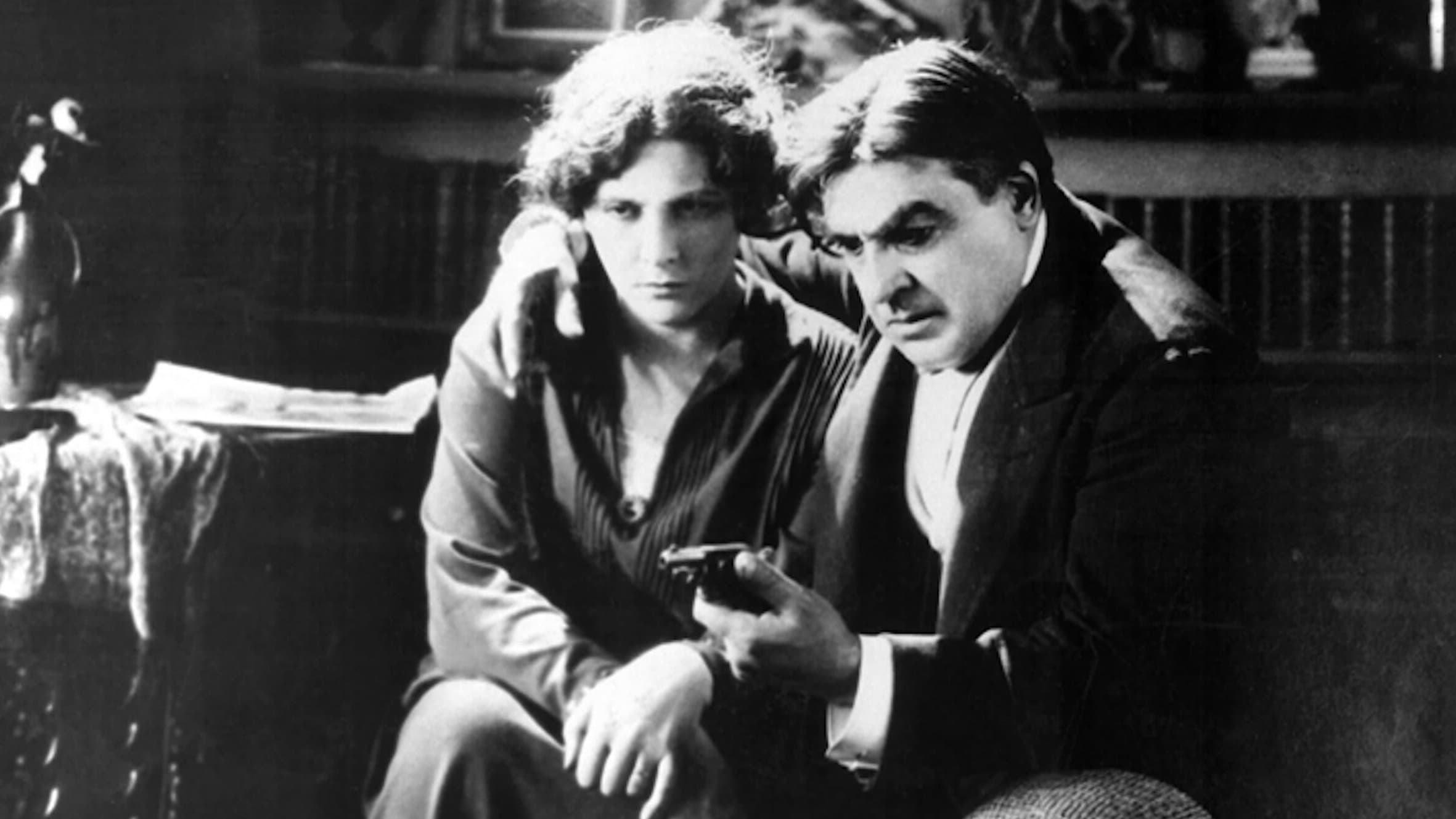
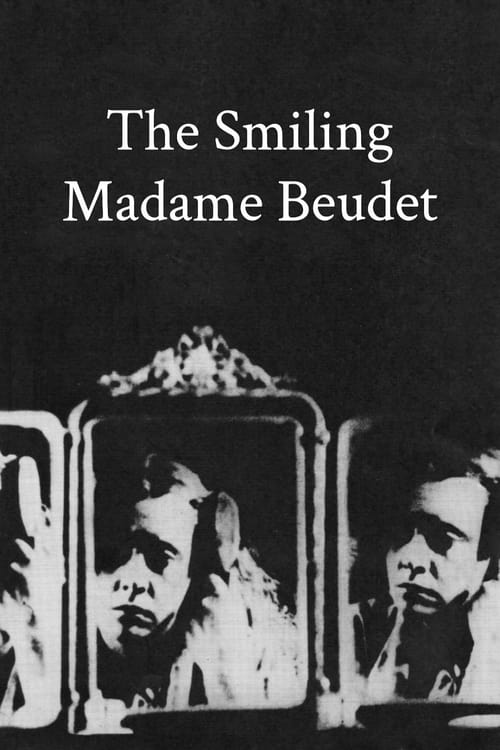
The Smiling Madame Beudet
1923·Drama·43m
7.0
★
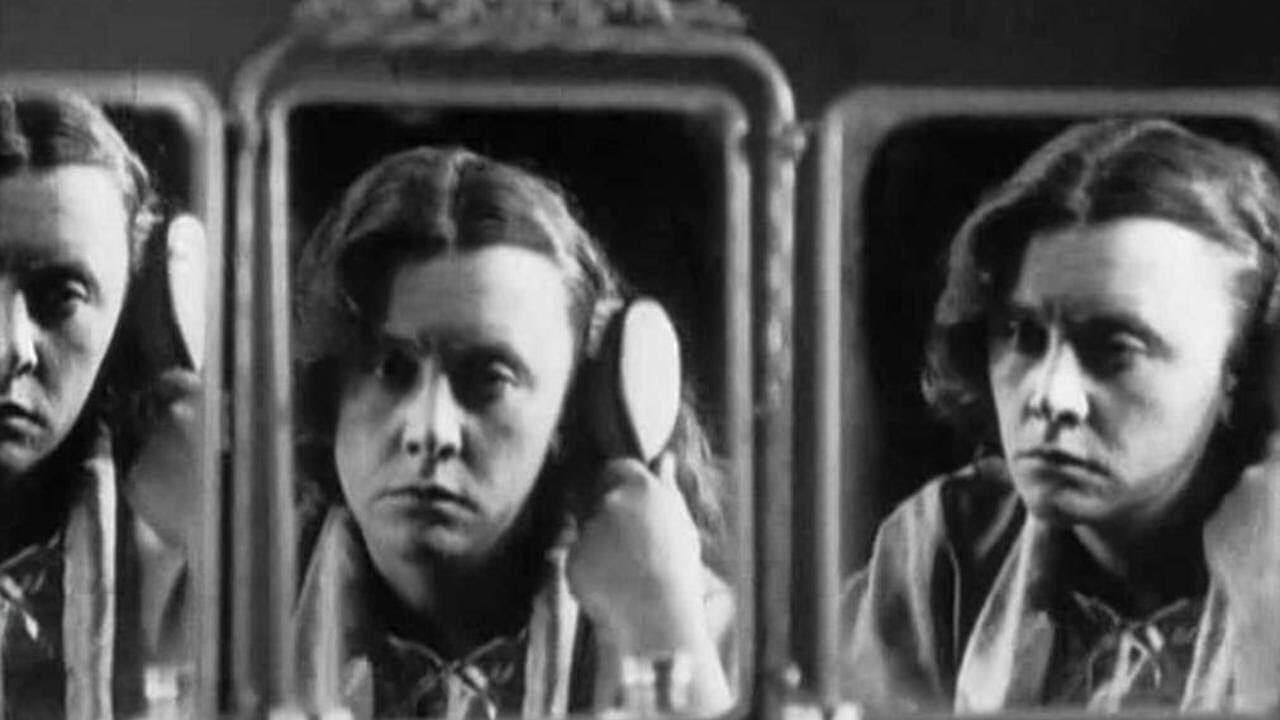
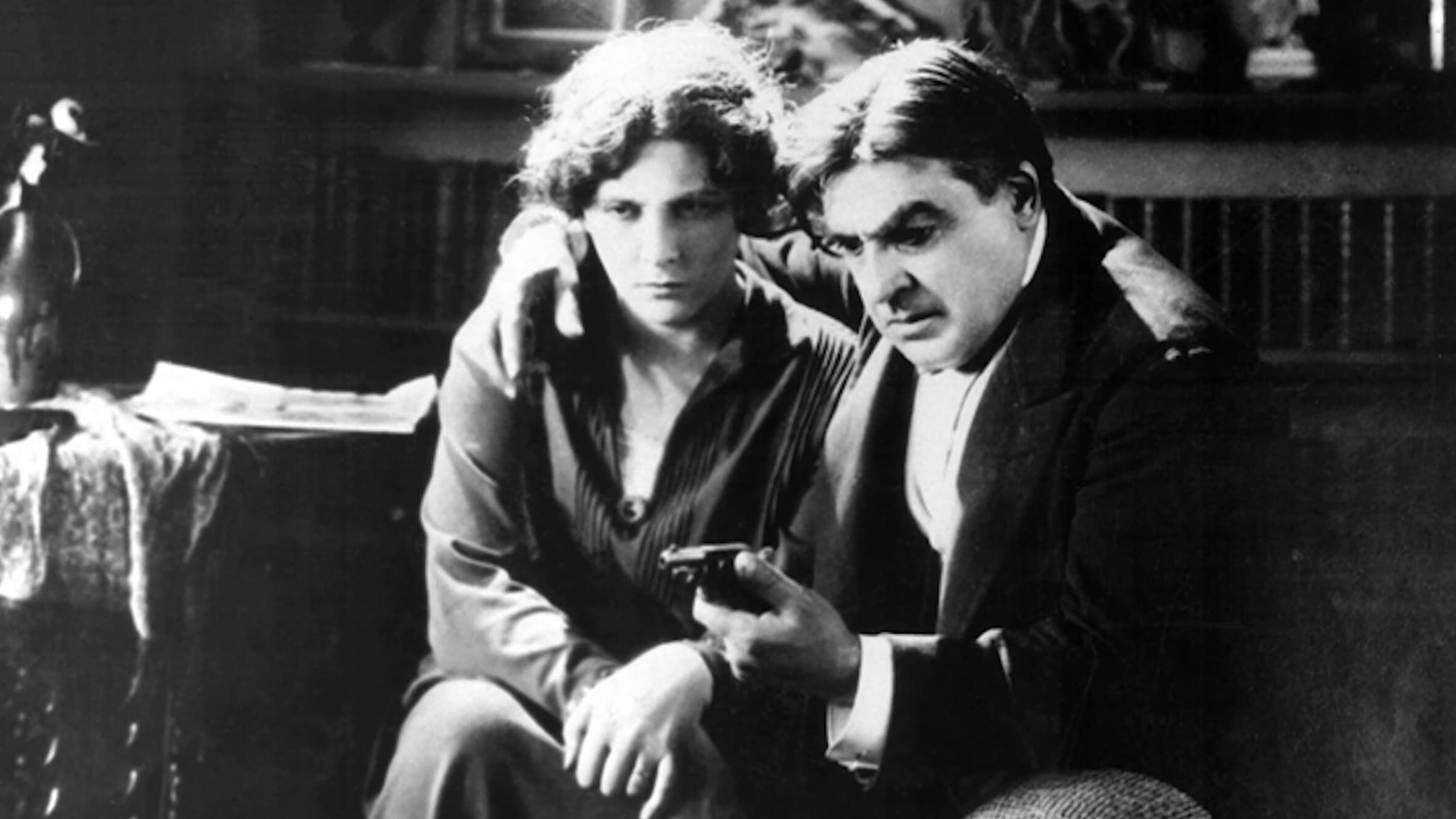
An unhappily married woman devises a scheme to get rid of her husband.
Directed by Germaine Dulac
silent film
woman director
french impressionism

IMDB
N/A
Cast

Germaine Dermoz
Madame Beudet
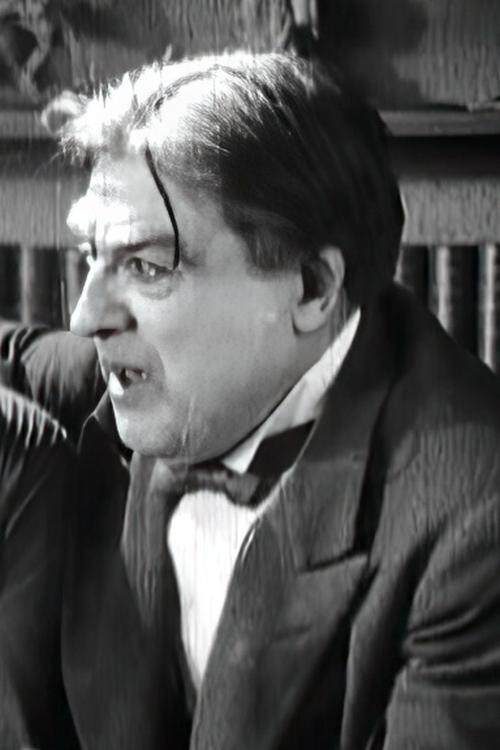
Alexandre Arquillière
Monsieur Beudet
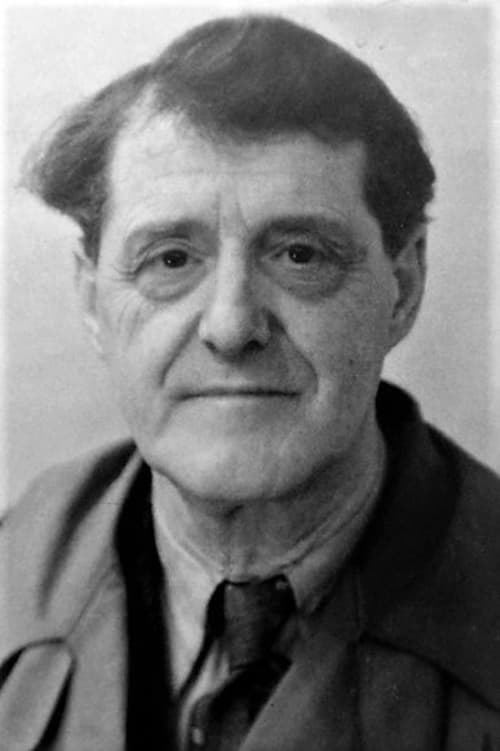
Jean d'Yd
Monsieur Labas
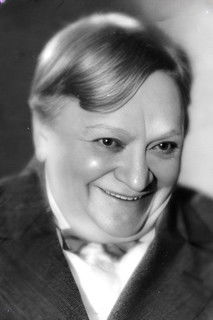
Madeleine Guitty
Madame Labas
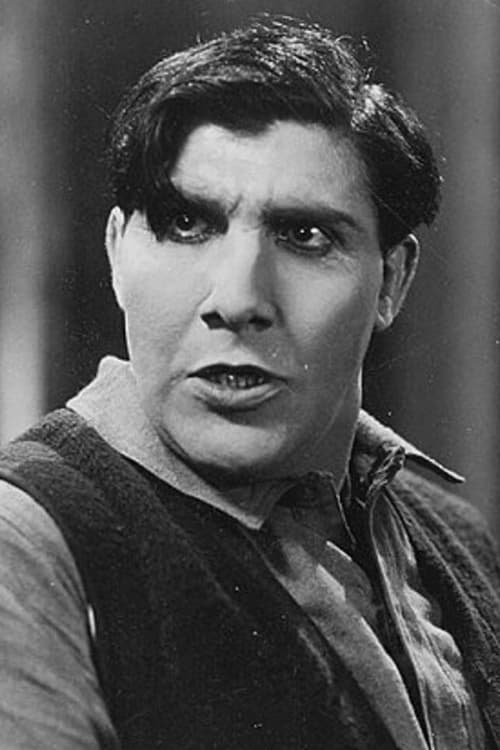
Raoul Paoli
Tennis Champion
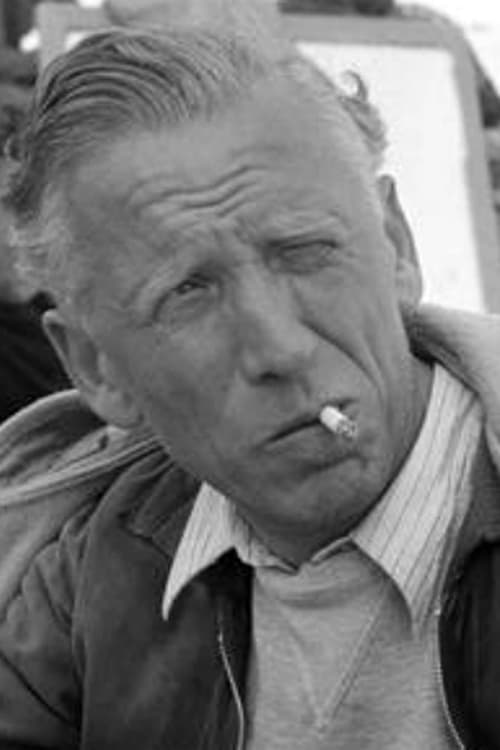
Armand Thirard
Clerk
Crew
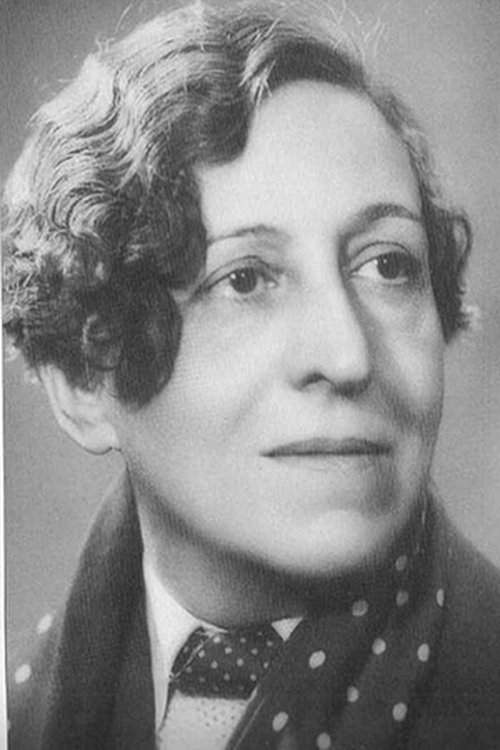
Germaine Dulac
Director
Germaine Dulac
Writer
Popular Reviews
59 reviews
Zimmy
8.0★ · 09/20/22
if this film wasn’t black and white, the wallpaper would be yellow
if this film wasn’t black and white, the wallpaper would be yellow

2

JBPRO
7.0★ · 06/06/26
One of the most interesting things to me about The Smiling Madame Beudet is the manner in which it is bookended by Dulac. Apart from a brief sequence of shots that separate the first from the second day, that show the provincial town awakening – shop shutters opening, children walking to school, dawn breaking on the canal – the film is oppressively insulated. The domestic space of the household dominates the plot. The only alternatives to domestic space that Dulac offers are the even more oppressive manifestations of Madame Beudet's inner thoughts and visions, which in themselves more often than not tend to reinforce domestic suffocation.
It is the opening and closing scenes that interest me, which, alongside the day-break sequence, exceed domesticity and by extension the plot itself. The opening scene is simple. A series of what are essentially establishing shots present the town with a kind of provincial idealism. We see the local church, humbling the houses beneath it. We see the glorious symmetry of a local park path, the benches and the trees arranged in quaint parallel. We see light playing on the canal waters, which double the buildings that line its banks. We see an empty street, etched with the imprints of carriage wheels. The impression is placid, tranquill, conservative.
The final scene offers a similar kind of extraneous snapshot. It's comprised of a single shot, and only lasts for a few seconds. A man and his wife walk down the street. Another man passes them. They tip hats at each other. They pass on. The film ends. Greetings are dutifully exchanged and the veneer of custom is preserved.
It's the fact that these two scenes envelop and cradle the narrative that makes them so signficant to me. They become insidious and ironic and oppressive, the viewer now acutely aware that these provincial snapshots are of the exact same fabric as Madame Beudet's aching hatred for her husband, her visions of his murder, Monsieur Beudet's grotesque mock suicides, and their stagnant curdled marriage. The social critique embedded within the film's isolated narrative is made brilliantly explicit by Dulac, whose insistence on the idea of domestic life as social performance goes so far as to turn a mirror into a stage in the final scene and literally stage a curtain call with puppets. These two extra-narrational, bookending scenes, totally unassuming in themselves, become loaded with violence, deceit, and irony, but also, more insidiously, with a sense of continuity. It's a brilliant structural move from Dulac.
It is the opening and closing scenes that interest me, which, alongside the day-break sequence, exceed domesticity and by extension the plot itself. The opening scene is simple. A series of what are essentially establishing shots present the town with a kind of provincial idealism. We see the local church, humbling the houses beneath it. We see the glorious symmetry of a local park path, the benches and the trees arranged in quaint parallel. We see light playing on the canal waters, which double the buildings that line its banks. We see an empty street, etched with the imprints of carriage wheels. The impression is placid, tranquill, conservative.
The final scene offers a similar kind of extraneous snapshot. It's comprised of a single shot, and only lasts for a few seconds. A man and his wife walk down the street. Another man passes them. They tip hats at each other. They pass on. The film ends. Greetings are dutifully exchanged and the veneer of custom is preserved.
It's the fact that these two scenes envelop and cradle the narrative that makes them so signficant to me. They become insidious and ironic and oppressive, the viewer now acutely aware that these provincial snapshots are of the exact same fabric as Madame Beudet's aching hatred for her husband, her visions of his murder, Monsieur Beudet's grotesque mock suicides, and their stagnant curdled marriage. The social critique embedded within the film's isolated narrative is made brilliantly explicit by Dulac, whose insistence on the idea of domestic life as social performance goes so far as to turn a mirror into a stage in the final scene and literally stage a curtain call with puppets. These two extra-narrational, bookending scenes, totally unassuming in themselves, become loaded with violence, deceit, and irony, but also, more insidiously, with a sense of continuity. It's a brilliant structural move from Dulac.
One of the most interesting things to me about The Smiling Madame Beudet is the manner in which it is bookended by Dulac. Apart from a brief sequence of shots that separate the first from the second day, that show the provincial town awakening – shop shutters opening, children walking to school, dawn breaking on the canal – the film is oppressively insulated. The domestic space of the household dominates the plot. The only alternatives to domestic space that Dulac offers are the even more oppressive manifestations of Madame Beudet's inner thoughts and visions, which in themselves more often than not tend to reinforce domestic suffocation.
It is the opening and closing scenes that interest me, which, alongside the day-break sequence, exceed domesticity and by extension the plot itself. The opening scene is simple. A series of what are essentially establishing shots present the town with a kind of provincial idealism. We see the local church, humbling the houses beneath it. We see the glorious symmetry of a local park path, the benches and the trees arranged in quaint parallel. We see light playing on the canal waters, which double the buildings that line its banks. We see an empty street, etched with the imprints of carriage wheels. The impression is placid, tranquill, conservative.
The final scene offers a similar kind of extraneous snapshot. It's comprised of a single shot, and only lasts for a few seconds. A man and his wife walk down the street. Another man passes them. They tip hats at each other. They pass on. The film ends. Greetings are dutifully exchanged and the veneer of custom is preserved.
It's the fact that these two scenes envelop and cradle the narrative that makes them so signficant to me. They become insidious and ironic and oppressive, the viewer now acutely aware that these provincial snapshots are of the exact same fabric as Madame Beudet's aching hatred for her husband, her visions of his murder, Monsieur Beudet's grotesque mock suicides, and their stagnant curdled marriage. The social critique embedded within the film's isolated narrative is made brilliantly explicit by Dulac, whose insistence on the idea of domestic life as social performance goes so far as to turn a mirror into a stage in the final scene and literally stage a curtain call with puppets. These two extra-narrational, bookending scenes, totally unassuming in themselves, become loaded with violence, deceit, and irony, but also, more insidiously, with a sense of continuity. It's a brilliant structural move from Dulac.
It is the opening and closing scenes that interest me, which, alongside the day-break sequence, exceed domesticity and by extension the plot itself. The opening scene is simple. A series of what are essentially establishing shots present the town with a kind of provincial idealism. We see the local church, humbling the houses beneath it. We see the glorious symmetry of a local park path, the benches and the trees arranged in quaint parallel. We see light playing on the canal waters, which double the buildings that line its banks. We see an empty street, etched with the imprints of carriage wheels. The impression is placid, tranquill, conservative.
The final scene offers a similar kind of extraneous snapshot. It's comprised of a single shot, and only lasts for a few seconds. A man and his wife walk down the street. Another man passes them. They tip hats at each other. They pass on. The film ends. Greetings are dutifully exchanged and the veneer of custom is preserved.
It's the fact that these two scenes envelop and cradle the narrative that makes them so signficant to me. They become insidious and ironic and oppressive, the viewer now acutely aware that these provincial snapshots are of the exact same fabric as Madame Beudet's aching hatred for her husband, her visions of his murder, Monsieur Beudet's grotesque mock suicides, and their stagnant curdled marriage. The social critique embedded within the film's isolated narrative is made brilliantly explicit by Dulac, whose insistence on the idea of domestic life as social performance goes so far as to turn a mirror into a stage in the final scene and literally stage a curtain call with puppets. These two extra-narrational, bookending scenes, totally unassuming in themselves, become loaded with violence, deceit, and irony, but also, more insidiously, with a sense of continuity. It's a brilliant structural move from Dulac.
uwu
omg si beba
omg si beba
Jelly
4.0★ · 02/05/26
uhhhhh i was just kinda bored, it wasn't like the worst silent film i've seen but it wasn't that great either, like it was just kinda there
uhhhhh i was just kinda bored, it wasn't like the worst silent film i've seen but it wasn't that great either, like it was just kinda there
iris
6.0★ · 01/15/26
first time I see a man look menacing while holding a tennis racket
first time I see a man look menacing while holding a tennis racket