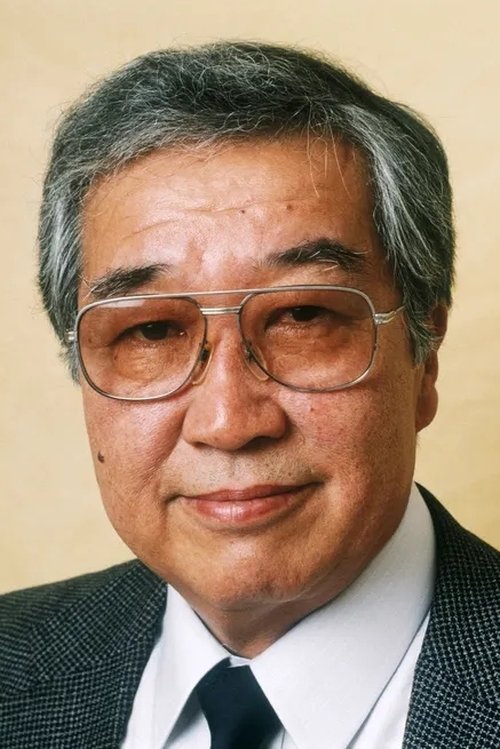
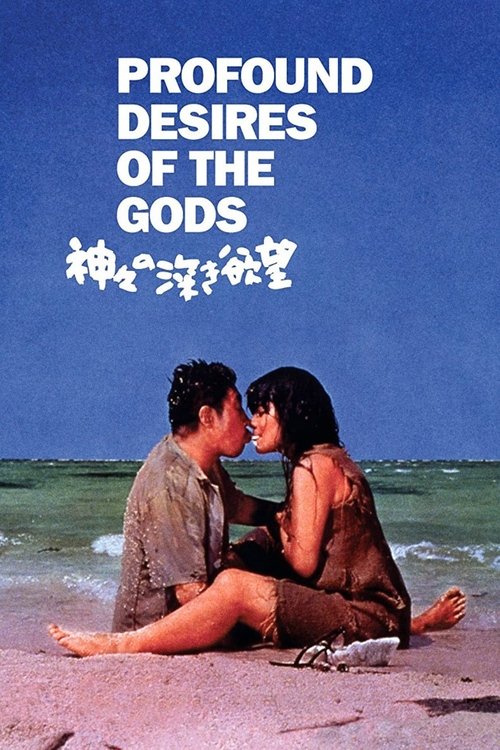
I wrote at length about Imamura’s unique criticism of capitalism in my review of The Insect Woman. Here, I think Imamura zooms out and posits, “What if all humans are insects?” In a way, it feels like a natural progression of this kind of inquiry into humanity. Any trace of optimism I gleaned back in Pigs and Battleships has all but evaporated.
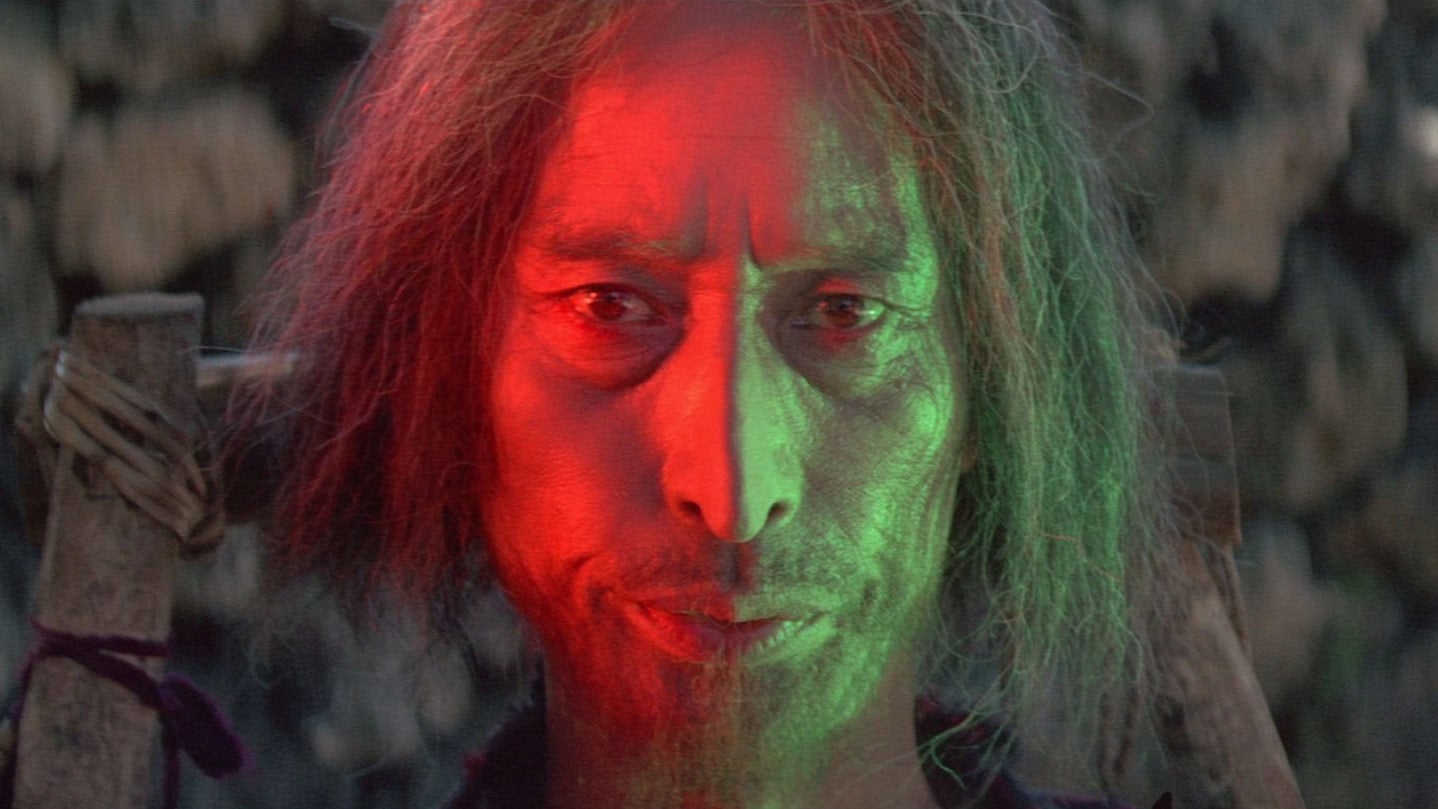
Imamura’s view and critique of capitalism is uniquely scathing in its relevance because of the ontological foundational lens he uses to look at the world. Consider the differing ontological concepts of particulars and universals. Imamura asks and shows which truths, ugly or otherwise, exist outside of the economic paradigm. From an analytical and proactive perspective, if you remove capitalism, you must know which things will remain behind. For example, in this movie, Nekichi, the bound and chained, exists and suffers under either economic paradigm. Ryu, who oscillates between civilizations, utilizes his power regardless of who he’s reporting to or what he is acting in service of. The ultimate insight here is the nature of power.
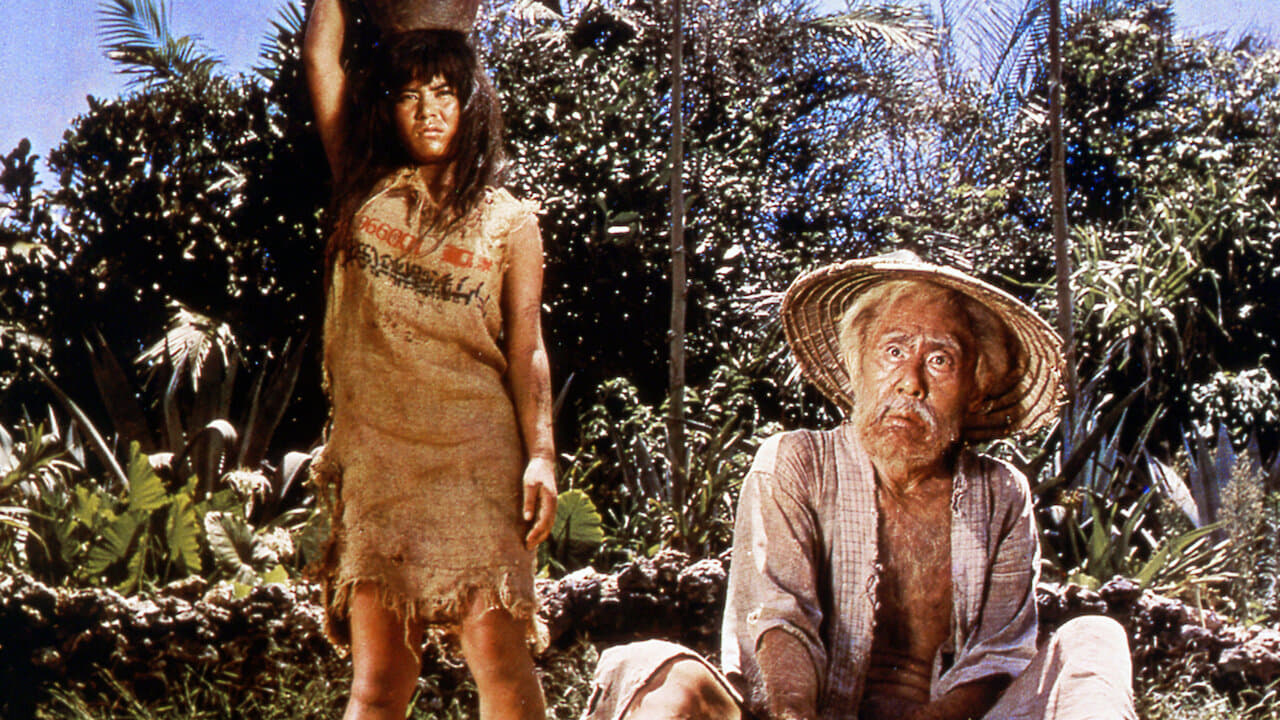
The parallels within this film are staggering. Think to the very title “Profound Desires of the Gods.” There is a spatial plane of separation between gods and man. So, too, is there a separation between the sugar cane factory owners and the villagers who work. Capitalism, then, has created a pathway for humans to supplant the old gods. Imamura ingeniously drops breadcrumbs of the economic landscape to show how powerful and influential the capitalists (the sugar cane factory owners) are despite never actually being in the movie.
Note how Ryu tries to remind the Engineer that the villagers work for free, and the company has a great deal. This exchange highlights the short-sightedness of profit motivation. Ultimately, a company obsessed in this way will doom itself. Further, it introduces the human “cost” of this kind of mentality, here, the villagers. This recalls the exposure in The Insect Woman. Imamura is giving a face and identity to the people capitalism swallows.
The death knell of capitalism comes in the reveal of the sugar cane factory writing off the balance owed to the villagers. A foundational ingredient to capitalism’s success is trust, or contract enforcement. Here, Imamura mocks capitalists. It feels like he’s saying capitalists posit that self-service leads to the best for all. But this same self-service motivates people to act in evil ways. This wage exploitation of the villagers represents the folly of thinking capitalism can just “happen” or just “work” when the evils in man’s hearts still thrives. In other words, the idealistic anarchy which lets capitalism gracefully take over is a pipe dream. Even more critically, is the implication of inherent imperialism that comes with capitalistic adoption.
What really makes me admire Imamura, though, is what I see as his fundamental pessimism. In fact, I may even call it principled pessimism. In this view, he sees humans and systems with equality. He surely does not believe in the better angels of our nature. As bad as the exploitation is in the movie, there’s nothing to show the village life pre-capitalism as any kind of place you’d want to live.
There are numerous mentions of the crimes of things, simply because they're done out in the open. The sentiment of underlying and hidden ugliness is huge. I think Imamura is saying how capitalism is just as evil, but its evils are just not in plain sight. That's why Imamura makes movies about people on the margin. It gives face and identity to victims otherwise relegated to a statistic.
The circularity of the island and the story of the brother-sister gods suggests maybe Imamura thinks we’re trapped in an ouroboros of suffering. It doesn’t matter which economic system we have, there will always be the bottom wrung of humanity to serve the meat grinder of whichever god is ruling.
I wrote at length about Imamura’s unique criticism of capitalism in my review of The Insect Woman. Here, I think Imamura zooms out and posits, “What if all humans are insects?” In a way, it feels like a natural progression of this kind of inquiry into humanity. Any trace of optimism I gleaned back in Pigs and Battleships has all but evaporated.
Imamura’s view and critique of capitalism is uniquely scathing in its relevance because of the ontological foundational lens he uses to look at the world. Consider the differing ontological concepts of particulars and universals. Imamura asks and shows which truths, ugly or otherwise, exist outside of the economic paradigm. From an analytical and proactive perspective, if you remove capitalism, you must know which things will remain behind. For example, in this movie, Nekichi, the bound and chained, exists and suffers under either economic paradigm. Ryu, who oscillates between civilizations, utilizes his power regardless of who he’s reporting to or what he is acting in service of. The ultimate insight here is the nature of power.
The parallels within this film are staggering. Think to the very title “Profound Desires of the Gods.” There is a spatial plane of separation between gods and man. So, too, is there a separation between the sugar cane factory owners and the villagers who work. Capitalism, then, has created a pathway for humans to supplant the old gods. Imamura ingeniously drops breadcrumbs of the economic landscape to show how powerful and influential the capitalists (the sugar cane factory owners) are despite never actually being in the movie.
Note how Ryu tries to remind the Engineer that the villagers work for free, and the company has a great deal. This exchange highlights the short-sightedness of profit motivation. Ultimately, a company obsessed in this way will doom itself. Further, it introduces the human “cost” of this kind of mentality, here, the villagers. This recalls the exposure in The Insect Woman. Imamura is giving a face and identity to the people capitalism swallows.
The death knell of capitalism comes in the reveal of the sugar cane factory writing off the balance owed to the villagers. A foundational ingredient to capitalism’s success is trust, or contract enforcement. Here, Imamura mocks capitalists. It feels like he’s saying capitalists posit that self-service leads to the best for all. But this same self-service motivates people to act in evil ways. This wage exploitation of the villagers represents the folly of thinking capitalism can just “happen” or just “work” when the evils in man’s hearts still thrives. In other words, the idealistic anarchy which lets capitalism gracefully take over is a pipe dream. Even more critically, is the implication of inherent imperialism that comes with capitalistic adoption.
What really makes me admire Imamura, though, is what I see as his fundamental pessimism. In fact, I may even call it principled pessimism. In this view, he sees humans and systems with equality. He surely does not believe in the better angels of our nature. As bad as the exploitation is in the movie, there’s nothing to show the village life pre-capitalism as any kind of place you’d want to live.
There are numerous mentions of the crimes of things, simply because they're done out in the open. The sentiment of underlying and hidden ugliness is huge. I think Imamura is saying how capitalism is just as evil, but its evils are just not in plain sight. That's why Imamura makes movies about people on the margin. It gives face and identity to victims otherwise relegated to a statistic.
The circularity of the island and the story of the brother-sister gods suggests maybe Imamura thinks we’re trapped in an ouroboros of suffering. It doesn’t matter which economic system we have, there will always be the bottom wrung of humanity to serve the meat grinder of whichever god is ruling.