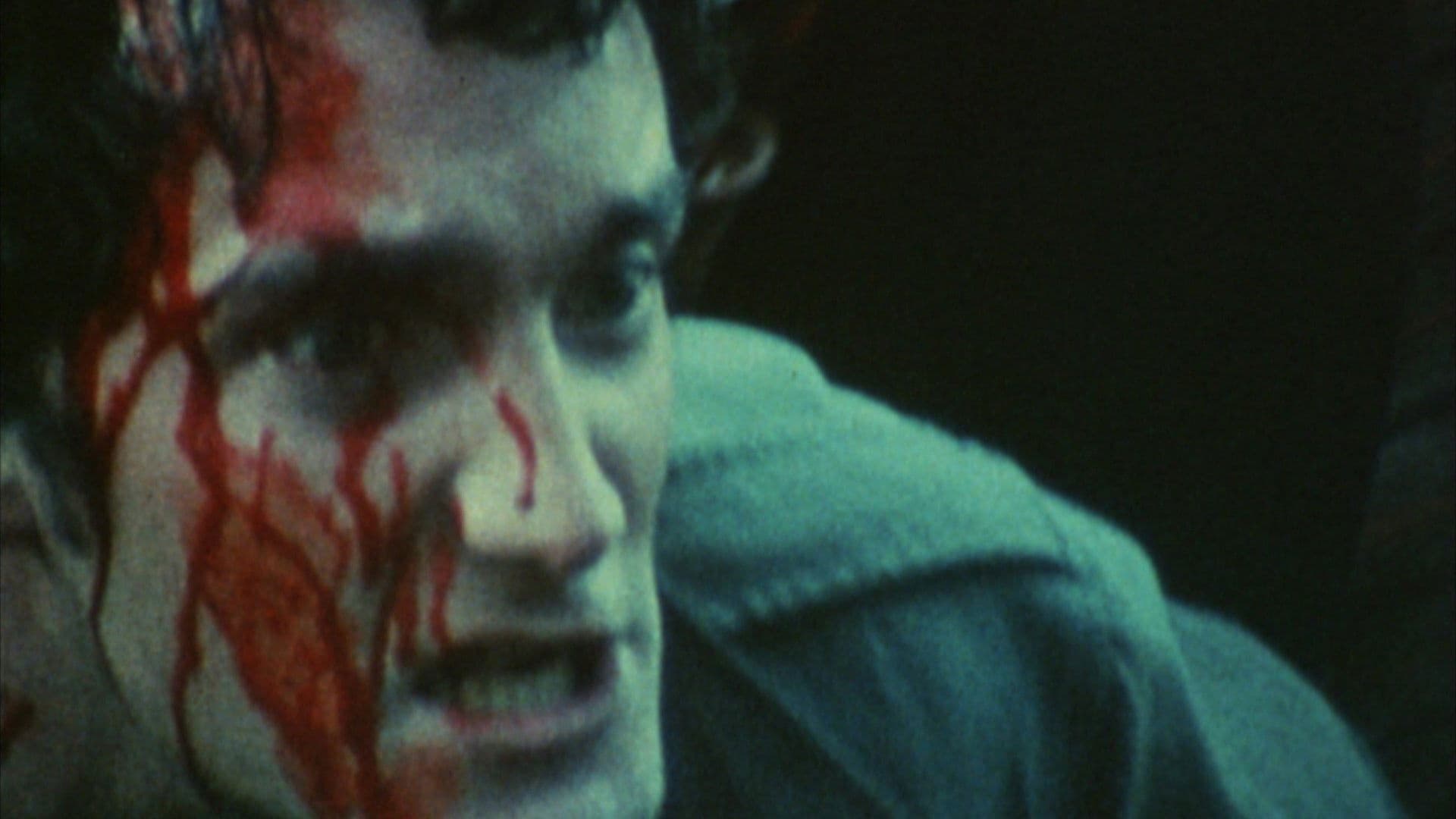
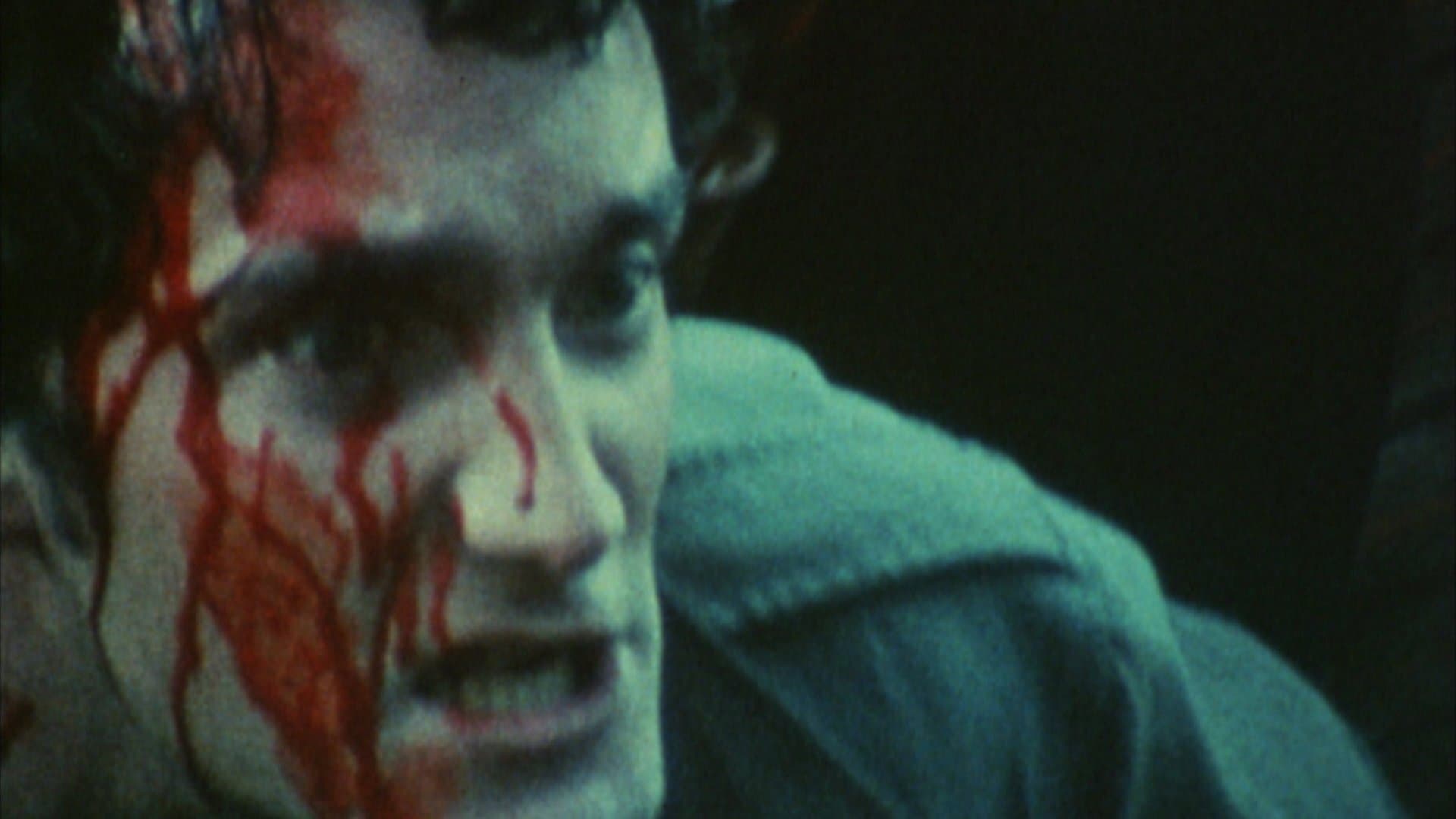
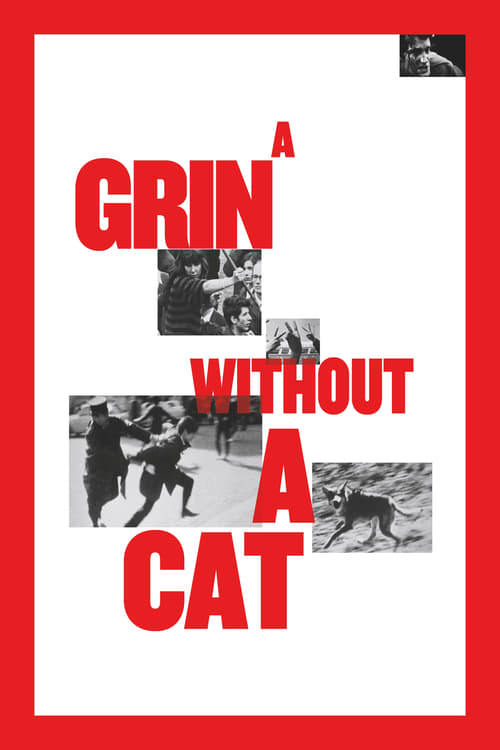
It took me two days to get through the film and a third to figure out what I actually wanted to say about it. Coming to it already familiar with Deleuze and Guattari's Anti-Oedipus, the film immediately stood out as something that needed to be seen through that lens, not because the framework was imposed on it from outside, but because it kept insisting on itself from within.
Anti-Oedipus (1972) is D&G's argument against the psychoanalytic idea that desire is organized around lack, that we desire what we don't have. Their counter-claim is that desire is productive: it doesn't want, it makes, it connects, it generates flows. Which raises an uncomfortable question. If desire is productive, why does it so often produce repression? Why do revolutionary movements end up reconstructing the hierarchies they set out to destroy? Why do people desire their own subjugation?
That question is, it turns out, exactly what Marker's film is about. Marker is observing what D&G put into concept. They are working on the same problem from different sides of the same wall, and reading one through the other feels less like a critical exercise and more like watching two people finish each other's sentences.
1) The Structure1968 is a very important year for the left: May in Paris, the Prague Spring, Tlatelolco, the assassinations of MLK and RFK, the escalations in Vietnam, and a global sense that the existing order was coming apart. Rather than accepting this mythologized version of the year as the decisive rupture, Marker stretches the timeline in both directions, showing the revolutionary energy of 1968 as something that had been building since at least 1967, and the defeat as something that had already begun before the barricades came down. 1968 is, for Marker, not the height of the possibility but the moment when it was already starting to close. In D&G's terms, what the film traces is not a binary opposition but a temporal process: the gradual passage from a moment of maximum deterritorialization, when flows of desire escape their habitual codings and connect across difference, to the onset of reterritorialization, when those same flows are captured, recoded, and redirected onto fixed structures of authority. The two part structure of the film is itself the formal inscription of this process.
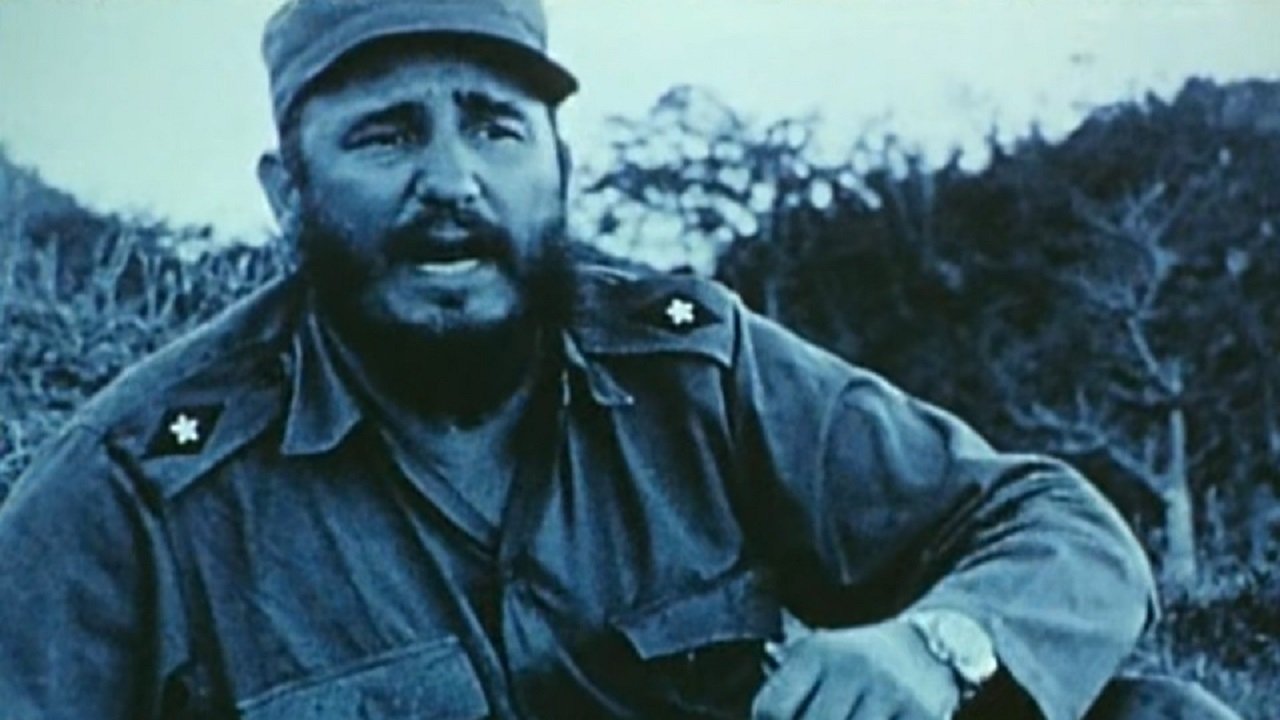
Les mains fragiles connects all causes either globally (Vietnam, France, Czechoslovakia, Che's vision of exporting the Cuban revolution to Africa and then to Bolivia) or internally, with the workers adopting the students' struggle, represented in the slogan:
"The workers will take the flag of struggle from the fragile hands of the students."
This unity is contrasted with the second part, Les mains coupées, where the connections are severed; the inclusive logic that made them possible is replaced by an exclusive logic that destroys them. Either you accept the party line or you are an enemy, either you are with the correct tendency or against the revolution. This is paranoid investment in D&G's precise sense: the molar organization that captures molecular desire and turns it against itself.
The sequence of events Marker assembles (Vietnam, the death of Che, May 1968, the Prague Spring, Chile) is not arranged as a catalog of defeats. It is arranged to show the same structure repeating: molecular energy arises, flows across previously fixed boundaries, and is then captured or destroyed by a centralizing force, whether through external repression or internal paranoia.
The revolutionary movements that fail are shown failing in a specific way: they become hierarchical, dogmatic, organized around a fixed center (the party, the leader, the correct line...) demanding allegiance to a totalizing code. The Stalinist left, the vanguard parties, the authoritarian structures of liberation movements: these are paranoid investments of revolutionary desire, and D&G are clear that this is not a pathology exclusive to the right. The factional left Marker documents has adopted the transcendent organizational logic of the very State it claims to oppose, and in doing so has become its mirror image.
The moments of genuine possibility in the film; the early footage of spontaneous occupation, the solidarities formed across different struggles, are precisely the moments before organization hardens into institution. That hardening is already the beginning of the end.
2) The Pleasure of CaptureThe "Lettre à quelques camarades" monologue is a second-person indictment of the leftist intellectuals who idealized the Chinese model and functioned as its theoretical apologists, as
"ratons laveurs de la révolution," washing it clean of its contradictions until it became theoretically immaculate and politically inert. As Marker puts it:
"it wasn't enough for you that human history as it is, with its cortege of horrors and darkness, manages sometimes to tear 700 million people from misery and slavery, even if by means of new servitude against which a new wave of history shall in turn fight. No, everything must be satisfied at once: political theory, democracy, philosophy, even literature and art."
This
"dialectique à l'envers," which begins from its conclusion and reconstructs a conveniently legible past, is reterritorialization as ideology: rather than following the lines of flight that revolutionary desire opened, they rerouted them back toward established points of authority. Most damning of all, and most consonant with D&G's argument that desire can invest repression as readily as liberation, is the
"fierté d'alpiniste" these intellectuals take in having tamed the vertigo of contradiction. Their pleasure is the pleasure of capture. In D&G's framework, Oedipalization names the process by which desire is submitted to a transcendent Law (originally the paternal figure), but extendable to any fixed authority that triangulates and domesticates desire's productive flows. What these intellectuals perform is precisely this: the submission of the irreducible complexity of revolutionary history to the Law of the dominant faction's word, the Party line as paternal tribunal. To have Oedipalized history is to have made it answer to a Father, and to have experienced that submission as intellectual achievement.
3) The SilenceIf the monologue locates the failure of revolutionary desire within the left itself — in the intellectual's compulsion to reterritorialize every line of flight back onto the fixed point of theory — the film then proceeds to show that this failure is not an exception but a structural condition, reproduced by power on a global scale with considerably more resources and considerably less guilt.
At the Shah of Iran's 2500-year celebration of the Persian Empire, surrounded by assembled heads of state, princes and kings, Marker's camera refuses the grandeur the occasion stages for itself. What his voiceover makes plain is that all these people knew that prisoners were being tortured in Iranian prisons, and they knew it together, in ceremony, in full diplomatic light. The intellectual left and the geopolitical establishment converge here on the same horror: both are desiring machines that invest in repression, one through theory, the other through protocol.
"The only criminals civilized nations denounced on posters are people without crowns, without oil."
It is the contrast between Tlatelolco and Munich that makes this complicity most nakedly visible, and it is here that Marker's montage achieves something close to a theorem. In October 1968, weeks before the Mexico City Olympics, the Mexican state massacred student demonstrators in the Plaza de las Tres Culturas, a slaughter the international community absorbed in near-silence, swallowed by the celebratory machinery of the Games that followed. Four years later, the murder of eleven Israeli athletes at Munich produced a global paroxysm of grief and condemnation. Marker does not diminish Munich. What he does is hold the two events in the same frame long enough to make the disproportion impossible to naturalize.
What is at work is not simply hypocrisy but something more systemic. Moral outrage is itself a flow that power captures and redistributes, channeled toward victims with the right geopolitical valence and quietly rerouted away from those without. Tlatelolco had neither crowns nor oil. The silence was not incidental but load-bearing: it held the whole edifice up. This is what Marker achieves by moving laterally across images that official history keeps in separate rooms — not opposing the dominant narrative from within its own logic, but connecting what it requires to remain unconnected.
4) Marker's Method as SchizoanalysisThe clearest description of the method comes from within the film itself:
"You can never tell what you might be filming."
The film is made of the actual wreckage of failures, and this is not incidental but constitutive. Marker assembles it from found footage, newsreel, militant cinema from Latin America, Vietnam, Czechoslovakia, France , fragments from different archives, different movements, different defeats. He does not impose a master narrative over them. He connects and rejects, lets the montage produce meaning that no single piece contains. At one point the film turns this into an explicit question:
"pourquoi quelquefois les images se mettent-elles à trembler?" It is a question asked from within the film itself, and it is the most exact description of the method Marker employs.
The trembling happens when an image is forced out of its assigned context and into contact with another, when the connection refuses to let it remain stable, legible, safely archived. In D&G's terms, this is deterritorialization within the image itself: the moment when footage escapes its coding and begins to produce meaning it was never meant to produce. The Prague sequence makes this explicit: Russian tanks advancing through the city's streets in 1945 are placed against Russian tanks advancing through the same streets in 1968. Neither image alone contains this meaning; it emerges only from the juxtaposition, from the refusal to keep them in their separate historical compartments. The image trembles because history's account of it can no longer hold.
D&G transform Lévi-Strauss's concept of bricolage (a mode of thought that works with available materials without a master plan) into a political and libidinal principle: the rhizome, the assemblage, the connective logic that moves horizontally across difference rather than vertically through cause and effect. Marker's montage operates by exactly this logic. The film does not know in advance what it will find; it discovers its argument through the act of assembly. That the question about trembling is asked at all implies an honest admission of the method's own instability: Marker knows he cannot fully master what he assembles, cannot guarantee that what the film produces will not itself be reterritorialized into something safe, archivable, and inert.
Neither Marker nor D&G offer a consoling answer to the practical question the film keeps returning to: why organized political movements so reliably reproduce the hierarchies and repressions they set out to destroy. What they do offer is a way of seeing it clearly. Capitalism doesn't defeat revolutionary desire primarily through force. It absorbs it, turns it into a book, a career, a party platform, a Netflix documentary. The flow continues. Only its destination changes.
Le Fond de l'air est rouge remains a very compelling diagnosis of the political pathology of the twentieth century left, compelling enough to still be useful now.