
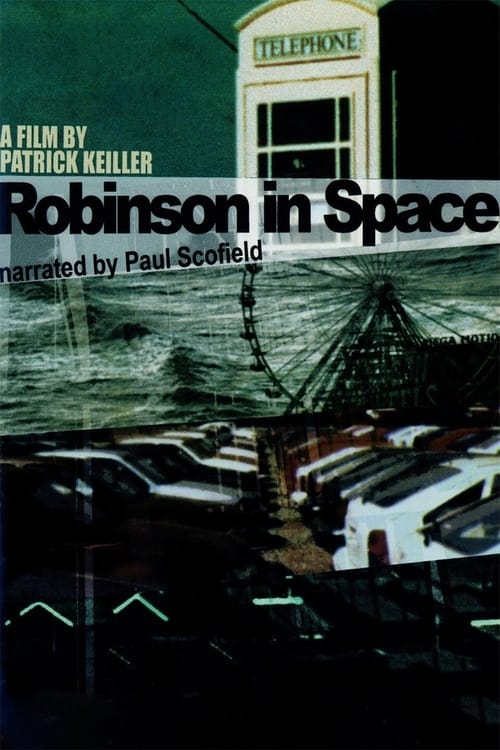
Robinson in Space
1997·Documentary·1h 18m
7.1
★
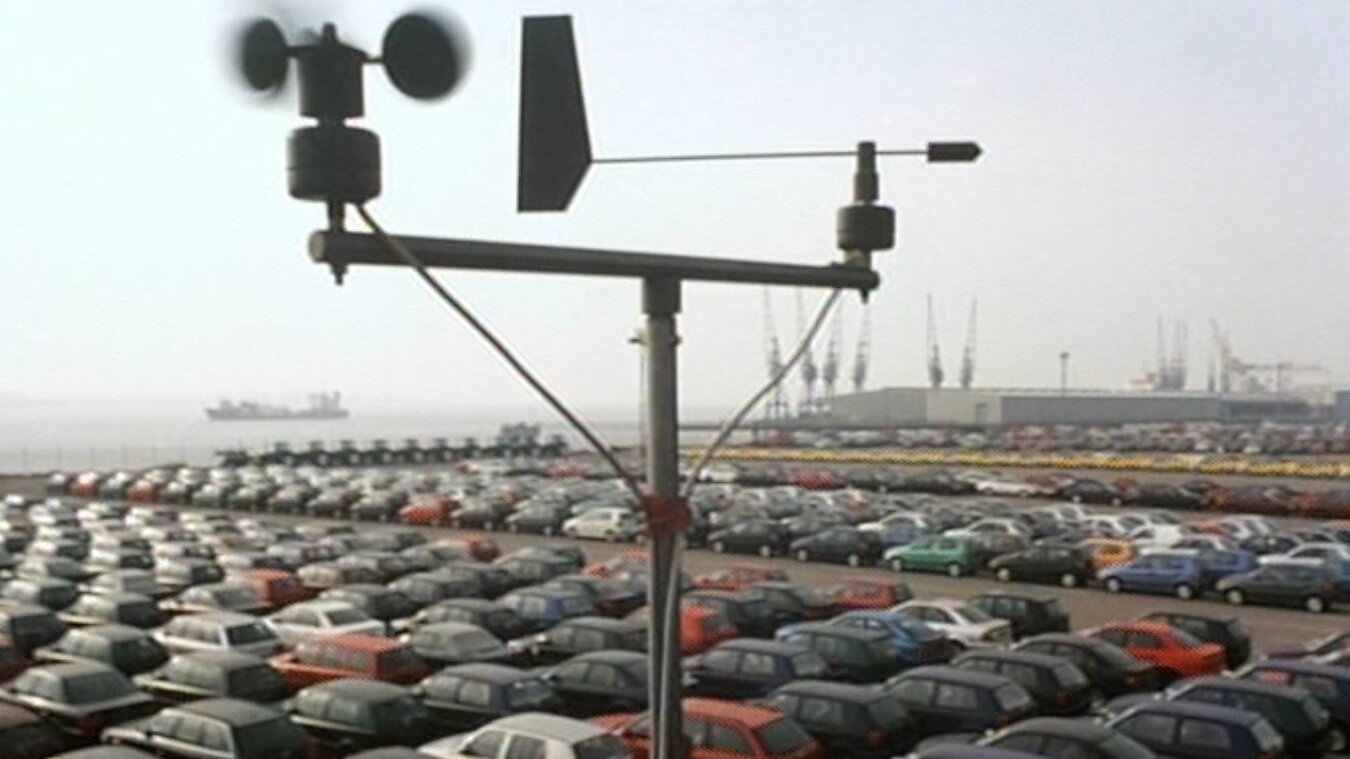
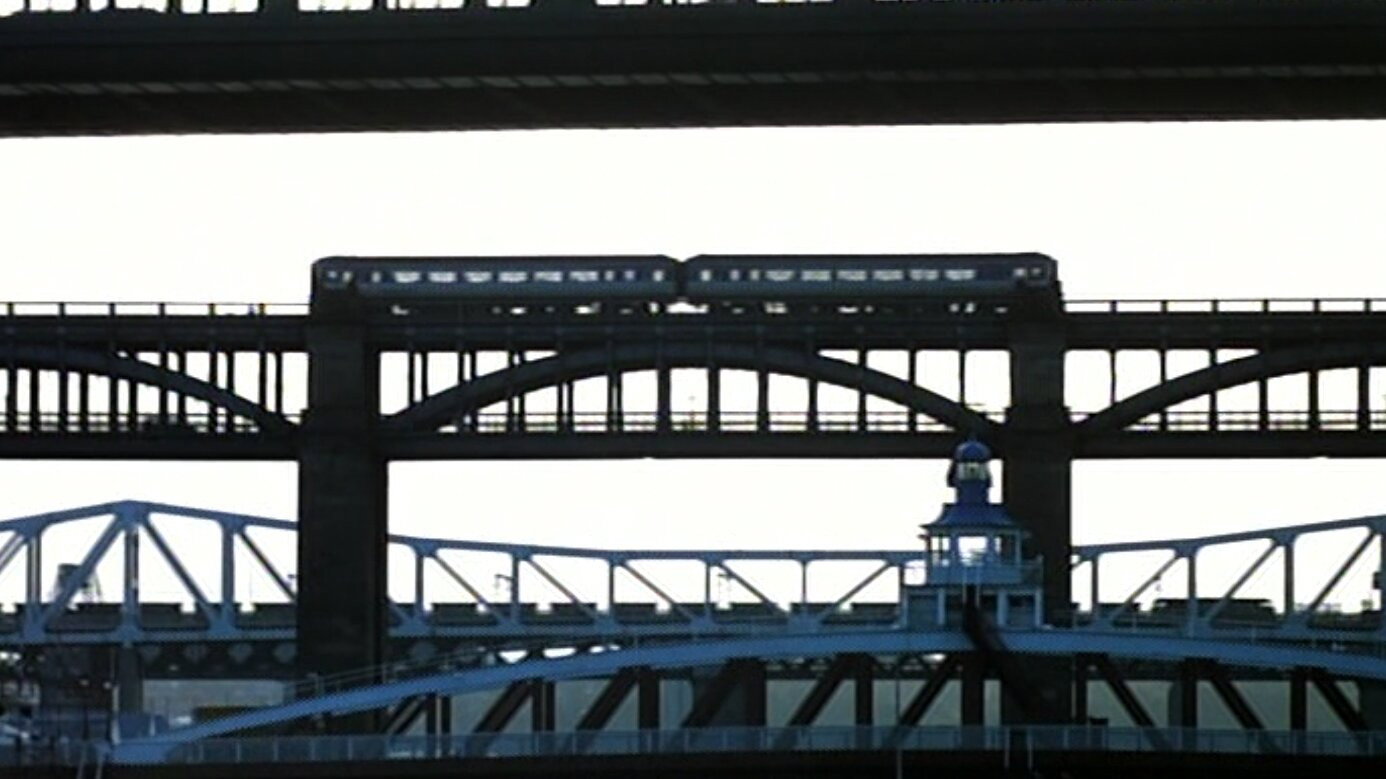
Robinson is commissioned to investigate the unspecified "problem of England." The narrator describes his seven excursions, with the unseen Robinson, around the country. They mainly concentrate on ports, power stations, prisons, and manufacturing plants, but they also bring in various literary connections, as well as a few conventional landscapes.
Directed by Patrick Keiller

IMDB
N/A
Cast
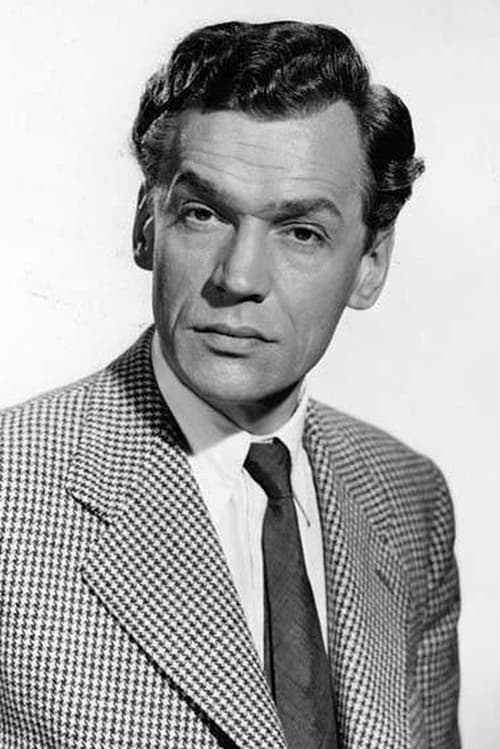
Paul Scofield
Narrator (voice)
Crew
Keith Griffiths
Producer

Tessa Ross
Executive Producer
Popular Reviews
2 reviews
Kieran
10.0★ · 11/19/24
“Robinson is beginning to act strangely”
It’s this line that stays with me long after I’ve watched this trilogy. It sums up everything that’s joyous about it and sets the stage for the third film brutally. A lot of it has to do with Paul Scofield’s inflection, stretching the “strangely” ever so slightly- a minute detail that gives this moment, and the film, its titular otherworldliness.
Robinson’s ending breakdown becomes the embodiment of what Robinson in Space attempts to posit. On first watch, this seemed the lesser to London- its scattered and less focused scope felt colder. On a rewatch, this is purposeful. The industrial landscapes Keiller photographs and obsesses over in statistical fetishisation are collapsing. They’re fragile, remnants of isolationism that, when retrospectively viewed through a globalist lens, were about to come crumbling down. Robinson stealing the fighter jet, as part of his breakdown, is probably the most important moment of this incredible trilogy. A moment of agency in a sea of neo-liberal artefacts and the march of progress. The moment where the askew nature of their trips enters into reality and has lasting effects.
Robinson in Space’s cool distance reflects Robinson’s inner mindset, an estrangement from what he’s seeing and the bubbling under of his own anti-capitalist sentiments. Robinson could deal with London; the capitalist infection across wider Britain required an act of rebellion.
Industrialism begets the surreal. The Narrator’s asides and Robinson’s final outburst should feel insignificant against this backdrop but they only feel more powerful.
I could talk endlessly about buckminsterfullerines, the crater and its reverberation through this film but it would be digression. This is more than equal to London.
It’s this line that stays with me long after I’ve watched this trilogy. It sums up everything that’s joyous about it and sets the stage for the third film brutally. A lot of it has to do with Paul Scofield’s inflection, stretching the “strangely” ever so slightly- a minute detail that gives this moment, and the film, its titular otherworldliness.
Robinson’s ending breakdown becomes the embodiment of what Robinson in Space attempts to posit. On first watch, this seemed the lesser to London- its scattered and less focused scope felt colder. On a rewatch, this is purposeful. The industrial landscapes Keiller photographs and obsesses over in statistical fetishisation are collapsing. They’re fragile, remnants of isolationism that, when retrospectively viewed through a globalist lens, were about to come crumbling down. Robinson stealing the fighter jet, as part of his breakdown, is probably the most important moment of this incredible trilogy. A moment of agency in a sea of neo-liberal artefacts and the march of progress. The moment where the askew nature of their trips enters into reality and has lasting effects.
Robinson in Space’s cool distance reflects Robinson’s inner mindset, an estrangement from what he’s seeing and the bubbling under of his own anti-capitalist sentiments. Robinson could deal with London; the capitalist infection across wider Britain required an act of rebellion.
Industrialism begets the surreal. The Narrator’s asides and Robinson’s final outburst should feel insignificant against this backdrop but they only feel more powerful.
I could talk endlessly about buckminsterfullerines, the crater and its reverberation through this film but it would be digression. This is more than equal to London.
“Robinson is beginning to act strangely”
It’s this line that stays with me long after I’ve watched this trilogy. It sums up everything that’s joyous about it and sets the stage for the third film brutally. A lot of it has to do with Paul Scofield’s inflection, stretching the “strangely” ever so slightly- a minute detail that gives this moment, and the film, its titular otherworldliness.
Robinson’s ending breakdown becomes the embodiment of what Robinson in Space attempts to posit. On first watch, this seemed the lesser to London- its scattered and less focused scope felt colder. On a rewatch, this is purposeful. The industrial landscapes Keiller photographs and obsesses over in statistical fetishisation are collapsing. They’re fragile, remnants of isolationism that, when retrospectively viewed through a globalist lens, were about to come crumbling down. Robinson stealing the fighter jet, as part of his breakdown, is probably the most important moment of this incredible trilogy. A moment of agency in a sea of neo-liberal artefacts and the march of progress. The moment where the askew nature of their trips enters into reality and has lasting effects.
Robinson in Space’s cool distance reflects Robinson’s inner mindset, an estrangement from what he’s seeing and the bubbling under of his own anti-capitalist sentiments. Robinson could deal with London; the capitalist infection across wider Britain required an act of rebellion.
Industrialism begets the surreal. The Narrator’s asides and Robinson’s final outburst should feel insignificant against this backdrop but they only feel more powerful.
I could talk endlessly about buckminsterfullerines, the crater and its reverberation through this film but it would be digression. This is more than equal to London.
It’s this line that stays with me long after I’ve watched this trilogy. It sums up everything that’s joyous about it and sets the stage for the third film brutally. A lot of it has to do with Paul Scofield’s inflection, stretching the “strangely” ever so slightly- a minute detail that gives this moment, and the film, its titular otherworldliness.
Robinson’s ending breakdown becomes the embodiment of what Robinson in Space attempts to posit. On first watch, this seemed the lesser to London- its scattered and less focused scope felt colder. On a rewatch, this is purposeful. The industrial landscapes Keiller photographs and obsesses over in statistical fetishisation are collapsing. They’re fragile, remnants of isolationism that, when retrospectively viewed through a globalist lens, were about to come crumbling down. Robinson stealing the fighter jet, as part of his breakdown, is probably the most important moment of this incredible trilogy. A moment of agency in a sea of neo-liberal artefacts and the march of progress. The moment where the askew nature of their trips enters into reality and has lasting effects.
Robinson in Space’s cool distance reflects Robinson’s inner mindset, an estrangement from what he’s seeing and the bubbling under of his own anti-capitalist sentiments. Robinson could deal with London; the capitalist infection across wider Britain required an act of rebellion.
Industrialism begets the surreal. The Narrator’s asides and Robinson’s final outburst should feel insignificant against this backdrop but they only feel more powerful.
I could talk endlessly about buckminsterfullerines, the crater and its reverberation through this film but it would be digression. This is more than equal to London.


Kieran
9.0★ · 04/09/24
“Robinson is beginning to act strangely”
Actual shivers.
By its own nature, not as focused as London but the photography is still gorgeous and the surreal melodrama between Robinson and the Narrator might be better than its predecessor.
Actual shivers.
By its own nature, not as focused as London but the photography is still gorgeous and the surreal melodrama between Robinson and the Narrator might be better than its predecessor.
“Robinson is beginning to act strangely”
Actual shivers.
By its own nature, not as focused as London but the photography is still gorgeous and the surreal melodrama between Robinson and the Narrator might be better than its predecessor.
Actual shivers.
By its own nature, not as focused as London but the photography is still gorgeous and the surreal melodrama between Robinson and the Narrator might be better than its predecessor.
estrella
8.0★ · 10/30/25