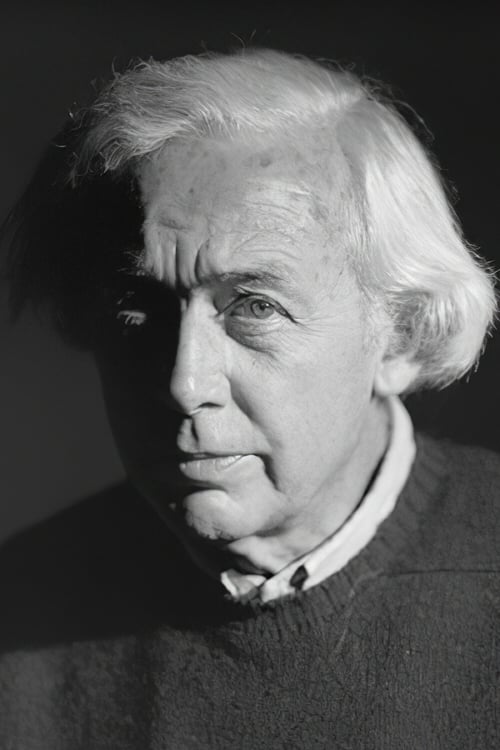
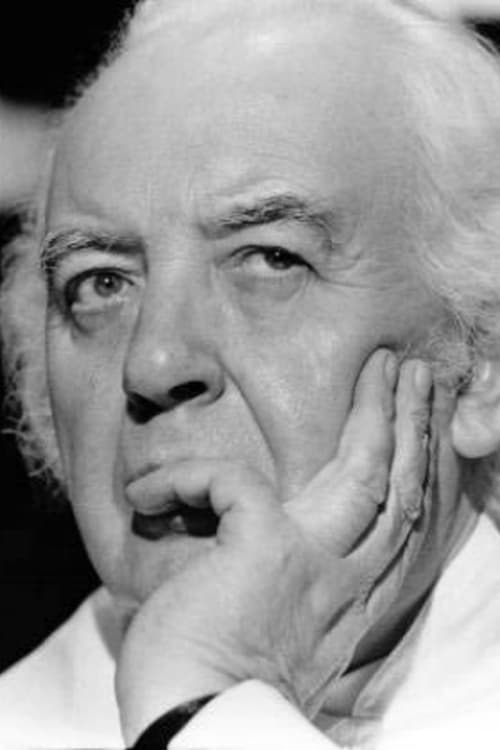
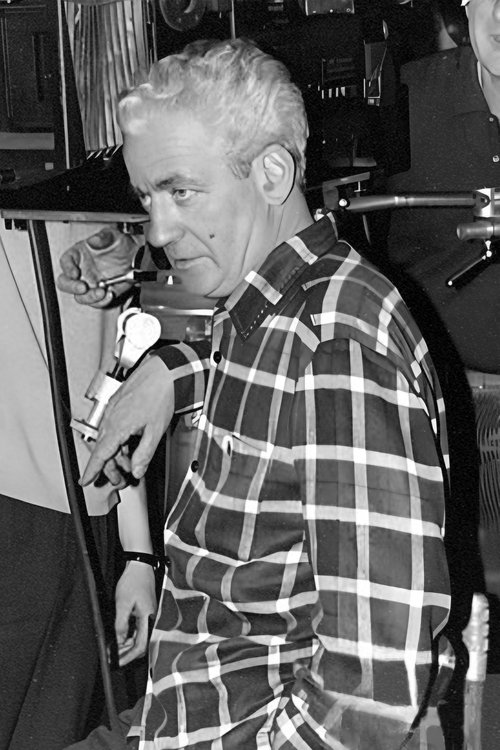
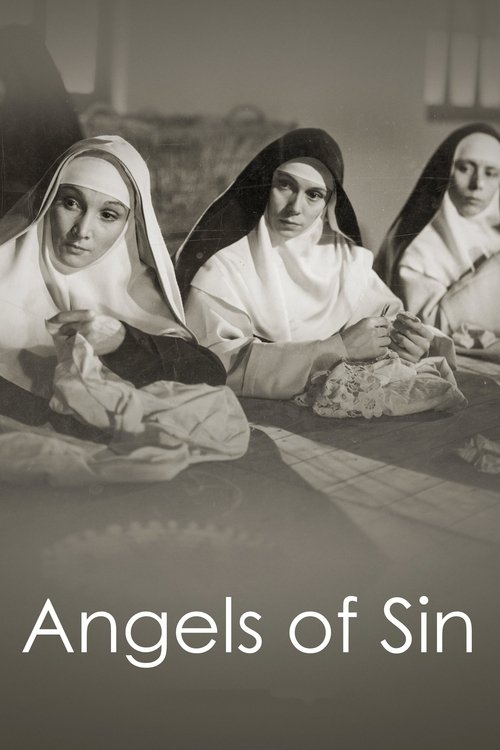
As Bresson’s first feature film, Angels of Sin works well as a point of reference as to the nature of his evolution, but not much else. Bresson’s idiosyncrasy that would go on to epitomise his entire career is practically non-existent - you could watch this film and associate it with any French director of the time. But there still exists peculiarities that one could very well point to as constants in other works of his oeuvre.
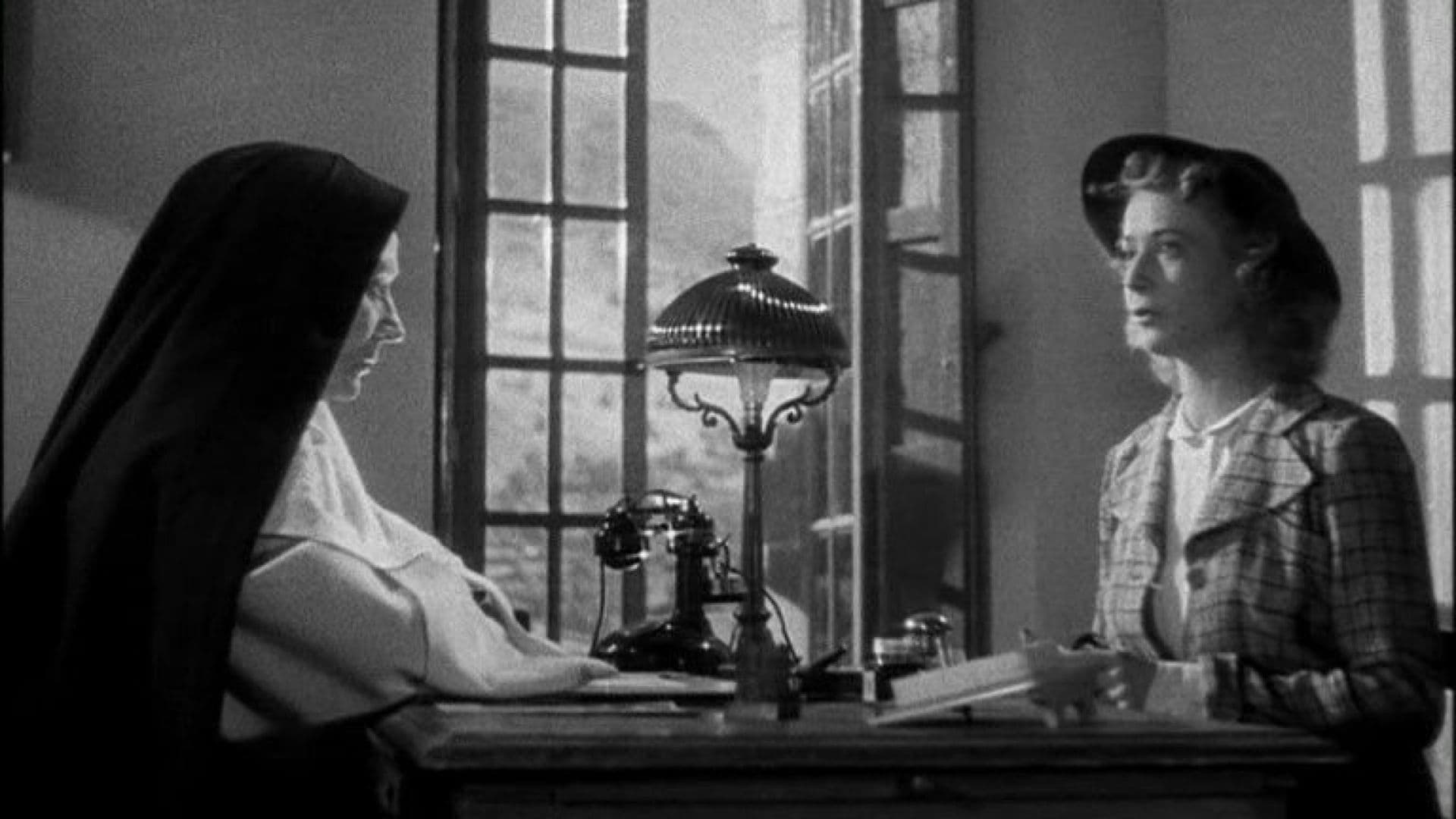
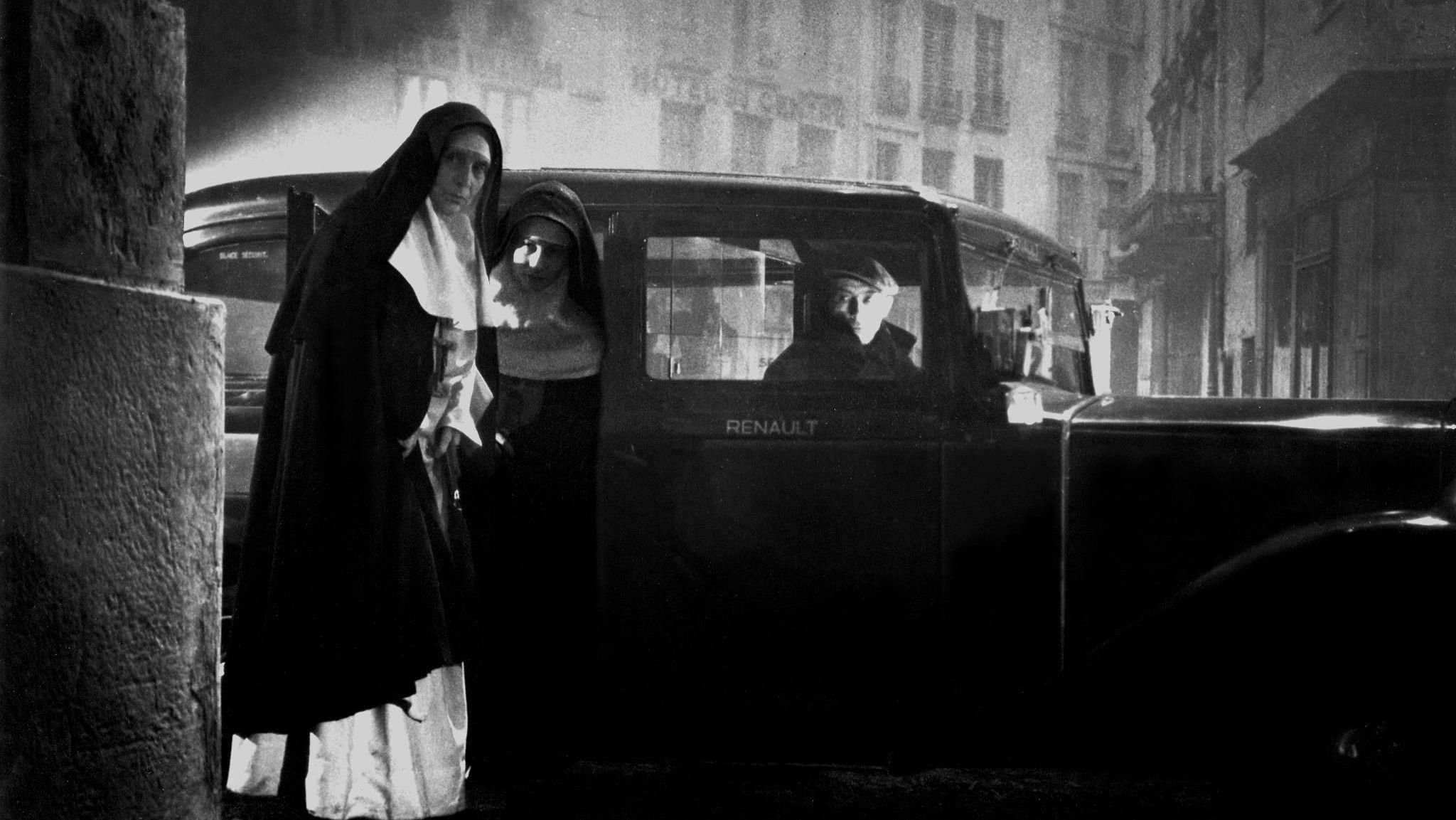
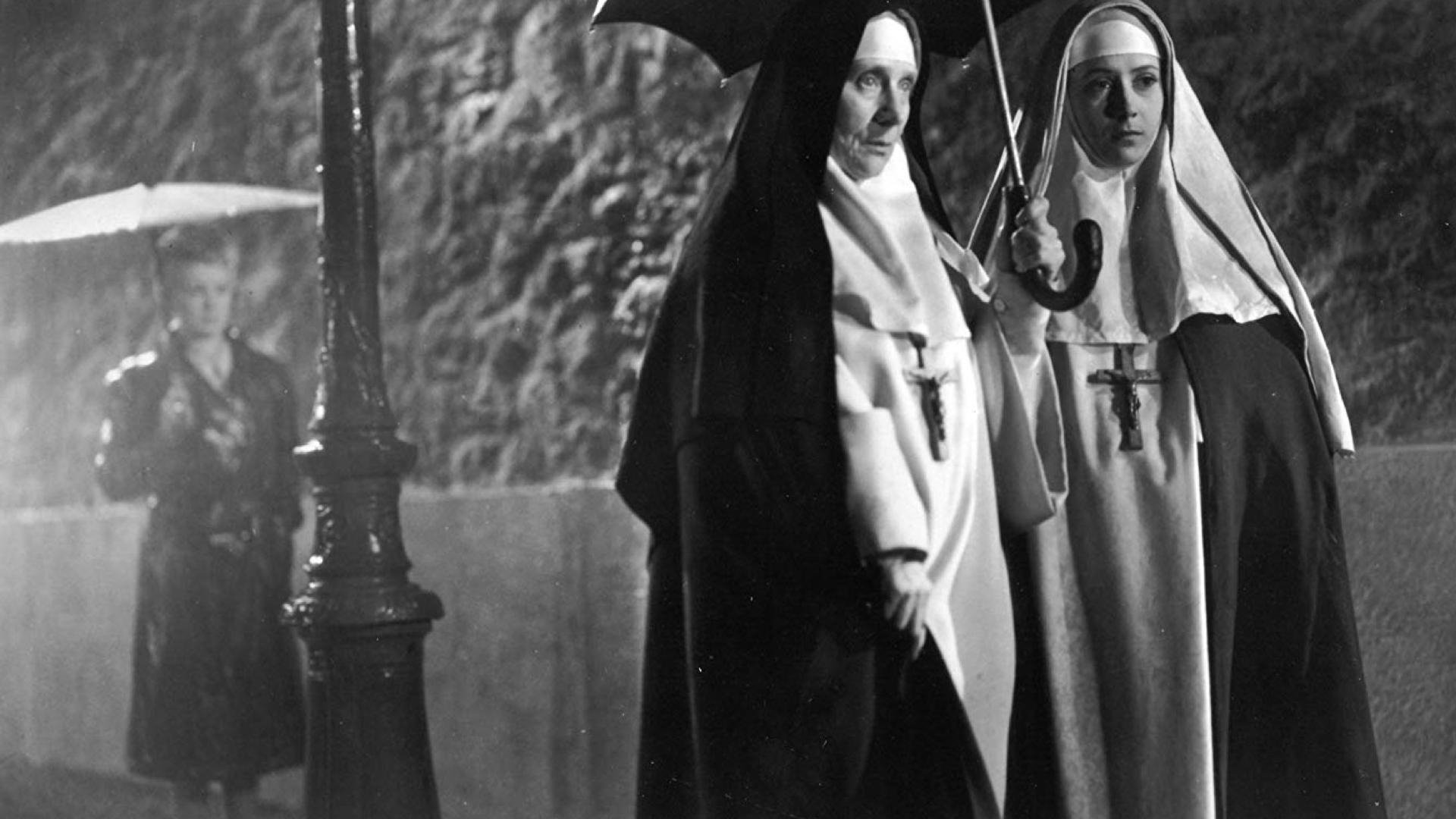
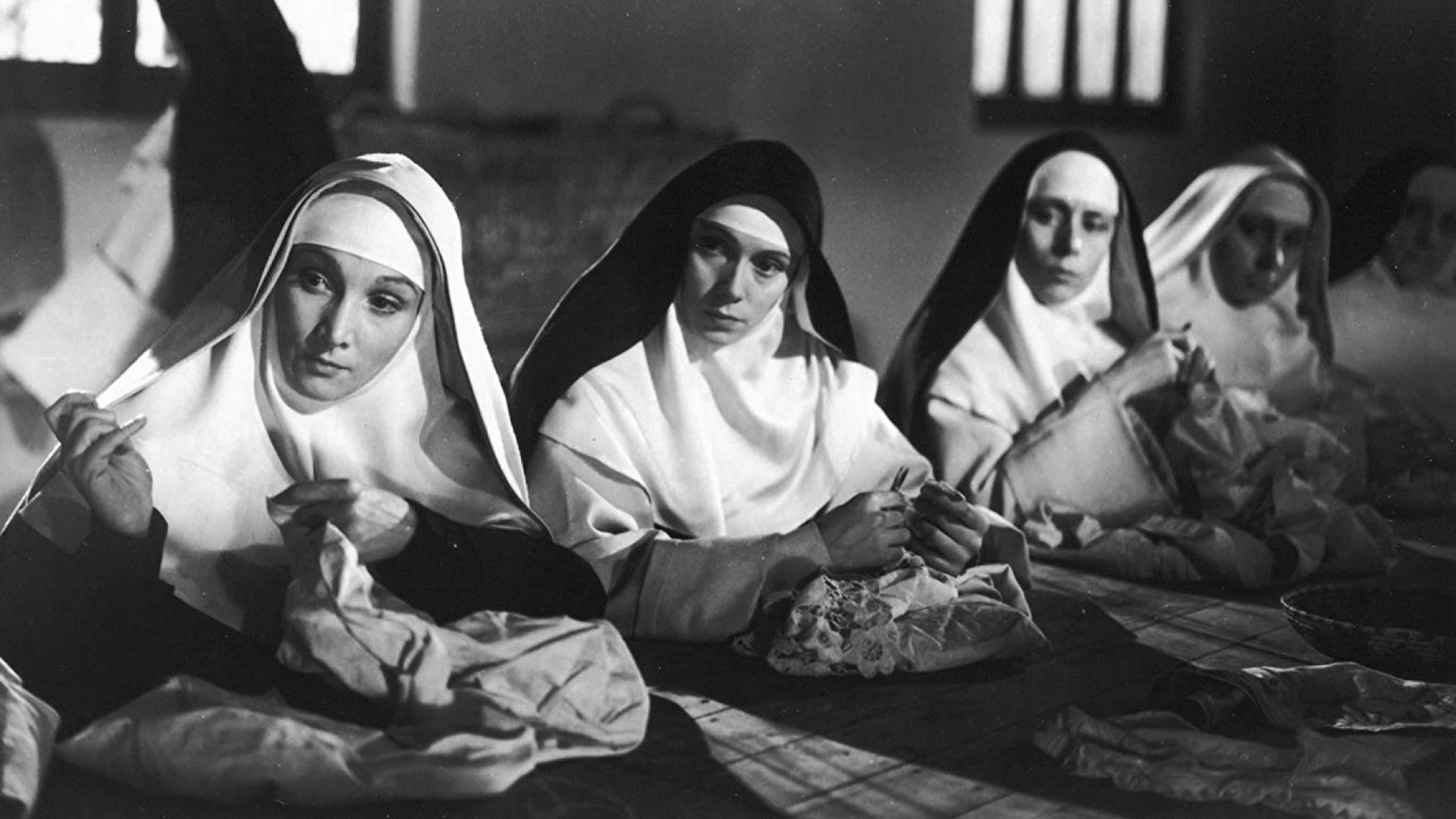
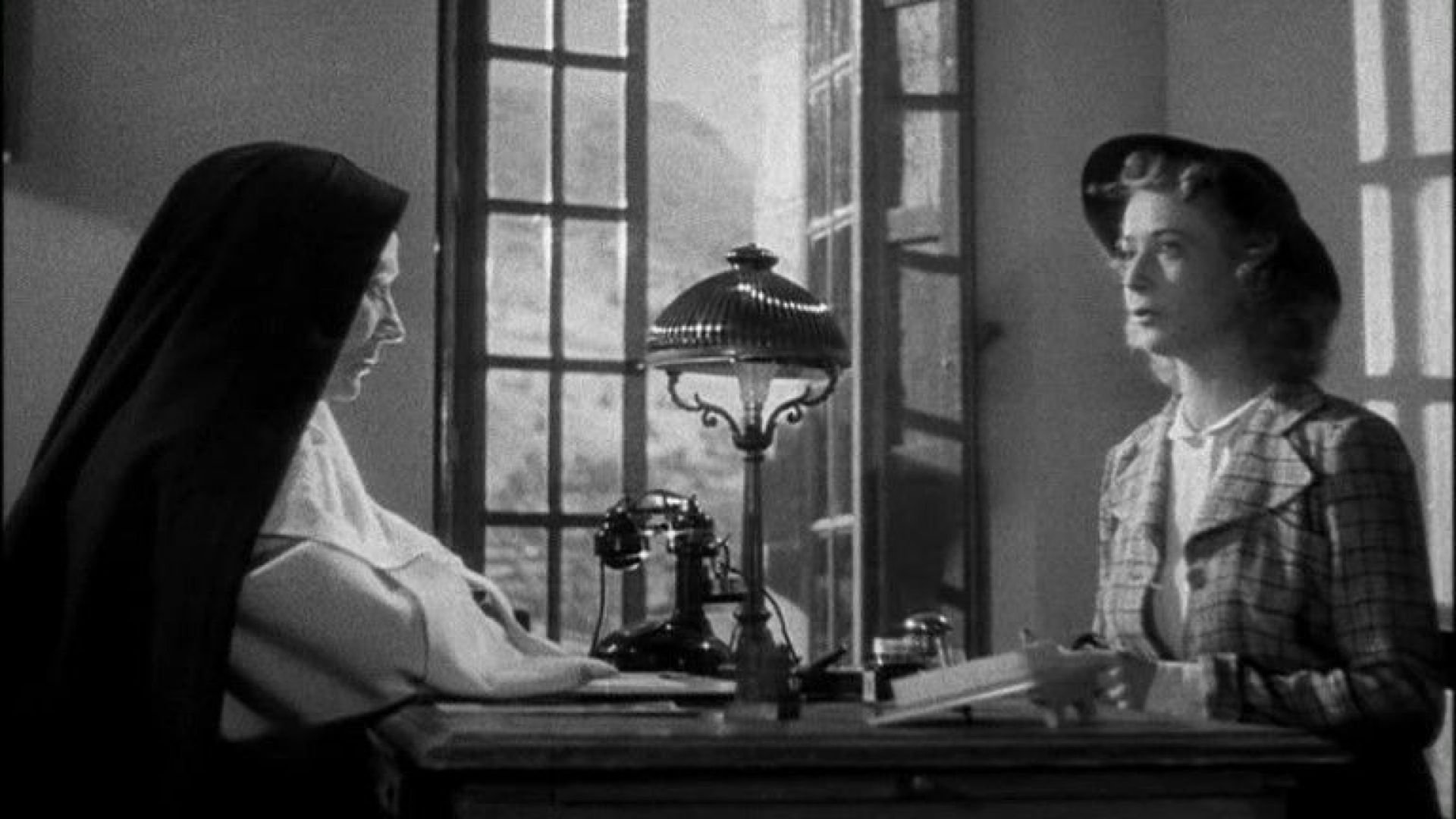
Of the non-Bressonian elements, there are many. Perhaps the most notable of these is in the mise en scène; the professional actors, with their theatrical performances is in stark contrast to the ‘models’ Bresson would use in all of his films from 1951 onward. As Bresson himself disdainfully put it in Notes on the Cinematograph, the film ‘smacks of the stage’. The expressive performances and overt drama would later be completely rejected in favour of automatic movements and deadpan delivery - internal drama, as he put it. The use of sets as opposed to real locations is also a notably anti-Bressonian element of the mise en scène, with their lavish design and oftentimes exaggeratedly contrasting lighting heavily juxtaposing the muted tones that would permeate his later work.
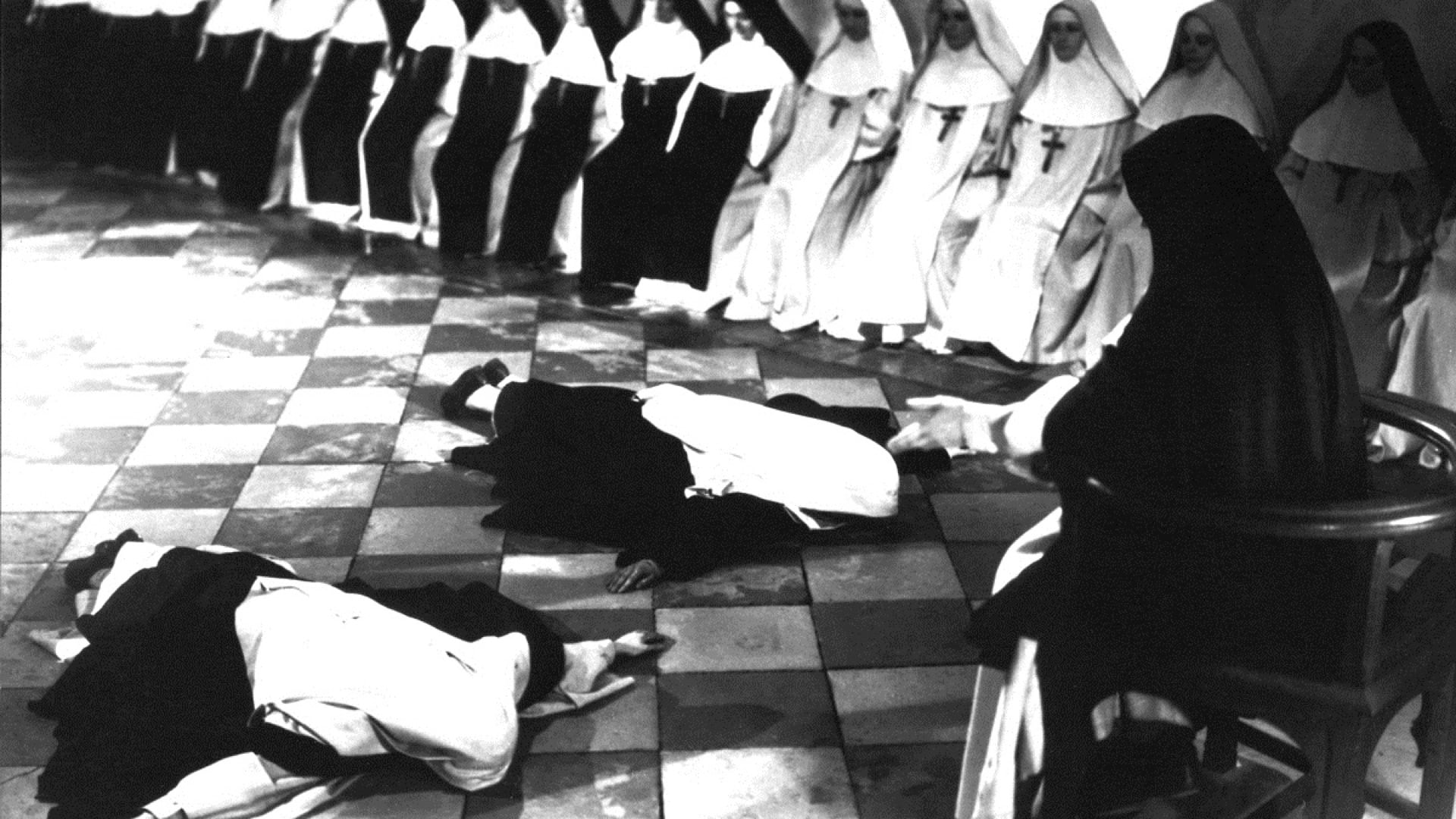
This non-Bressonian embellishment extends also to the use of the camera: vast, often sweeping movements are commonplace here, a particularly notable example for me being a shot where the camera cranes upwards and dollies outwards to show a procession of nuns all leaving their rooms, stepping from areas of low-key shadowed lighting into well-lit areas, in a manner so utterly and ironically anti-Bressonian that I couldn’t help but chuckle to myself. The shots themselves have a tendency to be very well-composed and expansive, akin to the theatrical staging which Bresson would come to so despise. The use of varied angles is present here as well. One could certainly note that the individual shots in this film impose themselves on and interpret the action happening on-screen. Bresson would later go out of his way to ensure that none of his images said too much on an individual level, but would instead be ‘transformed on contact with other images’. As he quite beautifully put it, ‘A blue is not the same blue beside a green, a yellow, a red. No art without transformation.’
So regarding Bresson’s form in Angels of Sin, the chasm is massive. To take all of what I have just pointed to and draw it together, Bresson has not flattened his images. He has not gone out of his way to remove expression from them so that he might point to a more internalised drama. Regarding the content, which for Bresson is inevitably informed by form and can only really be talked about having addressed the form beforehand, one notes how the drama is externalised, and how the characters’ conflict seem to be more social and more overt than the strictly internal drama and to an extent spiritual voids that would define his later characters. Protagonist Anne-Marie is more self-assured here, and her burden is less concerned with a struggle to come to terms with one’s spiritual destiny, as much as it is concerned with the external immediacies of her dilemma.
However, there are traces of the later works in Angels of Sin, motifs or themes, which Bresson would certainly expand on later in his career. The most obvious ones regard subject matter. Religion is inescapable with Bresson and the contrast between the individual and the church as a whole would certainly be expanded on in Diary of a Country Priest. One might even observe how the relationship between Anne-Marie and her Mother Superior reflects that of the young priest and the Vicar of Torcy. Crime and imprisonment is also essential to Bresson, and it’s probably the most obvious similarity in the film. Prisons are to some extent at least, present in every Bresson film, whether it be literal prisons as in A Man Escaped, The Trial of Joan of Arc and L’Argent, the prison of the self as in Diary of a Country Priest and Pickpocket, or imprisonment within one’s environment as in Au Hasard Balthazar and Mouchette. Thérèse’s coming to redemption by spiritual means is absolutely indicative of a thematic observation which would be carried forward throughout Bresson’s entire career.
When it comes to the form in this regard, the similarities are more limited. However, whilst this is a general similarity as opposed to an artistic one, it is clear that Bresson even then understood the importance of sound in cinema. He doesn’t use it as he would later in his films, by that I mean the replacement of image with sound, and the use of sound to evoke interpretation from the imagination of the viewer. But there are a number of times here where it is clear that sound is being used as a cinematic device, and whilst he certainly hadn’t yet come to a consensus regarding how he would use sound in cinema, his understanding of its importance is no less apparent. The only other formal similarity I could point to is the motif of hands. It only appears once, but it appears emphatically at the end of the film, where Thérèse hands herself in by extending her hands to be cuffed, which we are shown in a characteristically Bressonian close-up of the hands. Of course, it’s easy to draw up fitting narratives with the benefit of hindsight, but there is something quite telling that this film is ended with such an uncannily Bressonian image.
What I think most surprised me about Angels of Sin is the fact that despite how conventional it is and despite the fact its director probably thought very little of it as his career went by, it is still a very good film. The conventional means that Bresson does apply are actually applied quite well, and it is clear that even before he refined his style, he was still a very capable director. It makes sense, I suppose, that this is a highly competent film due to the critical praise it received on release, and while it’s far from career-defining and bordering on forgettable, it’s still a very good piece of storytelling and filmmaking. One can only really speculate as to what extent the conventionalism of this film is a result of Bresson’s will, and to what extent it is a result of the producers’. For even by 1943, Bresson definitely had ideas about the arts that stemmed from his background in painting and which he surely would have intended to apply to cinema. Once again, we may only speculate.
As Bresson’s first feature film, Angels of Sin works well as a point of reference as to the nature of his evolution, but not much else. Bresson’s idiosyncrasy that would go on to epitomise his entire career is practically non-existent - you could watch this film and associate it with any French director of the time. But there still exists peculiarities that one could very well point to as constants in other works of his oeuvre.
Of the non-Bressonian elements, there are many. Perhaps the most notable of these is in the mise en scène; the professional actors, with their theatrical performances is in stark contrast to the ‘models’ Bresson would use in all of his films from 1951 onward. As Bresson himself disdainfully put it in Notes on the Cinematograph, the film ‘smacks of the stage’. The expressive performances and overt drama would later be completely rejected in favour of automatic movements and deadpan delivery - internal drama, as he put it. The use of sets as opposed to real locations is also a notably anti-Bressonian element of the mise en scène, with their lavish design and oftentimes exaggeratedly contrasting lighting heavily juxtaposing the muted tones that would permeate his later work.
This non-Bressonian embellishment extends also to the use of the camera: vast, often sweeping movements are commonplace here, a particularly notable example for me being a shot where the camera cranes upwards and dollies outwards to show a procession of nuns all leaving their rooms, stepping from areas of low-key shadowed lighting into well-lit areas, in a manner so utterly and ironically anti-Bressonian that I couldn’t help but chuckle to myself. The shots themselves have a tendency to be very well-composed and expansive, akin to the theatrical staging which Bresson would come to so despise. The use of varied angles is present here as well. One could certainly note that the individual shots in this film impose themselves on and interpret the action happening on-screen. Bresson would later go out of his way to ensure that none of his images said too much on an individual level, but would instead be ‘transformed on contact with other images’. As he quite beautifully put it, ‘A blue is not the same blue beside a green, a yellow, a red. No art without transformation.’
So regarding Bresson’s form in Angels of Sin, the chasm is massive. To take all of what I have just pointed to and draw it together, Bresson has not flattened his images. He has not gone out of his way to remove expression from them so that he might point to a more internalised drama. Regarding the content, which for Bresson is inevitably informed by form and can only really be talked about having addressed the form beforehand, one notes how the drama is externalised, and how the characters’ conflict seem to be more social and more overt than the strictly internal drama and to an extent spiritual voids that would define his later characters. Protagonist Anne-Marie is more self-assured here, and her burden is less concerned with a struggle to come to terms with one’s spiritual destiny, as much as it is concerned with the external immediacies of her dilemma.
However, there are traces of the later works in Angels of Sin, motifs or themes, which Bresson would certainly expand on later in his career. The most obvious ones regard subject matter. Religion is inescapable with Bresson and the contrast between the individual and the church as a whole would certainly be expanded on in Diary of a Country Priest. One might even observe how the relationship between Anne-Marie and her Mother Superior reflects that of the young priest and the Vicar of Torcy. Crime and imprisonment is also essential to Bresson, and it’s probably the most obvious similarity in the film. Prisons are to some extent at least, present in every Bresson film, whether it be literal prisons as in A Man Escaped, The Trial of Joan of Arc and L’Argent, the prison of the self as in Diary of a Country Priest and Pickpocket, or imprisonment within one’s environment as in Au Hasard Balthazar and Mouchette. Thérèse’s coming to redemption by spiritual means is absolutely indicative of a thematic observation which would be carried forward throughout Bresson’s entire career.
When it comes to the form in this regard, the similarities are more limited. However, whilst this is a general similarity as opposed to an artistic one, it is clear that Bresson even then understood the importance of sound in cinema. He doesn’t use it as he would later in his films, by that I mean the replacement of image with sound, and the use of sound to evoke interpretation from the imagination of the viewer. But there are a number of times here where it is clear that sound is being used as a cinematic device, and whilst he certainly hadn’t yet come to a consensus regarding how he would use sound in cinema, his understanding of its importance is no less apparent. The only other formal similarity I could point to is the motif of hands. It only appears once, but it appears emphatically at the end of the film, where Thérèse hands herself in by extending her hands to be cuffed, which we are shown in a characteristically Bressonian close-up of the hands. Of course, it’s easy to draw up fitting narratives with the benefit of hindsight, but there is something quite telling that this film is ended with such an uncannily Bressonian image.
What I think most surprised me about Angels of Sin is the fact that despite how conventional it is and despite the fact its director probably thought very little of it as his career went by, it is still a very good film. The conventional means that Bresson does apply are actually applied quite well, and it is clear that even before he refined his style, he was still a very capable director. It makes sense, I suppose, that this is a highly competent film due to the critical praise it received on release, and while it’s far from career-defining and bordering on forgettable, it’s still a very good piece of storytelling and filmmaking. One can only really speculate as to what extent the conventionalism of this film is a result of Bresson’s will, and to what extent it is a result of the producers’. For even by 1943, Bresson definitely had ideas about the arts that stemmed from his background in painting and which he surely would have intended to apply to cinema. Once again, we may only speculate.