We're all bored with our lives and seek escape in ways that manifest without warning, but the picture becomes more apparent when lived in.
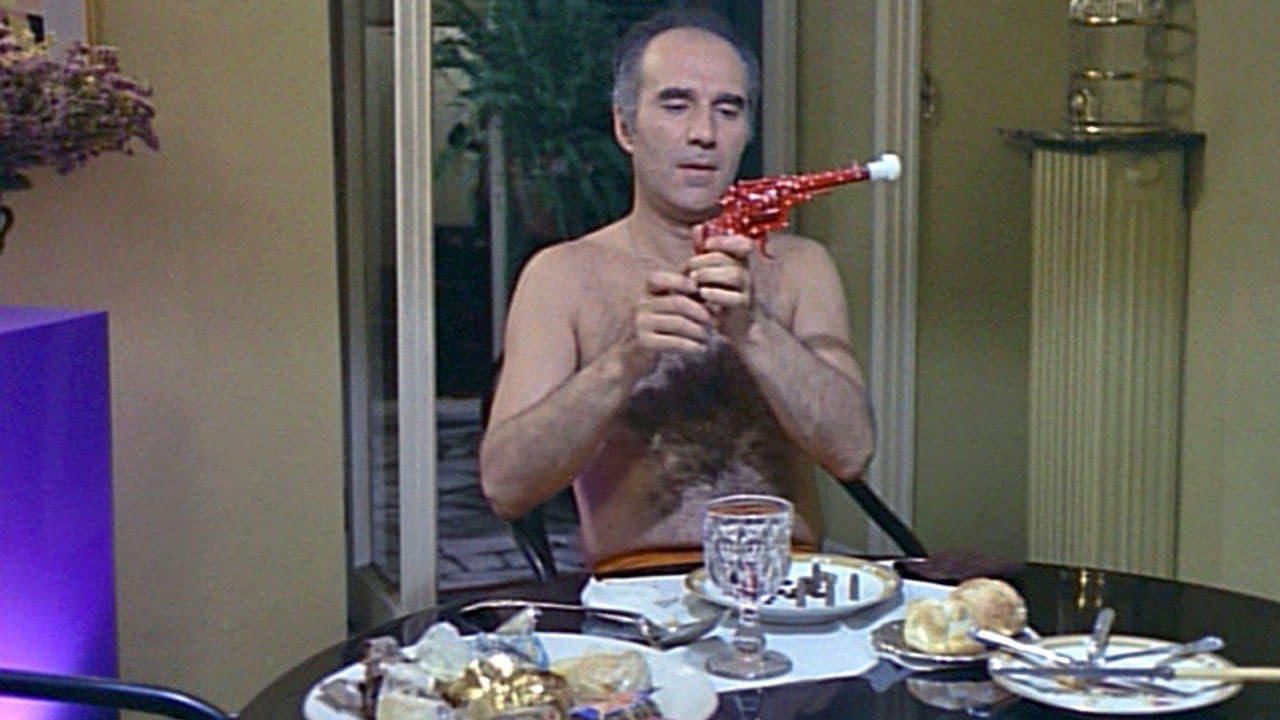
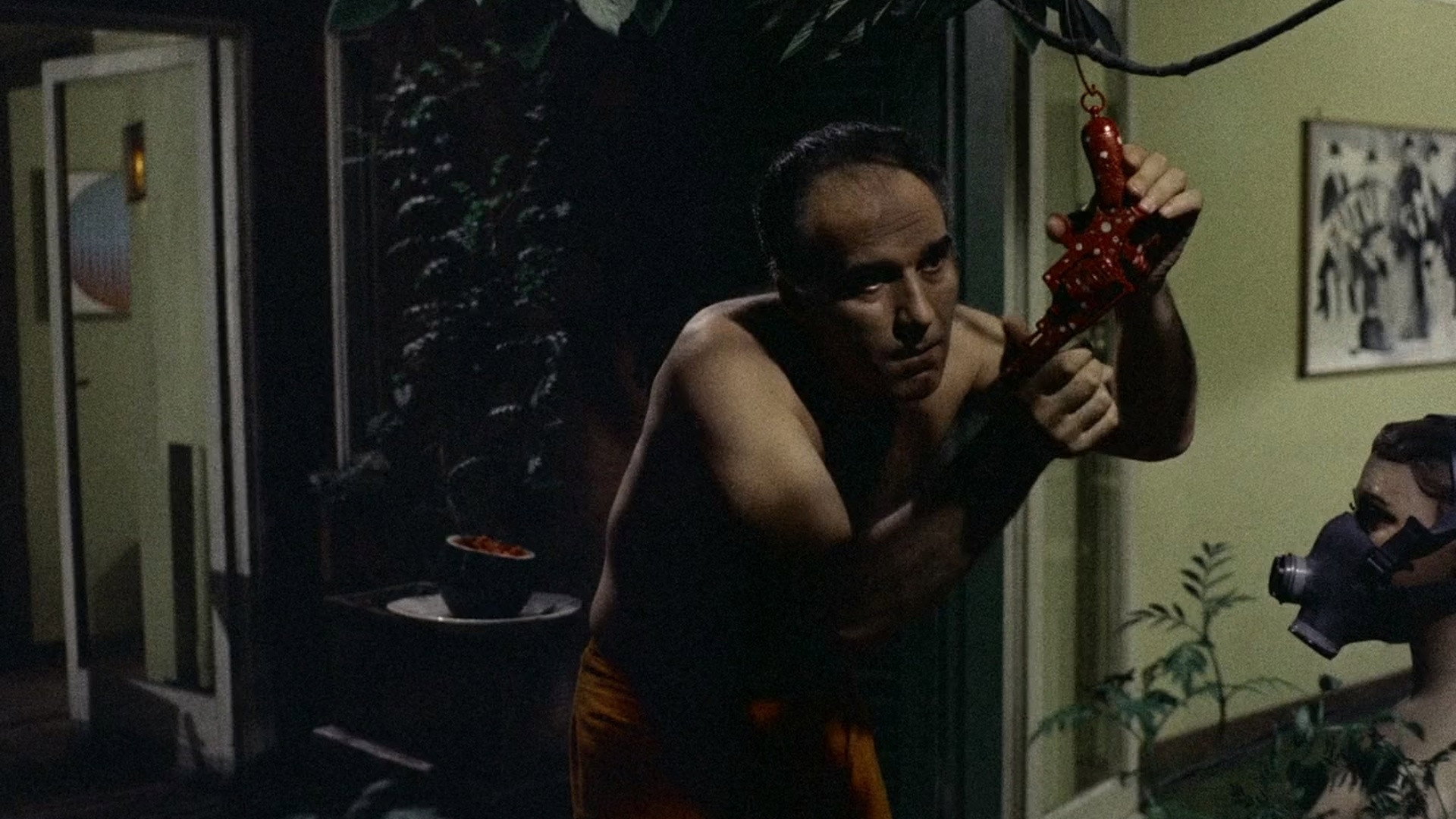
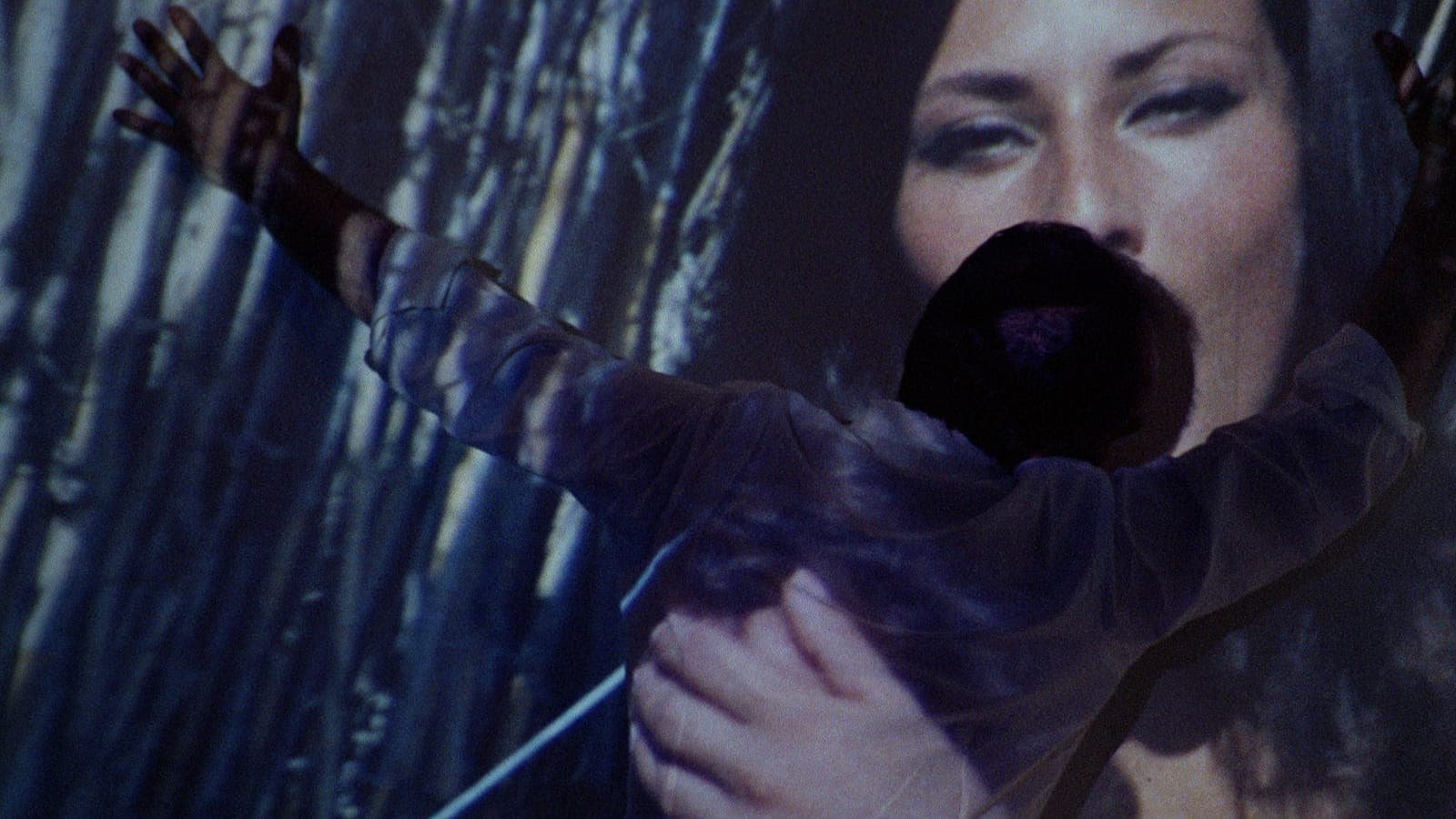
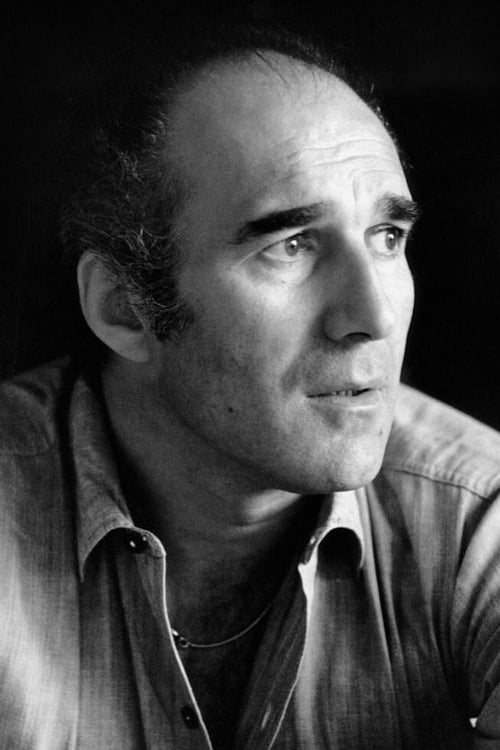
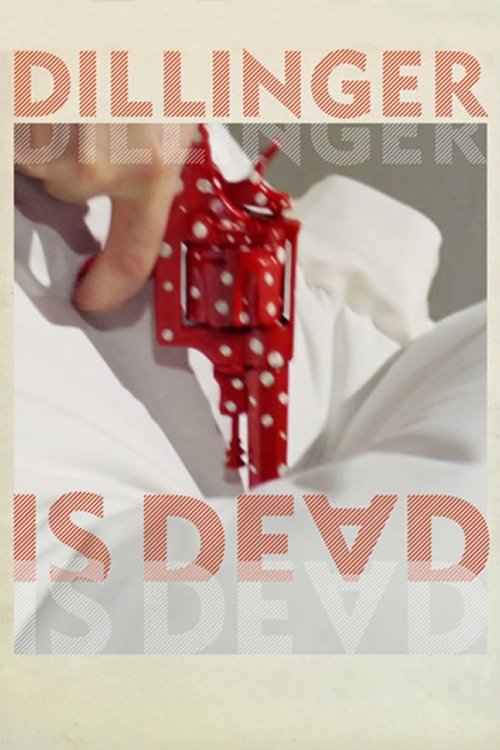
Dillinger is Dead captures the anxiety associated with aging, boredom, and modernity. Glauco (Michel Piccoli) is an architect who leads a successful life with a happy wife and live-in maid. On any other ordinary night, Glauco cooks himself a nice dinner until he discovers American gangster John Dillinger's revolver. What transpires next is deliberate teasing of what could happen with that revolver and the dances around the ennui of this existence. While watching home movies, Glauco contemplates his past as he absentmindedly grabs at his bald spot when viewing younger images of himself, only reminding himself of the life he once lived and the one he's currently living.
The inclusion of Dillinger's gun serves to cultivate fantasies that help mitigate the monotony of a comfortable but ultimately purposeless existence. This conflict is represented between the actual reality of life versus the imagination spurred by one's boredom. The meticulous attention given to the details of preparing dinner, watching home movies, spending time with the maid, or cleaning the revolver illustrates how such tasks in our minds appear to be less time-consuming than they are. By the time we finish our smaller tasks, the day has passed without us being able to live it how we intended. It is unsurprising that one would pursue actions that appear inexplicable at first but, within the malaise, made more sense than any possible alternative. Glauco experiences this feeling to his core as he watches old home movies and holds Dillinger's revolver. In the imaginary world we never see, Glauco finally experiences the freedom he craves. Dillinger Is Dead solidifies its themes with an ending that left me bewildered and reeling from its abrupt but poignant conclusion.
To some extent, we all wish for a version of freedom that may not be possible with our current means, but it doesn't stop us from dreaming of that escape. More of our time becomes dedicated to menial tasks and work, but we do it to survive. In this quest for survival, we utilize escapism to cope with a draining existence. We are left to figure out what we want to achieve with the means at our disposal or end up like Glauco.
We're all bored with our lives and seek escape in ways that manifest without warning, but the picture becomes more apparent when lived in.
Dillinger is Dead captures the anxiety associated with aging, boredom, and modernity. Glauco (Michel Piccoli) is an architect who leads a successful life with a happy wife and live-in maid. On any other ordinary night, Glauco cooks himself a nice dinner until he discovers American gangster John Dillinger's revolver. What transpires next is deliberate teasing of what could happen with that revolver and the dances around the ennui of this existence. While watching home movies, Glauco contemplates his past as he absentmindedly grabs at his bald spot when viewing younger images of himself, only reminding himself of the life he once lived and the one he's currently living.
The inclusion of Dillinger's gun serves to cultivate fantasies that help mitigate the monotony of a comfortable but ultimately purposeless existence. This conflict is represented between the actual reality of life versus the imagination spurred by one's boredom. The meticulous attention given to the details of preparing dinner, watching home movies, spending time with the maid, or cleaning the revolver illustrates how such tasks in our minds appear to be less time-consuming than they are. By the time we finish our smaller tasks, the day has passed without us being able to live it how we intended. It is unsurprising that one would pursue actions that appear inexplicable at first but, within the malaise, made more sense than any possible alternative. Glauco experiences this feeling to his core as he watches old home movies and holds Dillinger's revolver. In the imaginary world we never see, Glauco finally experiences the freedom he craves. Dillinger Is Dead solidifies its themes with an ending that left me bewildered and reeling from its abrupt but poignant conclusion.
To some extent, we all wish for a version of freedom that may not be possible with our current means, but it doesn't stop us from dreaming of that escape. More of our time becomes dedicated to menial tasks and work, but we do it to survive. In this quest for survival, we utilize escapism to cope with a draining existence. We are left to figure out what we want to achieve with the means at our disposal or end up like Glauco.