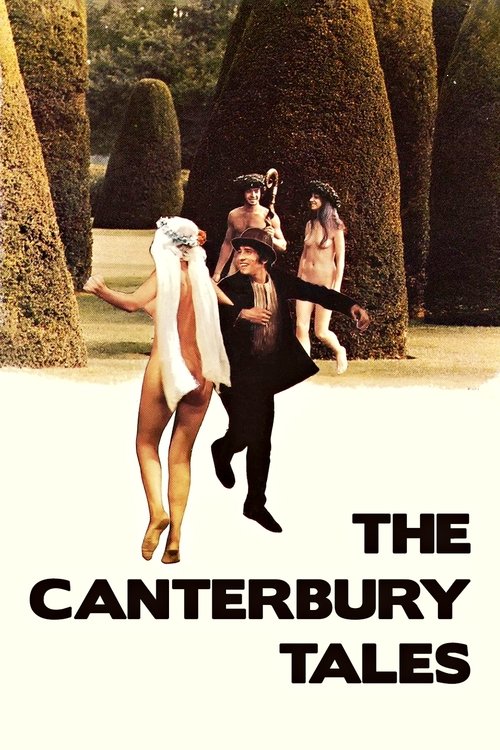
Apparently, Pasolini thought of English as the primary language of this film. So I watched this in English! It really is amazingly written, as well.
Like the first film, this one extensively engages with the text to represent six different stories from the whole poem (with another story filmed but cut by Pasolini, down from two stories filmed but cut in the Decameron).
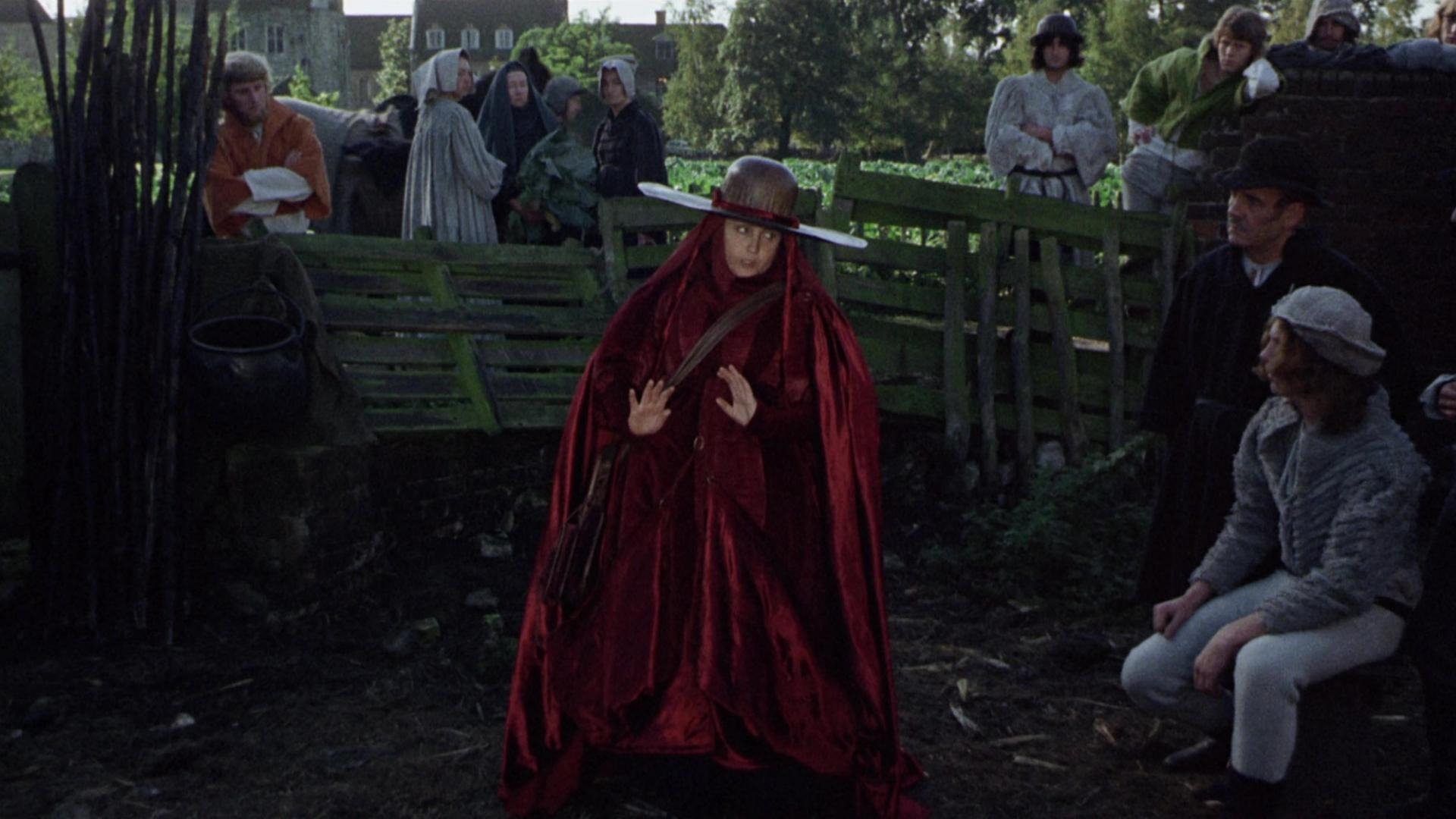
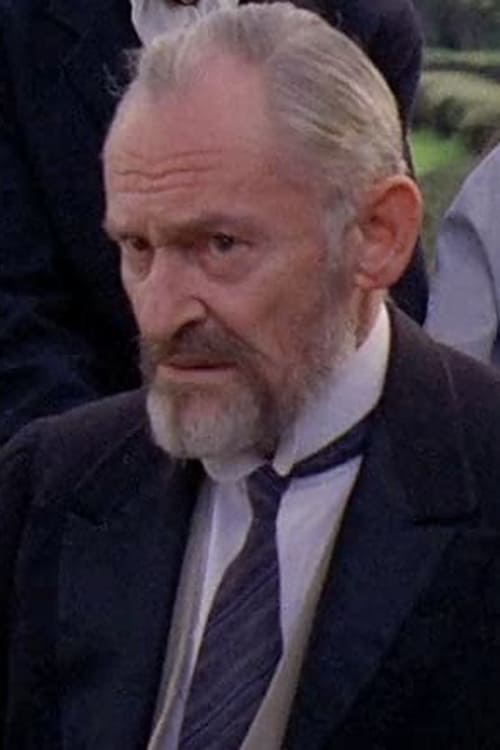
The first of the stories has these two incredible old men who are Sir January's attendants. One in particular constantly rolls his eyes and makes faces at Sir January whenever January says something stupid, which happens virtually every time he opens his mouth to speak.
Between the two films (Pasolini's Decameron and this, his Canterbury Tales), there's something very particular that happens that I find interesting. People eating or drinking during sex, or during a short break between bouts of sex. What does it mean? Is this normal? Was it normal then?
Bit of cynicism on display when a rich man pays his way out of being convicted of sodomy (that is, homosexual relations with another man), while a poor man is instead publicly executed for the crime. But it's also a legitimately affecting movement, as a voyeur, the vendor who alerts the authorities, to their act first watches the act, then the bribery, and finally the execution. He's at the execution selling griddle cakes, but maybe he's also contemplating what would happen if he were ever caught in the act with another man. Would he be rich enough to bribe his way out of it? For just a moment, he leans forward and puts his chin against the shoulder of the watchman in front of him. He's the last to turn away from the scene. Of course, the vendor is the devil himself. It's a really chilling performance. It's a story that feels particularly relevant right now as we watch the wealthy men who control global politics and finance get away with murder and all manner of sexual abuse. There is a depth of hatred here for not only the greedy, but all those who punish men for their desires, those who make their living by cheating, stealing, and blackmailing. Those who extract rent, give summons, blackmail others, sell their neighbors out to the authorities, these people do belong to the devil, and they will go with him at the end of the day. As I write this, I'm several stories down the line and I haven't stopped thinking about this one. It's perhaps the most revelatory story in this film of the nature of fascism, the profound betrayal (and self-betrayal, in fact) that fascism demands eventually of all fascists.
So it's no wonder that the next story is about a guy pretending to be Charlie Chaplin. It's a funny segment, brilliant and immaculately put together. My god, he fucks his friend's wife with his friend, and falls asleep to dream about a lively band of naked women playing him music and dancing with him. Then when he wakes up, he's arrested and put in the stocks, where he of course sings joyfully. Chaucer laughs just as well at this story as I did watching it. Of course, between the singing and the dancing, this nets the half-star bump up that I give to every film featuring these things.
The figure of the Wandering Jew shows up in this film, threatened by three absolute bastards on the search for the thief Death, who killed their dearest friend. With the slightest provocation, of course, they kill one another over a small amount of gold. There are some utterly jawdropping shots here, of the three of them silhouetted against the sky at sunset. This sequence made me cry, but just as good was the BDSM play seen at the start of the Pardoner's Tale (I believe that in a deleted scene, he tells us that he preaches against greed, the sin which he commits every day).
At some point, I got a spiked coffee and I realized that this is a film meant to be enjoyed with a few drinks.
I suppose that it makes sense I'd love this movie so much, since it's such an incredibly good rendition of the Canterbury Tales, one of the greatest poems ever written, as well as one of the funniest texts ever written. It's the first medieval text I ever read, when I was twelve, in an online edition which still exists today. The middle ages will always be dear to my heart in ways which I'll never be able to fully express.
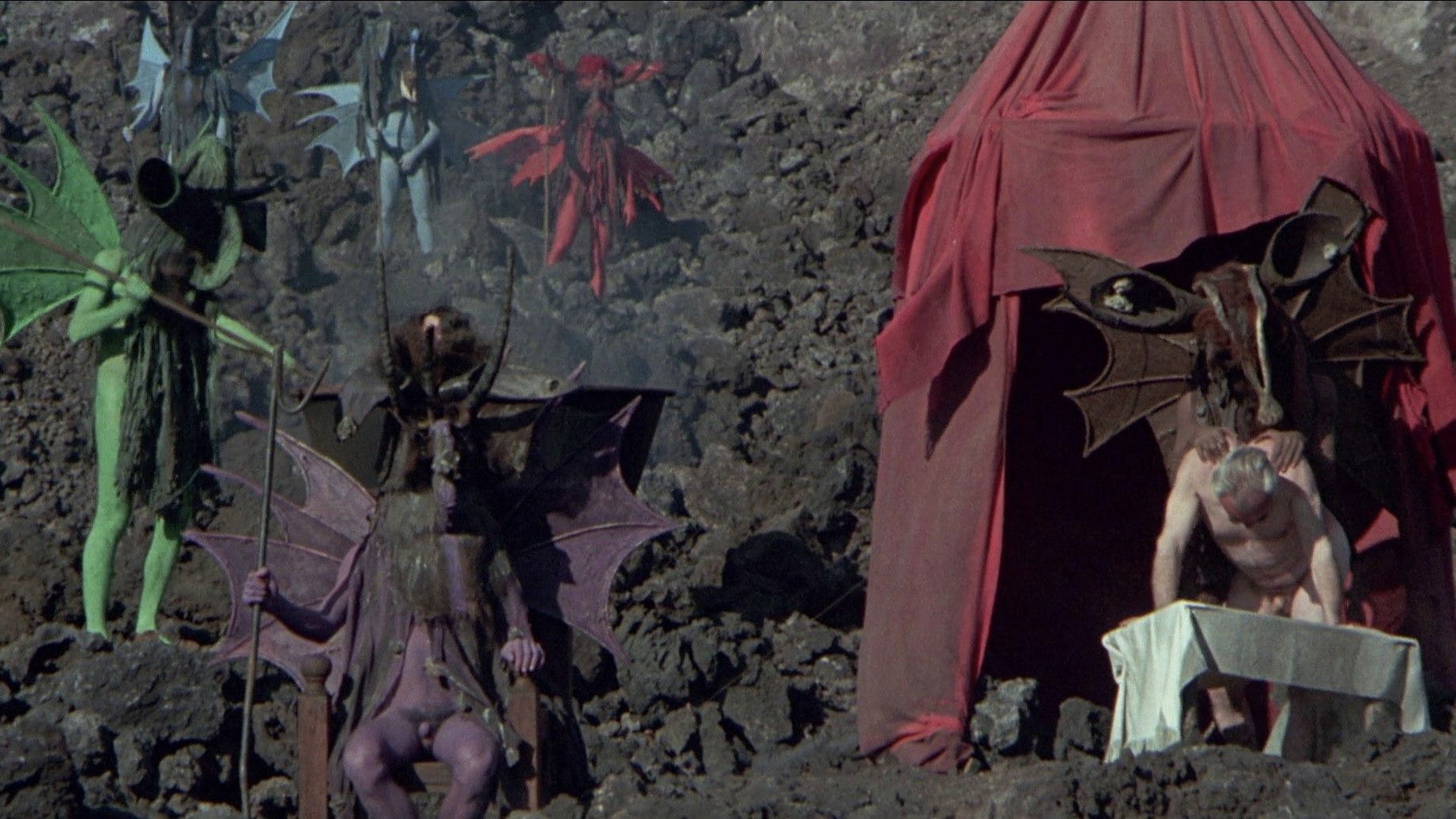
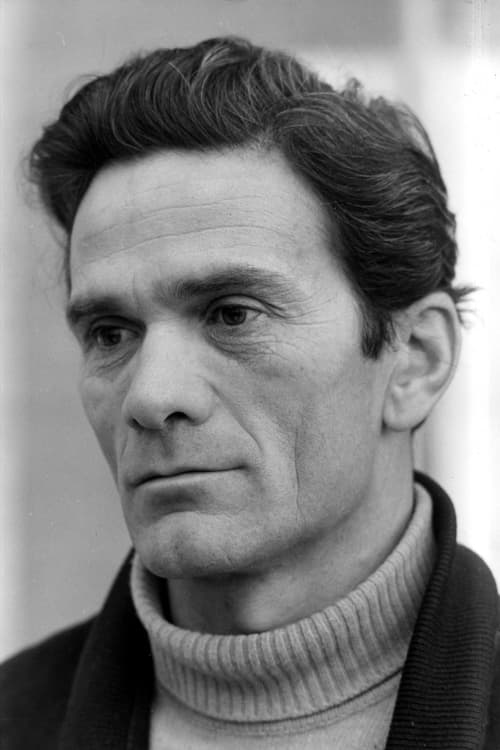
In the final story, the devil expels dozens or hundreds of friars from his asshole as a corrupt friar watches on in terror, watching on as men are tortured and sodomized, and the friars keep spilling out. Chaucer, played by Pasolini and smiling impishly, ends his writing without apology.
"Between a jest and a joke, many a truth can be told."
alt. quote: "Mm, don't speak of it, we're worse than monks, arses tight and pricks hard!"
alt. alt. quote: "Here ends the Canterbury Tales, told only for the pleasure of telling them. Amen."
Apparently, Pasolini thought of English as the primary language of this film. So I watched this in English! It really is amazingly written, as well.
Like the first film, this one extensively engages with the text to represent six different stories from the whole poem (with another story filmed but cut by Pasolini, down from two stories filmed but cut in the Decameron).
The first of the stories has these two incredible old men who are Sir January's attendants. One in particular constantly rolls his eyes and makes faces at Sir January whenever January says something stupid, which happens virtually every time he opens his mouth to speak.
Between the two films (Pasolini's Decameron and this, his Canterbury Tales), there's something very particular that happens that I find interesting. People eating or drinking during sex, or during a short break between bouts of sex. What does it mean? Is this normal? Was it normal then?
Bit of cynicism on display when a rich man pays his way out of being convicted of sodomy (that is, homosexual relations with another man), while a poor man is instead publicly executed for the crime. But it's also a legitimately affecting movement, as a voyeur, the vendor who alerts the authorities, to their act first watches the act, then the bribery, and finally the execution. He's at the execution selling griddle cakes, but maybe he's also contemplating what would happen if he were ever caught in the act with another man. Would he be rich enough to bribe his way out of it? For just a moment, he leans forward and puts his chin against the shoulder of the watchman in front of him. He's the last to turn away from the scene. Of course, the vendor is the devil himself. It's a really chilling performance. It's a story that feels particularly relevant right now as we watch the wealthy men who control global politics and finance get away with murder and all manner of sexual abuse. There is a depth of hatred here for not only the greedy, but all those who punish men for their desires, those who make their living by cheating, stealing, and blackmailing. Those who extract rent, give summons, blackmail others, sell their neighbors out to the authorities, these people do belong to the devil, and they will go with him at the end of the day. As I write this, I'm several stories down the line and I haven't stopped thinking about this one. It's perhaps the most revelatory story in this film of the nature of fascism, the profound betrayal (and self-betrayal, in fact) that fascism demands eventually of all fascists.
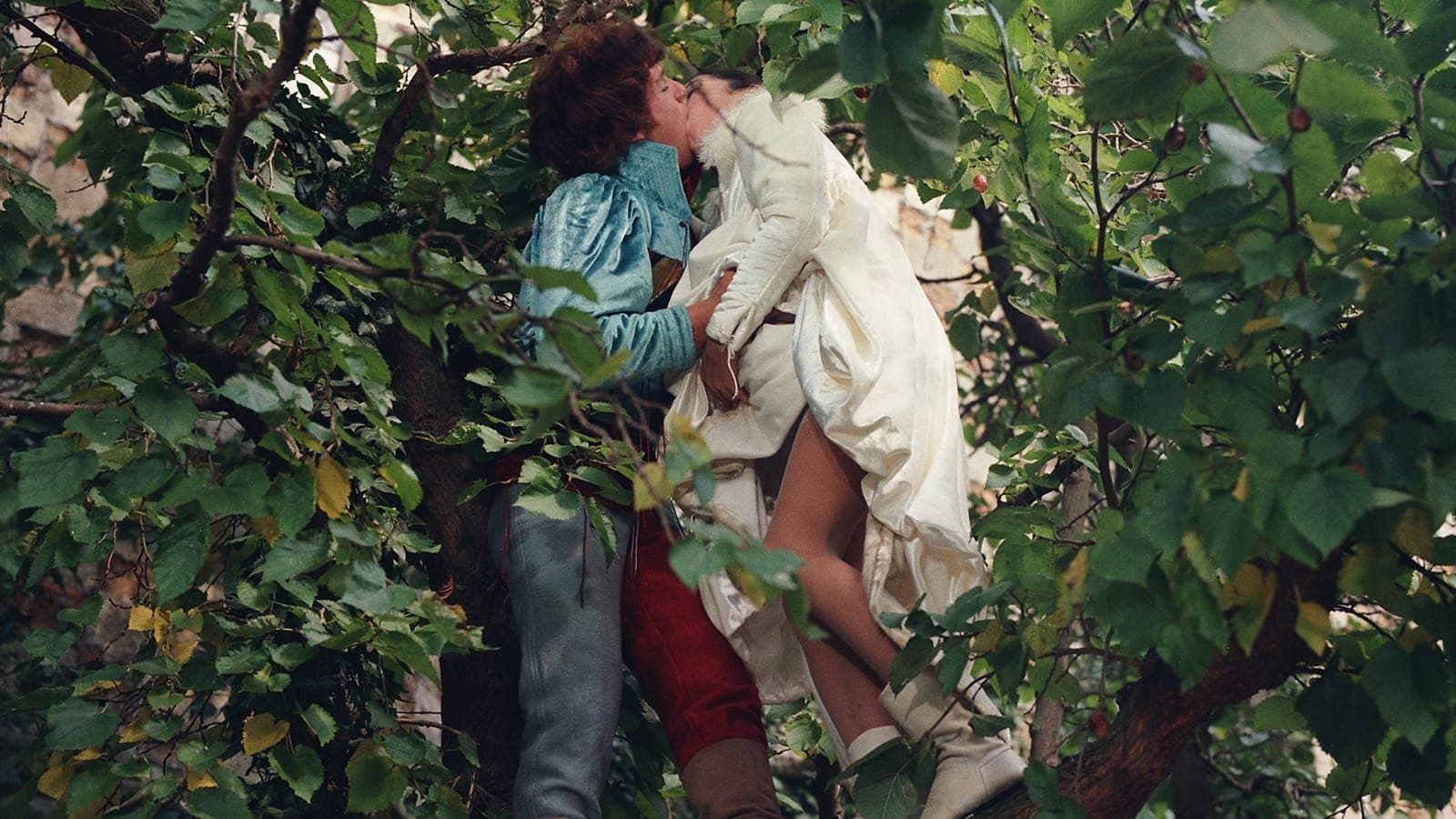
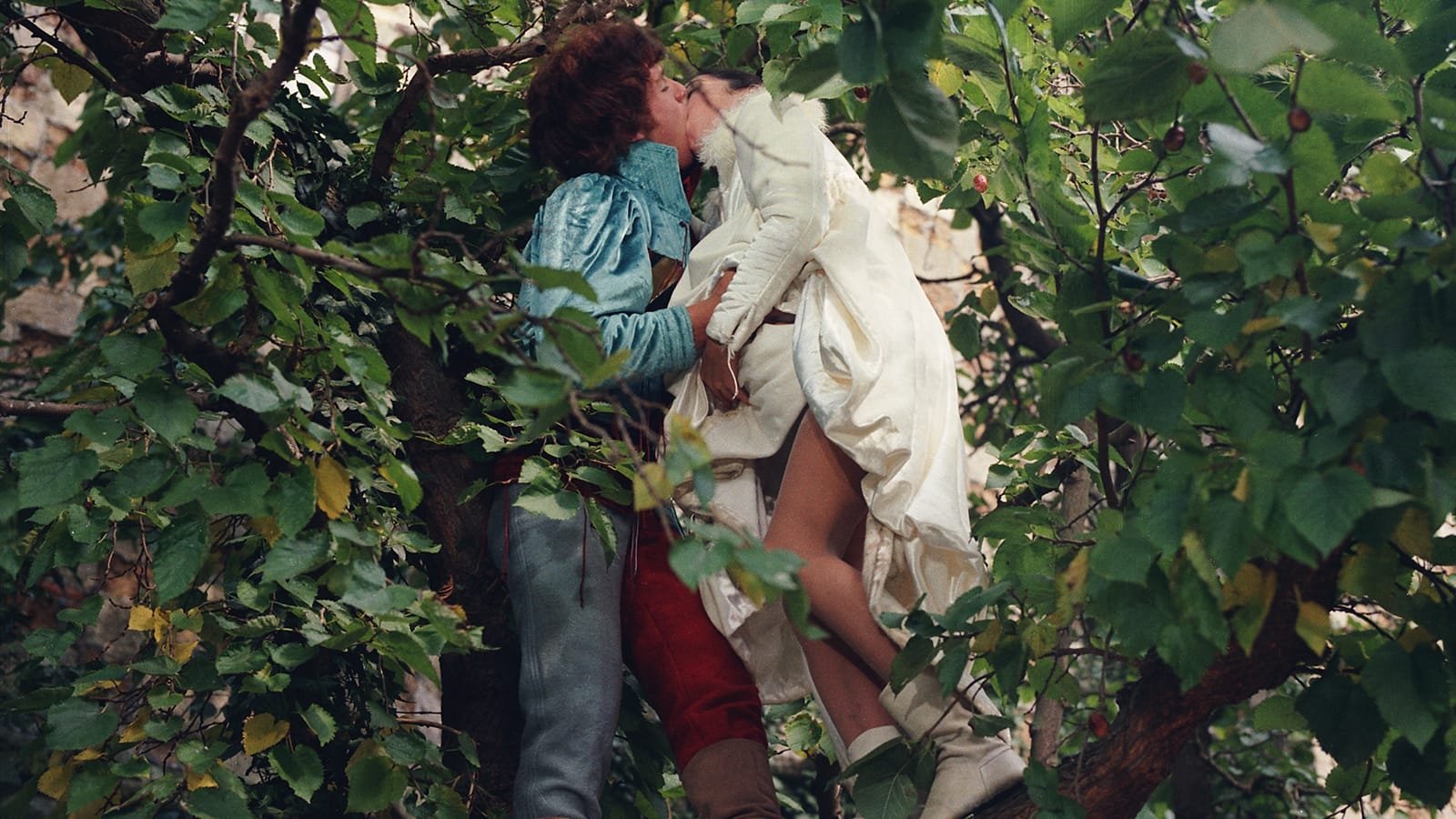
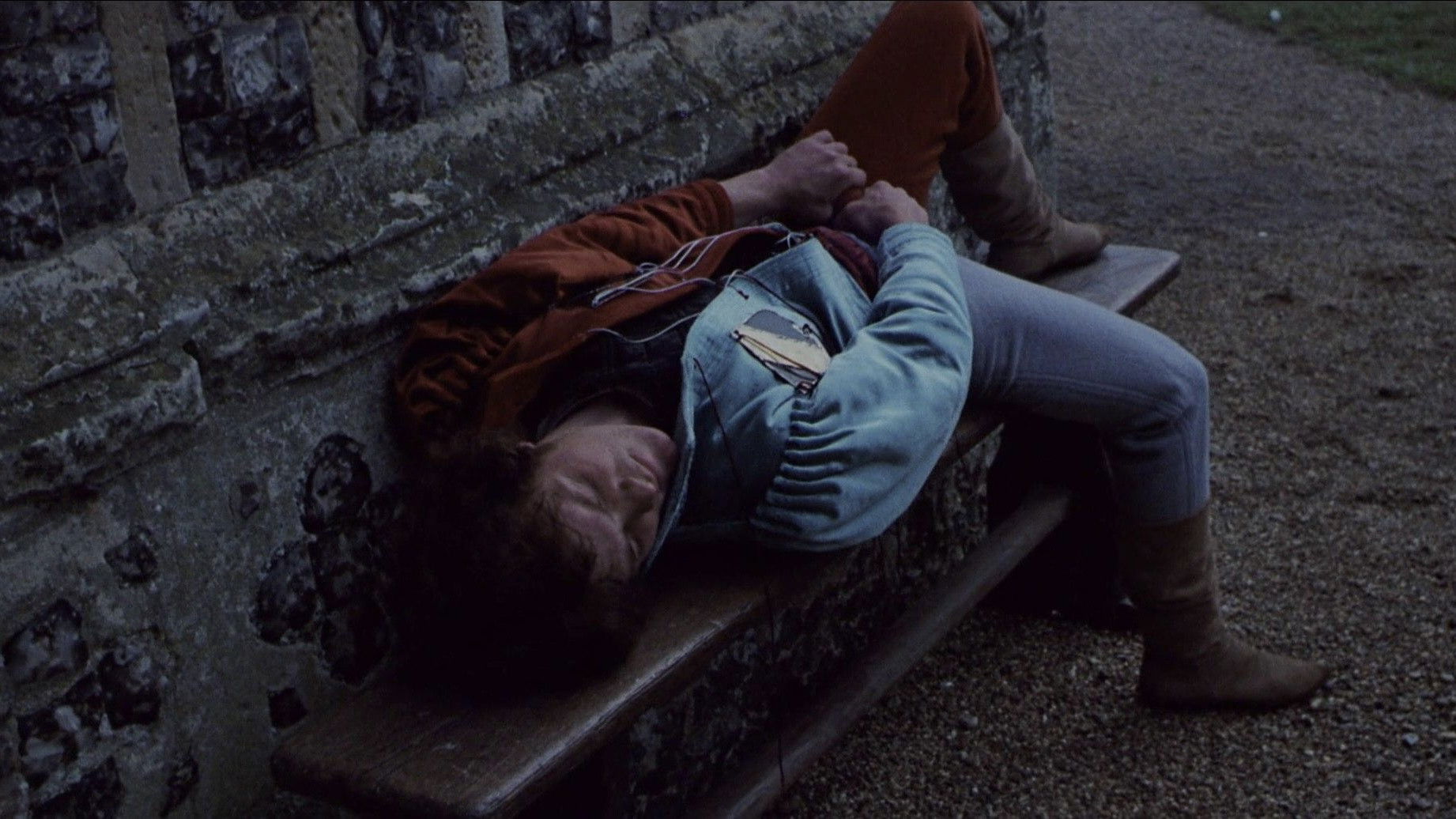
So it's no wonder that the next story is about a guy pretending to be Charlie Chaplin. It's a funny segment, brilliant and immaculately put together. My god, he fucks his friend's wife with his friend, and falls asleep to dream about a lively band of naked women playing him music and dancing with him. Then when he wakes up, he's arrested and put in the stocks, where he of course sings joyfully. Chaucer laughs just as well at this story as I did watching it. Of course, between the singing and the dancing, this nets the half-star bump up that I give to every film featuring these things.
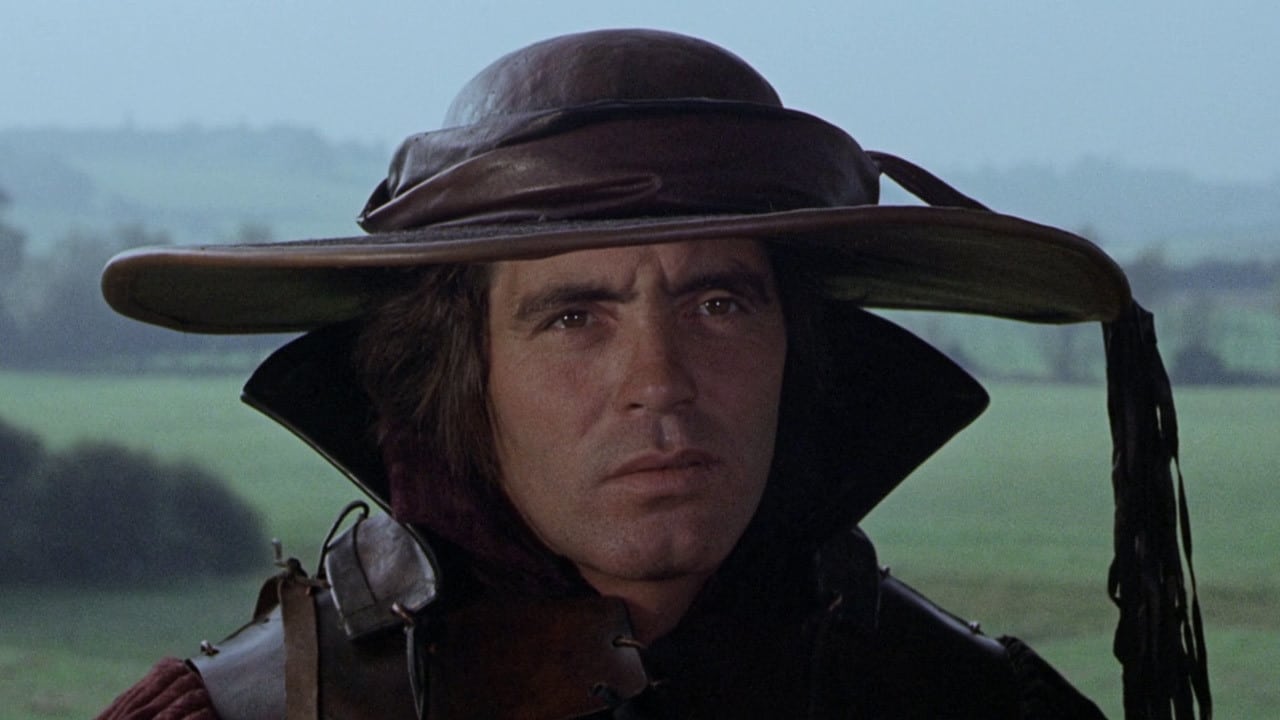
The figure of the Wandering Jew shows up in this film, threatened by three absolute bastards on the search for the thief Death, who killed their dearest friend. With the slightest provocation, of course, they kill one another over a small amount of gold. There are some utterly jawdropping shots here, of the three of them silhouetted against the sky at sunset. This sequence made me cry, but just as good was the BDSM play seen at the start of the Pardoner's Tale (I believe that in a deleted scene, he tells us that he preaches against greed, the sin which he commits every day).
At some point, I got a spiked coffee and I realized that this is a film meant to be enjoyed with a few drinks.
I suppose that it makes sense I'd love this movie so much, since it's such an incredibly good rendition of the Canterbury Tales, one of the greatest poems ever written, as well as one of the funniest texts ever written. It's the first medieval text I ever read, when I was twelve, in an online edition which still exists today. The middle ages will always be dear to my heart in ways which I'll never be able to fully express.
In the final story, the devil expels dozens or hundreds of friars from his asshole as a corrupt friar watches on in terror, watching on as men are tortured and sodomized, and the friars keep spilling out. Chaucer, played by Pasolini and smiling impishly, ends his writing without apology.
"Between a jest and a joke, many a truth can be told."
alt. quote: "Mm, don't speak of it, we're worse than monks, arses tight and pricks hard!"
alt. alt. quote: "Here ends the Canterbury Tales, told only for the pleasure of telling them. Amen."