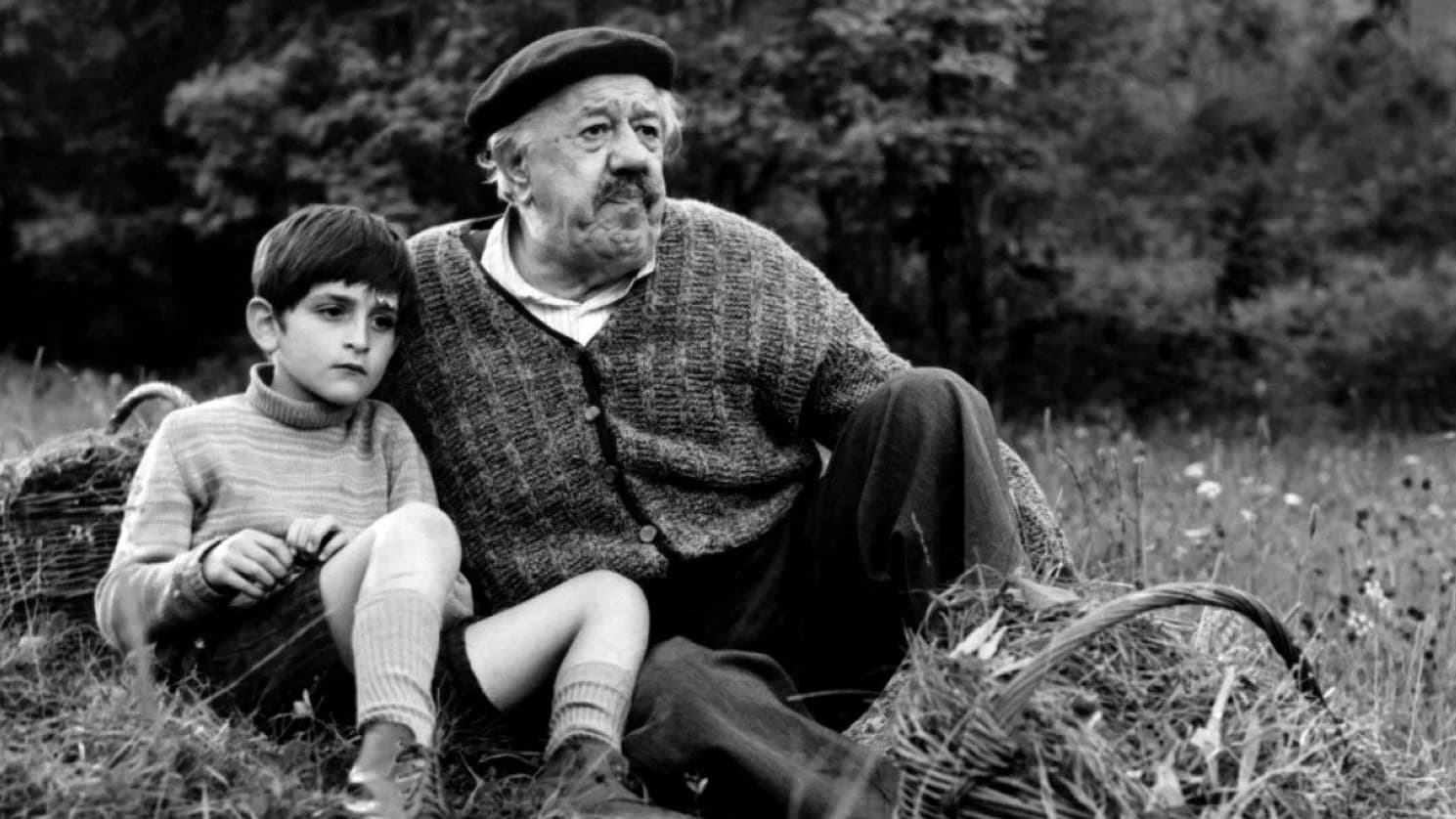
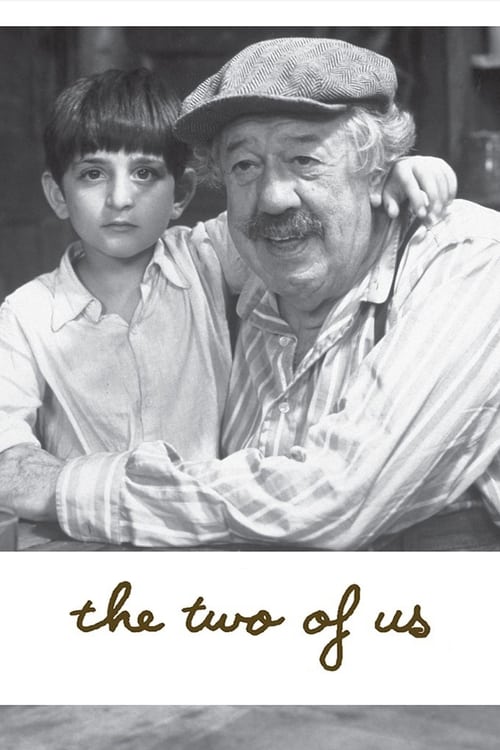
After an air raid, Claude's parents send him into hiding. They embrace at the train station, unsure of what the future holds. An elderly couple raises him as their grandchild. They remain clueless about Claude's identity throughout the film. Released in 1967, the myth of widespread resistance was still strong, and films that directly examined complicity remained relatively rare. Claude Berri, drawing from his childhood, approached this history indirectly through the intimacy of a single relationship. By setting the story in a rural household, he underscores how prejudice and innocence could coexist in everyday life.
What makes the film remarkable is how it draws a parallel between the boy’s developing worldview and the old man’s ossified delusions. The child, still piecing together a coherent picture of reality, treats each experience as another puzzle piece. The grandfather, by contrast, clings to caricatured ideas of Jewish identity and outdated political slogans. Their companionship glows with purity but carries the weight of impermanence. War rages beyond their view, and the boy’s parents await his return. The film becomes bittersweet. Joy appears, but it cannot last. The Two of Us captures how love and companionship briefly transcend ideology without erasing it. It testifies to how, in the darkest times, unlikely bonds can expose both the cruelty of prejudice and the tenderness of human connection.
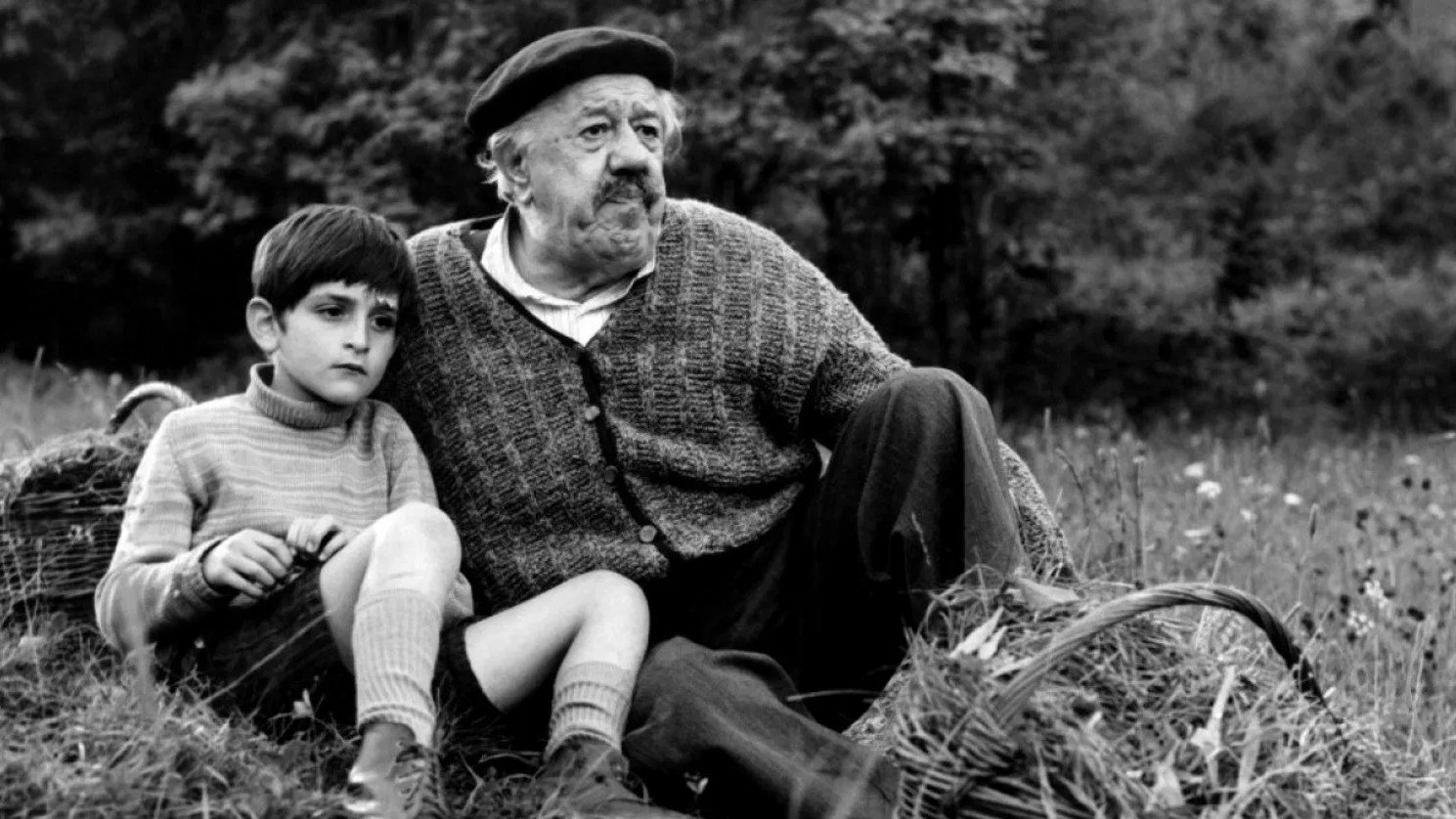
After an air raid, Claude's parents send him into hiding. They embrace at the train station, unsure of what the future holds. An elderly couple raises him as their grandchild. They remain clueless about Claude's identity throughout the film. Released in 1967, the myth of widespread resistance was still strong, and films that directly examined complicity remained relatively rare. Claude Berri, drawing from his childhood, approached this history indirectly through the intimacy of a single relationship. By setting the story in a rural household, he underscores how prejudice and innocence could coexist in everyday life.
What makes the film remarkable is how it draws a parallel between the boy’s developing worldview and the old man’s ossified delusions. The child, still piecing together a coherent picture of reality, treats each experience as another puzzle piece. The grandfather, by contrast, clings to caricatured ideas of Jewish identity and outdated political slogans. Their companionship glows with purity but carries the weight of impermanence. War rages beyond their view, and the boy’s parents await his return. The film becomes bittersweet. Joy appears, but it cannot last. The Two of Us captures how love and companionship briefly transcend ideology without erasing it. It testifies to how, in the darkest times, unlikely bonds can expose both the cruelty of prejudice and the tenderness of human connection.