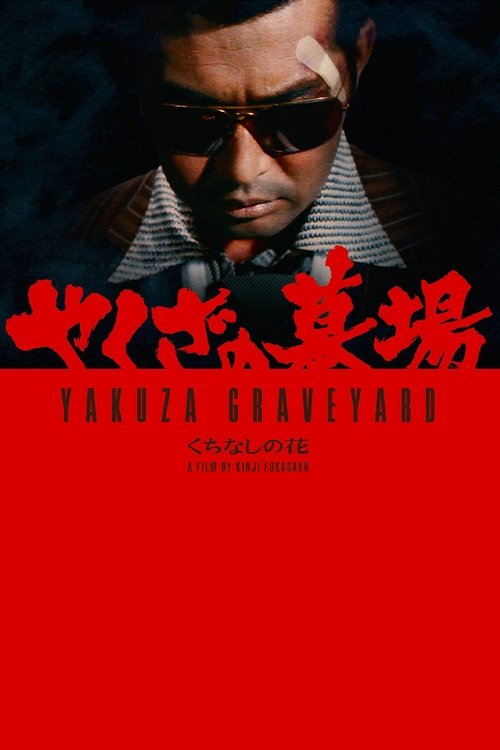
Trying to Watch as Many of the Films I Blind Bought this Year Before the Year is Over 7Yakuza Graveyard, directed by Kinji Fukasaku, 1976
Radiance is a newer boutique film label that caught my attention right away with its incredibly varied catalogue. Based in the UK, its available films are different depending on the region, but even with that region lock in mind, the diversity in their limited initial release was incredible. Big Time Gambling Boss, The Working Class Goes To Heaven, A Woman Kills, Miami Blues, and Welcome To The Dollhouse were all a part of their first year of releases on the UK side of things. I was keeping an eye on what films they had planned for the states, the Region A area, as I don’t have a region-free player at the moment and don’t see myself using one anytime soon, and so I’ve been slowly snatching up their titles, starting with their US release of Big Time Gambling Boss and A Moment of Romance. The latter of those two impressed me deeply and I had to keep buying more of their films, soon adding Messiah of Evil, Red Sun, and Black Tight Killers to my collection. Yakuza Graveyard is the latest addition from their catalogue that I bought and I snagged it up less because I was starting to really enjoy everything in the label (A Woman Kills, for instance, did not grab me despite being right up my alley in concept. I will need to give it a rewatch) and more because a friend in one of my film discord servers noted that stock for that title was starting to drop low and for a lot of the films released stateside from Radiance, this is their first and only home media release in the US.
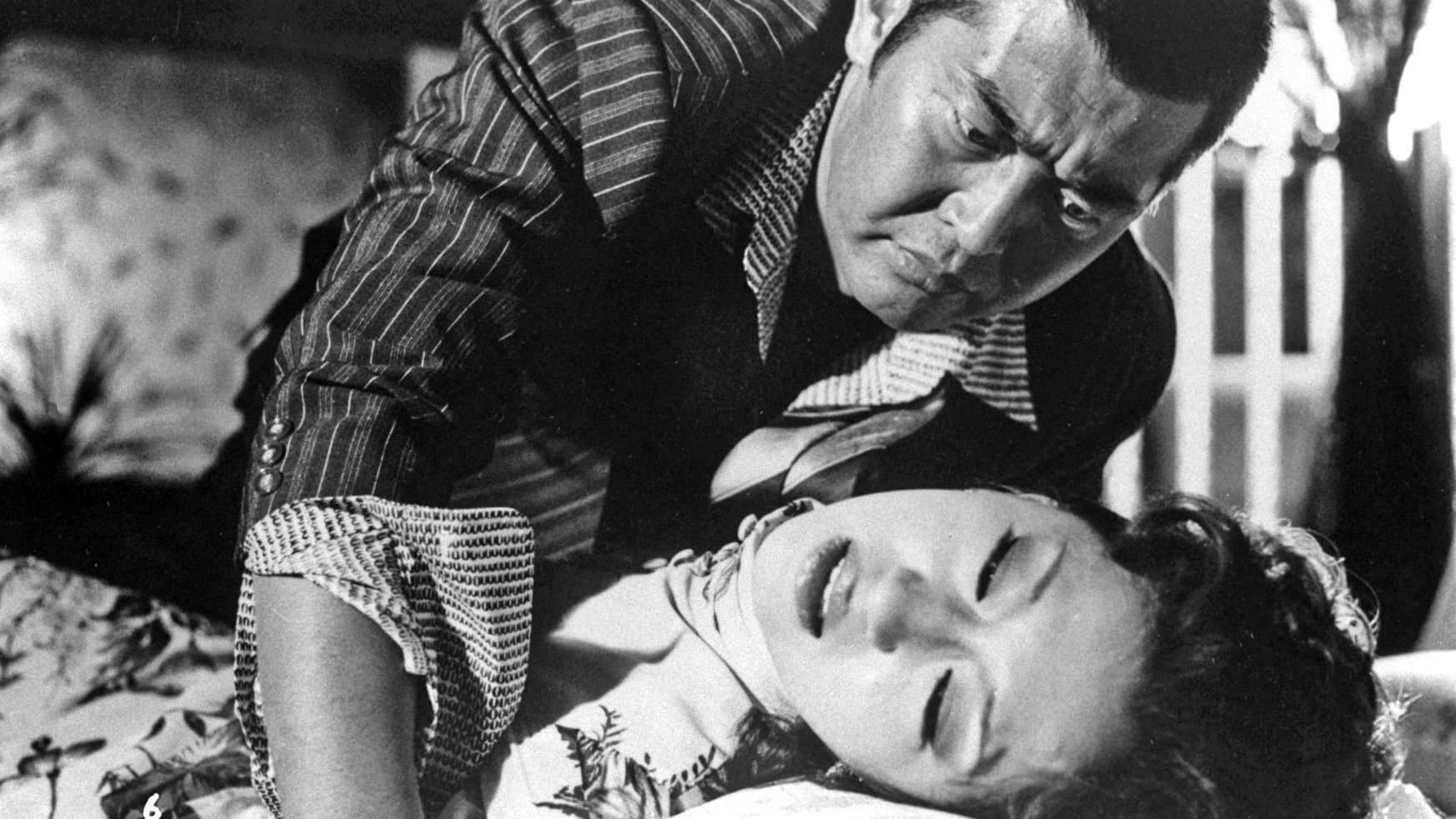
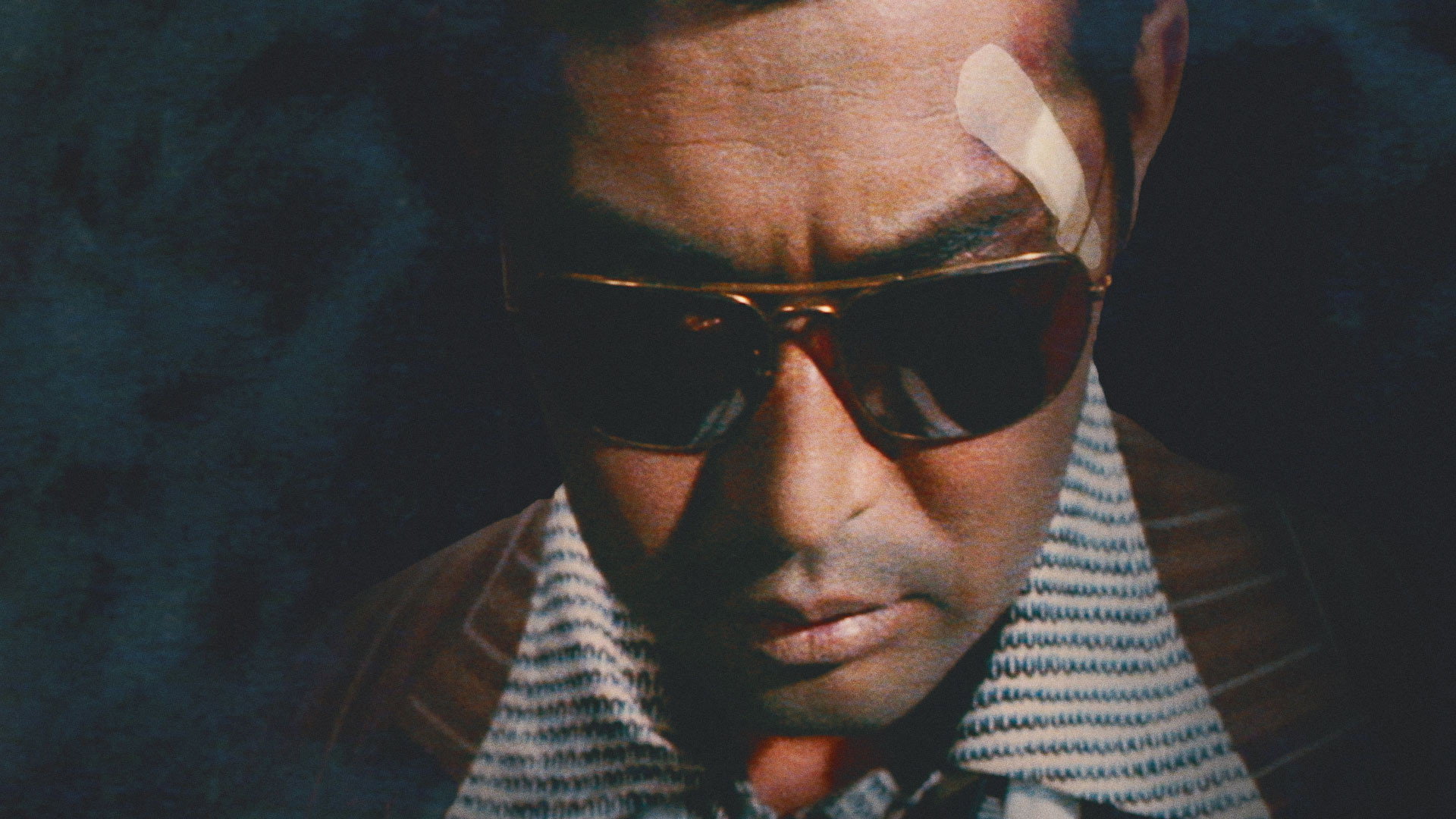
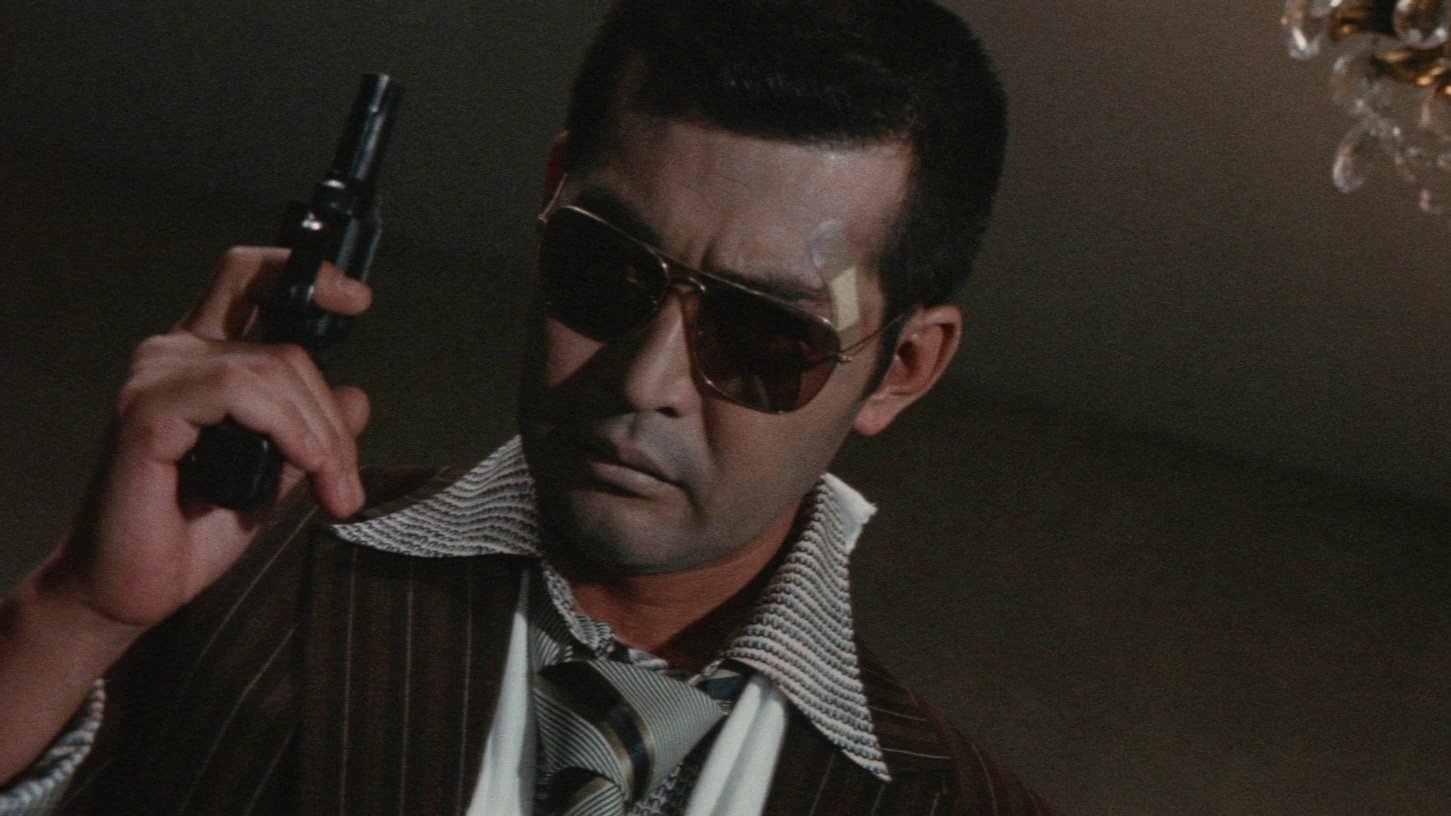
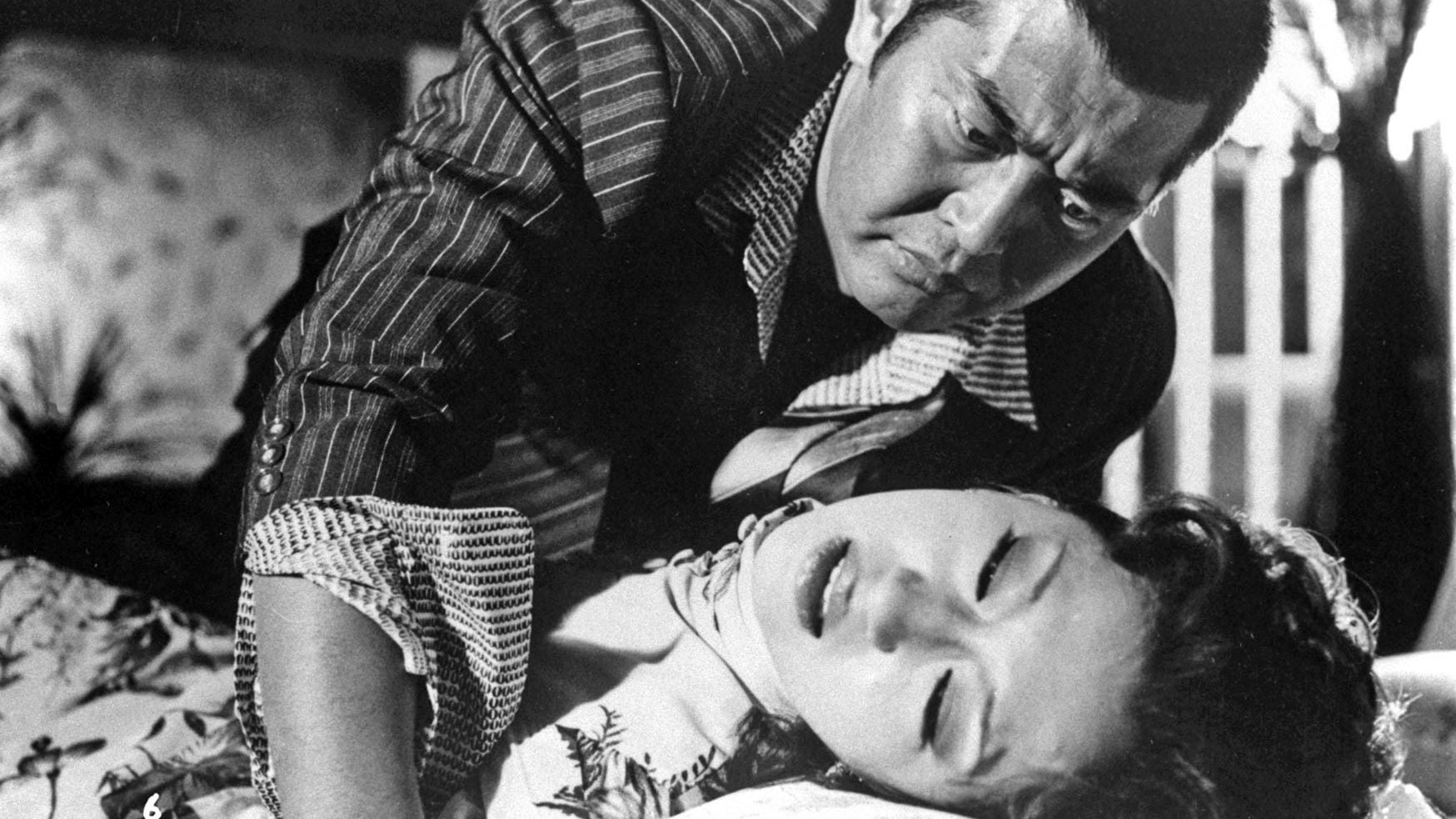
Additionally, this film was directed by Kinji Fukasaku, who directed Battle Royale. I had no idea that his career was so long, with a vast filmography streatching so far back. Yakuza Graveyard, being a yakuza crime film from the 1970s, interested me greatly since yakuza films from the decade prior such as Tokyo Drifter and Branded to Kill, both by Seijun Sezuki who has a lot of influence on the genre. Right away I was hooked by Yakuza Graveyard, which opens with a violent attack in a baseball stadium, an event used as justification for ruthless a brutal methods of hunting down yakuza by police officer Kuroiwa. His methods involve entrapment and stalking and extreme beatdowns and the planting of evidence, all displayed in this really gritty and sharp handheld sequence that feels halfway between choreographed and real. The way that Fukasaku uses the wide screen format is breathtaking. There are dutch angles so extreme here that they pretty much turn completely sideways.
These visual flourishes are a great way of showcasing how the police and the yakuza of this story are one and the same, operating by codes and punishing those who step away from those codes. This push and pull are not just a great showcase for Tetsuya Watari’s hard-boiled persona, but also a powerful display of Meiko Kaji’s skill as an actress as she plays a yakuza wife who has assumed control of the group and its finances while her husband is in jail. She doesn’t take up a lot of screentime and yet it feels like her presence is so powerful because of how her relationship to Kuroiwa is connected to the themes of the film. It’s a whole cops ‘n robbers type crime film with cops and robbers on both teams no matter what. It’s an incredibly fun and wild crime film that has these really large action setpieces full of riot gear and very kinetic shots. These choices jostle and shake the camera while still settling them into just the perfect position to showcase their actors
Trying to Watch as Many of the Films I Blind Bought this Year Before the Year is Over 7Yakuza Graveyard, directed by Kinji Fukasaku, 1976
Radiance is a newer boutique film label that caught my attention right away with its incredibly varied catalogue. Based in the UK, its available films are different depending on the region, but even with that region lock in mind, the diversity in their limited initial release was incredible. Big Time Gambling Boss, The Working Class Goes To Heaven, A Woman Kills, Miami Blues, and Welcome To The Dollhouse were all a part of their first year of releases on the UK side of things. I was keeping an eye on what films they had planned for the states, the Region A area, as I don’t have a region-free player at the moment and don’t see myself using one anytime soon, and so I’ve been slowly snatching up their titles, starting with their US release of Big Time Gambling Boss and A Moment of Romance. The latter of those two impressed me deeply and I had to keep buying more of their films, soon adding Messiah of Evil, Red Sun, and Black Tight Killers to my collection. Yakuza Graveyard is the latest addition from their catalogue that I bought and I snagged it up less because I was starting to really enjoy everything in the label (A Woman Kills, for instance, did not grab me despite being right up my alley in concept. I will need to give it a rewatch) and more because a friend in one of my film discord servers noted that stock for that title was starting to drop low and for a lot of the films released stateside from Radiance, this is their first and only home media release in the US.
Additionally, this film was directed by Kinji Fukasaku, who directed Battle Royale. I had no idea that his career was so long, with a vast filmography streatching so far back. Yakuza Graveyard, being a yakuza crime film from the 1970s, interested me greatly since yakuza films from the decade prior such as Tokyo Drifter and Branded to Kill, both by Seijun Sezuki who has a lot of influence on the genre. Right away I was hooked by Yakuza Graveyard, which opens with a violent attack in a baseball stadium, an event used as justification for ruthless a brutal methods of hunting down yakuza by police officer Kuroiwa. His methods involve entrapment and stalking and extreme beatdowns and the planting of evidence, all displayed in this really gritty and sharp handheld sequence that feels halfway between choreographed and real. The way that Fukasaku uses the wide screen format is breathtaking. There are dutch angles so extreme here that they pretty much turn completely sideways.
These visual flourishes are a great way of showcasing how the police and the yakuza of this story are one and the same, operating by codes and punishing those who step away from those codes. This push and pull are not just a great showcase for Tetsuya Watari’s hard-boiled persona, but also a powerful display of Meiko Kaji’s skill as an actress as she plays a yakuza wife who has assumed control of the group and its finances while her husband is in jail. She doesn’t take up a lot of screentime and yet it feels like her presence is so powerful because of how her relationship to Kuroiwa is connected to the themes of the film. It’s a whole cops ‘n robbers type crime film with cops and robbers on both teams no matter what. It’s an incredibly fun and wild crime film that has these really large action setpieces full of riot gear and very kinetic shots. These choices jostle and shake the camera while still settling them into just the perfect position to showcase their actors