

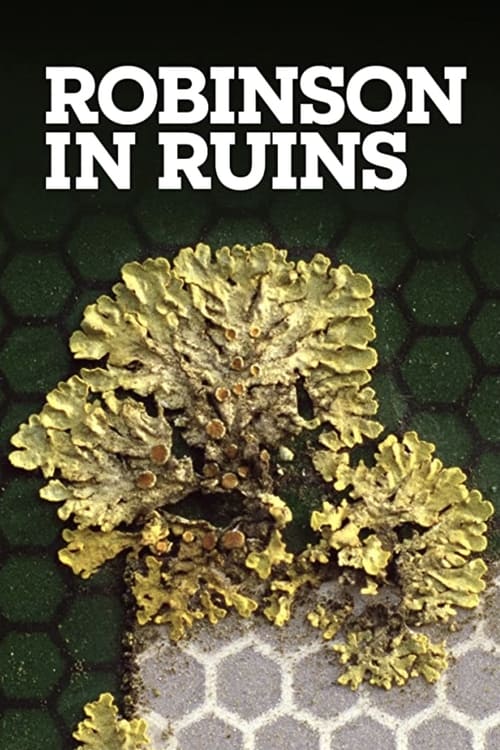
Robinson in Ruins
2010·Documentary·1h 41m
7.1
★

The eagerly awaited sequel to Patrick Keiller's London and Robinson in Space is a beautifully photographed cinematic essay on our current environmental and economic predicament, narrated by Vanessa Redgrave. Timely, provocative and studded with surreal humour, Robinson in Ruins reveals hidden histories and surprising visions (from the opium poppy fields of Oxfordshire to what seems to be a talking post box), making us consider the world around us afresh.
Directed by Patrick Keiller

Trailer

IMDB
N/A
Cast

Vanessa Redgrave
Narrator
Crew

Keith Griffiths
Executive Producer
Popular Reviews
1 review
Kieran
10.0★ · 11/20/24
The most serenely volatile of the Robinson trilogy. A sense of permanent, sinister dread and a peaceful disquiet permeate the lonely images of Ruins.
Lonely because of the lack of people and lonely from the lack of music. We’re far from the bustling of London. We were pushed back in Robinson in Space, but this is different: it’s more open, the aspect ratio isn’t constrained, you are more susceptible to danger. You are held at arm’s length structurally too: the framing device of the narrator’s former betrothed narrating pushes you back even further. More so than any of the Robinson films, Ruins puts our documenter as far from London as possible. From this vantage point, Keiller can dissect his subject in a more direct way than before. The looming of the financial crisis and its fallout lend these pastoral images the aforementioned dread and Ruins attempts to reckon with nature’s use in all this.
Whereas in Robinson in Space manufacturing, and industry, was measured against itself and its capitalist outcomes, here it’s measured against its place in the natural world- the two collide, no more so than in the central metaphor of lichen on a road sign. Enclosure and its ripples are traced in detail through history, woven through the film like the featured spider’s web. Nature and Industry are thematically and practically inextricable, the two are interlinked but maybe they never should have been. Or rather, Robinson argues, maybe they should have been kept in the over-romanticised state it was in centuries ago, a take-and-give relationship that industry soon unbalanced.
When Robinson encountered the monument, it wasn’t for the meteorite he yearned to board in Robinson in Space, but for a cycle path. Nature is erased, human progress is celebrated. Robinson’s biophilia, and resulting agreement to the rejection of neo-Darwinist capitalist interpretations, don’t make sense in the post-crash world of Ruins. Robinson’s sojourns to meteorite crash sites and his obsession with the past show a longing to get even further away from London than the natural vistas he’s assessing, even as he becomes more fixated on their exploitation. It’s all pushing you to another place, out from nature, while Keiller’s camera becomes ever more focused in on it.
“We don’t know where he is now but the last images he made were of a milestone on the Aberystwyth coach road, which measures 58 miles to London”
The reason these films resonate isn’t truly the factual depositions by the narrator, it’s the interpersonal drama. This final line is unsentimental, but cyclical enough to make me cry. Ruins is the most contemplative and strangely sad entry in the Robinson trilogy. It’s a dark film with light images (what’s particularly moving is when a cloud passing overhead momentarily shadows an image that was drenched in sunlight beforehand.) It could be the best of the three.
I’ve tried to get my points across as well as I can but it’s hard, especially for Ruins with all its dense information and beauty. Keiller does so much in these three films that condensing it or trying to make sense of it all is a fool’s errand. What i do know is that these three films are extraordinarily special and extraordinarily important to me.
Lonely because of the lack of people and lonely from the lack of music. We’re far from the bustling of London. We were pushed back in Robinson in Space, but this is different: it’s more open, the aspect ratio isn’t constrained, you are more susceptible to danger. You are held at arm’s length structurally too: the framing device of the narrator’s former betrothed narrating pushes you back even further. More so than any of the Robinson films, Ruins puts our documenter as far from London as possible. From this vantage point, Keiller can dissect his subject in a more direct way than before. The looming of the financial crisis and its fallout lend these pastoral images the aforementioned dread and Ruins attempts to reckon with nature’s use in all this.
Whereas in Robinson in Space manufacturing, and industry, was measured against itself and its capitalist outcomes, here it’s measured against its place in the natural world- the two collide, no more so than in the central metaphor of lichen on a road sign. Enclosure and its ripples are traced in detail through history, woven through the film like the featured spider’s web. Nature and Industry are thematically and practically inextricable, the two are interlinked but maybe they never should have been. Or rather, Robinson argues, maybe they should have been kept in the over-romanticised state it was in centuries ago, a take-and-give relationship that industry soon unbalanced.
When Robinson encountered the monument, it wasn’t for the meteorite he yearned to board in Robinson in Space, but for a cycle path. Nature is erased, human progress is celebrated. Robinson’s biophilia, and resulting agreement to the rejection of neo-Darwinist capitalist interpretations, don’t make sense in the post-crash world of Ruins. Robinson’s sojourns to meteorite crash sites and his obsession with the past show a longing to get even further away from London than the natural vistas he’s assessing, even as he becomes more fixated on their exploitation. It’s all pushing you to another place, out from nature, while Keiller’s camera becomes ever more focused in on it.
“We don’t know where he is now but the last images he made were of a milestone on the Aberystwyth coach road, which measures 58 miles to London”
The reason these films resonate isn’t truly the factual depositions by the narrator, it’s the interpersonal drama. This final line is unsentimental, but cyclical enough to make me cry. Ruins is the most contemplative and strangely sad entry in the Robinson trilogy. It’s a dark film with light images (what’s particularly moving is when a cloud passing overhead momentarily shadows an image that was drenched in sunlight beforehand.) It could be the best of the three.
I’ve tried to get my points across as well as I can but it’s hard, especially for Ruins with all its dense information and beauty. Keiller does so much in these three films that condensing it or trying to make sense of it all is a fool’s errand. What i do know is that these three films are extraordinarily special and extraordinarily important to me.
The most serenely volatile of the Robinson trilogy. A sense of permanent, sinister dread and a peaceful disquiet permeate the lonely images of Ruins.
Lonely because of the lack of people and lonely from the lack of music. We’re far from the bustling of London. We were pushed back in Robinson in Space, but this is different: it’s more open, the aspect ratio isn’t constrained, you are more susceptible to danger. You are held at arm’s length structurally too: the framing device of the narrator’s former betrothed narrating pushes you back even further. More so than any of the Robinson films, Ruins puts our documenter as far from London as possible. From this vantage point, Keiller can dissect his subject in a more direct way than before. The looming of the financial crisis and its fallout lend these pastoral images the aforementioned dread and Ruins attempts to reckon with nature’s use in all this.
Whereas in Robinson in Space manufacturing, and industry, was measured against itself and its capitalist outcomes, here it’s measured against its place in the natural world- the two collide, no more so than in the central metaphor of lichen on a road sign. Enclosure and its ripples are traced in detail through history, woven through the film like the featured spider’s web. Nature and Industry are thematically and practically inextricable, the two are interlinked but maybe they never should have been. Or rather, Robinson argues, maybe they should have been kept in the over-romanticised state it was in centuries ago, a take-and-give relationship that industry soon unbalanced.
When Robinson encountered the monument, it wasn’t for the meteorite he yearned to board in Robinson in Space, but for a cycle path. Nature is erased, human progress is celebrated. Robinson’s biophilia, and resulting agreement to the rejection of neo-Darwinist capitalist interpretations, don’t make sense in the post-crash world of Ruins. Robinson’s sojourns to meteorite crash sites and his obsession with the past show a longing to get even further away from London than the natural vistas he’s assessing, even as he becomes more fixated on their exploitation. It’s all pushing you to another place, out from nature, while Keiller’s camera becomes ever more focused in on it.
“We don’t know where he is now but the last images he made were of a milestone on the Aberystwyth coach road, which measures 58 miles to London”
The reason these films resonate isn’t truly the factual depositions by the narrator, it’s the interpersonal drama. This final line is unsentimental, but cyclical enough to make me cry. Ruins is the most contemplative and strangely sad entry in the Robinson trilogy. It’s a dark film with light images (what’s particularly moving is when a cloud passing overhead momentarily shadows an image that was drenched in sunlight beforehand.) It could be the best of the three.
I’ve tried to get my points across as well as I can but it’s hard, especially for Ruins with all its dense information and beauty. Keiller does so much in these three films that condensing it or trying to make sense of it all is a fool’s errand. What i do know is that these three films are extraordinarily special and extraordinarily important to me.
Lonely because of the lack of people and lonely from the lack of music. We’re far from the bustling of London. We were pushed back in Robinson in Space, but this is different: it’s more open, the aspect ratio isn’t constrained, you are more susceptible to danger. You are held at arm’s length structurally too: the framing device of the narrator’s former betrothed narrating pushes you back even further. More so than any of the Robinson films, Ruins puts our documenter as far from London as possible. From this vantage point, Keiller can dissect his subject in a more direct way than before. The looming of the financial crisis and its fallout lend these pastoral images the aforementioned dread and Ruins attempts to reckon with nature’s use in all this.
Whereas in Robinson in Space manufacturing, and industry, was measured against itself and its capitalist outcomes, here it’s measured against its place in the natural world- the two collide, no more so than in the central metaphor of lichen on a road sign. Enclosure and its ripples are traced in detail through history, woven through the film like the featured spider’s web. Nature and Industry are thematically and practically inextricable, the two are interlinked but maybe they never should have been. Or rather, Robinson argues, maybe they should have been kept in the over-romanticised state it was in centuries ago, a take-and-give relationship that industry soon unbalanced.
When Robinson encountered the monument, it wasn’t for the meteorite he yearned to board in Robinson in Space, but for a cycle path. Nature is erased, human progress is celebrated. Robinson’s biophilia, and resulting agreement to the rejection of neo-Darwinist capitalist interpretations, don’t make sense in the post-crash world of Ruins. Robinson’s sojourns to meteorite crash sites and his obsession with the past show a longing to get even further away from London than the natural vistas he’s assessing, even as he becomes more fixated on their exploitation. It’s all pushing you to another place, out from nature, while Keiller’s camera becomes ever more focused in on it.
“We don’t know where he is now but the last images he made were of a milestone on the Aberystwyth coach road, which measures 58 miles to London”
The reason these films resonate isn’t truly the factual depositions by the narrator, it’s the interpersonal drama. This final line is unsentimental, but cyclical enough to make me cry. Ruins is the most contemplative and strangely sad entry in the Robinson trilogy. It’s a dark film with light images (what’s particularly moving is when a cloud passing overhead momentarily shadows an image that was drenched in sunlight beforehand.) It could be the best of the three.
I’ve tried to get my points across as well as I can but it’s hard, especially for Ruins with all its dense information and beauty. Keiller does so much in these three films that condensing it or trying to make sense of it all is a fool’s errand. What i do know is that these three films are extraordinarily special and extraordinarily important to me.


Kieran
9.0★ · 04/10/24
London, Robinson in Space and Robinson in Ruins can be neatly summed up by Vanessa Redgrave narrating a long passage about bombing over ducks swimming beneath a yellow flowered bush.
The prosaic colliding with the mosaic.
The genuine thrill I feel learning about tiny snippets of the drama surrounding the facts in this film is a testament to how great all three are.
The prosaic colliding with the mosaic.
The genuine thrill I feel learning about tiny snippets of the drama surrounding the facts in this film is a testament to how great all three are.
London, Robinson in Space and Robinson in Ruins can be neatly summed up by Vanessa Redgrave narrating a long passage about bombing over ducks swimming beneath a yellow flowered bush.
The prosaic colliding with the mosaic.
The genuine thrill I feel learning about tiny snippets of the drama surrounding the facts in this film is a testament to how great all three are.
The prosaic colliding with the mosaic.
The genuine thrill I feel learning about tiny snippets of the drama surrounding the facts in this film is a testament to how great all three are.