
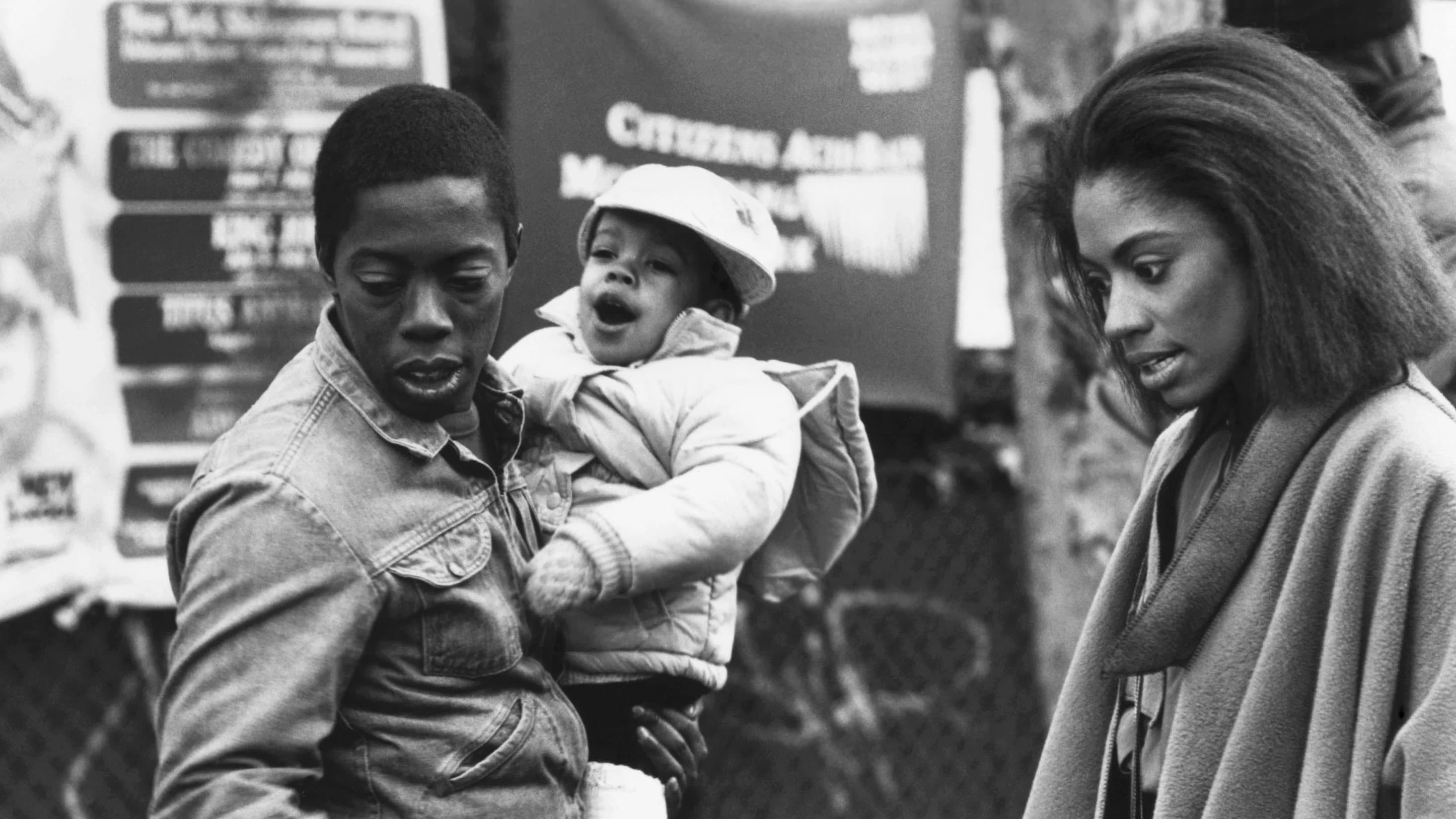
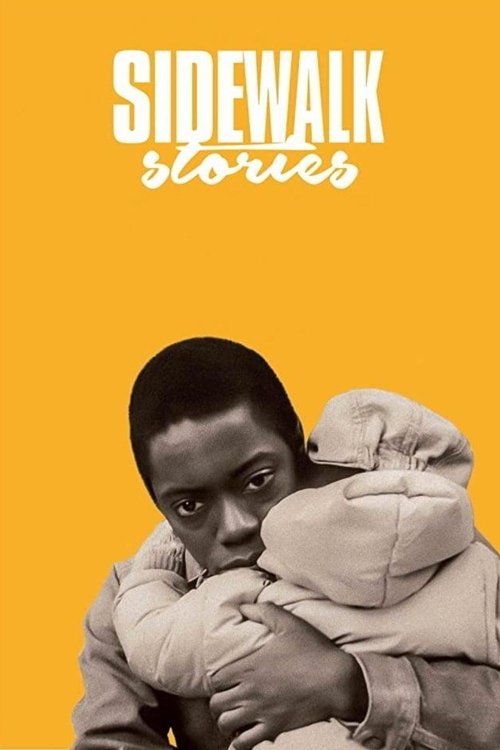
Sidewalk Stories
1989·Comedy·1h 42m
7.1
★
A New York City street artist rescues a baby girl after her father is murdered. He then sets off to find the mother, but has to first learn how to care for the child. Ultimately he ends up in a horse drawn chase for the murderers.
Directed by Charles Lane
new york city
witness
street artist
black and white
witness to murder
silent film
mother child separation
stabbed in the back
stabbed to death
abandoned child
mother looking for child
murder of father

Trailer

IMDB
N/A
Where to Watch

Cast
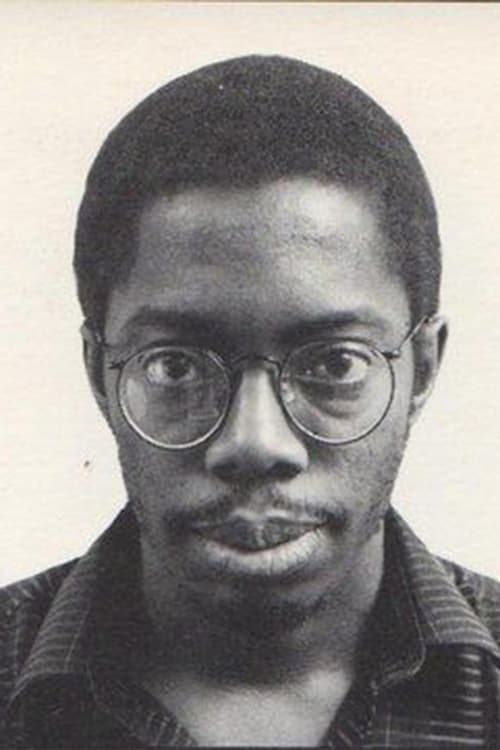
Charles Lane
The Artist
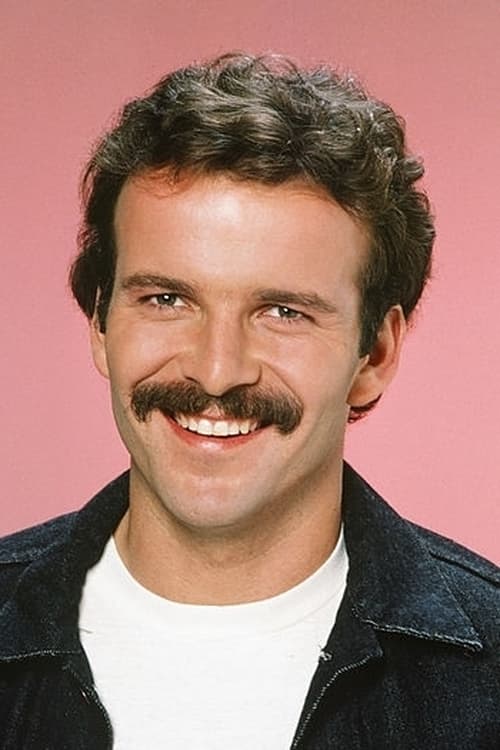
Robert Clohessy
Alley Tough

Edie Falco
Carriage Couple

Trula Hoosier
Mother

Bill Sage
Carriage Couple

Michael Baskin
Doorman / Street Cop
Crew
Charles Lane
Director
Charles Lane
Writer
Charles Lane
Editor
Charles Lane
Producer
Popular Reviews
10 reviews
Alexandra
6.0★ · 09/21/22
Sidewalk Stories is a beautifully told silent film that pays homage to Charlie Chaplin’s iconic film The Kid. As a born and raised New Yorker, this film really captures the heart of how brutal the city can be at times. From the music alone each neighborhood and scene has its own vibe. The constant bass when capturing the block of artists or the lullabies that the young girl gets are just an amazing representation of how music can act as a tool of communication. As a filmmaker this film also taught me the importance of visual language. It was shocking to me how much the audience was able to fill in the gaps of what was going on without a single word. I also thought the use of sound was so genius. Simple small sounds to insert us into the world and of course, the ending when sound finally cuts through. The ending was so powerful because it really made you realize how much you missed it. Especially as a part of New York, the sounds are part of what makes it the city that never sleeps. The problem I had with the film was it felt a bit long at times. It was a very cool idea but I think at times it could have been better as a short. Overall a really insane film that I am glad to have watched.
Sidewalk Stories is a beautifully told silent film that pays homage to Charlie Chaplin’s iconic film The Kid. As a born and raised New Yorker, this film really captures the heart of how brutal the city can be at times. From the music alone each neighborhood and scene has its own vibe. The constant bass when capturing the block of artists or the lullabies that the young girl gets are just an amazing representation of how music can act as a tool of communication. As a filmmaker this film also taught me the importance of visual language. It was shocking to me how much the audience was able to fill in the gaps of what was going on without a single word. I also thought the use of sound was so genius. Simple small sounds to insert us into the world and of course, the ending when sound finally cuts through. The ending was so powerful because it really made you realize how much you missed it. Especially as a part of New York, the sounds are part of what makes it the city that never sleeps. The problem I had with the film was it felt a bit long at times. It was a very cool idea but I think at times it could have been better as a short. Overall a really insane film that I am glad to have watched.


Jacob Dickens
8.7★ · 07/20/20
There's something surprisingly endearing about a silent film set in a modern day setting. Most of the homages to the silent era work hard to recapture the look of the 1920s, as if that's the only time we are allowed to use silent techniques. But even something as simple as a McDonald's takes on a different connotation under the plinking pianos and horns of the silent movie soundtrack. Even the soundtrack itself is modernized with tracks that feature basslines and distorted guitar. Most revolutionary of all, though, is Lane himself who casts himself as a "what if" scenario for silent film. What if a black artist like himself had the same opportunities, the same resources as a Chaplin or a Lloyd back in the silent era? What would a black silent comedy star have looked like? Lane isn't as interested for much of the film's runtime with slapstick though there are definitely scenes where he uses it in delightful fashion. Much of his humor is drawn from bait and switches or little looks to the camera. But more than anything else, Lane is searching for pathos. The most obvious corollary film is Chaplin's The Kid which also focused on a poor man who inadvertently raises a child while searching for the kid's mother. Here, however, Lane's characters and their settings are "mythologized" as Ebert put it in his review. There's something noble about Lane's artist, a short and scrappy young man who is a beacon of hope in his environment without becoming saccharine or cloying. The low budget of the film rarely makes itself known. I love the way Lane uses tracking shots (that opening sequence is incredible!) and close-ups. It's a bold recontextualizing of an environment that other filmmakers at the time dismissed as a source of horror, of hopelessness, of crimes and drugs. But Lane looks at that same neighborhood and says "Why can't we find stories of hope and joy?" It's an incredibly endearing experiment.
There's something surprisingly endearing about a silent film set in a modern day setting. Most of the homages to the silent era work hard to recapture the look of the 1920s, as if that's the only time we are allowed to use silent techniques. But even something as simple as a McDonald's takes on a different connotation under the plinking pianos and horns of the silent movie soundtrack. Even the soundtrack itself is modernized with tracks that feature basslines and distorted guitar. Most revolutionary of all, though, is Lane himself who casts himself as a "what if" scenario for silent film. What if a black artist like himself had the same opportunities, the same resources as a Chaplin or a Lloyd back in the silent era? What would a black silent comedy star have looked like? Lane isn't as interested for much of the film's runtime with slapstick though there are definitely scenes where he uses it in delightful fashion. Much of his humor is drawn from bait and switches or little looks to the camera. But more than anything else, Lane is searching for pathos. The most obvious corollary film is Chaplin's The Kid which also focused on a poor man who inadvertently raises a child while searching for the kid's mother. Here, however, Lane's characters and their settings are "mythologized" as Ebert put it in his review. There's something noble about Lane's artist, a short and scrappy young man who is a beacon of hope in his environment without becoming saccharine or cloying. The low budget of the film rarely makes itself known. I love the way Lane uses tracking shots (that opening sequence is incredible!) and close-ups. It's a bold recontextualizing of an environment that other filmmakers at the time dismissed as a source of horror, of hopelessness, of crimes and drugs. But Lane looks at that same neighborhood and says "Why can't we find stories of hope and joy?" It's an incredibly endearing experiment.
Isabel Kalbacher
7.0★ · 01/21/26
Adrian
7.0★ · 08/25/25
Hayden
4.4★ · 01/29/25