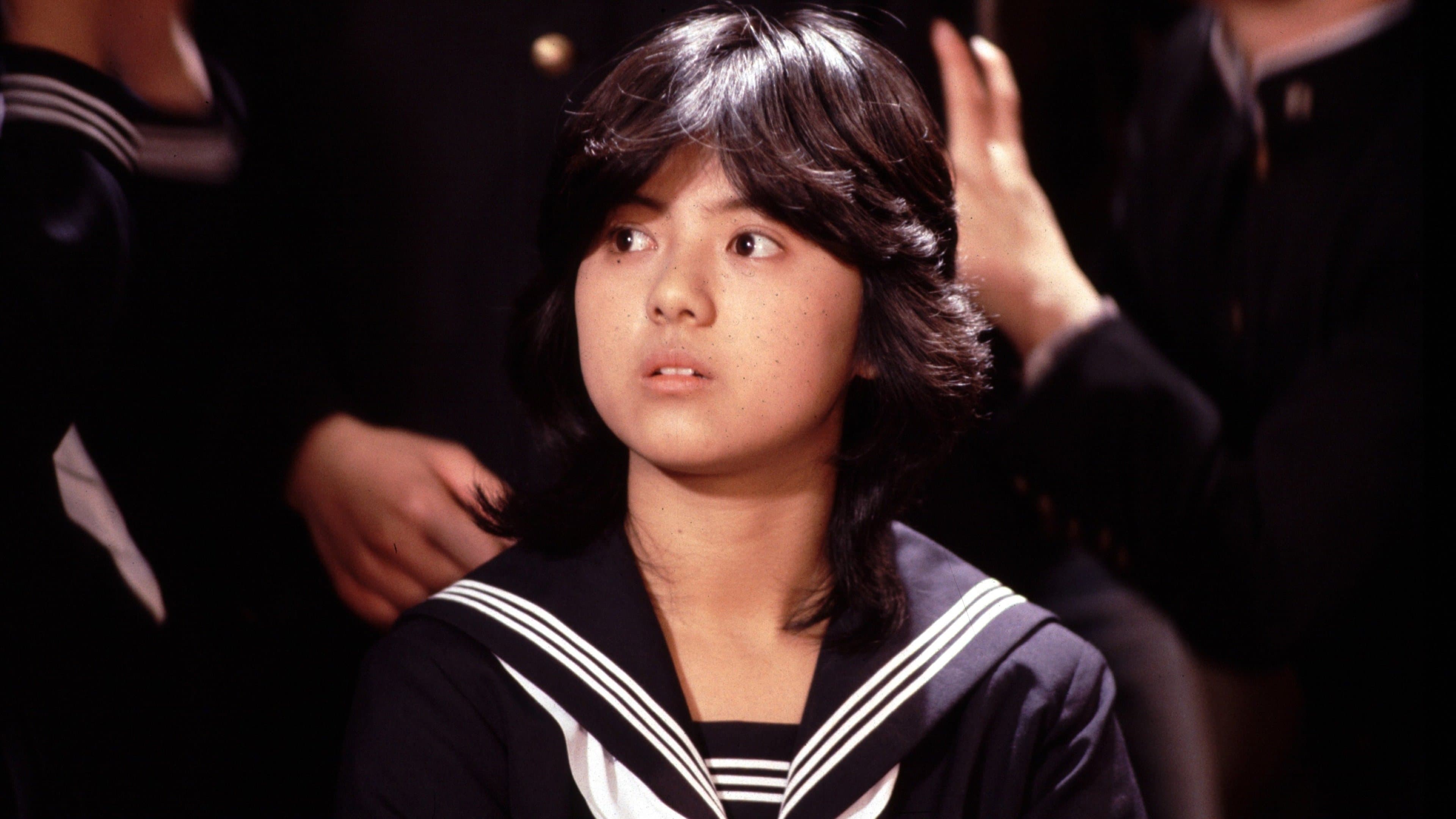
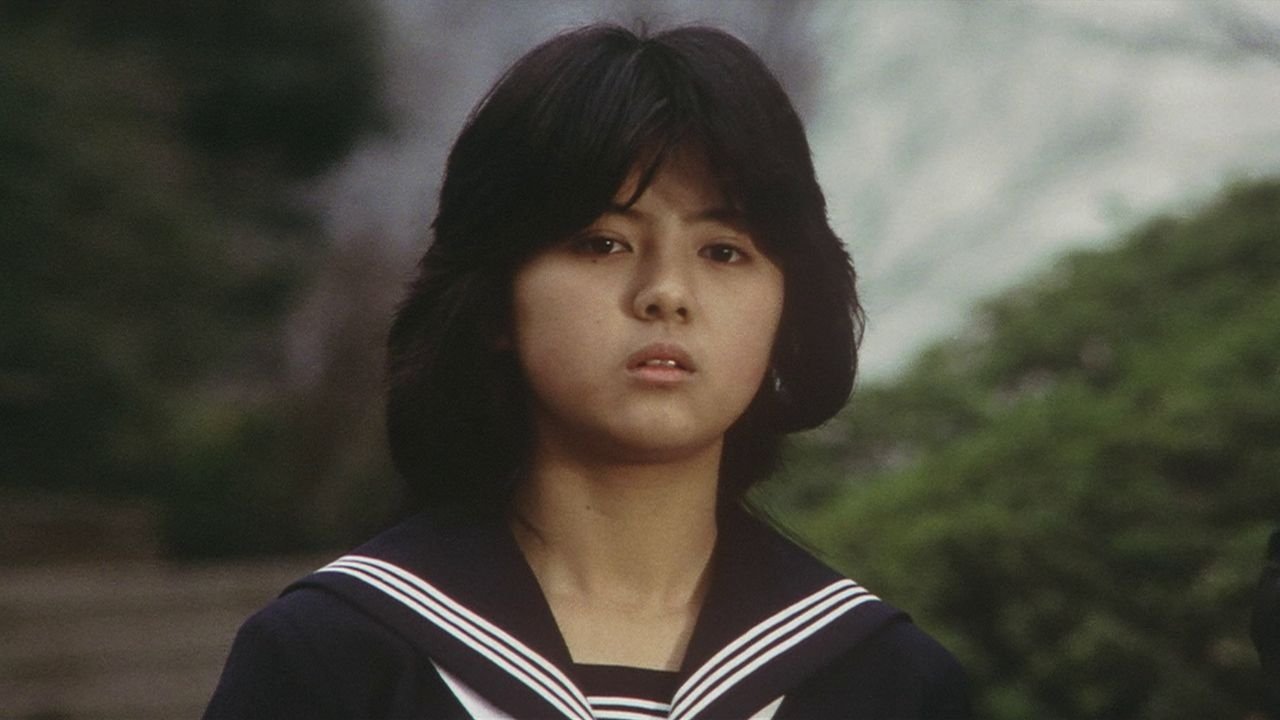
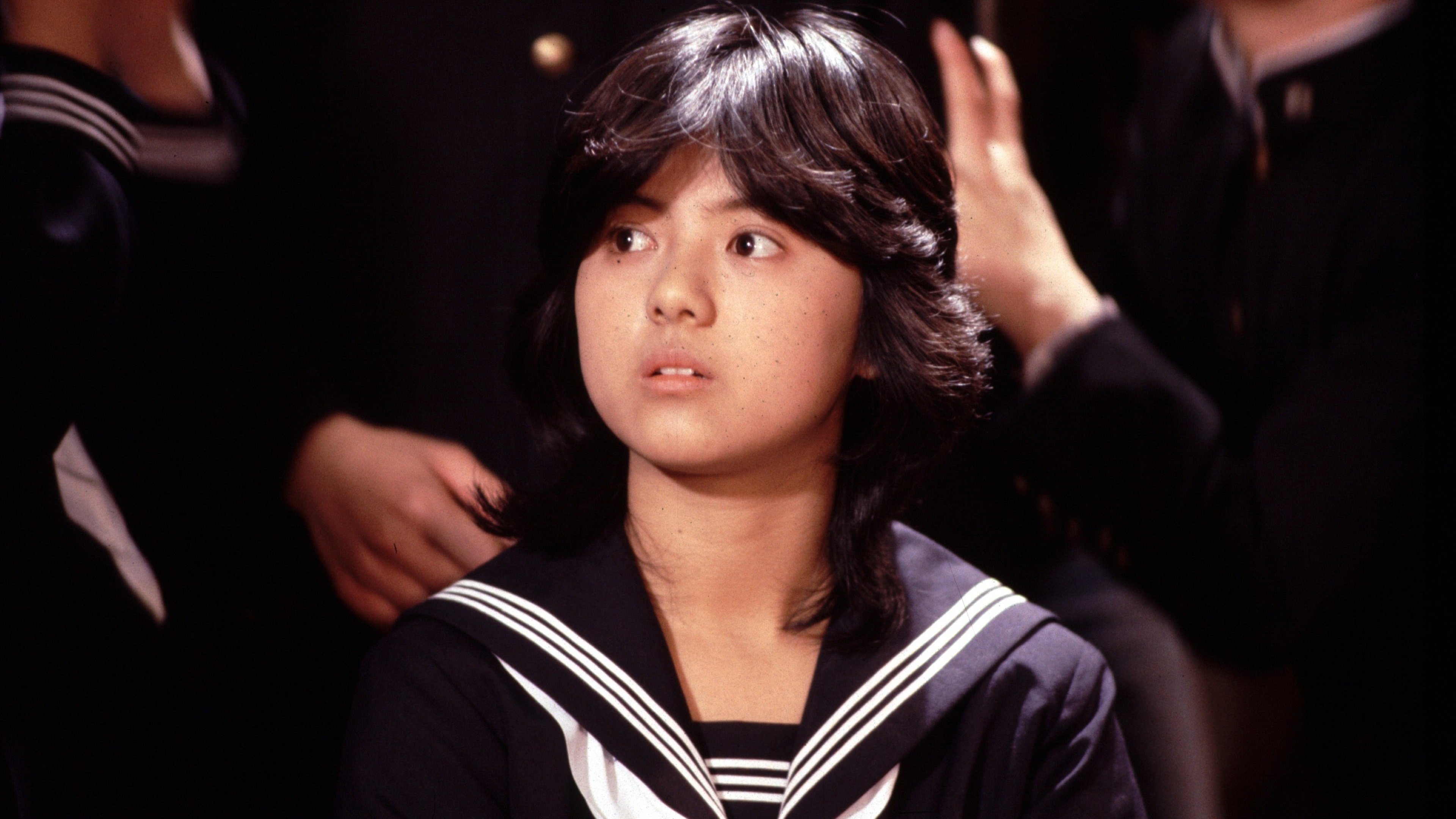
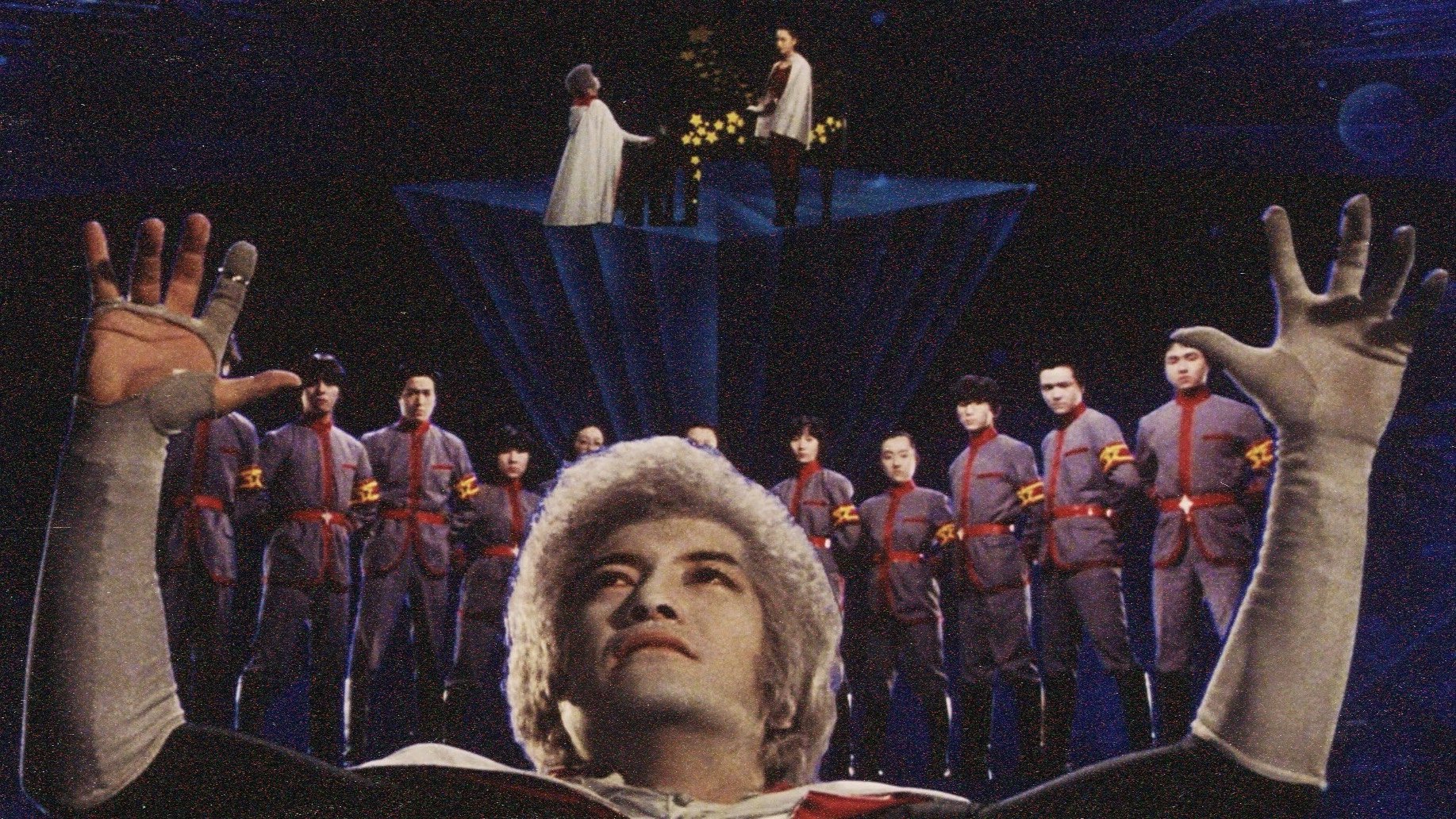
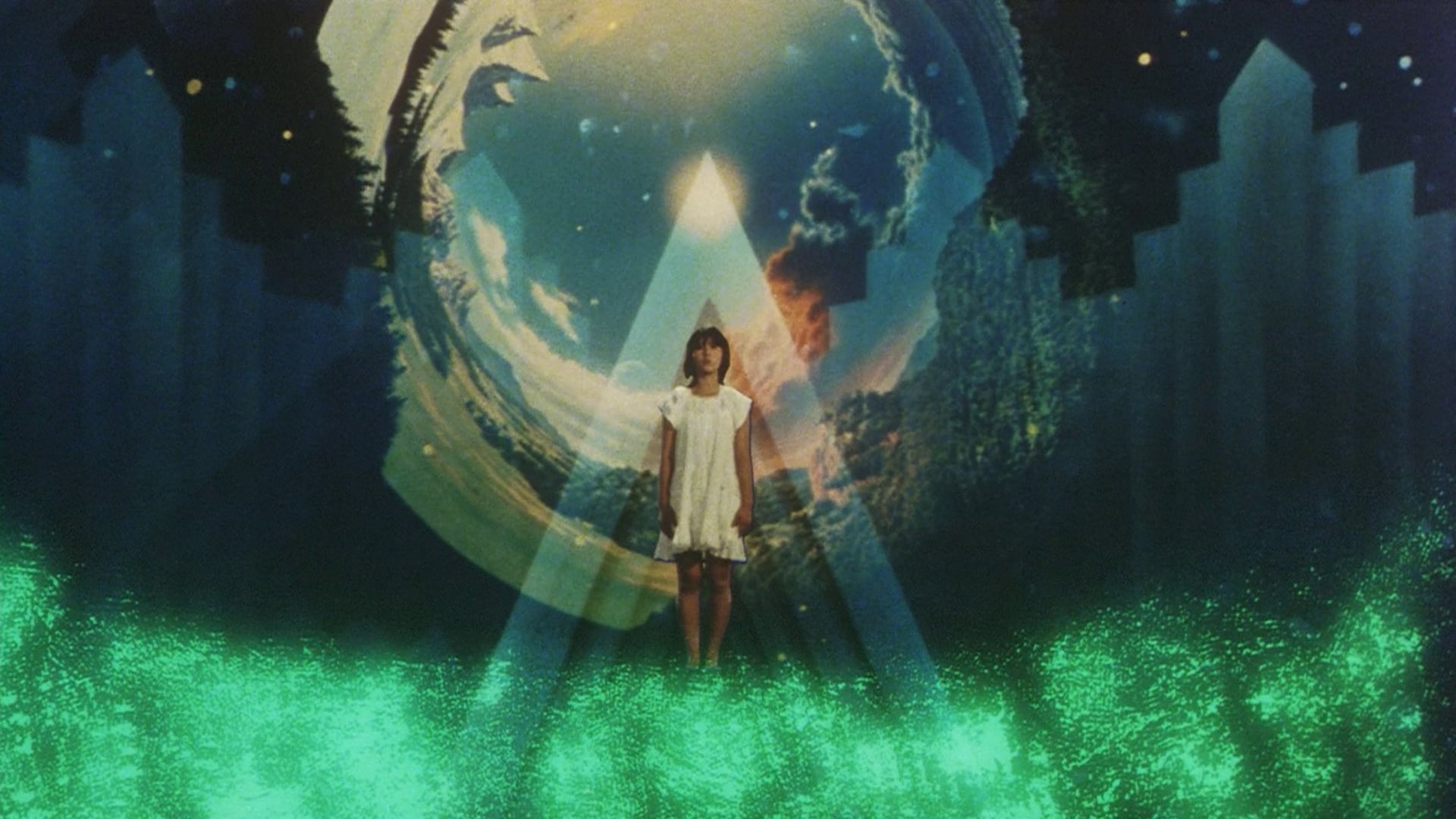
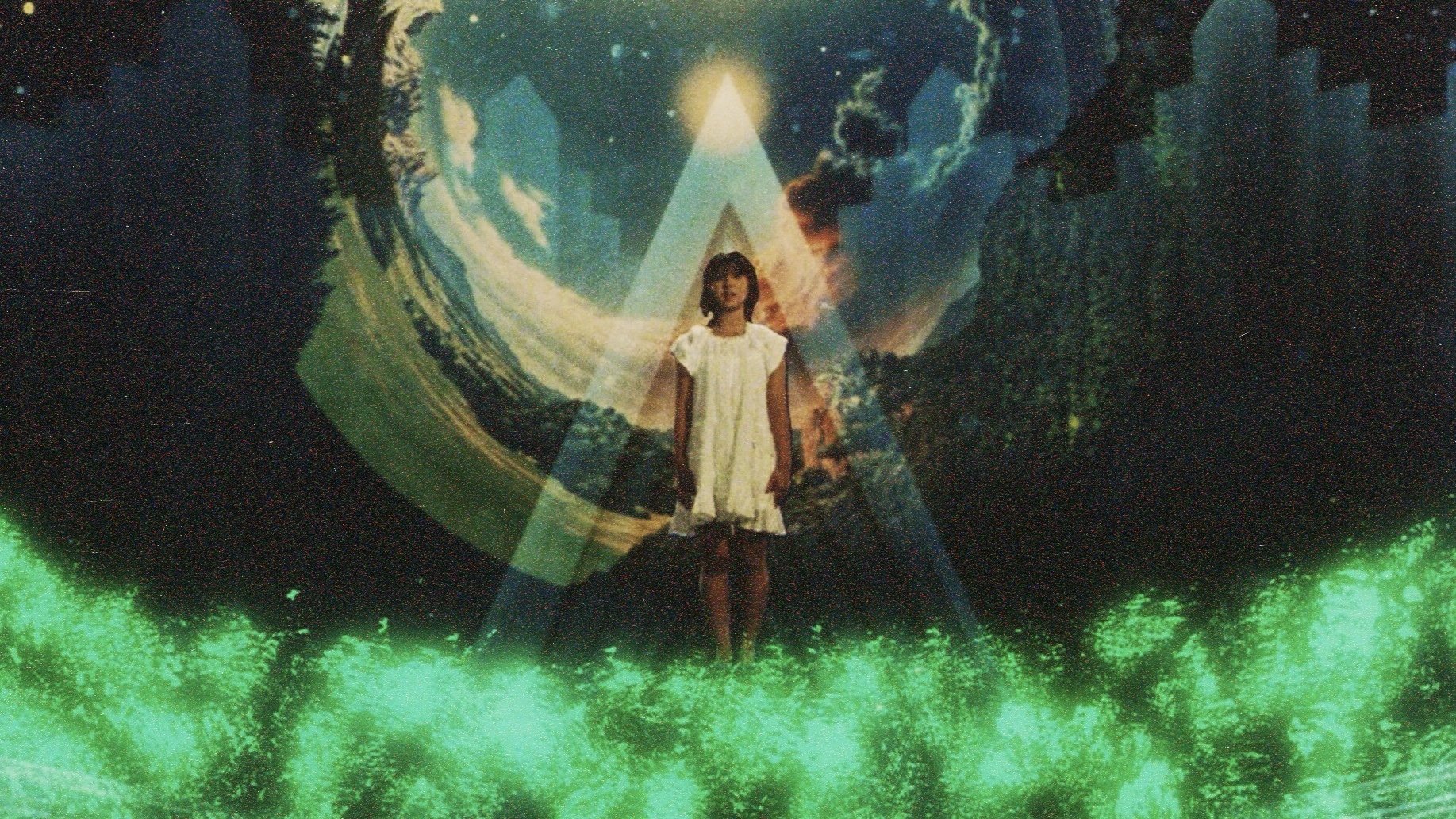
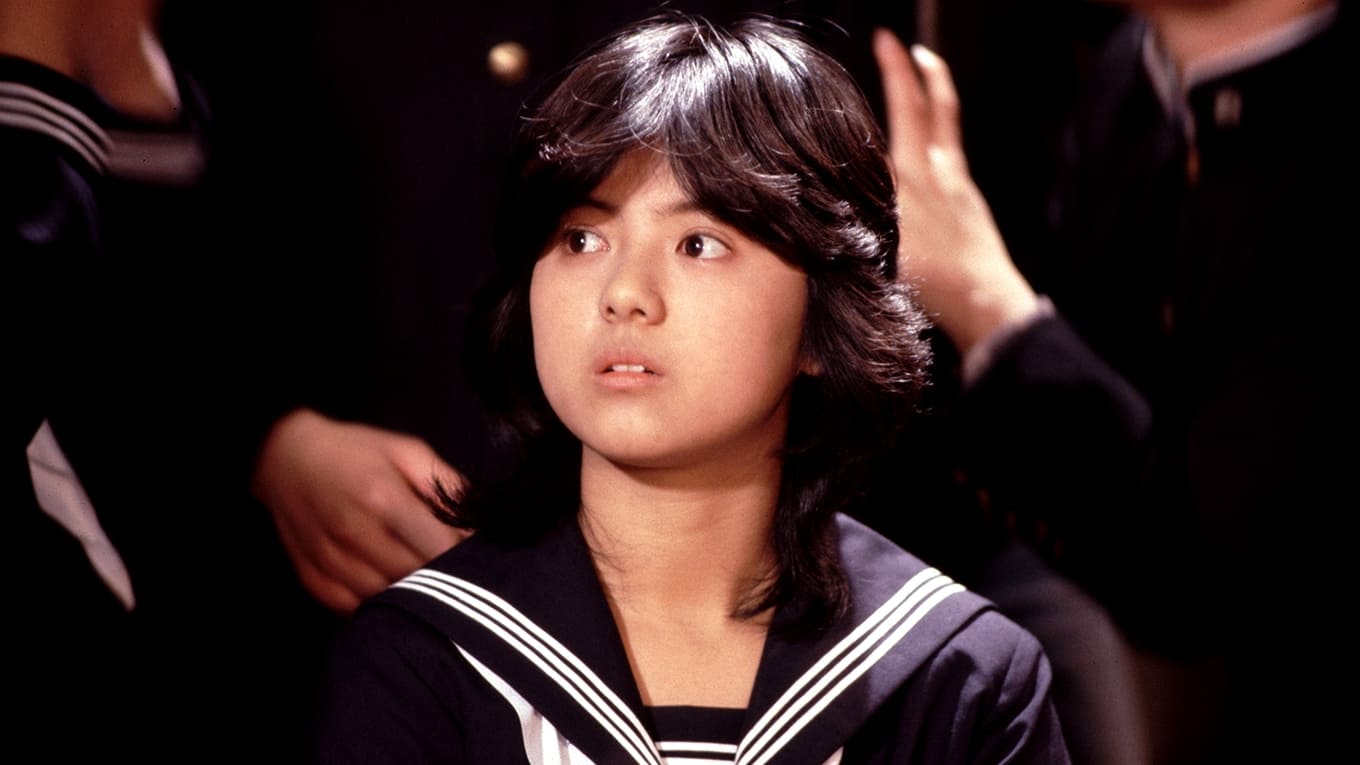
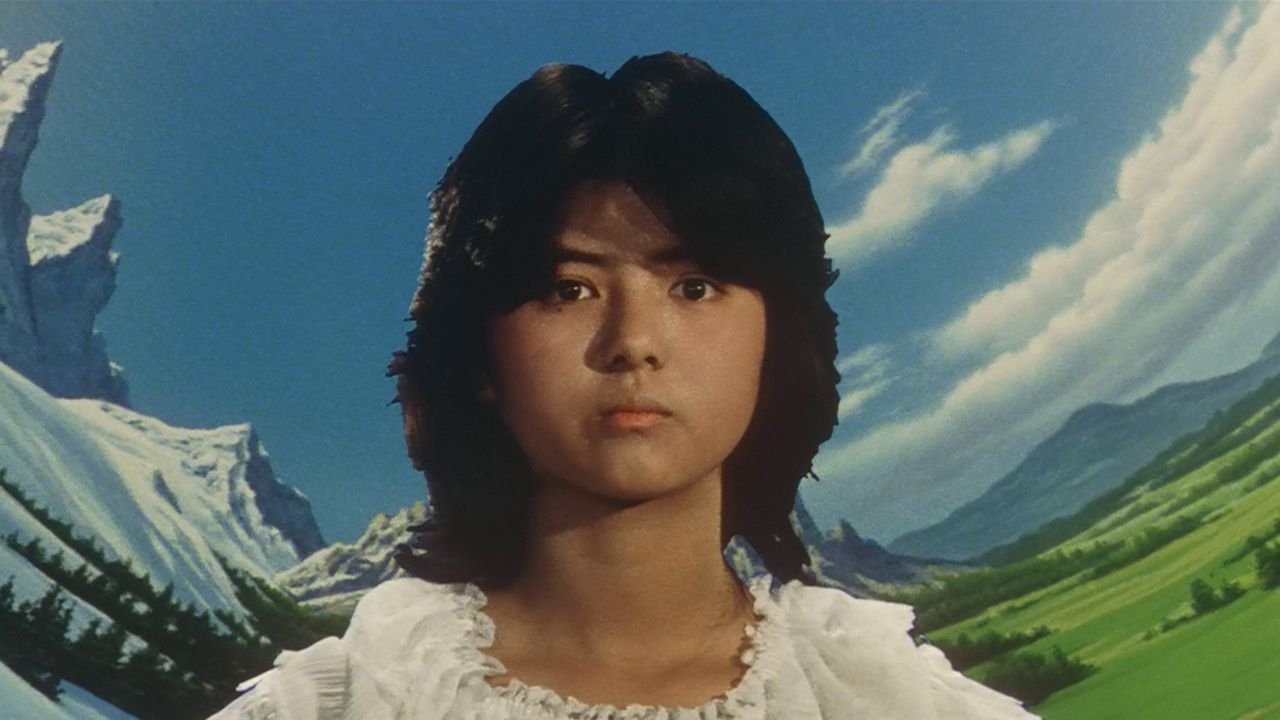
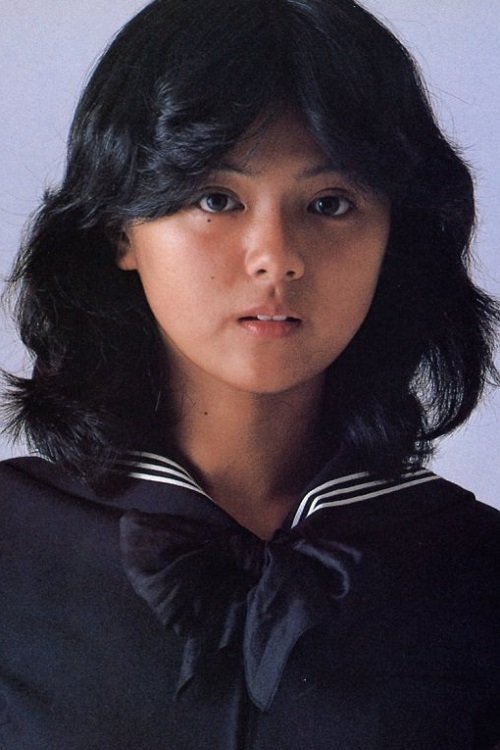
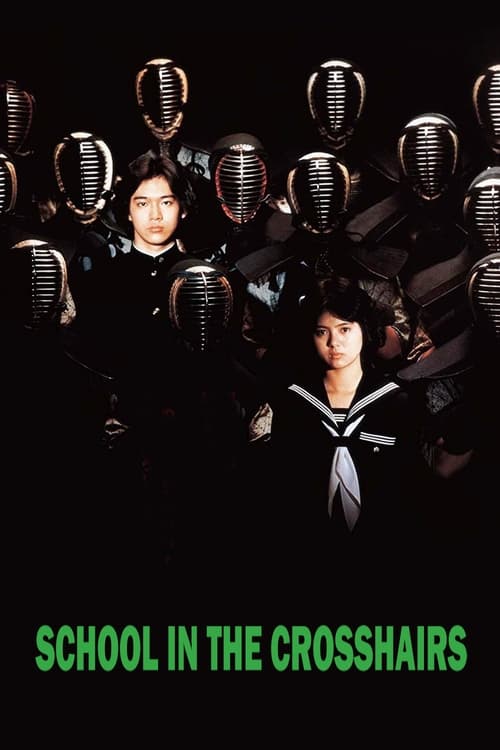
Before exposition, narrative, or concrete image, I'm blasted with psychedelic vistas. I'm interested at this point, then a few moments later absolutely charmed as I meet our main character, Yuka, whose heart is big enough to earn cosmic acclaim. Her friend, Seki, is fairly upright, as we learn when he scolds a group of kids for trying to peek up girls' skirts. Within fifteen minutes, there's a huge dance segment.
There's some sexism in this film, as all the boys fight to drink from the spout after Yuka, because it would be an indirect kiss (this includes Seki, of course). They also use her good looks to advertise their kendo club, unbeknownst to her. The psychic powers are a pretty clear metaphor for puberty, and it seems to have attracted the attention of the alien psychic of this film. Amazingly, in the original I think Seki is the one who has psychic powers, which on the face of it is less interesting for the existence of this angle in the story.
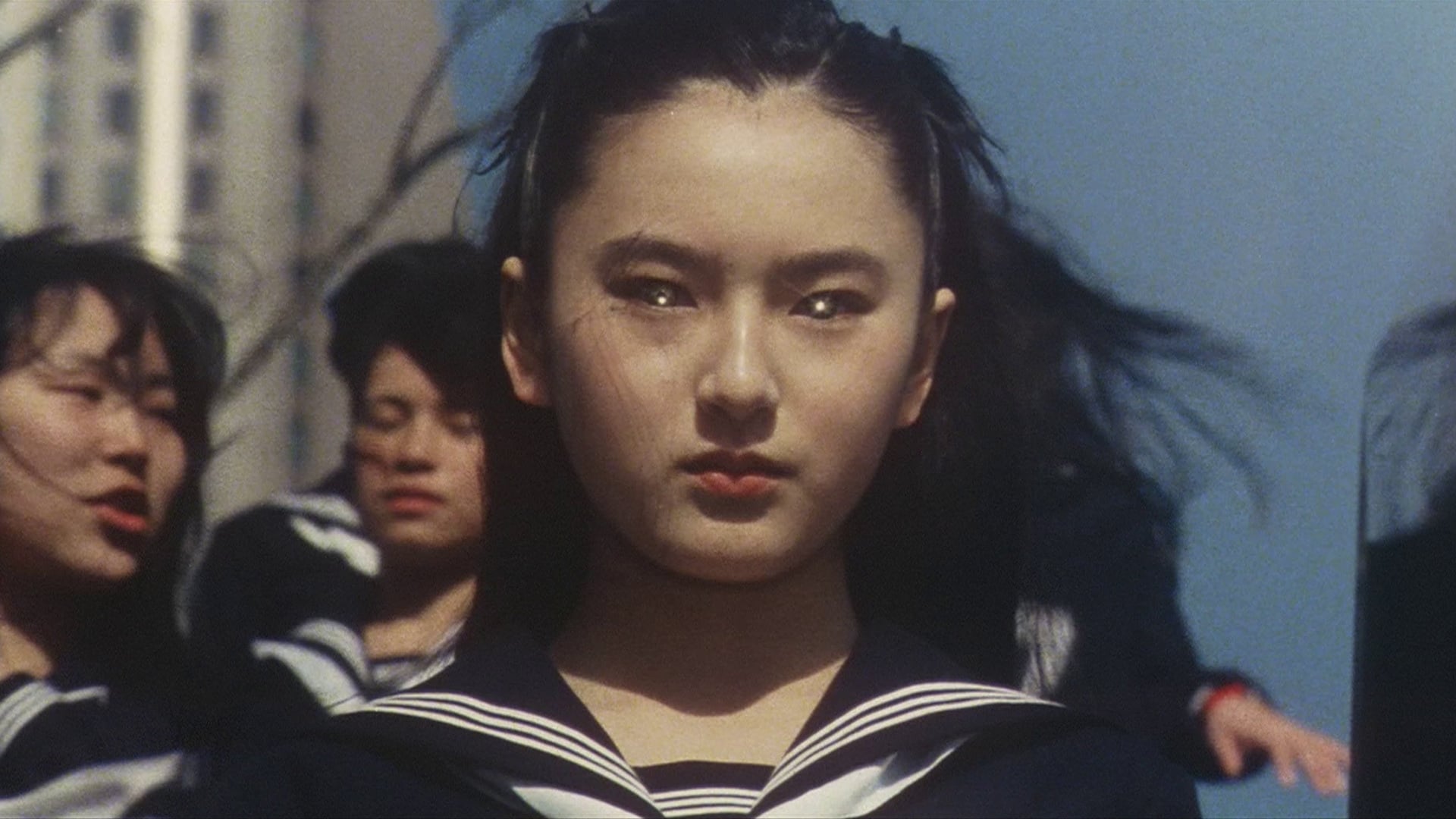
She uses her psychic powers to cheat during the kendo matches, draining her own energy to help her friends win. In the end, she's exhausted and one of the athletes on the other side collapses. Also, she sees some strange mystic watching over her. Approvingly? Disapprovingly? It's not really clear at first, but this bizarre guy catches up later on, and invites her into his car, where everything turns gray but somehow bursts with color at the same time. Besides this Venusian interloper, she soon discovers that another psychic has transferred to her school, and she sees her strike the pervert kids from earlier in the film blind. Now, I definitely think kids should be corrected when they do things that are wrong, but I don't know if striking them blind is the right thing to do. She turns out to be in league with the jerk-ass nerd of the class, hence the other English title for this story, Psychic School Wars. The goal of these two is to stamp out any youthfulness or hopeful energy the students of the school might have. The adults involved largely care about the students' grades and nothing else. The teacher leading the kendo club is brave enough to describe what they're doing as fascism, but it struck low by an intense psychic blast from the transfer student. Shortly after, his car is intensely throttled and he's thrown into a car accident by Takamizawa, who personally refuses entry to his hospital room to everyone including his wife. It soon becomes an all-out assault on Yuka's friends in the kendo club, who are viciously assaulted in all sorts of different ways.
This film's understanding of youth is such that it figures a classroom of happy, well-educated children smiling along with the lesson as something perverse. Kids aren't supposed to be happy in class. They're supposed to work hard in class, but for a youth to find joy in mindless rote education is something horrible to imagine. The youths who are joyed to know every synonym for "look out" purely because it means they are doing well in class appear deeply antisocial, but in fact most of them have simply been misled by malicious authority figures (egotistical teachers, narcissistic parents, violently fascistic peers). These authoritarian adults don't care about children, who are only a means to an end, a more or less perverse relation between adults and children.
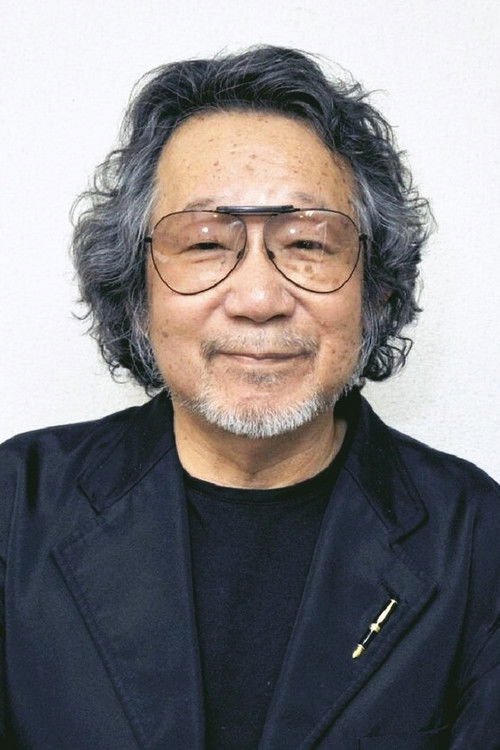
I suspect that I'm going to end up loving every single film Obayashi has ever made. He has such an eye for composition, which is one of my major concerns whenever I'm watching a movie. Furthermore, Obayashi's films always feature these really wild and psychedelic experiments, like the introduction to Yuka in this film.
"Today's the start of a new term. Oh, your button's come off. But what a miracle you passed last term! Your math score was awful. Even though I showed you the answers on the exam, you still did terribly!" "Ah, if only it were a panty test!" "Hhuh? A what test?" "Don't ask." two others pass by saying "Good morning," then he speaks again,] "Anyway, starting tomorrow, use the crosswalk and not the bridge." "Eh, that's the long way around. How come?" "There's perverts around." "Eh? How could that be?" "It's true!" "Look, just don't use the bridge." "Weirdo."
alt. quote, punctuated by thumps on the desk, making three statuettes lift off the desk at once: "Isn't it said that 'A sound mind resides in a sound body'?!"
alt. alt. quote: "Summer break will be awful. It'll be that demon Yamagata's training hell!"
Before exposition, narrative, or concrete image, I'm blasted with psychedelic vistas. I'm interested at this point, then a few moments later absolutely charmed as I meet our main character, Yuka, whose heart is big enough to earn cosmic acclaim. Her friend, Seki, is fairly upright, as we learn when he scolds a group of kids for trying to peek up girls' skirts. Within fifteen minutes, there's a huge dance segment.
There's some sexism in this film, as all the boys fight to drink from the spout after Yuka, because it would be an indirect kiss (this includes Seki, of course). They also use her good looks to advertise their kendo club, unbeknownst to her. The psychic powers are a pretty clear metaphor for puberty, and it seems to have attracted the attention of the alien psychic of this film. Amazingly, in the original I think Seki is the one who has psychic powers, which on the face of it is less interesting for the existence of this angle in the story.
She uses her psychic powers to cheat during the kendo matches, draining her own energy to help her friends win. In the end, she's exhausted and one of the athletes on the other side collapses. Also, she sees some strange mystic watching over her. Approvingly? Disapprovingly? It's not really clear at first, but this bizarre guy catches up later on, and invites her into his car, where everything turns gray but somehow bursts with color at the same time. Besides this Venusian interloper, she soon discovers that another psychic has transferred to her school, and she sees her strike the pervert kids from earlier in the film blind. Now, I definitely think kids should be corrected when they do things that are wrong, but I don't know if striking them blind is the right thing to do. She turns out to be in league with the jerk-ass nerd of the class, hence the other English title for this story, Psychic School Wars. The goal of these two is to stamp out any youthfulness or hopeful energy the students of the school might have. The adults involved largely care about the students' grades and nothing else. The teacher leading the kendo club is brave enough to describe what they're doing as fascism, but it struck low by an intense psychic blast from the transfer student. Shortly after, his car is intensely throttled and he's thrown into a car accident by Takamizawa, who personally refuses entry to his hospital room to everyone including his wife. It soon becomes an all-out assault on Yuka's friends in the kendo club, who are viciously assaulted in all sorts of different ways.
This film's understanding of youth is such that it figures a classroom of happy, well-educated children smiling along with the lesson as something perverse. Kids aren't supposed to be happy in class. They're supposed to work hard in class, but for a youth to find joy in mindless rote education is something horrible to imagine. The youths who are joyed to know every synonym for "look out" purely because it means they are doing well in class appear deeply antisocial, but in fact most of them have simply been misled by malicious authority figures (egotistical teachers, narcissistic parents, violently fascistic peers). These authoritarian adults don't care about children, who are only a means to an end, a more or less perverse relation between adults and children.
I suspect that I'm going to end up loving every single film Obayashi has ever made. He has such an eye for composition, which is one of my major concerns whenever I'm watching a movie. Furthermore, Obayashi's films always feature these really wild and psychedelic experiments, like the introduction to Yuka in this film.
"Today's the start of a new term. Oh, your button's come off. But what a miracle you passed last term! Your math score was awful. Even though I showed you the answers on the exam, you still did terribly!" "Ah, if only it were a panty test!" "Hhuh? A what test?" "Don't ask." two others pass by saying "Good morning," then he speaks again,] "Anyway, starting tomorrow, use the crosswalk and not the bridge." "Eh, that's the long way around. How come?" "There's perverts around." "Eh? How could that be?" "It's true!" "Look, just don't use the bridge." "Weirdo."
alt. quote, punctuated by thumps on the desk, making three statuettes lift off the desk at once: "Isn't it said that 'A sound mind resides in a sound body'?!"
alt. alt. quote: "Summer break will be awful. It'll be that demon Yamagata's training hell!"