

1980·Action·1h 38m
7.1
★
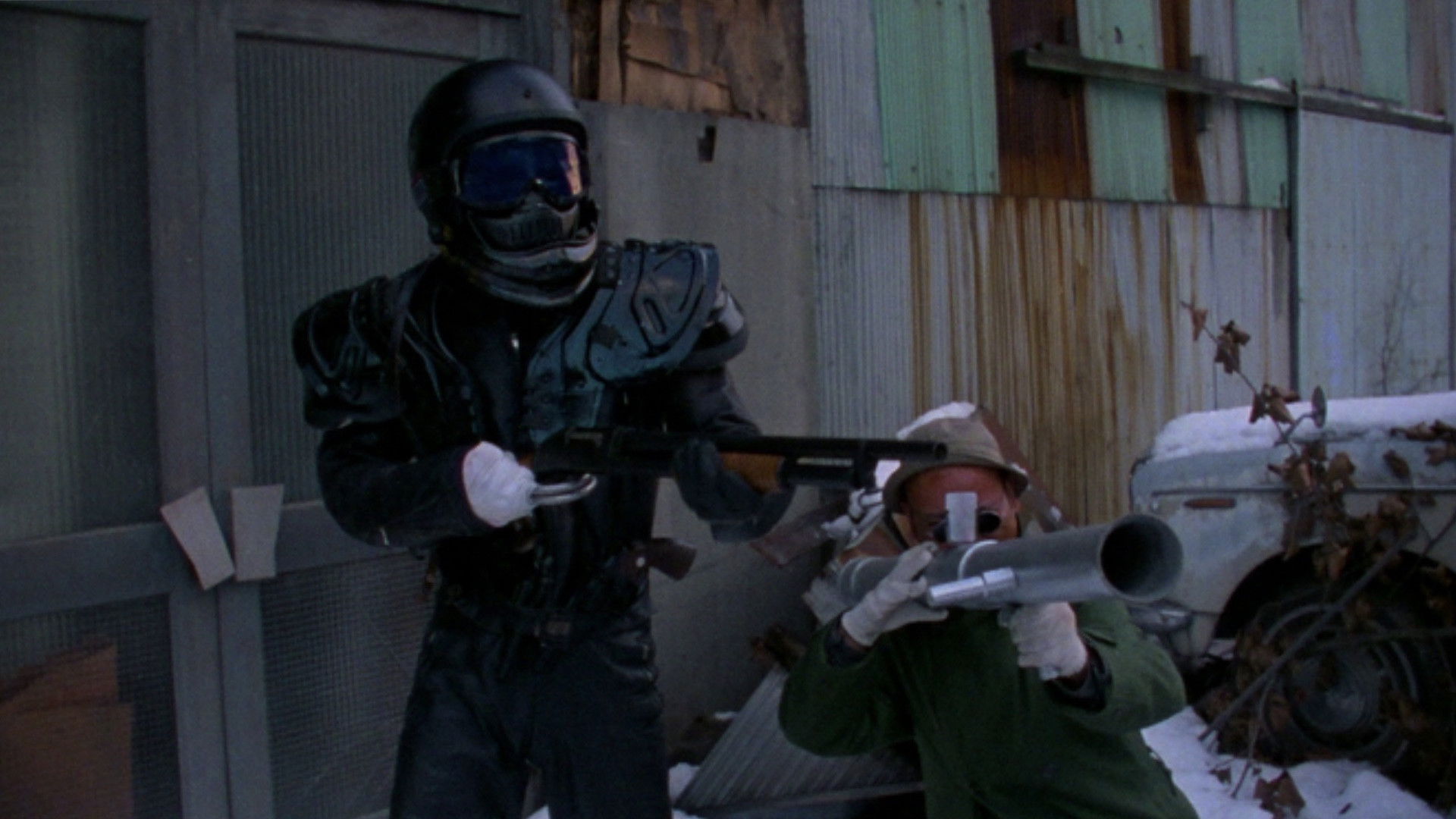
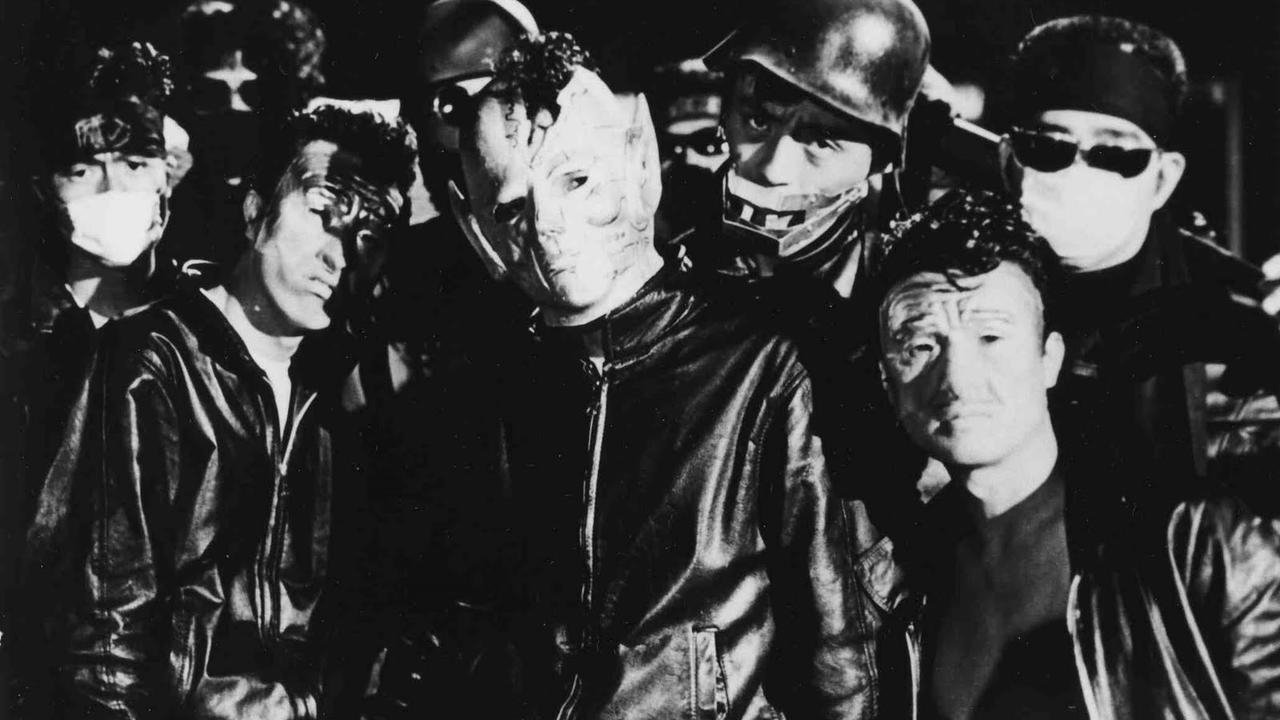
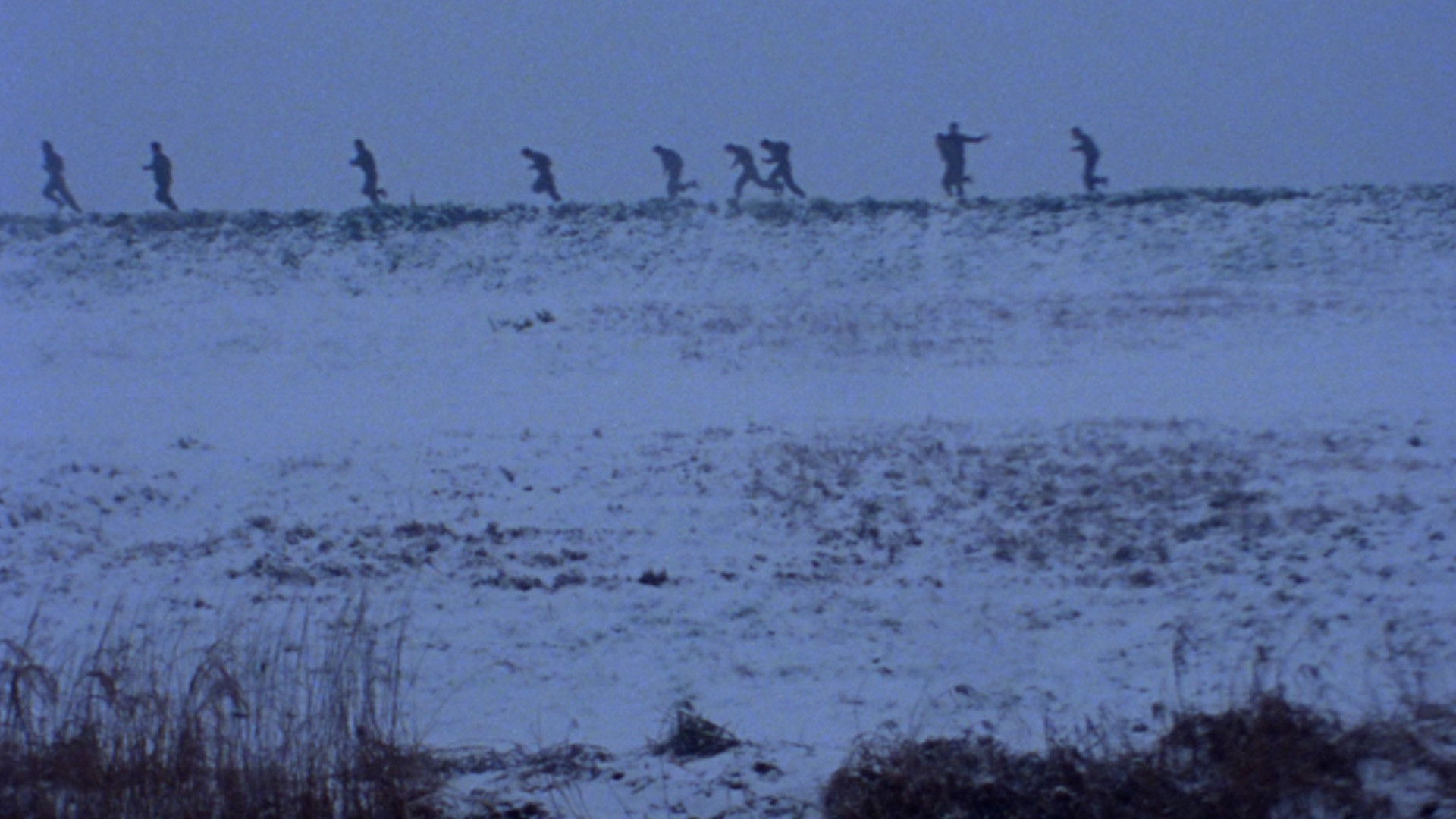
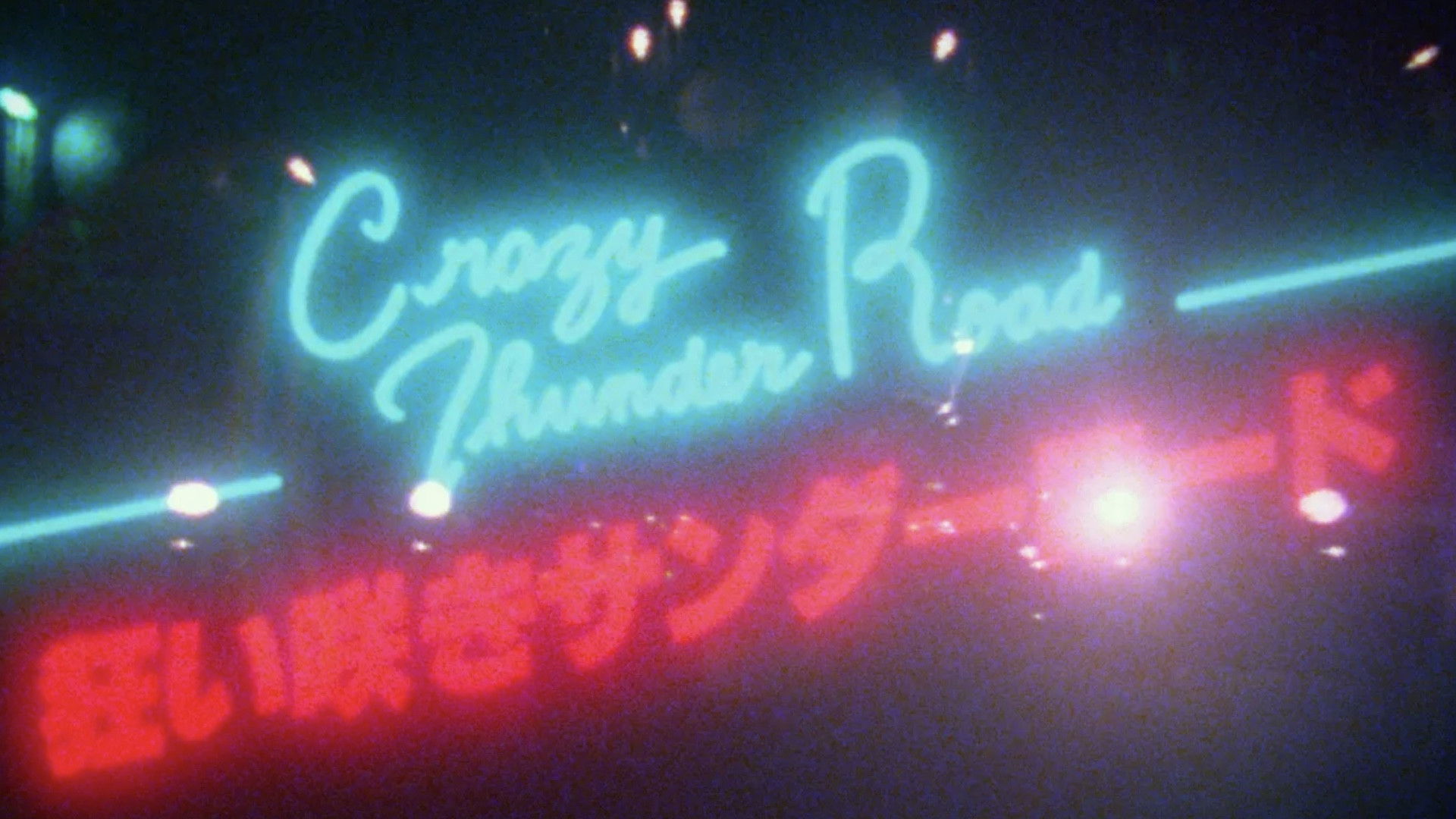
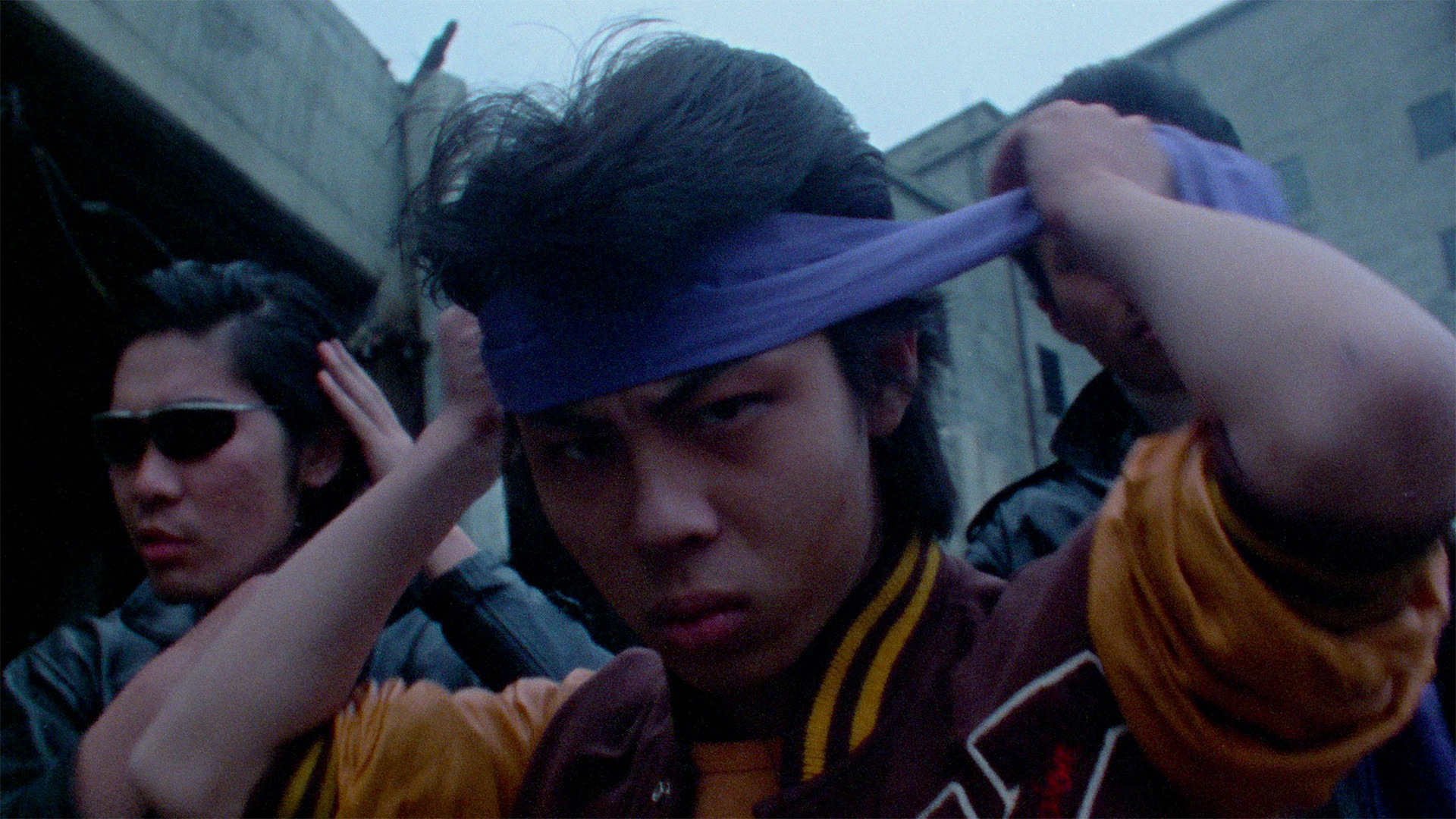
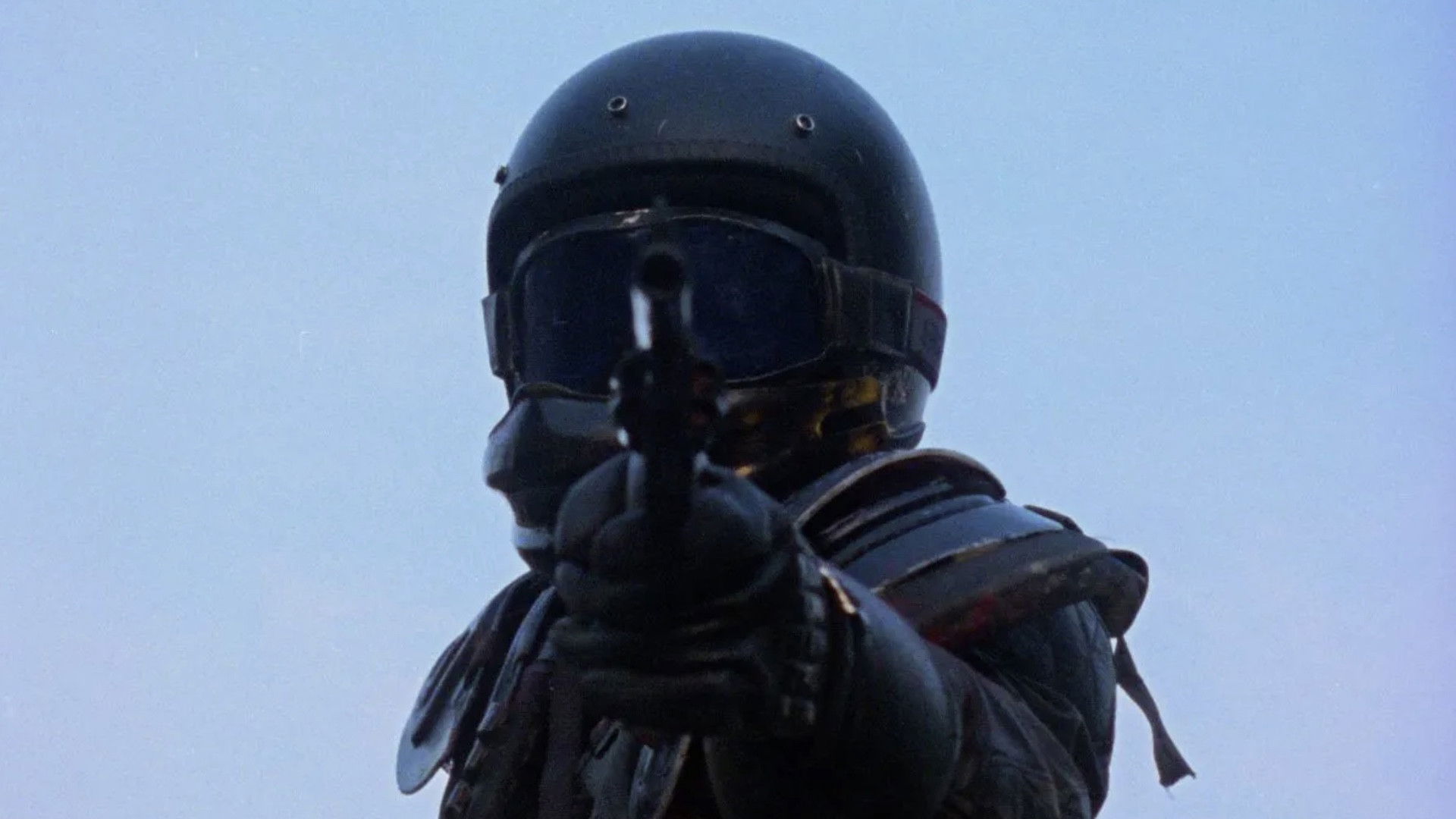
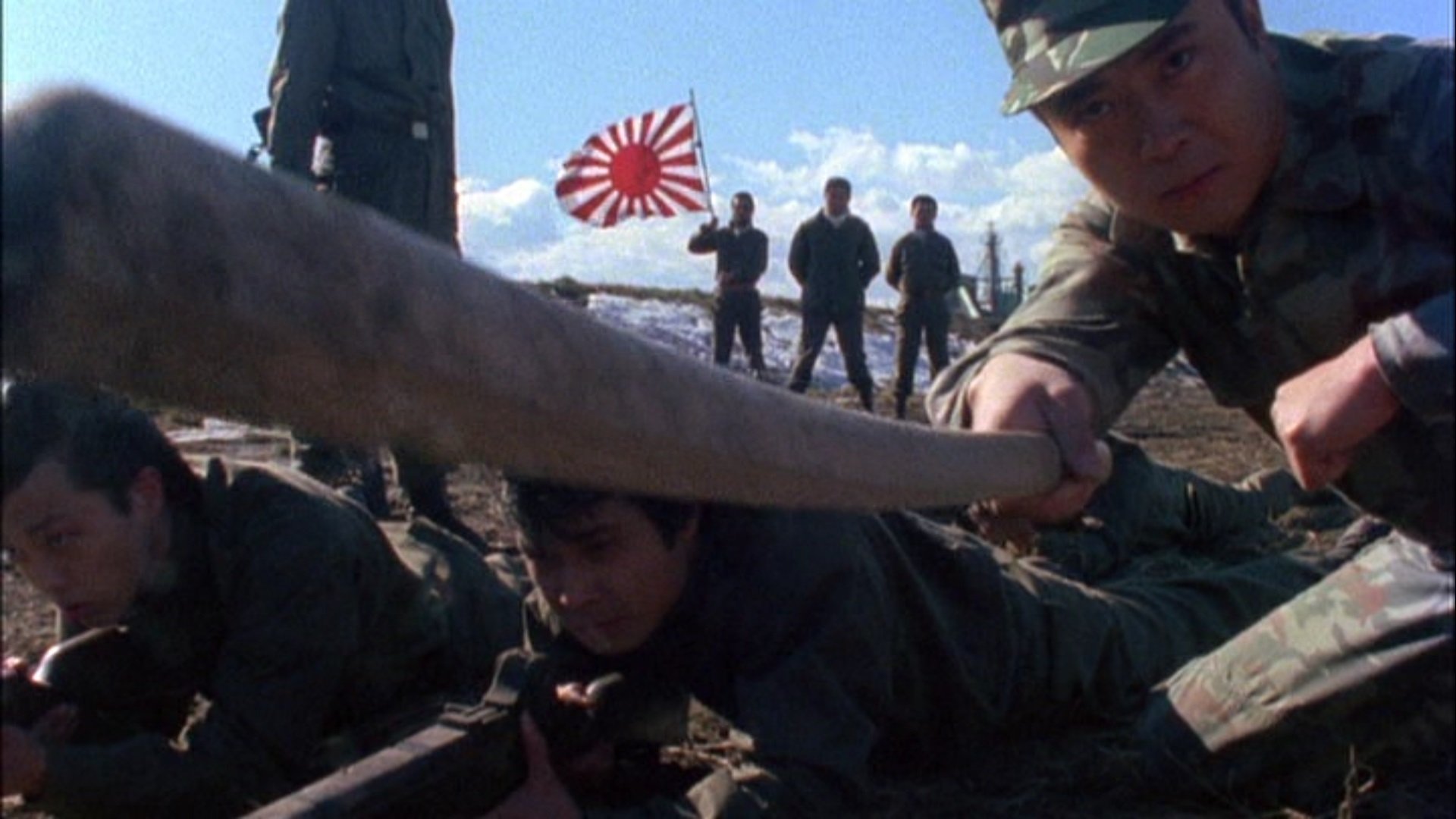
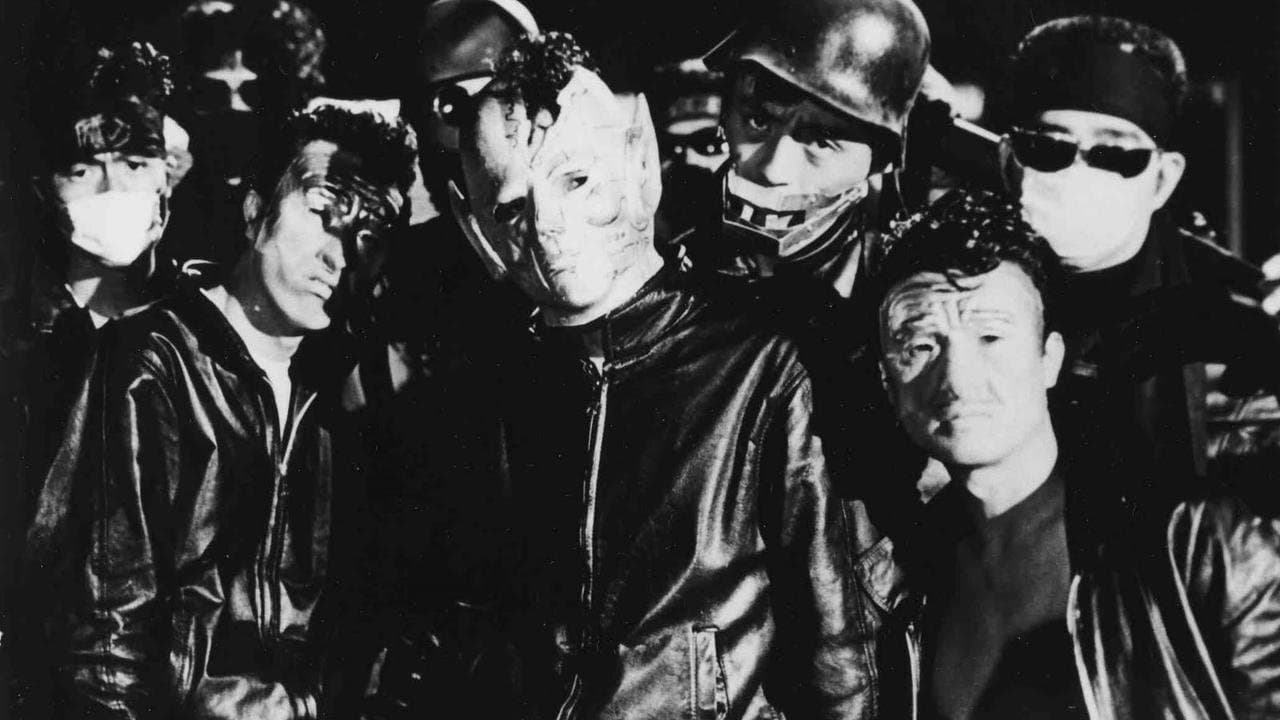
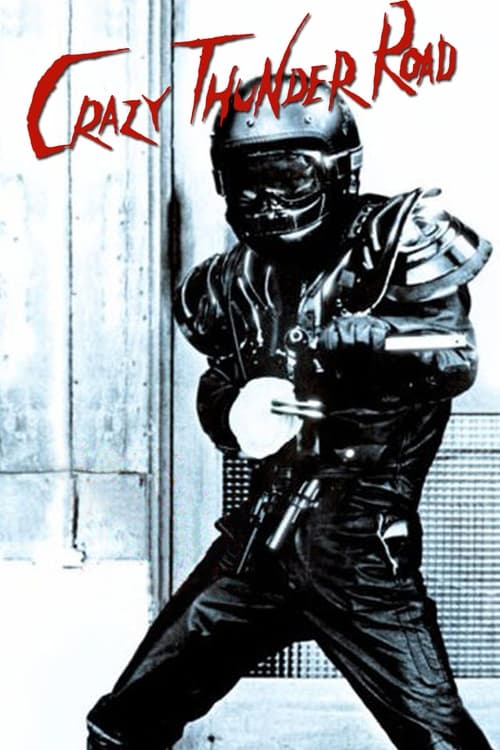
When Ken, the leader of the once-notorious biker gang of Tokyo, falls in love with a barmaid, he quickly loses his rebellious ideals. The rest of the gang feels betrayed, especially the reputedly troubled kid Jin who revolts against his former friend.
Directed by Gakuryu Ishii
japan
biker
tokyo, japan
motorcycle
motorcycle gang
brisk
defiant
earnest
excited

IMDB
N/A
Cast
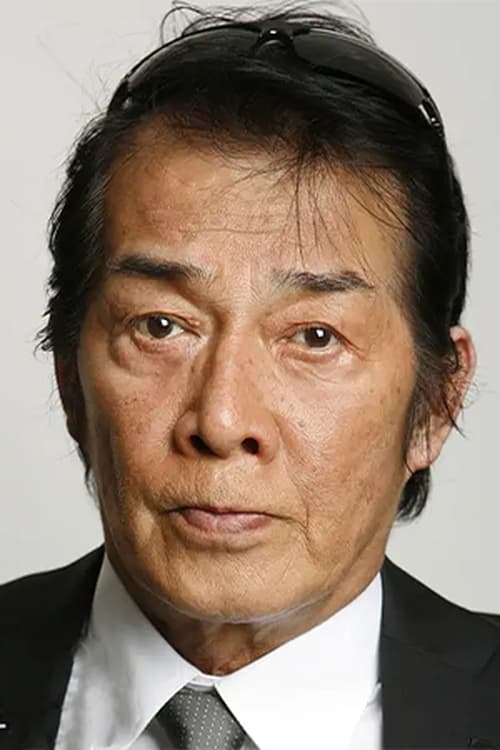
Koji Nanjo
Ken

Tatsuo Yamada
Jin
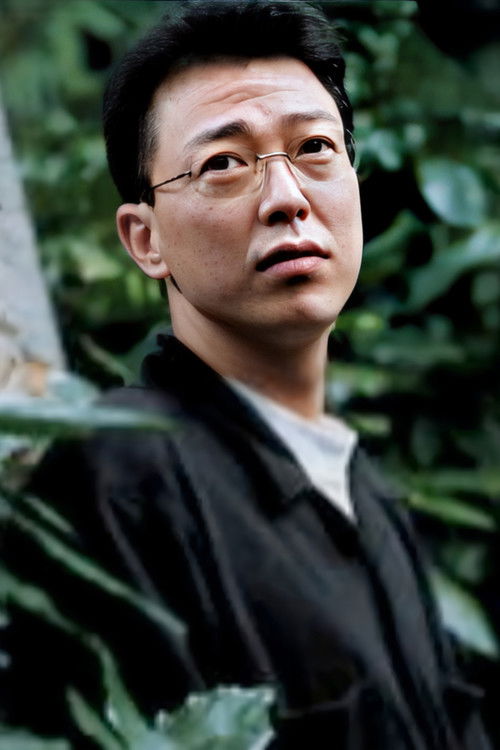
Yōsuke Nakajima
Eiji
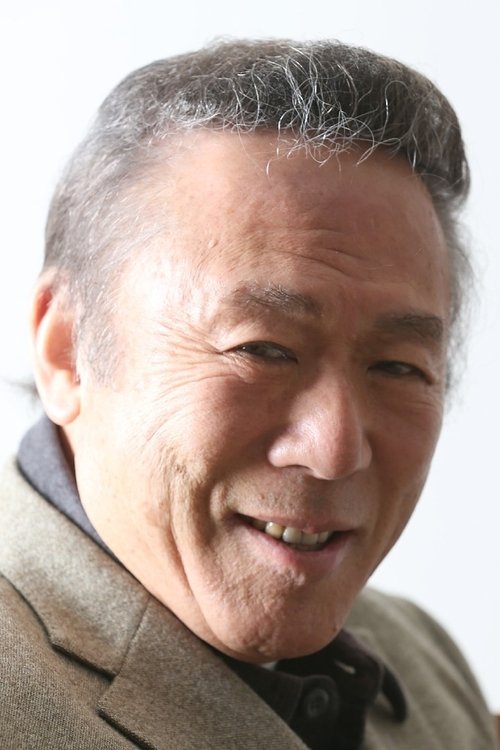
Nenji Kobayashi
Tsuyoshi
Crew
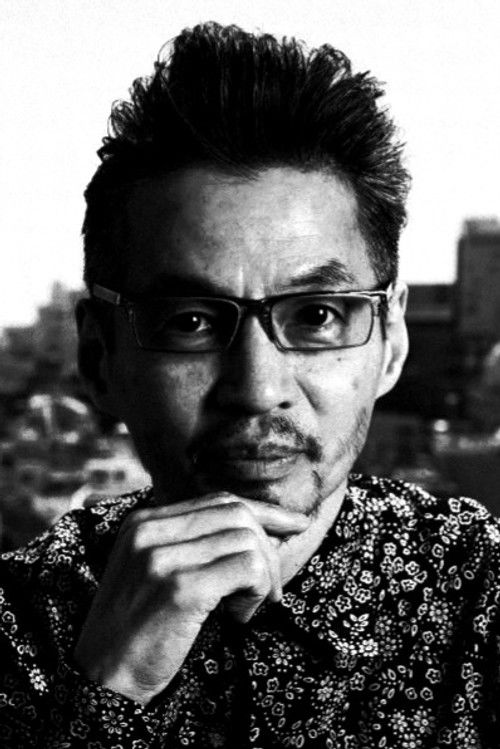
Gakuryu Ishii
Director
Gakuryu Ishii
Screenplay
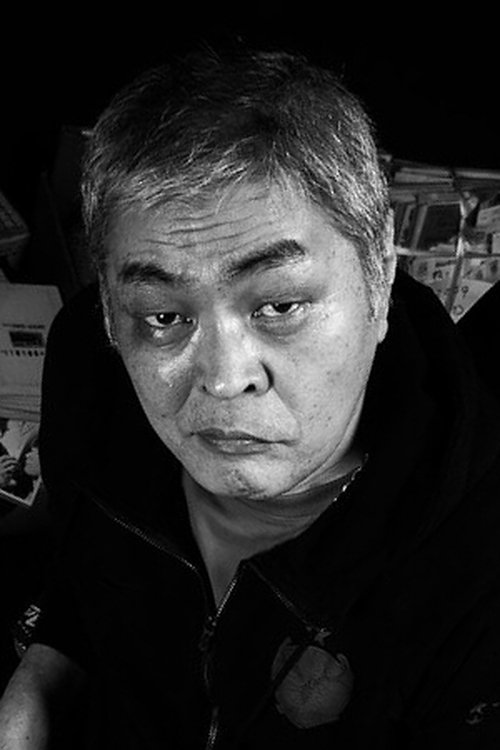
Yoshihiko Matsui
Editor
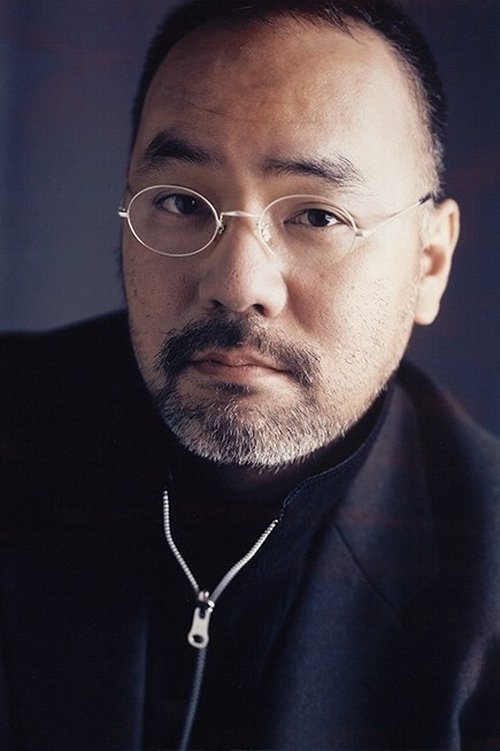
Akira Ogata
Assistant Director

Shigeru Izumiya
Music
Shigeru Izumiya
Production Design
Popular Reviews
23 reviews
niaknyai
TakashYO ! Le Facho 🗣️🗣️🗣️🔥🔥🔥🔥
TakashYO ! Le Facho 🗣️🗣️🗣️🔥🔥🔥🔥


Maldoror
8.0★ · 02/23/26
The world is mad, and so I am.
On nous présente un monde gangrené d'ultra violence avec des personnages en constante recherche de repère, d'identité à qui les seules réponses qu'on donne sont une privation de leurs libertés.
Le film marque notamment par ses musiques, il y en a constamment ce qui crée une sensation de saturation, vécu par les personnages, mais traduisant aussi leur rythme de vie effréné.
Personnellement j'ai surtout été touché par le personnage de Jin. Pas tant parce que je me suis identifié à lui, mais c'est surtout le fait qu'il soit totalement incompris et qu'en plus tout le monde pense le comprendre et savoir ce qu'il veut. Jin crèverai pour sa liberté, et il est le seul à pouvoir se l'offrir.
Également le film reste tout de même ambigu sur son approche du "bonheur". L'idéal serait d'avoir la vie de Ken au premier abord, ce qui reste vrai en soi. Sa vie est paisible, il baigne dans le bonheur limite (accentué par les scènes dans son appartement baigné dans la lumière), principalement car il a trouvé l'amour. Mais la réponse de Ishii n'est pas qu'il faut trouver l'amour. C'est principalement qu'il faut se trouver une raison de vivre tel que l'on vit. Trouver sa raison, qu'importe laquelle tant que celle-ci te correspond.
On nous présente un monde gangrené d'ultra violence avec des personnages en constante recherche de repère, d'identité à qui les seules réponses qu'on donne sont une privation de leurs libertés.
Le film marque notamment par ses musiques, il y en a constamment ce qui crée une sensation de saturation, vécu par les personnages, mais traduisant aussi leur rythme de vie effréné.
Personnellement j'ai surtout été touché par le personnage de Jin. Pas tant parce que je me suis identifié à lui, mais c'est surtout le fait qu'il soit totalement incompris et qu'en plus tout le monde pense le comprendre et savoir ce qu'il veut. Jin crèverai pour sa liberté, et il est le seul à pouvoir se l'offrir.
Également le film reste tout de même ambigu sur son approche du "bonheur". L'idéal serait d'avoir la vie de Ken au premier abord, ce qui reste vrai en soi. Sa vie est paisible, il baigne dans le bonheur limite (accentué par les scènes dans son appartement baigné dans la lumière), principalement car il a trouvé l'amour. Mais la réponse de Ishii n'est pas qu'il faut trouver l'amour. C'est principalement qu'il faut se trouver une raison de vivre tel que l'on vit. Trouver sa raison, qu'importe laquelle tant que celle-ci te correspond.
The world is mad, and so I am.
On nous présente un monde gangrené d'ultra violence avec des personnages en constante recherche de repère, d'identité à qui les seules réponses qu'on donne sont une privation de leurs libertés.
Le film marque notamment par ses musiques, il y en a constamment ce qui crée une sensation de saturation, vécu par les personnages, mais traduisant aussi leur rythme de vie effréné.
Personnellement j'ai surtout été touché par le personnage de Jin. Pas tant parce que je me suis identifié à lui, mais c'est surtout le fait qu'il soit totalement incompris et qu'en plus tout le monde pense le comprendre et savoir ce qu'il veut. Jin crèverai pour sa liberté, et il est le seul à pouvoir se l'offrir.
Également le film reste tout de même ambigu sur son approche du "bonheur". L'idéal serait d'avoir la vie de Ken au premier abord, ce qui reste vrai en soi. Sa vie est paisible, il baigne dans le bonheur limite (accentué par les scènes dans son appartement baigné dans la lumière), principalement car il a trouvé l'amour. Mais la réponse de Ishii n'est pas qu'il faut trouver l'amour. C'est principalement qu'il faut se trouver une raison de vivre tel que l'on vit. Trouver sa raison, qu'importe laquelle tant que celle-ci te correspond.
On nous présente un monde gangrené d'ultra violence avec des personnages en constante recherche de repère, d'identité à qui les seules réponses qu'on donne sont une privation de leurs libertés.
Le film marque notamment par ses musiques, il y en a constamment ce qui crée une sensation de saturation, vécu par les personnages, mais traduisant aussi leur rythme de vie effréné.
Personnellement j'ai surtout été touché par le personnage de Jin. Pas tant parce que je me suis identifié à lui, mais c'est surtout le fait qu'il soit totalement incompris et qu'en plus tout le monde pense le comprendre et savoir ce qu'il veut. Jin crèverai pour sa liberté, et il est le seul à pouvoir se l'offrir.
Également le film reste tout de même ambigu sur son approche du "bonheur". L'idéal serait d'avoir la vie de Ken au premier abord, ce qui reste vrai en soi. Sa vie est paisible, il baigne dans le bonheur limite (accentué par les scènes dans son appartement baigné dans la lumière), principalement car il a trouvé l'amour. Mais la réponse de Ishii n'est pas qu'il faut trouver l'amour. C'est principalement qu'il faut se trouver une raison de vivre tel que l'on vit. Trouver sa raison, qu'importe laquelle tant que celle-ci te correspond.
bisho
7.0★ · 10/24/25
Still pretty fun and more enjoyable the second time around.
Still pretty fun and more enjoyable the second time around.
Medhansh Kaushik
10.0★ · 06/16/25
Director- Ishii Gakuryu.This is the fourth film I have seen of his, the fifth if we count his short film Panic in High School.I decided to watch this film because I had not seen many of his films from the Punk era, and thus was under the misconception that he made more transcendental and spiritual films.This film is spiritual, too, but the spirit is unbridled violence coupled with voyeurism.From what I have seen of this movement, I am under the impression that this movement is the successor to the Japanese New Wave film movement due to both of them's focus on youth, especially disillusioned youth.What I found astounding about this film is that this is Ishii's graduation film. He tried his hardest to stay there his whole life as he wanted to keep on using the school's filmmaking equipment, but they finally managed to kick him out. He was quite inexperienced at the time, credit going to Nikkatsu's antics during the shooting of the feature-length version of Panic in High School. They could kick him out of the film, but his vision persevered in the form of filmmaking technique. This work appears much more raw since Ishii didn't have a studio's backing, and also because he still had a lot of punk to push out of his system.He also couldn't get many actors, so he worked with those who volunteered among several biker gang members. It was quite tough, though, as many times the members got caught by the police before they appeared in the film. This is a testament to his perseverance that even with all this, he still managed to make such a strong work. The runtime of the film is quite short, with only an hour and thirty minutes. This leads it to be filled to the brim with themes to the point it is overflowing. This makes the use of runtime economical, but makes it a bit tougher to follow with all the different events taking place.The major themes I could see are-1) The protagonist is dealing with a sense of betrayal after finding out that the leader of his biker gang has decided to disband it, having found a lover. He has to deal with the rival gangs' onslaughts, too, to ensure his gang's survival. The rival gangs are circling the degrading state of the gang as vultures, waiting to pounce when they are at their weakest or least expect it.2) We can see that all the gangs are of young kids; this might be because only they have the time and energy for such supposedly meaningless conflicts. The kids are on a destructive path, which I think is due to them being disillusioned with Japanese society and finding no merit in being mere cogs in the not-so-well-oiled machine called the workforce of Japan.3) The film also provides a commentary on far-right military ideologists who prey on the youth to increase their numbers and maintain their stronghold.Showing us that one of the army personnel is assaulting a kid from the gang, but he is too brainwashed to see the truth, shows us how deeply rooted their ability to make one submit without question is.The camera work is fantastic, especially the shaky cam during brawl scenes. In some scenes, the camera becomes a character in its own right. Ishii puts the camera quite close to the characters, and hence, the viewers can see everything from up close. This makes us bystanders in many scenes.The film is a phenomenal work and is the inspiration behind Akira, particularly in its depiction of biker gangs and its overall punk aesthetic.The film is also the inspiration behind the Cyberpunk film genre. Tsukamoto Shinya hailed it as a key influence for Tetsuo the Iron Man. The films share stylistic elements like rapid editing, jump cuts, and undercranking. The final fight scene, where the protagonist is fighting against the army and rival biker gangs alone, is phenomenal and absolutely hilarious. It reminded me quite of Pigs and Battleships by Imamura Shohei.The buildup to that fight also shows us a child selling drugs, showing us how the next generation has to resort to whatever means necessary to survive. In a later scene, he is shown to be using the drugs too, showing us how the next generation is on a destructive path towards imminent doom. It also shows us that they are dealing with a difficult era to live in, and hence have resorted to numbing themselves.The ending scene with the protagonist close to dying and riding a bike explains the theme of the film quite well- to take the reins of one's life into one's own hands. He doesn't want to be controlled by external forces. The only time he truly feels free is when he is driving, specifically at high speeds.Overall, this is one awesome film that makes me look forward to watching another Ishii film soon. Maybe I will watch a Tsukamoto Shinya next if not Electric Dragon 80000 volts.
Director- Ishii Gakuryu.This is the fourth film I have seen of his, the fifth if we count his short film Panic in High School.I decided to watch this film because I had not seen many of his films from the Punk era, and thus was under the misconception that he made more transcendental and spiritual films.This film is spiritual, too, but the spirit is unbridled violence coupled with voyeurism.From what I have seen of this movement, I am under the impression that this movement is the successor to the Japanese New Wave film movement due to both of them's focus on youth, especially disillusioned youth.What I found astounding about this film is that this is Ishii's graduation film. He tried his hardest to stay there his whole life as he wanted to keep on using the school's filmmaking equipment, but they finally managed to kick him out. He was quite inexperienced at the time, credit going to Nikkatsu's antics during the shooting of the feature-length version of Panic in High School. They could kick him out of the film, but his vision persevered in the form of filmmaking technique. This work appears much more raw since Ishii didn't have a studio's backing, and also because he still had a lot of punk to push out of his system.He also couldn't get many actors, so he worked with those who volunteered among several biker gang members. It was quite tough, though, as many times the members got caught by the police before they appeared in the film. This is a testament to his perseverance that even with all this, he still managed to make such a strong work. The runtime of the film is quite short, with only an hour and thirty minutes. This leads it to be filled to the brim with themes to the point it is overflowing. This makes the use of runtime economical, but makes it a bit tougher to follow with all the different events taking place.The major themes I could see are-1) The protagonist is dealing with a sense of betrayal after finding out that the leader of his biker gang has decided to disband it, having found a lover. He has to deal with the rival gangs' onslaughts, too, to ensure his gang's survival. The rival gangs are circling the degrading state of the gang as vultures, waiting to pounce when they are at their weakest or least expect it.2) We can see that all the gangs are of young kids; this might be because only they have the time and energy for such supposedly meaningless conflicts. The kids are on a destructive path, which I think is due to them being disillusioned with Japanese society and finding no merit in being mere cogs in the not-so-well-oiled machine called the workforce of Japan.3) The film also provides a commentary on far-right military ideologists who prey on the youth to increase their numbers and maintain their stronghold.Showing us that one of the army personnel is assaulting a kid from the gang, but he is too brainwashed to see the truth, shows us how deeply rooted their ability to make one submit without question is.The camera work is fantastic, especially the shaky cam during brawl scenes. In some scenes, the camera becomes a character in its own right. Ishii puts the camera quite close to the characters, and hence, the viewers can see everything from up close. This makes us bystanders in many scenes.The film is a phenomenal work and is the inspiration behind Akira, particularly in its depiction of biker gangs and its overall punk aesthetic.The film is also the inspiration behind the Cyberpunk film genre. Tsukamoto Shinya hailed it as a key influence for Tetsuo the Iron Man. The films share stylistic elements like rapid editing, jump cuts, and undercranking. The final fight scene, where the protagonist is fighting against the army and rival biker gangs alone, is phenomenal and absolutely hilarious. It reminded me quite of Pigs and Battleships by Imamura Shohei.The buildup to that fight also shows us a child selling drugs, showing us how the next generation has to resort to whatever means necessary to survive. In a later scene, he is shown to be using the drugs too, showing us how the next generation is on a destructive path towards imminent doom. It also shows us that they are dealing with a difficult era to live in, and hence have resorted to numbing themselves.The ending scene with the protagonist close to dying and riding a bike explains the theme of the film quite well- to take the reins of one's life into one's own hands. He doesn't want to be controlled by external forces. The only time he truly feels free is when he is driving, specifically at high speeds.Overall, this is one awesome film that makes me look forward to watching another Ishii film soon. Maybe I will watch a Tsukamoto Shinya next if not Electric Dragon 80000 volts.
Medhansh
9.9★ · 06/16/25
Director- Ishii Gakuryu.This is the fourth film I have seen of his, the fifth if we count his short film Panic in High School.I decided to watch this film because I had not seen many of his films from the Punk era, and thus was under the misconception that he made more transcendental and spiritual films.This film is spiritual, too, but the spirit is unbridled violence coupled with voyeurism.From what I have seen of this movement, I am under the impression that this movement is the successor to the Japanese New Wave film movement due to both of them's focus on youth, especially disillusioned youth.What I found astounding about this film is that this is Ishii's graduation film. He tried his hardest to stay there his whole life as he wanted to keep on using the school's filmmaking equipment, but they finally managed to kick him out. He was quite inexperienced at the time, credit going to Nikkatsu's antics during the shooting of the feature-length version of Panic in High School. They could kick him out of the film, but his vision persevered in the form of filmmaking technique. This work appears much more raw since Ishii didn't have a studio's backing, and also because he still had a lot of punk to push out of his system.He also couldn't get many actors, so he worked with those who volunteered among several biker gang members. It was quite tough, though, as many times the members got caught by the police before they appeared in the film. This is a testament to his perseverance that even with all this, he still managed to make such a strong work. The runtime of the film is quite short, with only an hour and thirty minutes. This leads it to be filled to the brim with themes to the point it is overflowing. This makes the use of runtime economical, but makes it a bit tougher to follow with all the different events taking place.The major themes I could see are-1) The protagonist is dealing with a sense of betrayal after finding out that the leader of his biker gang has decided to disband it, having found a lover. He has to deal with the rival gangs' onslaughts, too, to ensure his gang's survival. The rival gangs are circling the degrading state of the gang as vultures, waiting to pounce when they are at their weakest or least expect it.2) We can see that all the gangs are of young kids; this might be because only they have the time and energy for such supposedly meaningless conflicts. The kids are on a destructive path, which I think is due to them being disillusioned with Japanese society and finding no merit in being mere cogs in the not-so-well-oiled machine called the workforce of Japan.3) The film also provides a commentary on far-right military ideologists who prey on the youth to increase their numbers and maintain their stronghold.Showing us that one of the army personnel is assaulting a kid from the gang, but he is too brainwashed to see the truth, shows us how deeply rooted their ability to make one submit without question is.The camera work is fantastic, especially the shaky cam during brawl scenes. In some scenes, the camera becomes a character in its own right. Ishii puts the camera quite close to the characters, and hence, the viewers can see everything from up close. This makes us bystanders in many scenes.The film is a phenomenal work and is the inspiration behind Akira, particularly in its depiction of biker gangs and its overall punk aesthetic.The film is also the inspiration behind the Cyberpunk film genre. Tsukamoto Shinya hailed it as a key influence for Tetsuo the Iron Man. The films share stylistic elements like rapid editing, jump cuts, and undercranking. The final fight scene, where the protagonist is fighting against the army and rival biker gangs alone, is phenomenal and absolutely hilarious. It reminded me quite of Pigs and Battleships by Imamura Shohei.The buildup to that fight also shows us a child selling drugs, showing us how the next generation has to resort to whatever means necessary to survive. In a later scene, he is shown to be using the drugs too, showing us how the next generation is on a destructive path towards imminent doom. It also shows us that they are dealing with a difficult era to live in, and hence have resorted to numbing themselves.The ending scene with the protagonist close to dying and riding a bike explains the theme of the film quite well- to take the reins of one's life into one's own hands. He doesn't want to be controlled by external forces. The only time he truly feels free is when he is driving, specifically at high speeds.Overall, this is one awesome film that makes me look forward to watching another Ishii film soon. Maybe I will watch a Tsukamoto Shinya next if not Electric Dragon 80000 volts.
Director- Ishii Gakuryu.This is the fourth film I have seen of his, the fifth if we count his short film Panic in High School.I decided to watch this film because I had not seen many of his films from the Punk era, and thus was under the misconception that he made more transcendental and spiritual films.This film is spiritual, too, but the spirit is unbridled violence coupled with voyeurism.From what I have seen of this movement, I am under the impression that this movement is the successor to the Japanese New Wave film movement due to both of them's focus on youth, especially disillusioned youth.What I found astounding about this film is that this is Ishii's graduation film. He tried his hardest to stay there his whole life as he wanted to keep on using the school's filmmaking equipment, but they finally managed to kick him out. He was quite inexperienced at the time, credit going to Nikkatsu's antics during the shooting of the feature-length version of Panic in High School. They could kick him out of the film, but his vision persevered in the form of filmmaking technique. This work appears much more raw since Ishii didn't have a studio's backing, and also because he still had a lot of punk to push out of his system.He also couldn't get many actors, so he worked with those who volunteered among several biker gang members. It was quite tough, though, as many times the members got caught by the police before they appeared in the film. This is a testament to his perseverance that even with all this, he still managed to make such a strong work. The runtime of the film is quite short, with only an hour and thirty minutes. This leads it to be filled to the brim with themes to the point it is overflowing. This makes the use of runtime economical, but makes it a bit tougher to follow with all the different events taking place.The major themes I could see are-1) The protagonist is dealing with a sense of betrayal after finding out that the leader of his biker gang has decided to disband it, having found a lover. He has to deal with the rival gangs' onslaughts, too, to ensure his gang's survival. The rival gangs are circling the degrading state of the gang as vultures, waiting to pounce when they are at their weakest or least expect it.2) We can see that all the gangs are of young kids; this might be because only they have the time and energy for such supposedly meaningless conflicts. The kids are on a destructive path, which I think is due to them being disillusioned with Japanese society and finding no merit in being mere cogs in the not-so-well-oiled machine called the workforce of Japan.3) The film also provides a commentary on far-right military ideologists who prey on the youth to increase their numbers and maintain their stronghold.Showing us that one of the army personnel is assaulting a kid from the gang, but he is too brainwashed to see the truth, shows us how deeply rooted their ability to make one submit without question is.The camera work is fantastic, especially the shaky cam during brawl scenes. In some scenes, the camera becomes a character in its own right. Ishii puts the camera quite close to the characters, and hence, the viewers can see everything from up close. This makes us bystanders in many scenes.The film is a phenomenal work and is the inspiration behind Akira, particularly in its depiction of biker gangs and its overall punk aesthetic.The film is also the inspiration behind the Cyberpunk film genre. Tsukamoto Shinya hailed it as a key influence for Tetsuo the Iron Man. The films share stylistic elements like rapid editing, jump cuts, and undercranking. The final fight scene, where the protagonist is fighting against the army and rival biker gangs alone, is phenomenal and absolutely hilarious. It reminded me quite of Pigs and Battleships by Imamura Shohei.The buildup to that fight also shows us a child selling drugs, showing us how the next generation has to resort to whatever means necessary to survive. In a later scene, he is shown to be using the drugs too, showing us how the next generation is on a destructive path towards imminent doom. It also shows us that they are dealing with a difficult era to live in, and hence have resorted to numbing themselves.The ending scene with the protagonist close to dying and riding a bike explains the theme of the film quite well- to take the reins of one's life into one's own hands. He doesn't want to be controlled by external forces. The only time he truly feels free is when he is driving, specifically at high speeds.Overall, this is one awesome film that makes me look forward to watching another Ishii film soon. Maybe I will watch a Tsukamoto Shinya next if not Electric Dragon 80000 volts.