The “Have a baby daughter and watch Robert Zemeckis’ Here” challenge
Forrest Gump is a potent Rorschach test of a film. Tell me what you think of it, and from that monologue I’ll come to understand a lot about you and your artistic tastes. It famously defeated Pulp Fiction and the ascendent Tarantino at that year’s Academy Awards to much retrospective chagrin. Since then, Tarantino stock has soared and Zemeckis stock has struggled.
Some viewers are effortlessly swept away by Forrest Gump’s wistful and nostalgic themes, its epic sprawl, its cheeky remastering of Americana. Others find the naked sentimentality to be like staring into the sun, painful and cloying, and its politics consummately Boomer-brained. Many too find themselves somewhere in the middle, recognizing both extremes as well as analyzing it as a work of interesting craftsmanship.
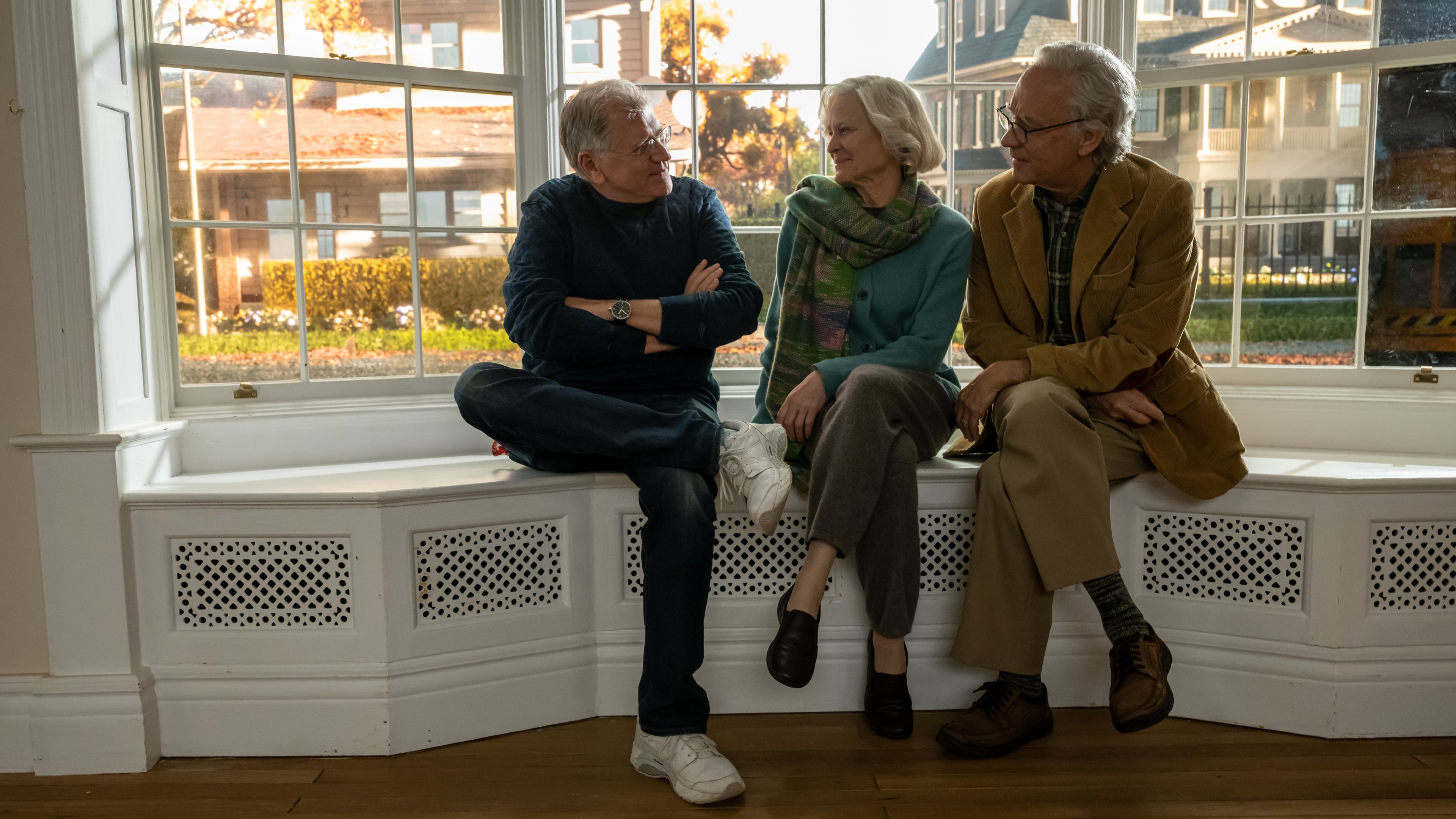
Forrest Gump is undoubtedly a forebear to Zemeckis’ latest Here - most of the principal cast and crew have returned, not merely its stars but also its screenwriter and cinematographer - but the other key forebear in the lineage of Here is Richard Linklater’s Boyhood, as both are experimental portraits of the passage of time.
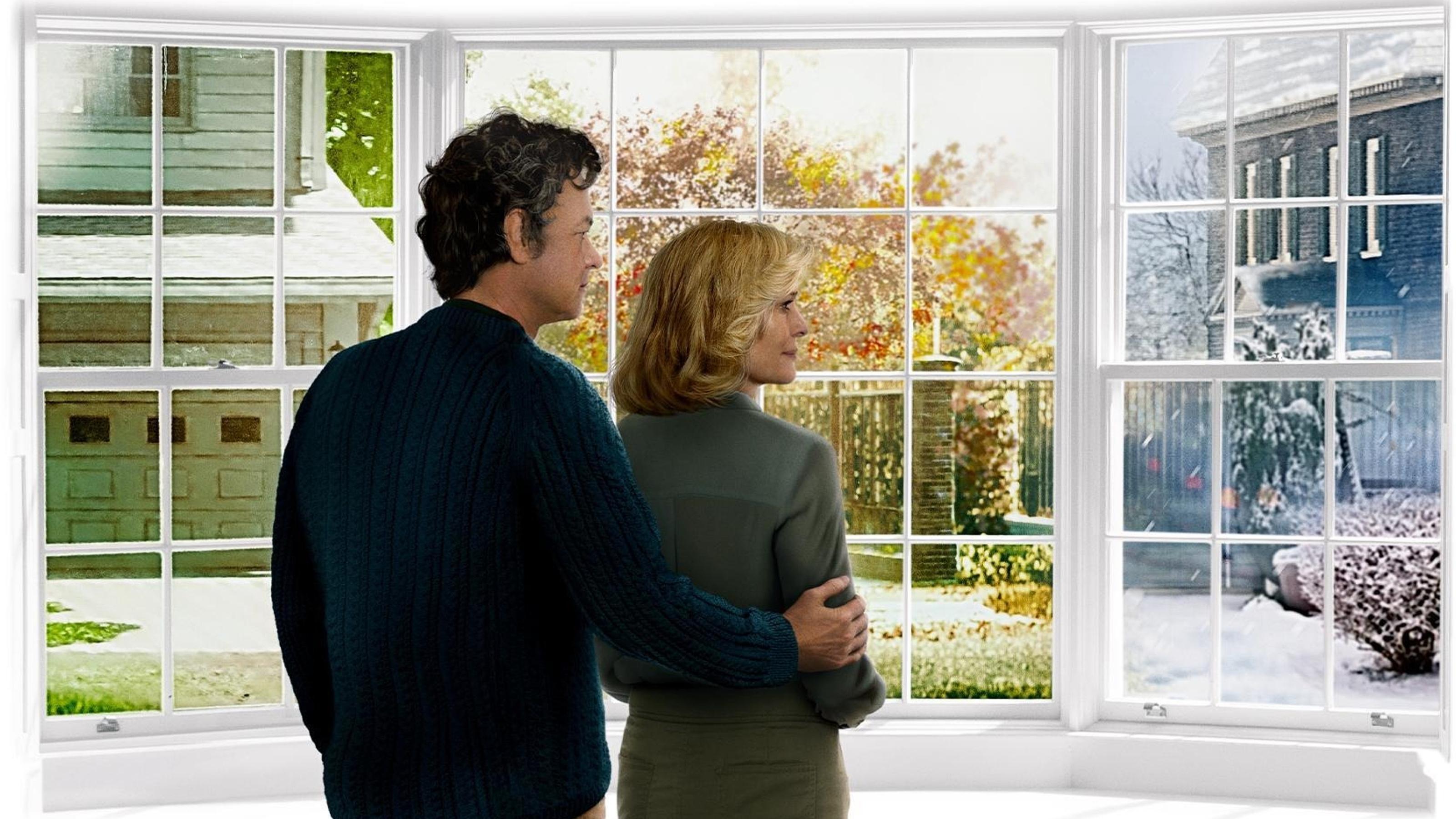
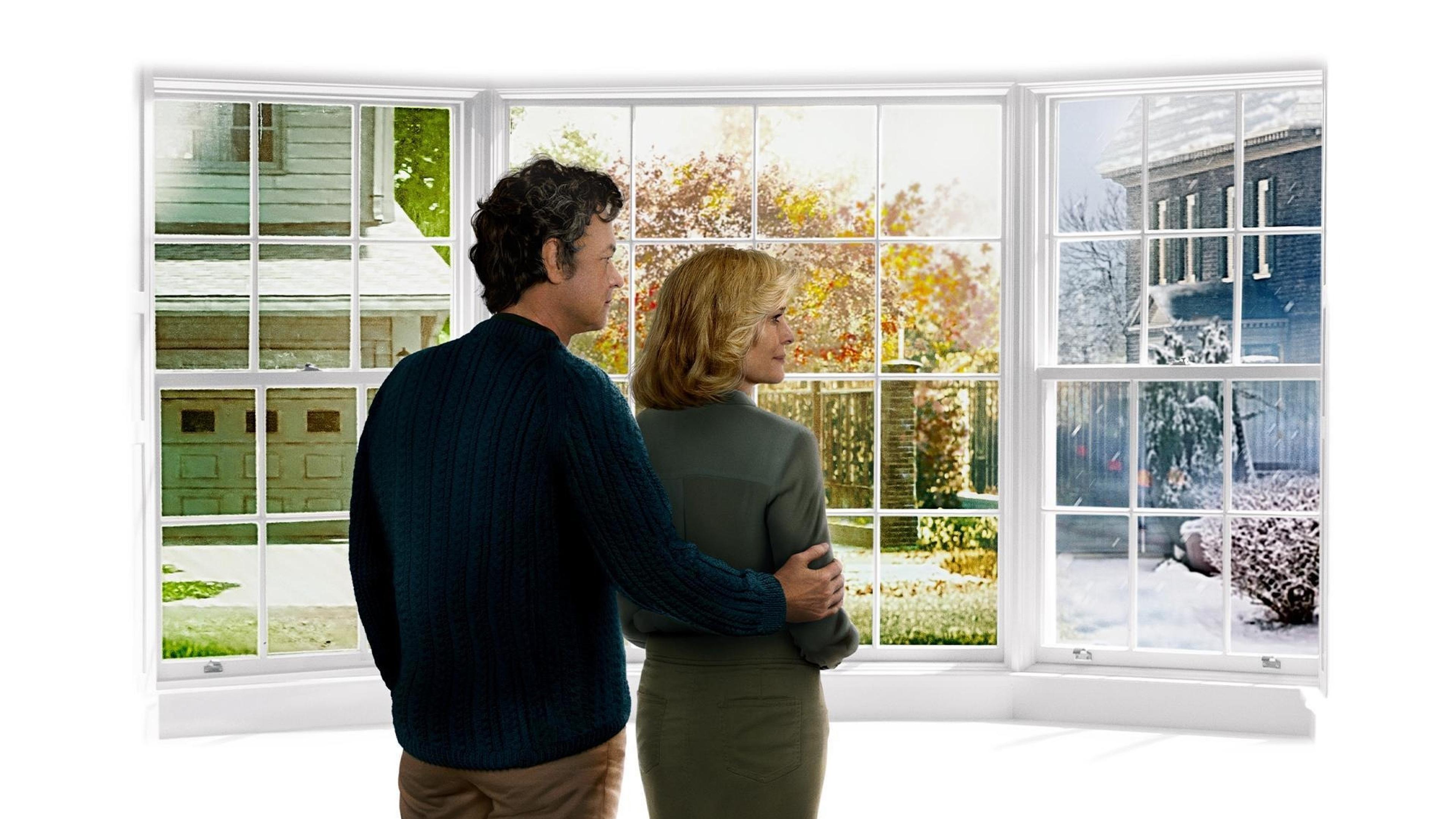
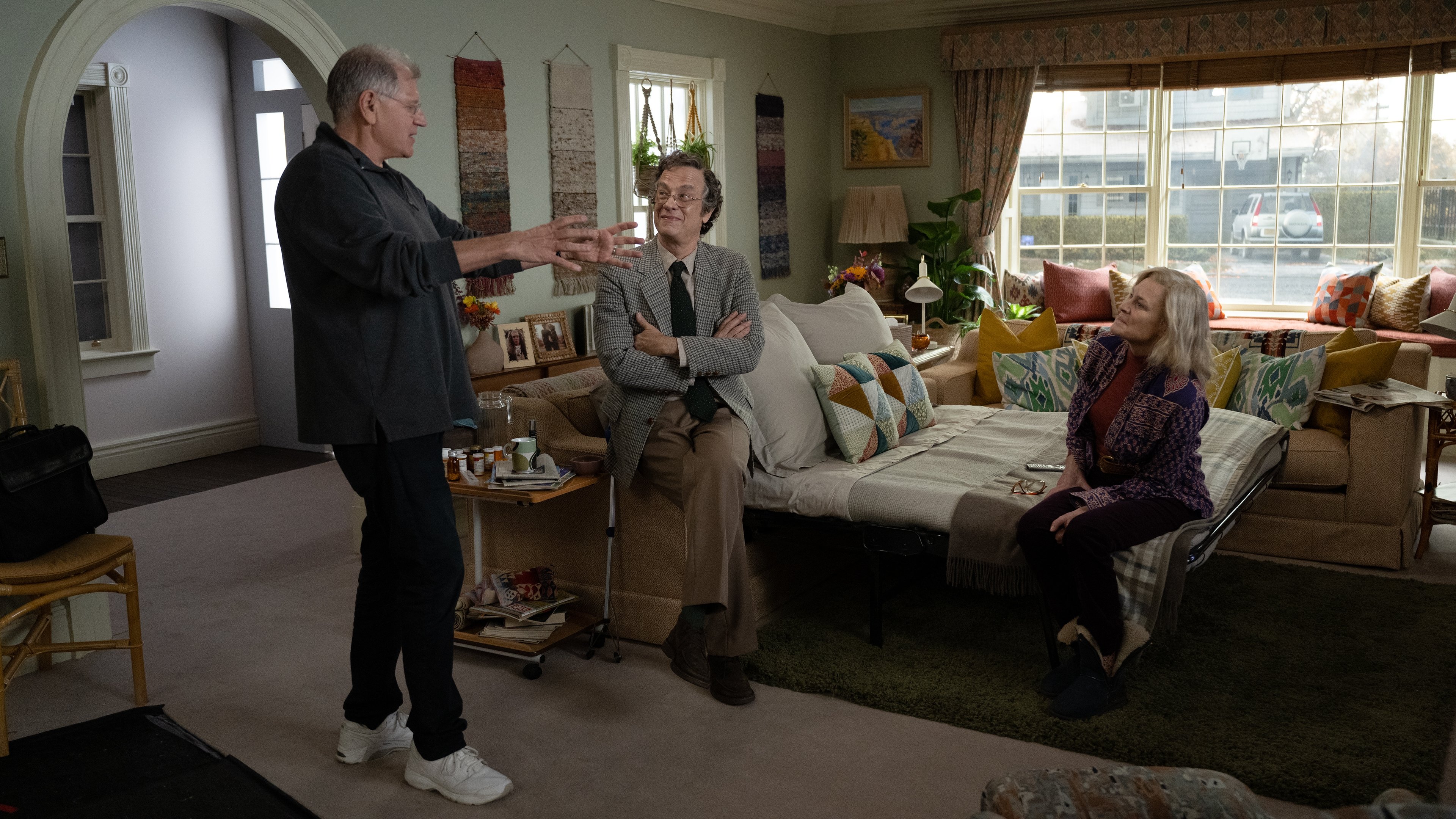
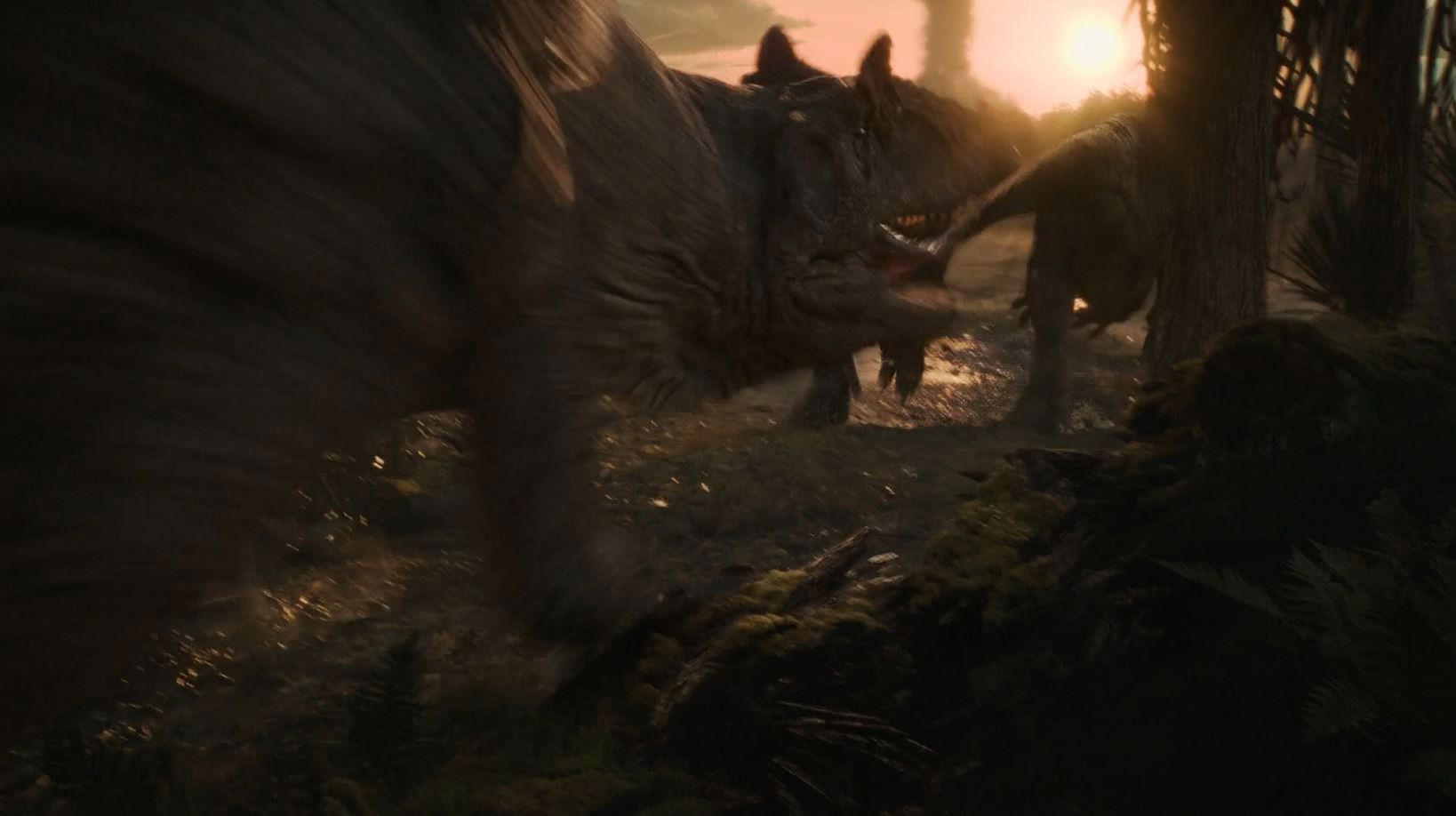
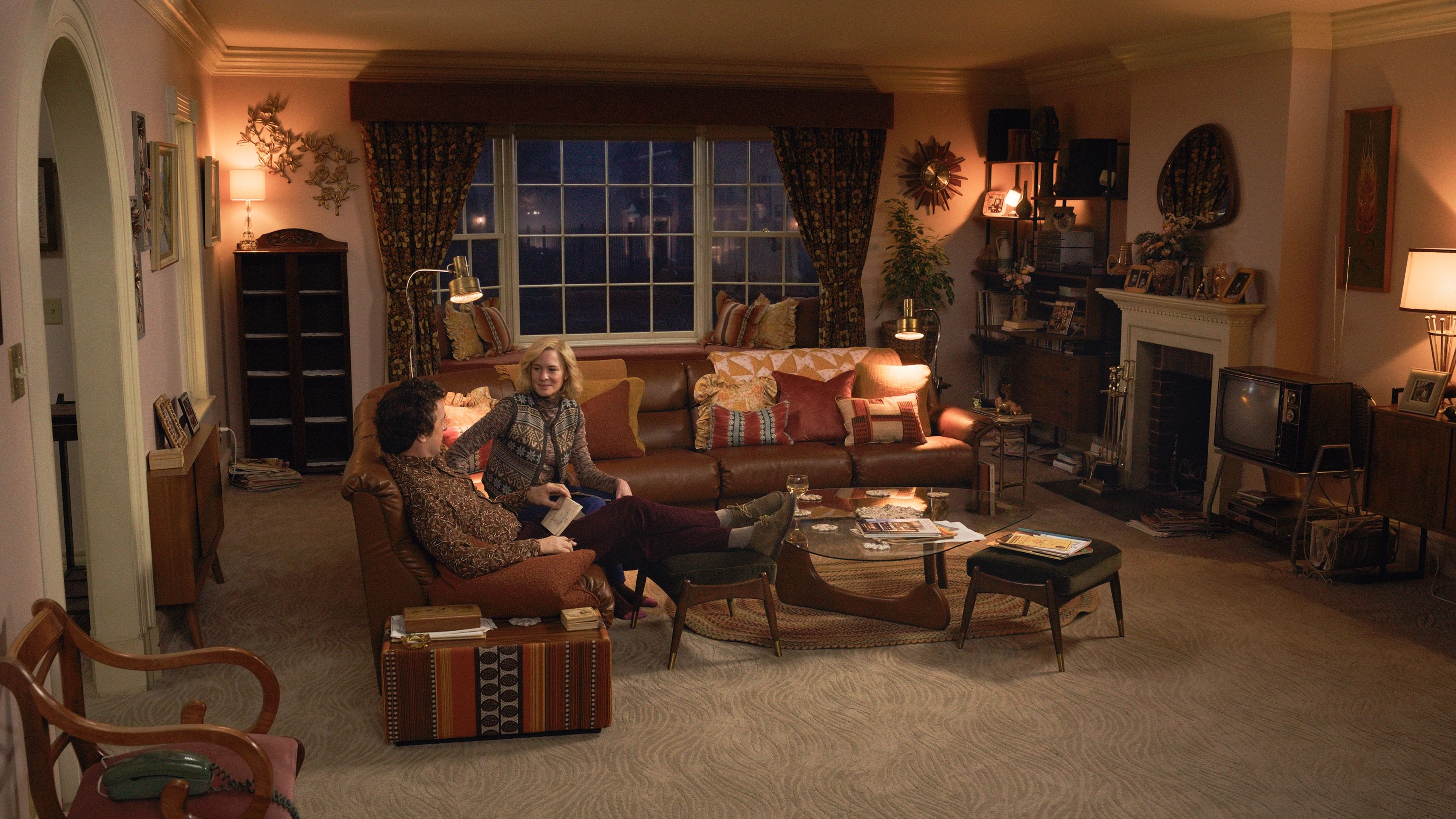
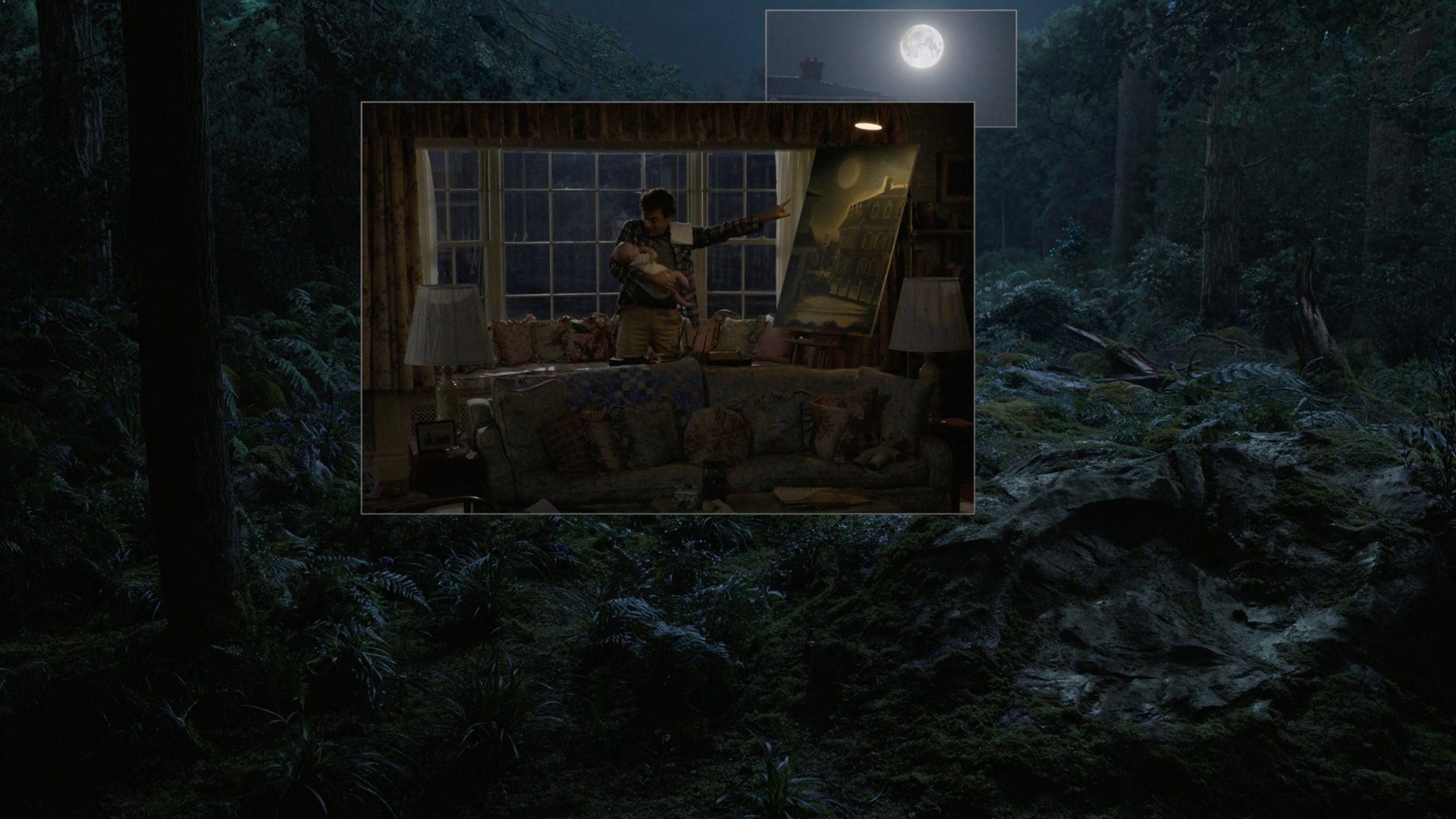
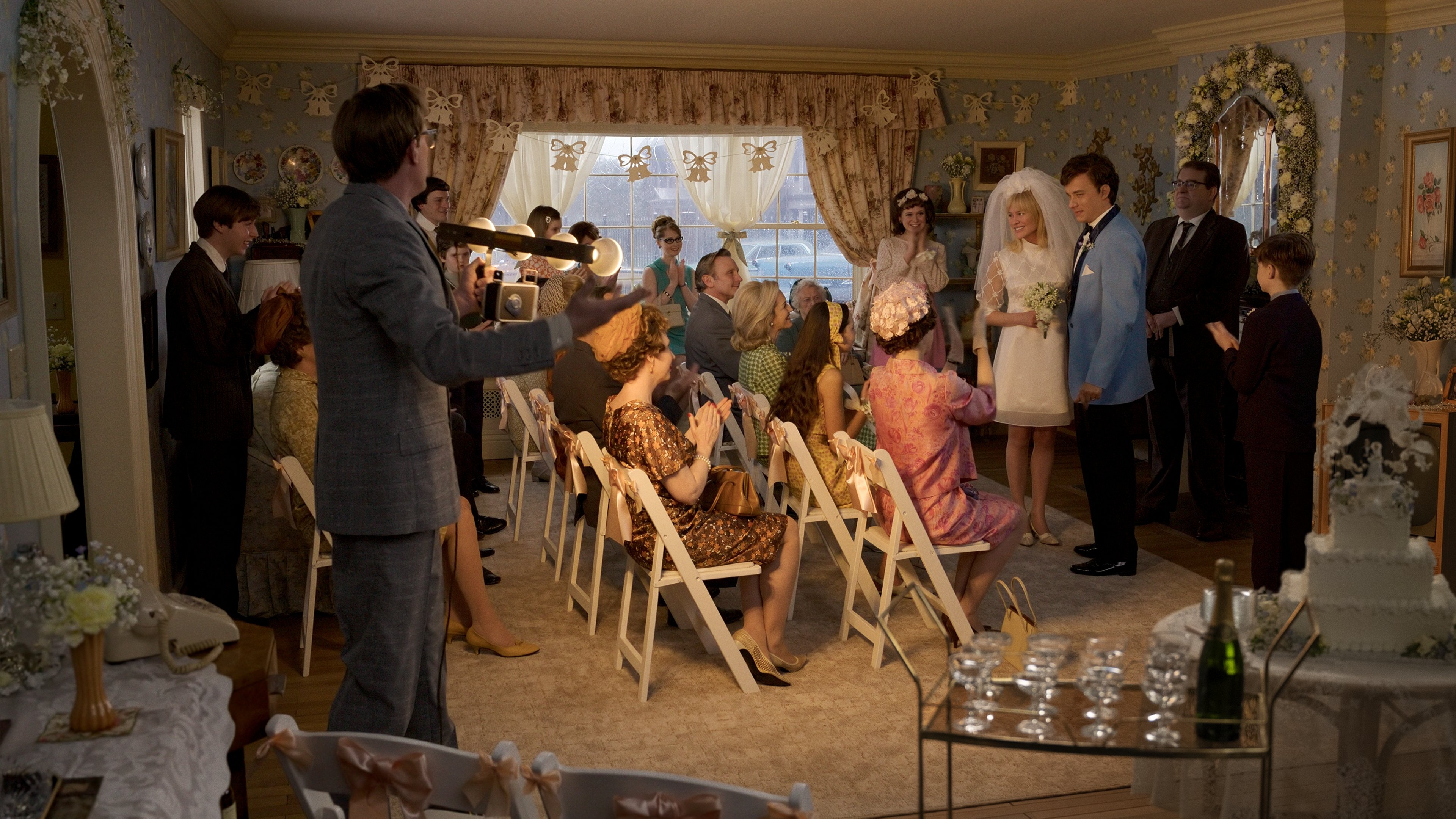
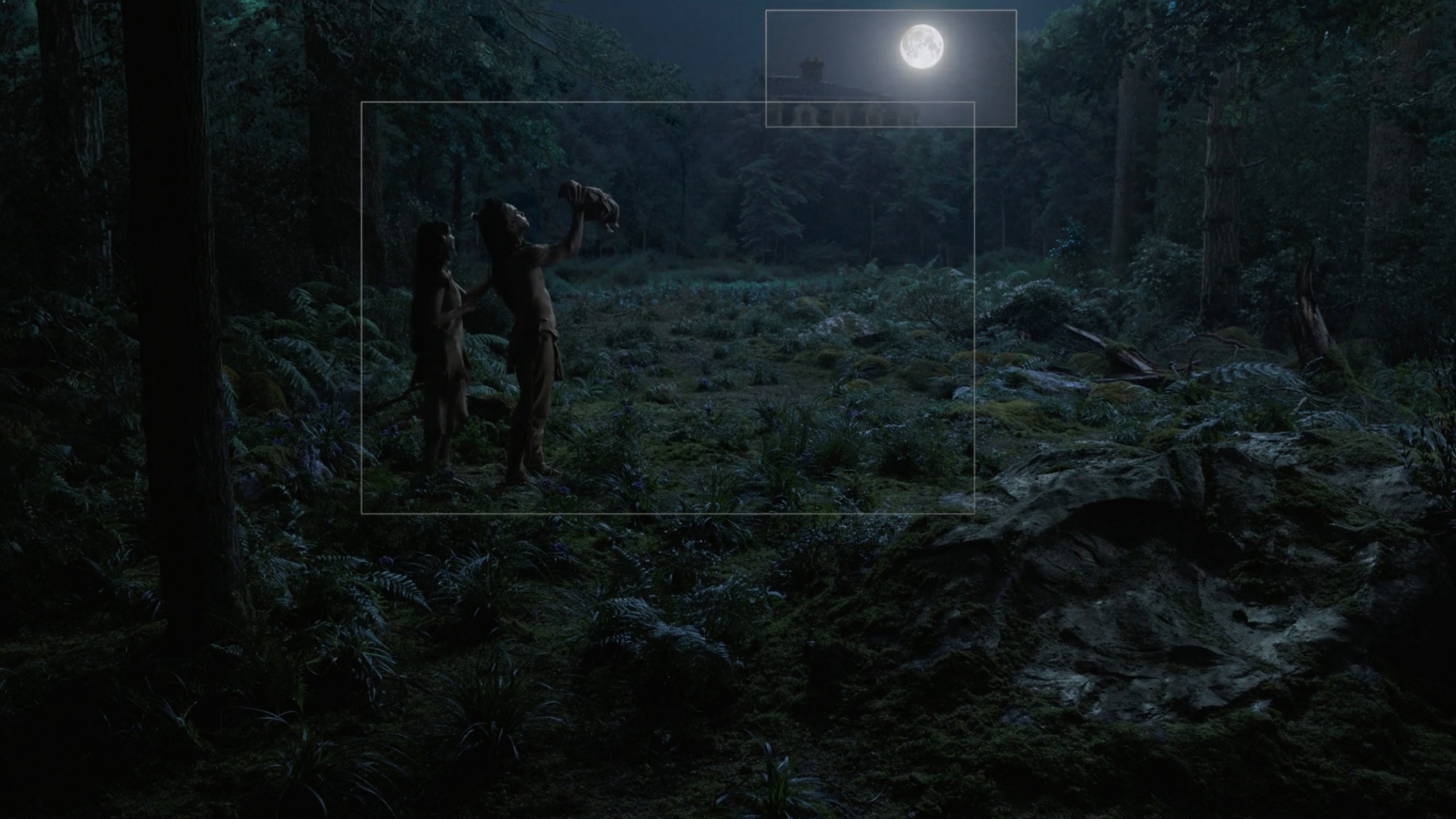
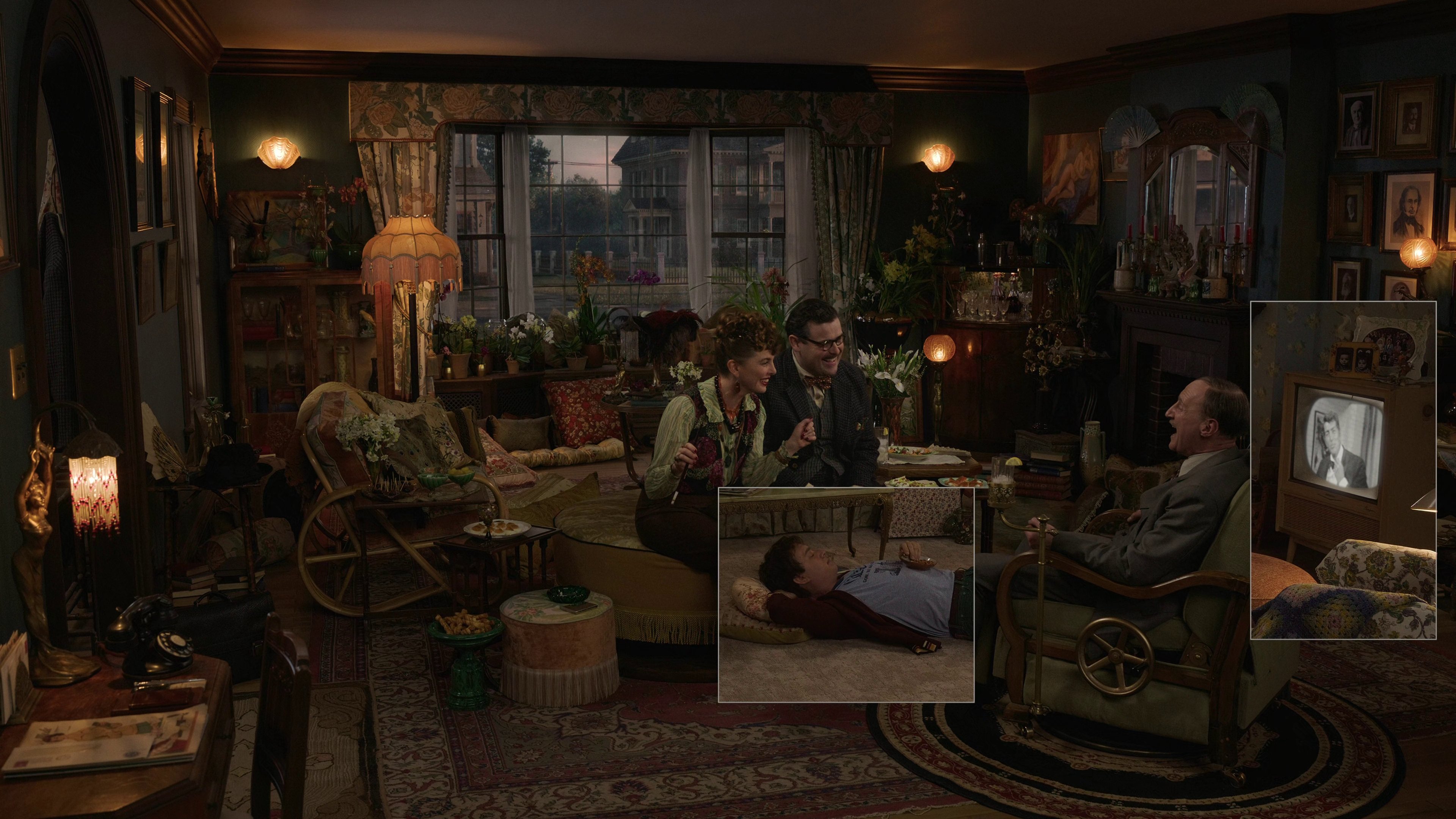
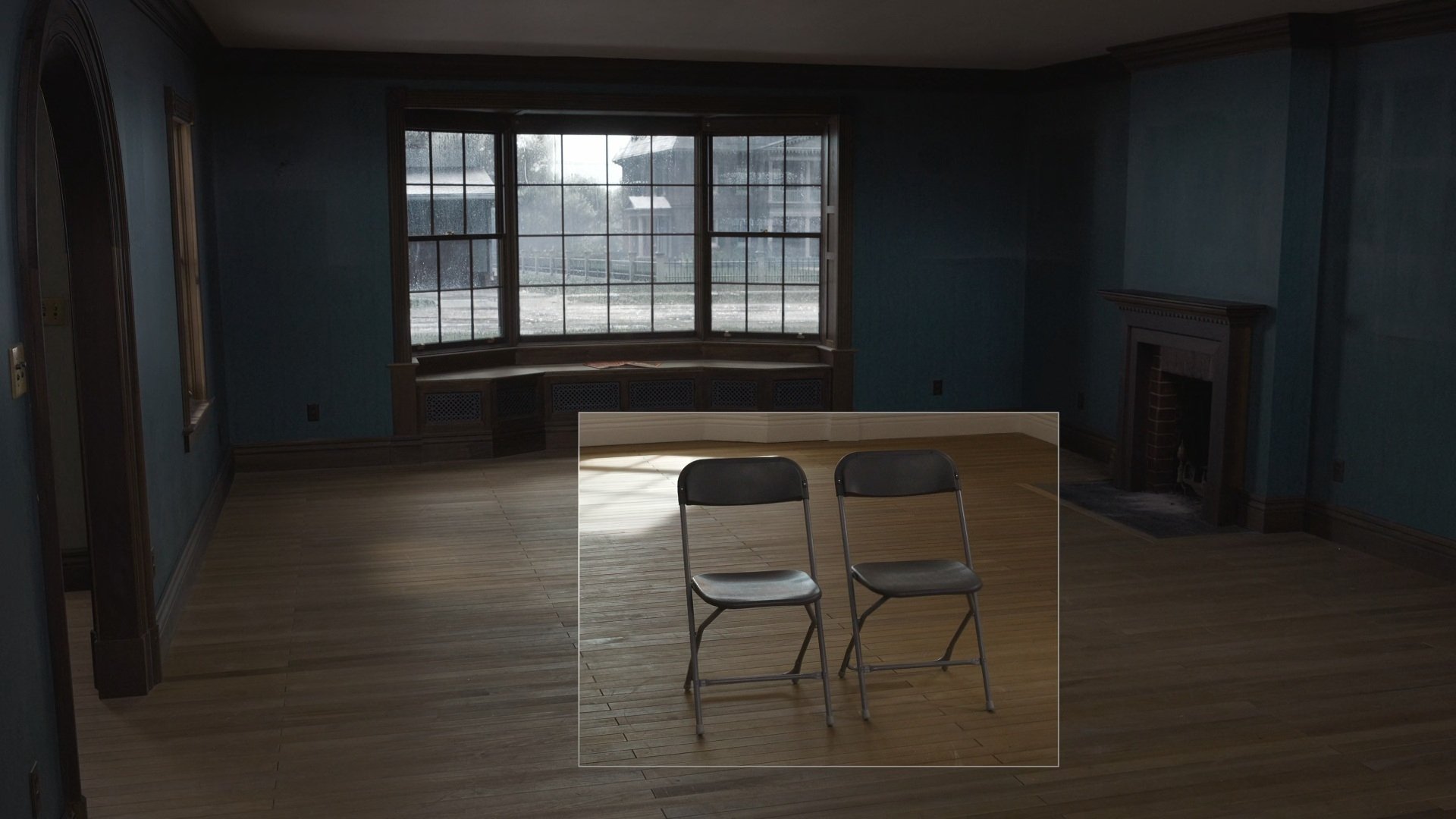
Boyhood famously aims to capture a real childhood by following and filming the same actors for 12 years, eschewing narrative cliches in favor of realism at every turn. Here’s whole gimmick is that it captures life in one single location, from one single camera angle, stretching back to the time of dinosaurs but largely focusing on a living room home to a series of American families, one family in particular where multiple generations come of age before your eyes. Clever editing makes time phase through this fixed point in space in a non-linear fashion.
If you were to boil down the entirety of literary fiction to a single theme, it would be time and the effects of its passage. Time is the constant, inescapable truth, the closest to a transcendental signified that philosophy has found, the alpha and omega of an agnostic existence. Art can step in and help us understand our relationship to it, and films like Boyhood and Here use experimental forms and their runtime as their key tool. The tradeoff of using the runtime as your key tool means that the moment-to-moment of Boyhood is mostly non-dramatic and arguably boring, but you hope that it has some cumulative effect that will hit you by the end. Eventually, Boyhood knocked me out flat.
In the case of Here, it’s not trading boredom for indirect thematic effect, but instead the aforementioned earnest, saccharine, Boomer-y sentimentality that has become Zemeckis’ trademark. Here is experimental form pushing anti-experimental content, but the theme of time is so emotionally overwhelming that for some, like me, you can forgive the obvious inelegances strewn throughout the experience just enough for the intended catharsis to hit. I mean, as a new father, you’re going to show me a daughter grow up in an hour and a half and NOT expect me to get teary-eyed?
Setting aside the emotions of the storytelling for a moment, the craftsmanship on display in Here is pretty remarkable. Zemeckis, like James Cameron, prioritizes technical innovation very highly in his filmmaking ethos. On one hand, this led to his nadir of the last 20 years with his motion capture obsession. On the other hand, it leads to industry-shaking innovations like Forrest Gump’s manipulation of archival footage or Who Framed Roger Rabbit?’s multimodal mania, among many other ambitious feats of cinematic engineering.
Here is no different, as numerous creative problems were presented by the single-shot/angle limitation. My teacher friends and I talk about this all the time - boundaries are the catalyst for creativity. You may think that Zemeckis choosing this challenge comes from a desire to flex, but I believe he knows that these constraints are ultimately assets in the creative process.
How do you block a scene with eight actors from a single camera angle in a compelling way, let alone from the same angle as the previous 50 scenes? How do you edit together transient moments from different points in time in the same frame simultaneously? How do you write a non-linear script that weaves together all of these disparate stories into a single functioning narrative? Satisfaction comes from seeing all of these questions answered, and the film answers them quite well, preventing me from ever being bored. It is a shame, then, that this movie magic is polluted by a number of awkward scriptwriting inelegances.
What inelegances, you ask? Apart from the aforementioned maudlin sentimentality and ham-fisted cultural references, the film also attempts to incorporate the lives of non-white people through the space, specifically an African American family and a Native American tribe, and it does so with the sensitivity and nuance of a sledgehammer. Both storylines do no favors in defending the film against accusations of tokenization. The Native American story in particular feels like community theater.
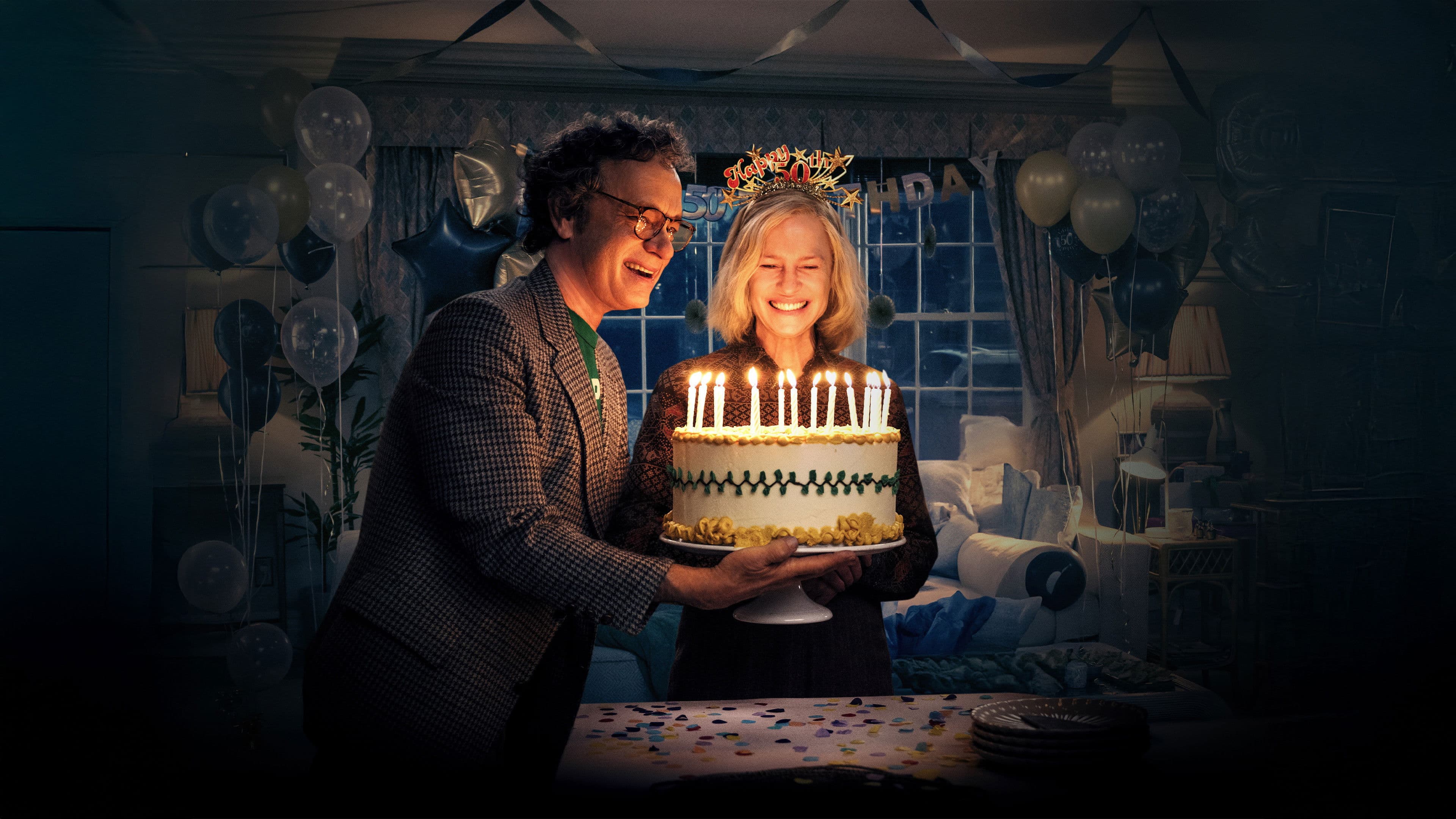
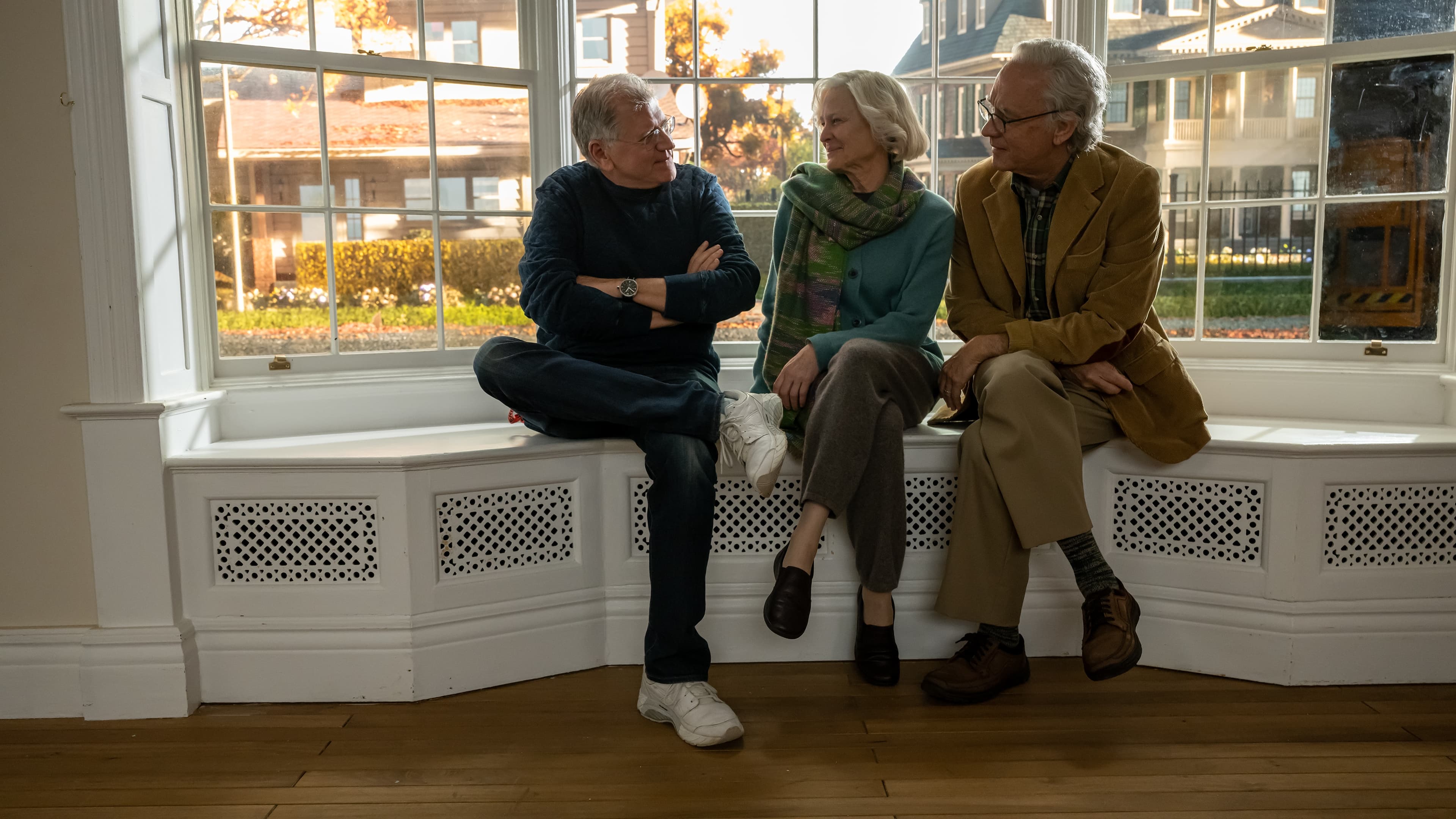
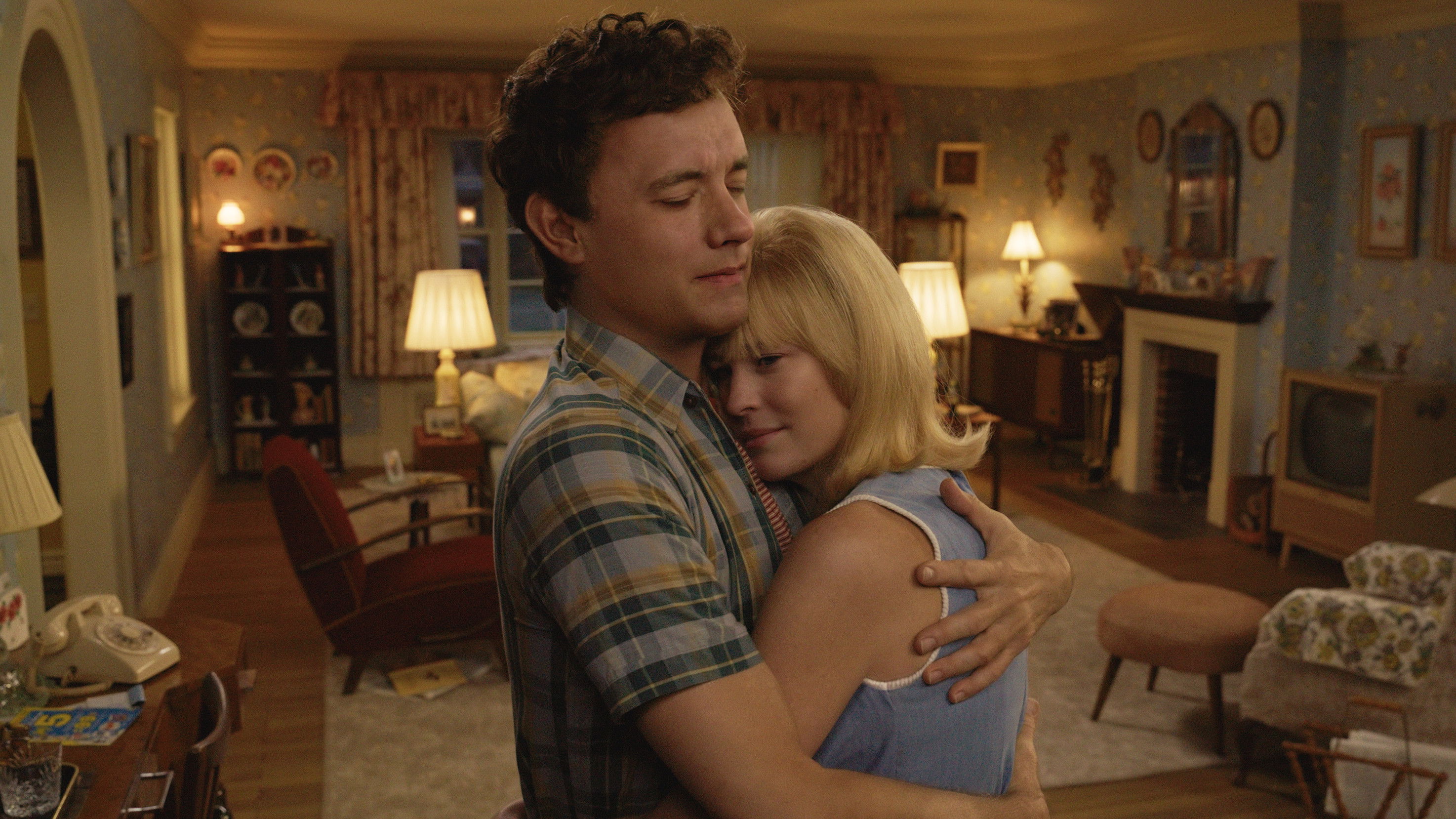
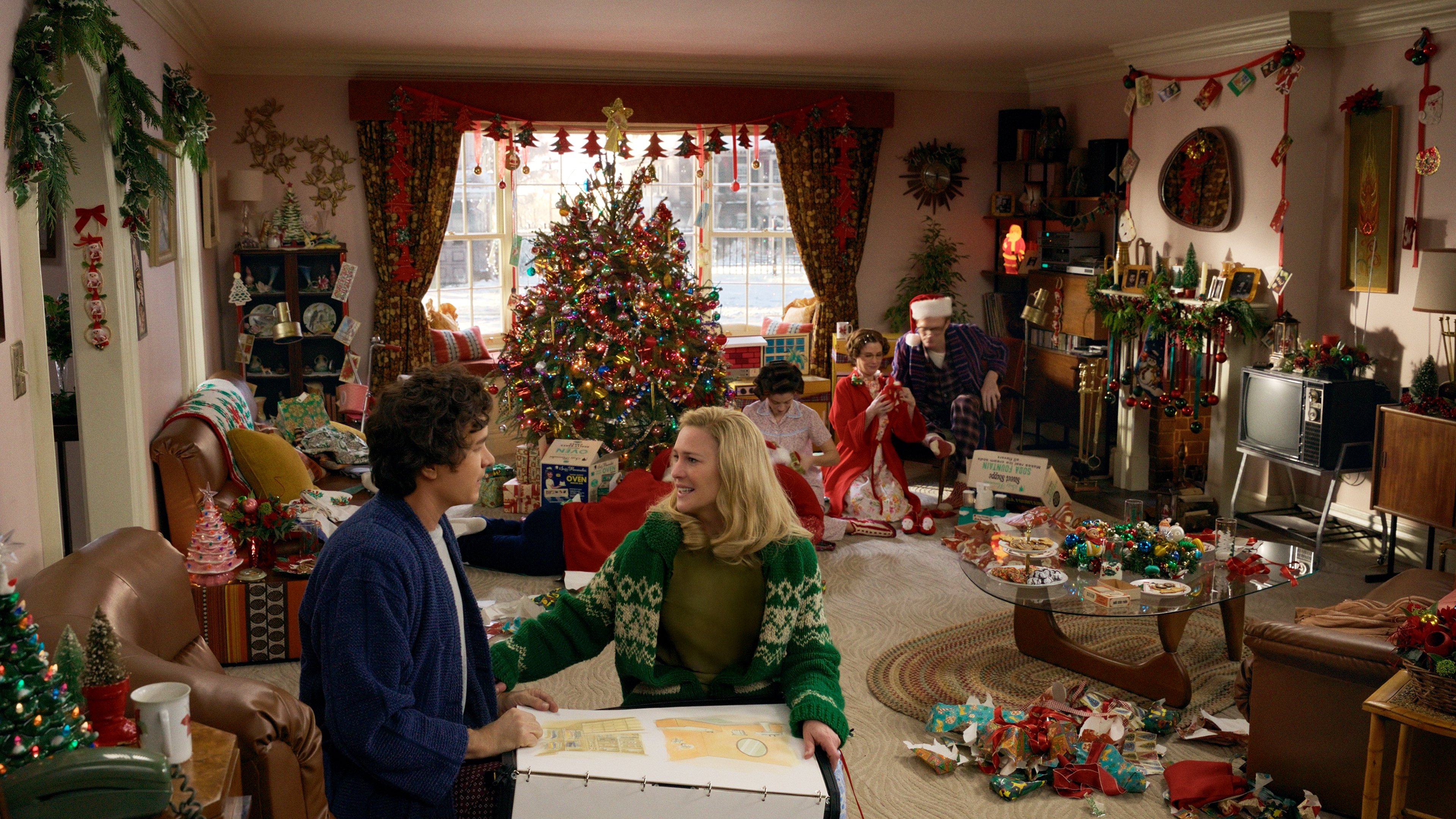
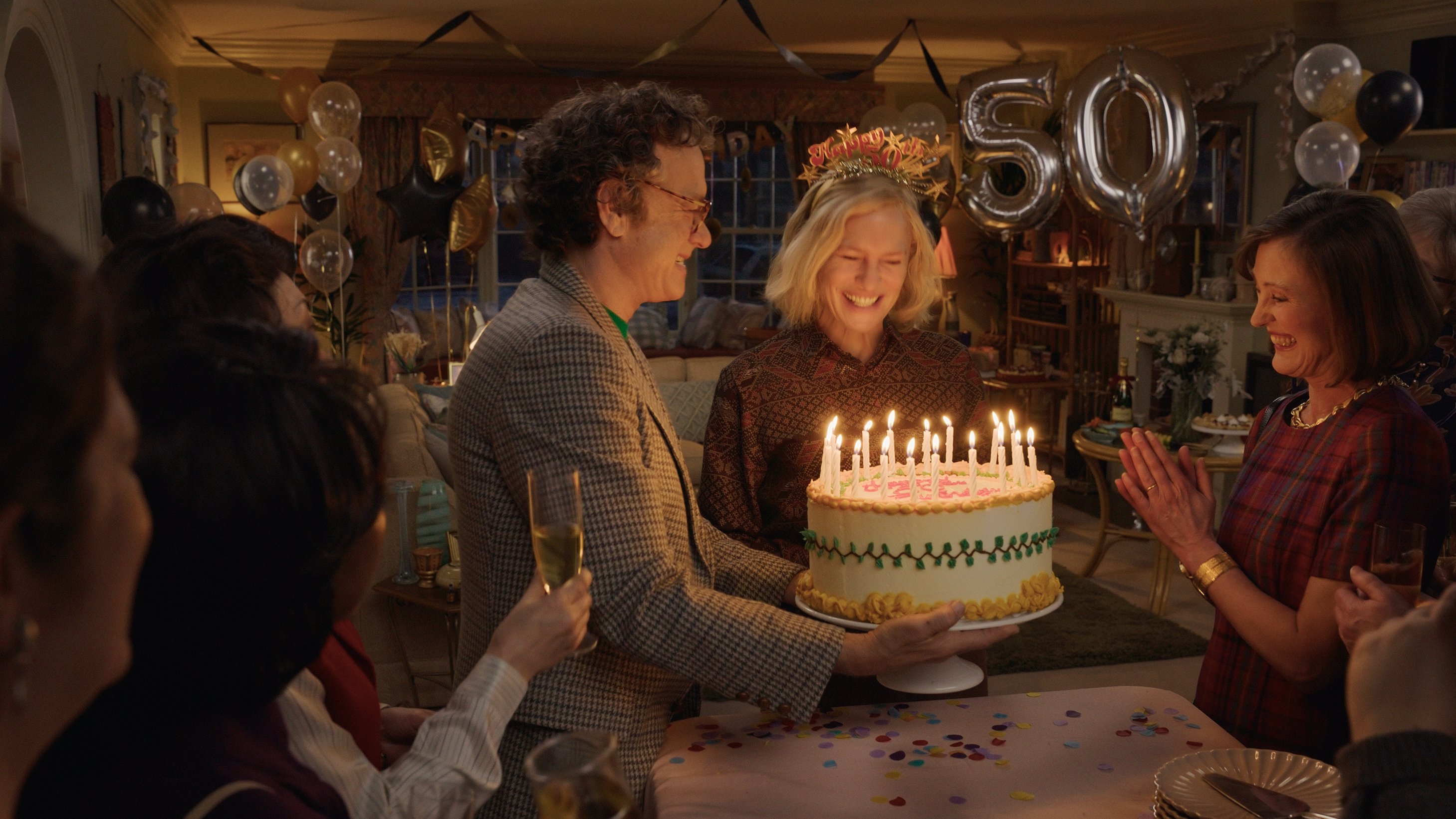
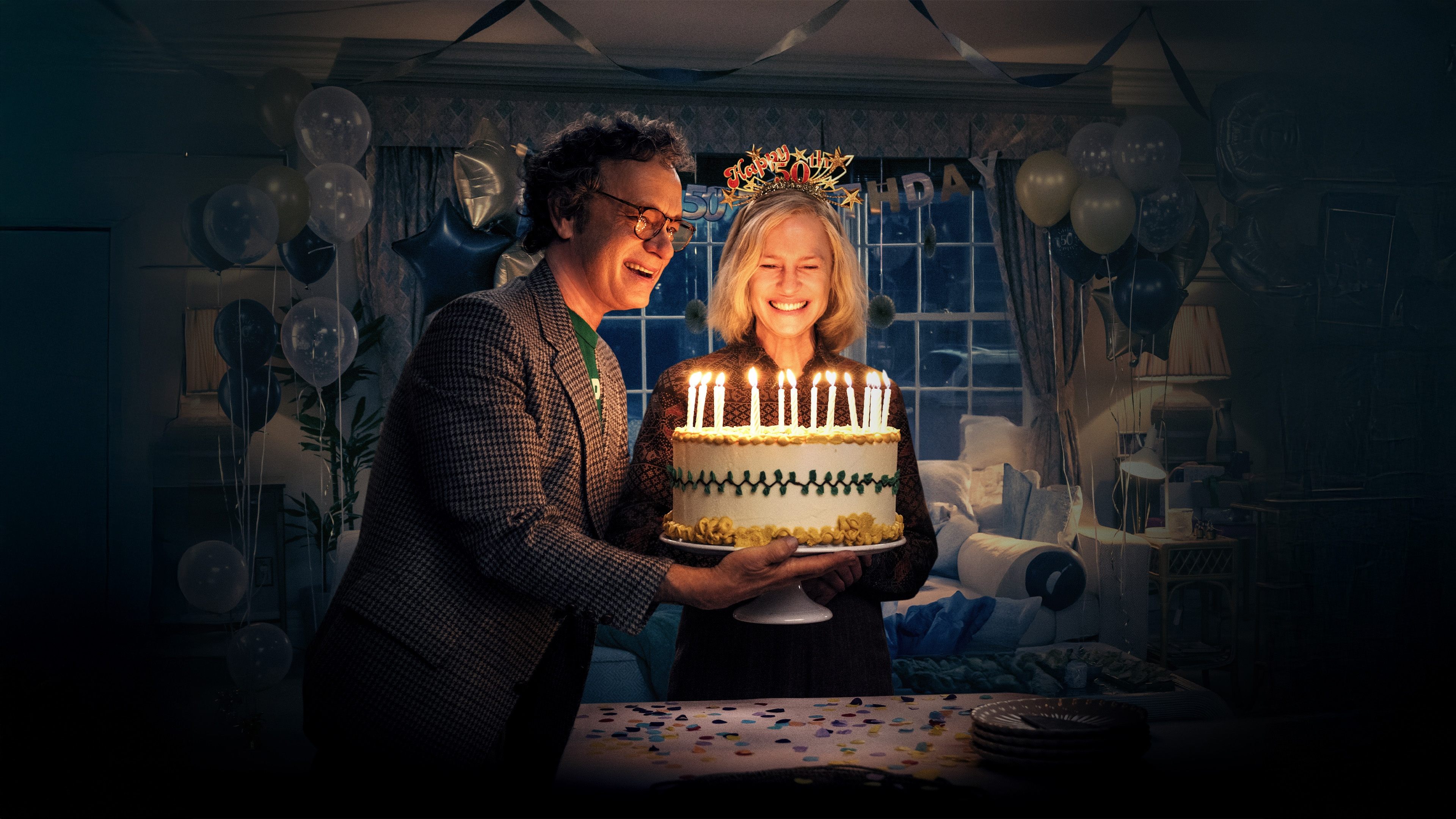
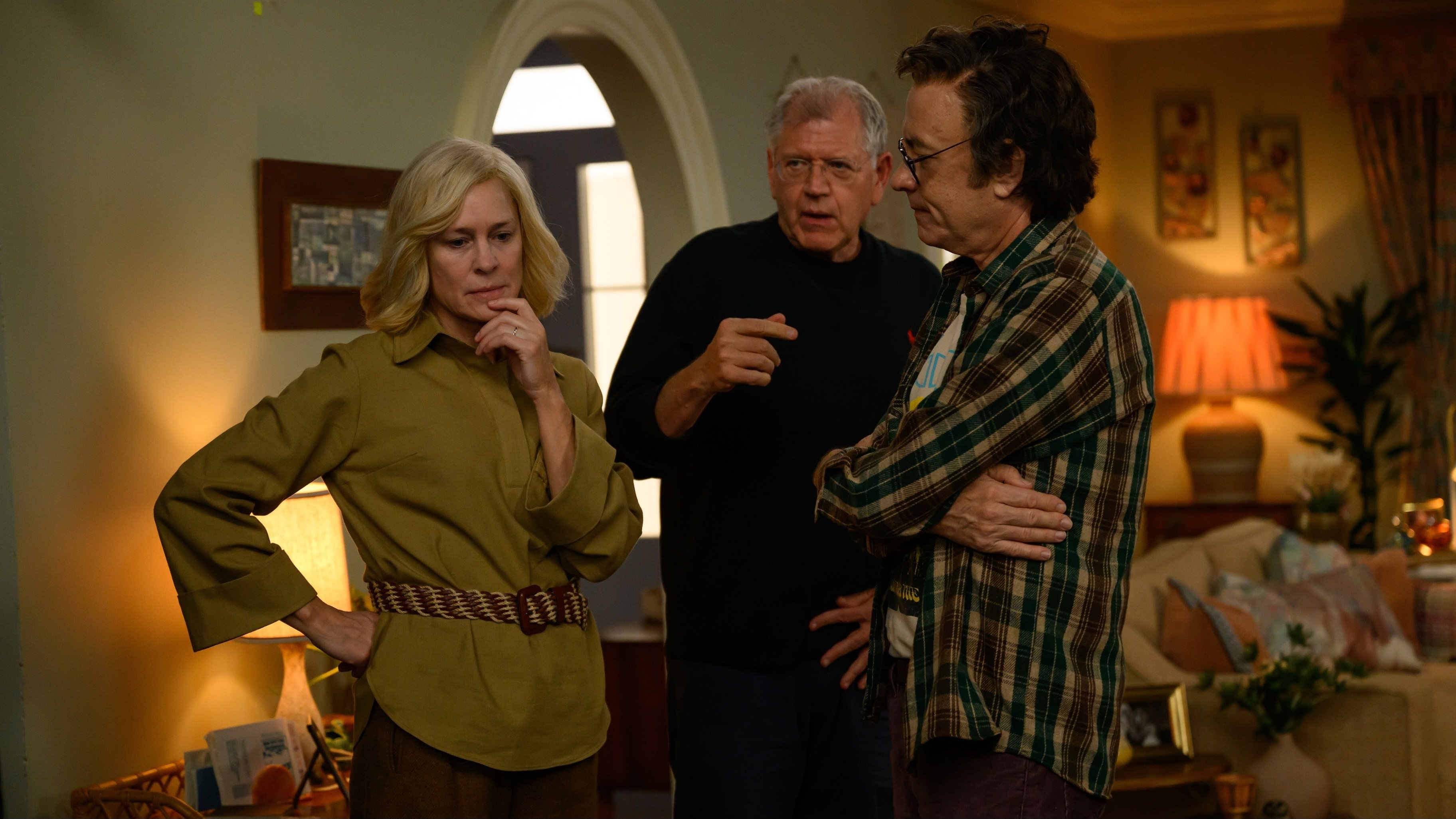
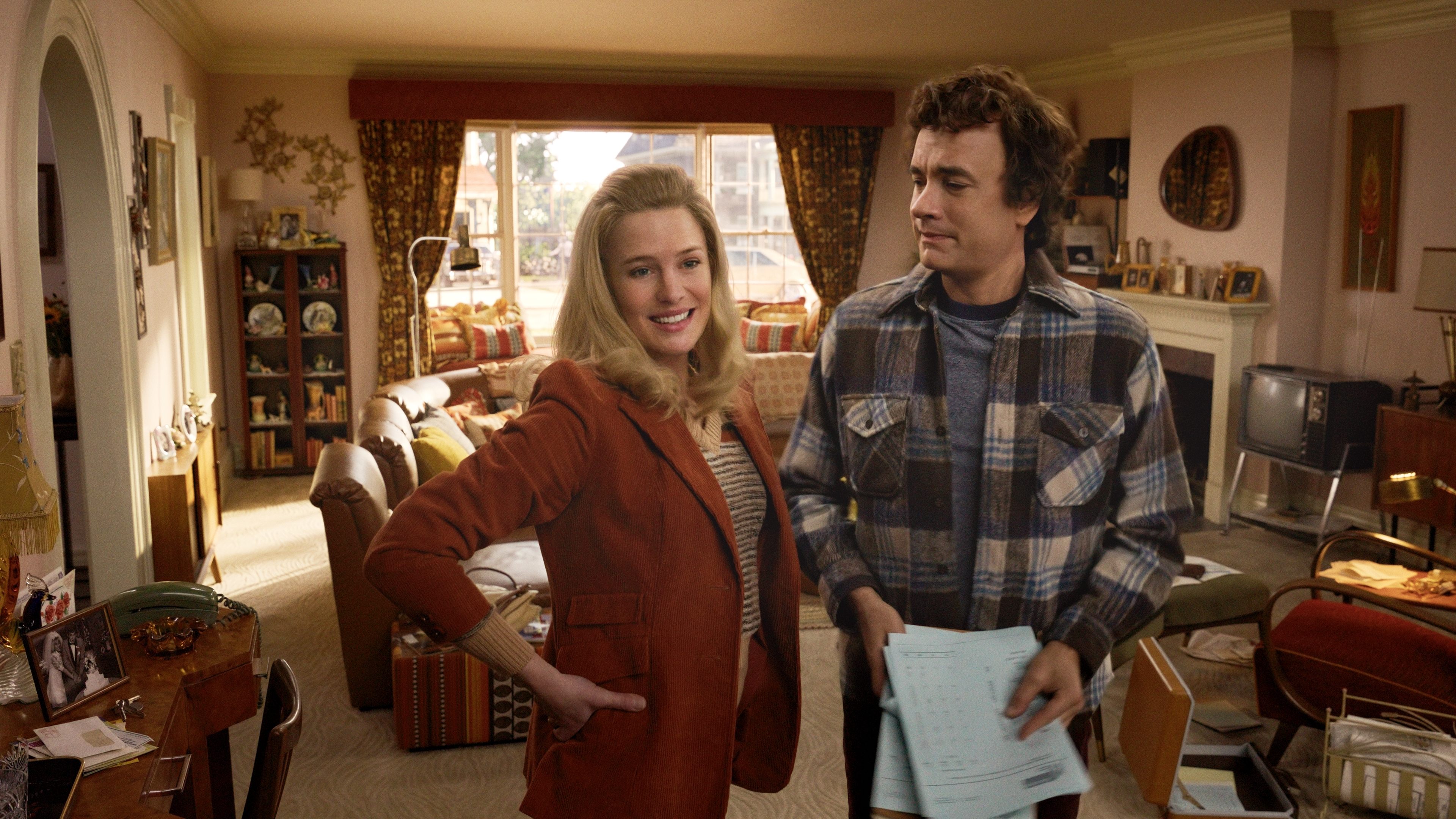
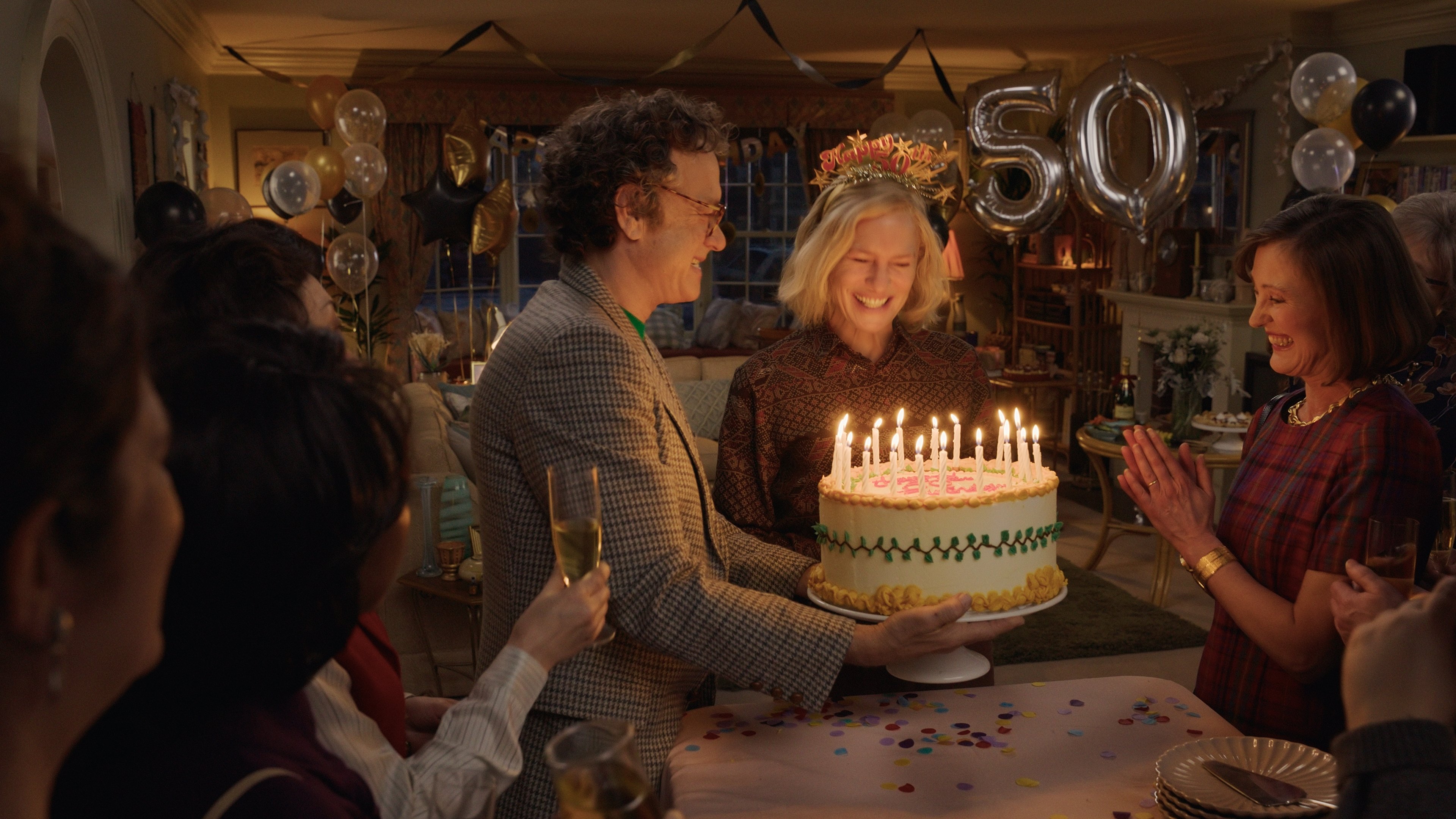
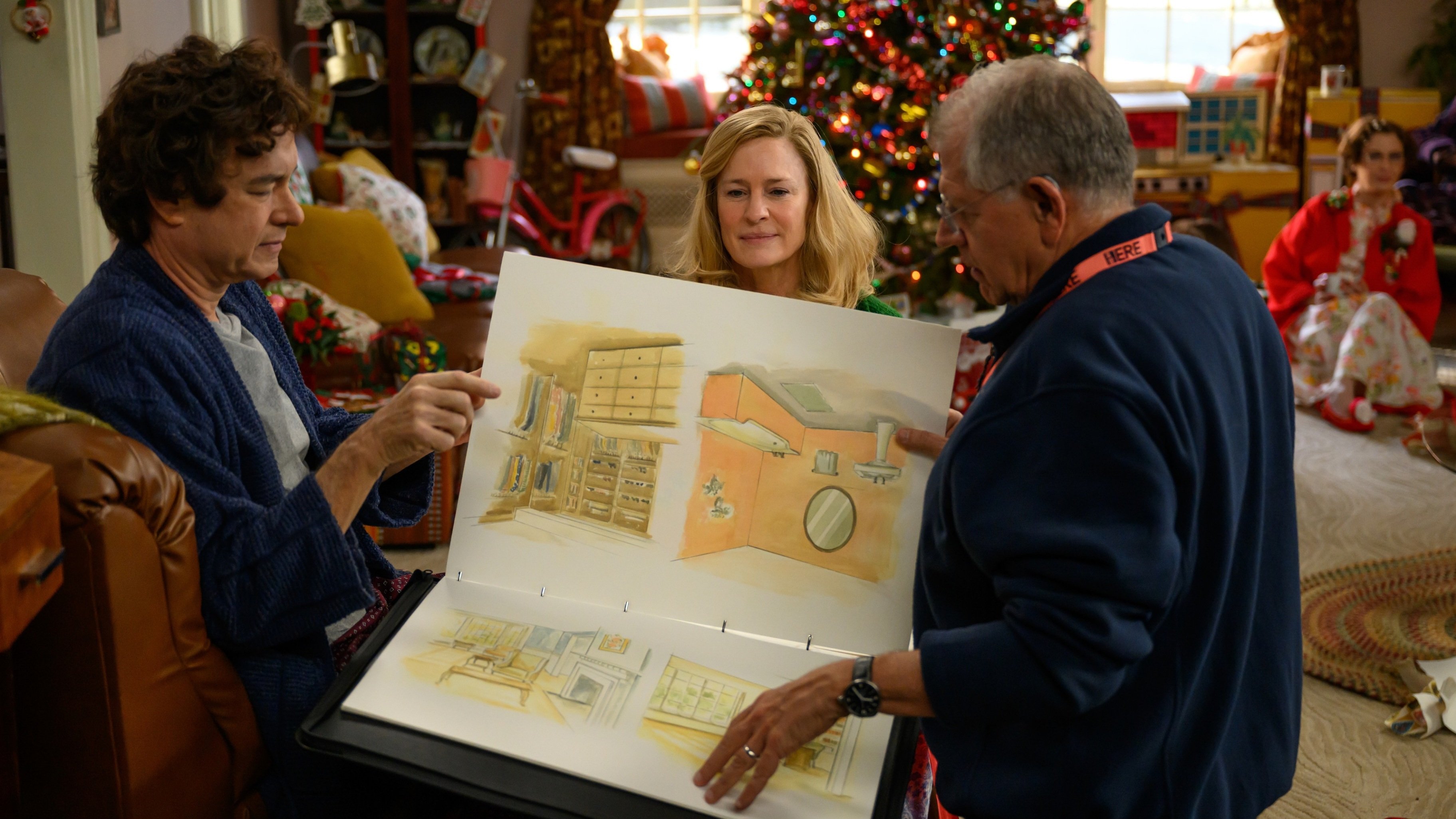
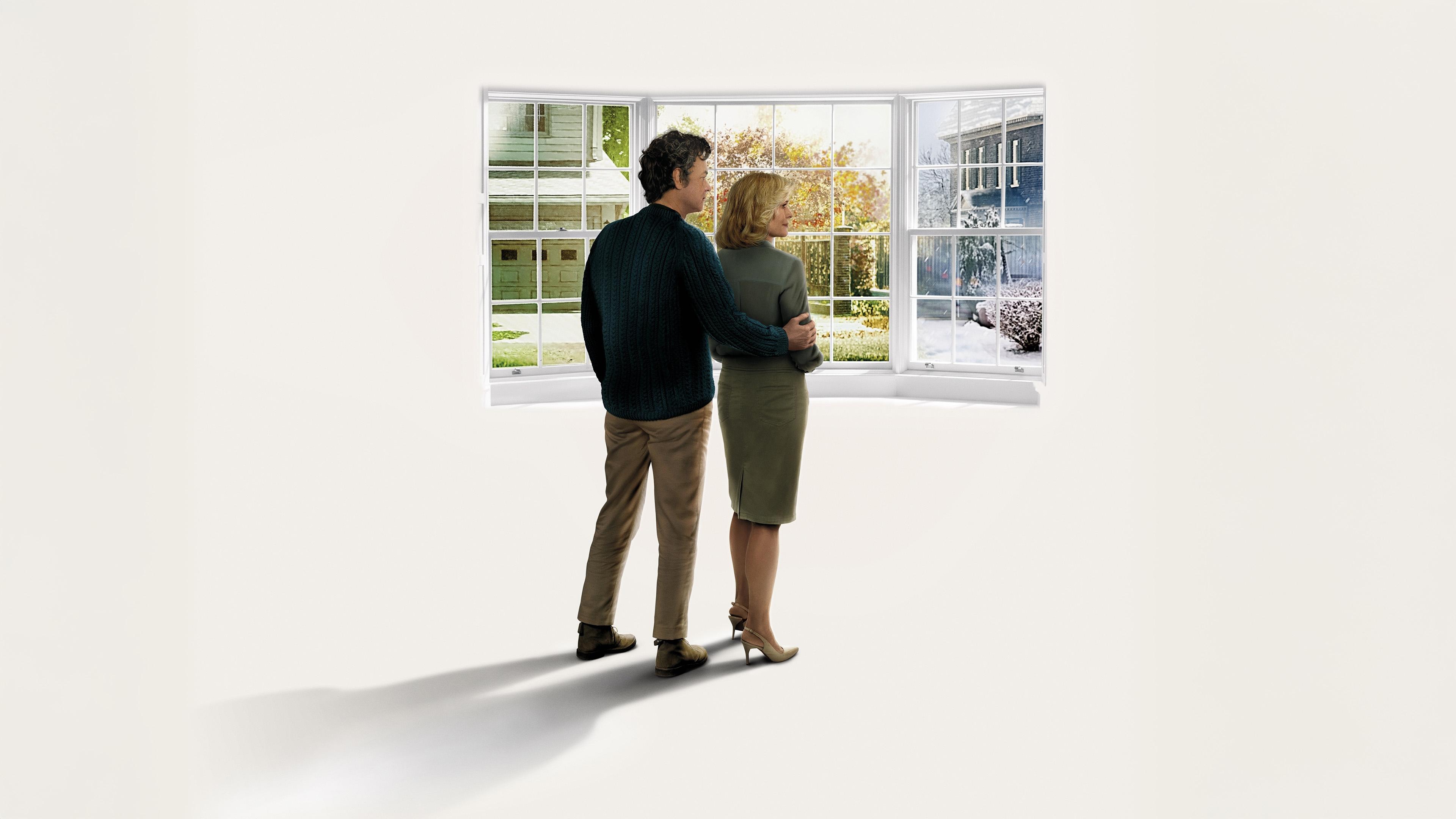
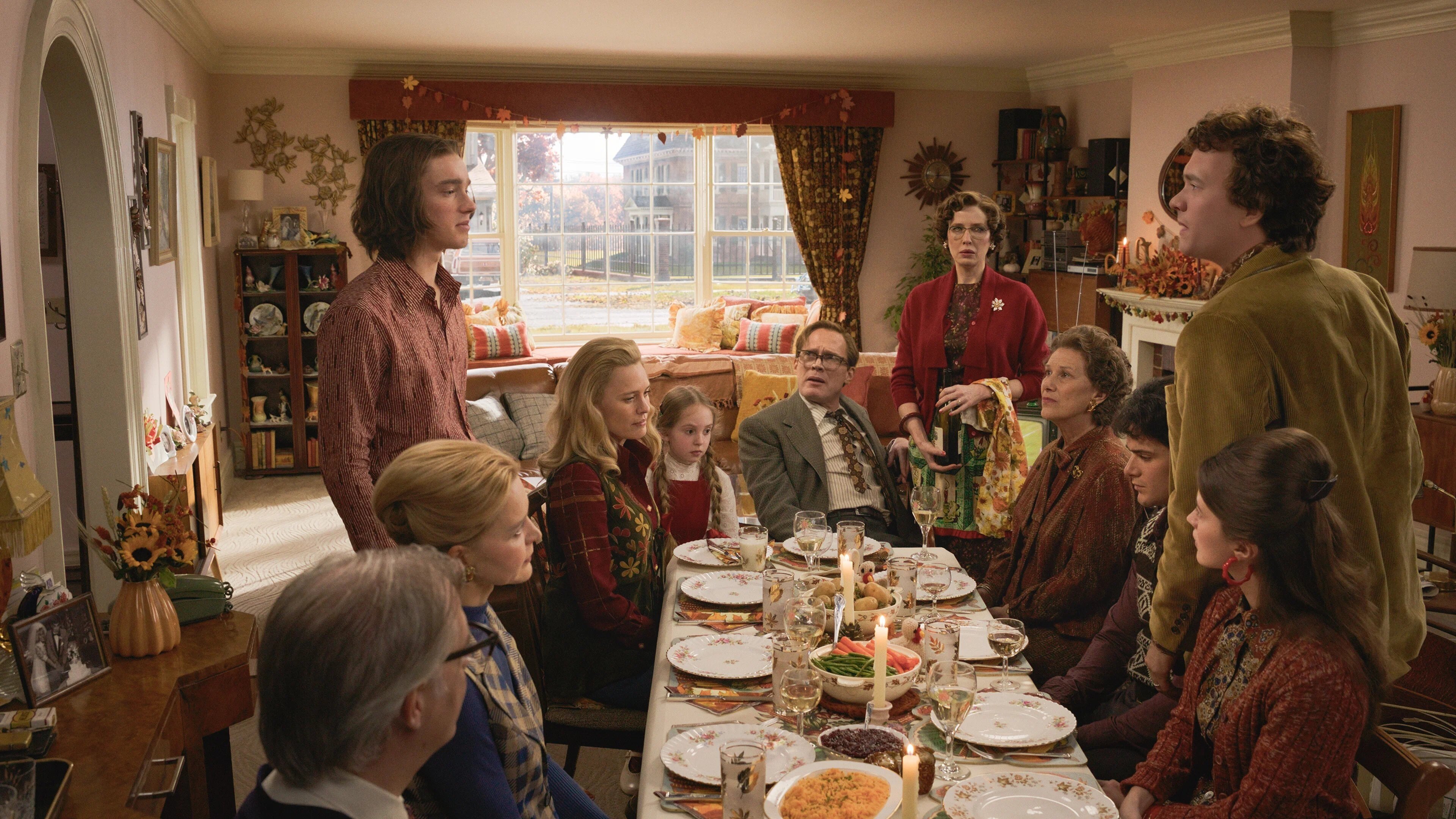
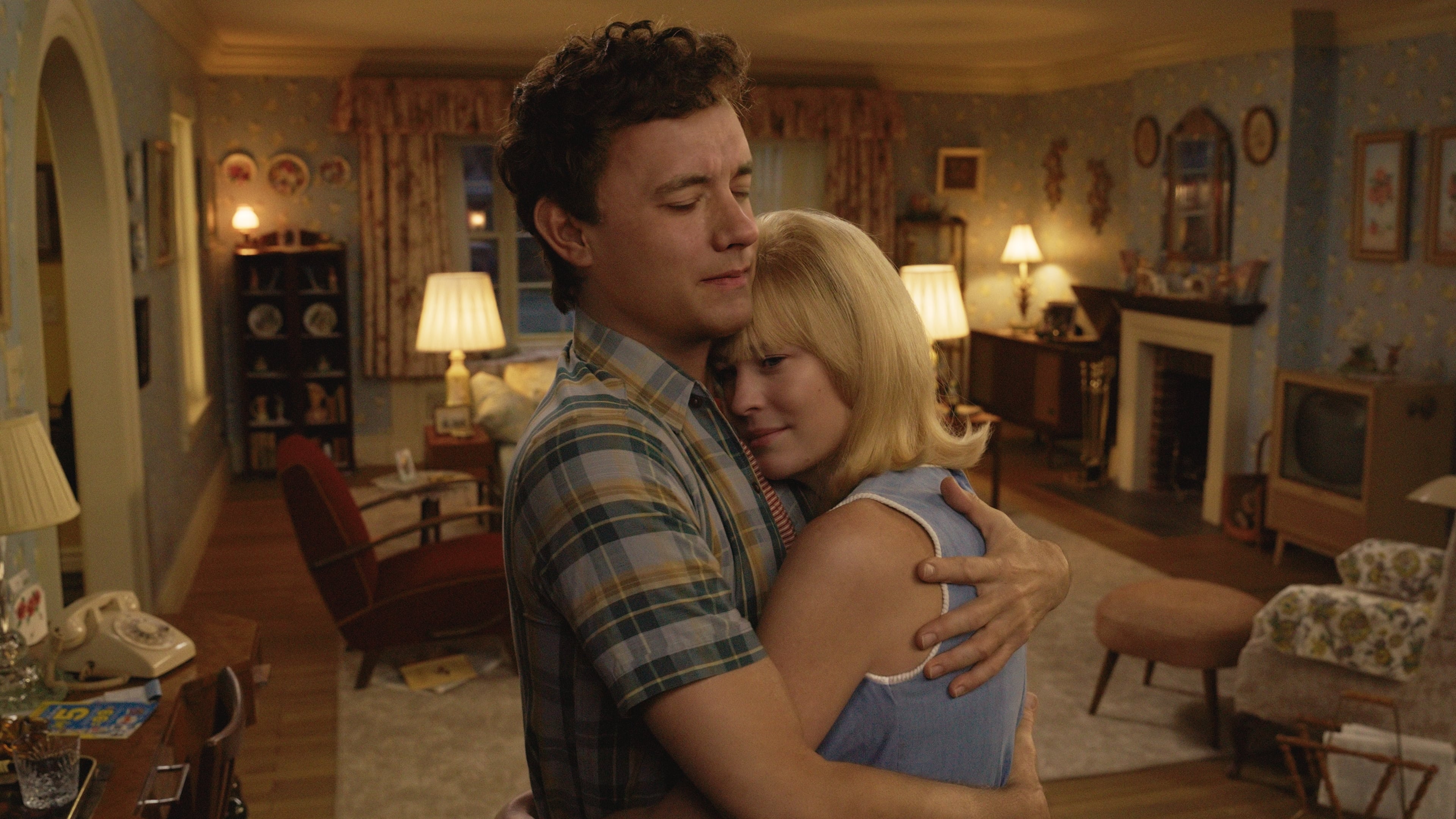
Most of the film, though, is focused on the post-war Young family, anchored by Tom Hanks who comes to inherit the home after being raised in it himself. His wife, played by Robin Wright, has vocal aspirations outside of the blissful time-thieving suburbia, but Hanks rails against the mortgage interest rates of the ‘70s and ‘80s and the worrisome realities of building a secure life for his children. All of the members of the Young clan clash over their definitions of a life well-lived, until….well, their lives are lived. Time didn’t stop for them to figure things out.
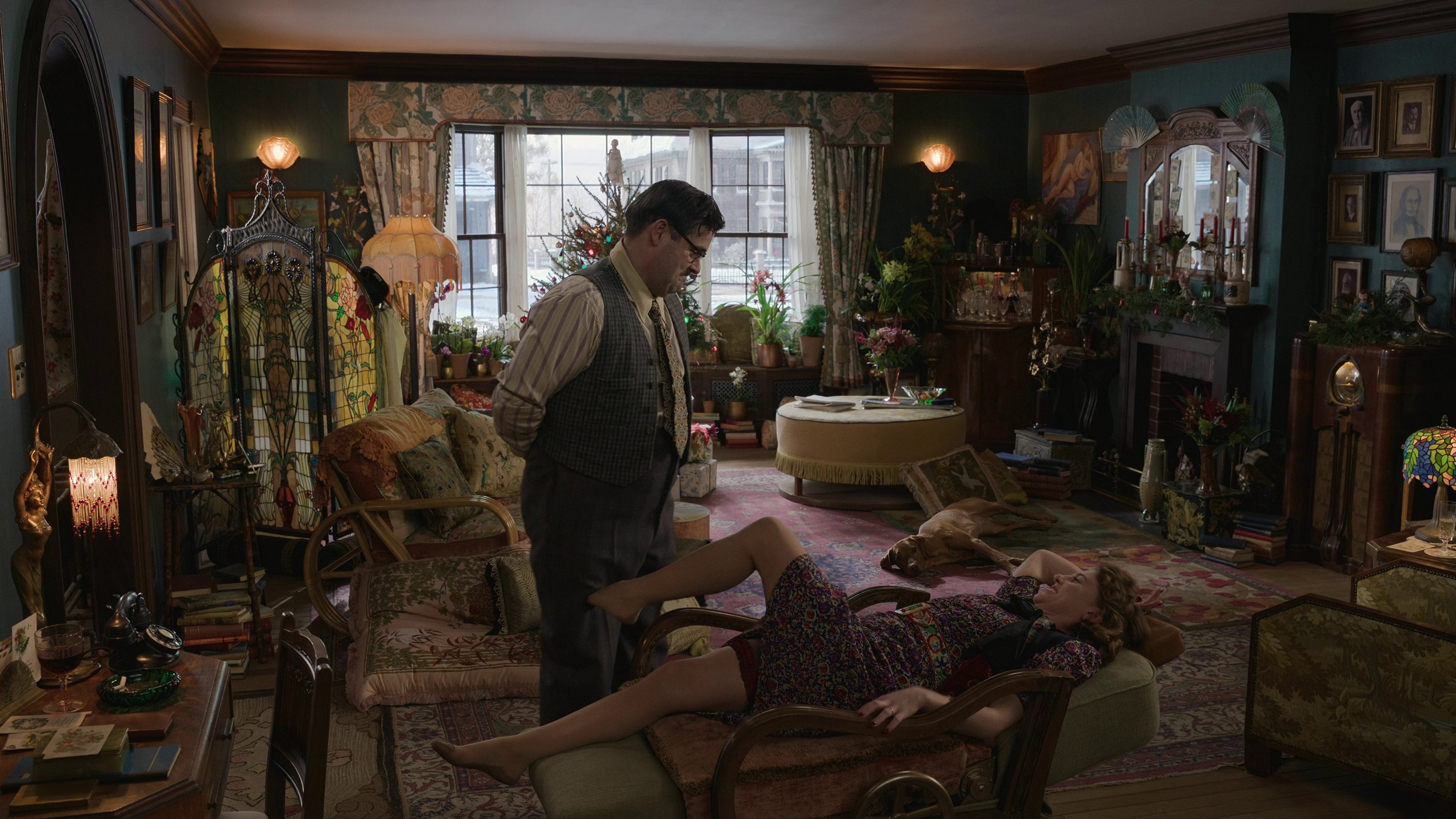
Zemeckis’ gambit pays off: watching the totality of a life pass through a place really does give the walls, the floor, the fixtures, the rugs, the tables, and the televisions, all of it a hallowed and beautiful sense of import. So much life can be lived in a single space on earth, especially in living rooms. Another film to broach these themes is David Lowery’s A Ghost Story, but I ultimately found it to be too abstract and unsentimental to make an impression. For all of the faults of Here, my wife and I spent the credits in an embrace, and I looked around my living room with a new perspective. This space is where my life happens. It can go by in a flash, so I better make every moment count.
In closing, earlier that day (our fourth wedding anniversary, no less) my wife and I drove through my old neighborhood on a whim to see my childhood home. While driving, I articulated to her a feeling that has stirred in me the last few times that I’ve revisited the old neighborhood. I said that when I’m here, I feel like I have to kink my emotions like a hose, allowing only a small stream to pass through. If I let it go freely, the joy and the pain would be too much. Time alone breeds emotional trauma.
Not every film inspires me to write like this, so when one does, I take notice and honor it. Halfway through watching Here, I sighed, lamenting to myself, “Fuck. I’m going to need to write 1000+ words in order to feel through with this, aren’t I?”
Thanks for reading them.
The “Have a baby daughter and watch Robert Zemeckis’ Here” challenge
Forrest Gump is a potent Rorschach test of a film. Tell me what you think of it, and from that monologue I’ll come to understand a lot about you and your artistic tastes. It famously defeated Pulp Fiction and the ascendent Tarantino at that year’s Academy Awards to much retrospective chagrin. Since then, Tarantino stock has soared and Zemeckis stock has struggled.
Some viewers are effortlessly swept away by Forrest Gump’s wistful and nostalgic themes, its epic sprawl, its cheeky remastering of Americana. Others find the naked sentimentality to be like staring into the sun, painful and cloying, and its politics consummately Boomer-brained. Many too find themselves somewhere in the middle, recognizing both extremes as well as analyzing it as a work of interesting craftsmanship.
Forrest Gump is undoubtedly a forebear to Zemeckis’ latest Here - most of the principal cast and crew have returned, not merely its stars but also its screenwriter and cinematographer - but the other key forebear in the lineage of Here is Richard Linklater’s Boyhood, as both are experimental portraits of the passage of time.
Boyhood famously aims to capture a real childhood by following and filming the same actors for 12 years, eschewing narrative cliches in favor of realism at every turn. Here’s whole gimmick is that it captures life in one single location, from one single camera angle, stretching back to the time of dinosaurs but largely focusing on a living room home to a series of American families, one family in particular where multiple generations come of age before your eyes. Clever editing makes time phase through this fixed point in space in a non-linear fashion.
If you were to boil down the entirety of literary fiction to a single theme, it would be time and the effects of its passage. Time is the constant, inescapable truth, the closest to a transcendental signified that philosophy has found, the alpha and omega of an agnostic existence. Art can step in and help us understand our relationship to it, and films like Boyhood and Here use experimental forms and their runtime as their key tool. The tradeoff of using the runtime as your key tool means that the moment-to-moment of Boyhood is mostly non-dramatic and arguably boring, but you hope that it has some cumulative effect that will hit you by the end. Eventually, Boyhood knocked me out flat.
In the case of Here, it’s not trading boredom for indirect thematic effect, but instead the aforementioned earnest, saccharine, Boomer-y sentimentality that has become Zemeckis’ trademark. Here is experimental form pushing anti-experimental content, but the theme of time is so emotionally overwhelming that for some, like me, you can forgive the obvious inelegances strewn throughout the experience just enough for the intended catharsis to hit. I mean, as a new father, you’re going to show me a daughter grow up in an hour and a half and NOT expect me to get teary-eyed?
Setting aside the emotions of the storytelling for a moment, the craftsmanship on display in Here is pretty remarkable. Zemeckis, like James Cameron, prioritizes technical innovation very highly in his filmmaking ethos. On one hand, this led to his nadir of the last 20 years with his motion capture obsession. On the other hand, it leads to industry-shaking innovations like Forrest Gump’s manipulation of archival footage or Who Framed Roger Rabbit?’s multimodal mania, among many other ambitious feats of cinematic engineering.
Here is no different, as numerous creative problems were presented by the single-shot/angle limitation. My teacher friends and I talk about this all the time - boundaries are the catalyst for creativity. You may think that Zemeckis choosing this challenge comes from a desire to flex, but I believe he knows that these constraints are ultimately assets in the creative process.
How do you block a scene with eight actors from a single camera angle in a compelling way, let alone from the same angle as the previous 50 scenes? How do you edit together transient moments from different points in time in the same frame simultaneously? How do you write a non-linear script that weaves together all of these disparate stories into a single functioning narrative? Satisfaction comes from seeing all of these questions answered, and the film answers them quite well, preventing me from ever being bored. It is a shame, then, that this movie magic is polluted by a number of awkward scriptwriting inelegances.
What inelegances, you ask? Apart from the aforementioned maudlin sentimentality and ham-fisted cultural references, the film also attempts to incorporate the lives of non-white people through the space, specifically an African American family and a Native American tribe, and it does so with the sensitivity and nuance of a sledgehammer. Both storylines do no favors in defending the film against accusations of tokenization. The Native American story in particular feels like community theater.
Most of the film, though, is focused on the post-war Young family, anchored by Tom Hanks who comes to inherit the home after being raised in it himself. His wife, played by Robin Wright, has vocal aspirations outside of the blissful time-thieving suburbia, but Hanks rails against the mortgage interest rates of the ‘70s and ‘80s and the worrisome realities of building a secure life for his children. All of the members of the Young clan clash over their definitions of a life well-lived, until….well, their lives are lived. Time didn’t stop for them to figure things out.
Zemeckis’ gambit pays off: watching the totality of a life pass through a place really does give the walls, the floor, the fixtures, the rugs, the tables, and the televisions, all of it a hallowed and beautiful sense of import. So much life can be lived in a single space on earth, especially in living rooms. Another film to broach these themes is David Lowery’s A Ghost Story, but I ultimately found it to be too abstract and unsentimental to make an impression. For all of the faults of Here, my wife and I spent the credits in an embrace, and I looked around my living room with a new perspective. This space is where my life happens. It can go by in a flash, so I better make every moment count.
In closing, earlier that day (our fourth wedding anniversary, no less) my wife and I drove through my old neighborhood on a whim to see my childhood home. While driving, I articulated to her a feeling that has stirred in me the last few times that I’ve revisited the old neighborhood. I said that when I’m here, I feel like I have to kink my emotions like a hose, allowing only a small stream to pass through. If I let it go freely, the joy and the pain would be too much. Time alone breeds emotional trauma.
Not every film inspires me to write like this, so when one does, I take notice and honor it. Halfway through watching Here, I sighed, lamenting to myself, “Fuck. I’m going to need to write 1000+ words in order to feel through with this, aren’t I?”
Thanks for reading them.






























 1
1