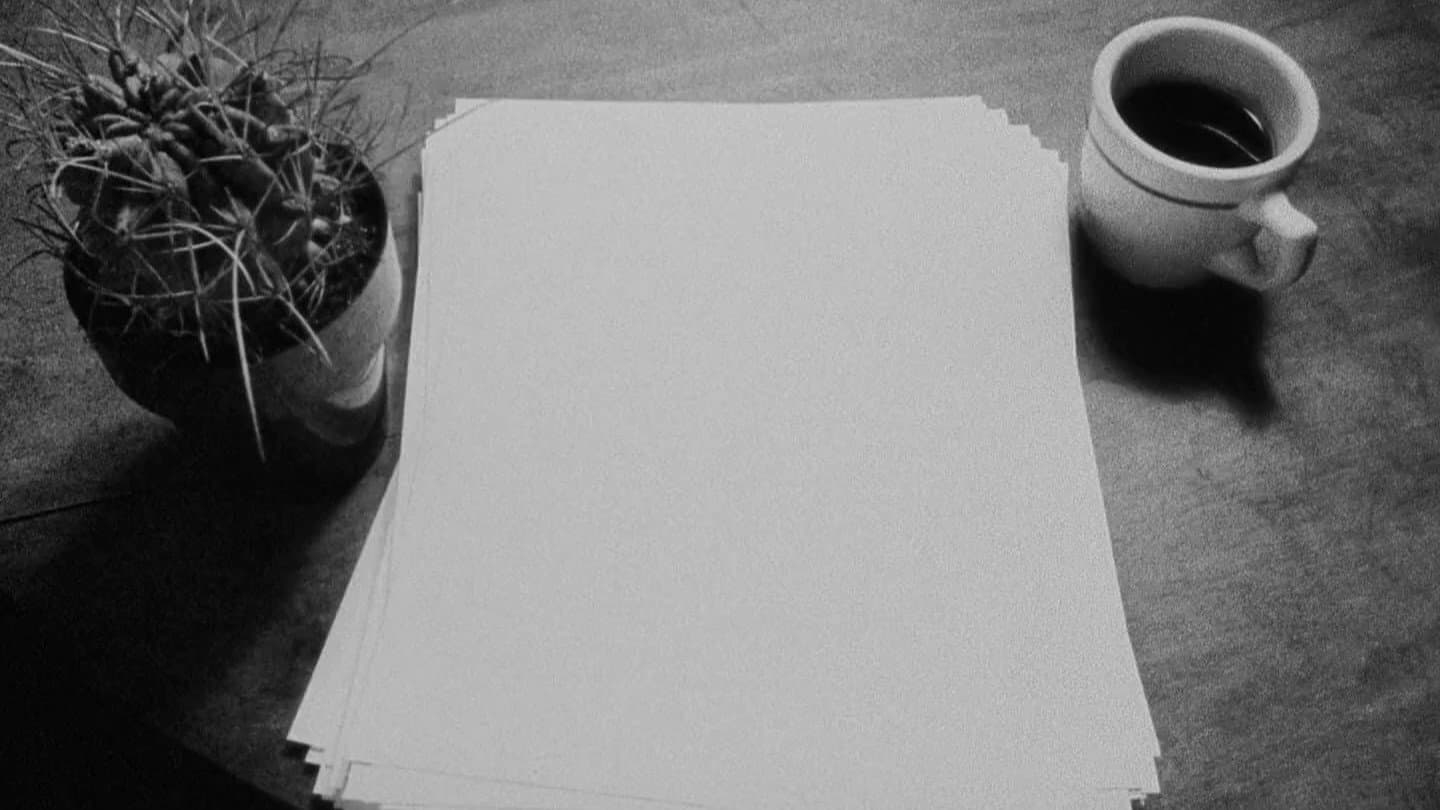
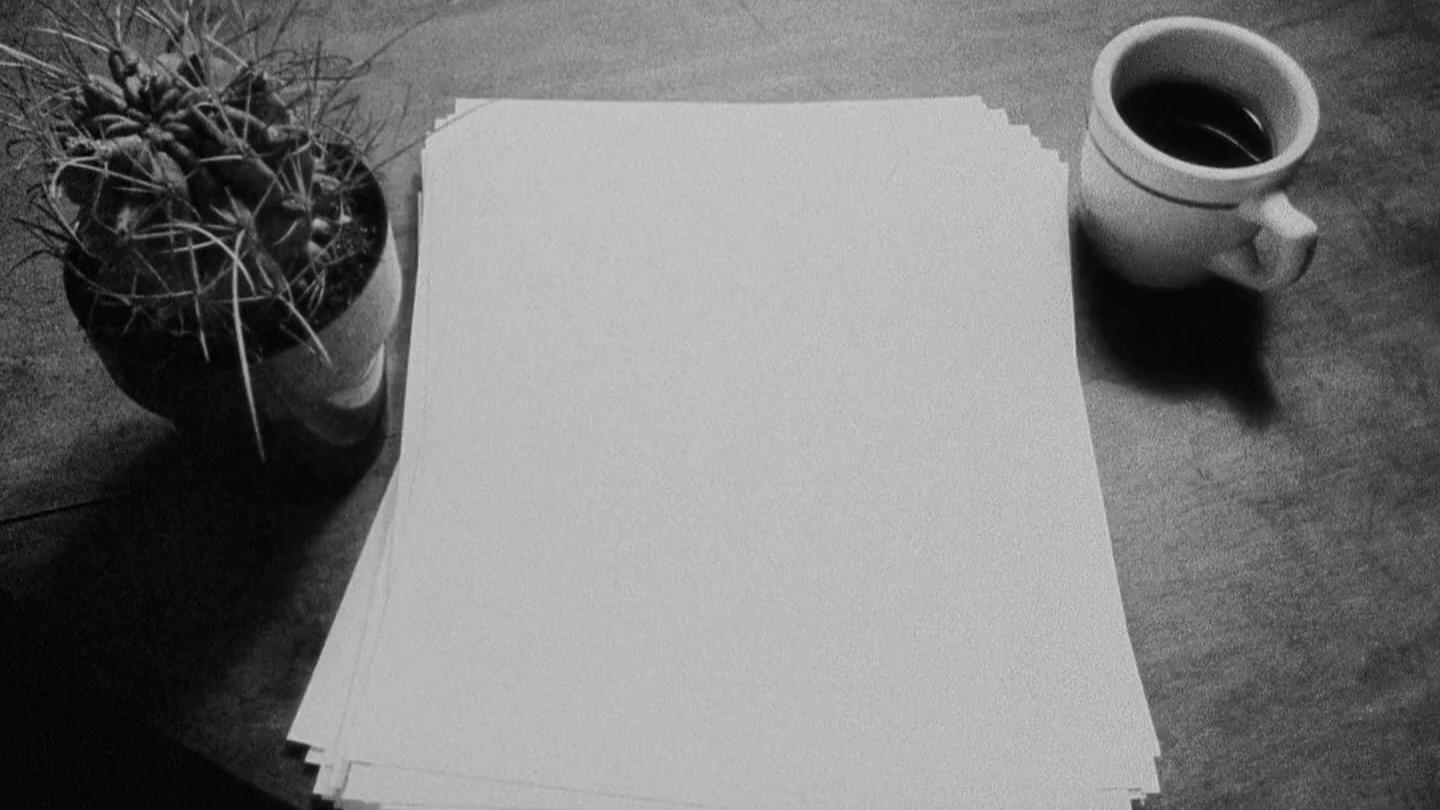
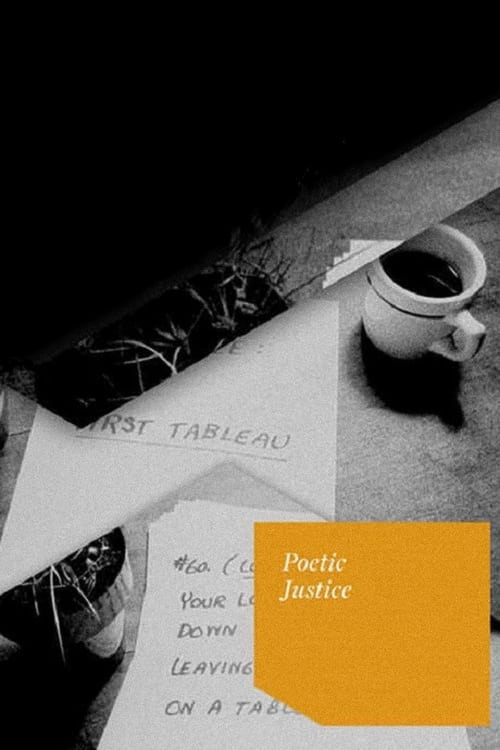
Hollis Frampton’s exploration of the limitations of the camera in relation to surrealism sees a script of an unmade film appear on screen, page by page, with a cactus and a mug of coffee on the table alongside it. The exercise is simple and begs the audience to imagine the sequence as the descriptors appear on screen, a mental disconnect between image and language and the imagined. Language’s relation to the visual is a tenuous one at best. They can describe one another but they are not complete. Leave too much undescribed and you are vague, describe too much of an image in words and you are being cumbersome. Central to this examination is the impossibility that You are the subject of the script. There is no way to create this script as it involves You and Your Lover. A film cannot be shot in the second person with the audience as that second person. It is impossible. One might argue that with AI tools such a film would be a reality, but to create such a thing would require the person to prompt in a way that betrays Frampton’s vision here not just because of the nature of AI but simply because the act of making is to make something real. Frampton’s filmmaking feels so tactile and physical. He would abhor the film that acts as Poetic Justice’s subject ever being made
Hollis Frampton’s exploration of the limitations of the camera in relation to surrealism sees a script of an unmade film appear on screen, page by page, with a cactus and a mug of coffee on the table alongside it. The exercise is simple and begs the audience to imagine the sequence as the descriptors appear on screen, a mental disconnect between image and language and the imagined. Language’s relation to the visual is a tenuous one at best. They can describe one another but they are not complete. Leave too much undescribed and you are vague, describe too much of an image in words and you are being cumbersome. Central to this examination is the impossibility that You are the subject of the script. There is no way to create this script as it involves You and Your Lover. A film cannot be shot in the second person with the audience as that second person. It is impossible. One might argue that with AI tools such a film would be a reality, but to create such a thing would require the person to prompt in a way that betrays Frampton’s vision here not just because of the nature of AI but simply because the act of making is to make something real. Frampton’s filmmaking feels so tactile and physical. He would abhor the film that acts as Poetic Justice’s subject ever being made