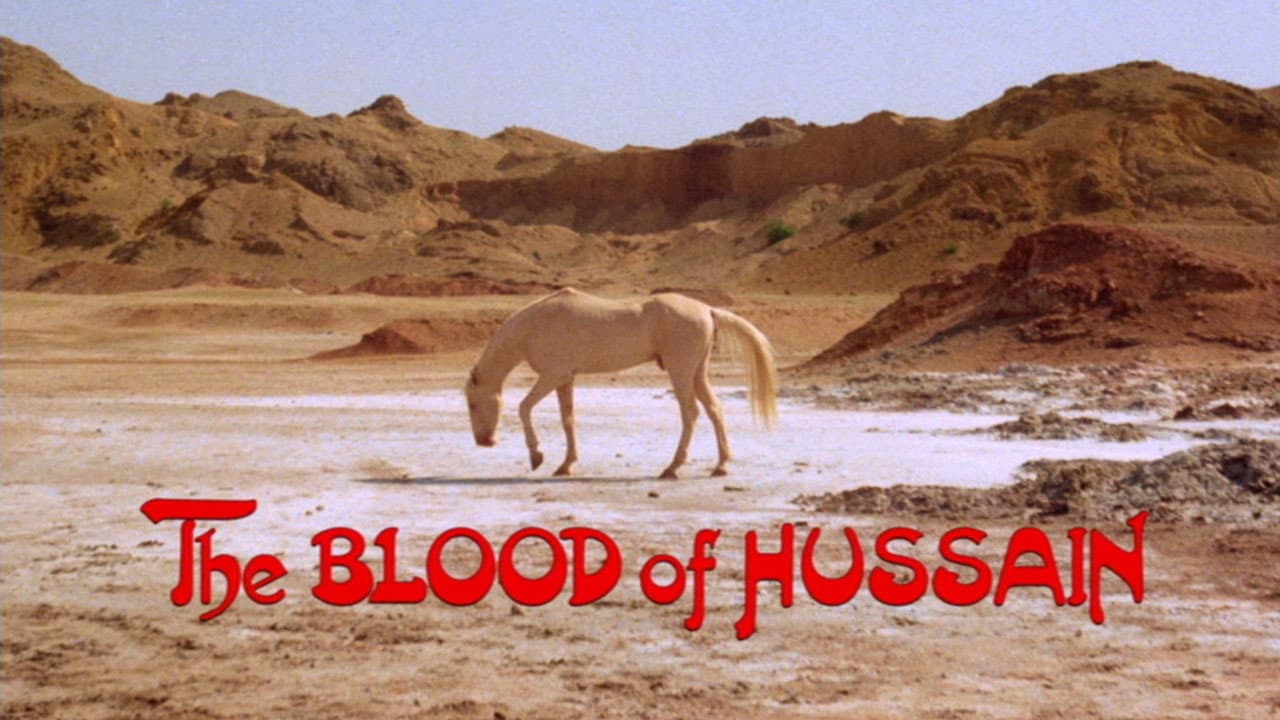
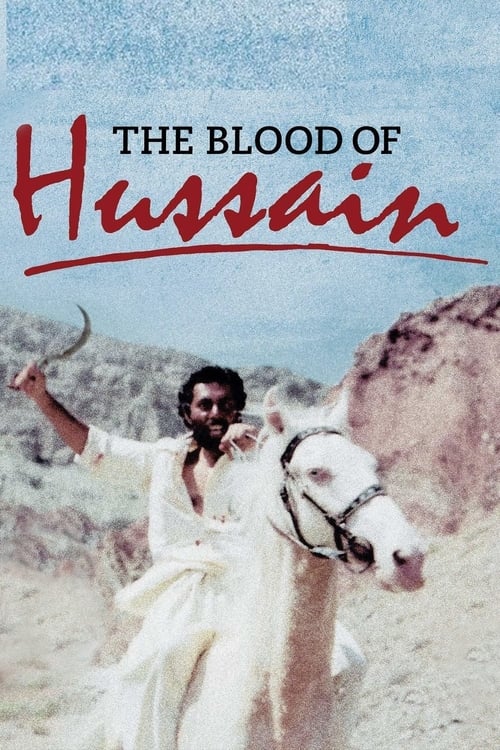
This controversial Pakistani film was completed shortly before the 1977 coup in Pakistan and the coming to power of General Zia-ul-Haq. The story is a sort of modern re-telling of the legend of Karbala and Imam Hussain's struggle against the tyrannical rule of Yazid in the seventh century. Hussain in this film, like his ancient namesake, leads a band of rebels against a tyrannical illegitimate government.
A responsibility of selflessness, compassion, and community conflicts with the desire to understand oneself, to become impersonal for the sake of a happy life. Hussain, our lead finds the worst in both extremes – a sobering discovery in modern times. His fortress, or his homestead, mountains surrounding the mystical city of Lahore is his dear village– the last stand in an attempt to fight the military dictatorship, young right-wing soldiers, and clear-cut untrustworthy sibling. Hussain attempts to speak for all, and he is frequently lambasted for being too vague, too opaque, lost in the mystery hanging in the air. His land is the eye in a hurricane, and it’s closing in, tightening around the throat, shape-shifting into a prison.Jamil Dehlavi understands the formal simplicity of being trapped, he understands the human condition first, rather than the history the Prophet Hussain with the exteriors only a tinge colder than the barren rooms and caverns of our main leads existence. It recalls Karbala’s backstory, with the righteous surrounded by the impure and the desolate when in this movie, a hypocritical complexity is at work. Seeing dreamy Lahore and the taboo, Marxist aspect of it all makes it worthwhile while the poorly written characters remain on tattered soil. The frequently empty, unexplored space allows bodies to wander, converse, and think, but what’s important is what they decide to do, and where they go. Dehlavi builds a cosmos around a man who cannot escape his selflessness, which in turn makes him ignorant, and yet, the opportunities to let go and be free are plentiful. It almost feels like our lead, Hussain, brought all of these hurdles onto himself. He got too carried away with spirituality. Spirituality is all about understanding your sense of mind and not being unrealistic in the time of a scary military takeover. What bothers me is the unnecessary need of forcing religion into this film. The pains and joys in the film, by extension, are some of the most harrowing and uplifting in the cinematic medium, because they embody a shared depression and a common cry for help. But I appreciate the effort Dehlavi has put in this film nonetheless, here’s a poetic and surreal quality to how he chooses to visualize his narrative that makes what is, on the surface at least, a traditional tale of good versus evil a striking and metaphorical art-house production.Dehlavi isn’t stating anything clear about the absolute nature of a God, or even the existence of one, but he is selling the idea that God, in this day and age, doesn’t matter, and that our imminent extinction is nothing in the face of an infamous regime, with sex being the only act offering some semblance of continuity in our daily lives. This truly is the case in our lifestyle nowadays.In conclusion, the story of Hussain has inspired countless works of poetry and passion play throughout the centuries, and was bound to make its way to film. If you grew up attending mourning ceremonies in Muharram and listened to every intricate detail of the battle, its prelude, and its aftermath, you can appreciate this film on a different level. I, on the other hand, found this movie quite irrelevant.
More broadly, I think that the history of Islam is filled with great epic stories that deserve such great cinematic re-tellings, but unfortunately, with the exception of this film and Moustapha Akkad's 'The Message' (1976), there haven't been many attempts at doing this, and instead appreciating modern religious films like these; they are undermined by the Muslim men in Pakistan and banned nationwide.
This controversial Pakistani film was completed shortly before the 1977 coup in Pakistan and the coming to power of General Zia-ul-Haq. The story is a sort of modern re-telling of the legend of Karbala and Imam Hussain's struggle against the tyrannical rule of Yazid in the seventh century. Hussain in this film, like his ancient namesake, leads a band of rebels against a tyrannical illegitimate government.
A responsibility of selflessness, compassion, and community conflicts with the desire to understand oneself, to become impersonal for the sake of a happy life. Hussain, our lead finds the worst in both extremes – a sobering discovery in modern times. His fortress, or his homestead, mountains surrounding the mystical city of Lahore is his dear village– the last stand in an attempt to fight the military dictatorship, young right-wing soldiers, and clear-cut untrustworthy sibling. Hussain attempts to speak for all, and he is frequently lambasted for being too vague, too opaque, lost in the mystery hanging in the air. His land is the eye in a hurricane, and it’s closing in, tightening around the throat, shape-shifting into a prison.Jamil Dehlavi understands the formal simplicity of being trapped, he understands the human condition first, rather than the history the Prophet Hussain with the exteriors only a tinge colder than the barren rooms and caverns of our main leads existence. It recalls Karbala’s backstory, with the righteous surrounded by the impure and the desolate when in this movie, a hypocritical complexity is at work. Seeing dreamy Lahore and the taboo, Marxist aspect of it all makes it worthwhile while the poorly written characters remain on tattered soil. The frequently empty, unexplored space allows bodies to wander, converse, and think, but what’s important is what they decide to do, and where they go. Dehlavi builds a cosmos around a man who cannot escape his selflessness, which in turn makes him ignorant, and yet, the opportunities to let go and be free are plentiful. It almost feels like our lead, Hussain, brought all of these hurdles onto himself. He got too carried away with spirituality. Spirituality is all about understanding your sense of mind and not being unrealistic in the time of a scary military takeover. What bothers me is the unnecessary need of forcing religion into this film. The pains and joys in the film, by extension, are some of the most harrowing and uplifting in the cinematic medium, because they embody a shared depression and a common cry for help. But I appreciate the effort Dehlavi has put in this film nonetheless, here’s a poetic and surreal quality to how he chooses to visualize his narrative that makes what is, on the surface at least, a traditional tale of good versus evil a striking and metaphorical art-house production.Dehlavi isn’t stating anything clear about the absolute nature of a God, or even the existence of one, but he is selling the idea that God, in this day and age, doesn’t matter, and that our imminent extinction is nothing in the face of an infamous regime, with sex being the only act offering some semblance of continuity in our daily lives. This truly is the case in our lifestyle nowadays.In conclusion, the story of Hussain has inspired countless works of poetry and passion play throughout the centuries, and was bound to make its way to film. If you grew up attending mourning ceremonies in Muharram and listened to every intricate detail of the battle, its prelude, and its aftermath, you can appreciate this film on a different level. I, on the other hand, found this movie quite irrelevant.
More broadly, I think that the history of Islam is filled with great epic stories that deserve such great cinematic re-tellings, but unfortunately, with the exception of this film and Moustapha Akkad's 'The Message' (1976), there haven't been many attempts at doing this, and instead appreciating modern religious films like these; they are undermined by the Muslim men in Pakistan and banned nationwide.