This
review posits Östlund’s influence, specifically 2011. Indeed,
Play does shine a clinical rhetorical lens on abuse, manipulation, and socio-economics. However, Östlund does not break the fourth wall in any sense. For that influence, I’d point to Haneke’s
Code Unknown, the film I thought of most during
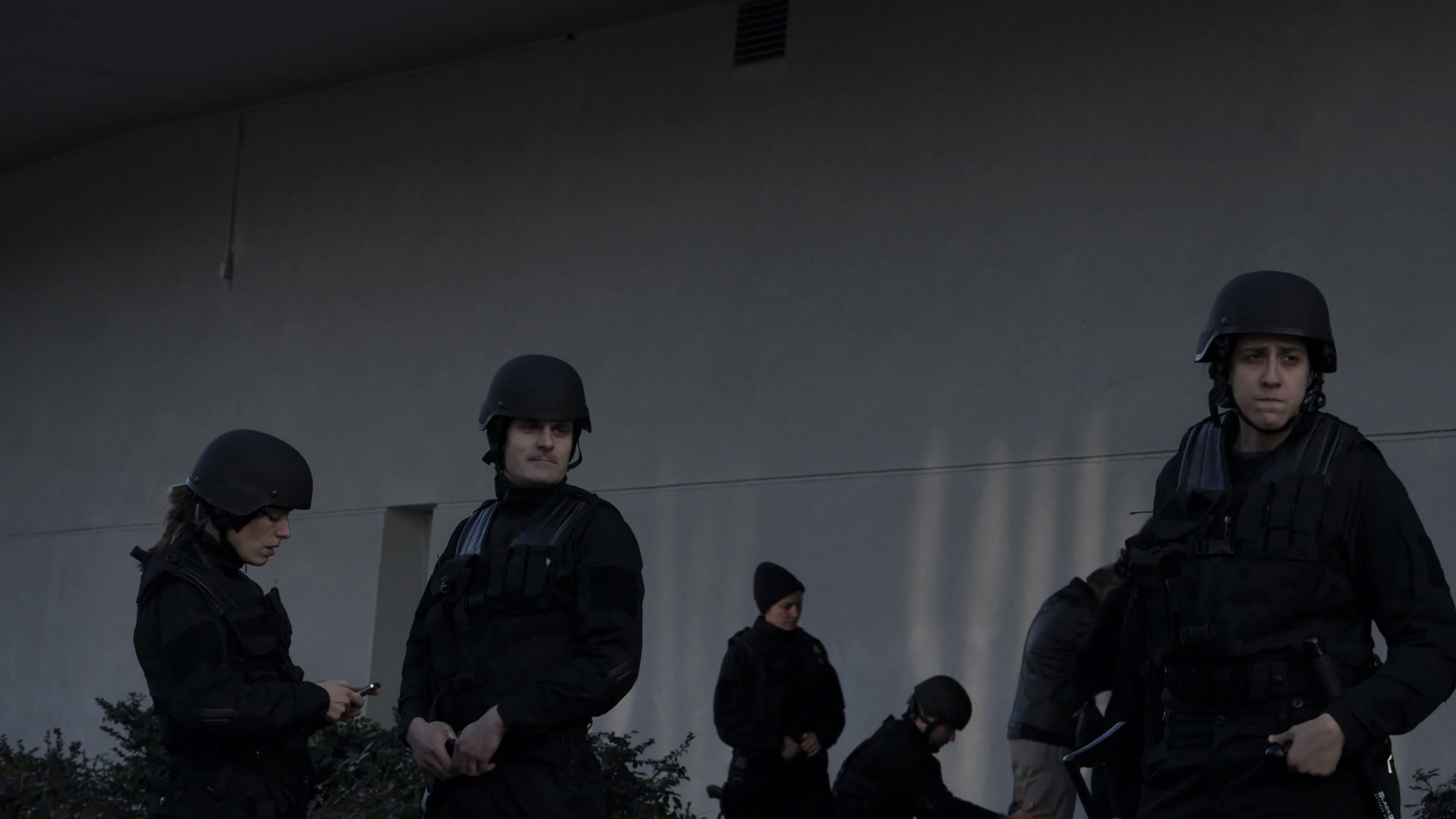
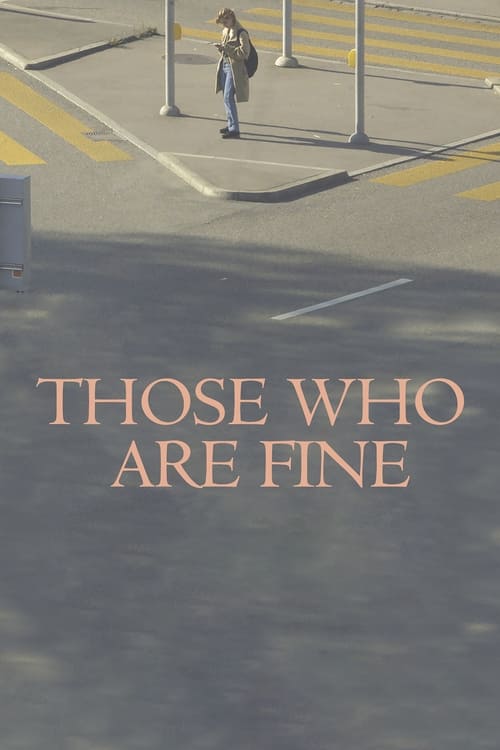
Those Who Are Fine. Three (iirc) scenes have seemingly unrelated characters discuss movies they’ve seen. The movies mentioned, whose titles can never be recalled, are oddly similar, yet more entertaining, than the actual movie you’re watching.
While critiquing the modern Capitalist world is not new or novel, the efficacy and insightfulness of those criticisms often fall short of any meaningful commentary. Here, though, Schäublin deftly captures a techno-neorealist dystopia framed explicitly through the late-stage capitalist paradigm. It is the sober Bressonian version of
Wall-E. Expression is withheld, movement is nondescript, and dimensionality is unnervingly mathematical. The future is now and autonomy has seemingly been replaced with monthly fees and transactional details.
Several thematic motifs recur to implicitly define the quietly nefarious mundanity of this society’s simmering dysfunction. The film erodes the socially constructed boundaries of crime and business. The temperament of the film seems to suggest there is little difference between the elderly fraud scams and the legal telemarketing industry. The constant exchange of codes (recall
Code Unknown) illuminates the cryptic nonsense we speak to facilitate overly complicated, yet superfluous transactions. Information collected about characters throughout the film (ages, account balance, internet provider, beneficiaries, etc) ironically reduce each human to a single data point.
The formal mastery should also be mentioned. It is not uncommon for dimensional distinguishability to be eliminated. One of my favourite shots features a policeman disappear behind a corner turning a three-dimensional space into two-dimensional right before our eyes. It’s a startling transformation; it feels audacious in its simplicity.
The power of critical films like this is in their explicit lack of proselytizing. The film does less to teach us a lesson and more to show us the reality in front of us we miss. We don’t need to be told whether something is bad or wrong to see it for ourselves. It doesn’t even offer a path forward. That’s our job.