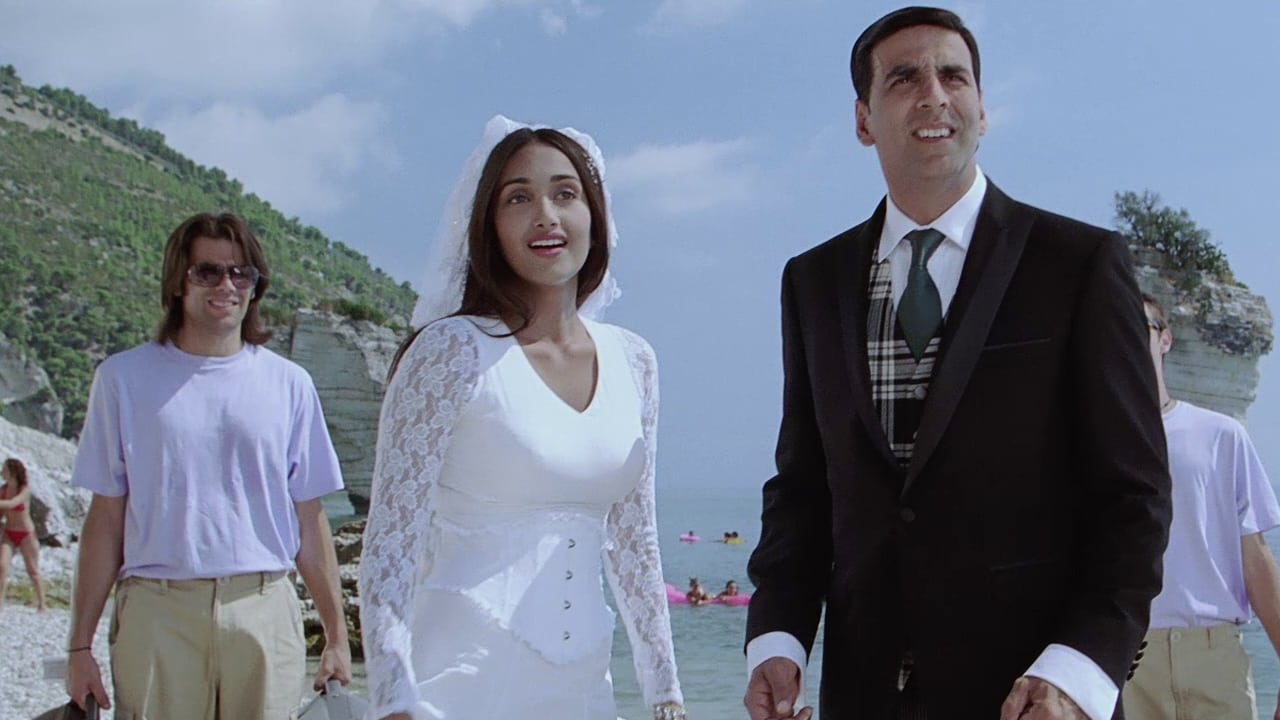
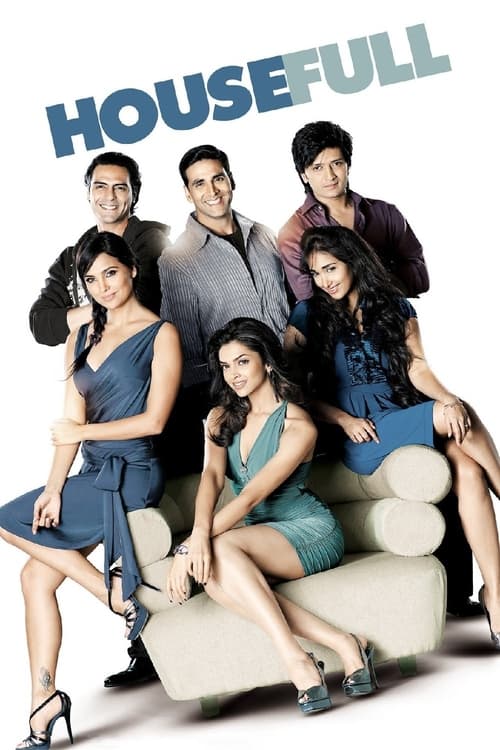
A textbook case of engineered chaos masquerading as comedy. Sajid Khan’s HOUSEFULL builds a tower of lies, coincidences, and cartoonish antics, only to collapse it all in Buckingham Palace flooded with laughing gas. It’s not a resolution—it’s a reset button. The climax doesn’t solve conflicts or complete arcs; it chemically induces laughter and hopes the audience follows suit. This isn’t storytelling, it’s emotional disarmament through spectacle. The film never promises depth, and it delivers accordingly: a farce that exhausts rather than entertains, where the loudest punchline wins by default.
Which, sometimes, is the kind of film one needs to reset (especially after a hectic funeral?). Also, Lara Dutta in a red bunny suit.
STRAY NOTESOnly in HOUSEFULL can your wife tumble out of a first-floor window, land perfectly in a garbage bin, and then have the lid slam shut like a punchline.
Only in HOUSEFULL can a poster smacks him straight through the head — and of course, it just happens to punch out the word “loser.” Classic chaotic timing.
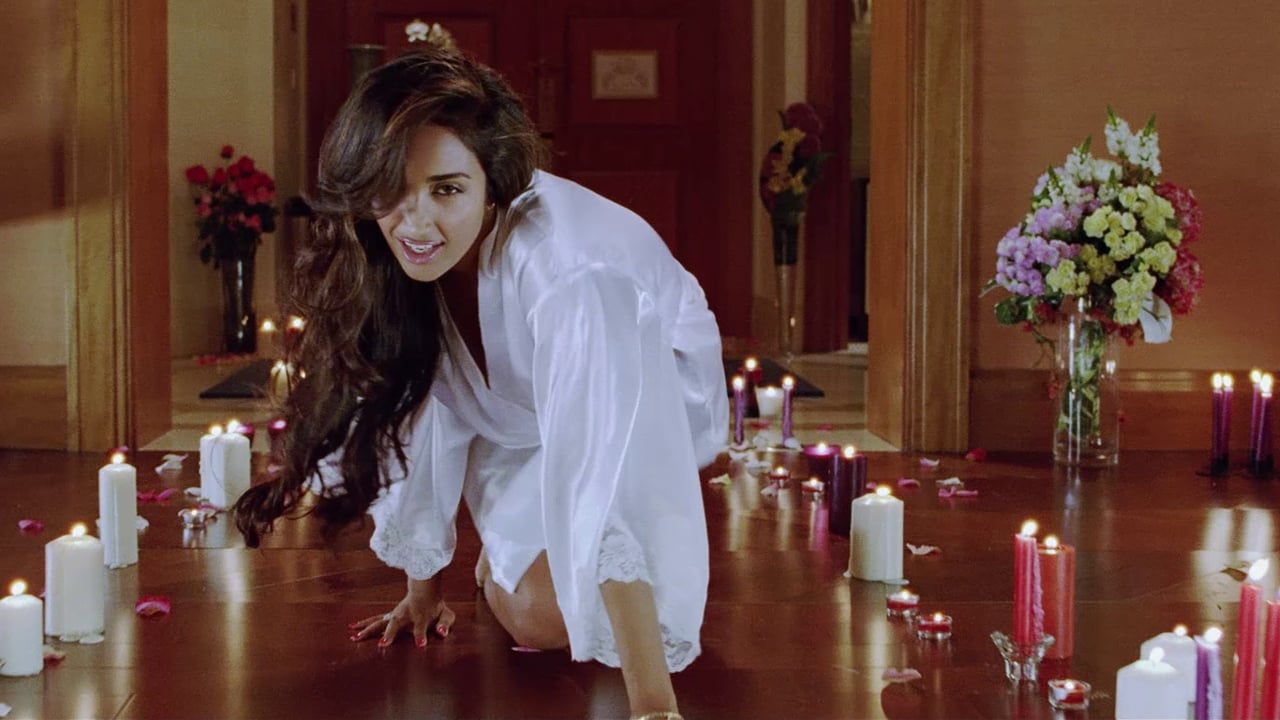
Only in HOUSEFULL can Jiah Khan entering the scene to the sound of string music is such a hauntingly beautiful moment. Knowing her fate, it’s heartbreaking to see her presence immortalized on screen like this.
Only in HOUSEFULL can you call Sandy, SAANDY (wordplay on bull)
Only in HOUSEFULL can Lilette Dubey walk down the stairs in slow motion as she’s introduced to the audience as Zulekha Bano— a three-time widow with an affinity for old millionaires who croak on the first night of the marriage.
Only in HOUSEFULL can the following lines be delivered with great hilarity — “Sandy’s brother is Hetal’s father. That means Sandy is Hetal’s aunt.”
Only in HOUSEFULL can a baby be brought in — and to everyone’s surprise, the baby is Black, followed by an impromptu African dance.
Also when you think about it, the film opens with a scene about a cooler (referring to bad luck, Aarush). In the final scene, the laughing gas is accidentally applied to replace depleted “coolant”.
A textbook case of engineered chaos masquerading as comedy. Sajid Khan’s HOUSEFULL builds a tower of lies, coincidences, and cartoonish antics, only to collapse it all in Buckingham Palace flooded with laughing gas. It’s not a resolution—it’s a reset button. The climax doesn’t solve conflicts or complete arcs; it chemically induces laughter and hopes the audience follows suit. This isn’t storytelling, it’s emotional disarmament through spectacle. The film never promises depth, and it delivers accordingly: a farce that exhausts rather than entertains, where the loudest punchline wins by default.
Which, sometimes, is the kind of film one needs to reset (especially after a hectic funeral?). Also, Lara Dutta in a red bunny suit.
STRAY NOTESOnly in HOUSEFULL can your wife tumble out of a first-floor window, land perfectly in a garbage bin, and then have the lid slam shut like a punchline.
Only in HOUSEFULL can a poster smacks him straight through the head — and of course, it just happens to punch out the word “loser.” Classic chaotic timing.
Only in HOUSEFULL can Jiah Khan entering the scene to the sound of string music is such a hauntingly beautiful moment. Knowing her fate, it’s heartbreaking to see her presence immortalized on screen like this.
Only in HOUSEFULL can you call Sandy, SAANDY (wordplay on bull)
Only in HOUSEFULL can Lilette Dubey walk down the stairs in slow motion as she’s introduced to the audience as Zulekha Bano— a three-time widow with an affinity for old millionaires who croak on the first night of the marriage.
Only in HOUSEFULL can the following lines be delivered with great hilarity — “Sandy’s brother is Hetal’s father. That means Sandy is Hetal’s aunt.”
Only in HOUSEFULL can a baby be brought in — and to everyone’s surprise, the baby is Black, followed by an impromptu African dance.
Also when you think about it, the film opens with a scene about a cooler (referring to bad luck, Aarush). In the final scene, the laughing gas is accidentally applied to replace depleted “coolant”.