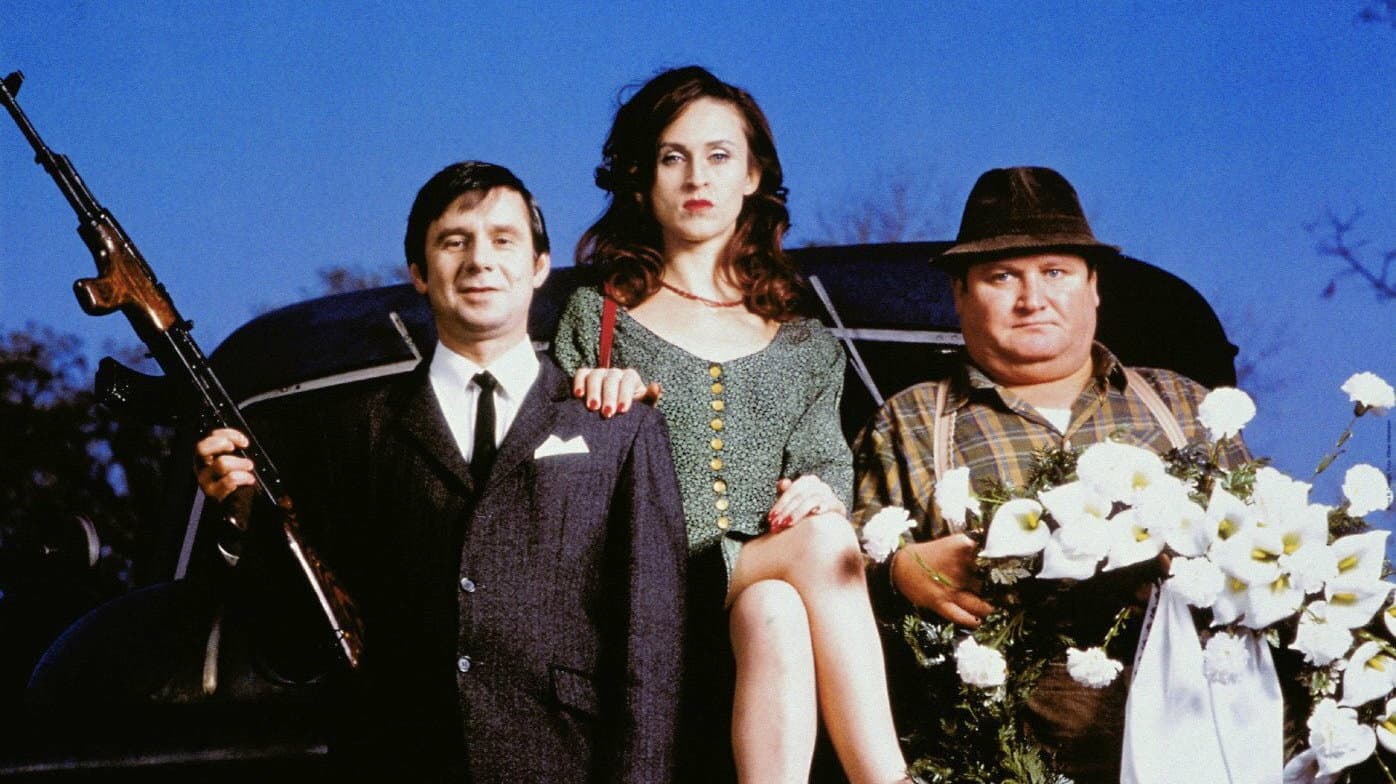
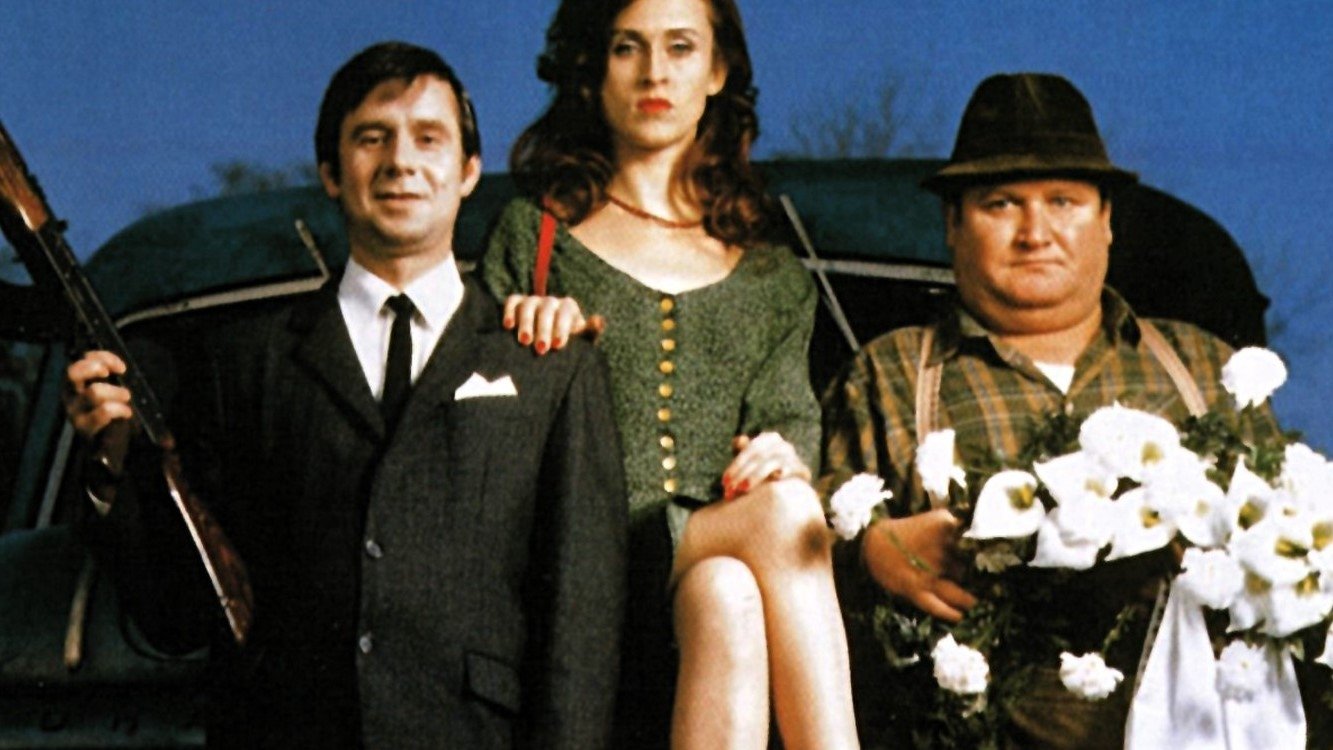
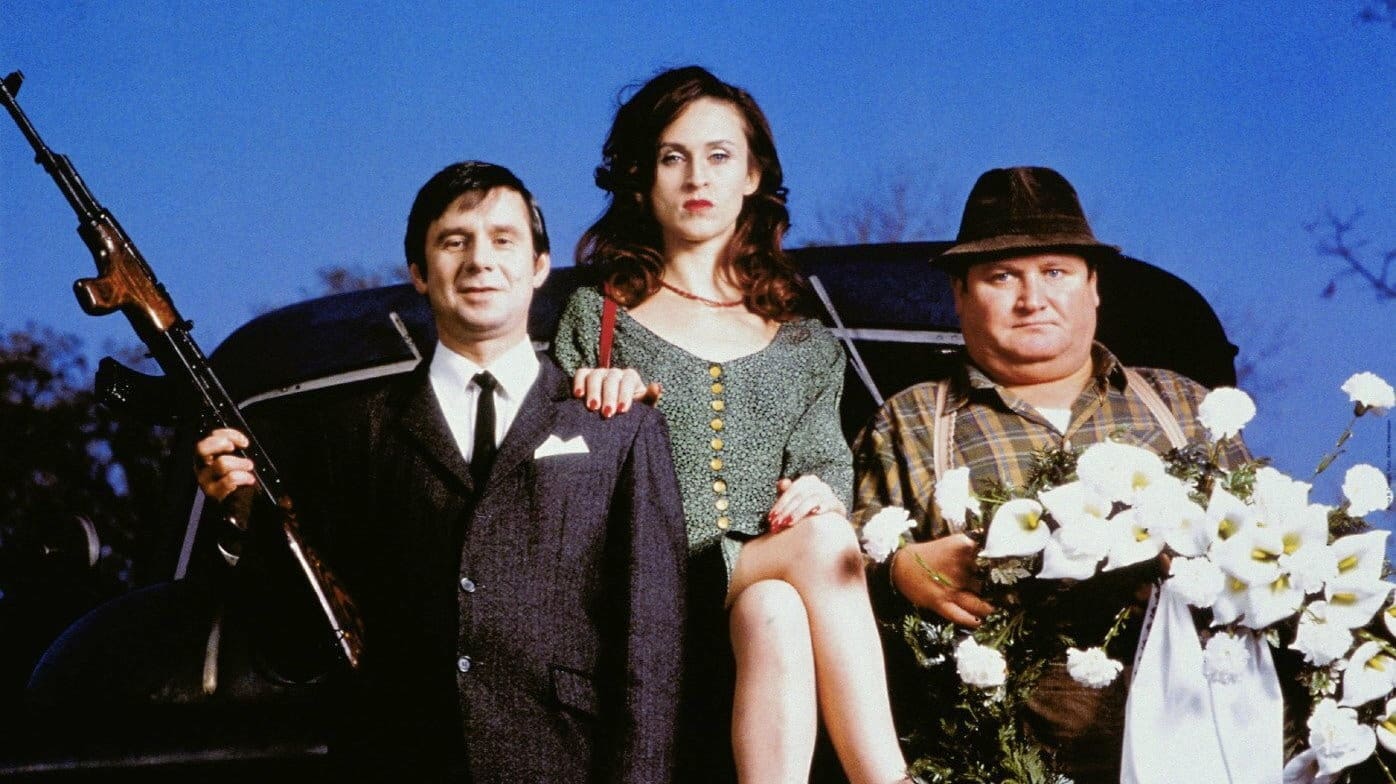
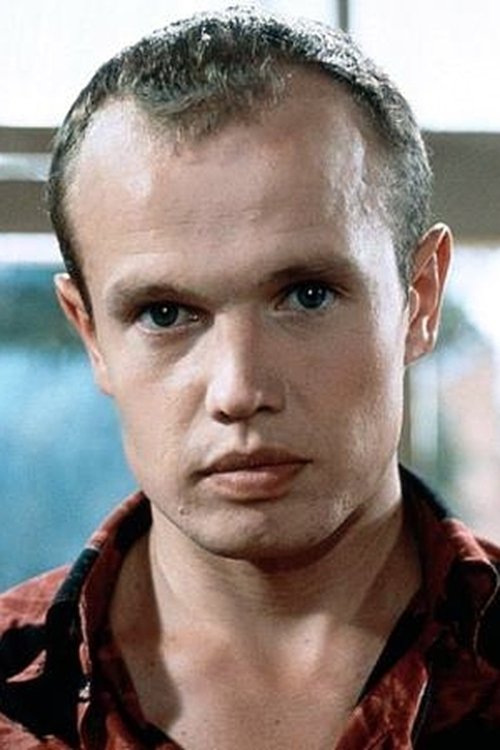
The brothers Kipp and Most set off to inherit their grandmother's estate. Along the way, they meet Viktor, a deserted Russian soldier who kidnaps them, and Nadine, who joins them voluntarily. On their way to their inheritance, the protagonists get into some seemingly hopeless situations.
Directed by Detlev Buck
sibling relationship
german democratic republic
eastern germany
road movie
IMDB
N/A
Letterboxd
3.5 / 5
Cast
Joachim Król
Rudi Kipp ("Kipp")
Horst Krause
Moritz Kipp ("Most')
Konstantin Kotlyarov
Viktor
Sophie Rois
Nadine
Detlev Buck
Skinhead
Heinrich Giskes
Kommissar
Ingo Naujoks
Schweinefahrer
Jan-Gregor Kremp
1. Wegelagerer
Hanno Thurau
Spendierhose
Uwe Dag Berlin
2. Wegelagerer
Christine Harbort
Cafedame
Hans Martin Stier
Tankstellenverkäufer
Crew
Detlev Buck
Director
Detlev Buck
Screenplay
Popular Reviews
0 reviews
rbPRO
Watching something in a language you don’t understand, without subtitles, can be a valuable experience. The words become less important, shifting attention to the film's physicality—the actors' gestures, micro-expressions, framing, and props. What assumptions can we make based on the character’s wardrobe? What is the character trying to convey about their values or priorities? What does the scene framing show us? The actor’s placement in relation to their surroundings or other actors conveys meaning.
The question becomes: What are they showing us versus what are they telling us? Watching something in an unfamiliar language requires analysis and inference.
This experience is new to me, but it isn't unique. Friends who learned English as a second language often did so through watching American TV and cinema. I wonder if they became attuned to the physicality and then connected it with the dialogue’s meaning.
Reading comedic films seems easier in theory (reserved for another essay). I'd like to think I grasped 95% of what happened in "Wir können auch anders." Laughter from the rest of the audience helped validate any assumptions.
Went for the theater and left with a thought proving experience.
Watching something in a language you don’t understand, without subtitles, can be a valuable experience. The words become less important, shifting attention to the film's physicality—the actors' gestures, micro-expressions, framing, and props. What assumptions can we make based on the character’s wardrobe? What is the character trying to convey about their values or priorities? What does the scene framing show us? The actor’s placement in relation to their surroundings or other actors conveys meaning.
The question becomes: What are they showing us versus what are they telling us? Watching something in an unfamiliar language requires analysis and inference.
This experience is new to me, but it isn't unique. Friends who learned English as a second language often did so through watching American TV and cinema. I wonder if they became attuned to the physicality and then connected it with the dialogue’s meaning.
Reading comedic films seems easier in theory (reserved for another essay). I'd like to think I grasped 95% of what happened in "Wir können auch anders." Laughter from the rest of the audience helped validate any assumptions.
Went for the theater and left with a thought proving experience.
Watching something in a language you don’t understand, without subtitles, can be a valuable experience. The words become less important, shifting attention to the film's physicality—the actors' gestures, micro-expressions, framing, and props. What assumptions can we make based on the character’s wardrobe? What is the character trying to convey about their values or priorities? What does the scene framing show us? The actor’s placement in relation to their surroundings or other actors conveys meaning.
The question becomes: What are they showing us versus what are they telling us? Watching something in an unfamiliar language requires analysis and inference.
This experience is new to me, but it isn't unique. Friends who learned English as a second language often did so through watching American TV and cinema. I wonder if they became attuned to the physicality and then connected it with the dialogue’s meaning.
Reading comedic films seems easier in theory (reserved for another essay). I'd like to think I grasped 95% of what happened in "Wir können auch anders." Laughter from the rest of the audience helped validate any assumptions.
Went for the theater and left with a thought proving experience.
Watching something in a language you don’t understand, without subtitles, can be a valuable experience. The words become less important, shifting attention to the film's physicality—the actors' gestures, micro-expressions, framing, and props. What assumptions can we make based on the character’s wardrobe? What is the character trying to convey about their values or priorities? What does the scene framing show us? The actor’s placement in relation to their surroundings or other actors conveys meaning.
The question becomes: What are they showing us versus what are they telling us? Watching something in an unfamiliar language requires analysis and inference.
This experience is new to me, but it isn't unique. Friends who learned English as a second language often did so through watching American TV and cinema. I wonder if they became attuned to the physicality and then connected it with the dialogue’s meaning.
Reading comedic films seems easier in theory (reserved for another essay). I'd like to think I grasped 95% of what happened in "Wir können auch anders." Laughter from the rest of the audience helped validate any assumptions.
Went for the theater and left with a thought proving experience.