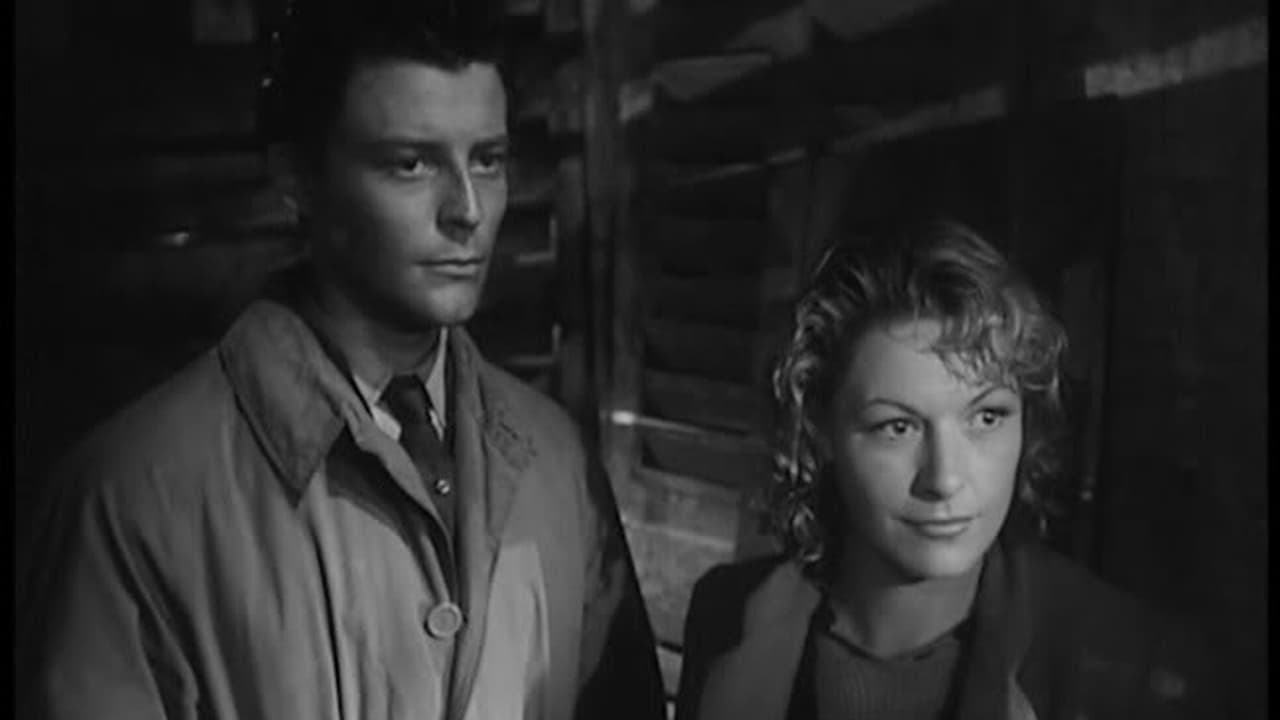
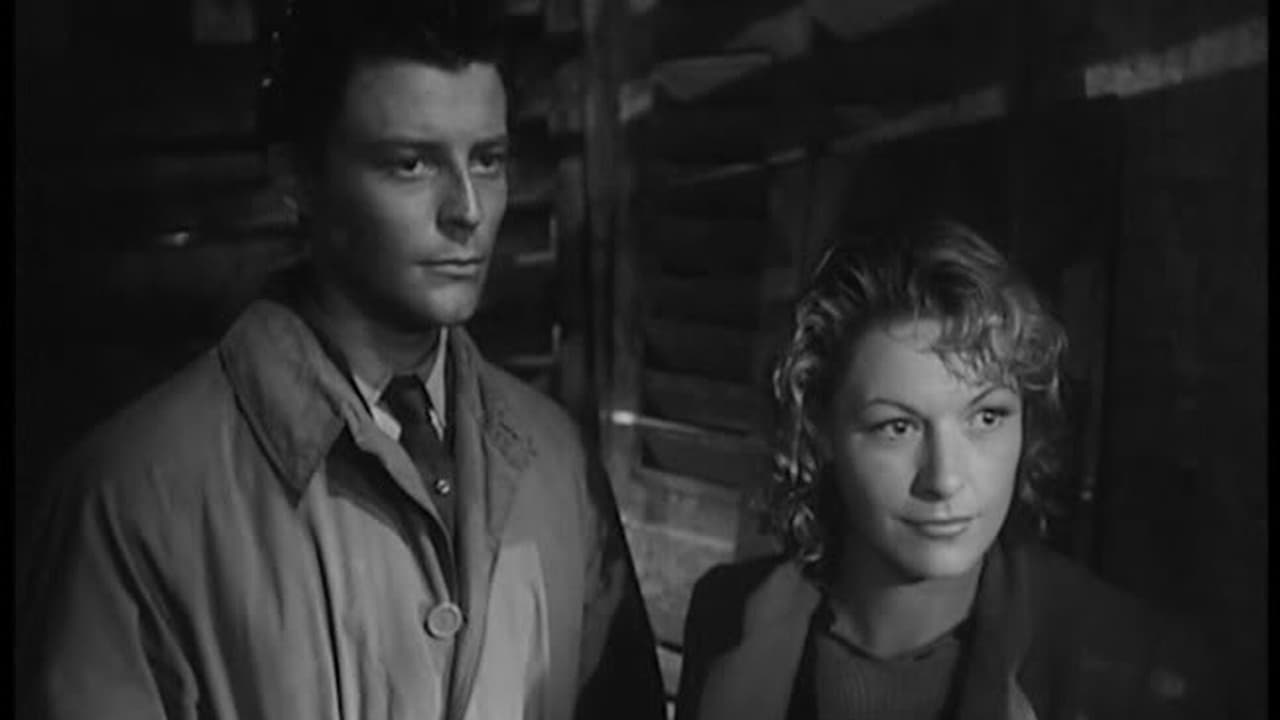
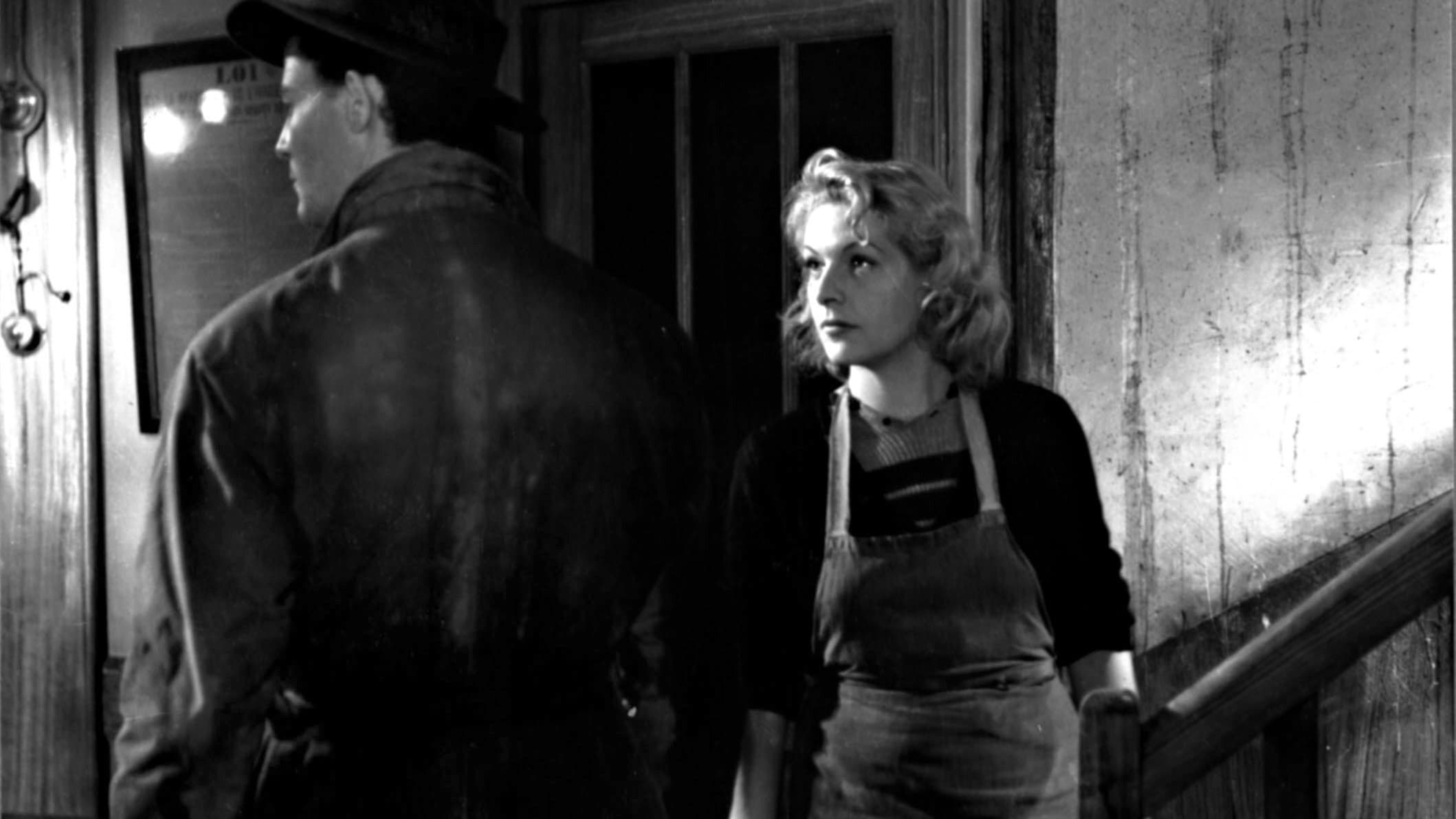
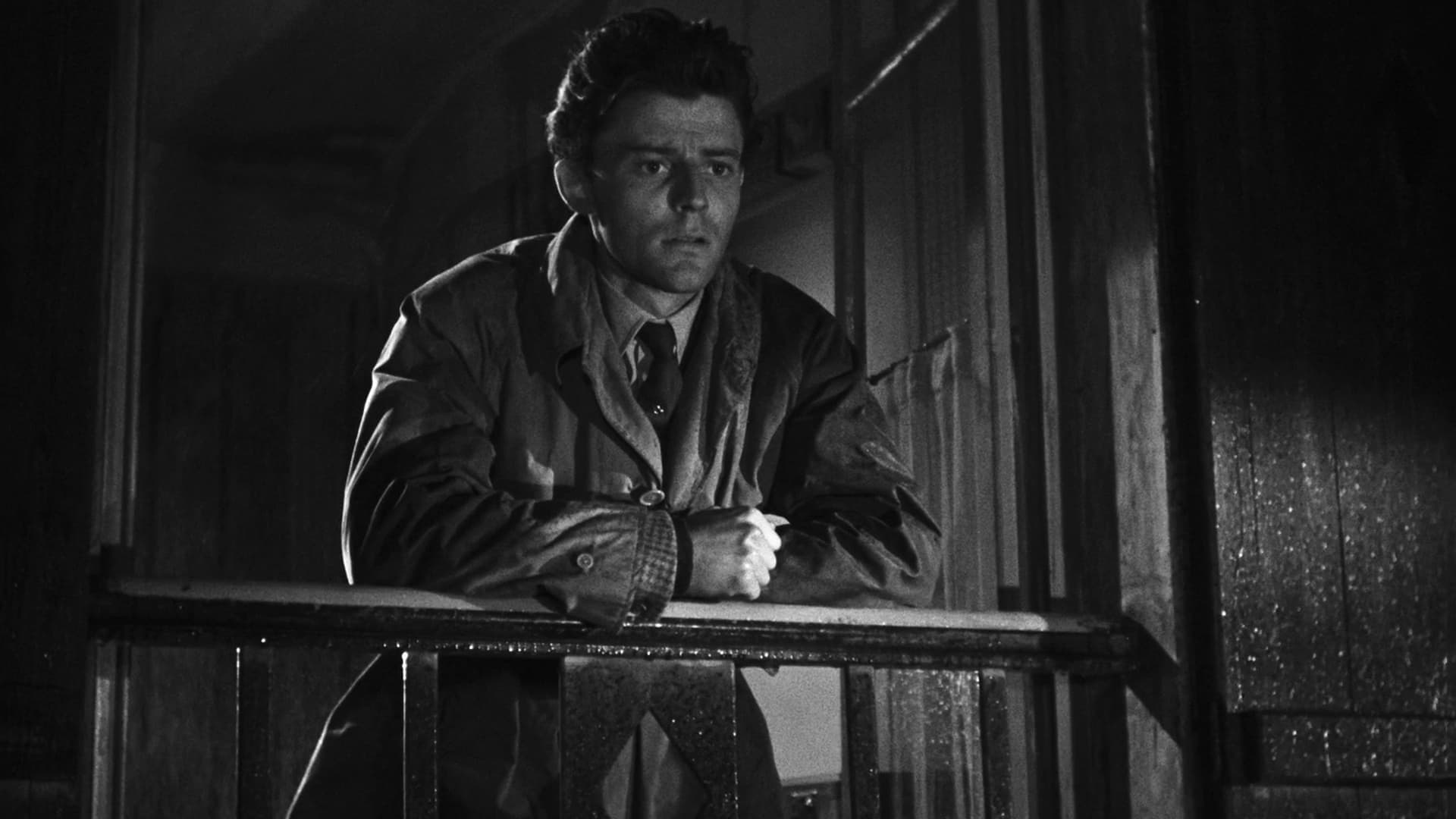
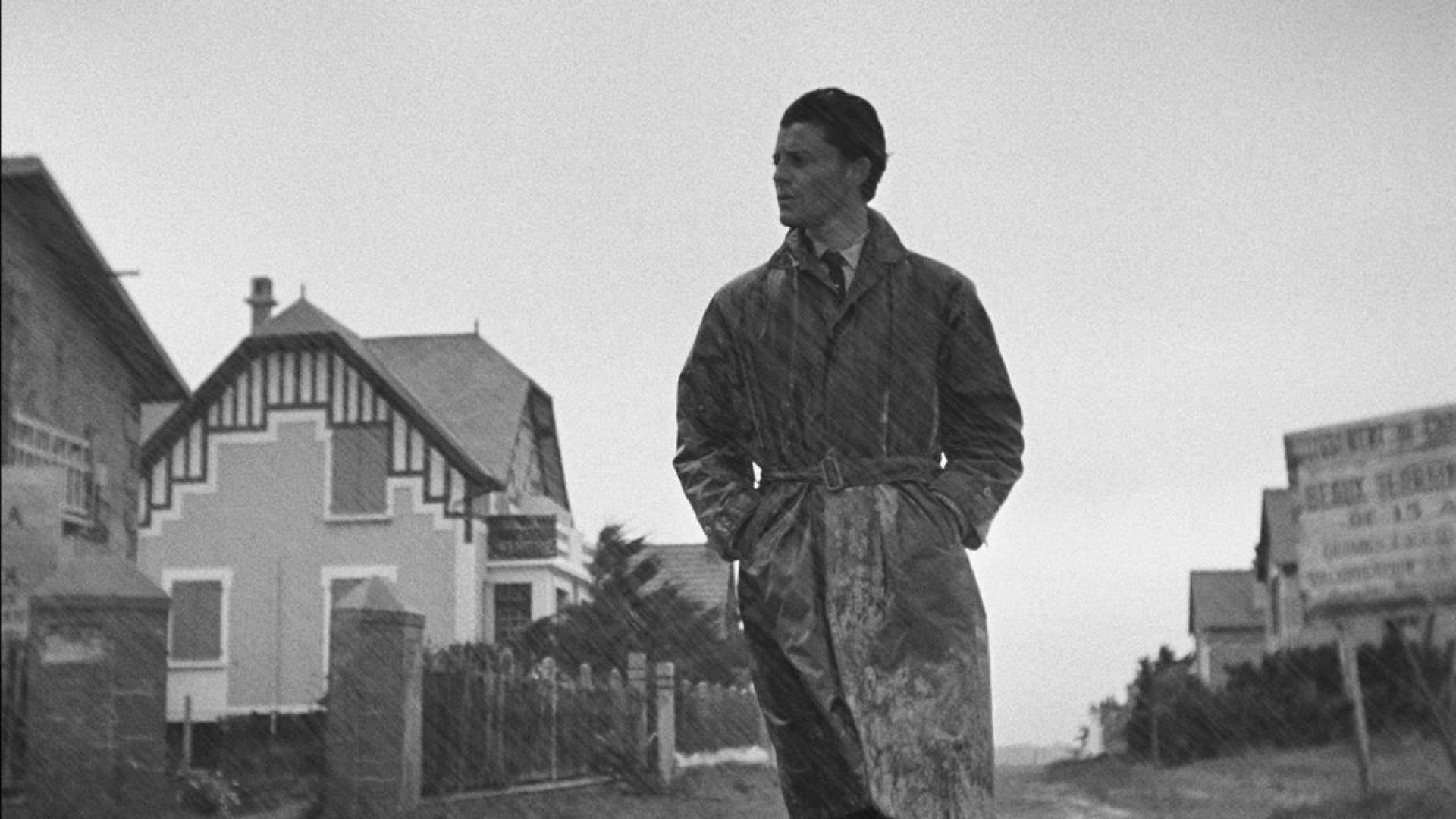
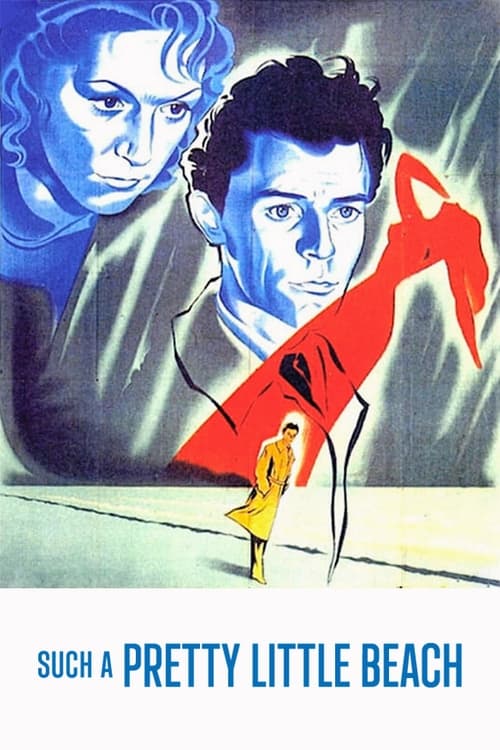
Very much a “sad man walks around rainy town” movie. That is to say, my kind of movie. The rainfall is constant and copious. The black and white cinematography emphasizes the dreariness of this town. You can hear the squish of the boots in the mud. But there’s also great beauty in the rain, with some windowsill/balcony shots being among my favourites.
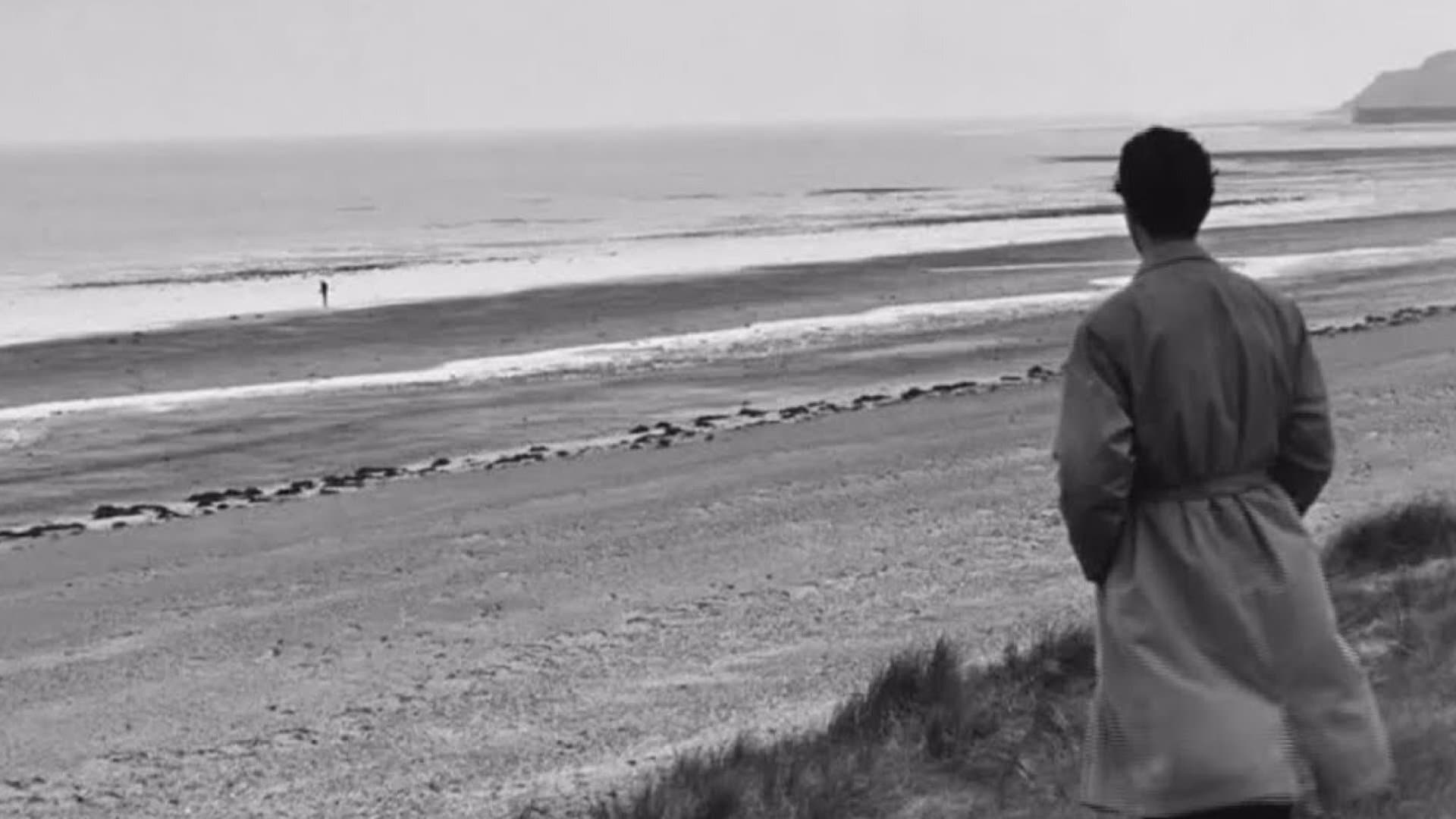
The film feels relatively light in dialogue. It often feels more intimately observational with a number of scenes spent in silence with characters. For example, one great shot features Pierre simply pacing lost in thought in his room. If you don’t feel alone enough walking in the rain, there’s also the titular beach, completely empty and barren.
Allégret’s location setting of this beach town felt like a noticeable, and refreshing, departure from the most famous French films with which I am familiar. In fact, there is a beach house here featured prominently, so much so that it intimately captures an experience I thought unique to Bergman’s Through a Glass Darkly. Looking at the cinematographer, maybe it’s no surprise. Henri Alekan was also the cinematographer for Wings of Desire and Cocteau’s Beauty and The Beast. He really knocked it out of the park here. The shot compositions are eclectic with a surprising burst of camera movement at the very end packing a punchy ending.
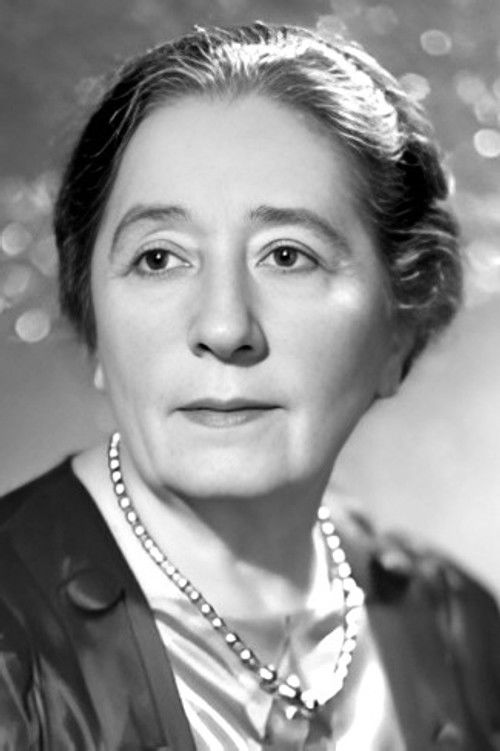
An interesting note as I’ve checked three sources is that Madeleine Robinson, who plays Marthe, is billed first! I love this because I feel her role is imperative to Pierre. Their union turned in a valuable way. In the scene with Pierre and her in the boathouse, she describes her life. It is completely moving and gives her a profound sense of self-awareness. The film, with this character, cements the infusion of underlying realism. While the film seems to center on war orphans, Marthe similarly has been displaced by war. Her discussions of navigating the male landscape regardless of nation bespeaks the universal experience.
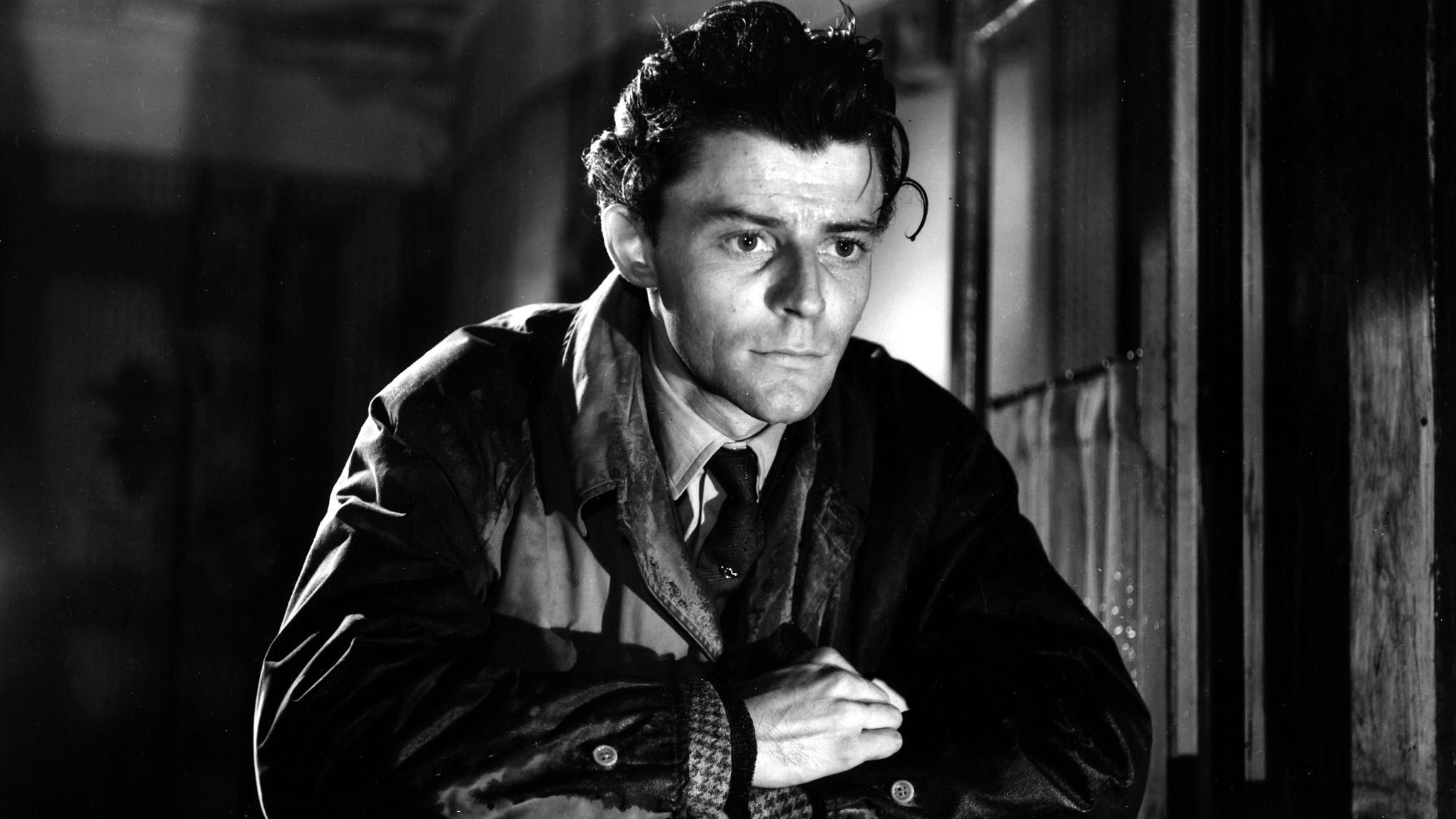
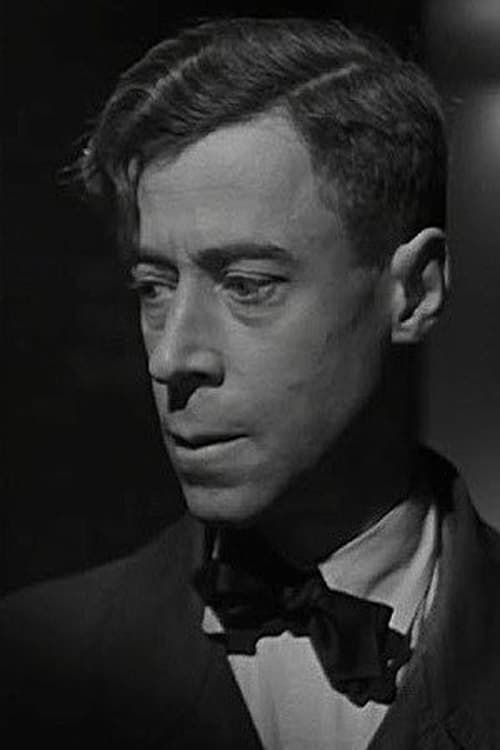
Pierre, played by Gérard Philipe, is a perfect moving mixture of hidden turmoil and mystery. Capturing a look reminiscent of Marcello Mastroianni, his gaze reflects deep piercing thoughts. His troubled visage compliments the deep hidden scars of this town, the vicious cycles at work and the hamster wheel of destitution. In the boathouse scene (which I now realize is my favourite scene of the movie), Pierre breaks in a moment of supreme vulnerability. I adored the dynamic here between Pierre and Marthe, but Allégret goes one step further and regrounds the scene to the micro and thematic-macro.
Definitely a lot of aesthetic choices that are exactly in my wheelhouse. Very surprising early examples of those kinds of things. I can see now, in hindsight, why this is considered a noir, but I latched onto the arthouse stuff way more. I especially chose this movie in a new splinter search of lesser known 40s films tapping into the darkness the mainstream of the time seems to want to forget. This was a great find and scratches a strain of darker cinema that I don’t think was quite so popular yet.
Very much a “sad man walks around rainy town” movie. That is to say, my kind of movie. The rainfall is constant and copious. The black and white cinematography emphasizes the dreariness of this town. You can hear the squish of the boots in the mud. But there’s also great beauty in the rain, with some windowsill/balcony shots being among my favourites.
The film feels relatively light in dialogue. It often feels more intimately observational with a number of scenes spent in silence with characters. For example, one great shot features Pierre simply pacing lost in thought in his room. If you don’t feel alone enough walking in the rain, there’s also the titular beach, completely empty and barren.
Allégret’s location setting of this beach town felt like a noticeable, and refreshing, departure from the most famous French films with which I am familiar. In fact, there is a beach house here featured prominently, so much so that it intimately captures an experience I thought unique to Bergman’s Through a Glass Darkly. Looking at the cinematographer, maybe it’s no surprise. Henri Alekan was also the cinematographer for Wings of Desire and Cocteau’s Beauty and The Beast. He really knocked it out of the park here. The shot compositions are eclectic with a surprising burst of camera movement at the very end packing a punchy ending.
An interesting note as I’ve checked three sources is that Madeleine Robinson, who plays Marthe, is billed first! I love this because I feel her role is imperative to Pierre. Their union turned in a valuable way. In the scene with Pierre and her in the boathouse, she describes her life. It is completely moving and gives her a profound sense of self-awareness. The film, with this character, cements the infusion of underlying realism. While the film seems to center on war orphans, Marthe similarly has been displaced by war. Her discussions of navigating the male landscape regardless of nation bespeaks the universal experience.
Pierre, played by Gérard Philipe, is a perfect moving mixture of hidden turmoil and mystery. Capturing a look reminiscent of Marcello Mastroianni, his gaze reflects deep piercing thoughts. His troubled visage compliments the deep hidden scars of this town, the vicious cycles at work and the hamster wheel of destitution. In the boathouse scene (which I now realize is my favourite scene of the movie), Pierre breaks in a moment of supreme vulnerability. I adored the dynamic here between Pierre and Marthe, but Allégret goes one step further and regrounds the scene to the micro and thematic-macro.
Definitely a lot of aesthetic choices that are exactly in my wheelhouse. Very surprising early examples of those kinds of things. I can see now, in hindsight, why this is considered a noir, but I latched onto the arthouse stuff way more. I especially chose this movie in a new splinter search of lesser known 40s films tapping into the darkness the mainstream of the time seems to want to forget. This was a great find and scratches a strain of darker cinema that I don’t think was quite so popular yet.